
中成药

Search documents
上海开通中成药集采首批扩围挂网通道,多维治理剑指价格虚高
Sou Hu Cai Jing· 2025-08-14 10:00
Core Viewpoint - The acceleration of traditional Chinese medicine (TCM) centralized procurement aims to address the long-standing issue of inflated prices in the TCM market, with significant price reductions observed in recent procurement rounds [1][6][9] Group 1: Price Reduction and Procurement Process - The average price reduction for selected TCM products in the third batch of centralized procurement reached 68%, with some products seeing reductions over 90% [1] - The first batch of TCM centralized procurement in 2021 resulted in an average price reduction of 42.27%, while the second batch in 2023 saw a reduction of 49.36% [3] - The third batch of procurement included 19 unique products, with an average price reduction of 47.38% [3] Group 2: Governance and Long-term Mechanisms - Experts suggest that a long-term mechanism for price governance should involve both centralized procurement and regular monitoring of listed prices to identify anomalies [1][2] - The establishment of a robust procurement credit system is essential to ensure that high-priced products are closely monitored for sales performance [2] Group 3: Challenges in the TCM Market - The high prices of TCM are attributed to various factors, including the impact of climate on raw material prices, insufficient market competition, and the complexity of pricing structures [6][7] - The presence of monopolistic practices in the TCM sector leads to concentrated pricing power, exacerbating the issue of inflated prices [7] Group 4: Regional Implementation and Impact - Various provinces, including Guangdong and Jiangsu, are actively implementing centralized procurement to ensure that selected products are available in hospitals and to manage prices effectively [4] - The expected annual savings for patients from the recent procurement efforts are estimated to exceed 31 million yuan [4] Group 5: Future Recommendations - Recommendations for future procurement processes include establishing a reasonable price increase mechanism during supply shortages and ensuring transparency in production costs [5] - A national collaborative governance framework is proposed to standardize pricing rules and monitor price fluctuations across provinces [9][10]
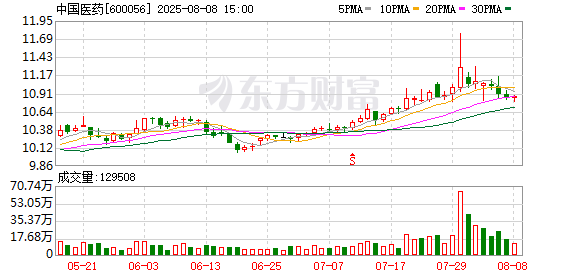
中国医药:8月8日召开董事会会议
Mei Ri Jing Ji Xin Wen· 2025-08-08 11:05
Core Viewpoint - China National Pharmaceutical Group announced the convening of its 30th board meeting on August 8, 2025, to review various proposals, including amendments to existing documents [2] Revenue Composition - For the year 2024, the revenue composition of China National Pharmaceutical Group is as follows: - Pharmaceutical commerce accounts for 77.31% - Pharmaceutical trade accounts for 14.35% - Chemical preparations account for 4.47% - Raw materials account for 2.78% - Traditional Chinese medicine accounts for 1.47% [2]


紫鑫药业签订表决权委托协议 国药兆祥成控股股东
Bei Jing Shang Bao· 2025-08-08 06:59
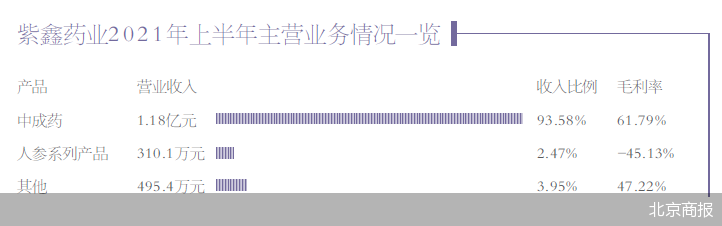
Core Viewpoint - Zixin Pharmaceutical, known as the "King of Ginseng," is undergoing a change in control as its major shareholder, Kangping Investment, transfers voting rights to Guoyao Zhaoxiang, marking a significant shift in the company's management amid ongoing financial losses [1][3]. Company Overview - Zixin Pharmaceutical's main business includes traditional Chinese medicine and ginseng products, with traditional Chinese medicine accounting for 93.58% of its revenue in the first half of 2021 [2][4]. - The company reported a total revenue of 1.26 billion yuan in the first half of 2021, with ginseng products contributing only 310.1 million yuan, representing 2.47% of total revenue [2][4]. Financial Performance - The company has faced continuous financial decline, with projected net losses for the first three quarters of 2021 estimated between 305 million and 350 million yuan, worsening from a loss of 277 million yuan in the same period last year [5][6]. - Zixin Pharmaceutical's net profit has been declining since 2017, with reported revenues of 13.27 billion yuan in 2017 dropping to 2.86 billion yuan in 2020, and corresponding net profits turning from 3.72 billion yuan in 2017 to a loss of 706 million yuan in 2020 [6]. Debt Situation - As of September 15, the total overdue debt of Zixin Pharmaceutical and its subsidiaries amounted to approximately 2.623 billion yuan, which is 70.16% of the latest audited net assets and 24.96% of total assets [6]. Strategic Changes - The introduction of Guoyao Zhaoxiang as the new controlling shareholder is expected to provide financial and resource support, optimize the shareholder structure, and reduce the company's debt levels [3][4].
感冒灵、感冒清热、板蓝根等成为应对发热等症状的合规储备药品
Guang Zhou Ri Bao· 2025-08-06 05:21
Group 1 - The article discusses the outbreak of Chikungunya fever, an acute mosquito-borne infectious disease characterized by high fever above 39°C, severe joint pain, and rashes, with no effective vaccine currently available [1] - The National Health Commission has recommended "acetaminophen" as a preferred antipyretic and analgesic to alleviate key symptoms in the "Chikungunya Fever Diagnosis and Treatment Plan (2025 Edition)" [1] - The Foshan Market Supervision Administration has implemented a real-name registration sales system for 47 types of drugs during the epidemic prevention period, including key controlled medicines for managing fever and joint pain [1] Group 2 - Guangzhou Pharmaceutical Group's subsidiary, Baiyunshan, highlighted the value of traditional Chinese medicine products, such as Baiyunshan Cold Medicine Granules, which contain acetaminophen to effectively relieve high fever, headaches, and body aches [2] - Baiyunshan has established GAP (Good Agricultural Practices) bases for the cultivation of medicinal materials, ensuring the safety, quality, and stability of the ingredients used in their products [2] - The sales of mosquito repellent products in Guangzhou, Shenzhen, and Foshan have surged over 200% in the past week, indicating a significant increase in consumer demand for mosquito prevention [3]
上证指数重返3600点,“牛市确认重要信号”
Di Yi Cai Jing Zi Xun· 2025-08-05 06:35
Core Viewpoint - The recent rise in bank stocks has led the Shanghai Composite Index to surpass 3600 points, signaling a potential confirmation of a bull market and the possibility of a "slow bull" trend continuing [2][3]. Market Trends - The Shanghai Composite Index's rise above 3600 points is seen as an important signal for confirming a bull market, indicating that the market is in its early stages [2][3]. - The market is expected to maintain an upward trend, with a potential breakthrough of 3674 points in the near future [3][4]. - A significant volume of trading activity, with over 10,186 billion yuan in total market transactions, reflects a healthy market environment [2]. Investment Opportunities - Analysts suggest that there are still many undervalued quality companies in the market, presenting a rare opportunity for long-term investors to increase their positions [2][4]. - Key sectors to focus on include artificial intelligence and consumer electronics, especially with upcoming major industry events that could act as catalysts for these sectors [3]. - The pharmaceutical and consumer sectors remain core areas of interest, with potential for significant returns as value reassessment occurs [4]. Sector Rotation - The market is expected to see a rotation of focus from "anti-involution" themes to technology sectors, with a return to performance-driven investment strategies [4]. - The accumulation of profit-making effects may lead to a shift from localized capital inflows to broader market participation, suggesting a potential expansion of market styles [4].

上证指数重返3600点,“慢牛”形态有望延续|市场观察
Di Yi Cai Jing· 2025-08-05 05:34
Group 1 - The Shanghai Composite Index has risen above 3600 points, indicating a confirmation of a bull market, with expectations for a slow bull trend to continue and a potential breakthrough of 3674 points [2][3] - The market is currently experiencing a rotation of hotspots, with a focus on valuation recovery concepts, particularly in the artificial intelligence and consumer electronics sectors due to upcoming significant industry events [3] - Investment strategies should focus on undervalued sectors such as traditional Chinese medicine and consumer goods, which are expected to see substantial returns during the value reassessment process [3] Group 2 - Analysts predict a shift in market hotspots from "anti-involution" to technology sectors, emphasizing a return to performance-driven investment strategies [4] - The stock market has been in a range-bound fluctuation since October 2024, with strong performance observed in sectors driven by high dividend stocks and small-cap stocks [4] - As the market accumulates profit effects, there is a potential for a shift from localized capital inflows to broader market participation, suggesting a further expansion of market styles [4]
贵州百灵股价上涨1.84% 盘中振幅超10%
Jin Rong Jie· 2025-08-04 16:15
Group 1 - Guizhou Bailing's stock price closed at 6.65 yuan on August 4, 2025, up 1.84% from the previous trading day [1] - The stock opened at 6.83 yuan, reached a high of 6.94 yuan, and a low of 6.28 yuan, with an intraday volatility of 10.11% [1] - The trading volume was 2.368 million hands, with a total transaction amount of 1.57 billion yuan [1] Group 2 - Guizhou Bailing specializes in the production and sales of traditional Chinese medicine, with key products including Kesu Ting syrup and Yindan Xinnao Tong soft capsules [1] - The company is located in Anshun City, Guizhou Province, and is recognized as a key pharmaceutical enterprise in the region [1] Group 3 - On August 4, the stock experienced rapid fluctuations, with a rebound of over 2% within 5 minutes around 9:40 AM, following a drop of over 2% earlier at 9:37 AM [1] - On the same day, the net outflow of main funds was 164 million yuan, accounting for 2.03% of the circulating market value [1] - Over the past five trading days, there was a cumulative net inflow of 54.5469 million yuan, representing 0.68% of the circulating market value [1]

“中国客药第一股” 领罚!新董事长违规拆借 2.2 亿背后
凤凰网财经· 2025-08-04 13:31
Core Viewpoint - The article discusses the recent regulatory penalties faced by Jiaying Pharmaceutical, highlighting issues of internal control failures and governance under the new chairman, Li Neng, who has been in charge for less than a year [2][4][6]. Group 1: Regulatory Issues - Jiaying Pharmaceutical and its executives received a warning and fines from the China Securities Regulatory Commission for illegal fund borrowing practices, involving a total of 21.999 million yuan, which accounted for 28.83% of the company's latest audited net assets [4][6]. - The penalties included a fine of 1.5 million yuan for Jiaying Pharmaceutical, 1.6 million yuan for Li Neng, 1 million yuan for You Yongping, and 800,000 yuan for Shi Junping [4][6]. Group 2: Historical Context and Shareholder Dynamics - The company has experienced significant internal conflicts over control, particularly since 2016 when a major shareholder, Tiger Group, acquired a significant stake, leading to a prolonged struggle for control [6][7]. - Jiaying Pharmaceutical's performance stagnated during the internal conflicts, with revenues remaining around 400 to 500 million yuan from 2014 to 2021 [7][8]. Group 3: Recent Developments and Market Reaction - In 2024, the acquisition of a 7% stake by Yangtianhe, a leading pharmacy chain, was marked by a share transfer at a premium price, but the stock price subsequently plummeted, indicating market skepticism [9][11][14]. - Following the acquisition, Li Neng became the new chairman, but Yangtianhe faced financial difficulties, leading to the pledging of shares for financing [18][19]. Group 4: Financial Performance and Future Outlook - Despite the challenges, Jiaying Pharmaceutical reported a revenue increase of 28.83% year-on-year in Q1, reaching 122 million yuan, and a net profit increase of 197.23%, amounting to 15.4 million yuan [25][24]. - The article emphasizes the need for improved internal governance and a focus on long-term investor returns to enhance company value [26].

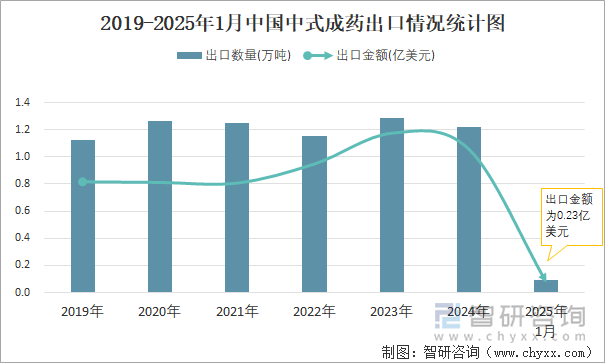
2025年5月中国中式成药出口数量和出口金额分别为0.1万吨和0.23亿美元
Chan Ye Xin Xi Wang· 2025-08-04 08:42
Group 1 - The core point of the article highlights that in May 2025, China's export volume of traditional Chinese medicine reached 0.1 million tons, representing a year-on-year increase of 2.5%, while the export value was $0.23 billion, showing a year-on-year decline of 32.2% [1] Group 2 - The data source for the information is from China Customs, and the analysis was organized by Zhiyan Consulting [3]
暑湿VS暑热 精准解暑先搞清区别
Bei Jing Qing Nian Bao· 2025-08-04 01:01
Group 1 - The article discusses the health risks associated with summer heat and humidity, emphasizing the importance of distinguishing between "heat" and "humidity" related illnesses to effectively prevent and alleviate symptoms of heatstroke [1][2] - Symptoms of "heat dampness" include chills, fever, lack of sweat, body aches, nausea, and poor appetite, often caused by excessive exposure to cold environments or consumption of cold foods [2] - Symptoms of "heat" include body heat, flushed face, rapid breathing, and dry mouth, typically resulting from prolonged outdoor labor in high temperatures [2] Group 2 - The article provides a list of traditional Chinese medicine remedies for treating heat dampness, such as Huo Xiang Zheng Qi Water, which can alleviate symptoms like nausea and abdominal pain [3][4] - It also mentions remedies for heat-related illnesses, including Liu Yi San, which can relieve symptoms like thirst and dizziness caused by heat [5][6] - The article suggests herbal teas and food remedies, such as Huo Xiang Pei Lan Tea and various congee recipes, to help cool the body and prevent heat-related issues [9][10][13][14] Group 3 - Dietary recommendations include increasing the intake of potassium-rich fruits and vegetables, as well as foods high in B vitamins and vitamin C to replenish nutrients lost through sweating [15] - The article highlights the benefits of bitter foods and beverages, which can help clear heat and improve appetite during the summer [15]