
冷链物流

Search documents
市场规模不断扩大,增长势头良好,韧性进一步加强 冷链物流支撑消费升级(经济聚焦)
Ren Min Ri Bao· 2025-10-13 22:13
Core Insights - The seafood market is thriving, with a robust cold chain logistics network ensuring fresh delivery to consumers, supported by increased investment in cold storage and refrigerated vehicles [1][2]. Cold Chain Logistics Demand - The total demand for food cold chain logistics reached 192 million tons in the first half of the year, representing a year-on-year growth of 4.35% [2]. - The total revenue for food cold chain logistics service companies was 279.94 billion yuan, an increase of 3.84% year-on-year [2]. - The growth momentum of the food cold chain logistics industry is strong, with enhanced resilience as fresh products enter the consumption peak season [2]. Cold Storage Investment - Investment in cold storage projects amounted to 22.306 billion yuan in the first half of the year, reflecting a year-on-year increase of 7.67% [4]. - The total capacity of cold storage (public food cold storage) reached 260 million cubic meters by the end of June, equivalent to approximately 104 million tons, which is a 6.12% increase year-on-year [4]. - A new "super cold storage" facility in Guangdong, with an investment of 920 million yuan and a capacity exceeding 150,000 tons, has been put into operation to enhance cold chain logistics in the region [3]. Refrigerated Vehicle Sales - Sales of refrigerated vehicles reached 29,474 units in the first half of the year, marking an 18.19% increase year-on-year, with sales of new energy refrigerated vehicles at 10,548 units, up 119.61% [5]. - The penetration rate of new energy refrigerated vehicles reached 35.8%, an increase of 16.5 percentage points year-on-year [5]. - The demand for refrigerated vehicles remains high, with continuous growth in transportation volume, maintaining a 20% growth rate for three consecutive months [6].
建好冷链物流“最先一公里”
Jing Ji Ri Bao· 2025-10-06 22:03
Core Viewpoint - The optimization of the cold chain logistics network for agricultural products is crucial for enhancing efficiency and reducing costs in delivering fresh produce to consumers, while also supporting the income of farmers and the quality of food available to urban residents [1][2][3]. Group 1: Cold Chain Logistics Development - The construction of a smooth and efficient cold chain logistics system for agricultural products can reduce circulation losses and improve the quality of consumption, benefiting both farmers and consumers [1][3]. - The "14th Five-Year Plan" emphasizes improving the capacity and standardization of cold chain logistics for agricultural products, with a focus on extending cold chain delivery and instant retail to rural areas [2][3]. - The establishment of key cold chain logistics hubs and comprehensive service platforms at production sites is aimed at maintaining the freshness of agricultural products [2][3]. Group 2: Role of Express Delivery Services - Express delivery services are playing a significant role in enhancing the efficiency of agricultural product circulation, especially during peak seasons for fruits and seafood [2][3]. - Companies are implementing specialized collection teams and developing mobile cold storage solutions to improve the speed and quality of delivery for perishable goods [2][4]. - The expansion of the sales radius for agricultural products is supported by the integration of cold chain logistics with community group buying models [4]. Group 3: Financial and Technological Support - Financial institutions are encouraged to innovate financing models to support the construction of comprehensive cold chain logistics systems [3][4]. - Investment in technology upgrades and equipment is essential for the development of cold chain logistics, including the establishment of research platforms for cold storage and preservation technologies [3][4]. - The promotion of shared cold storage facilities and collaborative platforms is aimed at reducing costs for small farmers and enhancing the overall cold chain infrastructure [3].
河南矿山董事长发1000万中秋礼金;威海冷库火灾调查结果公布;哈马斯高层亲赴埃及,将与以色列谈判丨每经早参
Mei Ri Jing Ji Xin Wen· 2025-10-05 23:13
Group 1 - Henan Mining Crane Co., Ltd. held its 12th Mid-Autumn Filial Culture Festival, inviting over 19,000 participants and hosting thousands of banquet tables each day [2][14] - The founder, Cui Peijun, presented 600 yuan in holiday gifts and flowers to each employee's parents, with a total gift distribution exceeding 10 million yuan [2][14] - Cui Peijun emphasized that the event, held for over a decade, is not a publicity stunt but a genuine celebration with employees and their families [2][15] Group 2 - The State Development and Reform Commission allocated 200 million yuan for disaster recovery efforts in Guangdong and Hainan following Typhoon "Maidum" [5] - The National Food and Strategic Reserves Administration dispatched 30,000 emergency relief items to support disaster relief efforts in affected areas [6] Group 3 - As of August 31, 2025, there are 5,435 listed companies in China's stock market, with the majority being A-share companies [7] - The manufacturing sector accounts for 68% of the total number of listed companies, representing 56% of the market capitalization [7] Group 4 - The fire incident at a cold storage facility in Weihai resulted in 9 fatalities and direct economic losses of 27.84 million yuan, with 13 individuals facing criminal charges [8][11] Group 5 - Sunshine Power submitted a listing application to the Hong Kong Stock Exchange, with CICC as the exclusive sponsor, aiming to enhance brand influence and raise capital [17] - Novo Holdings announced the establishment of the world's largest quantum-focused venture capital fund, raising approximately 300 million euros, which is expected to foster innovation in the quantum technology sector [18]


冷库火灾9人遇难,山东通报:13人被追究刑责
中国能源报· 2025-10-05 12:04
Core Viewpoint - The investigation into the fire accident at the cold storage facility in Weihai, Shandong, revealed significant safety management failures, leading to the deaths of 9 individuals and injuries to 3 others, with direct economic losses amounting to 27.84 million yuan [1][2]. Group 1: Accident Details - The fire occurred on December 7, 2024, during welding operations, where high-temperature sparks ignited flammable materials, resulting in rapid fire spread and significant casualties [1][2]. - A total of 31 workers from four different companies were present at the site during the incident, with 8 fatalities occurring on-site and 1 person dying later in the hospital [1]. Group 2: Causes of the Accident - The accident was attributed to multiple factors, including the use of non-compliant polyurethane insulation materials, chaotic safety management on-site, and unlicensed welding operations by workers [2]. - The initial fire response was inadequate, leading to a rapid escalation of the situation and blocking evacuation routes with toxic smoke [2]. Group 3: Criminal Accountability - A total of 13 individuals have been recommended for criminal prosecution due to their roles in the accident, including company executives and safety personnel [3][4][5]. - Key figures include the legal representatives and project managers of the involved companies, who face charges related to major responsibility for the accident [3][4][5]. Group 4: Administrative and Disciplinary Actions - Recommendations for disciplinary actions include severe warnings and demotions for various officials from local government and construction management agencies, highlighting systemic failures in oversight [6][7][8]. - Administrative penalties are suggested for several companies involved in the project, indicating a broader accountability for safety violations [10][11].

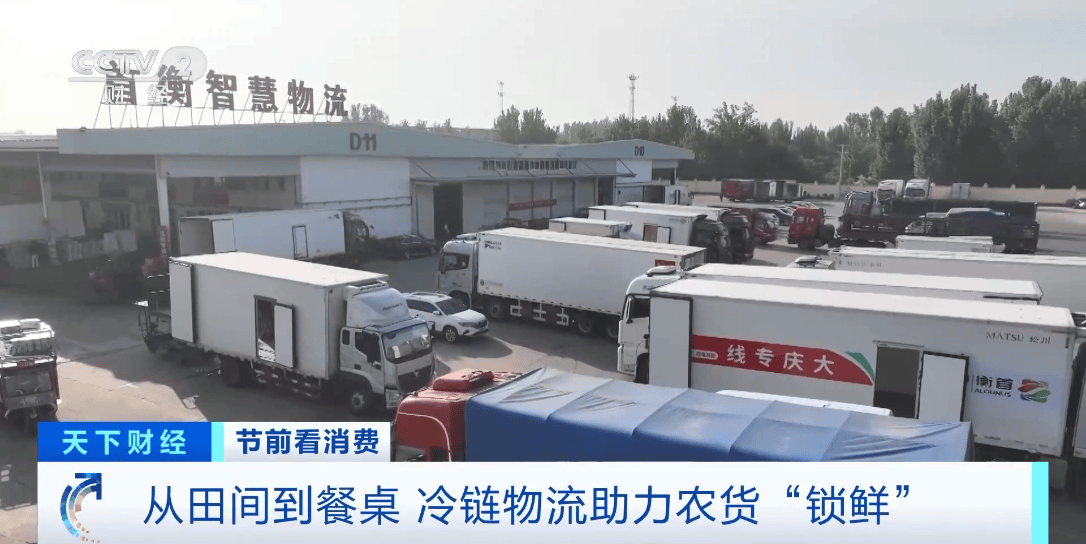
12小时内交付市场!从田间到餐桌,冷链物流助力农货“锁鲜”
Sou Hu Cai Jing· 2025-09-30 14:36
Core Viewpoint - The article discusses the logistics and cold chain management of agricultural products in the Beijing-Tianjin-Hebei region as the National Day and Mid-Autumn Festival approach, highlighting the importance of maintaining product freshness from farm to table [1]. Group 1: Logistics Operations - The Shouheng Gaobeidian market is experiencing high activity, with over 10,000 logistics vehicles entering and exiting daily [5]. - Each refrigerated truck is assigned a specific temperature based on the type of fruits and vegetables and their delivery destinations [3]. - The logistics department has accumulated over 100,000 related agricultural product transport resources, which are precisely labeled and filtered during peak supply periods [6]. Group 2: Cold Chain Advantages - The company utilizes high-quality transport resources and nearly a thousand logistics routes to connect major fruit and vegetable production and consumption cities across 13 provinces and regions [6]. - The cold chain vehicles and transport resources in these areas are significant advantages, ensuring delivery within 12 hours for distances ranging from 300 to 1,000 kilometers [8].
专注新能源冷链物流,新亚科技完成超5000万元美元战略轮融资|36氪独家
3 6 Ke· 2025-09-30 04:11
Core Insights - SINGAUTO, a cold chain logistics technology company based in Singapore, has successfully completed a strategic funding round exceeding $50 million, with investors including prominent firms such as金沙江弘禹资本, 德陆资本, 中银资产管理 (Singapore), and BBG Global [1] - The funding will primarily be used for global market expansion and ongoing product development, with a focus on their new energy cold chain vehicle, the S1, designed for high-standard applications in food, fresh e-commerce, catering, and pharmaceuticals [1][2] Group 1: Company Overview - SINGAUTO was established in March 2023 and has set up regional headquarters and assembly plants in Shanghai and Dubai, with a long-term agreement to build a production base in Abu Dhabi [1] - The S1 vehicle features a storage capacity of over 18m³ and is equipped with a lithium iron phosphate battery pack ranging from 80-165 kWh, offering a driving range of 260-400 km [2] Group 2: Product Features and Market Demand - The S1 supports both charging and battery swapping modes, with fast charging from 0 to 80% taking only 40 minutes and battery swapping requiring just 5 minutes [2] - The company has received 14,000 pre-orders for the S1, primarily from large logistics firms in China, South Korea, Singapore, and Malaysia, indicating strong market interest [2] Group 3: Market Potential and Competitive Advantage - The market for new energy smart cold chain logistics vehicles is promising, especially in Singapore and Southeast Asia, where high temperatures create a significant demand for food preservation [3] - SINGAUTO has developed over 120 patents for the S1, which includes features like temperature monitoring and insulation, positioning the company favorably in a currently uncompetitive market [3] - Achieving sales of 20,000 units is crucial for the company to reach breakeven and enter a new phase of development [3]
国家冷链物流骨干通道网络基本形成
Ren Min Ri Bao· 2025-09-29 19:57
Core Insights - The development of cold chain logistics in China is rapidly improving, with a focus on enhancing the efficiency of agricultural product distribution and meeting consumer demands [1][9] - A new batch of 19 national backbone cold chain logistics bases has been established, contributing to a more comprehensive cold chain logistics network across the country [2][9] Group 1: Cold Chain Logistics Bases - The newly established cold chain logistics bases are designed to meet the needs of consumer upgrades and improve the logistics network [2][3] - The Hangzhou cold chain logistics base features a dual-area model, with a total investment of 7.35 billion yuan and a cold storage capacity of 860,000 cubic meters [2][3] - The Cangzhou base benefits from its proximity to transportation hubs, enhancing the efficiency of cold chain product distribution [3][5] Group 2: Technological Innovations - The integration of IoT, 5G, and AI technologies allows for real-time tracking and management of inventory, significantly improving operational efficiency [6][7] - The use of automated systems and smart shelving in cold chain logistics bases enhances storage space utilization and product preservation [7][8] - Green and low-carbon practices are being implemented, such as the use of safer refrigerants and solar energy solutions [6][7] Group 3: Regional Development and Impact - The cold chain logistics network is expanding across various provinces, including Guizhou and Jilin, facilitating the efficient distribution of local agricultural products [8][9] - The Cangzhou base is positioned to support both domestic and international trade, enhancing the logistics capabilities for seafood, meat, and pharmaceuticals [5][8] - The overall improvement in cold chain logistics infrastructure addresses regional disparities and promotes a more organized and scalable logistics system [9]
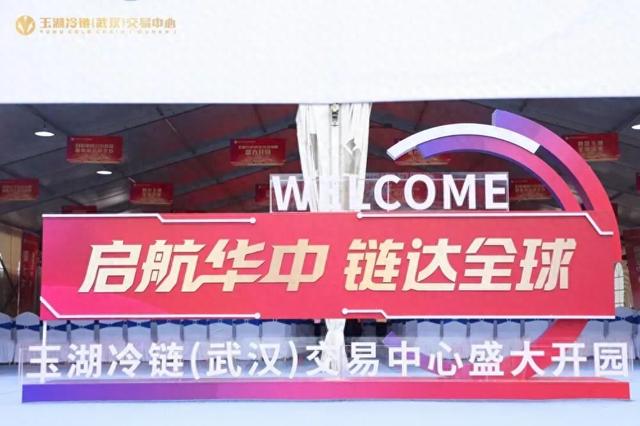
启航华中 链达全球 玉湖冷链(武汉)交易中心盛大开园
Huan Qiu Wang· 2025-09-29 07:20
Core Insights - The opening of Yuhu Cold Chain (Wuhan) Trading Center marks a significant step in the development of cold chain logistics in Huangpi District, aiming to attract over 1,000 food trading enterprises in the future [1][5][16] Group 1: Company Overview - Yuhu Cold Chain aims to create a high-quality trading platform for cold chain food in China, focusing on heavy asset investment and technological innovation to build a safe, efficient, and traceable cold chain supply chain ecosystem [8][18] - The Wuhan center is the first primary trading center in Central China and the third nationwide, selected as a member of the "Commerce and Trade Service Type National Logistics Hub" [16] Group 2: Infrastructure and Logistics - The center features eight high-standard cold storage facilities capable of covering temperature ranges from -60°C to ambient temperature, meeting the ultra-low temperature storage needs for high-end products like tuna [20] - The logistics system includes 16 major logistics routes covering over 200 delivery points within Hubei and 104 points outside the province, establishing a modern cold chain logistics system with comprehensive coverage [20] Group 3: Economic Impact - The annual transaction volume of frozen products at the center is expected to reach 1 million tons, with an annual transaction value exceeding 20 billion [20] - The center is anticipated to enhance the economic development of Huangpi District by attracting high-quality upstream and downstream enterprises, thereby injecting strong momentum into the local economy [5][16] Group 4: Events and Partnerships - The first "Central China Food Procurement Festival" was held from September 27 to 29, featuring over 100 specialty merchants and achieving a transaction volume of 3,000 tons on the first day [22][26] - The event facilitated efficient connections between B-end purchasers and merchants, showcasing the center's role in enhancing industry collaboration and resource expansion [22][26]
东航冷链亮相2025中国国际水果展与上海国际渔业博览会
Zhong Guo Min Hang Wang· 2025-09-28 07:30
Group 1 - The 2025 China International Fruit Expo and the 19th Shanghai International Fisheries Expo were held concurrently in Shanghai, showcasing the cold chain service solutions of Eastern Airlines Logistics' subsidiary, Eastern Airlines Cold Chain [1] - Eastern Airlines Cold Chain highlighted its supply chain solutions for high-end seafood products such as Norwegian fresh salmon, Russian king crab, and Canadian lobster, leveraging its extensive global and domestic route network [1] - The company introduced technologies like "Dongdong Measurement," aviation water-absorbing pallets, and mobile deep-sea simulation warehouses to address traditional cold chain transportation issues, attracting interest from numerous domestic and international buyers [1] Group 2 - Eastern Airlines Cold Chain has been focused on building a safe, efficient, transparent, and intelligent global supply chain for temperature-sensitive products, enabling Chinese consumers to access global products without leaving the country [2] - The company plans to continue its transformation by enhancing the export of domestic pharmaceuticals and high-quality agricultural products, as well as deep processing of fresh products, collaborating with more partners to build a high-quality product supply chain [2]

深耕“保税+”生态体系
Shen Zhen Shang Bao· 2025-09-28 06:52
Group 1 - The 19th China (Shenzhen) International Logistics and Supply Chain Expo showcased the Salt Yan Comprehensive Bonded Zone, emphasizing its "Bonded+" ecosystem and collaborative development capabilities [1][2] - The Salt Yan Comprehensive Bonded Zone was awarded the title of "Excellent Logistics Demonstration Park" during the event, highlighting its strong logistics service capabilities and industrial development achievements [1] - The exhibition featured diverse industries, including bonded maintenance, cold chain logistics, cross-border e-commerce, and international supply chains, attracting numerous business interactions and cooperation intentions [1][2] Group 2 - The "Innovation Integration · Ecological Win-Win: 8th Logistics and Supply Chain Collaborative Development Conference" was successfully held, where the Salt Yan Economic Development Service Center presented the industrial functions and business environment of the Salt Yan District and Comprehensive Bonded Zone [2] - The "Bonded+" ecosystem was promoted, detailing the full chain of policy benefits and flexible functions that support the development of the supply chain service industry [2] - Salt Yan District is positioned as a key hub for high-quality economic development, housing 275 enterprises across modern logistics and international trade, and is recognized as a core hub for cold chain logistics in Shenzhen [3]