
商业地产

Search documents
黄金地块加速唤醒,江门沉睡资产如何焕新生?
Nan Fang Du Shi Bao· 2026-01-21 12:41
"一体抓好新城建设与老城更新,实施城市品质化管理行动,提升城市颜值。"自江门市委书记陈杰履新 以来,城市品质化建设管理成为江门发展部署中的高频词。从长堤历史文化街区的活化利用到甘化厂工 业遗产的焕新规划,从绿美江门生态建设到精细化城市更新的稳步推进,当前,江门正全方位发力擦亮 侨乡名片、提升城市颜值。在这幅城市焕新的生动图景中,散落于核心商圈、新城腹地、交通枢纽等寸 土寸金板块的多处"沉睡资产",也正通过多方协同发力逐步"苏醒",既补上城市颜值提升的"断点",也 回应着无数家庭的民生期盼,与江门纵深推进大湾区建设、打造幸福侨乡的发展步调同频共振。本 期"问政2026"栏目聚焦江门"沉睡资产"的激活实践,探寻破局路径,回应市民对城市品质与民生保障的 双重期待。 核心板块多点开花 "唤醒工程"捷报频传 在江门主城区,蓬江、江海、新会的多处"沉睡资产"正加速挣脱沉寂枷锁,黄金板块的价值潜力被逐步 唤醒。 位于蓬江区堤东路与东华一路交叉口西北侧的江晟大厦,前身为广东省第七建筑集团有限公司选址,因 企业破产清算空置超20年,后由江晟公司购入整体产权重建为江晟公司总部大楼。这个总投资 2.5亿 元、占地6.6亩的项目,规 ...
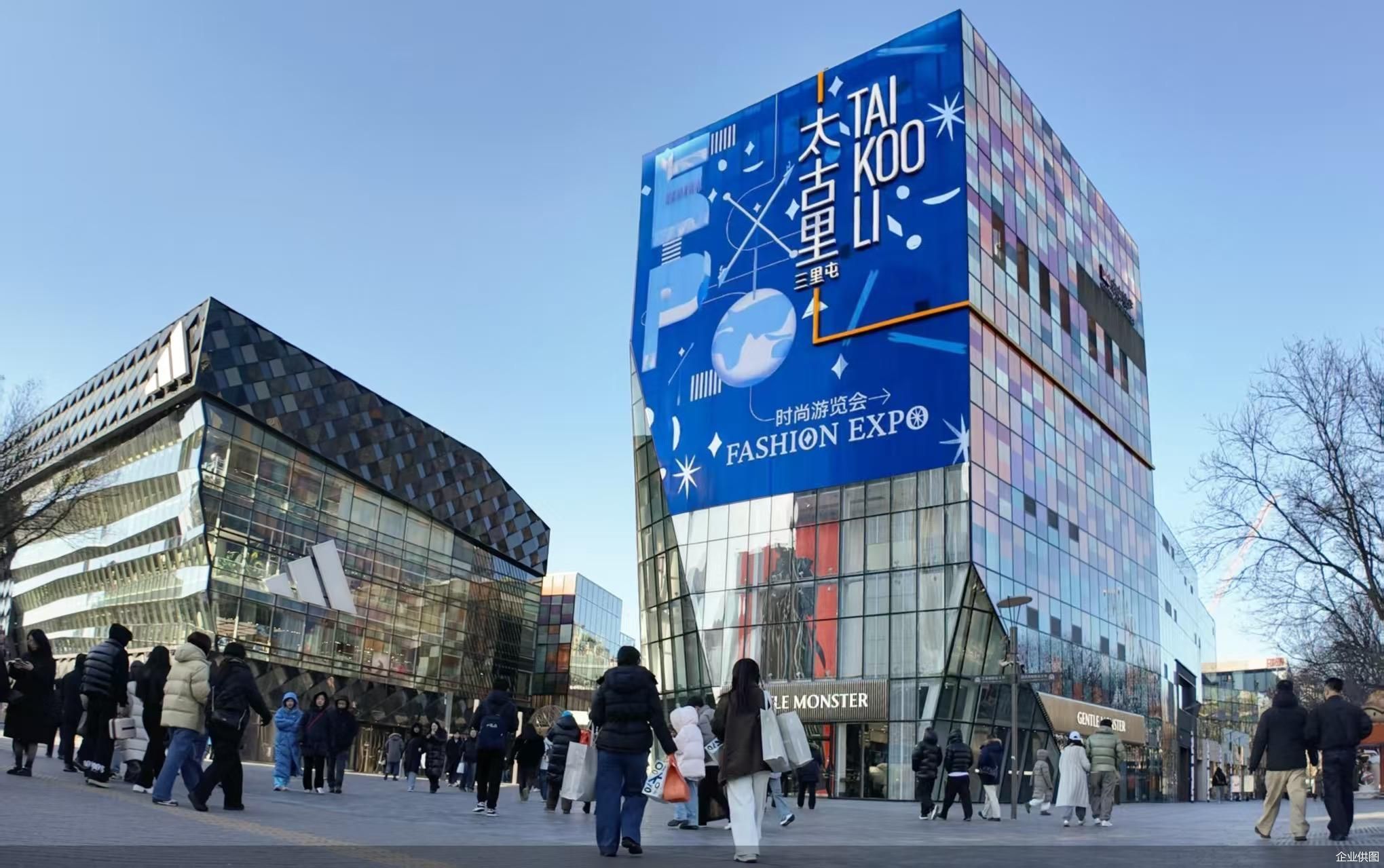
定位全球时尚文化引领地 三里屯太古里北区近半品牌完成焕新
Bei Jing Shang Bao· 2026-01-21 09:41
Core Insights - Swire Properties announced significant progress in the renovation and upgrade of Sanlitun Taikoo Li, aiming to establish it as a globally recognized fashion and cultural destination [1] - The renovation focuses on experiential retail, integrating local cultural elements with global lifestyle trends, providing a dynamic platform for both international and local brands [1] Group 1: Renovation Progress - The North District renovation has been completed over three years since its initiation in 2022, with nearly half of the commercial space revamped and an optimized brand lineup [3] - High-end flagship stores from international brands such as Dior, Hermès, Louis Vuitton, and Tiffany & Co. have opened, all designed by top architects [3] - The foot traffic at Sanlitun Taikoo Li has significantly increased since the opening of multiple flagship stores in December 2025 [3] Group 2: Brand and Service Enhancements - The brand mix emphasizes diversity and functional integration, featuring China's first Dior restaurant and the first Le Café Louis Vuitton in Beijing, along with a planned Hermès store set to open in Spring 2026 [4] - A variety of luxury brands, including Alaïa, Balenciaga, Burberry, and Rolex, have established flagship stores, creating a multi-layered high-quality brand cluster [4] - Service enhancements include the establishment of high-quality VIP lounges, an upgraded membership system, improved drop-off areas, and a revitalized sunken garden for cultural and community activities [5] Group 3: Future Developments - The renovation journey continues with plans for the redevelopment of the North District N1 floor and further community building and public space quality improvements [5] - The project aims to deepen the integration of international avant-garde art, fashion, and culture, reinforcing its status as a future urban landmark and contributing to Beijing's development as a world-class city [5]


5年“复出”:苏宁酒店生死录!
3 6 Ke· 2026-01-21 06:58
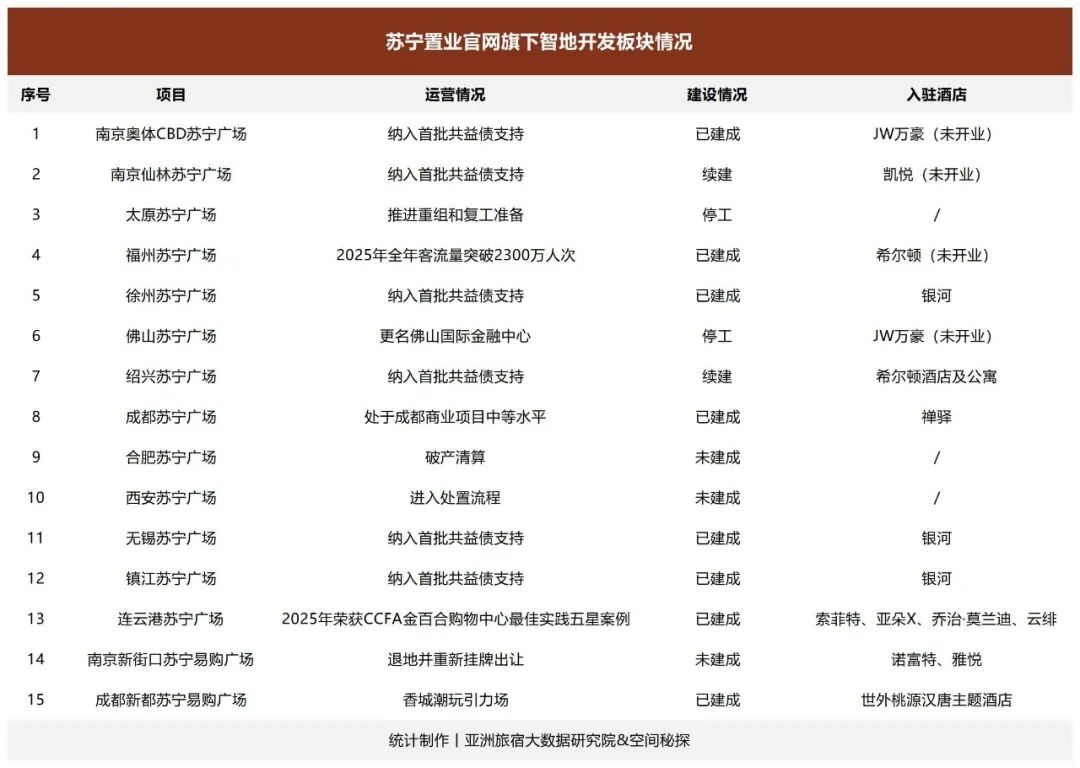
Core Viewpoint - Suning Group has avoided bankruptcy liquidation by having the restructuring plans for 38 of its subsidiaries approved by the court, marking a significant step towards recovery after a five-year crisis [1][2]. Group 1: Hotel Project Overview - The newly opened Shaoxing Suning Hilton Hotel and Apartments represents Suning's largest single hotel project in five years, with a total investment of 750 million yuan [1][2]. - The hotel features 347 modern rooms and suites, equipped with advanced amenities such as Bluetooth speakers and smart lighting systems [2]. - The hotel is part of a larger commercial complex, Shaoxing Suning Plaza, which has been stalled for years due to financial difficulties [2][3]. Group 2: Financial Context and Strategic Moves - Suning Group's debt crisis began in late 2020 and worsened from 2021 to 2023, leading to a restructuring process initiated in 2025 [2]. - The Shaoxing project was restarted with the help of strategic investors, including CITIC Jinzi, which provided 440 million yuan for continued construction [3]. - Suning's restructuring plan includes a total debt of 238.7 billion yuan, with a focus on retaining core assets while liquidating others [4][5]. Group 3: Asset Management and Future Prospects - Suning currently has 15 commercial complex projects, with over half already built and operational, generating significant rental income [4][5]. - The company is exploring the conversion of some hotel assets into serviced apartments, although financial constraints limit its ability to invest in such transformations [15][16]. - The partnership with Hilton during the restructuring period indicates a strategic move to secure valuable urban locations while minimizing risks [6][16]. Group 4: Brand Positioning and Market Strategy - Suning's hotel brands, including Suning YAYUE and Suning ZHENYUE, face challenges in market differentiation and brand recognition compared to international competitors [14]. - The company is likely to reassess its hotel brand strategy as it emerges from bankruptcy restructuring, aiming to optimize brand positioning and operational efficiency [14][16]. - The focus on high-quality locations and hardware assets is seen as crucial for navigating the current market environment and ensuring long-term value creation [16].

5年“复出”:苏宁酒店从危机转向新生?
Xin Lang Cai Jing· 2026-01-21 06:16
Core Viewpoint - Suning Group has made significant progress in its restructuring efforts, avoiding bankruptcy liquidation and marking a potential revival with the opening of its first major hotel project in five years, the Shaoxing Hilton Hotel and Apartments [1][2]. Group 1: Hotel Project Details - The Shaoxing Hilton Hotel and Apartments represents Suning's largest single hotel project to date, with a total investment of 750 million yuan, located in a prime area of Shaoxing [1][2]. - The hotel features 347 modern guest rooms and suites, equipped with high-end amenities such as Bluetooth speakers and smart lighting systems [2]. - The hotel is part of a larger commercial complex, the Shaoxing Suning Plaza, which has been stalled for years due to financial difficulties [2][3]. Group 2: Financial Context and Restructuring - Suning Group's debt has reached 238.7 billion yuan, with a restructuring plan involving 8 billion yuan in beneficial debt from CITIC Financial and Oriental Asset [5]. - The restructuring has categorized Suning's assets into "operational retention" and "disposal realization," focusing on core assets in cities like Nanjing and Wuxi [5]. - The five operational commercial complexes are expected to generate over 1.2 billion yuan in rental income in 2024 [5]. Group 3: Market Strategy and Future Prospects - The opening of the Shaoxing hotel signals a potential revival of the long-stalled commercial complex, with plans for the shopping center to open later this year [3][12]. - Suning's strategy includes leveraging its existing commercial properties to enhance hotel operations and marketing efforts [13][14]. - Despite the challenges, Suning aims to optimize its asset structure and focus on core business areas, indicating a continued interest in the hotel sector [12][16]. Group 4: Brand Positioning and Market Challenges - Suning operates around 10 hotels, with its self-owned brand, Suning YAYUE, being the most prevalent, but faces challenges in brand differentiation and market recognition compared to international hotel brands [15]. - The company has shifted some hotel projects to self-operated brands, reducing reliance on international partnerships, which may impact brand strength [6][11]. - The potential transformation of hotel assets into serviced apartments is being considered, but financial constraints may limit Suning's ability to invest in such changes [16].
南京零售物业市场分化或进一步加剧 购物中心租金报价更具吸引力
Yang Zi Wan Bao Wang· 2026-01-20 15:06
Group 1 - The demand for high-quality retail properties in Nanjing remains strong, but some shopping center owners are lowering rental income expectations due to increased supply [1][2] - The average rental price for the first floor of mid-to-high-end shopping centers in Nanjing has decreased to 554.65 yuan/month/㎡, a 2.79% decrease compared to the previous period [1] - Despite the increase in new supply, the overall vacancy rate has only risen by 0.7 percentage points to 9.6%, indicating a still active leasing market [1] Group 2 - Several new commercial projects have opened in Nanjing, including招商花园城 and 雨花万象天地, with more immersive and themed shopping centers planned, which may lead to further differentiation in the retail property market [2] - The average rental price for office buildings in Nanjing has continued to decline, with an overall average of approximately 2.37 yuan/day/㎡, reflecting a 7.0% year-on-year decrease and a 0.8% quarter-on-quarter decrease [2] - The overall office market in Nanjing is still in a phase of deep supply-demand adjustment, and effectively revitalizing property resources is seen as a key strategy to alleviate market downward pressure [2]
珠海万达商管换了位女将
Hua Er Jie Jian Wen· 2026-01-20 13:30
Core Insights - The leadership change at Zhuhai Wanda Commercial Management marks a significant shift in the company's direction, with Xu Fen taking over as CEO from Huang Dewei, indicating a transfer of power from investors like PAG to Wanda [1] - The appointment of Xu Fen, who has a strong financial background, reflects a new focus on return-driven management rather than scale-driven growth, aligning with the interests of major investors [1][3] - The combination of Xu Fen and COO Chen Qi aims to balance operational efficiency with market-oriented strategies, essential for navigating the current challenges in the commercial real estate sector [2] Group 1 - Xu Fen's promotion from financial manager to CEO demonstrates a commitment to operational efficiency and financial sensitivity, crucial for maximizing rental income and managing costs [1][2] - The shift in management philosophy from scale to return on investment is a response to the recent volatility in the commercial real estate market, emphasizing the need for precise cost control and deep operational management [2][3] - The transition in leadership is seen as a strategic move to enhance the company's resilience and adaptability in a challenging market environment, with a focus on professional management rather than individual heroism [3] Group 2 - The recent changes in leadership are part of a broader restructuring effort aimed at improving operational efficiency and ensuring the long-term viability of the company amidst financial pressures [3] - The expectation is that 2026 will mark a new era of specialization in the commercial management industry, where effective management practices will be critical for success [3] - The separation of ownership and management is anticipated to create a more robust governance structure, reducing the risk of operational disruptions due to financial instability [3]
A股高开低走 原因找到了!化工股逆市大涨 消费股表现活跃
Zhong Guo Ji Jin Bao· 2026-01-20 08:50
Market Overview - The A-share market opened high but closed lower on January 20, with the ChiNext index dropping nearly 2%. The Shanghai Composite Index fell by 0.01%, the Shenzhen Component Index decreased by 0.97%, and the ChiNext index declined by 1.79% [1]. Stock Performance - A total of 2,233 stocks rose, with 62 hitting the daily limit, while 3,102 stocks declined [2]. - Chemical stocks surged against the market trend, with companies like Cangzhou Dahua and Xinxiang Chemical Fiber reaching their daily limit [3]. - Precious metals stocks strengthened in the afternoon, with Hunan Silver and Zhaojin Gold also hitting the daily limit [4]. - Consumer stocks showed active performance, with Han Commercial Group and Shanghai Jiubai reaching their daily limit [4]. - Real estate stocks rebounded, with Chengdu Investment Holding and Dayue City hitting their daily limit [4]. Policy Impact - On January 20, the Ministry of Finance announced a package of five fiscal and financial policies aimed at boosting domestic demand, focusing on enhancing consumption and expanding private investment [4]. - The policies include optimizing personal consumption loans and service industry loan interest subsidies, aimed at reducing credit costs for residents and service industry operators [4]. Market Sentiment - The decline in the market was attributed to a recent penalty issued by the Zhejiang Securities Regulatory Bureau against a market influencer for manipulating the securities market, which has made speculative investors cautious [7]. - There were also rumors regarding the "Dragon and Tiger List" that could potentially stabilize the market by reducing speculative stocks [8]. - External market pressures were noted, particularly due to a sudden drop in Japanese government bonds, which caused a ripple effect across Asian and U.S. markets, leading to concerns about global asset demand [9].
利嘉阁:香港工商铺市道最低迷时期已过 料今年买卖登记金额同比增加17%
智通财经网· 2026-01-20 06:08
Core Viewpoint - The commercial property market in Hong Kong is expected to rebound significantly in 2025 and continue its upward trend into 2026, driven by stock market recovery, economic improvement, declining interest rates, and favorable policies [1][2][3]. Group 1: Market Performance in 2025 - In 2025, Hong Kong recorded a total of 4,468 commercial property transactions, marking a 31% increase from the historical low of 3,414 transactions in 2024, indicating a successful rebound after three consecutive years of decline [1] - The total transaction value for commercial properties in 2025 reached HKD 63.221 billion, a 16% increase compared to the previous year, surpassing the HKD 60 billion mark for the first time since 2021 [1] - The industrial property segment saw a total of 2,281 transactions in 2025, a 26% increase from the historical low of 1,814 in 2024, with a total contract value rising to HKD 16.571 billion, reflecting a 5% increase [2] - The overall commercial building transactions amounted to 1,074, a 63% increase from 657 in the previous year, with the total contract value soaring by 82% to HKD 27.903 billion [3] - The retail property segment recorded 1,113 transactions, an 18% increase year-on-year, although the total contract value decreased by 20% to HKD 18.747 billion due to high-value transactions in the previous year [3] Group 2: Outlook for 2026 - The commercial property market is expected to see a further increase in transaction volume by 17% in 2026, aiming for 5,240 transactions, and a corresponding increase in transaction value to approximately HKD 74 billion [1] - The industrial property segment is projected to rise by 14% in transaction volume, reaching 2,600 transactions, with a 15% increase in transaction value to around HKD 19 billion [2] - The commercial building market is anticipated to grow by 34%, targeting 1,440 transactions, with the total contract value expected to increase by over 25% to challenge the HKD 35 billion level [3] - The retail property market is forecasted to reach 1,200 transactions in 2026, an 8% increase, with the total transaction value expected to approach HKD 20 billion, reflecting a 7% year-on-year growth [4]
商业地产库存压力对比研究
Lian He Zi Xin· 2026-01-20 05:20
Investment Rating - The report indicates a cautious outlook on the commercial real estate sector in China, highlighting significant inventory pressure and credit risks for certain companies [2]. Core Insights - The commercial real estate market in China has experienced severe inventory pressure compared to the residential market, with the inventory multiple for commercial properties exceeding 12 times as of November 2025, indicating a significant imbalance in supply and demand [5][7]. - The report emphasizes the need for a transformation in commercial real estate companies towards lower leverage, specialization, and differentiation, particularly for those with high asset constraints and non-core area investments [2]. - The recovery of the retail property market is supported by the resilience of consumer spending in China, while the office market faces substantial challenges due to oversupply and prolonged inventory adjustments [2][12]. Summary by Sections 1. Inventory Pressure in Commercial Real Estate - The inventory multiple for commercial properties has been on the rise, reaching over 12 times by November 2025, compared to residential properties which have also seen an increase to nearly 7 times [5][7]. - The office sector specifically shows a troubling inventory multiple nearing 15 times, indicating a significant oversupply situation [11]. 2. Price Dynamics and Supply-Demand Balance - The report discusses how asset prices in cities like Beijing and Shanghai have deviated from fundamentals, leading to high inventory multiples, while cities like Chongqing have maintained more stable prices and inventory levels [12][21]. - The historical context of Japan's real estate bubble is referenced, drawing parallels to the current situation in China, where rapid price increases have led to significant market imbalances [22][23]. 3. Recovery Path for Commercial Real Estate - The report outlines that the recovery of the commercial real estate market in China will require a prolonged period of inventory reduction and supply control, similar to Japan's experience post-bubble [29][41]. - It highlights that while Japan's retail market faced a prolonged downturn, China's retail sector shows signs of resilience, with consumer spending still holding up despite challenges [30][37]. 4. Corporate Strategies and Market Dynamics - The report notes that many residential developers have ventured into commercial real estate, leading to a mixed performance in the sector as companies face pressures to adapt to changing market conditions [53]. - It emphasizes the importance of learning from Japan's real estate recovery strategies, particularly the role of financial instruments like J-REITs in stabilizing the market [67].
官宣!商业用房首付降了!
Xin Lang Cai Jing· 2026-01-19 16:11
Core Viewpoint - The People's Bank of China and the National Financial Regulatory Administration have announced a reduction in the minimum down payment ratio for commercial property loans from 50% to 30% to adapt to changes in the real estate market and support a new development model [1] Group 1 - The minimum down payment ratio for commercial properties, including "commercial-residential mixed-use properties," has been adjusted to no less than 30% [1] - The policy aims to implement the decisions of the Central Committee and the State Council regarding the real estate market [1] - Local branches of the People's Bank of China and the National Financial Regulatory Administration are allowed to set lower limits for down payment ratios based on local government regulations, following the principle of "differentiated policies" [1]