桥梁建设

Search documents
尼泊尔能源与基建部长吉星实地考察工期延误已久的卡凯桥
Shang Wu Bu Wang Zhan· 2025-10-13 06:39
Core Viewpoint - The Minister of Energy, Water Resources and Irrigation, along with the Minister of Infrastructure and Transport, conducted an on-site inspection of the Kankai Bridge in the Jhapa region, which has been abandoned for over 14 years due to construction delays and technical issues [1] Group 1: Project Status - The Kankai Bridge, measuring 723 meters, was contracted in the fiscal year 2010/11 for 510 million Nepali Rupees to the Pappu-Mahadev Khimti joint venture, but only 55% of the work has been completed [1] - The project has faced significant delays, with work halted since 2019 due to technical faults, and the contractor has requested an extension after the contract's expiration in the fiscal year 2023/24 [1] Group 2: Government Response - Minister Gistang expressed dissatisfaction with the prolonged delays and committed to a detailed review of the project, indicating a possibility of terminating the existing contract and restarting the process [1] - Following recent heavy rains in October, the Minister also inspected another bridge that partially collapsed and called for a prompt technical assessment [1] - Officials stated that a report on the Kankai Bridge issues will be completed within weeks to expedite the project's completion [1]
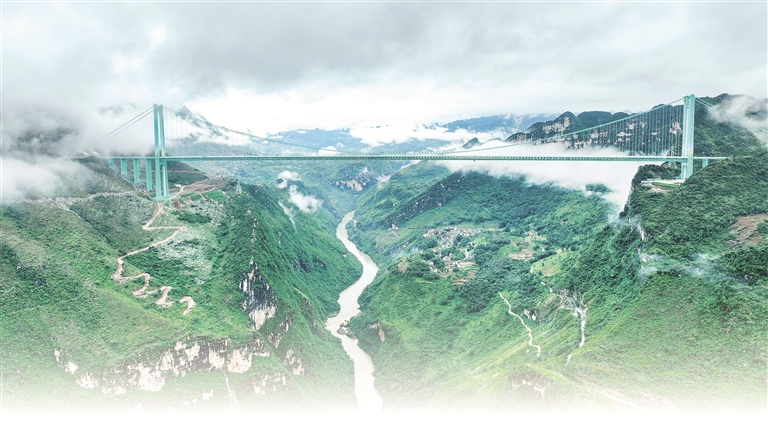
走近大国工程丨云端飞虹架长空探访世界第一高桥贵州花江峡谷大桥
Zhong Yang Ji Wei Guo Jia Jian Wei Wang Zhan· 2025-10-13 00:17
Core Points - The Huajiang Grand Canyon Bridge, the world's highest bridge at 625 meters, officially opened on September 28, 2023, marking a significant achievement in transportation infrastructure in Guizhou Province [2][3][5] - The bridge is a key component of the Liuwan Expressway, enhancing connectivity between major cities in Guizhou and significantly reducing travel time from two hours to just two minutes across the canyon [4][5] - The construction of the bridge faced numerous technical challenges, particularly related to high winds and complex geological conditions, which were addressed through innovative engineering solutions [6][7][8] Infrastructure Development - The bridge spans 2,890 meters with a main span of 1,420 meters, setting records for both height and span in mountainous regions [2][3] - The project is part of a broader initiative to create a sustainable and efficient transportation system in line with national development goals [2][5] - The bridge's design incorporates advanced technologies, including a smart monitoring system for real-time assessment of structural integrity [11] Economic Impact - The completion of the bridge is expected to stimulate local economies by improving access to resources and facilitating tourism, with over 220,000 visitors recorded during the recent holiday period [13] - The bridge is positioned to enhance the integration of various tourism resources in the region, contributing to the development of a comprehensive tourism economy [13] Technological Innovation - The construction utilized cutting-edge technologies such as laser radar for wind measurement and a smart cable monitoring system, showcasing advancements in engineering and construction practices [8][11] - The project has resulted in 21 patent authorizations, reflecting the innovative approaches taken during its development [11] Cultural and Tourism Integration - The bridge's design emphasizes aesthetic appeal and integrates tourism experiences, with plans for various activities and facilities to attract visitors [12][13] - The concept of "bridge-tourism integration" is central to the bridge's planning, aiming to enhance both the functional and experiential aspects of the infrastructure [12][13]

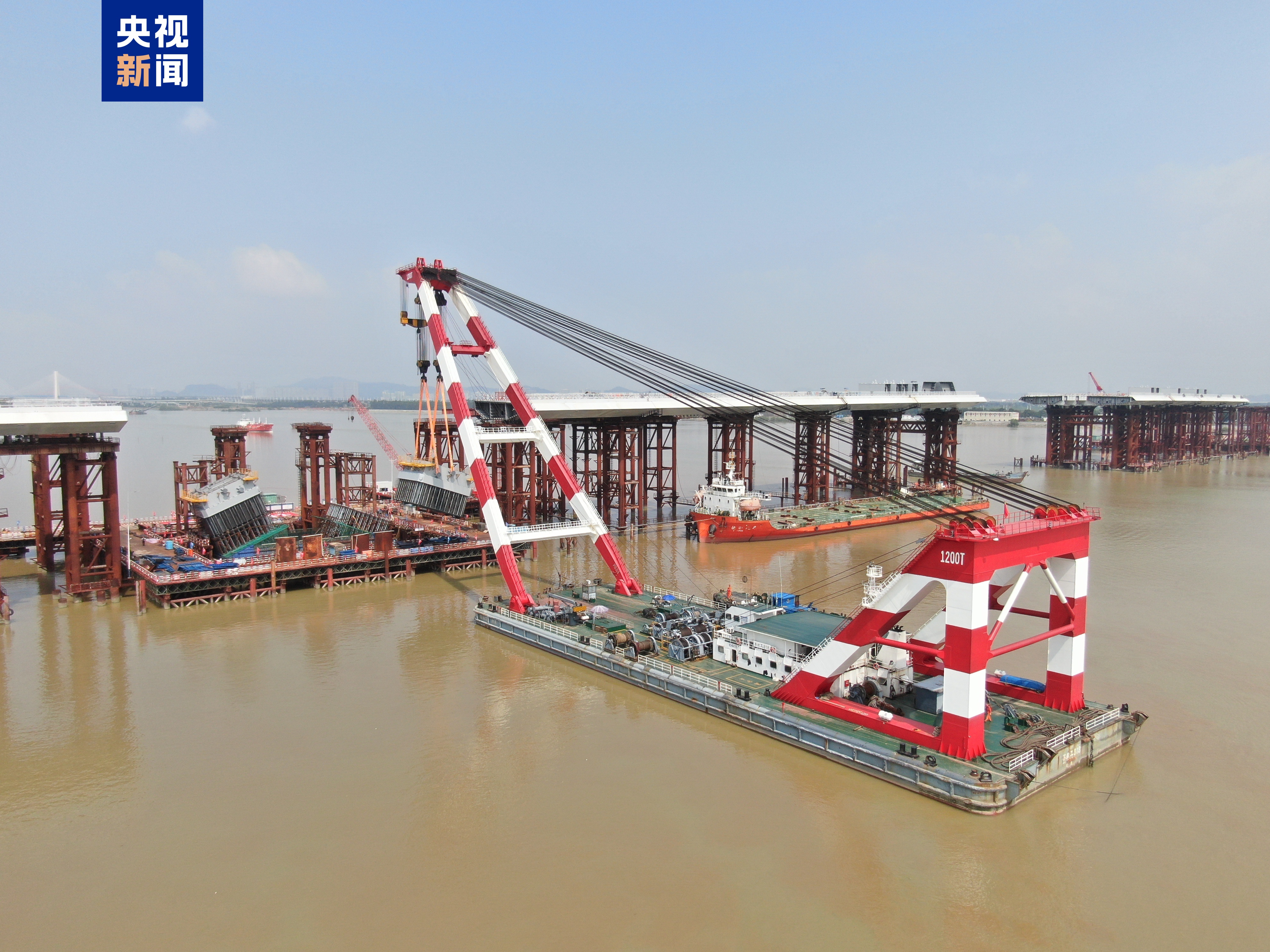
进度条刷新 广州万龙大桥首节段钢塔架设完成
Yang Shi Xin Wen Ke Hu Duan· 2025-10-10 23:32
Group 1 - The construction of the Wanlong Bridge has reached a significant milestone with the completion of the first core node of the main tower, marking the transition to the installation phase of the steel tower structure [4] - The initial segment, known as the "tower base steel-concrete combined section," is critical as it serves as the transition structure between the steel tower column and the concrete tower base, requiring high precision and a single lift and positioning [4] - Following the completion of the first segment, the Wanlong Bridge project will enter a new phase characterized by "layered installation of the steel tower and simultaneous advancement of supporting projects" [4]
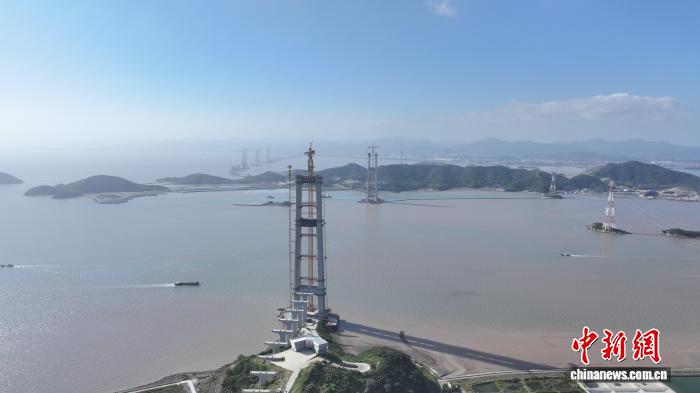
中国最大跨海悬索桥主塔实现“云端合龙”
Zhong Guo Xin Wen Wang· 2025-10-10 13:02
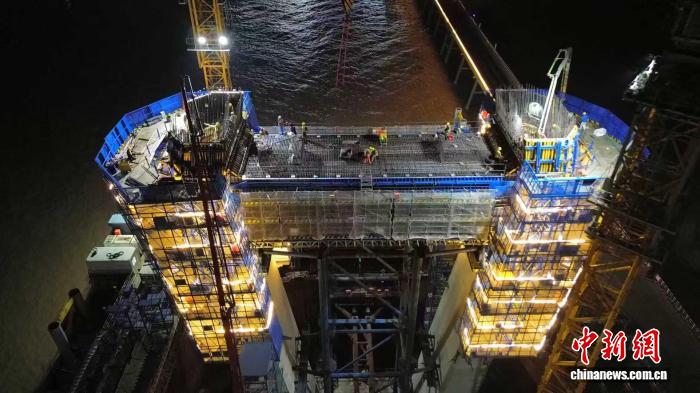
Core Viewpoint - The successful installation of the last horizontal beam on the main tower of the Shuangyumeng Bridge marks a significant milestone in the construction of China's largest single-span steel box girder suspension bridge, which has a main span of 1,768 meters [1][2]. Group 1: Construction and Technology - The construction of the Shuangyumeng Bridge showcases the "Zhoushan manufacturing" strength and the advanced bridge technology of China [2]. - China Railway Baogao (Zhoushan) Co., Ltd. is responsible for the manufacturing of the main tower's steel structure, achieving a full-process "smart manufacturing" from plate cutting to steel beam coating [2]. - The use of intelligent welding robots combined with real-time quality monitoring systems has resulted in a welding first-pass qualification rate of over 99.5%, with efficiency improvements exceeding 40% year-on-year [2]. Group 2: Innovative Techniques - Several techniques used in the bridge construction are innovative, including a "steel frame + prefabricated concrete components" structure for the tower [2]. - The construction team has implemented a "ground prefabrication and overall hoisting" approach, enhancing quality and efficiency akin to "building with blocks" [2]. - The application of "digital twin" pre-assembly has effectively reduced risks associated with offshore construction [2]. Group 3: Economic Impact - Upon completion, the second phase of the Ningbo-Zhoushan Port Six Horizontal Highway Bridge will enhance the collection and distribution network of the Ningbo-Zhoushan Port, providing a boost to the marine economy of Zhejiang and facilitating the integration of the Yangtze River Delta [2].
杭州湾跨海铁路桥建设提速 助力“轨道上的长三角”
Zhong Guo Xin Wen Wang· 2025-10-10 12:04
Core Viewpoint - The construction of the Hangzhou Bay Cross-Sea Railway Bridge is progressing rapidly, marking a significant step in the development of the "Railway on the Yangtze River Delta" initiative [1][2]. Group 1: Project Overview - The Hangzhou Bay Cross-Sea Railway Bridge is a key project for the newly constructed Tongzhou-Ningbo High-Speed Railway, featuring three navigation bridges and a total length of 29.2 kilometers, designed for a speed of 350 kilometers per hour [2][3]. - The South Navigation Bridge spans 814.5 meters with a main span of 364 meters, utilizing a steel truss combined beam cable-stayed bridge structure [2]. Group 2: Construction Challenges - The construction environment in Hangzhou Bay is complex, characterized by significant tidal differences, strong erosion, rapid currents, and deep mud layers, which pose high safety risks and construction difficulties [2]. - The construction team implemented continuous 11-hour operations and utilized a smart temperature control system to ensure the quality and durability of the concrete [2]. Group 3: Strategic Importance - The Tongzhou-Ningbo High-Speed Railway is an essential part of China's "Eight Vertical and Eight Horizontal" high-speed rail network along the coast, connecting multiple cities and enhancing the integration of the Yangtze River Delta region [3].
徒骇河上的技术突围
Huan Qiu Wang· 2025-10-10 08:35
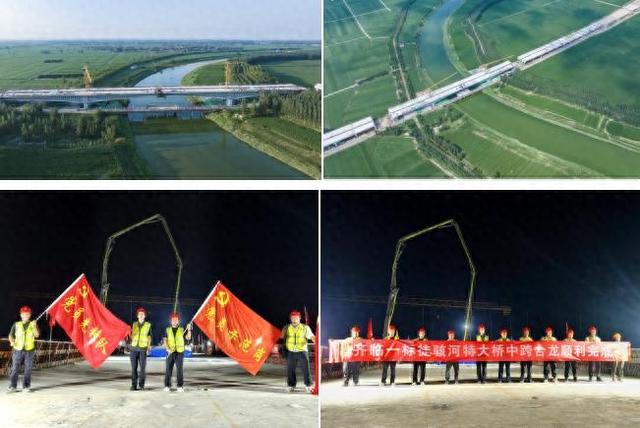
Core Insights - The article highlights the successful application of advanced technology in the construction of the Tuhai River Grand Bridge, which is a critical infrastructure project for the Jinan to Linqing Expressway [1][3][6] Group 1: Technological Innovation - The project team adopted 3D laser scanning technology to enhance measurement efficiency, reducing the time required for adjustments from two days to just a few hours, thus significantly improving operational efficiency [1][3] - The use of 3D scanning allowed for the creation of reverse reality models that were compared in real-time with design BIM models, leading to a 100% acceptance rate for 126 construction segments [3][4] - The introduction of the "N+2 segment block advanced installation of wave-shaped steel web" technique replaced the traditional "N+1" method, resulting in a 45-day reduction in construction time [4] Group 2: Quality Control - The project implemented a Doppler detection system to ensure the quality of high-strength bolts, allowing for rapid identification of non-compliant areas [4] - A quality control team conducts daily site inspections, weekly analyses, and monthly reviews to ensure that every construction phase is thoroughly monitored and validated [4][5] - The project has achieved recognition with seven national invention patents and one international invention patent, along with various provincial and departmental quality control achievements [5] Group 3: Safety Management - The project employs an AI monitoring system to track safety hazards in real-time, focusing on optimizing wind resistance measures for construction equipment [5] - Comprehensive safety training and daily briefings are conducted for high-altitude workers, along with a one-person-one-card management system to monitor qualifications and health [5] - The project has established a multi-dimensional safety management system that includes equipment inspections and weather monitoring to ensure a safe working environment [5][6] Group 4: Economic Impact - The Tuhai River Grand Bridge is expected to enhance regional economic development by improving transportation links in the northwest of Shandong Province [6]
“在红海区域树立绿色施工的标杆”
Ren Min Ri Bao· 2025-10-09 22:22
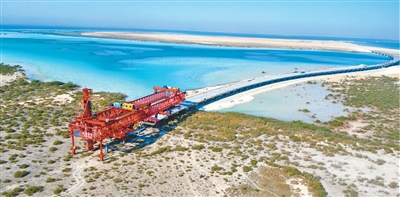
Core Viewpoint - The introduction of the pile-beam integrated machine in the Red Sea region of Saudi Arabia marks a significant advancement in construction technology, emphasizing ecological protection while enhancing construction efficiency [2][4]. Group 1: Project Overview - The project involves the construction of the Lahek connecting road and cross-sea bridge, which includes two small bridges, one large bridge, and one extra-large bridge, connecting multiple tourist islands [2]. - The main bridge spans 2,170 meters and crosses approximately 30,000 square meters of mangrove forest, necessitating innovative construction methods to minimize environmental impact [2]. Group 2: Technological Innovation - The pile-beam integrated machine, named "Red Sea Vision No. 1," is specifically developed for this project and has successfully completed several key milestones since its deployment in June [4]. - The machine can lift precast beam blocks weighing over 200 tons and operates with a construction efficiency that is 3 to 5 times greater than traditional methods [3]. - An intelligent control system with 12 sensors monitors the load on each leg of the machine, achieving a walking distance precision of 600 millimeters and an overall error of no more than 5 millimeters [3]. Group 3: Environmental and Social Impact - The project aligns with Saudi Arabia's Vision 2030, focusing on creating a green ecological tourism project that includes 50 hotels, over 1,000 residential units, and an international airport [2]. - The use of advanced Chinese construction equipment not only improves efficiency but also demonstrates a commitment to environmental protection and social responsibility, setting a benchmark for green construction in the Red Sea region [4].
中企助力沙特实现“红海愿景”—— “在红海区域树立绿色施工的标杆”
Ren Min Ri Bao· 2025-10-09 22:07
Core Insights - The project in Saudi Arabia's Red Sea region utilizes the first pile-beam integrated machine in the Middle East, showcasing a commitment to ecological protection while constructing infrastructure [1] - The Red Sea tourism project aligns with Saudi Arabia's Vision 2030, aiming to create a comprehensive tourism city with 50 hotels, over 1,000 residences, and an international airport [1][3] - The pile-beam integrated machine, named "Red Sea Vision No. 1," was specifically developed for this project and has successfully completed several key milestones since its deployment in June [3] Group 1: Project Overview - The project includes two small bridges, one large bridge, one extra-large bridge, and permanent embankments, connecting multiple tourist islands [1] - The main bridge spans 2,170 meters and crosses approximately 30,000 square meters of mangroves, necessitating innovative construction methods to minimize ecological impact [1] Group 2: Technological Innovation - The all-precast bridge structure solution is based on experiences from the Xiong'an New Area, significantly improving construction efficiency [2] - The pile-beam integrated machine can lift precast beam blocks weighing over 200 tons with precision, achieving construction efficiency 3 to 5 times greater than traditional methods [2] - An intelligent control system with 12 sensors monitors the load on the machine's legs, ensuring high stability and precision during operation [2] Group 3: Environmental and Social Responsibility - The project exemplifies the integration of Chinese manufacturing capabilities with sustainable practices, setting a benchmark for green construction in the Red Sea region [3] - The use of advanced equipment not only enhances construction efficiency but also effectively protects the local mangrove ecosystem, reflecting the social responsibility of Chinese enterprises [3]
中国中铁:“10中铁G4”将于10月20日本息兑付并摘牌
Zhi Tong Cai Jing· 2025-10-09 09:23
Core Viewpoint - China Railway Group Limited (601390) announced the issuance of its corporate bonds, which will pay the final annual interest and principal on October 20, 2025 [1] Summary by Relevant Sections - **Bond Details** - The bond is referred to as "10 Zhongtie G4" with a code of 122055 [1] - The total issuance amount is 3.5 billion yuan [1] - The bond has a maturity period of 15 years [1] - The coupon rate is set at 4.50%, with each bond having a face value of 1,000.00 yuan and an interest payment of 45.00 yuan (tax included) [1] - The bond will be delisted on October 20, 2025 [1]

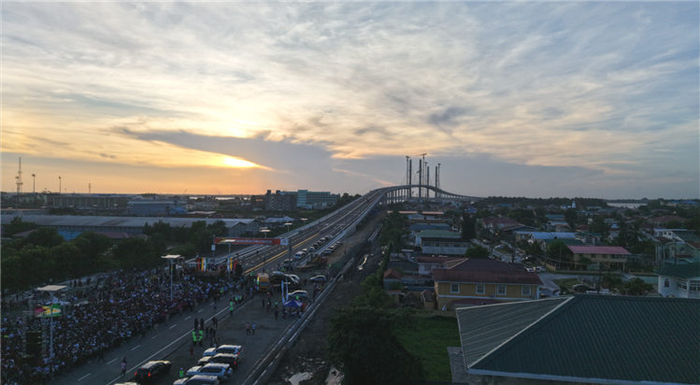
中企承建圭亚那巴拉特·贾格迪奥—德梅拉拉河大桥正式通车
Ren Min Wang· 2025-10-09 03:51
Core Points - The Demerara River Bridge, constructed by China Railway Construction International Group, officially opened on October 5, marking a significant infrastructure achievement for Guyana [1][3][5] - The bridge is a symbol of courage, wisdom, and progress, enhancing transportation capacity and efficiency while reducing costs [3] - The project is a milestone in the high-quality construction of the Belt and Road Initiative, showcasing the friendship between China and Guyana [3] Company and Industry Summary - The bridge spans approximately 2900 meters with a design speed of 80 km/h and features a dual four-lane roadway, with a projected lifespan of 100 years [5] - The project has created over a thousand jobs directly or indirectly and involved training over 300 local technicians, demonstrating a commitment to local development [3] - The bridge is expected to significantly improve travel conditions for residents on both sides of the Demerara River, reducing travel time by three-quarters and enhancing the efficiency of river traffic [5]