
氢能

Search documents
“能源绿色低碳转型”看山东之济南:济南都市圈获批氢能协同创新区域试点
Zhong Guo Fa Zhan Wang· 2026-01-29 14:53
Core Viewpoint - The National Energy Administration of China has announced the first batch of hydrogen energy pilot projects, with the Jinan metropolitan area being recognized as one of the nine regional pilots, focusing on collaborative innovation in hydrogen energy [1] Group 1: Pilot Project Overview - The Jinan metropolitan area, led by the Jinan Development and Reform Commission, aims to explore the hydrogen energy industry chain through a model of "Jinan R&D transformation + Dezhou and Binzhou hydrogen supply + comprehensive application scenarios" [2] - The pilot project will focus on clean and low-carbon hydrogen energy development, high-density diversified storage, long-term hydrogen storage operation, and comprehensive applications in the energy sector [2] Group 2: Regional Strengths and Resources - Jinan, Dezhou, and Binzhou have strong chemical industry foundations and abundant wind and solar resources, which provide advantages in innovation chain construction, application scenarios, and project development [3] - Key equipment manufacturing enterprises such as Green Hydrogen, Sike Sais, and China National Heavy Duty Truck Group are being cultivated to supply hydrogen production equipment, fuel cells, and vehicle manufacturing [3] Group 3: Implementation and Coordination - The pilot project will enhance cross-administrative cooperation, with Jinan as the core, leveraging the hydrogen production advantages of Dezhou and Binzhou to expand applications in hydrogen storage, cogeneration, and transportation [4] - The project aims to integrate resources from Jinan's hydrogen equipment manufacturing with the low-cost hydrogen sources from Dezhou and Binzhou, promoting cross-regional collaboration in the innovation and supply chains [4][5] Group 4: Future Prospects - The approval of this pilot project indicates national recognition of the Jinan metropolitan area's hydrogen industry foundation, innovation capabilities, and regional cooperation model [5] - The Jinan metropolitan area is positioned to lead the hydrogen industry development in Shandong Province, contributing to the establishment of a green, low-carbon, and high-quality development model [5]

绿氢制造技术实现 轻量化紧凑化跨越
Xin Lang Cai Jing· 2026-01-29 09:26
(来源:中国电力新闻网) 1月16日,"紧凑型可再生能源电热氢联产系统模块关键技术"配套工程在浙江宁波正式投运。工程在保 障制氢效率与安全性的同时,仅用14平方米的集装箱便装下了过去上千平方米才能铺开的制氢、储氢、 氢燃料电池等设备,实现了绿氢制造技术的轻量化、紧凑化跨越。 责任编辑:王奕博 此次投运的"紧凑型可再生能源电热氢联产系统模块关键技术"配套工程,使绿氢制造能够更加适配城市 周边、工业园区等存在土地资源紧张情况的分布式能源核心应用场景。工程虽然在体积上明显"浓缩", 但整体能量转换效率并不打折,反而有所提升。其核心的"新能源发电—储电—电制氢—氢发电—并 网"五端口高功率密度变换器,将能量变换效率提升至98%以上,燃料电池热电联供效率超过97%(以 高热值计算),高于95%的国际标杆值。为应对紧凑型带来的运维问题,工程采用低压高密度固态金属 储氢技术,实现了氢气常压存储,从源头上大幅降低了泄漏与燃爆风险。 转自:中国电力新闻网 ...
氢能行业 2026 年度投资策略:从技术降本迈向规模化降本,期待“十五五”放量
Changjiang Securities· 2026-01-29 09:08
Core Insights - The hydrogen industry in China is experiencing steady growth in both supply and demand, with applications expanding across various sectors. The country is the largest hydrogen producer globally, with an expected production of approximately 36.5 million tons in 2024, reflecting a year-on-year increase of 3.5% [4][17]. - The economic viability of hydrogen energy is improving due to declining green electricity costs, inclusion in the CCER (China Certified Emission Reduction) program, and technological advancements in cost reduction. The transition from technical cost reduction to large-scale cost reduction is anticipated during the "14th Five-Year Plan" period [4][8]. - The hydrogen industry chain, including production, storage, transportation, and application, is developing rapidly, warranting attention [4][9]. Supply and Demand Status - China's hydrogen production is projected to reach 36.5 million tons in 2024, with a compound annual growth rate (CAGR) of 10.7% over the past five years. The global hydrogen production is expected to be nearly 100 million tons, growing by approximately 2.7% year-on-year [17][24]. - Hydrogen is primarily used in traditional industrial applications, with emerging sectors like transportation and metallurgy showing a compound growth rate of about 7.1%, significantly higher than the overall industry growth [8][21]. Policy Framework - Hydrogen energy has been recognized as a crucial component of the new energy system, with significant emphasis from top leadership. The formal inclusion of hydrogen in the energy category by the Energy Law in November 2024 is expected to enhance the industry's development [8][30]. - The government has set a phased target for 2027, focusing on the high-quality development of energy equipment, which will guide the hydrogen sector [30][34]. Cost Reduction Pathways - Multiple factors are contributing to the cost reduction of hydrogen, including: 1. Decreasing costs of green electricity, with projected costs for photovoltaic power dropping to 0.15-0.20 yuan/kWh, allowing green hydrogen costs to fall to 10.36-13.22 yuan/kg [8][40]. 2. Inclusion of electrolysis water hydrogen in the CCER program, which can shorten the investment payback period from 9.21 years to 8.62 years [8][46]. 3. Technological advancements leading to significant cost reductions in electrolyzers and fuel cells, with average prices decreasing by 11%-24% over recent years [8][49]. 4. Increased subsidies and pilot projects across the entire industry chain, which are expected to further drive down costs [8][9]. Industry Chain Development - The hydrogen production segment is expected to see a significant increase in electrolyzer bidding, with projections of over 4.5 GW by 2025, compared to 1.5 GW and 1.2 GW in 2023 and 2024, respectively [9]. - Storage and transportation remain bottlenecks, with ongoing efforts to develop a large-scale, low-cost, and safe hydrogen transport system [9][19]. - By the end of 2025, the number of hydrogen refueling stations in China is expected to increase by approximately 2.6 times compared to 2020, with a high proportion of comprehensive energy stations [9][20]. Investment Strategy - The report highlights several investment opportunities in the hydrogen sector, including companies that empower shareholders, pure hydrogen-related companies, and those with stable main businesses that view hydrogen as a potential growth point. Notable companies include Ice Wheel Environment, Yihua Tong, and Longjing Environmental Protection [10].
海上风电直连制氢项目落地广东阳江
Zhong Guo Zi Ran Zi Yuan Bao· 2026-01-29 05:55
这个项目由中国宝武钢铁集团子公司宝武清洁能源有限公司投资建设。项目创新使用海上风电直连 制氢模式,整合风电与氢能全链条,通过"绿电直供、绿氢直连",带动氢能装备、绿氨、绿色醇类等上 下游产业集群发展。 据悉,为实现氢能源与市场接轨,阳江将开展输氢管道建设,可大幅降低运输成本。其中,将规划 建设阳江至湛江输氢管线,可为湛江宝武钢铁基地供应绿氢。此外,还将谋划到珠三角、香港输氢管 线,服务粤港澳大湾区氢能市场。 总投资110.9亿元的宝武清能(阳江)绿氢产业园项目,1月23日在广东省阳江市主平台产业新空间 正式启动。 新金属材料全国重点实验室——宝武清能(阳江)绿氢产业创新研究院当天揭牌成立,将重点攻关 新型制氢变革性纳米关键组件等技术,引领产业技术突破。 项目规划建设年产8万吨绿氢生产基地,同步布局绿氨产品线、氢能先进装备生产基地、新型固态 储氢材料及装备生产线、新型制氢装备创新研发中心等。 ...
氢启能源:固态储氢瓶出货破万支,AEM制氢设备完成3000h稳定运行
势银能链· 2026-01-29 03:14
Core Viewpoint - Hydrogen energy is transitioning from demonstration to commercialization, with companies possessing core technologies and rapid market delivery capabilities becoming focal points for industry and capital attention [2]. Group 1: Technological Strength and Recognition - Hydrogen Energy Technology (Chengdu) Co., Ltd. has recently been recognized as a national high-tech enterprise, highlighting its strong innovation capabilities [3]. - The company has a founding team with over 20 years of experience in the hydrogen energy field, enabling a complete independent R&D capability from key materials to system integration [3]. Group 2: Solid-State Hydrogen Storage Technology - The company has developed a solid-state hydrogen storage technology platform based on AB2 alloy, with additional materials like titanium iron and vanadium systems [5]. - Its solid-state hydrogen bottles received an "international advanced" scientific and technological achievement evaluation in 2025, indicating significant progress in product development [5]. Group 3: Product Matrix and Commercialization - Hydrogen Energy has established a product lineup addressing various storage and transportation needs, achieving over 10,000 solid-state hydrogen bottles for hydrogen two-wheelers in 2025, capturing about two-thirds of the national market share in this segment [7]. - The company has also delivered nearly 100 sets of kilogram-level hydrogen storage modules for industrial applications and is advancing a ton-level container hydrogen storage system for large-scale wind and solar hydrogen production [7]. Group 4: Market Validation and Industry Position - The company has secured nearly 100 million yuan in orders by collaborating with numerous industry chain enterprises and winning several high-end demonstration projects [10]. - It has received angel investment from venture capital and recognition in innovation competitions, solidifying its market position and growth potential [10]. Group 5: Strategic Vision and Future Positioning - Hydrogen Energy has established a dual-core strategy focusing on AEM hydrogen production and solid-state hydrogen storage, aiming to address high transportation costs in the industry [12]. - The company is positioned to leverage the growing hydrogen energy market, with a clear path for commercialization and a strong foundation for future growth [12]. Group 6: Awards and Recognition - At the 2025 TrendBank Hydrogen Annual Conference, Hydrogen Energy was awarded the "Annual Product Power Award" for its advancements in AEM hydrogen production and solid-state hydrogen storage, reflecting its product development and commercialization capabilities [14].


中经评论:发展新能源就是拥抱未来
Jing Ji Ri Bao· 2026-01-29 00:54
Group 1 - The core viewpoint of the articles emphasizes the rapid growth of the global green economy, which has reached a value of $5 trillion, making it the fastest-growing sector after technology [1] - China is leading the world in renewable energy capacity and market share, positioning itself as a key player in the global green transition [1][2] - The development of China's renewable energy sector has significantly contributed to global carbon emission reductions, with an estimated 4.1 billion tons of carbon emissions reduced through the export of wind and solar products during the 14th Five-Year Plan [2] Group 2 - The transition to renewable energy is seen as a new engine for global economic growth, especially as traditional economic growth engines weaken and trade protectionism rises [3] - China's renewable energy initiatives not only provide products but also create opportunities for economic growth and job creation across various sectors, including high-end steel, smart chips, and logistics [3] - The current energy transition is characterized by a focus on sustainability and the integration of digital technologies, which will reshape global economic structures and productivity [4] Group 3 - The new energy transition is expected to drive humanity towards a higher stage of civilization, addressing the challenges of limited resources and climate change while promoting economic development [4] - This transition is systemic and digital, relying on renewable energy, new storage technologies, and smart grids, which will have a broader impact than previous energy transitions [4] - By embracing renewable energy, countries can better develop high-value manufacturing and future-oriented industries, demonstrating that green transformation is a vital opportunity rather than a burden [4]
预计2025年天津新能源产业实现产值800亿元
Zhong Guo Chan Ye Jing Ji Xin Xi Wang· 2026-01-29 00:35
Group 1 - The core viewpoint of the articles highlights Tianjin's ambition to establish a comprehensive "wind, solar, lithium, hydrogen" new energy industry chain by 2025, with projected output value exceeding 74 billion yuan in the first 11 months of 2025, representing a 10% year-on-year growth [1] - The new energy industry in Tianjin is characterized by a long industrial chain, high relevance, and strong driving force, serving as a crucial vehicle for high-quality manufacturing development [1] - Tianjin currently has over 110 enterprises in the new energy industry chain, indicating a robust industrial presence [1] Group 2 - In 2025, Tianjin plans to implement specific measures to enhance the photovoltaic industry, supporting TCL Zhonghuan in N-type high-efficiency silicon wafer research and other key technological advancements [2] - The city aims to accelerate technological iteration and model innovation in the new energy sector by 2026, promoting a transition towards a "manufacturing + service" model [2] - Key focus areas for technological innovation include improving photovoltaic conversion efficiency and advancing next-generation solar cell technologies, with an emphasis on collaboration between research institutions and enterprises like TCL Zhonghuan [2]

开拓进取 接续奋斗 推动“十五五”开好局起好步
Shan Xi Ri Bao· 2026-01-29 00:24
Group 1: Promoting Common Prosperity - The focus is on improving the quality of life for the people in Shaanxi, emphasizing the importance of meeting the public's aspirations for a better life [2] - Suggestions include integrating rural elderly care, childcare, and assistance for the disabled into key tasks of rural revitalization, and promoting public resources to support rural and disadvantaged groups [2] - Recommendations for enhancing labor rights and protections for new employment forms, including establishing a legal framework and improving access to benefits [2][3] Group 2: Developing a Modern Industrial System - The development of new productive forces is essential for upgrading productivity and achieving modernization in Shaanxi [4] - Suggestions include strengthening local industrial policies, enhancing innovation platforms, and promoting collaboration across various sectors to improve competitiveness [4][5] - Recommendations for establishing a drone innovation center and a national-level low-altitude economy training base to enhance the aerospace industry's competitive edge [5] Group 3: Urban-Rural Integration and Regional Coordination - Urban-rural integration and regional coordination are crucial for optimizing spatial layout and enhancing internal dynamics for sustainable development [6] - Proposals include creating a collaborative mechanism for industrial integration and establishing a supply-demand information platform for key industries [6] - Suggestions for enhancing the connectivity between Xi'an and Yulin to form a collaborative innovation and energy industry belt [6][7] Group 4: Building an Inland Reform and Opening High Ground - The goal is to create an inland reform and opening high ground to support high-quality development in Shaanxi [8] - Recommendations include enhancing transportation networks and resource allocation hubs to facilitate cross-regional collaboration [8][9] - Suggestions for participating in the Belt and Road Initiative to foster multidimensional trade cooperation and attract high-tech investments [9] Group 5: Promoting Green and Low-Carbon Development - The "14th Five-Year Plan" period is critical for the comprehensive green transformation of economic and social development [10] - Proposals include developing renewable energy industries and enhancing pollution control measures through collaborative governance [10][11] - Recommendations for optimizing waste management systems and transforming waste incineration into a resource recovery hub [11] Group 6: Cultural Development and Promotion - Building a culturally strong province is essential for the high-quality development of Shaanxi [12][13] - Suggestions include enhancing cultural tourism experiences and optimizing service delivery to attract visitors [13] - Recommendations for establishing cultural exchange platforms and promoting Shaanxi's cultural products internationally [14]
扶持战略性新兴产业 需细化支持方向
Nan Fang Du Shi Bao· 2026-01-28 23:10
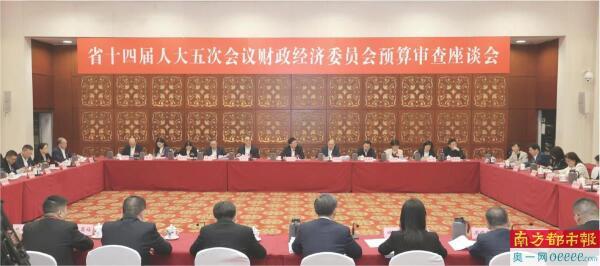
Core Insights - The Guangdong Provincial People's Congress held a budget review meeting, discussing the 2025 budget execution and the 2026 budget draft, with a focus on revitalizing idle assets, strengthening industrial support, and enhancing public welfare [2][4]. Group 1: Revitalizing Idle Assets - Representatives emphasized the importance of managing idle assets, suggesting the establishment of a management group involving finance, state-owned assets, and education departments to optimize the use of these resources [4]. - Suggestions included utilizing idle assets through leasing, selling, or reallocating them to public institutions, transforming "sleeping assets" into "income-generating resources" [4]. - The need to simplify the issuance process of special bonds was highlighted to support new infrastructure and urban renewal projects, which could attract more social capital and financial resources [4] Group 2: Strengthening Industrial Support - The focus on building a modern industrial system with competitive advantages was discussed, with representatives calling for more targeted support for strategic emerging industries like hydrogen energy [6]. - Increased support for the commercial aerospace industry in Yangjiang was proposed to ensure project progress and effective investment [6]. - Suggestions were made to enhance support for marine ranching and textile industries, aiming to establish Guangdong as a hub for fast fashion manufacturing [6] Group 3: Enhancing Public Welfare - The report indicated that from 2021 to 2025, public welfare spending in Guangdong would reach 6.45 trillion yuan, maintaining over 70% of the general public budget [7]. - Representatives called for increased financial support for special education in underdeveloped regions, emphasizing the need for better resources for disabled individuals [7][8]. - There were proposals to accelerate the construction of medical centers in less developed areas and to establish special funds for updating medical equipment in grassroots healthcare facilities [8]
一边是加氢站“喊饿” 一边是氢能轿车“乏人问津”
Xin Lang Cai Jing· 2026-01-28 18:54
Core Insights - The hydrogen refueling stations in Guangdong are struggling with low utilization rates, with some stations averaging only 300 kg of hydrogen refueling per day, primarily due to high hydrogen costs and insufficient demand from customers [1][9] - The hydrogen industry in China is experiencing rapid development, but the commercialization of hydrogen energy remains challenging due to various bottlenecks, including high operational costs and regulatory hurdles [9] Group 1: Current Challenges in Hydrogen Stations - Many operational hydrogen stations in Guangdong are underperforming, with about one-third of them refueling less than 30% of their capacity, and some stations refueling as low as 100 kg per day [2] - The high cost of hydrogen is a significant barrier, with prices reaching 30-35 yuan per kg, making it difficult for public transport companies and logistics vehicles to adopt hydrogen fuel [1][2] - The lengthy process to obtain government subsidies, which can take up to two years, further exacerbates the financial strain on hydrogen stations [1][2] Group 2: Infrastructure and Regulatory Issues - The construction of hydrogen stations faces challenges related to land approval, requiring multiple departmental approvals, which is time-consuming and costly [2] - Many regions in Guangdong rely on purchasing hydrogen from local chemical plants, leading to high transportation costs that push the price of hydrogen close to 55 yuan per kg [2] - The investment cost for hydrogen station equipment is substantial, accounting for 30% to 80% of total investment, which becomes a burden when utilization rates are low [2] Group 3: Market Dynamics and Future Prospects - The operational scenarios for hydrogen vehicles are limited, primarily involving government-supported buses and sanitation vehicles, leading to uncertainty in market demand [3] - Some stations, like YunTao Hydrogen's facility, have managed to lower prices to 27.5 yuan per kg but still face challenges in achieving commercial viability due to land use restrictions [4][6] - The industry is exploring innovative solutions, such as mobile hydrogen stations and strategic partnerships to ensure stable and low-cost hydrogen supply, aiming to reduce costs further by 2027 [5][6] Group 4: Recommendations for Industry Development - Experts suggest that to promote hydrogen vehicle adoption, there needs to be an increase in hydrogen station construction and optimization of land use policies [7] - There is a call for streamlined approval processes for hydrogen station construction to facilitate faster development and deployment of infrastructure [7] - The establishment of a unified regulatory framework for hydrogen energy is essential to support the industry's growth and address safety concerns [7]