
算力产业

Search documents
强数字动能 拓发展新局——贵州推动数字经济高质量发展
Zhong Guo Jin Rong Xin Xi Wang· 2025-09-13 05:37
Core Viewpoint - Guizhou is leveraging its digital economy to drive high-quality development, showcasing significant growth in data-driven industries and infrastructure [1]. Group 1: Digital Economy Growth - Guizhou's digital economy has maintained a growth rate among the top in the country for nine consecutive years, with over 30,000 enterprises utilizing cloud services and software and information technology service revenue surpassing 100 billion yuan [1]. - The province is actively promoting the digital industrialization and industrial digitalization pathways, broadening its development landscape and building new advantages [1]. Group 2: Computing Power Development - The computing power in Guizhou has tripled, with outbound bandwidth expanded by 180 times and the number of servers increased by 700 times over the past decade [3]. - Guizhou has established a high-speed network connecting over 20 major cities, providing extensive storage and computing services to various sectors, including government and finance [3]. - As of July 22, Guizhou's computing power scale reached 85 EFLOPS, with intelligent computing accounting for over 98% [3]. Group 3: Data Value Extraction - Guizhou has been approved as a pilot province for data intellectual property in the industrial and information sectors, exploring data registration, pledge financing, and multi-scenario applications [4]. - A tourism company successfully secured 40 million yuan in pledge financing by registering its core data, demonstrating the potential of data as an asset [5]. - The province is developing a data factor ecosystem to optimize resources and unlock data value, collaborating with financial institutions for credit assessments based on energy consumption data [5][6]. Group 4: Industry Upgrading through Digitalization - Guizhou Tire Co. has implemented IoT and AI technologies in its manufacturing processes, significantly improving production efficiency and reducing quality defects [7]. - The company has achieved a 68% increase in labor productivity and a 34% reduction in inventory levels through digital transformation [7]. - Guizhou is focusing on key industries such as coal, chemicals, and power, creating high-quality data sets and replicable digital transformation solutions [8].
时评:算力“用得好”赋能高质量发展
Sou Hu Cai Jing· 2025-09-12 08:47
Core Insights - The 2025 China Computing Power Conference highlighted significant advancements in the country's computing power infrastructure, with 10.85 million standard racks in use and a computing power scale of 788 EFLOPS as of June 2025 [2][3] - Despite the growth in computing power, challenges remain in effectively utilizing these resources for high-quality development, indicating a need for a shift from merely building infrastructure to optimizing its use [2][5] Infrastructure Development - As of mid-2025, China has 10.85 million computing power center standard racks and 14,060 400G ports, with total storage exceeding 1,680 EB [2] - The average Power Usage Effectiveness (PUE) of computing centers has improved to 1.42, but this still lags behind the international benchmark of below 1.1 [3] Utilization Challenges - There is a significant disparity in the distribution of computing resources, with eastern regions being more developed compared to the rapidly growing but still underserved central and western regions [2][3] - The transition from having computing power to effectively utilizing it remains a challenge, with many enterprises unsure how to convert available resources into productive capabilities [3][5] Application and Demand - User demand is evolving from basic computing resources to more advanced capabilities such as knowledge base construction and model fine-tuning, but the supply side primarily focuses on basic services [3][4] - Key sectors like government, finance, and industry still show insufficient depth and breadth in computing power applications [4] Green Development - The computing power industry is energy-intensive, necessitating a shift towards green development, with examples of successful implementations like the advanced cooling technology reducing PUE to 1.04 [4] - However, the promotion of green computing faces challenges related to costs and technological barriers, requiring collaborative efforts from government, enterprises, and society [4] Future Directions - To enable high-quality development, it is crucial to bridge the gap in computing power utilization, enhance the integration of computing resources with industry needs, and promote green development [5] - The focus should be on ensuring that computing power is not just built but effectively utilized to drive economic growth [5]

【砥砺奋进七十载 天山南北谱华章】新兴产业聚势起
Yang Shi Wang· 2025-09-11 11:55
Group 1 - Xinjiang has accelerated the cultivation of new productive forces by leveraging its resource endowments and industrial foundation, focusing on strategic emerging industries for high-quality development [1] - The wind power equipment manufacturing industry in Hami has seen significant growth, with 14 large-scale wind power enterprises established since 2012, making it the largest and most comprehensive wind power equipment manufacturing base in Xinjiang [2] - The localization rate of key components in wind turbine production reached 60% in 2014 and is expected to exceed 90% this year [2] Group 2 - Xinjiang's wind power industry has achieved large-scale and comprehensive development, with wind turbine production ranking first in the country [3] - The city of Karamay has attracted nearly 500 projects related to drones and AI software, showcasing its growing technological landscape [3] - Karamay has established six data centers, with a total computing power exceeding 17,000 P, leading in Xinjiang [3] - Strategic emerging industries in Xinjiang are on the rise, including the first domestic ultra-thin flexible electronic glass production line and the largest photovoltaic green hydrogen demonstration project [3] - In 2024, investment in high-tech industries in Xinjiang is projected to grow by 31%, with the added value of strategic emerging industries increasing by 21.6% [3]
海内外AI大幅投入引燃算力加速潮,联德股份(605060.SH)链接全球温控龙头,再获发展新窗口
Cai Fu Zai Xian· 2025-09-11 03:10
Group 1 - The core viewpoint is that China's computing power industry is transitioning from a phase of scale expansion to a critical period of quality improvement, driven by government policies and significant investments in AI infrastructure [1] - The demand for liquid cooling technology is increasing as it addresses the challenges of high power density equipment cooling and reduces energy usage efficiency (PUE), highlighting its importance in the AI computing power landscape [1][2] - Major international players are significantly increasing their investments in AI computing power, with Trump planning to invest $17 trillion and Meta committing at least $600 billion by 2028, indicating a sustained trend of overseas investment in AI [1] Group 2 - The domestic computing power industry faces structural mismatches, with a projected demand of 300 EFLOPS by 2025, while supply remains uneven and difficult to manage, necessitating efficient cooling technologies [2] - Chilled water units play a crucial role in liquid cooling systems, impacting the cooling efficiency of data centers, as demonstrated by companies like Yingweike and Shenling Environment [2] - LianDe Co., Ltd. is positioned as a key player in the liquid cooling upstream market, producing chilled water units that cater to various cooling needs and have successfully served numerous data center projects [2] Group 3 - LianDe Co., Ltd. reported a revenue of 587 million yuan and a net profit of 109 million yuan in the first half of 2025, reflecting a steady growth despite challenges in the manufacturing sector, with over 50% of revenue coming from compressor components [3] - The company collaborates with leading temperature control firms globally, supplying precision compressor components for multiple AI data center liquid cooling projects, enhancing its market position [3] - LianDe is also establishing a factory in Mexico to better serve North American liquid cooling equipment manufacturers, aligning with the growing demand for computing power infrastructure [3] Group 4 - The liquid cooling industry is undergoing a critical upgrade from single-machine to cluster cooling systems, requiring higher precision and heat resistance in components [4] - The increasing domestic and international demand for liquid cooling will challenge upstream companies to enhance their market responsiveness [4] - LianDe Co., Ltd. aims to strengthen its collaboration with liquid cooling equipment manufacturers to improve product adaptability in high-density cooling scenarios, positioning itself to capitalize on the global infrastructure upgrade opportunities [4]

砥砺奋进七十载 天山南北谱华章丨戈壁追风、算力新城 活力新疆向绿向新
Yang Shi Xin Wen· 2025-09-10 12:32
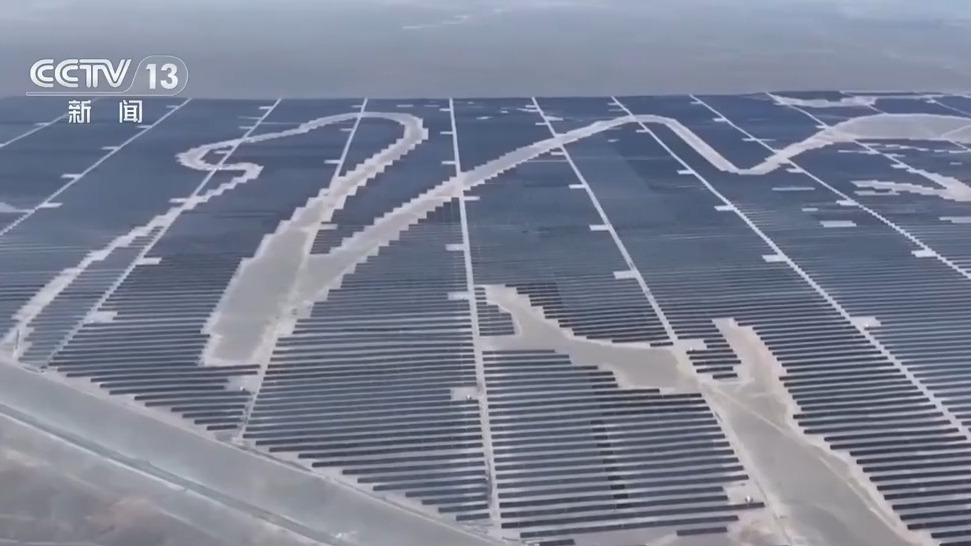
Group 1: Economic Development in Xinjiang - Xinjiang is recognized as the richest region in China for renewable energy resources, with wind energy accounting for approximately one-fifth of the national total [2] - The local government is focusing on transforming wind and solar resources into economic advantages, particularly in Hami, which has three of the nine major wind zones in Xinjiang [2][5] - Hami has accelerated the development of the wind power industry since 2012, attracting 14 large-scale wind power enterprises and establishing three wind power industrial parks, making it the largest wind power equipment manufacturing base in Xinjiang [5] Group 2: Wind Power Industry Growth - The localization rate of key components in wind power equipment manufacturing in Hami has increased from 60% in 2014 to an expected 90% this year [5] - Xinjiang's wind power industry has achieved a full-scale development of the supply chain, with the production of wind turbine units ranking first in the country [5] - The region has also established the largest photovoltaic green hydrogen demonstration project in China, producing over 13,000 tons of green hydrogen [5] Group 3: Transition to New Industries - Karamay, originally known as an oil city, is transitioning towards becoming a "computing power new city," attracting nearly 500 projects related to drones and AI software [6][8] - Karamay has built six data centers with a total computing power scale exceeding 17,000 P, with 80% of this computing power serving the eastern regions of China [12] - The city has also become the largest single-unit base for film and animation rendering in the country, indicating a shift towards new industries [12] Group 4: Emerging Industries and Future Prospects - New industries, including renewable energy and computing power, are rapidly developing in Xinjiang, with a projected growth rate of over 20% for strategic emerging industries in 2024 [14] - The region has launched the first production line for ultra-thin flexible electronic glass and successfully produced the world's largest single unit of sponge titanium [14]
大同市去年原煤产量1.62亿吨
Xin Hua Cai Jing· 2025-09-08 00:46
Core Insights - The article highlights the transformation of Datong, a coal-dependent city in Shanxi Province, into a hub for computing power, driven by advancements in artificial intelligence and data center investments [1][2]. Group 1: Industry Transformation - Datong is transitioning from a coal-based economy to a computing power industry, leveraging its natural advantages such as low average temperatures and abundant renewable energy sources [1][2]. - The city produced 162 million tons of raw coal last year, but is now seeking to diversify its economy as high-quality coal resources diminish [1]. Group 2: Computing Power Infrastructure - The first phase of the intelligent computing power data center in Datong has been completed, with ongoing construction of the second and third phases [1]. - Datong's total installed power capacity is 18.3965 million kilowatts, with renewable energy accounting for 56.46% of this capacity [2]. - The city has established itself as a "gigabit city" with a direct distance of approximately 200 kilometers to Beijing and a one-way latency of only 3 milliseconds to the national computing power hub in the Beijing-Tianjin-Hebei region [2]. Group 3: Investment and Development - Major companies such as Qinhuai Group, China United Network Communications Group, JD Group, and Douyin Group have established computing centers in Datong [2]. - The cumulative investment in computing power infrastructure in Datong has reached 28.2 billion yuan, with server investments totaling 49.1 billion yuan, primarily driven by market forces [2]. - Datong has been designated as a national data labeling base, ranking third in China's comprehensive computing power index according to the 2025 China Computing Power Conference [2]. Group 4: Talent Development - The establishment of Datong Data Technology Vocational College aims to focus on training talent in big data technology and artificial intelligence applications [2].
“煤都”大同迈向算力之城
Xin Hua Wang· 2025-09-07 02:47
Group 1 - The core viewpoint of the articles highlights the transformation of Datong from a coal-based city to a computing power city, leveraging its natural advantages and investments in the computing industry [2][4][5] - JD Logistics has implemented artificial intelligence in its customer service operations, with 30% of calls being resolved by AI, significantly improving user experience and reducing communication costs [1][2] - Datong's computing power industry benefits from low electricity costs and a high proportion of renewable energy, with 56.46% of its total installed capacity being from renewable sources [4][5] Group 2 - Major companies such as Qinhuai Group, China United Network Communications Group, JD Group, and Douyin Group have established computing centers in Datong, contributing to the city's economic transformation [5] - Datong ranks third in China's comprehensive computing power index, indicating its growing significance in the national computing landscape [5] - The establishment of Datong Data Technology Vocational College aims to cultivate talent in big data and artificial intelligence, supporting the local computing power industry's growth [5]
新华视点丨算力热度持续攀升,如何“扩容”?
Xin Hua She· 2025-09-04 09:46
Core Insights - The demand for computing power in China is rapidly increasing, with significant advancements in infrastructure and technology being made to support this growth [1][2][5] - The Chinese government has issued policies to enhance the development of computing power, recognizing it as a critical resource in the digital economy [1][5] Infrastructure Development - As of mid-2023, China has 10.85 million standard racks in use for computing centers, ranking second globally in total computing power [2] - The "East Data West Computing" initiative has led to the construction of over 250 optical cable lines, enhancing the country's data transmission capabilities [2] - Major expansions in computing centers have been reported, such as the China Telecom Central Intelligent Computing Center in Wuhan, which added 300 intelligent computing servers, reaching over 2000 PFLOPS [1][2] Technological Innovations - The intelligent computing capacity in China has reached 788 EFLOPS, driven by advancements in artificial intelligence technologies [2] - ZTE has launched an intelligent computing supernode system that integrates self-developed AI chips, enabling flexible assembly of domestic GPUs for high-speed operations [2] - The development of a national integrated computing network is underway, with a tiered layout of hub nodes, regional centers, and local edge computing [3] Industry Applications - Computing power is transforming various industries, including automotive and healthcare, with significant improvements in operational efficiency and productivity [4][5] - In the automotive sector, companies like Geely are leveraging intelligent computing centers to reduce manufacturing cycles significantly [3][4] - The healthcare sector is experiencing explosive growth in data, with a 36% annual compound growth rate, leading to increased demand for computing power to support innovative applications [4] Future Directions - The computing power industry in China is transitioning towards high-quality, large-scale development, with a focus on optimizing resource allocation and enhancing technological collaboration [5][6] - By 2035, it is projected that artificial intelligence will contribute over 11 trillion yuan to China's GDP, driving a tenfold increase in computing power demand [5] - The government plans to implement a standardized interconnectivity framework for computing resources by 2028, aiming to improve efficiency and accessibility [6]
算力产业量质齐升
Jing Ji Ri Bao· 2025-09-01 22:27
Core Insights - The 2025 China Computing Power Conference highlighted the significant advancements in China's computing power industry, indicating a shift towards high-quality and large-scale development [1][2][3] Group 1: Industry Development - As of June 2023, China has 10.85 million standard racks in use for computing power centers, with intelligent computing power reaching 788 EFLOPS [1] - The total storage capacity has exceeded 1680 EB, and the average Power Usage Effectiveness (PUE) of computing centers has decreased to 1.42, reflecting improved efficiency [1] - The Ministry of Industry and Information Technology aims to enhance the construction of diverse, intelligent, agile, secure, and green computing power infrastructure [1][2] Group 2: Market Trends - The demand for intelligent computing is rapidly increasing, driven by the development of artificial intelligence, with a notable shift from scale expansion to high-quality development [2][4] - The computing power structure is transitioning from a focus on training to a dual emphasis on inference and training, with inference power expected to reach ten times that of training power in the future [4] - The market is evolving from basic computing resource needs to more sophisticated requirements, such as knowledge base construction and model fine-tuning [7][8] Group 3: Technological Innovations - Innovations in computing technology and hardware upgrades are accelerating the application of domestic computing power, with improvements in core capabilities such as collaborative scheduling and elastic expansion [3][6] - The introduction of new cooling technologies, such as immersion cooling, has significantly reduced PUE values to as low as 1.04 in some centers [3] Group 4: Platform Integration - The China Computing Power Platform has successfully integrated with ten provincial sub-platforms, achieving comprehensive connectivity across various resources and ecosystems [5][6] - By the end of July 2023, over 1,000 enterprise users had registered on the platform, with more than 100 service providers and over 110 quality computing power products available [5] Group 5: Policy and Strategic Initiatives - The Ministry of Industry and Information Technology plans to accelerate breakthroughs in key technologies such as GPU chips and promote the application of new technologies in critical sectors like education and healthcare [8] - The focus is on building a robust computing power ecosystem and enhancing the quality of computing resource supply through policy guidance and infrastructure optimization [8]
企业“算力落地难”怎么破
Ke Ji Ri Bao· 2025-09-01 00:54
Core Insights - The strategic value of computing power has transcended mere technology, becoming a key variable in reshaping industry structures, with China's AI-related ICT market investment expected to reach 1.6 trillion yuan by 2025 and 3.5 trillion yuan by 2028 [1] - The rapid evolution of large model technology is driving industries towards digital and intelligent transformation, presenting challenges such as "computing power selection difficulties" and "ambiguous transformation paths" for many enterprises [1][2] - The demand for autonomous innovative computing power is rapidly increasing in the Chinese market, projected to occupy nearly half of the market share by the end of this year [4] Industry Trends - As of June 2023, China's total computing power ranks second globally, with 10.85 million standard racks in use and an intelligent computing power scale of 788 EFLOPS [2] - The traditional IT architecture is struggling to meet the high demands of AI in terms of computing power, data, and real-time processing, leading to the emergence of "data islands" [2] - The shift in computing demand structure from training to inference is driving the rise of autonomous innovative computing power, which is expected to accelerate the industry's move towards intelligence [4] Technological Developments - The new AI transformation era is characterized by the need for computing facilities to possess high-performance multi-core processing capabilities and AI application acceleration technologies [3] - Huawei's computing industry in China is projected to grow by 80% in 2024, with the Kunpeng and Ascend platforms playing crucial roles in various sectors such as government, finance, energy, and transportation [5] Solutions and Frameworks - Huawei has developed an "Industry Intelligent Reference Architecture" to help enterprises find suitable upgrade paths for their digital and intelligent transformation, consisting of five layers: intelligent perception, intelligent connection, intelligent foundation, intelligent platform, and AI models [7][8] - The "Three Layers, Five Stages, Eight Steps" methodology provides a comprehensive roadmap for enterprises, detailing the levels, stages, and specific tasks involved in the transformation process [8] Collaborative Efforts - Huawei aims to leverage partnerships to extend the advantages of Kunpeng and Ascend technologies to a wide range of industries, emphasizing the importance of collaboration in achieving widespread intelligent solutions [9] - The company plans to continue investing in computing technology and strengthen its partner ecosystem to drive innovation and accelerate the digital transformation process across various sectors [9]