
脑机接口

Search documents
岩山科技:全资子公司岩思类脑在脑机接口领域取得突破
news flash· 2025-07-28 09:10
Core Viewpoint - The company has developed an EEG-based large model for precise Chinese language recognition, aiming to enable communication for patients with speech impairments due to conditions like ALS and stroke [1] Group 1: Technology Development - The company's subsidiary, Yansi Brain, relies on a self-developed EEG large model and collaborates with the neurosurgery team at Huashan Hospital to collect high-throughput neural activity signals from different brain regions and depths [1] - The company plans to continuously optimize the EEG large model and develop its own brain-computer interface system [1] Group 2: Clinical Application - The technology aims to help patients who have lost the ability to speak due to diseases or neurological damage, allowing them to communicate freely and understand their consciousness and intentions [1] - The ultimate goal is to achieve seamless communication between the brain and the external world [1]

“盗梦空间”走进现实?全球首款多模态梦境脑机接口横琴发布
Nan Fang Du Shi Bao· 2025-07-28 08:43
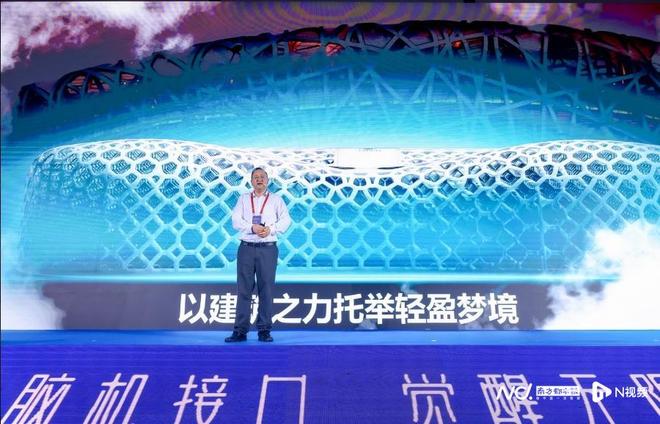
Core Viewpoint - The launch of the "Dream Neighbor" multi-modal dream brain-computer interface device marks a significant advancement in non-invasive brain health management and aims to improve sleep quality and emotional well-being through innovative technology [1][5][9]. Group 1: Product Overview - "Dream Neighbor" is the world's first multi-modal dream brain-computer interface device, developed by the Guangdong Provincial Academy of Intelligent Science and Technology in collaboration with Suiren Medical [1][3]. - The device is designed in the form of a pillow and can monitor brain sleep state signals in real-time, enhancing deep sleep duration through non-invasive neural feedback [5][7]. - It features four main functions: EEG signal monitoring, sleep state regulation, intervention strategy generation, and AI data analysis, aimed at improving sleep quality and alleviating anxiety [5][7]. Group 2: Event and Collaboration - The product was unveiled at the "2025 Sleep Neuroregulation Medicine Seminar and Dream Brain-Computer Interface Innovation Product Launch" held in Hengqin, attended by nearly 200 experts and industry representatives from various regions [3][5]. - The seminar focused on the intersection of brain-computer interfaces and sleep science, providing a platform for interdisciplinary exchange [3]. Group 3: Market Potential and Pricing - "Dream Neighbor" is expected to achieve mass production and market launch by the end of August, with a price comparable to that of a mid-to-high-end smartphone [9].

脑机接口“接入”睡眠干预,加速打开万亿睡眠经济市场
Di Yi Cai Jing· 2025-07-28 05:46
Group 1: Core Insights - Sleep disorders have become a significant public health issue, with non-invasive brain-computer interface (BCI) technology providing potential for daily intervention in sub-healthy sleep populations, shifting health management from "passive treatment" to "active prevention" [1] - The 2025 Sleep Neuroregulation Medicine Seminar highlighted the transition from traditional symptom management to personalized proactive health management based on real-time neural activity perception and precise regulation [1] - The development of BCI technology for sleep treatment is crucial, as sleep disorders can exacerbate mental health issues like depression and pain, creating a cyclical relationship [2][3] Group 2: Market Potential - The Chinese sleep economy market has grown from 261.63 billion yuan in 2016 to 495.58 billion yuan in 2023, with projections to reach 658.68 billion yuan by 2027, indicating a potential trillion-yuan market [6] - The launch of the "Dream Neighbor" device, a consumer-grade product integrating BCI technology with daily sleep scenarios, aims to provide tools for "precise sleep intervention" and "active health management" [6][7] - The focus on consumer-grade products may enhance public awareness and market recognition, while the development of medical-grade products will target conditions like depression, anxiety, and chronic pain [7]
诚益通:脑机接口技术研究验证中心与动物实验中心开工建设
Jin Rong Jie· 2025-07-28 04:24
Group 1 - The core viewpoint of the article highlights the commencement of construction for two key centers by Chengyitong, marking a new phase in the brain-computer interface (BCI) sector [1] - The BCI technology research validation center will focus on cutting-edge theories, key technologies, new materials, and core devices, aiming to create a complete innovation chain from basic research to engineering application [1] - The animal experiment center will provide in vivo research and application validation for core BCI technologies, equipped with facilities for various experimental capabilities, supporting the transition of BCI from laboratory to clinical applications [1] Group 2 - The construction ceremony took place on July 8, 2025, at the Beijing Daxing Biomedical Industry Base, attended by key company executives [1] - The research validation center will conduct studies on neural signal acquisition, processing, and decoding, as well as explore biocompatible materials and closed-loop control algorithms [1] - The animal experiment center will support experiments related to neural coding mechanisms, implantable electrode evaluation, and system integration, facilitating the practical application of BCI technologies [1]

34颗未来产业“金种子”破“赛”而出
Xin Hua Ri Bao· 2025-07-28 01:40
Core Insights - The Jiangsu Future Industry Innovation and Entrepreneurship Competition showcased 56 projects focusing on key future industries such as brain-computer interfaces, new materials, hydrogen energy, and advanced storage, with 34 projects selected as "gold seeds" for investment [1][2][6] Group 1: Competition Overview - The competition is a significant platform for nurturing future industries in Jiangsu, organized by the Provincial Development and Reform Commission and supported by various investment and entrepreneurial associations [2] - The number of projects registered for this year's competition increased by nearly 40% compared to the first edition, indicating growing interest and innovation in the sector [2] - The final round involved rigorous processes including live presentations and real-time scoring, highlighting the high quality of projects that advanced to this stage [2] Group 2: Investment Opportunities - Winning projects will enter the Jiangsu Strategic Emerging Industry Fund's future industry angel fund project reserve, providing them with potential investment opportunities [3][6] - The Jiangsu Strategic Emerging Industry Fund has reached a scale of over 100 billion, establishing a solid foundation for the growth of emerging industries [2][6] - Successful cases from the fund include a 10 million yuan investment in a biotechnology company aimed at accelerating clinical research for cancer treatments [3] Group 3: Ecosystem and Support - The competition is part of a broader strategy to cultivate future industries through collaboration among government, enterprises, research institutions, finance, and society [5][6] - The Jiangsu government is implementing a three-year action plan (2024-2026) to accelerate the development of future industries, with the competition serving as a key initiative [5][6] - The selected projects will receive continuous support and tracking services from the Jiangsu High-tech Investment Group, enhancing their chances of success [6]
数字孪生大脑与人类大脑相似度已近六成
3 6 Ke· 2025-07-28 00:25
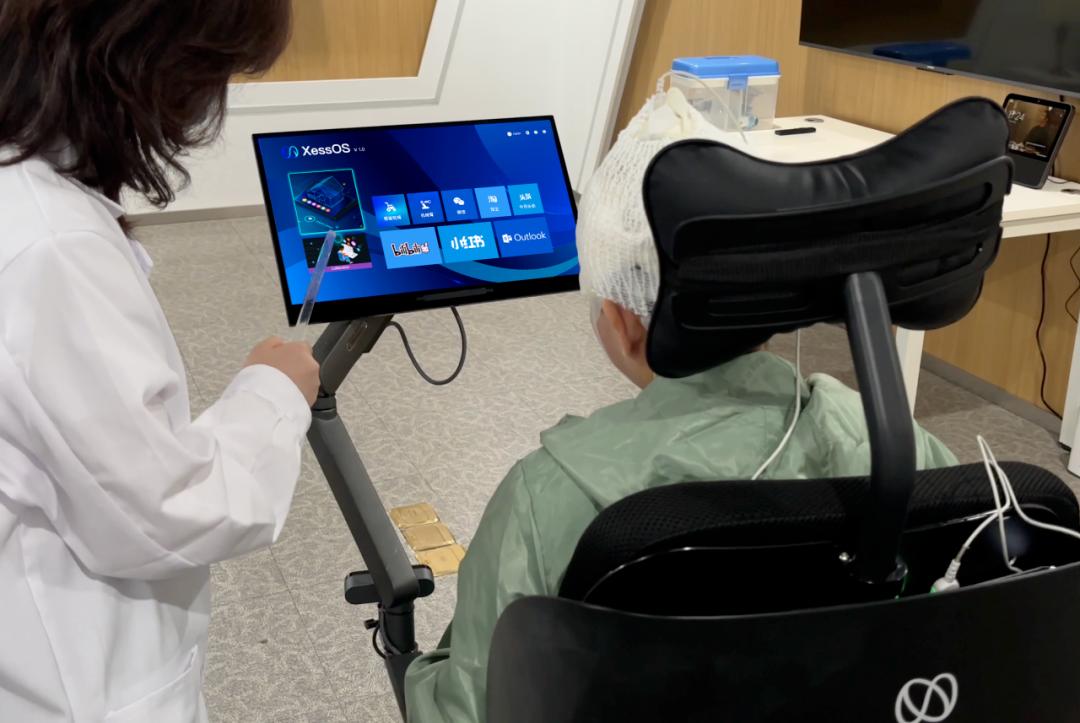
Group 1: Brain-Machine Interface Achievements - A patient with motor dysfunction successfully operated social media applications and controlled a smart wheelchair using a 256-channel flexible brain-machine interface designed by Brain Tiger Technology after two weeks of training [1] - Another patient with language dysfunction achieved real-time Mandarin communication at a speed of 50 words per minute, which is about one-third of the average person's speaking speed, with a latency of less than 100 milliseconds [1][3] Group 2: Digital Twin Brain Development - The Digital Twin Brain (DTB) project, led by a team from Fudan University, aims to simulate the human brain to enhance understanding of information processing and improve brain disease diagnosis and treatment [4][5] - The DTB is constructed by dividing brain imaging data into 23,000 blocks, each approximately 3mm in size, and using MRI data to clarify connections between these blocks [4][5] - The team has achieved a Pearson correlation coefficient of 0.63 for visual experiments and 0.57 for auditory experiments, indicating a high similarity between DTB activity patterns and human brain activity [5] Group 3: Advancements in Brain-Like Intelligence - Research on brain-like intelligence focuses on creating systems that mimic the efficiency of biological brains while overcoming high energy consumption issues faced by current AI systems [7][8] - The development of the Darwin III brain-like chip, which has the largest scale of neurons on a single chip, represents a significant advancement in this field [7] - The goal is to extract efficient characteristics from biological brains, such as sparse connectivity and dynamic activation, rather than mechanically replicating them [8] Group 4: Cross-Species Brain Research - Cross-species brain research is emerging as a critical area in brain science, providing simplified models from lower organisms that can inform human brain models [9] - The ultimate aim of both Digital Twin Brain and brain-like intelligence research is to deepen the understanding of brain mysteries and advance AI technology to better serve medical and scientific fields [9][10] - The Digital Twin Brain has shown potential for precision medicine, allowing for the simulation of specific brain conditions to test treatment options, thereby reducing clinical trial costs and improving targeted therapies [10]
领益智造与脑机接口独角兽企业强脑科技达成战略合作
news flash· 2025-07-27 13:52
Core Viewpoint - Guangdong Lingyi Intelligent Manufacturing Co., Ltd. has signed a strategic cooperation framework agreement with Zhejiang Qiangnao Technology Co., Ltd., a leading unicorn in the brain-computer interface sector, to enhance collaboration in various technological fields [1] Group 1 - The strategic cooperation aims to leverage both companies' strengths in the fields of embodied intelligent robots, joint modules, dexterous hands, and supporting structural components and core parts for long-term mutual benefits [1] - The partnership will involve joint market research, product development, and brand building for specific projects to expand quality markets and achieve mutual gains [1]

马斯克意识到危险,为什么把老爹送俄罗斯而不是中国?
Sou Hu Cai Jing· 2025-07-27 07:54
Core Viewpoint - Elon Musk's decision to send his father to Russia is a strategic business move rather than a personal or emotional one, aimed at risk mitigation and strategic positioning in the global market [3][10][13]. Group 1: Business Strategy - Musk's business interests span multiple high-tech industries, including electric vehicles (Tesla), satellite internet (Starlink), space exploration (SpaceX), and brain-computer interfaces (Neuralink), all of which are critical in international competition [3][5]. - The relationship between Musk and China has been beneficial, particularly with the establishment of the Tesla Gigafactory in Shanghai, which has received significant support from the Chinese government [5][10]. - Musk recognizes the risks of relying too heavily on a single market, especially given the fluctuating nature of U.S.-China relations, which could lead to sudden policy changes affecting his business in China [5][8]. Group 2: Geopolitical Considerations - Sending his father to Russia serves as a signal to both China and the U.S. that Musk is not overly reliant on any one country, thereby maintaining a balance in his international business dealings [10][11]. - Russia, despite its current economic challenges, possesses valuable space technology and experience, which could be advantageous for Musk's ambitions in space exploration [7][11]. - The U.S. government closely monitors Musk's activities due to his influence in strategic sectors, making it essential for him to navigate relationships carefully to avoid perceptions of favoritism towards China [8][13]. Group 3: Risk Management - Musk's approach reflects a broader understanding of the importance of maintaining multiple avenues for business operations, akin to diversifying investments to mitigate risks [13][14]. - The decision to establish a presence in Russia, while seemingly simple, is a calculated move to ensure that Musk has options and can adapt to changing geopolitical landscapes [10][15].


强脑科技在WAIC发布全球最轻专业级灵巧手Revo 2 ,可轻松提起20公斤重物
Zheng Quan Shi Bao Wang· 2025-07-27 00:37
Core Insights - The article highlights the launch of BrainCo's new bionic dexterous hand, Revo2, at the WAIC2025, showcasing its advanced features and potential applications in various fields [1][2][3]. Product Features - Revo2 is designed with a lightweight structure, weighing only 383g and measuring 16cm, making it 20% lighter than the industry average while maintaining a grip strength of 50N, sufficient for most light industrial tasks [2][3]. - The hand can lift up to 20kg, equivalent to a full office water jug, and operates quietly at noise levels below 50 decibels, making it suitable for diverse environments such as laboratories and homes [2][3]. - It incorporates a multi-modal tactile sensor system that allows it to perceive force, hardness, texture, and distance, enabling precise manipulation of objects [2][3]. Market Potential - The dexterous hand is essential for both household service robots and industrial robots, facilitating complex tasks like assembly and welding, indicating a growing market demand as embodied intelligence technology advances [3]. - Strong Brain Technology aims to address real-world needs by enhancing the application of bionic dexterous hands across various scenarios [3]. Company Background - Founded in 2015 by Han Bicheng during his PhD at Harvard, Strong Brain Technology focuses on non-invasive brain-machine interface technology, with core products including smart bionic hands and legs [3][4]. - The company has over 250 core patents and more than 600 global patent applications, positioning itself as a leader in non-invasive brain-machine interface technology [4]. Product Accessibility - The pricing of Revo2 is significantly lower than international counterparts, being only one-fifth of similar products, which enhances its accessibility [5]. - Strong Brain Technology has achieved mass production of 100,000 units, indicating strong market readiness and demand [5].
不对标马斯克,脑机接口的故事还能怎么讲?
Hu Xiu· 2025-07-26 02:16
Core Insights - The article highlights the significant advancements and investments in the brain-computer interface (BCI) industry, particularly in China, where policies and clinical trials are paving the way for commercialization [1][16][26]. Group 1: Industry Developments - The BCI technology has been recognized as one of the ten landmark products for future industries, with specific pricing standards established for medical services related to BCI [1]. - Several startups in the BCI space are transitioning from laboratory research to clinical trials, with hospitals across the country beginning to establish clinical research wards for various neurological conditions [1][16]. - The year 2025 is anticipated to be a pivotal year for the BCI industry in China, marking the beginning of large-scale clinical trials for fully implanted micro-systems [1][15]. Group 2: Investment Trends - Investment in the BCI sector surged in 2022, with notable funding rounds, including Neuralink's $650 million financing, which raised its valuation to $9 billion [4]. - New investors from the TMT medical sector are entering the BCI market, driven by optimism about new technologies and the potential for high returns [5][6]. - The influx of capital and supportive policies have encouraged major hospitals to participate in BCI research and development [6][26]. Group 3: Challenges and Perspectives - Companies in the BCI field face significant challenges, including the need for continuous funding to support clinical trials and product development [12][22]. - The industry is experiencing a "淘汰赛" (elimination race), where companies must demonstrate clinical progress and secure funding to survive [27]. - There is a growing concern among BCI entrepreneurs about the sustainability of their businesses amid rising competition and the need for substantial investment [22][29]. Group 4: Clinical Applications and Future Outlook - BCI technology has the potential to treat various neurological disorders, with a focus on developing systems that can provide real-time monitoring and support during surgeries [46][47]. - The article emphasizes the importance of practical applications and the need for BCI products to prove their effectiveness in clinical settings [50][52]. - The long-term vision for BCI technology is to create high-performance medical devices that can significantly improve the quality of life for patients with neurological conditions [52][53].