半导体存储

Search documents
兆易创新股价上扬再创新高,存储涨价持续,机构看好公司业绩持续增长
Zhi Tong Cai Jing· 2026-02-24 06:49
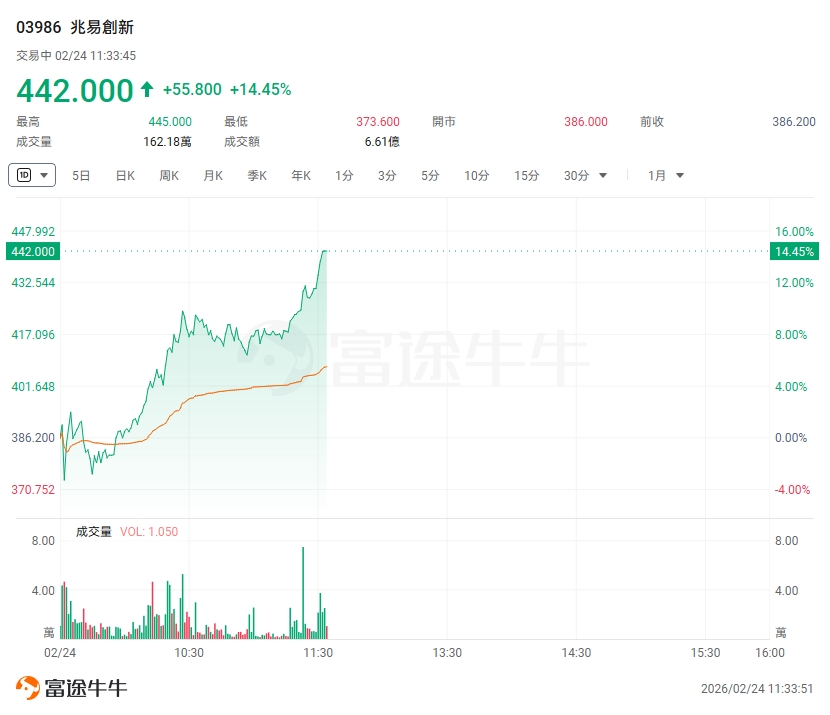
Group 1 - The stock price of a company surged over 14%, reaching a new historical high of 445 HKD during intraday trading, with a current price of 442 HKD and a trading volume exceeding 600 million HKD [1] Group 2 - On February 20, Hynix stated in a conference call that it is unable to meet all customer demands due to strong demand from AI clients and limited supply, leading to a continuous increase in storage prices this year [4] - Hynix reported that the inventory for DRAM and NAND is only about 4 weeks, and this level is expected to continue to decline throughout the year [4] - The company is in discussions with major clients regarding long-term contracts, and all HBM (High Bandwidth Memory) for 2026 has been sold out, with production plans already allocated to meet customer demands [4] - The current tight supply and demand for traditional DRAM may lead to more favorable terms for HBM business in 2027 [4] - Huajin Securities noted that with the steady upward cycle of storage, the company is expected to maintain its leading position as it continues to advance storage chip process iterations and categories [4] - The potential for customized DRAM to open up incremental space is highlighted, alongside the growth of MCU, sensors, and analog businesses in the context of consumer electronics, automotive electronics, and industrial smartization, indicating continued performance growth [4]


港股午评:恒指跌1.93%,恒生科指跌2.36%,大型科技股集体重挫,智谱逆势大涨21%
Jin Rong Jie· 2026-02-24 04:21
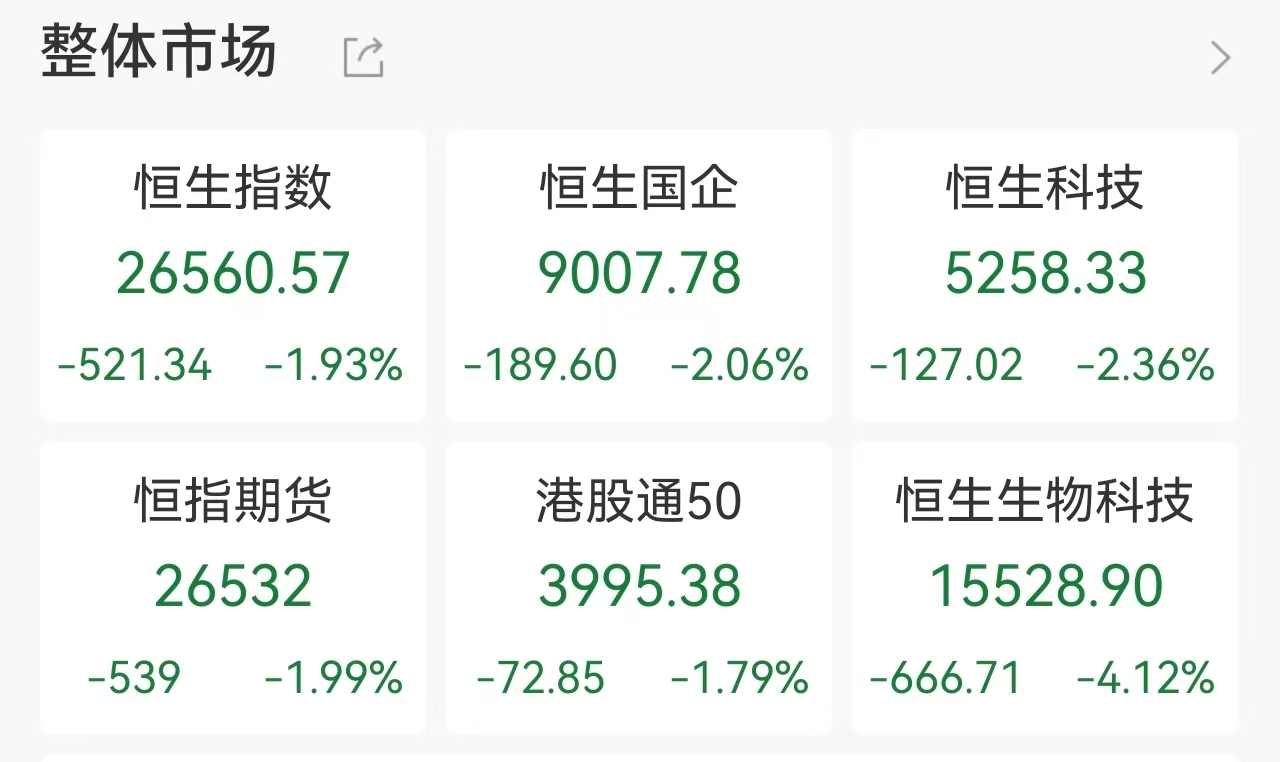
Market Overview - The Hong Kong stock market experienced a decline, with the Hang Seng Index falling by 1.93% to 26,560.57 points, the Hang Seng Tech Index down by 2.36% to 5,258.33 points, and the Hang Seng China Enterprises Index decreasing by 2.06% to 9,007.78 points [1][2]. Major Stocks Performance - Major technology stocks saw significant declines: Alibaba fell by 2.96%, Tencent by 3.44%, JD.com by 0.19%, Xiaomi by 1.86%, NetEase by 0.71%, Meituan by 4.76%, Kuaishou by 3.79%, and Bilibili by 2.73% [2]. Film and Entertainment Sector - The film and entertainment sector faced substantial drops, with DMG Entertainment down by 9% and Maoyan Entertainment falling over 7%, hitting new lows. According to a report from CICC, the effective box office for the first six days of the 2026 Spring Festival was 5.077 billion yuan, a decrease of 38.7% compared to the previous year. The expected box office for the period may fall below the previously anticipated range of 6.5 to 8.5 billion yuan due to a lack of leading films [3]. Tourism and Retail Sector - The tourism and retail sector also declined, with China Duty Free Group dropping over 8%. During the first five days of the Spring Festival holiday, duty-free shopping in Hainan reached 1.38 billion yuan, with 177,000 shoppers, representing increases of 19% and 24.6% year-on-year, respectively. However, the stock price of China Duty Free has largely reflected this demand [3]. Semiconductor Sector - The semiconductor and memory stocks showed resilience, with Hynix reporting strong demand from AI clients and limited supply, leading to continued price increases in memory products. Hynix indicated that its inventory for DRAM and NAND is only about four weeks, and it expects this level to continue to decline throughout the year [4]. AI Applications - AI application companies, particularly Zhiyuan and MINIMAX-WP, performed strongly, with Zhiyuan rising nearly 21% and MINIMAX-WP up nearly 8%. Reports indicate that Chinese large models are capturing a significant share of the global developer market, with Chinese models accounting for 61% of the total token volume [4].
DDR5内存价格高位震荡,欧洲局部回调但全球供需格局未根本改变
Sou Hu Cai Jing· 2026-02-23 06:39
Group 1 - The memory market prices have been rising since the second half of last year and are expected to maintain high levels in the short term [3] - Recent observations indicate a price correction for some DDR5 memory products in the European market, particularly for 32GB DDR5 memory kits [3][4] - The retail price of 32GB DDR5 memory kits was stable at around 95 to 100 euros (approximately 776 to 817 RMB) until September last year, then surged to a peak of 430 to 470 euros (approximately 3512 to 3839 RMB) by January this year, before dropping to 370 to 420 euros (approximately 3022 to 3431 RMB) in late February [3] Group 2 - Price adjustments are occurring only for specific models and channels, influenced by regional policies, sales structures, and tax compositions, indicating a clear differentiation in the market [4] - The domestic market trends align with the European market, where most DDR5 memory products remain at high prices, with some models continuing to rise while only a few show slight price corrections [4]
存储巨头四季报“五大关键点”:当前周期强度超越2017-18“云繁荣周期”
Hua Er Jie Jian Wen· 2026-02-16 06:17
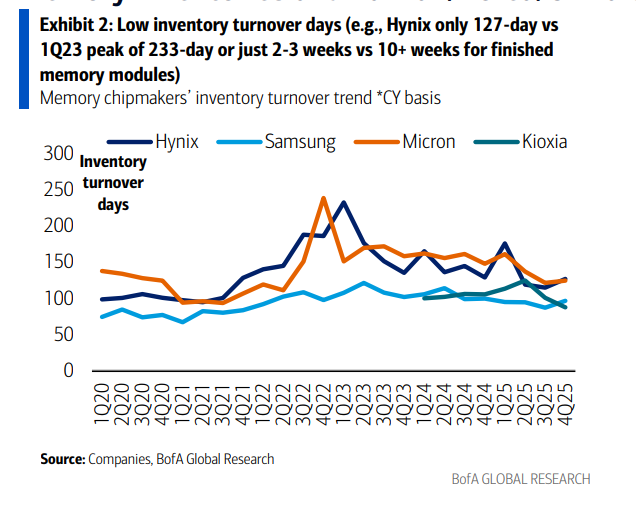
Core Insights - The storage industry is emerging from a downturn and entering a "super cycle" driven by AI demand, as indicated by the recent earnings reports from major storage companies [1] Group 1: Key Signals from Earnings Reports - Inventory levels have dropped below the "warning line," with SK Hynix's inventory turnover days decreasing from a peak of 233 days in Q1 2023 to just 127 days, indicating potential supply chain shortages [2] - Average Selling Prices (ASP) are experiencing significant recovery, with Samsung's DRAM ASP soaring by 40% quarter-over-quarter and SK Hynix's NAND prices increasing by 32% [2] - Major companies are aggressively increasing capital expenditures in response to surging demand for High Bandwidth Memory (HBM), with SK Hynix's capital spending projected to rise from 7 trillion KRW in Q4 2024 to 12 trillion KRW by Q3 2025 [2] Group 2: Market Trends and Price Movements - HBM4 production is exceeding expectations, which will influence future market share in AI computing [3] - The industry outlook is extremely optimistic, with projections for a long-term "storage super cycle," as noted by Nanya Tech's president, who claims the current cycle is better than the 2017-2018 cloud server boom [3] - The Memory Indicator from Bank of America has risen to 124, indicating an upward cycle, compared to an average of 103 in the first half of 2025 [4] Group 3: Current Market Conditions - DRAM spot prices remain high, with 16Gb DDR5 prices at $38, a year-on-year increase of 709%, and 16Gb DDR4 prices reaching $78, up 2445% year-on-year [6] - Despite some OEMs indicating temporary assembly line halts due to rising storage costs, overall sales data from Taiwan shows significant month-over-month growth exceeding 20% and year-on-year doubling for several manufacturers [7] - SSD prices have surged, with a weekly increase of 40% and a monthly increase of 60%, reflecting market concerns about potential shortages in the second half of the year [9] Group 4: Insights from Semicon Korea - The recent Semicon Korea event showcased a booming industry, with equipment suppliers benefiting from record capital expenditures by major players like Samsung and SK Hynix [10] - HBM production is time-consuming, requiring extensive equipment to maintain high output levels, which may impact supply timelines [12] - The adoption of Hybrid Bonding technology may face delays, as manufacturers prefer existing methods for HBM production [12]
恒指翻红,恒生科指跌幅收窄至1.09%,互联网巨头走低,有色金属活跃,半导体板块直线拉升
Jin Rong Jie· 2026-02-16 02:53
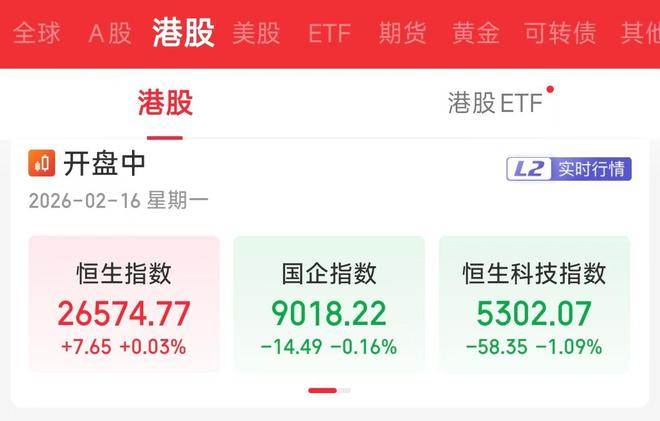
Market Overview - The Hong Kong stock market opened slightly lower on February 16, with the Hang Seng Index, Hang Seng Tech Index, and Hang Seng China Enterprises Index down by 0.25%, 0.19%, and 0.08% respectively. After initial declines, the Hang Seng Index turned positive while the Hang Seng Tech Index's losses narrowed to 1.09%, indicating a slight easing of market panic [1]. Sector Performance - There was a clear divergence in sector performance, with precious metals, semiconductors, and oil & petrochemicals showing strong gains, while sectors such as defense, consumer discretionary, and hardware equipment struggled, negatively impacting market sentiment [3]. Precious Metals Sector - The precious metals sector led the market, with gold-related stocks performing particularly well. Notable gains included Luoyang Molybdenum rising over 7% and Lingbao Gold increasing by over 6%. Other related stocks like China Nonferrous Mining, Shandong Gold, Jiangxi Copper, and Minmetals Resources also saw significant increases, driven by strong consumer demand during the Valentine's Day and Chinese New Year holiday season [4]. AI and Semiconductor Stocks - AI application stocks opened strong, with notable performances from companies like Fubo Group, which rose over 10%, and MINIMAX-WP, which increased nearly 6%. Zhipu continued its recent strong performance, reaching a peak of 540 HKD per share, up over 11%, as it plans to list on the STAR Market [5][6]. - The semiconductor sector also experienced a sharp rise, with stocks like Zhaoyi Innovation increasing over 17% and Lanke Technology rising over 13%. This surge was supported by recent price fluctuations in the storage market, where prices for some DDR4 products have decreased by 10% to 20% from their peak in 2025, while NAND flash memory prices have doubled since the beginning of the year [6].

美经济学家曾坦言:美国出现严重战略失误,没料到中国会这么强大
Sou Hu Cai Jing· 2026-02-15 11:45
Group 1 - Joseph Stiglitz argues that the U.S. fundamentally misjudged its economic strategy towards China, failing to anticipate China's emergence as a strong competitor [2] - The U.S. initially designed a framework based on tariffs and technology restrictions to maintain its dominance, overlooking China's deep accumulation in industrial layout and innovation [2] - Trade tensions initiated in 2018, with the U.S. imposing tariffs to reshape global supply chains, did not yield the expected results as Chinese companies adapted their market strategies [4] Group 2 - U.S. tariff measures have led to increased domestic inflation, forcing consumers to bear higher prices for goods [5] - Stiglitz highlights that the U.S. mistakenly assumed China's economy was heavily reliant on a single market, not recognizing China's ability to diversify risks through policy guidance and innovation [7] - In the semiconductor storage technology sector, Chinese companies have progressed from relative lagging to achieving comprehensive control over design and production by 2025 [9] Group 3 - By 2025, China's photovoltaic capacity is projected to account for 85% of the global market, with exports reaching $92 billion, enhancing its position in the global energy market [13] - The U.S. has been slow in transitioning to renewable energy, while China has been investing in solar and electric vehicle industries for over a decade [11] - The number of higher education students in China is expected to reach 240 million by 2026, surpassing the U.S. and contributing to a significant increase in research output [13] Group 4 - By 2025, China is expected to complete 93 space launches with a success rate of 96%, showcasing its strong capabilities in independent research and development [15] - China's shipbuilding industry is projected to account for 56% of global deadweight tonnage by 2025, demonstrating efficient management and investment in infrastructure [15] - The share of the Chinese yuan in cross-border payments is anticipated to rise to 53.9% by 2025, diminishing the dollar's dominance and enhancing China's global trade connections [18] Group 5 - By early 2026, China's export volume is expected to reach a new high, with increasing penetration into emerging markets, thereby maintaining economic growth and enhancing geopolitical influence [20] - Over 60% of U.S. companies still view China as a core part of their supply chain, indicating the failure of decoupling strategies [22] - If the U.S. continues to adhere to outdated frameworks, global economic fragmentation may worsen, while China is likely to continue playing a constructive role in a multipolar world [22]
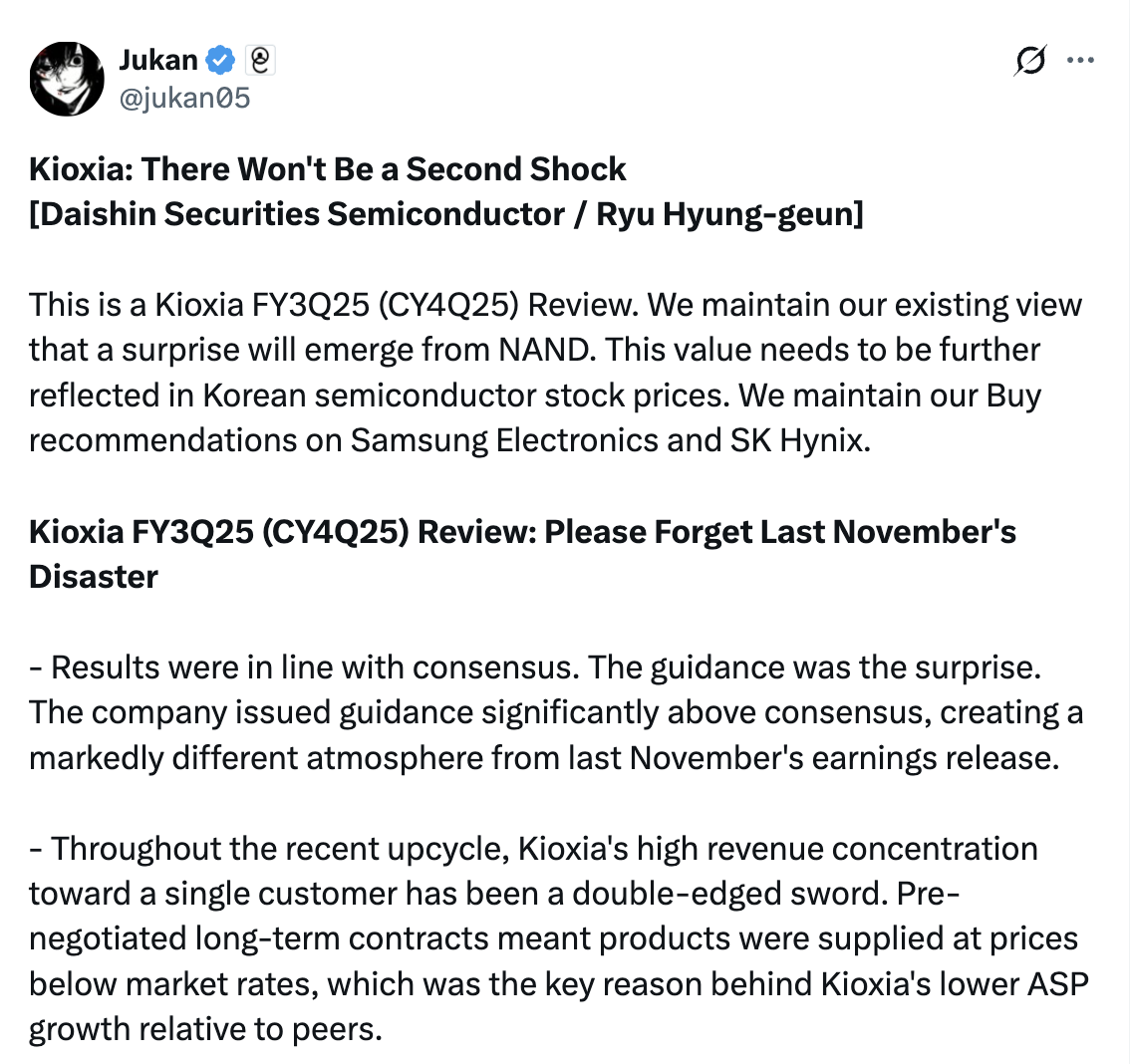
Memory后续怎么走?Bernstein开始看空Kioxia
傅里叶的猫· 2026-02-14 15:13
Core Viewpoint - Kioxia's recent financial report indicates a mixed outlook, with a strong profit guidance for the next quarter but concerns over its pricing strategy and competitive position in the NAND market [2][4][8]. Financial Performance - Kioxia reported an operating profit of 142.8 billion yen for Q3, slightly above market expectations but with an average selling price (ASP) increase of only about 10%, lagging behind competitors like Samsung and SK Hynix [2][6]. - The company provided a profit guidance range of 436 billion to 526 billion yen for the next quarter, significantly higher than market expectations of 250 billion to 300 billion yen, driven by price increases across all application areas [2][8]. Analyst Opinions - **Bernstein - Bearish View** - Concerns over high valuation and lack of DRAM business, leading to a cautious outlook on Kioxia's long-term competitiveness [4][5]. - Kioxia's ASP growth is lagging behind competitors, primarily due to lower pricing for major client Apple [6]. - Bernstein maintains a low target price of 7,000 yen, suggesting a significant downside risk [7]. - **Bank of America - Bullish View** - Upgraded target price to 32,000 yen, citing strong demand driven by generative AI and limited expansion among global NAND manufacturers [8]. - Profit forecast for FY2027 increased by 112% to 2.3 trillion yen based on Q3 performance [8]. - **Goldman Sachs - Neutral View** - Target price adjusted to 24,000 yen, indicating limited upside due to cyclical nature of the NAND industry and existing valuation ceilings [9][10]. - Highlights risks related to supply-demand dynamics and reliance on major clients, which could affect long-term profitability [10][11]. - **GSR - Bullish View** - Notable price increases in data center products, including a 70% hike accepted by Apple, indicating a shift in market perception regarding Kioxia's pricing power [13]. - Transition from a volatile commodity model to a stable industrial product model through long-term agreements, enhancing profitability and reducing performance volatility [13].
铠侠翻身仗:打破定价枷锁,NAND价格1季度有望暴涨50%
Hua Er Jie Jian Wen· 2026-02-13 03:08
Core Viewpoint - Kioxia, a Japanese NAND flash memory manufacturer, is breaking free from a long-standing pricing dilemma that has suppressed its profitability, marking a significant turning point in the industry as it adjusts its pricing strategy in response to rising AI demand and supply constraints [1][5]. Group 1: Pricing Adjustments - Kioxia will implement a revised pricing policy starting in Q1 2026, with expected average selling prices (ASP) for major North American customers projected to increase by approximately 50% quarter-over-quarter [1][5]. - Morgan Stanley predicts an even more aggressive ASP increase of nearly 90% in Q1 2026, with adjusted gross margins reaching 66%, aligning with industry benchmarks [4][6]. Group 2: Industry Signals - The pricing changes from Kioxia signal a robust recovery for the entire NAND industry, with Goldman Sachs forecasting a 70% ASP increase for Samsung and a 45% increase for SK Hynix in Q1 2026 [4][5]. - The NAND market is entering a new profit growth cycle, driven by sustained supply constraints and disciplined capital expenditures from manufacturers [4][7]. Group 3: Supply and Demand Dynamics - Kioxia anticipates a nearly 20% growth in NAND bit demand for 2026, primarily fueled by strong data center requirements, with a long-term compound annual growth rate also expected at 20% [7]. - The supply environment is expected to remain tight throughout the year, with industry players focusing on investment conversion and product mix adjustments rather than increasing capacity [7][8]. Group 4: Profitability Recovery - The NAND industry is experiencing a significant recovery in profitability, with Samsung's NAND operating margin projected to rise from 25% in Q4 2025 to 37% in Q1 2026, and SK Hynix's margin expected to increase from 30% to 42% [9]. - Kioxia's operating margin guidance ranges from 47% to 63%, with expectations for Q1 2026 NAND ASP to increase by over 40% quarter-over-quarter [9].
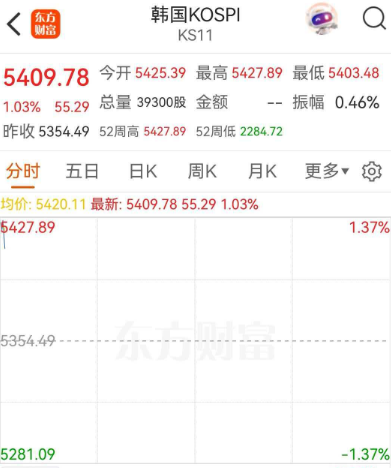
日韩股市高开,日经225指数涨0.51%,韩国KOSPI指数涨1.03%,SK海力士涨超3%丨日韩股市
Mei Ri Jing Ji Xin Wen· 2026-02-12 00:19
Group 1 - The core viewpoint of the news highlights the positive performance of the Japanese and South Korean stock markets, with the Nikkei 225 index rising by 0.51% to 57,942.33 points and the KOSPI index increasing by 1.03% to 5,409.78 points [1] - SK Hynix shares experienced a notable increase of 3.14% [1] - The U.S. stock market saw significant gains in the storage sector, with SanDisk rising by 10.55%, Micron Technology by 9.91%, and Western Digital and Seagate Technology both increasing by over 2% [1] Group 2 - The KOSPI index opened at 5,425.39 points, with a low of 5,403.48 points and a previous close of 5,354.49 points, indicating a 52-week high of 5,427.89 points and a low of 2,284.72 points [2] - The KOSPI index showed a total trading volume of 39,300 shares with a fluctuation of 0.46% [2] - The average price for the KOSPI index was recorded at 5,420.11 points, with the latest value at 5,409.78 points, reflecting a change of 55.29 points or 1.03% [2]
大摩“暴力”上调美光目标价至450美元:只要AI需求强劲,中国产能冲击、资本开支过热统统不是问题!
美股IPO· 2026-02-11 13:03
Core Viewpoint - Morgan Stanley has significantly raised Micron's target price from $350 to $450, indicating an implied upside of approximately 28.6% from the current stock price, driven by a supply shortage in memory chips across all end markets and a shift in pricing power to sellers [1][3]. Group 1: Market Dynamics - The current memory chip supply shortage is underestimated by the market, with both DRAM and NAND prices expected to continue rising in Q1 and Q2 of 2026 [4]. - Micron's guidance for Q2 suggests a 37% quarter-over-quarter revenue growth, with an implied average selling price (ASP) increase of about 30% [4]. - Competitors like SanDisk have reported a staggering 60% quarter-over-quarter increase in NAND ASP, while teams covering Samsung and Hynix predict DRAM price increases of 48% and 55%, respectively [5]. Group 2: Profitability and Earnings Forecast - Morgan Stanley projects Micron's earnings per share (EPS) to soar to over $52 in the calendar year 2026, indicating a significant increase in profitability [3][9]. - The consensus expectation for Micron's earnings is considered overly conservative, with predictions suggesting a peak EPS of around $12 in late 2027, which Morgan Stanley believes will be exceeded in the next 18 months [9]. Group 3: Valuation Logic - Morgan Stanley argues that using traditional cyclical valuation frameworks for Micron is misguided, as the current price corresponds to a price-to-earnings (P/E) ratio of only 8 times the projected earnings of $48, which is significantly undervalued [10]. - The firm has adjusted its cross-cycle EPS estimate from $14 to $18, leading to a new target price of $450 based on a 25 times P/E ratio [11]. Group 4: Supply and Demand Imbalance - The structural supply-demand imbalance driven by AI is expected to create an additional $200 billion in annual revenue demand within the next 12 months, surpassing the entire semiconductor market revenue in 2020 [12]. - The slow growth in wafer output is projected to be only 7% year-over-year by the end of 2026, while demand is expected to grow explosively, with companies like Nvidia and AMD significantly increasing their revenue forecasts [12]. Group 5: Addressing Market Concerns - Concerns regarding the impact of Chinese memory chip companies and HBM4 production issues are deemed exaggerated by Morgan Stanley, which maintains that Micron's production timeline for HBM4 remains unchanged [13][14]. - Even if Micron faces unforeseen challenges in ramping up HBM4 production, the existing HBM3e will continue to dominate the market and will not negatively impact profitability [13].