卡车制造

Search documents
Mike Roeth:电动卡车在可持续性、成本与运营优化方面表现尤为突出
Feng Huang Wang Cai Jing· 2025-10-25 05:05
Group 1 - The "Zero Carbon Mission International Climate Summit 2025" aims to gather insights and strategies for addressing climate change, supporting China's carbon neutrality vision and global emission reduction goals [1] Group 2 - Mike Roeth, Director of the North American Council on Efficient Freight Transportation, shared insights on the decarbonization of heavy-duty trucking, highlighting the transition from diesel to electric trucks [3] - The team has conducted five decarbonization practices over the past eight years, with a significant shift towards battery electric vehicles starting in 2021 and 2023 [3] - The focus for 2025 is on long-haul freight decarbonization solutions, including renewable diesel and biodiesel, with electric trucks showing notable sustainability and cost optimization advantages [3] Group 3 - The industry is still in the early stages of technological development, with original equipment manufacturers experiencing fluctuations in technology advancements [4] - Electric trucks have a simpler structure compared to complex diesel systems, which is seen as a sustainable advantage for future development [4] - Currently, the adoption and ownership of heavy-duty electric trucks in North America are very low, with only a few hundred units in operation [4] Group 4 - Concerns were raised about the U.S. lagging in heavy-duty electric truck development, particularly with recent government actions to reduce regulations and incentives [4] - The early stage of the market requires more support to achieve significant market share, as the current environment may negatively impact the electrification of heavy-duty vehicles [4]


PACCAR(PCAR) - 2025 Q3 - Earnings Call Transcript
2025-10-21 17:02
Financial Data and Key Metrics Changes - PACCAR achieved revenues of $6.7 billion and net income of $590 million in Q3 2025, with PACCAR Parts achieving record quarterly revenues of $1.72 billion and pre-tax income of $410 million, reflecting a 4% growth in parts revenue compared to the same period last year [4][5][9] - PACCAR's gross margins for trucks, parts, and other were 12.5% in Q3, affected by tariff increases on steel and aluminum, with expectations for fourth quarter margins around 12% as tariffs peak in October [7][8] Business Line Data and Key Metrics Changes - PACCAR Parts reported gross margins of 29.5% and a 4% increase in sales compared to the previous year, with similar growth expected in Q4 [9][10] - PACCAR Financial Services achieved pre-tax income of $126 million, an 18% increase from $107 million reported a year earlier, reflecting a high-quality portfolio and improving used truck results [10] Market Data and Key Metrics Changes - The U.S. and Canadian Class eight market is estimated to be between 238,000 - 245,000 trucks this year, with expectations for next year in the range of 230,000 - 270,000 [5][6] - The European above 16-ton market is projected to be between 275,000 - 295,000 vehicles this year, with expectations for 2026 in the range of 270,000 - 300,000 [6][7] Company Strategy and Development Direction - PACCAR is investing in capacity and services for PACCAR Parts, including a new 180,000 sq ft parts distribution center in Calgary and a new engine remanufacturing center in Columbus, Mississippi [9][10] - The company is focused on long-term growth through investments in truck and engine factories, advanced technology, and clean diesel and alternative powertrains [10][11] Management's Comments on Operating Environment and Future Outlook - Management expressed optimism about improving market conditions and the potential for increased demand in the truckload sector as clarity around tariffs and emissions policies develops [5][8] - The company anticipates that the new Section 232 tariffs will benefit customers by reducing costs and improving competitive positioning [8][15] Other Important Information - Capital expenditures for this year are projected to be between $750 million and $775 million, with research and development expenses estimated at $450 million - $465 million [10] - The company is prepared for the EPA's 35 mg NOx standard and is working on new products to support it [28] Q&A Session Summary Question: Impact of Section 232 tariffs on competitive position - Management indicated that Section 232 tariffs will improve PACCAR's competitive position as they manufacture trucks in the U.S., with expectations for stability and benefits to customers [15][16] Question: Pricing strategy in light of tariffs - Management noted that while pricing has been affected by tariffs, they expect opportunities for price increases as the market stabilizes and demand improves [18][19] Question: North American growth outlook and customer conversations - Management highlighted mixed customer feedback, with positive sentiment in the vocational market but challenges in the truckload sector, indicating a potential increase in orders as clarity around regulations improves [26][27] Question: Tariff headwinds and gross profit margin expectations - Management stated that the primary impact on margins in Q4 will be from tariff costs, with expectations for improvement as tariffs decrease [51][52] Question: Inventory levels and demand outlook - Management reported healthy inventory levels, with 2.8 months of inventory for PACCAR, and expressed optimism about demand in the first half of next year as customers finalize their buying plans [85][86]

PACCAR(PCAR) - 2025 Q3 - Earnings Call Transcript
2025-10-21 17:00
Financial Data and Key Metrics Changes - PACCAR achieved revenues of $6.7 billion and net income of $590 million in Q3 2025, with PACCAR Parts recording record quarterly revenues of $1.72 billion and pre-tax income of $410 million, reflecting a 4% revenue growth compared to the same period last year [3][4][8] - Gross margins for PACCAR's trucks, parts, and other segments were 12.5% in Q3, impacted by tariff increases on steel and aluminum, with expectations for fourth quarter margins around 12% as tariffs peak in October [5][6] Business Line Data and Key Metrics Changes - PACCAR Parts reported gross margins of 29.5% and a 4% increase in sales compared to the previous year, with similar growth anticipated in Q4 [8] - PACCAR Financial Services achieved pre-tax income of $126 million, an 18% increase from $107 million a year earlier, driven by a high-quality portfolio and improving used truck results [9] Market Data and Key Metrics Changes - The U.S. and Canadian Class 8 truck market is estimated to be between 238,000 to 245,000 trucks for this year, with projections for next year ranging from 230,000 to 270,000 [4] - The European above 16-ton truck market is projected to be between 275,000 to 295,000 vehicles this year, with expectations for 2026 to be in the range of 270,000 to 300,000 [5] Company Strategy and Development Direction - PACCAR is investing in capacity and services for PACCAR Parts, including a new distribution center in Calgary and an engine remanufacturing center in Mississippi [8] - The company is focused on long-term growth through investments in truck and engine factories, advanced technology, and clean diesel and alternative powertrains [10] Management's Comments on Operating Environment and Future Outlook - Management expressed optimism about improving market conditions and the potential for increased demand in the truckload sector as customers return to replacement cycles [17][24] - The implementation of Section 232 tariffs is expected to enhance PACCAR's competitive position, with management anticipating stability and improved margins as tariffs decrease [13][40] Other Important Information - Capital expenditures for this year are projected to be between $750 million and $775 million, with research and development expenses estimated at $450 million to $465 million [9] - The company is preparing for the EPA's 35 mg NOx standard, with confidence in their ability to meet regulatory requirements [26] Q&A Session Summary Question: Impact of Section 232 tariffs on competitive position - Management indicated that Section 232 tariffs will improve PACCAR's competitive position as they manufacture trucks in the U.S., with full implementation expected to stabilize costs [12][14] Question: Pricing strategy in light of tariffs - Management noted that while tariffs peaked in Q4, they expect to integrate pricing discussions without surcharges, focusing on the value of their trucks [45][78] Question: Customer demand and order outlook - Management highlighted mixed customer responses, with positive sentiment in vocational and less-than-truckload markets, while truckload sector remains cautious [24][40] Question: Inventory levels and destocking needs - Current industry inventory is at four months, with PACCAR's inventory at 2.8 months, indicating a healthy position without excess stock [74] Question: Future growth in parts business - Management expressed confidence in the parts business growth, leveraging AI for better service and anticipating continued demand as truck fleets age [69][70]
长假10个重磅消息来袭,明天10月9日,A股大概率会这么走!
Sou Hu Cai Jing· 2025-10-08 13:43
Group 1 - The China Securities Regulatory Commission (CSRC) held a seminar to discuss the "14th Five-Year" capital market planning, focusing on deepening investment and financing reforms through the Sci-Tech Innovation Board and the Growth Enterprise Market, aiming to enhance market attractiveness and competitiveness [1] - The seminar emphasized the importance of long-term investment strategies, which could boost market confidence and liquidity, leading to a stabilization and recovery of the A-share market, particularly in the technology sector [1] Group 2 - The U.S. announced new tariffs on imported building materials, cabinets, bathroom products, vanities, and upholstered furniture, which could weaken the price competitiveness of export products, especially affecting companies heavily reliant on the U.S. market [2] - Tariffs ranging from 30% to 50% may significantly impact the export business of related companies [2] Group 3 - OPEC+ representatives indicated a potential increase in oil production by 500,000 barrels per day over the next three months, which could lead to a decrease in oil prices and pressure on oil exploration companies [3][4] - However, lower oil prices may benefit downstream industries such as aviation and logistics due to reduced costs [4] Group 4 - A leading domestic AI model company, Zhipu, officially released and open-sourced its new generation model GLM-4.6, achieving significant improvements in key capabilities [4] - The advancements in AI technology and domestic deployment are expected to strengthen the technology sector, with a focus on hard technology as a priority in the "14th Five-Year" plan [5] Group 5 - Berkshire Hathaway, led by Warren Buffett, is investing $10 billion to acquire a subsidiary of Occidental Petroleum, signaling confidence in the energy sector and potentially boosting global energy valuations [5][6] Group 6 - Apple has paused its upgrade plans for the Vision Pro headset to focus on developing smart glasses that can compete with Meta's products, which may impact existing supply chain orders but also indicate new opportunities in AI smart glasses [8] - The real estate sector is entering a traditional peak season, with the top 100 real estate companies achieving a sales amount of 252.8 billion yuan in September 2025, reflecting a year-on-year increase of 0.4% and a month-on-month increase of 22.2% [9] Group 7 - The U.S. announced that starting November 1, 2025, all medium and heavy trucks imported from other countries will be subject to a 25% tariff, which could weaken the export competitiveness of trucks [10][11] - Similar to the furniture case, high tariffs may lead to a loss of orders in the truck market [12] Group 8 - AMD has entered a four-year agreement with OpenAI to supply tens of thousands of AI chips, granting OpenAI an option for up to 10% equity, which is expected to boost the AI and semiconductor sectors [14] - The People's Bank of China reported an increase in gold reserves to 74.06 million ounces by the end of September, indicating rising demand for safe-haven assets and benefiting gold production companies [14]



市场综述:美股股指期货缺乏方向黄金从历史高位回落
Xin Lang Cai Jing· 2025-10-07 09:49
Market Overview - European stock markets and US futures are lacking direction as investors await political developments on both sides of the Atlantic [1] - Gold prices retreated after approaching $4000 per ounce, following a historical high of $3977 [1] - The S&P 500 index futures slightly declined after reaching a record high on Monday, driven by a surge in technology stocks due to AI spending [1] - The Stoxx 600 index remained largely flat, while the French CAC40 index reversed early losses amid political turmoil in France [1] Political and Economic Factors - Concerns over a US government shutdown and a political crisis in France have led investors to seek alternative assets like gold and Bitcoin, both of which reached new highs [1] - The resignation of French Prime Minister Sebastien Lecornu has prompted President Emmanuel Macron to make last-ditch efforts to stabilize the government [1] Sector-Specific Developments - Truck manufacturers such as Volvo AB and Daimler Truck Holding AG saw stock price declines due to President Trump's announcement of a 25% tariff on medium and heavy trucks next month [1] - A series of AI-related transactions among chip manufacturers have driven stock prices up, raising concerns about a potential "speculative bubble" reminiscent of the late 1990s internet bubble [1] Investment Insights - Michael Brown, a senior research strategist at Pepperstone Group Ltd., believes concerns about a tech bubble are "overblown," citing that the valuations of the "Magnificent Seven" tech giants are in line with their five-year averages [1] - The overall market's "path of least resistance" appears to be upward, supported by strong corporate earnings growth, robust economic resilience, and an increasingly accommodative monetary policy environment [1] - Recent significant deals in the data center sector, including a major transaction by Advanced Micro Devices, highlight the ongoing demand for computing power driven by tools like ChatGPT [1]
关税全部由美国人买单!10月1日生效,特朗普对进口药征100%关税
Sou Hu Cai Jing· 2025-09-29 05:30
Core Viewpoint - The recent tariff reforms in the U.S. are significantly increasing costs for consumers and businesses, leading to a rapid decline in purchasing power for ordinary families [3][15]. Pharmaceutical Industry - The pharmaceutical sector is facing severe disruptions, with companies like Novo Nordisk having to re-label diabetes medication due to a 100% tariff, resulting in an additional $700 per box [6]. - Sumitomo Pharma anticipates a direct loss of $435 million in profits from the U.S. market due to tariffs on its cancer drug [6]. - The lengthy FDA approval process (28 months) complicates the transition to alternative production, exacerbating supply issues for U.S. patients [6][9]. Supply Chain Impact - Indian pharmaceutical companies are pressured to reduce raw material prices by 5%, while facing an 18% increase in steel prices due to tariffs [8]. - U.S. pharmaceutical companies are also struggling, with Pfizer experiencing a 22% increase in the cost of imported vaccine components [8]. Trucking Industry - The trucking sector is heavily impacted, with a 25% tariff causing each truck to cost an additional $87,500, leading to production delays and potential shutdowns [9]. - Domestic companies like PACCAR are facing increased costs due to a 40% rise in steel prices and doubled costs for German robotics, resulting in an estimated $12,000 increase in truck production costs [9]. Furniture Market - The furniture industry is seeing a significant drop in demand, with a 45% price increase from Vietnamese suppliers driving away 60% of American customers [13]. - Ashley Furniture is also affected, facing a 22% increase in domestic lumber prices and a 35% tariff on Vietnamese hardware, raising the cost of cabinets by $380 [13]. Global Economic Impact - The IMF reports that the tariff situation will create an additional $120 billion in trade costs, with 70% of this burden falling on American consumers [15]. - Despite the projected $350 billion investment in new pharmaceutical plants, the R&D processes remain largely overseas, indicating a fragmented production model that may lead to inefficiencies for global consumers [15].

President Trump announces new tariffs: Here's what you need to know
Youtube· 2025-09-26 17:35
Tariffs - President Trump announced new tariffs, including a 100% tariff on branded or patented pharmaceuticals and a 25% tariff on imported heavy trucks, both effective October 1st [2][3] - A 50% tariff will be imposed on kitchen cabinets and bathroom vanities, and a 30% tariff on upholstered furniture, also starting October 1st [3] - Section 232 investigations into imports of robotics, industrial machinery, and medical devices were announced, which may lead to additional tariffs [4] Impact on Agriculture - The trade war has negatively affected American farmers, particularly with a decline in Chinese purchases of American soybeans [5] - A mechanism is being developed to transfer some tariff revenues to American farmers, though details are still to be determined [5][6] Government Shutdown - A government shutdown appears increasingly likely, with no serious negotiations between parties, potentially leading to the first full shutdown since 2013 [7][10] - If a shutdown occurs, it will delay jobs data, company certifications, and federal payments, with the travel industry projected to lose $1 billion weekly [9][10] - The potential for massive federal layoffs could impact hundreds of thousands of workers, although specific numbers are unclear [9][10] Market Reactions - The market has shown resilience despite the looming shutdown and tariff announcements, with some sectors, particularly drug stocks, performing well [11][15] - Investors are becoming accustomed to the tariff situation, with some companies using tariffs as a pricing strategy, leading to increased prices for consumers [17][19] - The impact of tariffs on consumer spending is expected to become more pronounced in upcoming quarters, particularly affecting lower-end consumers [21][22]
Paccar shares rise after Trump announces tariffs on foreign heavy-duty trucks
Invezz· 2025-09-26 15:34
Core Viewpoint - Shares of US truck manufacturer Paccar increased following President Donald Trump's announcement of new tariffs on foreign-made heavy-duty trucks, aimed at protecting domestic manufacturing [1] Group 1: Company Impact - Paccar's stock price rose as a direct response to the tariff announcement, indicating a positive market reaction to the protective measures for domestic manufacturers [1] Group 2: Industry Implications - The new tariffs are expected to impact the competitive landscape of the heavy-duty truck market, potentially benefiting US manufacturers like Paccar while posing challenges for foreign competitors [1]
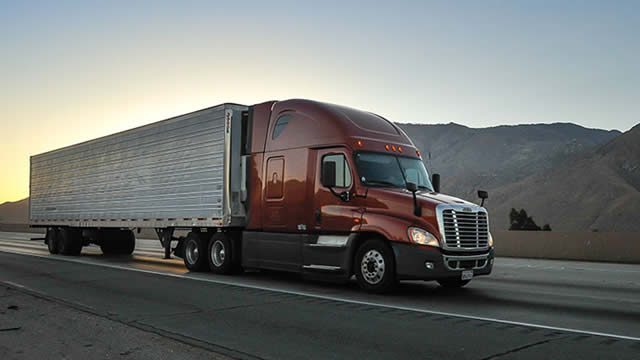
Shares of Paccar - Peterbilt and Kenworth owner - soar after Trump's heavy truck tariffs
CNBC· 2025-09-26 11:52
Core Viewpoint - The announcement of a 25% tariff on imported heavy trucks by President Trump is expected to benefit Paccar, leading to a significant increase in its stock price. Group 1: Tariff Announcement - President Trump announced a 25% tariff on imported heavy trucks effective October 1, which has led to a more than 6% increase in Paccar's shares premarket [1] - The tariff aims to protect large truck manufacturers, including Paccar's brands Peterbilt and Kenworth, from foreign competition [2] Group 2: Cost Implications - Paccar manufactures over 90% of its trucks domestically, but these trucks are priced $8,000 to $10,000 higher than those produced by competitors in Mexico, according to Bank of America [2] - The tariff is likely to address the cost disparity and enhance Paccar's competitive position in the market [3]
特朗普宣布对重型卡车和家具加征关税
日经中文网· 2025-09-26 08:00
Core Viewpoint - The U.S. government, under President Trump, is implementing new tariffs on heavy trucks and furniture to protect domestic manufacturers from foreign competition, citing national security concerns [1][4]. Group 1: Tariff Details - Starting from October 1, a 25% tariff will be imposed on heavy trucks manufactured overseas [1][3]. - Additionally, a 50% tariff will be applied to cabinets and sinks, while upholstered furniture will face a 30% tariff [1][3]. - The U.S. Department of Commerce initiated an investigation into the import situation of medium and heavy trucks in April, with heavy trucks defined as those weighing over 26,000 pounds (approximately 11.7 tons) [3]. Group 2: Domestic Manufacturing Protection - Trump emphasized that the tariffs aim to protect American manufacturers such as Mack Trucks, Kenworth, and Peterbilt from foreign competition [3]. - The focus on tariffs for furniture products aligns with previous discussions about imposing tariffs on wood products, including furniture made from wood [3]. Group 3: Political Implications - The furniture manufacturing hubs are primarily located in swing states like North Carolina and Michigan, which are critical for electoral votes [3].