
商品零售

Search documents
沈建光:四季度消费 “冷暖不均”,政策还需加力
Di Yi Cai Jing· 2025-12-24 15:24
Core Viewpoint - The recent trends in China's consumer market indicate a decline in overall consumption growth, with a notable differentiation in product categories and a resilient service consumption sector. The urban consumption has significantly slowed down, necessitating policy adjustments to stimulate recovery and address structural disparities [1][9]. Group 1: Product Consumption Trends - The retail sales growth of goods has weakened, with November's year-on-year growth dropping to 1%, the lowest since August 2023. This decline is attributed to high base effects from the previous year and diminishing policy impacts [2]. - Categories related to the "trade-in" policy, such as home appliances and automobiles, have seen significant declines in retail sales, with decreases of 19.4% and 8.3% respectively in November. This reflects the exhaustion of consumer demand in these sectors [2]. - Non-trade-in categories have shown more stable performance, with retail growth for essential goods like food and beverages remaining robust, and some discretionary categories like cosmetics and clothing experiencing growth rates of 7.9% and 4.9% respectively [3]. Group 2: Service Consumption Insights - Service retail sales have demonstrated resilience, with a cumulative year-on-year growth of 5.4% from January to November, surpassing the 4.1% growth in goods retail. This indicates an increasing share of service consumption in overall spending [4]. - The growth in service consumption is supported by the development of new consumption scenarios, such as cultural and sports activities, which have contributed to a 19.5% increase in national box office revenue [4]. - The potential for service consumption remains significant, as it currently lags behind goods consumption in GDP contribution, suggesting opportunities for growth in sectors like tourism, elderly care, and childcare [5]. Group 3: Urban Consumption Dynamics - Urban retail growth has notably slowed, with November figures showing a year-on-year increase of only 1%, compared to 2.8% in rural areas. This shift is partly due to the diminishing effects of the trade-in policy [7]. - The central economic work conference has emphasized the need to eliminate unreasonable restrictions in the consumption sector to stabilize urban consumption, particularly in first-tier cities where growth has been weaker compared to lower-tier cities [7]. - Recommendations include accelerating the removal of consumption restrictions and promoting new consumption forms, such as yacht and automotive modifications, to enhance consumer confidence and spending [8][9].
商务部消费促进司负责人谈2025年11月我国消费市场情况
Shang Wu Bu Wang Zhan· 2025-12-19 03:53
Group 1 - In November, the total retail sales of consumer goods reached 4.39 trillion yuan, with a year-on-year growth of 1.3%. From January to November, the total retail sales amounted to 45.6 trillion yuan, growing by 4.0%, which is 0.5 percentage points faster than the same period last year [1] - Commodity consumption remained stable, with retail sales of goods increasing by 1.0% in November. Sales of essential goods such as grain, oil, and food increased by 6.1%, while clothing and footwear sales rose by 3.5%. Upgraded goods like gold and silver jewelry and cosmetics saw retail sales growth of 8.5% and 6.1%, respectively. Categories related to trade-in programs, such as communication equipment and cultural office supplies, experienced significant growth, with increases of 20.6% and 11.7% [1] - Service consumption grew rapidly, with retail sales of services increasing by 5.4% from January to November, which is 1.3 percentage points faster than the growth of goods retail sales. In November, restaurant income grew by 3.2%, indicating stable growth [1] Group 2 - New consumption demand is strong, with online retail sales growing by 9.1% from January to November, and physical goods online retail sales increasing by 5.7%. Key monitored platforms reported that sales of action cameras, embodied intelligent robots, and first-class energy-efficient televisions all grew by over 20% in November. Additionally, the penetration rate of new energy passenger vehicles reached 59.3% in November [1] - Rural consumption outpaced urban consumption, with retail sales of consumer goods in rural areas growing by 4.4% from January to November, which is 0.5 percentage points faster than urban areas. In November, rural retail sales increased by 2.8%, outpacing urban growth by 1.8 percentage points [2]
11月经济数据点评:需求偏弱延续,政策加力必要性上升
LIANCHU SECURITIES· 2025-12-18 09:42
Production - In November, industrial added value increased by 4.8% year-on-year, with a month-on-month growth of 0.4%, indicating resilience in industrial operations[1] - The service production index grew by 4.2% year-on-year, down 0.4 percentage points from the previous month[1] Investment - Fixed asset investment in November saw a month-on-month decline of 12.0%, with a cumulative growth rate dropping to -2.6%, a decrease of 0.9 percentage points from the previous month[2] - Infrastructure investment showed a cumulative growth rate of 0.1% for broad infrastructure and -1.1% for narrow infrastructure, both continuing to decline[2] - Real estate investment fell by 15.9% cumulatively, with funding and sales also showing significant declines, indicating ongoing instability in housing prices[2] Consumption - Social retail sales grew by 1.3% year-on-year in November, a decrease of 1.6 percentage points from the previous month, primarily due to high base effects from last year[3] - Restaurant consumption showed relative resilience with a year-on-year growth of 3.2%, while retail sales of goods increased by only 1.0%, reflecting a notable slowdown[3] Policy Outlook - The necessity for policy support has increased due to continued weak demand, with the December Central Economic Work Conference emphasizing the need for proactive fiscal measures and enhancing macroeconomic governance[5] - The policy toolbox remains ample, with a focus on expanding domestic demand and optimizing supply[5]
科技股,集体跳水!
Zheng Quan Shi Bao· 2025-12-16 10:00
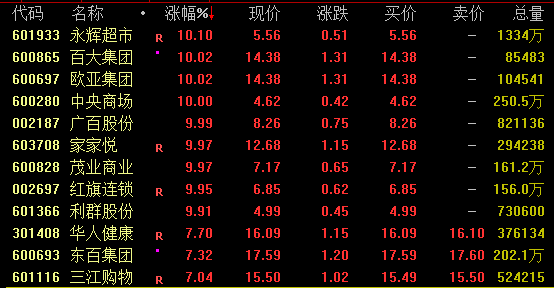
Market Overview - Major stock indices in the Asia-Pacific region mostly declined, with the Nikkei 225 index closing down 1.56% at 49,383.29 points, the South Korean Composite Index down 2.24% at 3,999.13 points, and the Australian S&P 200 index down 0.56% at 8,598.9 points [1] - A-shares and Hong Kong stocks also saw significant declines, with the Shanghai Composite Index dropping over 1%, the ChiNext Index down over 2%, and the Hang Seng Index down over 1.5% [2] A-share Market Performance - The three major A-share indices experienced a downward trend, with the Shanghai Composite Index closing down 1.11% at 3,824.81 points, the Shenzhen Component Index down 1.51%, and the ChiNext Index down 2.1% [2] - The North China 50 Index rose 0.54% against the market trend, with total trading volume in the Shanghai and Shenzhen markets amounting to 1.7483 trillion yuan, a decrease of approximately 46 billion yuan from the previous day [2] Sector Performance - Approximately 4,300 A-shares were in the red, with technology stocks experiencing a significant drop, including a decline of over 7% for Moore Threads and nearly 5% for Tianfu Communication [3] - The retail sector was active, with several stocks hitting the daily limit, including Baida Group, which achieved a four-day limit-up streak [4][5] - The autonomous driving concept saw a strong rise, with stocks like Wanji Technology and Jiuzhiyang hitting the daily limit [8] Retail Sector Insights - The retail sector showed renewed activity, with stocks such as Yonghui Supermarket and Baida Group hitting the daily limit [4] - Baida Group has experienced a four-day limit-up streak, with the company stating that it has not identified any media reports or market rumors that could impact its stock price [5] Autonomous Driving Sector Developments - The autonomous driving concept surged, with several companies, including Wanji Technology and Jiuzhiyang, reaching the daily limit [8] - The Ministry of Industry and Information Technology announced the first batch of L3-level conditional autonomous driving vehicle approvals, marking a significant step towards commercial application [9] - The smart driving market is expected to grow significantly, with projections indicating a market size of 1.1082 trillion yuan in 2024, representing a year-on-year growth of 34% [10] Company Spotlight: Angrui Microelectronics - Angrui Microelectronics, which debuted on the STAR Market, saw its stock price rise approximately 160% to 216.05 yuan per share, with intraday highs reaching 244 yuan [11] - The company specializes in the design of RF and analog integrated circuits and is recognized as a national-level "little giant" enterprise [11]


科技股,集体跳水!
证券时报· 2025-12-16 09:56
Market Overview - Major stock indices in the Asia-Pacific region mostly declined, with Japan's Nikkei 225 down 1.56% to 49,383.29 points, South Korea's Composite Index down 2.24% to 3,999.13 points, and Australia's S&P 200 down 0.56% to 8,598.9 points [1] - A-shares and Hong Kong stocks also saw significant declines, with the Shanghai Composite Index down over 1% and the ChiNext Index down over 2% [2] Japanese Central Bank Policy - The Bank of Japan's hawkish signals have caused market fluctuations, with expectations of a potential interest rate hike of 25 basis points to 0.75% during the upcoming monetary policy meeting on December 18-19 [2] - Analysts suggest that the impact of this rate hike may be limited due to prior communication and pricing in the market [2] A-share Market Performance - In the A-share market, approximately 4,300 stocks were in the red, with technology stocks experiencing significant drops, such as Moer Thread down over 7% and Tianfu Communication down nearly 5% [3] - Conversely, the retail sector showed resilience, with stocks like Baida Group achieving a four-day limit-up streak [3][5] Retail Sector Activity - The retail sector was notably active, with several companies including Yonghui Supermarket and Baida Group hitting the daily limit-up [5][6] - Baida Group's stock has risen significantly, prompting a cautionary note regarding potential risks of a price correction [7] Autonomous Driving Sector Growth - The autonomous driving concept saw a strong rise, with stocks like Wanjitech and Jiuzhiyang hitting the daily limit-up [9] - The Ministry of Industry and Information Technology has approved the first batch of L3-level conditional autonomous driving vehicles, marking a significant step towards commercialization [11] Investment Opportunities in Autonomous Driving - The intelligent driving market is projected to grow significantly, with the industry scale expected to reach 1.1082 trillion yuan in 2024, a year-on-year increase of 34% [11] - By 2030, the industry scale is anticipated to exceed 5 trillion yuan, driven by advancements in algorithms and technology [11] New IPO Performance - The newly listed company Angrui Microelectronics saw its stock price surge approximately 160% on its debut, closing at 216.05 yuan per share, with intraday highs reaching 244 yuan [13] - Angrui Microelectronics specializes in RF and analog integrated circuit design, indicating strong market interest and potential for growth [13]





滁州乐居科技有限公司成立 注册资本50万人民币
Sou Hu Cai Jing· 2025-12-16 03:36
Group 1 - A new company, Chuzhou Leju Technology Co., Ltd., has been established with a registered capital of 500,000 RMB [1] - The legal representative of the company is Zhong Xianchao [1] - The company's business scope includes a wide range of activities such as technology services, internet sales, import and export of goods, and various retail sectors including pet products, daily necessities, cosmetics, and more [1] Group 2 - The company is involved in both wholesale and retail of pet food and supplies, indicating a focus on the pet industry [1] - Additional retail activities include clothing, jewelry, household appliances, toys, and sports equipment, showcasing a diverse product offering [1] - The company also provides advertising design and information consulting services, expanding its service portfolio [1]
广东“诚信价格”行为指引公开征求意见
Nan Fang Ri Bao Wang Luo Ban· 2025-12-15 07:49
Core Viewpoint - Guangdong Province has released three draft guidelines on "Integrity Pricing" for the retail, catering, and accommodation industries, aiming to promote compliance with pricing norms and protect consumer rights while maintaining fair market competition. Group 1: Catering Industry Guidelines - Operators must clearly display prices through various means such as paper menus, electronic screens, and online pages, ensuring that the information is accurate and easily visible to consumers before ordering [2] - Any additional fees, such as service charges, must be disclosed to consumers prior to ordering [2] - Platform operators are prohibited from infringing on the pricing autonomy of businesses on their platforms and must not use technical means to enforce misleading pricing [2] Group 2: Retail Industry Guidelines - Retailers can adopt pricing methods that are convenient for consumers to understand, with e-commerce operators required to display prices clearly on their online platforms [2] - Both member and non-member prices can be displayed, but they must be clearly marked and of equal font size [2] Group 3: Accommodation Industry Guidelines - Accommodation prices are subject to market regulation, and operators must set prices based on costs and market demand while ensuring fair competition [4] - Promotional pricing must adhere to strict rules, including accurate comparisons and the prohibition of fictitious original prices [4] - Operators must not use unverifiable market prices as comparison prices and must ensure that any comparative pricing is based on the lowest transaction price within the last seven days [4]
11月经济数据解读:关注扩大内需政策接续
Yin He Zheng Quan· 2025-12-15 07:11
Economic Overview - GDP growth for January to November is reported at 4.9%, slightly down from 4.8% in November[1] - Industrial production growth remains weak, with a decline of 1.1% in fixed asset investment for the same period[1] Consumption Trends - Retail sales growth is under pressure, with a 1.3% increase in November, while service consumption shows improvement[4] - The retail sector is experiencing a decline in durable goods, with a notable drop of 7.7% in November[6] Manufacturing Sector - Manufacturing investment has decreased significantly, with a decline of 12.2% year-to-date[11] - The manufacturing sector's growth rate has slowed, with a drop of 4.45% in November compared to the previous year[11] Infrastructure Investment - Infrastructure investment shows a narrowing decline, with a year-to-date drop of 1.1%[15] - Policy support is expected to stabilize some of the downturn in infrastructure investment, with projections for improvement in 2026[15] Real Estate Market - Real estate investment continues to weaken, with a year-to-date decline of 14.7%[22] - Residential sales prices are falling, with new and second-hand home prices decreasing by 1.2% and 2.2% respectively in November[22]
加强商务金融协同 更大力度提振消费
Zheng Quan Shi Bao· 2025-12-15 02:57
Core Viewpoint - The joint notification issued by the Ministry of Commerce, the People's Bank of China, and the National Financial Regulatory Administration aims to enhance collaboration between commerce and finance to boost consumption through 11 policy measures focusing on various consumption sectors [1][2]. Group 1: Policy Measures - The notification emphasizes deepening collaboration between commerce and finance systems, encouraging local departments to enhance communication and cooperation, and promoting a combination of fiscal, credit, and social capital [1]. - It highlights the importance of cross-departmental coordination to implement consumption-boosting measures, with the Ministry of Finance and the People's Bank of China already implementing personal consumption loan interest subsidies since September 1 [1]. - The notification aims to create a "1+N" policy framework to support service consumption, focusing on sectors like home services, hospitality, entertainment, education, tourism, and elderly care [2]. Group 2: Financial Support and Innovation - The notification calls for enhancing financial services for durable goods and digital products, exploring the potential for upgrading commodity consumption [2]. - It encourages the development of innovative financial products and services that integrate into consumption scenarios, particularly in emerging sectors like green consumption and digital consumption [2]. - Financial institutions are urged to create tailored loan products for rural e-commerce and urban consumption hotspots, expanding online channels and strengthening offline services [2]. Group 3: Collaborative Consumption Activities - The notification promotes a collaborative approach among government, finance, and enterprises to conduct diverse consumption promotion activities and share information effectively [3]. - It encourages financial institutions to customize digital RMB smart contract red envelope services based on local consumption policies and needs [3]. - Local commerce departments are advised to establish a list of key projects in the consumption sector and enhance information sharing with financial institutions to facilitate precise service matching [3].
三部门联合发文推11条举措 促消费政策“组合拳”再加码 加强商务金融协同 更大力度提振消费
Zheng Quan Shi Bao· 2025-12-14 18:35
Core Viewpoint - The joint issuance of the "Notice" by the Ministry of Commerce, the People's Bank of China, and the National Financial Regulatory Administration aims to enhance collaboration between commerce and finance to boost consumption through 11 policy measures focusing on various consumption sectors [1][2]. Group 1: Policy Measures - The "Notice" emphasizes deepening collaboration between commerce and finance systems, encouraging local departments to enhance communication and cooperation, and promoting a combination of fiscal, credit, and social capital to implement specific measures [1]. - It highlights the importance of cross-departmental coordination to ensure effective policy implementation, with the Ministry of Finance and the People's Bank of China already implementing a personal consumption loan subsidy policy since September 1 [1]. - The "Notice" aims to create a systematic approach by encouraging regular communication between commerce and finance sectors, enhancing policy alignment, and sharing information to maximize the effectiveness of various policy combinations [1]. Group 2: Consumption Focus Areas - The "Notice" proposes targeted measures for goods consumption, service consumption, and new consumption types, including enhancing financial services for durable goods and digital products to tap into consumption upgrade potential [2]. - It suggests improving the "1+N" policy framework to increase support for service consumption, focusing on sectors like home services, hospitality, entertainment, education, tourism, and elderly care [2]. - The document encourages innovation in financial products and services to integrate more into consumption scenarios and ecosystems, exploring effective measures to support emerging consumption models such as green consumption and digital consumption [2]. Group 3: Support for Consumption - The "Notice" encourages the "government-finance-enterprise" collaboration to conduct diverse consumption promotion activities and information sharing, ensuring precise service matching to meet the needs of businesses and consumers [3]. - It promotes the customization and upgrading of digital RMB smart contract red envelope services by financial institutions to meet the requirements for efficient fund turnover and targeted policies [3]. - Local commerce departments are urged to establish a list of key projects in the consumption sector and enhance information sharing with financial institutions to facilitate precise service matching [3].