
工业智能化

Search documents
从郑煤机到中创智领,改变的是什么?
Sou Hu Cai Jing· 2025-09-17 03:07
Group 1 - The core viewpoint of the articles emphasizes the strategic transformation and rebranding of companies in Henan, particularly the renaming of Zhengzhou Coal Mining Machinery Group to Zhongchuang Zhiling Group, which signifies a fundamental reshaping of future positioning and strategic layout [1][2][3] - Zhongchuang Zhiling Group aims to accelerate the upgrade of high-end equipment and intelligent manufacturing industries, aspiring to become a globally competitive industrial intelligent technology group valued at hundreds of billions [1] - The company has signed cooperation agreements with major firms like Lenovo, Deloitte, and Huawei to promote industrial intelligence development through technology research, talent cultivation, and market expansion [1] Group 2 - The trend of renaming among listed companies in Henan reflects a broader strategic transformation, allowing companies to reshape their brand image and adapt to global market competition [2][3] - In the first half of the year, Henan's A-share listed companies reported total revenue of 508.77 billion and net profit of 44.80 billion, indicating growth in both revenue and profit [3] - The collective rebranding efforts of Henan companies are aimed at enhancing their international appeal and competitiveness, contributing to the formation of a collective brand effect on the international stage [3]

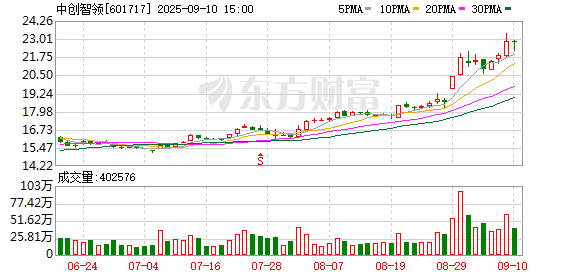
中创智领:在工业智能化领域 公司推进“人工智能+制造”应用 助力传统产业改造升级
Zheng Quan Ri Bao· 2025-09-10 11:50
Group 1 - The company has transitioned its main product in the coal machinery sector from manual and electro-hydraulic control to intelligent control, expanding its offerings from single equipment to a comprehensive solution including hydraulic supports, scraper conveyors, coal mining machines, and control systems [2] - In the automotive parts sector, the company has expanded its product line from traditional fuel vehicle components to key components for intelligent connected new energy vehicles, including noise reduction products, intelligent air suspension systems, battery cooling plates, high-pressure intelligent drive motors, and braking system motors [2] - The company is advancing the application of "artificial intelligence + manufacturing" in the industrial intelligence sector, integrating digital technology with manufacturing advantages to provide intelligent industrial solutions across various discrete manufacturing scenarios, aiding the transformation and upgrading of traditional industries [2]

提升运营效率 大模型加快向工业领域拓展
Jing Ji Ri Bao· 2025-08-22 00:39
Core Insights - The industrial intelligent agent is a fusion of large models, industrial mechanisms, and machine learning, generating significant economic value and driving innovation in industrial applications [1][2] - The global industrial intelligence market is expected to exceed 3.5 trillion yuan this year, with China accounting for over 40% of the market share, indicating a rapid acceleration towards the era of industrial intelligent agents [1] Group 1: Definition and Functionality - Industrial intelligent agents are designed specifically for industrial production, possessing autonomous perception, cognition, decision-making, and learning capabilities, distinguishing them from general intelligent agents [2] - These agents can understand high-level and natural language commands, transforming human-machine interaction by allowing direct command execution without manual software operation [2][4] - The integration of multi-modal perception, large model task planning, and refined motion control enhances the autonomous operational capabilities of robots in complex industrial environments [3] Group 2: Applications and Benefits - Industrial intelligent agents are shifting R&D from experience-based trial and error to an intelligent-driven paradigm, significantly reducing R&D cycles and enhancing design combinations [3] - In manufacturing, these agents facilitate the transition from automation to autonomy, optimizing production scheduling, equipment maintenance, and cross-system collaboration [3][5] - The implementation of intelligent agents has led to a 60% reduction in process preparation time and a 20% increase in order fulfillment rates, showcasing their efficiency-enhancing capabilities [6] Group 3: Challenges and Future Directions - The deployment of industrial intelligent agents faces challenges such as technology maturity, data isolation, and the complexity of industrial environments, which affect adaptability and reliability [7] - Safety concerns are paramount, as intelligent agents operate through autonomous code generation, exposing them to potential security threats like API vulnerabilities and code supply chain issues [7] - Strengthening infrastructure, establishing standard systems, and creating experimental ecosystems are essential for the effective deployment and integration of industrial intelligent agents [8]
大模型加快向工业领域拓展
Jing Ji Ri Bao· 2025-08-21 22:08
Core Insights - The industrial intelligent agent is a new product resulting from the integration of large models, industrial mechanisms, and machine learning, attracting significant attention for its economic value [1] - The global industrial intelligence market is expected to exceed 3.5 trillion yuan this year, with China's market share surpassing 40%, indicating the rapid arrival of the industrial intelligent agent era [1] Group 1: Definition and Characteristics - The industrial intelligent agent is designed specifically for industrial production, possessing autonomous perception, cognition, decision-making, and learning capabilities, distinguishing it from general intelligent agents [2] - It enables a shift from preset programming and mechanical responses to autonomous decision-making and dynamic adaptability, enhancing human-machine interaction [2] - The industrial intelligent agent can decompose tasks, call tools, and collaborate with multiple agents, marking a significant difference from traditional automation systems [2] Group 2: Applications and Benefits - Industrial intelligent agents are transforming R&D from an experience-based trial-and-error model to an intelligent-driven paradigm, significantly shortening R&D cycles and enhancing design combinations [3] - In manufacturing, they upgrade processes from automation to autonomy, optimizing production scheduling, equipment maintenance, and cross-system collaboration [3] - The integration of multi-modal perception and task planning technologies enhances robots' autonomous operational capabilities in complex industrial environments [3] Group 3: Operational Efficiency - Industrial intelligent agents play a crucial role in supply chain optimization and internal management, enhancing operational efficiency through intelligent reasoning and prediction [5] - They can autonomously handle order processing, inventory alerts, and sales analysis, thereby increasing supply chain resilience [5] - The implementation of intelligent agents in production processes has led to a 60% reduction in preparation time and a 20% increase in order fulfillment rates [6] Group 4: Challenges and Future Directions - The deployment of industrial intelligent agents faces challenges such as technology maturity, data isolation, and safety concerns, which need to be addressed for effective implementation [7] - Infrastructure development is critical for supporting the construction of autonomous and compatible industrial AI platforms, overcoming technical bottlenecks [8] - There is a need for a standardized system and evaluation mechanism to guide enterprises in expanding applications and fostering industry-level collaborative innovation [8]
聚焦垂直场景,工业大模型商业化加速
2 1 Shi Ji Jing Ji Bao Dao· 2025-07-29 09:50
Core Insights - The year 2023 marks a period of rapid development and popularization of general large models, while 2024 and beyond will see the application of various specialized large and small models in vertical fields, becoming a major trend in the integration of artificial intelligence across industries [1] - Industrial sectors, characterized by complex production processes and clear mechanisms, are identified as key areas for the commercialization of vertical large models [1] Group 1: Industrial Applications - Industrial large models are being applied in energy conservation, manufacturing, and management, with expectations for accelerated commercialization as data accumulation enhances model capabilities [1] - The introduction of large models can significantly improve production accuracy, with average accuracy rates increasing from 70% to 90% in complex manufacturing processes [2] - Large models facilitate the integration of various energy mediums and types of water used in production, allowing for comprehensive decision-making in energy conservation efforts [2] Group 2: Challenges and Solutions - Challenges include the limited understanding of production processes by personnel and the lack of integration between independent systems, which hampers effective energy efficiency control [3] - The introduction of large models enables comprehensive energy and carbon management, creating a unified service model that enhances operational efficiency [4] - Data issues remain a significant barrier, with many facilities lacking real-time data collection capabilities, which is essential for deploying large models effectively [6] Group 3: Implementation Strategies - The fastest implementation projects are often retrofitting older facilities, particularly in the energy sector, which yields immediate economic benefits and encourages further digitalization efforts [6] - Service providers are also engaging in new facility construction, establishing digital twin systems to facilitate comprehensive large model integration across the entire production chain [7] - The combination of immediate results and flexible implementation strategies is accelerating the commercialization of industrial large models, providing better adaptability and customized solutions for various application scenarios [7]
行业首发!广域铭岛超级智能体重构制造全流程:开启AI原生企业时代
Jiang Nan Shi Bao· 2025-07-25 07:21
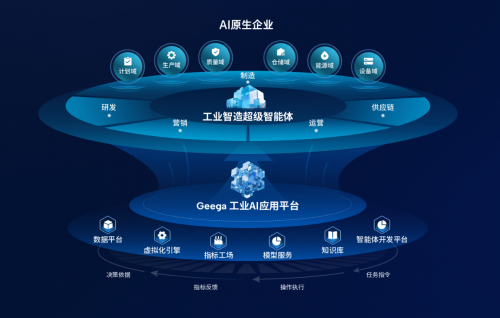
Core Viewpoint - The rapid development of industrial intelligence aligns with the national strategy for new industrialization and the development of new quality productivity, driven by breakthroughs in large model technology [1][14]. Group 1: Industrial AI Integration - The integration of AI into industrial manufacturing is not merely a slogan; it requires deep engagement with specific production scenarios [1][2]. - The challenges of implementing industrial AI include the difficulty of accessing private data, the disconnect between process knowledge and AI technology, and the need for experienced personnel to maintain and adapt systems [2][3]. Group 2: Geega Industrial AI Application Platform - The Geega Industrial AI Application Platform aims to provide a comprehensive solution for manufacturing enterprises, integrating AI technology with industrial know-how [6][12]. - The platform features three core capabilities: efficient industrial data standardization, closed-loop knowledge encapsulation, and customizable intelligent agent development [7][8]. Group 3: Industrial Intelligent Agents - The Industrial Intelligent Agents, built on the Geega platform, cover the entire business process from research and production to supply, sales, and service, creating a collaborative decision-making network [8][10]. - These agents can respond quickly to supply chain disruptions, generating emergency plans and validating feasibility within minutes [10][11]. Group 4: AI-Driven Transformation - The transition from digitalization to intelligentization is characterized by the emergence of AI-native enterprises, which integrate AI deeply into business processes [12][13]. - The company has empowered over 60 enterprises, accumulating practical experience in industrial scenarios, which supports the training and validation of its AI platform and intelligent agents [13][14].
科远智慧(002380):利润端开花结果 构筑全链路研发体系
Xin Lang Cai Jing· 2025-07-13 10:34
Core Viewpoint - The company, Koyuan Smart, is expected to maintain strong performance and long-term growth potential driven by its multi-national certifications, comprehensive technology R&D system, platform-based products, and decentralized channels [1]. Investment Highlights - The investment recommendation is to maintain a "Buy" rating, with the target price raised to 31.66 yuan (+0.98). The projected EPS for 2025-2027 is 1.27 (-0.21), 1.73 (-0.22), and 2.06 yuan respectively. The average PE for comparable companies in 2025 is estimated at 26.79X. Given the company's focus on control systems and continuous expansion in the industrial internet product matrix, it is expected to sustain high growth, justifying a 25x PE for 2025, leading to the target price of 31.66 yuan [2]. - In 2024, Koyuan Smart achieved total revenue of 1.682 billion yuan, a year-on-year increase of 19.55%, with a net profit attributable to shareholders of 252 million yuan, marking a significant growth of 56.64% compared to 2023. In Q1 2025, the company reported revenue of 420 million yuan, a year-on-year increase of 14.60%, and a net profit of 61 million yuan, reflecting a 42.30% increase, showcasing its technological breakthroughs and ability to leverage policy benefits for enhanced profitability [2]. Technological and Market Positioning - The company has established a technological ecological barrier through multiple national certifications and a comprehensive technology R&D system. As a national-level manufacturing champion and a key high-tech enterprise, it holds certifications such as ISO 9001/45001/14001 and CMMI Level 5, demonstrating its credibility in the industrial intelligence sector. The company integrates cutting-edge technologies like AI, large models, and real-time databases, with R&D investment accounting for 10.44% in 2024, adding 16 new patents and holding a total of 236 effective patents [3]. - Koyuan Smart focuses on platform-based products and decentralized channels to efficiently convert technological advantages into market penetration. The company has built an IT/OT integrated platform that deeply merges industrial automation systems with industrial software, providing full lifecycle services from planning to operation for traditional industries. Its marketing network, covering 17 divisions nationwide, enhances customer loyalty and market share, accelerating the large-scale implementation of smart manufacturing solutions [3].

以AI驱动制造革新,大云端亮相2025中国国际金属成形展
Sou Hu Cai Jing· 2025-07-01 07:15
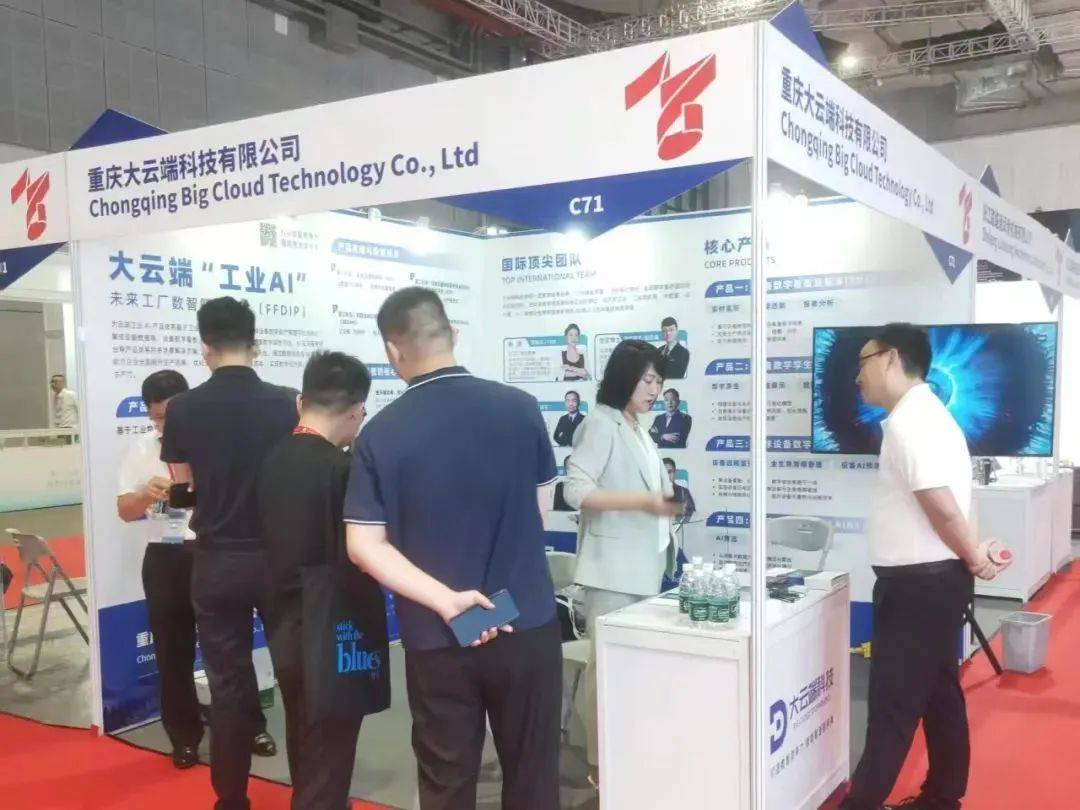
Core Insights - The article highlights the successful conclusion of the China International Metal Forming Exhibition, where Dayun Technology showcased its core technologies and full-stack product system aimed at facilitating digital transformation in manufacturing enterprises [1] Group 1: AI Empowerment in Manufacturing - Dayun Technology utilizes AI for predictive maintenance, connecting equipment manufacturers and production enterprises to eliminate data silos and establish a unified equipment management standard, thereby enhancing equipment utilization and production efficiency [3] - The downtime analysis module addresses core pain points for production enterprises by enabling precise classification and real-time monitoring, facilitating a closed-loop management system from problem identification to resolution [3] Group 2: "1+4+N" Product System - The Equipment Data Lake (EDL) collects and aggregates operational data in real-time, creating a digital foundation for all equipment by utilizing self-developed edge computing gateways [4] - The downtime analysis module aids in problem identification and closed-loop management [5] - The platform supports seamless integration with various industrial systems, providing real-time data for lifecycle management [6] Group 3: Real-time Monitoring and Optimization - The Equipment Digital Twin Platform (EDT) offers real-time monitoring and optimization, presenting equipment operational status visually and enabling comprehensive monitoring and prediction [7] - The AI Application Service Platform (AIAS) transitions from reactive responses to proactive optimizations, offering services such as equipment health prediction and energy consumption analysis [7] Group 4: Value Summary - Dayun Technology's "1+4+N" system bridges equipment data silos, creating a collaborative intelligent manufacturing ecosystem that propels enterprises towards efficient and intelligent management [9] Group 5: Exhibition Outcomes - The exhibition attracted significant attention from industry experts and clients, with recognition from the China Forging Association for Dayun Technology's capabilities in promoting AI technology collaboration between equipment manufacturers and production enterprises [10] - Dayun Technology received the "Outstanding Supplier Recommendation Award for Forging, Stamping, and Sheet Metal Equipment," reflecting industry acknowledgment of its technological strength and driving continuous innovation [12] Group 6: Future Vision - Dayun Technology aims to deepen its focus on industrial AI, facilitating a shift from passive to predictive management, and fostering a collaborative, efficient digital factory ecosystem with equipment manufacturers and production enterprises [14]
上海全应科技有限公司董事长夏建涛:AI技术推动能化产业数智化升级
Zhong Guo Hua Gong Bao· 2025-06-25 04:31
Group 1 - The core viewpoint is that AI technology is becoming a driving force for a new round of technological revolution, particularly in the energy and chemical industries, which are expected to undergo a digital and intelligent upgrade driven by AI [1][2] - Traditional coal power systems are struggling to meet the demands of new power systems, leading to a need for intelligent control upgrades. For instance, operators in a chemical company's self-owned power plant handle 2,000 to 4,000 control commands daily, facing issues like control lag and parameter oscillation [1] - The intelligent solutions from the company have been implemented in over 100 benchmark projects across four major industries: thermal power, chemicals, metallurgy, and environmental protection, achieving over 99% automation in upgraded chemical thermal power plants, with operational efficiency improved by 1.7% [1] Group 2 - The company highlights that China has unique advantages in industrial data generation in sectors like petrochemicals and power production, which are essential for developing industrial AI [2] - Industrial AI differs significantly from large language models, which face issues like hallucination and high energy consumption, making them unsuitable for industrial applications. Therefore, a specialized technical system for industrial AI is necessary [2] - Future trends in industrial digitization in the energy and chemical sectors include a shift from point optimization to global intelligence, from cloud collaboration to autonomous decision-making, and from efficiency tools to low-carbon engines, with AI being a key enabling technology for achieving carbon neutrality goals [2]
东土科技(300353) - 董事会2024年度工作报告
2025-03-03 15:15
北京东土科技股份有限公司 董事会 2024 年度工作报告 2024 年度,公司董事会严格按照《公司法》《证券法》等法律法规以及《公 司章程》《董事会议事规则》等的相关规定,本着对全体股东负责的态度,恪尽 职守、积极有效的行使职权,认真执行股东大会的各项决议,勤勉尽责的开展董 事会各项工作,保障了公司良好的运作和可持续发展。现将董事会 2024 年度工 作主要工作报告如下: 一、公司 2024 年度经营指标完成情况 2024 年全球宏观环境复杂多变,地缘局势博弈加剧。在此背景下,中国经济 展现出强大韧性,在迈向高质量发展的进程中,面临着产业结构调整以及有效需 求进一步释放等多重挑战。面对形势变化,公司坚定自主可控的发展理念,紧抓 工业智能化产业趋势,积极谋划并布局各项业务。报告期内,公司实现营业收入 102,913.75 万元,虽然同比下降 11.52%,但实现扣非归母净利润 923.44 万元, 同比增长 108.52%。其中,公司工业操作系统及工业软件业务长期战略布局效果 显现,该部分业务实现收入增长 25.8%;同时,公司持续深化工业网络通信业务 的全球化战略,新增开拓拉丁美洲、中东等友好市场,报告期内, ...
