
普惠金融

Search documents
分期乐普惠“冬枣专家”上门服务解难题 ,助力六元一颗的大荔冬枣不误农时
Xin Lang Cai Jing· 2026-01-15 02:15
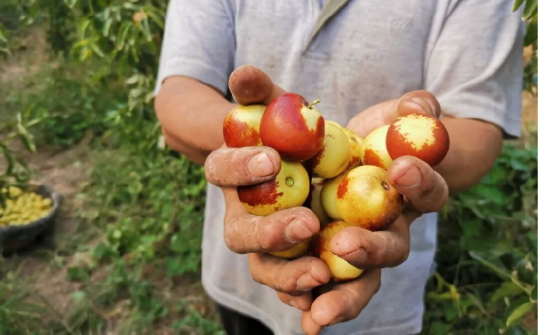
Core Insights - The article discusses the winter jujube cultivation in Dali County, Shaanxi, highlighting the three types of greenhouses used for different maturation periods, with the earliest harvest starting in May and the latest in October [1][2][12]. Group 1: Industry Overview - Dali County is recognized as "China's Jujube Town," with winter jujube cultivation covering tens of thousands of acres and the entire industry chain's output value exceeding 10 billion yuan [2][12]. - The winter jujube's market not only thrives domestically but also exports to Central Asia, Europe, and the United States, making it a pillar industry for local economic development [2][12]. Group 2: Financial Challenges - Farmers face significant financial pressure due to high costs associated with winter jujube cultivation, including heating equipment, daily maintenance, fertilizers, and labor during the busy season [2][4][12]. - A specific case is highlighted where a farmer, referred to as Old Dong, experienced cash flow issues and faced difficulties obtaining loans from traditional financial institutions due to collateral requirements and bureaucratic hurdles [5][15]. Group 3: Innovative Financial Solutions - The article introduces the role of Fenqi Le Puhui, a financial service provider that offers localized financial solutions without the need for collateral, addressing the challenges faced by small micro-businesses and individual entrepreneurs [7][19]. - Fenqi Le Puhui employs a localized service model, utilizing local staff familiar with regional agricultural practices to provide financial services directly to farmers, thus overcoming traditional financial service limitations [19]. - The service allows for quick loan approvals based on actual business performance rather than standard collateral, enabling farmers to access funds rapidly, often within minutes, to meet their operational needs [19].

以“AI in ALL”打造金融“五篇大文章”样本丨陆控及旗下平安融易双双获评为年度优秀机构
2 1 Shi Ji Jing Ji Bao Dao· 2025-12-30 03:24
Core Insights - The company,陆控, has been recognized as the "Outstanding Digital Financial Institution of the Year" at the "2025 Financial Annual Conference" for its innovative practices in digital finance [1] - The company continues to implement its "AI in ALL" strategy, integrating digital finance, technology finance, and green finance into its inclusive finance operations [1] Group 1: Digital Technology and Innovation - The company leverages technologies such as artificial intelligence, cloud computing, blockchain, and big data to enhance its digital services, focusing on financing guarantees for local key industries and small micro-economies [2] - The recently launched "Yunfan" solution is the first AI-driven remote financing service in the non-bank credit sector, achieving a 158% increase in productivity through the use of AI coaches for customer service representatives [2] - The "Zhihun" project utilizes large model technology and machine learning to automate due diligence processes, reducing processing time by 90% and achieving a 93% accuracy rate in application dimensions [3] Group 2: Financial Services and Support - The "Prism" project aims to support local key industries by analyzing their financing needs and usage patterns, providing a comprehensive financial service ecosystem that addresses various financing challenges [3] - The "Smart Customer Service 3.0" initiative has improved customer service efficiency, increasing resolution rates by 2% and reducing the need for human intervention by 14%, while customer satisfaction rose from 80% to 85% [4] - The "Che e Loan" green financing program offers exclusive benefits for small micro-enterprises, facilitating access to lower financing rates for new energy vehicle owners, with over 4.22 billion yuan in loans disbursed by September 2025 [4] Group 3: Community Engagement and Support - The company emphasizes grassroots engagement by establishing a professional team that actively serves local small micro-economies, providing tailored financing solutions and support [5] - A case study highlights how the company assisted a cattle farmer in Shandong by providing 500,000 yuan in financing, resulting in a 50% increase in production capacity and a nearly 30% rise in income [6] - The company has partnered with the China Women's Development Foundation to support female entrepreneurship, distributing 43.1 million yuan in micro-loans to over 2,500 women, thereby promoting local employment and industry development [7]
“十五五”首席观察:中国经济提“量”更提“质”
Bei Jing Shang Bao· 2025-12-28 16:11
Core Insights - The macroeconomic environment in 2025 presents both opportunities and challenges, with a focus on the transition from the "14th Five-Year Plan" to the "15th Five-Year Plan" [1] - The financial market in China is characterized by a unique rhythm amidst internal and external changes, with monetary policy maintaining a "moderately loose" stance and promoting consumption through various financial support policies [1] - Key questions for 2025 include understanding the core contradictions limiting consumer spending and how to achieve sustainable long-term growth in consumption [1] Group 1: Green Finance - As of Q3 2025, China's green loan balance reached 43.51 trillion yuan, a year-on-year increase of 22.9%, maintaining over 20% growth for five consecutive years [3] - The balance between "stabilizing growth" and "reducing carbon emissions" is essential for high-quality economic development, with green finance playing a critical role in directing funds towards high-value and low-carbon sectors [4][5] - Green finance should support the upgrade of traditional industries and promote the development of green sectors like new energy vehicles and circular economy [4] Group 2: Financial Policies and Strategies - The "Five Major Articles" in finance aim to serve the real economy and require coordination among various financial sectors, with digital finance being a key driver for high-quality development [7][8] - The need for a systematic approach to financial services, including credit assessment and risk management, is emphasized to support technological and green finance [8] - The financial system's openness and alignment with international standards are crucial for enhancing the effectiveness of the "Five Major Articles" [9] Group 3: Monetary Policy Outlook - Structural monetary policy tools are expected to be adjusted to enhance effectiveness, with potential increases in quotas and reductions in interest rates [12] - The RMB is anticipated to appreciate moderately in 2026, influenced by both domestic and international factors, including the Fed's interest rate cycle [13] - The focus on domestic circulation stability will be essential in countering external uncertainties, with an emphasis on enhancing domestic market competitiveness [11] Group 4: Consumer Spending and Economic Growth - Recent consumer subsidy policies have shifted from "incremental stimulation" to "structural optimization," highlighting the importance of consumption in driving economic potential [15] - The core contradiction limiting consumer spending is linked to the real estate market's adjustment phase, necessitating multi-faceted policy approaches to stabilize expectations and enhance consumer confidence [16] - Recommendations for boosting consumption include implementing paid staggered vacations, optimizing service consumption, and improving the overall price environment to stimulate consumer willingness [16]

新华指数|11月普惠金融-景气指数:融资环境改善 企业经营韧性凸显
Xin Hua Wang· 2025-12-23 09:40
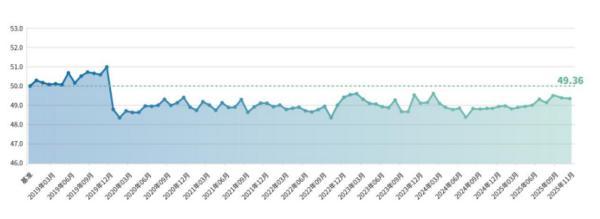
Core Insights - The Inclusive Finance Prosperity Index reached 49.36 points in November 2025, a slight decrease of 0.03 points from October, but up 0.51 points year-on-year [1] Financing Dimension - The financing prosperity index rose to 54.83 points in November, an increase of 0.14 points from October [2] - The average interest rate for newly issued loans (in both domestic and foreign currencies) was approximately 3.1%, down about 30 basis points year-on-year [2] - The balance of inclusive micro and small loans and medium to long-term loans in the manufacturing sector grew by 11.4% and 7.7% year-on-year, respectively, both exceeding the growth rate of other loans [2] Operating Dimension - The operating prosperity index slightly decreased to 48.28 points in November, down 0.07 points from October, with the decline rate narrowing compared to the previous month [3] - The performance and investment indices showed slight month-on-month increases, driven by the "Double Eleven" shopping festival, which stimulated consumer demand [3] - The business vitality index decreased by 0.13 points, indicating that market confidence among enterprises still needs to be strengthened [3] Industry Prosperity - Among nine major industries, four showed an increase in operating prosperity while five experienced a decline [6] - The construction and real estate sectors saw slight increases in their operating indices due to accelerated project construction and policy support [6] - The agriculture, industry, transportation, accommodation, and social services sectors experienced declines in their operating indices [6] Regional Prosperity - Among seven regions, four experienced an increase in operating prosperity while three saw a decline [7] - The Northeast, North China, East China, and Northwest regions reported increases in their indices, while South China, Central China, and Southwest regions saw declines [7]
流水上亿小微被“小钱”卡住,分期乐普惠让厂里机器不停转、鱼虾满塘跃
Xin Lang Cai Jing· 2025-12-22 08:29
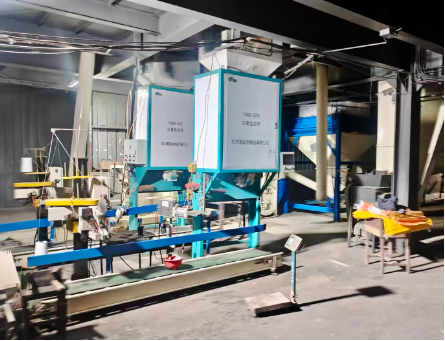
Core Insights - The article highlights the challenges faced by small and micro enterprises in accessing financial services, exemplified by Zhao Zhen, a small business owner in the aquaculture industry who struggles with cash flow despite significant annual revenue [1][8]. Group 1: Business Background - Zhao Zhen started his business in the 1990s, initially trading raw materials for aquaculture feed, and later established his own feed factory in 2019, focusing on fish, shrimp, and crab feed production [2][9]. - His factory quickly gained popularity, selling products not only locally but also to provinces like Zhejiang, Anhui, and Guangdong, becoming a leading fish feed processing enterprise in the region [10]. Group 2: Financial Challenges - In 2023, Zhao expanded his operations by contracting nearly 1,000 acres for aquaculture and invested 4 million yuan in new machinery, leading to increased financial strain [4][12]. - The cost of fishmeal is significant, with prices at 17,000 yuan per ton, requiring over 1 million yuan in working capital to maintain normal operations [4][12]. Group 3: Financial Solutions - Zhao Zhen's experience with traditional loans was slow and cumbersome, often requiring property collateral, which delayed access to necessary funds [4][12]. - Recently, he utilized a service called Fenqi Le Puhui, which provided a quick loan approval process, allowing him to access funds almost immediately, thus addressing his cash flow issues effectively [4][12][15]. Group 4: Industry Impact - The article emphasizes the importance of small and micro enterprises like Zhao's in the local economy, contributing significantly to regional production and employment [5][13]. - Fenqi Le Puhui's innovative approach combines local service with online data risk assessment, enabling better access to financial services for small businesses, thus fostering economic resilience in county-level economies [5][15]. Group 5: Service Reach and Impact - Fenqi Le Puhui has expanded its services to cover over 30 provinces and 330 counties, assisting more than 4 million small users in overcoming financial challenges [15]. - In the third quarter of 2025 alone, nearly 160,000 users received a total of 5 billion yuan in inclusive loans, demonstrating the platform's significant role in supporting small enterprises [15].
把握普惠金融人民性 厚植金融为民底色
Xin Lang Cai Jing· 2025-12-16 06:35
Core Viewpoint - The concept of "people-oriented" finance has become a key focus in the financial sector since the 20th National Congress of the Communist Party of China, emphasizing that financial work must prioritize the needs of the people [1][2][15]. Group 1: People's Finance Characteristics - The core of inclusive finance's "people-oriented" nature lies in adhering to a people-centered development philosophy, emphasizing fairness, inclusiveness, and accessibility in financial services [2][3][15]. - Inclusive finance distinguishes itself from traditional commercial finance by focusing on serving vulnerable groups such as small and micro enterprises, farmers, and low-income urban residents [3][16]. Group 2: Operational Philosophy - The "14th Five-Year Plan" requires inclusive finance to prioritize "people first and livelihood security," shifting from merely expanding quantity to enhancing quality and efficiency [4][17]. - Financial institutions are encouraged to develop products that address urgent issues in areas like pension, healthcare, housing, and employment for low-income groups [4][17]. Group 3: Addressing Financing Challenges - Financial institutions should innovate guarantee methods and explore credit products based on credit data and industry chain scenarios to alleviate financing difficulties [5][18]. - There is a need to regulate fees, streamline processes, and enhance service efficiency to reduce the costs and time associated with financing [5][18]. Group 4: Value Orientation - A balance between social value and commercial sustainability is essential, ensuring that financial services contribute to social equity while maintaining operational viability [5][19]. - The relationship between economic and social value must be harmonious, as neglecting social value can lead to exploitative practices in the name of inclusive finance [6][19]. Group 5: Service Objectives - The satisfaction of the public should be the core standard for evaluating the effectiveness of inclusive finance, focusing on alleviating difficulties in daily life and supporting small and micro enterprises [20][21]. - Financial services should reach underserved populations, including low-income urban residents and rural communities, ensuring comprehensive coverage [21][22]. Group 6: Product Design and Accessibility - Financial products should be designed with low thresholds and affordability in mind, avoiding high-cost barriers that exclude those in need [22][23]. - The focus should be on simplifying application processes and reducing unnecessary qualification restrictions to make financial services accessible to all [23][24]. Group 7: Interest Rate Design - There is a push to gradually lower loan interest rates in the inclusive finance sector, particularly for small and micro enterprises and ordinary residents, to reflect a "finance for the people" philosophy [11][24]. - Sustainable business practices are necessary, ensuring that financial institutions do not rely solely on high-interest rates to cover risks [11][24]. Group 8: Human-Centric Approach - Emphasizing a human-centered approach, financial services should address the digital divide faced by elderly and vulnerable populations, providing tailored solutions [12][25]. - Regulatory measures should be in place to protect consumers, particularly in sensitive areas like agriculture, elderly care, and education, to prevent exploitation [26][27]. Group 9: Overall Development Goals - The ultimate goal of inclusive finance is to create a sustainable, efficient, and warm financial ecosystem that serves the comprehensive development of individuals and meets the needs of the people [27][28].
专访贝多广:避免普惠金融演变为不良风险累积通道
Bei Jing Shang Bao· 2025-12-10 11:53
Core Insights - The core viewpoint emphasizes the importance of practical effectiveness and long-term sustainability in promoting inclusive finance, highlighting the shift from mere availability to quality of financial services [1] Group 1: Current Landscape of Inclusive Finance - The inclusive finance market has developed a diversified, multi-layered, and moderately competitive financial supply structure, with digital inclusive finance becoming a significant driving force for high-quality development [2][4] - The transition from "whether" to "how good" in inclusive finance indicates a critical phase where structural challenges are emerging, necessitating a focus on consumer capability building and risk management [5][6] Group 2: Role of Technology and Digital Finance - Digital transformation is seen as a new direction to overcome the "triangle dilemma" in inclusive finance, effectively lowering service costs and enhancing accessibility [6][10] - The application of financial technology has improved service efficiency but also raised concerns about digital divides and potential exclusion of certain demographics [10][11] Group 3: Policy and Regulatory Framework - The People's Bank of China's initiative to implement a one-time personal credit relief policy aims to balance strict credit system constraints with social welfare, addressing the needs of passive defaulters and enhancing credit market quality [8][9] - The government is encouraged to clarify the boundaries between government and market roles, ensuring that regulatory measures do not compromise the quality of inclusive finance services [6][12] Group 4: Future Opportunities in Inclusive Finance - Future growth points in inclusive finance are identified in three main areas: credit, insurance, and capital markets, with a focus on new citizens, flexible workers, and disabled individuals as emerging target groups [14][15] - The establishment of specialized funds for early-stage innovative enterprises is suggested to address the financing gaps faced by small and micro enterprises [15]

10月普惠金融—景气指数显示:企业发展潜力有望进一步释放
Zhong Guo Jing Ji Wang· 2025-12-02 03:41
Core Insights - The Inclusive Finance Prosperity Index for October 2025 is reported at 49.39 points, a slight decrease of 0.11 points from September, but still higher than the same period last year [1] - The financing sector continues to expand, with stable costs and ongoing policy benefits, while the operational fundamentals for enterprises remain stable, indicating potential for further development [1] Financing Sector - The financing prosperity index stands at 54.69 points, down 0.24 points from September, indicating continued expansion in enterprise financing [1] - As of the end of October, the total social financing stock reached 437.72 trillion yuan, reflecting a year-on-year growth of 8.5% [1] - The balance of RMB loans to the real economy was 267.01 trillion yuan, with a year-on-year increase of 6.3%, demonstrating strong financial support for the real economy [1] - The balance of inclusive micro and small loans and medium to long-term loans in the manufacturing sector grew by 11.6% and 7.9% year-on-year, respectively, both exceeding the growth rate of other loan categories [1] - The average interest rate for newly issued loans (in both domestic and foreign currencies) was 3.1%, approximately 40 basis points lower than the same period last year, indicating a favorable financing environment [1] Operational Sector - The operational prosperity index is at 48.35 points, down 0.09 points from September, with small and micro enterprises maintaining overall stability [2] - Some enterprises are entering an adjustment phase, leading to a slowdown in profitability, as indicated by a decrease of 0.21 points in the operational performance index [2] - Despite the adjustments, operational investment continues to grow, with the operational investment index rising by 0.03 points from the previous month [2] - The operational prosperity index across nine major industries shows a trend of 3 industries increasing and 6 decreasing [2] - The agricultural sector benefits from increased activities during the autumn harvest and planting season, leading to rapid growth in the agriculture, forestry, animal husbandry, and fishery industries [2] - The industrial economy is experiencing growth due to new momentum and technological advancements, with a slight increase in the industrial operational index [2] - There are signs of accelerated construction activities related to infrastructure investment, resulting in a slight rise in the construction industry's operational index [2] - However, sectors such as wholesale and retail, transportation, and accommodation and catering have seen a decline in operational prosperity [2]
中国普惠金融研究院院长贝多广:普惠金融在中国走出独特快车道,下一步是构建高质量生态体系
Xin Lang Cai Jing· 2025-11-19 08:13
Core Viewpoint - The Chinese financial system is at a historical juncture, with a focus on building a strong financial nation and enhancing the quality and resilience of the financial system, particularly in the context of the upcoming "14th Five-Year Plan" [1] Group 1: Development of Inclusive Finance - Inclusive finance in China has developed uniquely and rapidly, driven by policy guidance that fosters collaboration among various financial entities [2][3] - The integration of financial technology has created an ecosystem that leverages "scenarios + data + technology," making China one of the most active markets for fintech applications globally [2] - The "last mile" problem is being addressed through deep coverage of underserved groups, such as small and micro enterprises and farmers, by lowering barriers to access financial services [3] Group 2: Achievements and Challenges - Since the formal introduction of inclusive finance in 2013, China has made significant progress, ranking high in various indicators such as account ownership and mobile payment penetration [4] - The current challenges for small and micro enterprises include unstable cash flow and significant accounts receivable, necessitating improved liquidity through bank loans [5] Group 3: Balancing Sustainability and Commercial Viability - The "impossible triangle" in inclusive finance—balancing coverage, affordability, and low risk—remains a challenge, requiring breakthroughs in market rules, top-level design, and technological empowerment [6][7] - Digitalization has proven essential in enhancing the accessibility and efficiency of inclusive finance services, particularly for underserved groups [7] Group 4: Future Directions - High-quality inclusive finance should evolve into a comprehensive ecosystem that includes not only credit but also insurance and investment services, addressing both production and consumption needs [8][9] - The development of inclusive insurance products is crucial, as all economic entities face risks, and insurance can be more critical than credit for low-income households [9] - Green inclusive finance is essential for sustainable rural development, particularly in achieving carbon neutrality goals while addressing the environmental impacts of rural economic activities [9]
分析新进展 展示新亮点 《中国普惠金融报告(2025)》发布
Ren Min Ri Bao· 2025-10-30 22:29
Core Insights - The report titled "China Inclusive Finance Report (2025)" was released, highlighting the latest progress and innovative achievements in building a high-level inclusive financial system in China [1] - The report emphasizes the importance of technological empowerment and the development of digital finance as key drivers for high-quality inclusive financial development [1] - It showcases the achievements in serving rural revitalization, small and micro enterprises, and social welfare, providing practical references for further advancing inclusive finance [1] Summary by Categories Technological Empowerment - Financial institutions are collaborating deeply with internet platforms and technology companies to optimize service supply and enhance service scenarios [1] - The integration of big data credit reporting, intelligent risk control, and the "scene + finance" model into the entire service process effectively expands the coverage of inclusive financial services [1] Consumer Protection - The report highlights the need for continuous improvement of the regulatory system for financial consumer rights protection [1] - It advocates for better enforcement of responsibilities by financial institutions to create a favorable market order [1]