智能影像

Search documents
影石创新:公司将持续深耕智能影像领域
Zheng Quan Ri Bao Zhi Sheng· 2026-01-28 13:45
Core Viewpoint - The company emphasizes its focus on core business and product innovation to enhance intrinsic investment value and create long-term value for shareholders [1] Group 1: Market Position and Strategy - The company's stock price fluctuations are influenced by market sentiment, industry changes, company conditions, and macroeconomic factors [1] - The company has achieved significant competitive advantages in the imaging technology sector through deep accumulation and continuous innovation [1] Group 2: Future Plans - The company plans to continue deepening its efforts in the intelligent imaging field by implementing technology innovation strategies, product planning strategies, and global brand strategies [1] - The goal is to further enhance the company's sustainable operational capabilities and overall competitiveness [1]

拿下19单IPO,深圳产业升级步伐持续加速
Sou Hu Cai Jing· 2026-01-19 10:42
Group 1 - The IPO market in Shenzhen is experiencing significant growth, with 19 new companies listed in 2025, including 6 on A-shares and 13 on overseas markets, indicating a vibrant capital market environment [3][4] - The Hong Kong Stock Exchange has become the world's leading IPO destination in 2025, with 117 companies raising HKD 285.69 billion, a more than twofold increase from the previous year [3] - Shenzhen's new listed companies are characterized by strong technological capabilities and rapid international expansion, with examples including Fengcai Technology and Yingshi Innovation [4] Group 2 - Shenzhen has completed 146 merger and acquisition (M&A) projects since 2025, with a total disclosed transaction value of CNY 86.645 billion, ranking second in the country by number and third by value [6] - Major M&A projects include China Resources Sanjiu's acquisition of a 28% stake in Tianjin-listed Tianshili for CNY 6.074 billion and China General Nuclear Power's acquisition of 100% of a subsidiary for CNY 1.204 billion [6] - The local government is actively promoting M&A to enhance the quality of listed companies, aiming for a total market value of CNY 20 trillion by the end of 2027 [7]


大疆和影石斗法,但年轻人开始对运动相机“祛魅”?
3 6 Ke· 2026-01-12 09:19
Core Insights - The outdoor camera market is experiencing significant growth, particularly in 2025, with sales of action cameras reaching 4.76 million units, a year-on-year increase of over 252%, and sales revenue increasing by over 316% [2] - The popularity of outdoor cameras among young consumers is driven by their compactness, affordability, and social media appeal, leading to a trend where many own these devices [5][6] - DJI and Insta360 have emerged as the dominant players in the market, with DJI capturing 66% of the market share by Q3 2025, while Insta360 holds 13% and GoPro's share has decreased to 18% [6] Market Dynamics - The rise of outdoor cameras is linked to their association with social media and the "everyone is a content creator" phenomenon, making them a form of "social currency" [5][6] - The competitive landscape is intensifying, with DJI and Insta360 continuously adjusting their pricing and product offerings to capture market share, such as DJI's Osmo360 surpassing Insta360's X5 in sales shortly after launch [6][8] - New entrants, including brands like "光子跃迁" and major smartphone manufacturers, are expected to further disrupt the market by introducing new products [8] Consumer Sentiment - Despite the initial excitement, there is a growing sentiment among consumers that action cameras may not be as practical as anticipated, leading to a decline in enthusiasm [10][14] - Many users have reported issues with usability and functionality, such as difficulties in exporting videos and product quality concerns, which have led to a rise in "avoid" and "disappointment" posts on social media [10][11][14] - The emergence of a rental market for action cameras indicates a shift in consumer behavior, with many preferring to rent rather than buy, as it offers a more cost-effective solution for occasional use [14][16] Future Considerations - The industry faces the challenge of transforming action cameras from novelty items into essential tools for everyday use, requiring a deeper understanding of consumer needs and improvements in usability and integration [16]
深圳在2026美国CES上,4大核心赛道超过350家深企集中亮相 |深商
Sou Hu Cai Jing· 2026-01-09 20:02
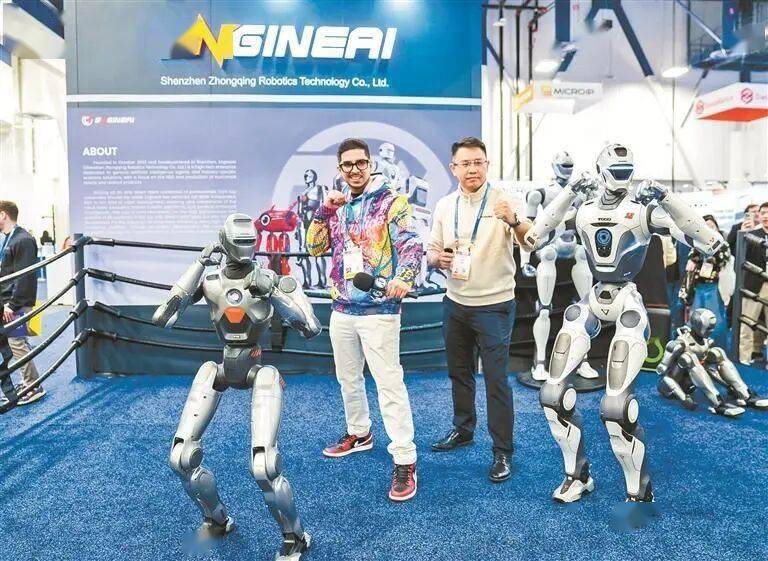
Core Insights - Shenzhen enterprises showcased over 350 innovative products at CES 2026, highlighting advancements in embodied intelligence, new energy, smart wearables, and smart imaging, demonstrating their strong technological capabilities and future-defining potential [1][13] Group 1: Embodied Intelligence - Shenzhen's progress in embodied intelligence is notable, with companies like Zhongqing Robotics presenting innovative products such as the PM01 and the T800 humanoid robot, marking a shift from laboratory concepts to industrial applications [2][4] - RoboSense's delivery robot successfully completed a complex task involving nearly 20 steps autonomously, showcasing advancements in robotics [3] Group 2: Smart Energy - In the smart energy sector, Shenzhen companies are integrating energy storage with robotics, exemplified by Huabao New Energy's innovative products like the Jackery Solar Gazebo and the Jackery Explorer 1500 Ultra, which highlight advancements in the "light-storage+" ecosystem [6][8] Group 3: Smart Wearables - Smart glasses emerged as a key focus at CES, with Shenzhen's RayNeo unveiling the world's first dual-lens AR glasses supporting eSIM functionality, allowing for a phone-independent experience [8][10] Group 4: Smart Imaging - Shenzhen's Insta360 gained attention with its Antigravity A1 drone, which won the Best Creative Award in the drone category, showcasing its innovative approach to immersive aerial photography [9][12] Group 5: Innovation Ecosystem - Shenzhen has transitioned from being labeled as a low-cost manufacturer to a leader in innovation, driven by a robust AI hardware ecosystem and a focus on independent innovation, resulting in a significant shift in its global market presence [13][14] - The city has established a comprehensive innovation ecosystem that integrates innovation chains, industrial chains, financial chains, and talent chains, fostering a conducive environment for original achievements and effective technology transfer [14] Group 6: Global Competitive Landscape - Shenzhen is becoming a critical node in the global smart hardware ecosystem, with over 2,200 AI-related companies and nearly 300 "city + AI" application scenarios, enhancing its local supply chain capabilities [15][16] - The city is reshaping the global competitive landscape across various sectors, including low-altitude economy, new energy vehicles, and autonomous driving, supported by leading companies like Huawei and BYD [15][16]
CES 2026:影翎Antigravity A1首次公开亮相
Huan Qiu Wang· 2026-01-09 05:35
Core Viewpoint - The 2026 International Consumer Electronics Show (CES) showcased innovative products from the Chinese smart imaging brand Insta360 and its drone sub-brand Antigravity, with the Antigravity A1 panoramic drone winning the "Best Innovation Award" in the drone category [1][2]. Group 1: Product Launches and Innovations - Insta360 exhibited a full range of flagship products, including the X5 panoramic action camera, GO Ultra pocket camera, Ace Pro2 action camera, and the AI smartphone stabilizer Flow 2 Pro [2]. - The new generation professional webcams, Insta360 Link 2 Pro and Link 2C Pro, were also showcased for the first time, set to launch on January 13, targeting meetings, live streaming, and content creation [2]. - The Antigravity A1, recognized as the world's first 8K panoramic drone, attracted significant attention at CES, featuring intuitive controls and immersive flight experiences [2]. Group 2: Awards and Market Position - The Antigravity A1 has previously won multiple design awards, including the German Red Dot Design Award and the Japan Good Design Award, and was listed in TIME magazine's "Best Inventions of 2025" [2]. - Insta360 has maintained its position as the global leader in the panoramic camera market for eight consecutive years, holding over 85% market share according to Frost & Sullivan [6]. - The company is driving the application of smart imaging technology in both consumer and professional fields through continuous product innovation and technology integration [6].

刷新迟到记录的老罗,状况百出的「科技春晚」
3 6 Ke· 2026-01-04 05:31
Core Insights - The annual technology innovation sharing conference "Luo Yonghao's Crossroads" returned after seven years, showcasing various products and innovations from ByteDance and other companies [1][2] - Despite high expectations, the event faced multiple errors, including a delayed start and technical issues, leading to audience disappointment [1][2] Product Highlights - **DJI NEO2 Drone**: A user-friendly drone designed for easy operation, featuring gesture control and safety measures to protect users [6] - **Hypershell Exoskeleton**: A lightweight exoskeleton that assists users in climbing and carrying heavy objects, suitable for various extreme environments [8] - **TuoZhu 3D Printer**: Aimed at making 3D printing accessible to the general public, it offers a community for sharing designs and resources [9] - **LiberNovo Ergonomic Chair**: An advanced ergonomic chair that automatically adjusts to the user's posture, enhancing comfort [12] - **LICURV Dishwasher**: A compact dishwasher that cleans dishes in five seconds without detergent, utilizing innovative technology for effective cleaning [15] - **Antigravity Drone**: A panoramic drone that simplifies aerial photography, allowing users to control it intuitively [17] - **New Beanbag AI**: An AI application that enhances communication and translation capabilities, demonstrating quick response times [19] - **Qie Ting AI Reading App**: An application that provides audio summaries of books, highlighting key points and allowing for voice cloning [22] - **LAVA Studio**: An AI music workstation that enables users to create diverse musical sounds with a single instrument [25] Audience Engagement - The event saw significant interest, with tickets selling out quickly and a peak online viewership of around 5 million [1] - Despite the initial excitement, audience reactions were mixed, with many expressing dissatisfaction over the event's execution [5][6]

刷新迟到记录的老罗,状况百出的「科技春晚」
36氪· 2026-01-01 04:12
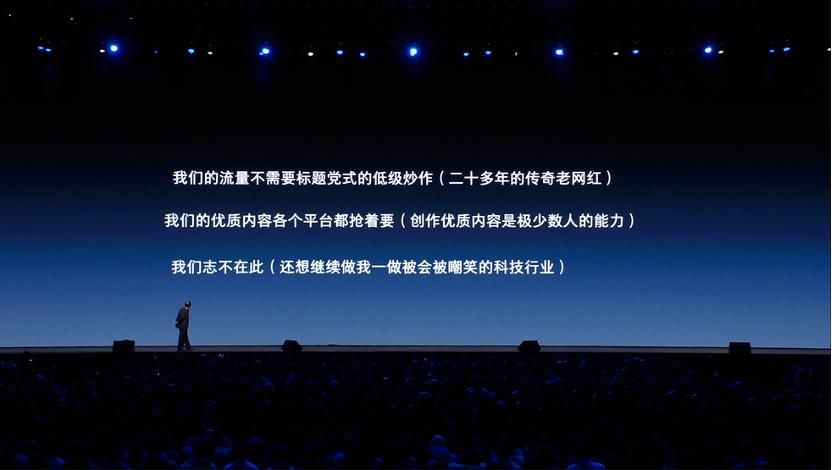
Core Viewpoint - The article discusses the return of Luo Yonghao's annual technology innovation sharing conference, highlighting the mixed reception of the event, which featured various innovative products but faced significant criticism for its execution and organization [5][6][8]. Event Overview - Luo Yonghao's annual technology innovation sharing conference took place on December 30, 2025, in Shanghai, featuring a four-hour presentation that included product showcases from ByteDance and several Shenzhen hardware companies [6][7]. - The event generated high anticipation, with tickets selling out quickly and viewership reaching around 5 million on Douyin [7]. Execution Issues - The event was marred by multiple errors, including incorrect PowerPoint content and a delayed start time of 50 minutes, which included 20 minutes of advertisements and 30 minutes of music [8][12]. - Audience dissatisfaction was evident, with calls for refunds and complaints about the event feeling more like a sales pitch than a genuine product showcase [15][16]. Product Highlights DJI NEO2 Drone - The DJI NEO2 is marketed as an easy-to-use drone for capturing everyday moments, featuring gesture control and a lightweight design of 151 grams [18][19]. Exoskeleton Device - An exoskeleton product designed to assist with physical tasks, utilizing lightweight materials and AI to adapt to different environments, was showcased [22][24]. 3D Printer by Tuozhu - The Tuozhu 3D printer aims to make 3D printing accessible for everyday users, supported by a community for sharing 3D models [26][28]. LiberNovo Ergonomic Chair - This chair adapts to the user's posture automatically, providing support without manual adjustments, representing a new generation of ergonomic furniture [30][32]. LICURV Dishwasher - A compact dishwasher that cleans dishes in five seconds without detergent, utilizing high-pressure water and heat for effective cleaning [34][36]. Antigravity Drone - The Antigravity drone allows users to control it easily and experience aerial views through a VR headset, simplifying the process of capturing panoramic footage [38][40]. AI Product "Doubao" - The Doubao AI application demonstrated advanced voice recognition and translation capabilities, showcasing its potential in real-time communication [46][48]. "Qie Ting" AI Reading App - This app offers AI-generated summaries of books, allowing users to listen to key points and insights, enhancing the reading experience [50][52]. LAVA Studio - LAVA Studio is an AI-powered music workstation that enables users to create complex musical compositions with minimal equipment, showcasing the potential of smart musical instruments [54][58].

2025年度成长型公司盘点:在红海赛道中“硬碰硬”
Xin Lang Cai Jing· 2025-12-29 07:58
Group 1: Market Dynamics - The business landscape in 2025 is increasingly competitive, with new companies challenging established leaders in saturated markets [1][3] - Companies like YingShi and TuoZhu are innovating in consumer hardware and 3D printing, respectively, by addressing core pain points and enhancing user experience [3][4][5] - The rise of AI applications is accelerating, with companies like MiniMax and Manus achieving significant milestones in their respective fields [1][14] Group 2: Company Performances - YingShi has become the global leader in panoramic cameras, surpassing major competitors like Ricoh and Samsung, with a revenue of 6.611 billion yuan in the first three quarters of 2025, a nearly 70% year-on-year increase [4][5] - TuoZhu has emerged as the global leader in consumer-grade 3D printing, achieving a revenue of nearly 10 billion yuan in 2025, doubling its previous year's figures [5][6] - MoEr Thread has successfully launched on the STAR Market, with a market capitalization exceeding 300 billion yuan, marking its position as the first domestic GPU stock [8][9] Group 3: Strategic Moves - MoEr Thread is focusing on building a comprehensive ecosystem around its MUSA architecture, aiming to compete with NVIDIA's CUDA by enhancing its software and hardware capabilities [9][11] - FishBubble is attempting to penetrate the white-collar recruitment market, aiming to expand its user base beyond its traditional blue-collar focus, with over 1 million users already [12][13] - Manus has achieved an annual recurring revenue (ARR) of over 100 million USD within nine months of commercialization, showcasing rapid growth in the AI sector [17][18] Group 4: Future Outlook - The 3D printing industry is expected to continue evolving, with TuoZhu aiming for further innovations and market penetration [7] - MoEr Thread plans to enhance its GPU offerings and expand its ecosystem, indicating a long-term vision for growth in the computing industry [11][12] - FishBubble's ambition to challenge established players in the recruitment market reflects a broader trend of new entrants seeking to disrupt traditional industries [12][13]

新产业造富记:富豪榜里的三个广东老板
2 1 Shi Ji Jing Ji Bao Dao· 2025-12-27 01:15
Core Viewpoint - Xiaopeng Motors reported impressive Q3 financial results, achieving a revenue of 20.38 billion yuan, marking a 101.8% year-on-year increase and an 11.5% quarter-on-quarter growth, with total vehicle deliveries reaching 116,000 units, a 149.3% increase year-on-year [1] Group 1: Company Performance - Xiaopeng Motors' revenue for Q3 2025 reached 20.38 billion yuan, the first time it surpassed 20 billion yuan in a single quarter [1] - The total vehicle delivery for Xiaopeng Motors in Q3 was 116,000 units, reflecting a significant year-on-year growth of 149.3% [1] - Xiaopeng Motors' total market capitalization is currently 156.558 billion HKD [8] Group 2: Wealth and Rankings - Xiaopeng Motors' CEO, He Xiaopeng, ranked 114th on the 2025 Hurun Rich List with a wealth of 48 billion yuan, a 50% increase from the previous year [1] - The combined wealth of He Xiaopeng, Chen Tao from Shenghong Technology, and Liu Jingkang from Yingshi Innovation exceeds 100 billion yuan [1] - Liu Jingkang's company, Yingshi Innovation, achieved a market capitalization of over 100 billion yuan, with a global market share of 67.2% in the panoramic camera sector [5][8] Group 3: Industry Trends - The rise of Xiaopeng Motors, Shenghong Technology, and Yingshi Innovation reflects the rapid development of new industries such as AI computing, smart mobility, and smart imaging [10] - In the first three quarters of this year, Guangdong's new product output saw significant growth, with industrial robots increasing by 33.7% and civilian drones by 44.8% [11] - Guangdong's R&D expenditure reached approximately 510 billion yuan last year, surpassing that of manufacturing powerhouses like Japan and Germany [11]

新产业造富记:富豪榜里的三个广东老板
21世纪经济报道· 2025-12-27 01:10
Core Viewpoint - Xiaopeng Motors reported impressive Q3 financial results, achieving a revenue of 20.38 billion yuan, marking a 101.8% year-on-year increase and an 11.5% quarter-on-quarter growth, with total vehicle deliveries reaching 116,000 units, a significant 149.3% increase year-on-year [1][8] Group 1: Company Performance - Xiaopeng Motors' revenue surpassed 20 billion yuan for the first time in a single quarter, reflecting strong sales growth and expanding market presence [1] - The company’s CEO, He Xiaopeng, ranked 114th on the 2025 Hurun Rich List with a wealth of 48 billion yuan, a 50% increase from the previous year [1] - Xiaopeng Motors' total market capitalization is currently 156.558 billion HKD [7] Group 2: Industry Trends - The rise of Xiaopeng Motors, along with other companies like Shenghong Technology and Yingshi Innovation, illustrates a shift in Guangdong's economy from traditional manufacturing to high-tech industries [9][10] - The new industrial landscape in Guangdong is characterized by significant growth in sectors such as AI, smart transportation, and smart imaging, with a notable increase in the production of industrial robots, service robots, and drones [9][10] - Guangdong's R&D expenditure reached approximately 510 billion yuan last year, surpassing that of manufacturing powerhouses like Japan and Germany, indicating a strong commitment to innovation [10] Group 3: Wealth Creation Stories - The wealth of entrepreneurs in the tech sector, such as Liu Jingkang of Yingshi Innovation and Chen Tao of Shenghong Technology, has surged, reflecting the rapid development of new industries [4][6] - Liu Jingkang's company, Yingshi Innovation, achieved a market value exceeding 100 billion yuan, with a 67.2% share in the global panoramic camera market [4] - Chen Tao's Shenghong Technology saw its stock price increase by 571% this year, positioning it as a key player in the AI supply chain [6]