
智能穿戴

Search documents
苔源获融资;叮咚买菜回应收购;自嗨锅关联公司被申请破产
Sou Hu Cai Jing· 2026-02-13 08:27
Financing Dynamics - AI sports wear brand "MossCode" has completed a multi-million RMB angel round financing, with a valuation reaching $100 million [3] - The funding will be used to expand the product R&D team and stabilize mass production, laying the groundwork for launching in the European and American markets in the first half of 2026 [3] - The investment reflects the capital market's recognition of the growth potential in the AI smart sports wear segment [3] Company Developments - Barry Callebaut plans to invest €250 million (approximately 2.06 billion RMB) to upgrade its factory in Wieze, Belgium, the largest chocolate production base globally [5] - The investment aims to enhance manufacturing capabilities in Europe amid ongoing volatility in the global cocoa market [5] - Dingdong Maicai reassured users that its operations remain stable and quality standards unchanged following acquisition news [8] - Crayon Shin-chan Foods announced a HKD 188 million acquisition of Qucloud AI HK Limited, marking its transition towards an AI-driven data company [10] - A related company of "Self-heating Pot" has been applied for bankruptcy review, highlighting the financial struggles faced by the brand [13] Market Trends - The health-focused tea drink leader Nayuki has opened a new "Fiber Studio" store in Shenzhen, emphasizing low GI and high fiber products [17] - This move represents Nayuki's shift from a "third space" concept to promoting a "healthy lifestyle," aiming to increase customer spending and repeat purchases [17] Personnel Changes - Thierry Conrad Reutenauer has been promoted to Chief Marketing Officer at Loewe, reflecting LVMH's recognition of the brand's narrative [21] - The departure of Patou's artistic director may indicate a strategic shift towards focusing on its core perfume business [24] - Guillaume Pats has been appointed Chief Commercial Officer at Saint Laurent, tasked with integrating global wholesale, retail, and e-commerce strategies [27] - Canada Goose appointed Patrick Bourke as North America President, responsible for enhancing brand connections with consumers in the region [30]


正浩、OPPO前高管创业AI智能运动手表,天使轮估值1亿美金|早起看早期
36氪· 2026-02-10 00:12
Core Viewpoint - The article discusses the recent angel round financing of the AI smart sports wearable brand "MossCode," which has raised several tens of millions of yuan and is valued at $100 million. The funding will be used to expand the R&D team and ensure stable mass production of products, with plans to launch in the European and American markets in the first half of 2026 [5][6][7]. Company Overview - MossCode is a subsidiary of Shenzhen Wuyin Power Technology Co., Ltd. The founding team includes experienced professionals from leading companies like OPPO and Apple, with a strong background in hardware development and market insights [6][7][11]. - The founder, Ni Ruoyang, has a history in TMT and hard technology investments and has successfully expanded teams and revenue in previous roles [7]. Market Context - According to CounterPoint, Apple Watch has seen a decline in shipments for two consecutive years, with a drop of 10%-19% annually, resulting in a loss of approximately 6-7 million users each year [7]. - In contrast, specialized brands like Garmin have seen significant revenue growth, with Garmin achieving $1.77 billion in revenue in Q3 2025, indicating a shift in consumer preference towards specialized sports health products [8]. User Behavior Insights - There is a clear migration from general smart wearables to specialized devices, with users increasingly seeking products that meet specific data and performance needs [9][10]. - Many users are currently using multiple devices to fulfill their needs, such as wearing Whoop for recovery and Garmin for performance tracking, highlighting the limitations of single-device solutions [10][11]. Product Positioning - MossCode aims to fill the gap in the market by creating a wearable that provides both real-time data interaction during exercise and continuous recovery monitoring [11][12]. - The company emphasizes the importance of comfort and usability in wearable design, aiming to avoid the pitfalls of increased weight and complexity that can deter users from consistent wear [12][13]. Technological Innovation - MossCode plans to leverage advancements in computing power and energy density to create a new hardware form that meets user demands for both performance and comfort [12][13]. - The company intends to utilize AI to provide personalized training methods based on individual physiological signals and preferences, moving beyond traditional training metrics [13]. Market Strategy - MossCode's strategy focuses on entering a niche market that is currently overlooked by larger competitors, aiming for a patient and precise execution to establish a foothold in the industry [14].
对话MossCode:估值1亿美金的AI运动手表,想给用户构建一套「个人运动能力Context」
Founder Park· 2026-02-09 12:45
Core Insights - The AI wearable market is experiencing significant growth, with various forms of products like necklaces, headphones, rings, and watches emerging [2] - The smartwatch segment is undergoing structural changes, with Apple Watch experiencing a decline in shipments by 10%-19% annually, while competitors like Garmin are seeing substantial growth, with 10 million units shipped and $4 billion in revenue, reflecting a 30% year-over-year increase [3] - There is a clear consumer trend towards more specialized and segmented health monitoring devices, leading to increased competition and innovation in the market [3] Company Overview - MossCode, an AI smart wearable brand, recently completed a multi-million RMB angel round financing led by XVC and Qingliu Capital, achieving a valuation of $100 million [4] - The founding team comprises members from leading companies and institutions, including EcoFlow, OPPO, Stanford, Apple, Huawei, and Suunto, with a focus on creating a product that breaks away from traditional narratives in the sports industry [4][5] - The company's philosophy emphasizes understanding individual differences through AI, aiming to help users find their own rhythm rather than competing against others [4][5] Market Positioning - MossCode's product strategy is based on three principles: long-term relevance, differentiation through personal experience, and aligning users with consumers [10] - The choice of smartwatches as the primary product form is due to their unobtrusive nature and ability to serve as a central data hub, making them ideal for continuous user engagement [11] - The company aims to differentiate itself by integrating AI deeply into its products, addressing the hidden barriers that traditional smartwatches present to users [17][18] User-Centric Approach - MossCode seeks to redefine the relationship between users and sports products by focusing on holistic health management rather than just athletic performance [19][20] - The brand aims to help users return to self-awareness, emphasizing that the goal of exercise is personal improvement rather than competition [20][21] - The product design incorporates user feedback and subjective experiences, aiming to create a supportive environment for personal growth [41][42] Technological Innovation - The integration of AI allows for personalized fitness guidance, making professional advice more accessible and tailored to individual needs [24][25] - The system is designed to continuously learn from user data, providing insights that evolve over time, thus enhancing the user experience [28][36] - The focus on subjective user experiences and feelings is seen as a critical variable in understanding individual adaptability and performance [41][42] Competitive Landscape - MossCode recognizes the reliability and established trust of competitors like Garmin, aiming to build a strong foundation of quality and user trust through rigorous testing and product development [45] - The company plans to target international markets, particularly Europe, where the sports market is more mature and competitive, allowing for advanced product refinement [46] - MossCode believes that even with similar AI technologies, its unique approach to user engagement and product development will set it apart from larger brands [50][51]

正浩、OPPO前高管创业AI智能运动手表,天使轮估值1亿美金 | 早期项目
3 6 Ke· 2026-02-09 01:30
Core Insights - AI smart sports wear brand "MossCode" has recently completed a multi-million yuan angel round financing, with a valuation reaching 100 million USD [1] - The funding will be used to expand the R&D team and ensure stable mass production, with plans to launch products in the European and American markets in the first half of 2026 [2] - The founder, Ni Ruoyang, has a background in TMT and hard technology investments, and has successfully scaled teams and revenue in previous roles [2] Company Overview - MossCode is a subsidiary of Shenzhen Wuyin Power Technology Co., Ltd. [1] - The founding team includes experienced professionals from leading companies like OPPO and Apple, with expertise in hardware development and user insights [2] - The company aims to create a new type of wearable that integrates real-time data interaction during exercise and continuous recovery monitoring [6] Market Trends - The global smartwatch market is experiencing a decline, with Apple Watch showing a negative growth trend for two consecutive years, losing approximately 6-7 million users annually [2] - In contrast, specialized brands like Garmin and Whoop are seeing significant revenue growth, indicating a shift towards professional health monitoring as a necessity rather than an optional consumer good [3][4] User Behavior Insights - There is a clear migration from general smart wearables to specialized devices, with users seeking more precise data and insights [4] - Many users are currently using multiple devices to meet their needs, indicating a gap in the market for a comprehensive solution that combines the strengths of existing products [5][6] Product Development Strategy - MossCode's product design is focused on addressing the limitations of current offerings, aiming to provide a seamless user experience that combines data collection with actionable insights [6][7] - The company plans to leverage advancements in technology and AI to create personalized training methods that cater to individual user needs [7][8] Competitive Landscape - The market is dominated by established players like Apple, Garmin, and Whoop, making it essential for new entrants like MossCode to find a unique positioning [8] - MossCode's strategy involves targeting an overlooked niche that larger companies may struggle to address, emphasizing the need for patience and precise execution in their market entry [8]

立足200亿新起点 推动新战略落地
Nan Fang Du Shi Bao· 2026-02-08 23:13
Core Insights - During the "14th Five-Year Plan" period, the economic output of Gaobu Town reached 21 billion yuan, marking a historic leap in comprehensive strength [5][6] - The focus for the "15th Five-Year Plan" will be on becoming a "strong manufacturing town" and a "new riverside city," driven by innovation and strategic urban development [5][10] Economic Performance - The total economic output of Gaobu Town increased to 21 billion yuan, with industrial output surpassing 40 billion yuan and retail sales doubling over five years [6][8] - The import and export volume grew by over 130%, with market entities exceeding 25,000 [6][8] Industrial Development - A modern industrial system is rapidly forming, with advanced manufacturing accounting for over 71% of the economy [6][7] - The number of national high-tech enterprises and specialized new enterprises has seen significant growth, with nearly 10 billion yuan invested in projects over five years [6][7] Urban Development - Urban functionality and quality have improved significantly, with nearly 1,000 acres of industrial space being developed or renovated [7][8] - Environmental quality has also improved, with air quality remaining good and green coverage nearing 50% [7][8] Social Welfare - Continuous investment in social welfare has been prioritized, with 1.47 billion yuan allocated for education and significant upgrades to healthcare facilities [7][8] - The town has successfully maintained social stability and harmony, with various cultural and sports initiatives gaining recognition [7][8] Strategic Focus for Future Development - The strategy for the "15th Five-Year Plan" includes three main areas: driving industrial innovation, enhancing urban living conditions, and ensuring effective implementation of strategic initiatives [10][11] - Emphasis will be placed on creating a collaborative innovation ecosystem in the smart wearable industry and improving the overall urban environment [10][11] Brand and Market Expansion - Plans to enhance brand recognition and market reach include the "Quality Product Cultivation" initiative, targeting sectors like smart wearables and precision manufacturing [12][13] - The government aims to support local businesses in expanding their market presence through innovative marketing strategies and participation in trade events [12][13]

AI眼镜扫福!今年集福又添科技新玩法
Guo Ji Jin Rong Bao· 2026-02-04 05:16
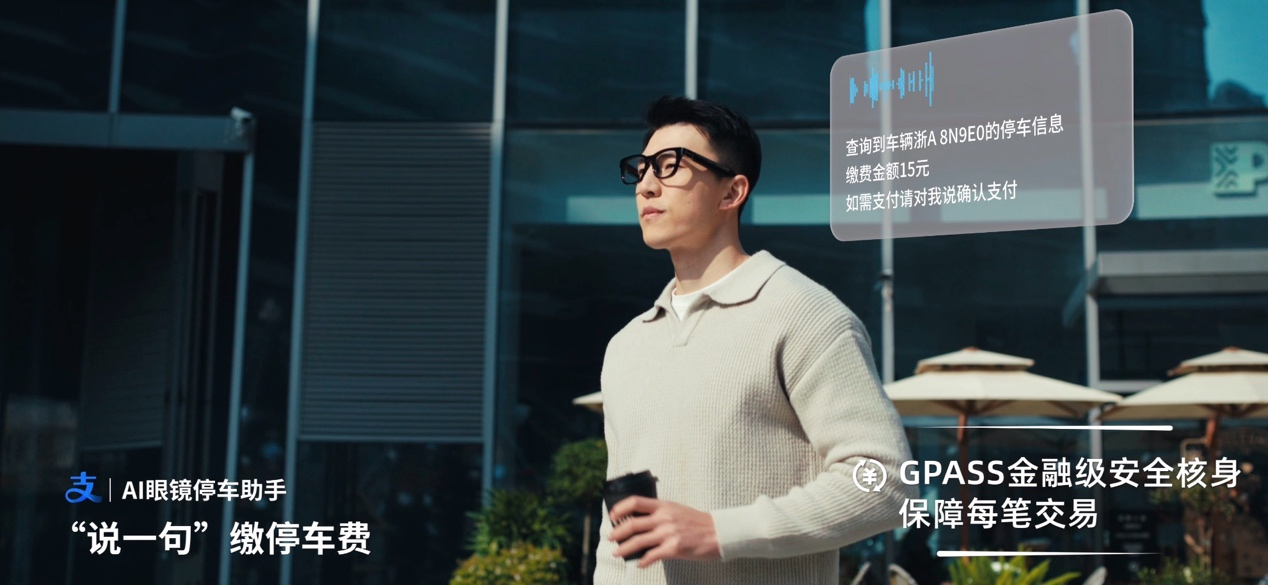
从手机AR(增强现实)扫福,到AI(人工智能)眼镜"目光所及,福气即至"——今年集福又添科 技新玩法。记者近日获悉,2026年支付宝集福活动首次上线智能穿戴设备扫福功能。用户佩戴夸克、乐 奇Rokid等品牌的AI眼镜,无需操作手机,通过"看一下"配合"说一句"的简单方式,即可完成扫福、集 卡、分享等全流程,实现"福在眼前"的沉浸式体验。 不仅限于"福"字,今年AI眼镜扫福在识别内容上大幅拓展,埋藏更多惊喜:注视创意"马"字或马形 象图案,均有机会触发福卡;接入的"王者荣耀""乡村爱情"等国民IP,扫描相关角色或元素,也有概率 收获彩蛋福卡。 从手机到AI眼镜集福,折射出智能穿戴设备正从极客玩具走向大众日常。此前,GPASS已支持"看 一下"支付、"说一句"停车缴费、对话AI健康助手"蚂蚁阿福",以及在文旅场景中提供数字伴游等服 务,逐步构建起"服务随行"的体验脉络。随着生态的持续拓展,未来,或许只需一句语音、一道目光, 更多生活服务将以更自然的方式,融入人们的视线之中。 具体来说,当你佩戴AI眼镜看向身边的"福"字并说出"扫福"指令后,眼镜会自动唤起摄像头,实时 识别视野中的"福"字或各类隐藏元素,识别成功后 ...
消费“新”图景|“新国补”点燃新热潮 智慧生活“加速跑”
Xin Hua Wang· 2026-01-30 07:35
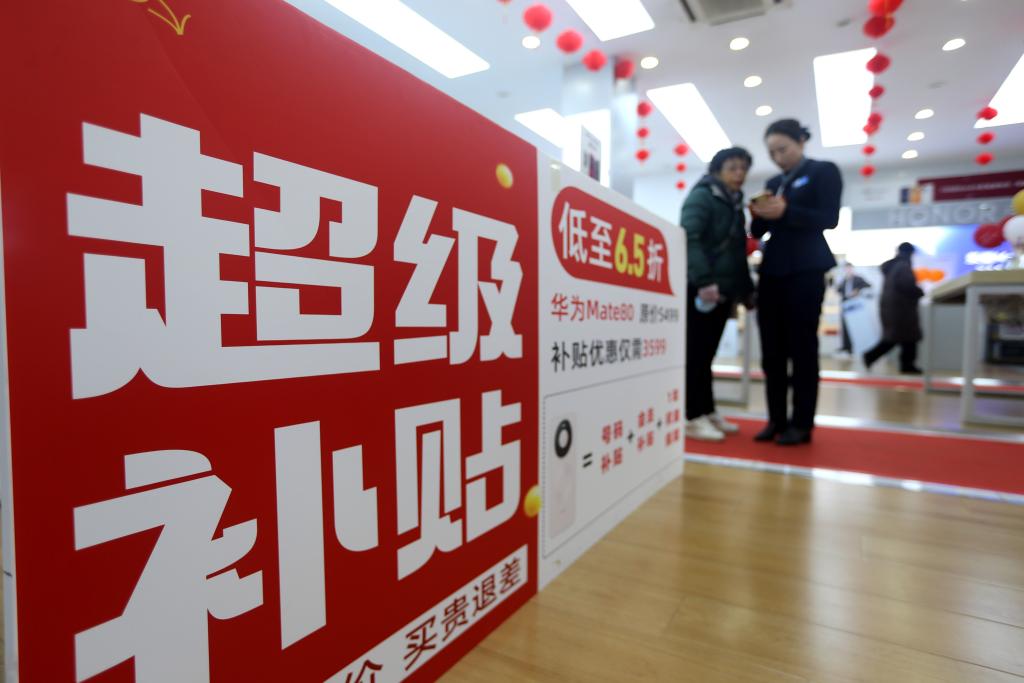
"新国补"落地,各地消费市场"焕新"。今年消费品以旧换新精准贴合民生需求与消费升级趋势。数码产品购新补贴拓展为数码和智能产品购新补 贴,将智能眼镜和智能家居产品纳入支持范围。 目前,智能眼镜市场正迎来爆发式增长。据机构预测,2026年中国智能眼镜市场出货量将达到450万台,同比增幅高达77%。在"新国补"政策推动 下,以智能眼镜、智能手表为代表的智能穿戴消费正迎来新热潮。 换得更好、用得更智,产业升级与百姓生活品质提升正在双向奔赴,绘就消费"新"图景。 记者:余刚 彭菁 编导:张南琦 新华社音视频部制作 【纠错】 【责任编辑:谷玥】 1月6日,消费者在江苏省连云港市连云区一大型手机卖场内挑选新款手机。新华社发(王春 摄) 1月18日,顾客在深圳市南山区的INNO100全球创新旗舰店体验智能眼镜。新华社记者 毛思倩 摄 个人消费者购买手机、平板、智能手表手环、智能眼镜等4类产品(单件销售价格不超过6000元),按产品销售价格的15%给予补贴,每位消费者 每类产品可补贴1件,每件补贴不超过500元。 ...
蚂蚁GPASS技术落地小米智能眼镜,支持停车缴费、AI健康问答
Quan Jing Wang· 2026-01-28 03:26
Core Insights - Xiaomi has partnered with Ant Group to launch innovative services on Xiaomi's smart glasses using the GPASS technology framework, marking the integration of this technology into daily life for a seamless user experience [1][7] Group 1: Parking Payment Service - The smart glasses feature an "AI Parking Assistant" that allows users to pay for parking without using their phones, enhancing the user experience with a hands-free approach [3][5] - The payment process involves three simple steps: voice notification of billing start time, voice-initiated payment, and confirmation of payment completion, all without manual operation [4][5] Group 2: Health Management Integration - GPASS technology also enables the integration of Ant Group's AI health application "Afu" with Xiaomi's smart glasses, allowing users to sync health data and access health-related queries via voice commands [5][7] Group 3: GPASS Technology Framework - GPASS is built on a unified framework focusing on security, connectivity, and interaction, ensuring a secure and seamless experience for users [7][8] - The technology integrates biometric identification for secure authorization and connects smart glasses with the Alipay digital service ecosystem, covering various parking facilities across major cities [7][8] Group 4: Future Prospects - Since its launch in 2025, GPASS has been evolving AI glasses from basic interaction devices to personal intelligent assistants, with plans for more digital services to be integrated into various scenarios [8] - The development of an open, secure, and interconnected service system is seen as crucial for the industry's advancement, with GPASS lowering the development barriers for hardware manufacturers [8]

产品迭代出货激增 智能眼镜“热”撬动产业链升级
Xin Hua Wang· 2026-01-26 02:35
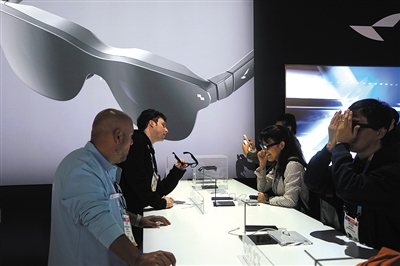
Core Insights - The smart glasses market is experiencing explosive growth, with China's shipment volume expected to reach 4.5 million units by 2026, representing a year-on-year increase of 77% [2][5]. Technology and Application Breakthroughs - The launch of the first eSIM smart glasses, "Thunderbird X3 Pro Project eSIM," showcases independent functionalities such as calls, AI conversations, and real-time translation without needing a smartphone [3]. - The integration of AI smart glasses with automotive technology allows users to control vehicle functions remotely and receive real-time navigation and speed information while driving [3]. - Recent advancements in optical technology, lightweight design, and independent communication capabilities have addressed previous limitations of smart glasses, enabling a transition from accessories to standalone devices [3][4]. Market Growth and Demand - The smart glasses market is projected to see significant growth, with shipments expected to reach 2.54 million units in 2025 and 4.51 million units in 2026, reflecting year-on-year growth rates of 92.9% and 77.7%, respectively [5][6]. - The core growth areas for smart glasses in 2026 will focus on consumer scenarios such as home use, travel, health management, content creation, and information services [6]. Industry Chain Upgrades - The demand for smart glasses is driving deep collaboration across the supply chain, enhancing product integration and production efficiency [7]. - Companies are innovating to meet the evolving demands for lightweight, low-power, and high-performance imaging systems, with new products being developed to align with market needs [8]. Challenges and Collaborative Solutions - The smart glasses industry faces challenges including balancing product weight, battery life, performance, and cost, as well as improving user education and market awareness [10]. - The first half of 2026 is expected to see advancements in optical displays and AI chips, but challenges related to production yield, cost control, and supply chain coordination remain [10][11].
千架无人机点亮CES夜空:36氪与同创伟业共塑出海报道新模式
3 6 Ke· 2026-01-23 11:31
Core Insights - The article highlights the innovative reporting model introduced by 36Kr in collaboration with Tongchuang Weiye during CES 2026, showcasing a blend of in-depth reporting and real-time coverage of technology trends and startups [1][2][3] Group 1: Event Coverage and Insights - 36Kr provided extensive coverage of Chinese startups at CES, emphasizing their strong position in the smart home cleaning sector and leadership in smart wearable devices [2] - Approximately 20 Chinese humanoid robot companies participated in CES, surpassing the total from the US, Japan, South Korea, Germany, and the UK combined, indicating China's significant entry into the Physical AI era [2] - The collaboration between 36Kr and Tongchuang Weiye aimed to deliver unique insights and real-time updates from the event, enhancing the understanding of global tech trends for domestic audiences [3] Group 2: Technological Innovations - The V4 system showcased at CES is a world-first commercial application of a nest-style automated drone charging system, featuring advanced technologies for automated control and dual power supply [5] - The drone performance, involving 1,200 drones, was noted as one of the most efficient large-scale drone light shows in US history, demonstrating the capabilities of the collaborating companies [6] Group 3: Future Prospects - The conclusion of CES 2026 marks the beginning of a new wave of technological competition and innovation, with expectations for continued collaboration between 36Kr and Tongchuang Weiye in exploring content innovation and supporting entrepreneurial ventures [7]