
水下机器人

Search documents
深之蓝科创板IPO获受理,拟募资15亿元
Bei Jing Shang Bao· 2025-12-28 03:41
Core Viewpoint - Deep Blue Ocean Technology Co., Ltd. has received acceptance for its IPO on the Sci-Tech Innovation Board, aiming to raise approximately 1.5 billion yuan for various projects [1] Company Overview - Deep Blue specializes in the research, production, sales, and services of cable-controlled underwater robots, autonomous underwater vehicles, underwater gliders, automatic profiling buoys, and underwater propulsion robots [1] - The company focuses on the "deep-sea technology" sector, providing products and professional solutions for marine safety, marine engineering, emergency rescue, hydropower, marine scientific research, and marine tourism [1] Fundraising Purpose - The company plans to use the raised funds for the expansion of its underwater robot production base, upgrading its underwater robot technology research and experimental center, and supplementing working capital [1]
报告:我国水下机器人产业迎黄金期,过去十年复合增长率达29.7%
Huan Qiu Wang· 2025-12-25 04:19
Core Insights - The underwater robotics industry in China is projected to reach a market size of 16.76 billion yuan in 2024, with a year-on-year growth of 18.3% and a compound annual growth rate of 29.7% over the past decade, indicating strong market potential [1] - The industry is experiencing a golden period of development driven by the marine power strategy, continuous capital infusion, and technological breakthroughs, with a notable trend of collaboration among academia, industry, and research [1] - Chinese underwater robotics companies are rapidly closing the gap with international counterparts, leveraging significant "latecomer advantages" and the overlap of the entire industry chain with robotics and new energy vehicles [1] Investment Landscape - The underwater robotics sector has become a focal point for capital, with increased activity and rising scale, entering a concentrated financing period from 2024 to 2025 [2] - Notable financing events include a 1 billion yuan A+ round by Xingmai Innovation in September 2025, marking the highest single financing amount recently, and a 550 million yuan Pre-IPO round by Deep Blue in May 2023, signaling an impending IPO breakthrough in the industry [2] - The market is characterized by parallel development of consumer-grade and industrial deep-sea-grade segments, with consumer-grade companies, particularly those producing pool cleaning robots, leading in financing scale [2] Future Outlook - Companies in the underwater robotics sector must achieve rapid technological breakthroughs, continuous innovation in business models, and proactive supply chain security to thrive in this capital and technology-intensive field [3] - With increased policy support and the emergence of industry chain advantages, Chinese underwater robotics companies are expected to secure a significant position in the deep blue world, making their future performance highly anticipated by the market [3]

历时两年 水下机器人厂商深之蓝完成IPO辅导 拟冲击科创板
Xin Lang Cai Jing· 2025-12-15 09:17
Group 1: Company Overview - Deep Blue Ocean Technology Co., Ltd. (referred to as "Deep Blue") is known as the "Underwater DJI" and has recently changed its IPO guidance status to acceptance, with China International Capital Corporation (CICC) as the advisory institution [1] - Founded in 2013, Deep Blue specializes in the research, production, and sales of underwater intelligent equipment, focusing on both industrial and consumer markets [2] - The company has developed a range of underwater robots, including remotely operated vehicles (ROVs), autonomous underwater vehicles (AUVs), and underwater gliders (AUGs), serving various sectors such as marine scientific research, marine engineering, and emergency rescue [2][3] Group 2: Market Position and Technology - Deep Blue's consumer brand, Sublue, was established in 2016 and has captured nearly 65% of the global market share in underwater propulsion devices, delivering over 200,000 underwater technology products across more than 80 countries [2] - The company has approximately 200 R&D personnel and has made significant advancements in underwater robotics technology, holding over 400 patents, including more than 120 invention patents [3] - The global underwater robotics market is projected to grow from $9.4 billion in 2024 to over $60 billion by 2030, with China's market expected to increase from $1.4 billion to $14 billion during the same period [3] Group 3: Financial and Investment Background - Deep Blue has completed 10 rounds of financing since its inception, raising over 1.3 billion yuan, with the latest round in May 2023 amounting to 550 million yuan, backed by China Agricultural Bank [4] - The company's investors include various state-owned capital and private equity firms, with the largest shareholder being the founder, Wei Jiancang, who holds 23.64% of the shares [4][5] - The company has a diverse shareholder structure with 43 shareholders and no controlling shareholder, indicating a broad base of investment support [4]


27岁西交大博士瞄准全自主水下作业,拿下多家央企订单,获英诺天使和奇绩创坛融资|36氪首发
3 6 Ke· 2025-12-15 01:26
Financing Information - Shaanxi Weilan Deep Sea Information Technology Co., Ltd. has recently completed an angel round financing of tens of millions of yuan, with investors including Inno Angel and Qiji Chuangtan [1] - The funds will primarily be used for the research and development of the "Super Frogman" underwater embodiment platform and the construction of a water data collection center [1] Company Overview - The company is headquartered in Xi'an, Shaanxi Province, and focuses on underwater operations in a challenging environment covering 3.6 million square kilometers of ocean [1] - The core product, "Super Frogman," significantly outperforms elite frogman special forces in terms of diving depth, operational range, and duration [1] - The platform consists of two main modules: an underwater autonomous recognition and disposal robot and an underwater in-situ power supply base [1] Technological Advantages - The company has developed ultra-low flow speed ocean current energy generation technology, capable of stable power generation in deep-sea environments with flow speeds as low as 0.1 meters per second [2] - The embodiment intelligent system enables autonomous operations through a closed-loop of perception, decision-making, and execution, achieving precise underwater tasks even in complex conditions [2] Product Applications - The "Super Frogman" platform is applicable in military fields for underwater reconnaissance, target disposal, and security of underwater infrastructure [2] - In civilian applications, it can perform long-distance inspections and maintenance of underwater cables and pipelines, exploration of marine oil and mineral resources, and underwater search and rescue [2] Market Potential - The ocean is a strategic resource with deep-sea areas (over 2000 meters) covering 84% of the ocean's total area, making it a significant target for development as land resources become scarce [3] - The global underwater robot market is approximately 50 billion yuan, with traditional underwater operations limited by the need for mother ships, which restricts usage scenarios [4] Company Performance - The research team has led national scientific projects totaling 80 million yuan and has completed the development and acceptance of the third-generation "Super Frogman" platform [5] - The company aims to complete its first benchmark case by 2026 and begin mass delivery of the entire machine by early 2027 [5] Team Background - The core team is from Xi'an Jiaotong University, with the founder, Zhang Dayu, being an assistant professor and having significant achievements in deep-sea equipment research [6] Founder Insights - The company's differentiation lies in achieving "human not in the loop" autonomous underwater operations, addressing the limitations of traditional remote-controlled operations [7] - The company sees collaboration with state-owned enterprises as an opportunity to leverage innovative technologies in the deep-sea equipment market [8] Development Plans - The company plans to focus on commercial implementation and the establishment of a water data collection center to accumulate operational data for algorithm upgrades [9] Investor Perspective - Investors recognize the transition in the marine equipment sector from reverse engineering to forward development, highlighting the team's potential to contribute to national strategies in the deep-sea domain [10]

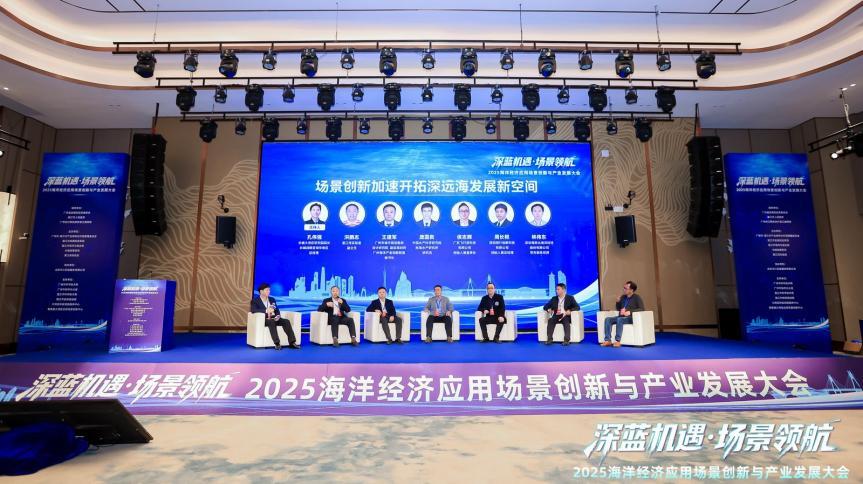
高端对话热议“场景创新加速开拓深远海发展新空间”
Feng Huang Wang Cai Jing· 2025-12-07 03:04
Core Insights - The 2025 Marine Economy Application Scenario Innovation and Industry Development Conference was held in Zhanjiang, focusing on the theme "Deep Blue Opportunities, Scene Navigation" [1] - The conference featured high-level discussions on accelerating scene innovation to explore new spaces for deep-sea development [1][3] Group 1: Key Discussions - The "Zhanjiang Bay No. 1" project was highlighted as a foundational example of offshore ranching, overcoming equipment challenges in the South China Sea and providing a replicable model for deep-sea aquaculture [3] - The collaboration between Guangzhou and Zhanjiang in marine economic development was emphasized, leveraging Zhanjiang's vast marine area and Guangzhou's technological strengths [6] - The current state of deep-sea aquaculture equipment in China was discussed, with over 70 large-scale aquaculture devices developed, positioning the country among the global leaders [8] Group 2: Industry Innovations - Guangdong Feixing Technology announced a strategic partnership with Zhanjiang Hengxing Group, aiming to enhance marine economic development through advanced delivery systems [10] - Shenzhen Qianxing Innovation Technology reported significant advancements in underwater robotics, breaking the monopoly of Western countries and expanding its market reach [12] - Shenzhen Haisebi Marine Technology introduced a "green energy island" initiative, integrating various technologies to create new marine economic models by 2026 [14] Group 3: Reports and Future Directions - The conference presented the first comprehensive annual report on marine economic application scenario innovation, outlining a "7-45" scenario map across seven fields and 45 key scenarios [19] - Zhanjiang's Development and Reform Bureau released a comprehensive marine application scenario list, including 48 specific project scenarios across nine major fields [19] - The successful hosting of the conference aligns with national strategies for marine economic development and the promotion of new application scenarios [19]
8万多海洋专利背后 深圳批量打造水下“小龙”
2 1 Shi Ji Jing Ji Bao Dao· 2025-10-31 11:55
Core Viewpoint - The article highlights the advancements in underwater robotics in Shenzhen, showcasing the emergence of innovative companies like FIFISH and 潜行创新, which are addressing the challenges of traditional underwater operations with smaller, more efficient, and cost-effective solutions [2][6][9]. Group 1: Underwater Robotics Innovations - The FIFISH X1 underwater robot, weighing less than 30 kg, has achieved a high market share in the industry due to its fully integrated domestic technology and capabilities [2]. - Shenzhen's underwater robotics market is projected to be a trillion-level emerging market, with applications ranging from marine engineering inspection to deep-sea aquaculture [6]. - The FIFISH X1 enhances operational efficiency by 10 times compared to traditional ROVs, thanks to its lightweight design and advanced AI algorithms that allow for stable underwater operations [8][9]. Group 2: Industry Growth and Ecosystem - Shenzhen's marine production value reached 540.9 billion yuan in 2024, accounting for 14.7% of its GDP, with over 110,000 marine-related enterprises and more than 82,000 marine-related patents [2][11]. - The city has established a robust ecosystem for marine innovation, with 86 marine innovation platforms, including 5 national-level and 27 provincial-level platforms, fostering collaboration among various stakeholders [18]. - The "AI + Marine" application scenarios launched in August 2023 aim to enhance innovation and market validation, creating a collaborative environment for large and small enterprises [13][19]. Group 3: Technological Advancements and Market Demand - Companies like 朗诚科技 are focusing on the localization of marine core sensors, significantly reducing product costs by at least 50% due to a well-established supply chain in the Greater Bay Area [11]. - The demand for underwater robots is broad, covering areas such as marine environmental monitoring, emergency rescue, and scientific research, indicating a strong market potential [6][9]. - The integration of advanced technologies and talent from major tech companies is driving innovation in Shenzhen's marine sector, enhancing the competitiveness of local enterprises [11][12].
深圳科技创新维度居全球第四
Nan Fang Du Shi Bao· 2025-10-13 23:15
Core Insights - The "Global Ocean City Competitiveness Index Report (2025)" was released, highlighting Shenzhen's strong position in technological innovation, ranking fourth globally in this dimension, which supports its goal of becoming a "global ocean center city" [2][5] Global Ocean City Competitiveness - Shenzhen ranks 11th globally in ocean city competitiveness, with Qingdao at 16th, showcasing China's significant presence in the global ocean competition [3][5] - The report identifies a clear "four-tier" differentiation in global ocean city competitiveness, with London, Singapore, and New York leading the first tier, while cities like Tokyo, Shanghai, Hong Kong, and Sydney form the top echelon of global ocean economies [3][4] Technological Innovation in Shenzhen - Shenzhen's innovation capabilities in marine electronic information, high-end equipment manufacturing, and underwater robotics are crucial for its ambition to become a global ocean center city [4][5] - The report emphasizes that Shanghai, Shenzhen, and Qingdao are the leading ocean economic circles in China, with Shanghai ranked second globally in economic vitality and maintaining the highest port cargo throughput [4][5] Recommendations for Chinese Ocean Cities - The report proposes a "four-dimensional enhancement path" for Chinese ocean cities, focusing on building an open economic ecosystem, creating a technology innovation hub, deepening global governance participation, and innovating green low-carbon models [6] - It predicts that from 2025 to 2030, technology-driven efficiency revolutions and green low-carbon transformations will dominate ocean city competitiveness, with new industries like marine data centers and blue carbon economies emerging rapidly [6]
“十万亿”后,中国海洋经济落子何处?
2 1 Shi Ji Jing Ji Bao Dao· 2025-10-12 01:43
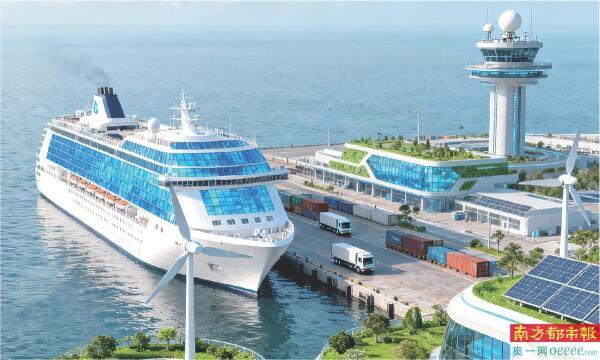
Core Insights - The global ocean economy has surpassed $2.5 trillion and is projected to reach $3 trillion by 2030, comparable to the world's seventh-largest economy [1][4] - The shift in ocean economic strength is moving from traditional port metrics to technology-driven innovations, with breakthroughs in deep-sea exploration, marine renewable energy, and marine biomedicine becoming core competitive advantages [1][4] Ocean Economy Overview - China's ocean production value has exceeded 10 trillion yuan for the first time, accounting for 7.8% of GDP, driven by cities like Shanghai, Shenzhen, and Qingdao [2] - The global ocean economy is expanding due to the collaborative growth of marine transportation, fisheries, energy, and tourism, with over 31 million direct jobs created and over 200 million indirect jobs anticipated [4] Global Ocean City Competitiveness - Traditional shipping centers remain dominant in the global ocean city rankings, with cities like London and Oslo leading in various dimensions such as economic vitality and technological innovation [5][7] - Singapore ranks first in Asia, benefiting from efficient governance and a complete industrial chain in marine engineering [7] Innovation as a Key Variable - The "Global Ocean City Competitiveness Index Report (2025)" offers a new perspective on evaluating ocean cities, emphasizing the transition from traditional maritime hubs to innovative ocean cities [9][12] - Both the LMC report and the new competitiveness index highlight the stability of top-tier ocean cities, with Singapore, London, and Rotterdam consistently leading [9] Strategic Pathways for Chinese Cities - Chinese cities are encouraged to transition from "supply chain participants" to "value chain creators," addressing the current challenges of being large but not strong [15][16] - Shanghai can leverage digital port technologies to enhance high-value services, while cities like Qingdao and Shenzhen should focus on integrating research and industry to foster innovation [16][17] Future Projections - The report predicts that Chinese cities will rise in global rankings, with Shanghai potentially entering the top three, and Qingdao moving closer to the first tier due to advancements in AI and marine technology [18]
海上竞速,深圳如何追上海?
Mei Ri Jing Ji Xin Wen· 2025-10-11 15:32
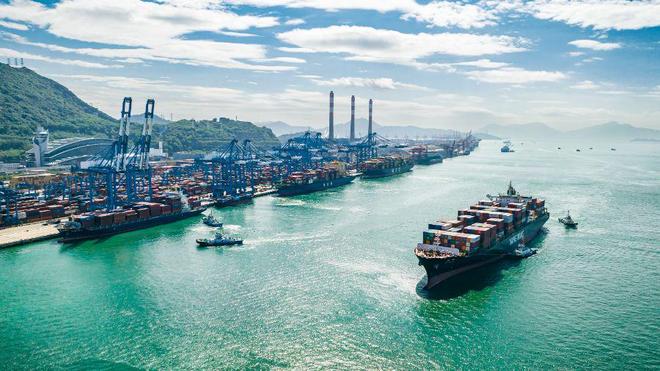
Core Insights - The "Global Ocean City Competitiveness Index Report (2025)" was released, evaluating 60 global ocean cities based on five dimensions: economic vitality, technological innovation, maritime services, international influence, and urban governance [1][3] - The report identifies Shanghai, Shenzhen, and Qingdao as the leading ocean economic circles in China, with Shanghai ranked as the global leader in economic vitality and port cargo throughput [1][3] Economic Circles Overview - The report categorizes global ocean cities into four distinct tiers, highlighting the competitive landscape [1] - Key cities and their rankings include: - London (1st) - Leading in technological innovation, maritime services, international influence, and urban governance [2] - New York (3rd) - Strong in economic vitality and international influence [2] - Singapore (2nd) - Top in economic vitality and maritime services [2] - Shenzhen (4th in innovation) and Qingdao (8th in innovation) are positioned as significant players in China's ocean economy [2][3] China's Ocean Economy - China's ocean economy has surpassed 10 trillion yuan, with a reported ocean GDP of 5.1 trillion yuan in the first half of the year, reflecting a year-on-year growth of 5.8% [3] - The northern, eastern, and southern ocean economic circles in China exhibit differentiated development based on regional resources and industrial foundations [3] - Shanghai leads in the global competitiveness ranking, while Shenzhen and Qingdao are in the second tier, indicating a need for Shenzhen to enhance its competitive edge [3][5] Shenzhen's Development Goals - Shenzhen aims to become a global ocean center city, with a target of achieving an ocean industrial output value of 215 billion yuan by the end of the 14th Five-Year Plan, with an annual growth rate of over 12% [5] - The city is focusing on technological integration in deep-sea equipment, renewable energy, and smart port operations to drive its ocean economy forward [5] Future Industry Initiatives - Shanghai is planning to establish national-level future industry pilot zones to foster technological innovation and industrial development [6] - Shenzhen is investing heavily in low-altitude industries, with financial support measures in place to boost the sector [7]

全球海洋城市竞争力指数报告发布 深圳排名全球第四
Nan Fang Du Shi Bao· 2025-10-11 12:15
Core Insights - The "Global Ocean City Competitiveness Index Report (2025)" highlights Shenzhen's strong position in technological innovation, ranking fourth globally, supported by its capabilities in marine electronic information, high-end equipment manufacturing, and underwater robotics [2][4]. Group 1: Global Ocean City Competitiveness - The report evaluates 60 global ocean cities based on five dimensions: economic vitality, technological innovation, maritime services, international influence, and urban governance, revealing a clear "four-tier" differentiation in competitiveness [3]. - London, Singapore, and New York lead the first tier, serving as benchmarks for global ocean development, while cities like Tokyo, Shanghai, Hong Kong, and Sydney form the "top power" in the ocean economy [3]. - Shenzhen ranks 11th and Qingdao 16th globally, showcasing China's significant presence in the ocean city competitiveness landscape [3]. Group 2: Characteristics of Top Cities - London excels in comprehensive strength, ranking first in technological innovation, maritime services, international influence, and urban governance, supported by a robust maritime legal system and financial services [4]. - Singapore ranks first in economic vitality due to efficient governance and its hub position, recognized for its port efficiency and openness [4]. - Shanghai leads China's ocean economy with a second-place ranking in economic vitality and the highest global port cargo throughput, transitioning from a participant in the global supply chain to a shaper of the global value chain [4]. Group 3: Enhancing Ocean City Competitiveness - The report emphasizes the need for ocean cities to build "hard infrastructure + soft rules + new ecology" as key competitive advantages [5]. - It outlines four pathways for enhancing competitiveness: creating an open economic ecosystem, establishing technology innovation hubs, deepening global governance participation, and innovating green low-carbon models [5]. Group 4: Future Trends in Ocean Competition - The report predicts that from 2025 to 2030, efficiency revolutions driven by technology and green low-carbon transitions will dominate ocean city competition [6]. - New business models such as marine data centers, marine AI, green fuel refueling (e.g., LNG), and blue carbon economy are expected to develop rapidly, positioning ocean cities advantageously in global competition [6].
