
深空探测

Search documents
从无到有 走出独特产业路径合肥:青年逐梦空天信息产业
Zhong Guo Qing Nian Bao· 2025-10-23 00:27
Group 1: Urban Air Mobility - The vision of convenient intercity air travel is accelerating in Hefei, with the unveiling of the VT35 eVTOL aircraft, capable of a range exceeding 200 kilometers, designed for urban environments [2][3] - Hefei is a pilot province for low-altitude airspace management reform, having established the world's first urban air traffic hub and issued the first operational certificate for passenger-carrying unmanned aerial vehicles [2][3] Group 2: Low-altitude Economy Development - EHang Intelligent, a leader in the low-altitude economy, has established its headquarters for the VT35 series in Hefei, while another local company, Zero Gravity Aircraft, is focused on the mass delivery of its eCTOL aircraft [3] - Hefei has integrated various departments to streamline low-altitude affairs and has published a white paper outlining the development goals and scenarios for the low-altitude economy [3][4] Group 3: Space Exploration and Technology - Hefei is focusing on the development of the aerospace information industry, including low-altitude economy, commercial space, and deep space exploration, with significant advancements in technology and application scenarios [4][5] - The Deep Space Exploration Laboratory in Hefei is working on innovative projects, such as a lunar regolith 3D printing system, which could utilize lunar soil for construction on the moon [4][6] Group 4: Industry Collaboration and Growth - The establishment of the International Deep Space Exploration Society in Hefei marks a significant step in international collaboration in the aerospace field [7] - Hefei's aerospace information industry has seen substantial growth, with over 140 companies in the sector, representing more than 90% of the city's aerospace industry [7][8]


中国经济圆桌会|国家发展改革委:创新成为我国推动高质量发展的主引擎
Xin Hua Wang· 2025-10-18 00:38
Group 1 - Innovation has become the main engine for promoting high-quality development in China, with a shift from quantity to quality and from low-end to high-end industries [1][2] - During the 14th Five-Year Plan, China is focusing on developing new productive forces and integrating technological and industrial innovation, resulting in significant achievements [2] - By 2024, China's total R&D expenditure is expected to increase by nearly 50% compared to the end of the 13th Five-Year Plan, with R&D intensity reaching 2.69%, close to the OECD average [2] Group 2 - The digital economy's core industries are projected to account for about 10% of GDP by 2024, with new industries and business models, such as "Artificial Intelligence+", rapidly emerging [2] - Over the past four years, China's GDP average growth rate reached 5.5%, with significant milestones achieved at 110 trillion, 120 trillion, and 130 trillion yuan [3] - Achievements in economic development, technological innovation, social welfare, ecological civilization, and security have been made despite external pressures and challenges [3]
理响中国|这就是“神秘的东方力量”
Xin Hua Wang· 2025-10-14 05:35
Core Insights - China's technology sector is experiencing significant growth, with major innovations such as the C919 aircraft and Chang'e 6 lunar mission showcasing the country's advancements in technology and innovation [1][3] - Cities like Hangzhou and Hefei are emerging as innovation hubs, demonstrating the effectiveness of China's technology-driven development model [2][6] - The "14th Five-Year Plan" emphasizes innovation as a key strategy for national development, leading to increased R&D investment and improved global rankings in innovation [3][5] Group 1: Investment and Growth - China's R&D expenditure reached a new high, with a nearly 50% increase compared to the end of the "13th Five-Year Plan," amounting to an additional 1.2 trillion yuan [3] - The intensity of R&D investment rose to 2.68%, approaching the OECD average, reflecting a strong commitment to innovation [3] - The high-tech manufacturing sector's added value grew by 42% compared to the end of the "13th Five-Year Plan," indicating robust industrial growth [11] Group 2: Technological Achievements - Major technological breakthroughs include the operation of the first fourth-generation nuclear power plant and the successful launch of the domestic large aircraft [5][9] - China's achievements in artificial intelligence, quantum technology, and space exploration have led to multiple global firsts, showcasing the country's technological prowess [9][11] - The number of innovative drugs in development has reached over 4,000, accounting for approximately 30% of the global total, highlighting advancements in the pharmaceutical sector [11] Group 3: Policy and Institutional Support - The Chinese government has prioritized innovation in its national development strategy, with a focus on high-level self-reliance in technology [6][12] - The establishment of a supportive innovation ecosystem is crucial, with efforts to enhance the role of enterprises in technological innovation and improve the business environment [12] - The emphasis on cultivating high-level innovative talent is essential for sustaining technological advancements and achieving self-reliance [12]
9月6日新闻夜览
Sou Hu Cai Jing· 2025-09-06 12:50
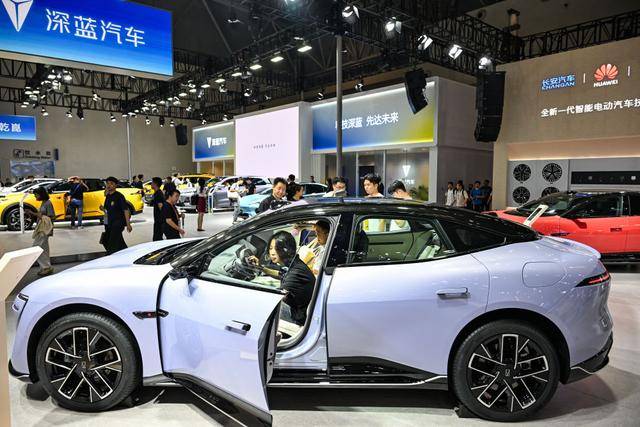
Group 1 - The automotive industry is experiencing continuous iteration driven by high-level intelligent technology, comprehensive safety guarantees, and an open cooperation ecosystem showcased at the World Intelligent Industry Expo 2025 in Chongqing [1] Group 2 - The Ningbo-Zhoushan Port Liuhong Highway Bridge, with a main span of 1768 meters, has successfully completed the topping of its first main tower, making it the largest span cross-sea bridge in China upon completion [3] Group 3 - Chinese scientists proposed a concept for asteroid detection, defense, and resource utilization at the third Deep Space Exploration International Conference, emphasizing the need for global cooperation in planetary defense [4][6] Group 4 - A breakthrough in end-to-end hazardous weather short-term warning technology for non-controlled airspace has been achieved, allowing for accurate 15-minute advance warnings for drone turbulence, enhancing safety for the low-altitude economy [7] Group 5 - The U.S. Labor Department reported significantly weaker-than-expected non-farm employment data, leading to a sharp decline in U.S. stocks and the dollar index, and strengthening market expectations for a potential interest rate cut by the Federal Reserve [11]
深空经济概念首次提出 十大产业方向发布
Xin Hua She· 2025-09-05 00:35
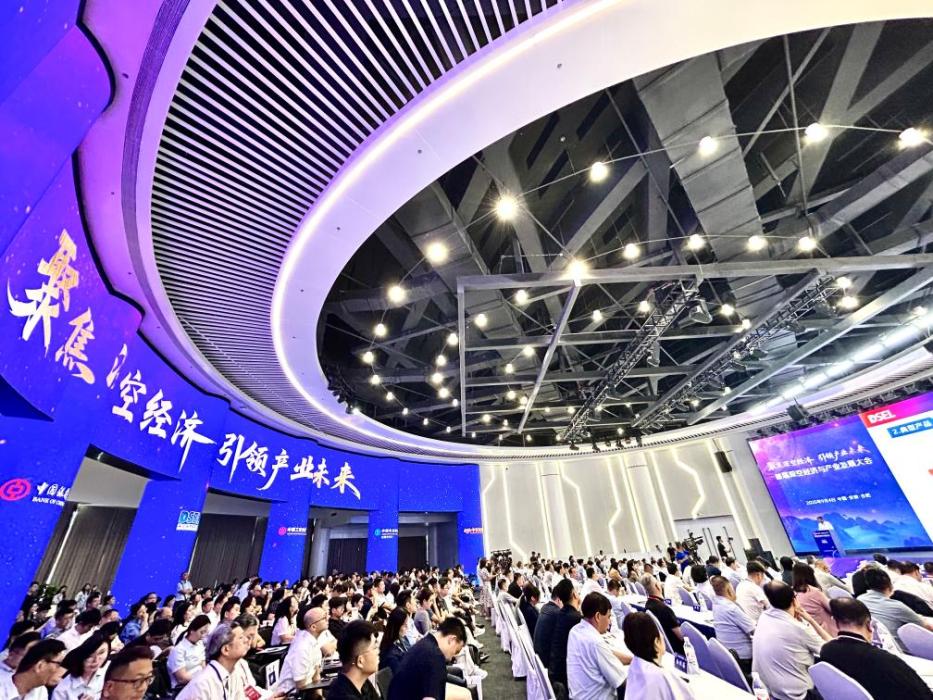
Core Insights - The first Deep Space Economy and Industry Development Conference was held on September 4 in Hefei, Anhui, focusing on the theme "Focusing on Deep Space Economy, Leading the Future of Industry" and introduced the concept of deep space economy for the first time [1][2] Industry Overview - Deep space economy is an extension of space economy, characterized by the development and utilization of resources from extraterrestrial bodies. It has emerged due to the global competition in deep space exploration activities [2] - This new economic model supports technological research and development, product manufacturing, facility construction, scientific exploration, resource development, operational support, and application services, showcasing features such as frontier, rarity, exploration, and diversity [2] Key Industry Directions - The conference outlined ten key industry directions for deep space economy: 1. Deep Space Resource Development 2. Deep Space Internet 3. Deep Space Energy 4. Deep Space Biology 5. Deep Space Transportation 6. Deep Space Intelligence 7. Deep Space Construction 8. Deep Space Tourism 9. Deep Space Security 10. Deep Space Culture [2] Economic Impact - The Chief Engineer of the Deep Space Exploration Laboratory, Shi Pingyan, stated that China's deep space exploration is transitioning from technological breakthroughs and scientific exploration to economic empowerment and industrial driving, positioning deep space economy as a core engine for cultivating new productive forces [2] Conference Participation - The conference attracted over 400 participants from government departments, industry entities, research institutions, and investment organizations, emphasizing the importance of open cooperation and win-win collaboration to promote high-quality development in the deep space economy and related industries [2]
新华全媒+|深空探测实验室发布“深空经济”十大产业方向
Xin Hua She· 2025-09-04 09:46
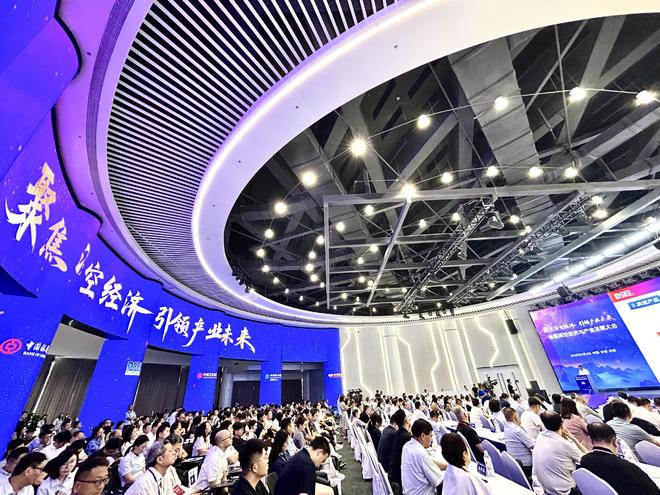
Core Insights - The first Deep Space Economy and Industry Development Conference was held on September 4 in Hefei, Anhui, focusing on the theme "Focusing on Deep Space Economy, Leading the Future of Industry" and introduced the concept of deep space economy for the first time [1][2] - Deep space economy is an extension of space economy, characterized by the development and utilization of resources from extraterrestrial bodies, and is emerging as a new economic model supporting deep space exploration [2] - The conference highlighted ten key industry directions for deep space economy, including deep space resource development, deep space internet, deep space energy, deep space biology, deep space transportation, deep space intelligence, deep space construction, deep space tourism, deep space security, and deep space culture [2] Industry Development - The deep space economy is seen as a core engine for cultivating new productive forces and is expected to drive the upgrade of the aerospace industry, foster innovation, and reshape spatial dynamics [2] - The conference attracted over 400 participants from government departments, industry entities, research institutions, and investment organizations, emphasizing the importance of collaboration and efficient matching of technology, capital, and market within the industry chain [3]
奔跑在创新前沿!按下科技强国建设“快进键”
Xin Hua She· 2025-08-29 18:48
Group 1 - The core viewpoint emphasizes China's significant advancements in technology and innovation during the "14th Five-Year Plan" period, showcasing numerous groundbreaking achievements in various fields [1][2][3] - China's focus on foundational research has led to major breakthroughs, such as the successful return of lunar samples by Chang'e 6 and advancements in quantum technology, indicating a strong commitment to high-level scientific independence [2][3] - The integration of technology and industry is accelerating, with a notable increase in R&D investment, which has grown nearly 50% compared to the end of the "13th Five-Year Plan," amounting to an additional 1.2 trillion yuan [4][5] Group 2 - The launch of the first commercial version of a domestic operating system based on the 6.6 kernel marks a significant step in supporting AI applications and digital transformation across industries [4] - The "New Economy" sector, represented by "Artificial Intelligence +," has seen its added value exceed 24 trillion yuan in 2024, equivalent to the combined GDP of Beijing, Shanghai, and Guangdong [4] - The recent World Artificial Intelligence Conference highlighted the transformative impact of AI on scientific methodologies, with new models being developed to enhance researchers' creativity [5][6] Group 3 - Challenges remain in the integration of innovation and industry, with a need to improve the efficiency of converting innovative results into productive forces and addressing the skills transition of the workforce [6] - The Chinese government has issued important directives to promote the development of AI applications, signaling a commitment to navigating the uncertainties posed by rapid technological changes [6] - China's transition from a major technological power to a strong technological nation is supported by a solid foundation, with an emphasis on maintaining confidence in innovation and striving for global technological leadership [6]
决胜“十四五” 打好收官战|奔跑在创新前沿!按下科技强国建设“快进键”
Xin Hua She· 2025-08-29 07:30
Group 1 - China's innovation has reached unprecedented importance during the 14th Five-Year Plan, with significant achievements in various sectors, including space exploration and quantum technology [1][2] - The successful return of samples from the Chang'e 6 mission reveals volcanic activity on the moon's far side, showcasing advancements in deep space exploration [1] - The number of China's hot research papers continues to grow, maintaining the world's leading position as of July 2024 [1] Group 2 - The release of a commercial version of a desktop and server operating system based on the 6.6 kernel marks a significant step in the integration of technology and industry, providing a new foundation for AI applications and digital transformation [2] - R&D investment in China has reached a new high, with a nearly 50% increase compared to the end of the 13th Five-Year Plan, amounting to an additional 1.2 trillion yuan [2] Group 3 - The "New Three" economy, represented by new industries, new business formats, and new models, is accelerating, with a total value exceeding 24 trillion yuan in 2024 [3] - The World Artificial Intelligence Conference highlighted the transformative impact of AI on scientific methodologies, with new models being developed to enhance researchers' creativity [3] Group 4 - The State Council's recent implementation of the "Artificial Intelligence+" action plan signals a commitment to advancing AI applications amid rapidly changing technological and external environments [4] - China's transition from a major technological power to a strong technological nation is supported by a solid foundation, emphasizing the need for innovation confidence and contributions to global scientific progress [4]
山海砺志建新功
Ren Min Ri Bao· 2025-08-08 22:01
Group 1 - The event in Beidaihe from August 1 to 7 invited 60 outstanding experts from various fields to enjoy a period of rest, emphasizing the importance of talent in national development and modernization [1][3] - The theme of this year's retreat is "Contributing to the New Era," highlighting the government's commitment to talent development and recognition of experts' contributions [1][3] - The gathering included a diverse group of experts, including both seasoned professionals and young talents, with a notable presence of individuals under 40 [3][4] Group 2 - Experts expressed gratitude for the government's support, emphasizing the importance of collaboration and innovation across disciplines to achieve breakthroughs in fields like biomedicine and artificial intelligence [4][5] - Discussions focused on the rapid development of China's biopharmaceutical industry and the need for interdisciplinary approaches to tackle major medical challenges [4][5] - The event served as a platform for experts to share insights and foster high-quality development, with a particular emphasis on nurturing young talent and addressing key technological challenges [4][5][7] Group 3 - The retreat also highlighted the significance of scientific research in national strength, with experts discussing the need for strategic talent cultivation and innovation in various sectors [5][7] - Specific goals were set by experts, such as establishing leading research institutions and advancing quantum research to contribute to China's technological self-reliance by 2035 [7][8] - The event underscored the importance of space exploration, with plans for future lunar missions and a focus on planetary defense against potential threats to Earth [8][9]
【科技日报】五年“三跨越” 按下科技强国建设“快进键”
Ke Ji Ri Bao· 2025-08-07 01:28
Group 1 - The launch of the third-generation autonomous superconducting quantum computer "Benyuan Wukong" and the successful return of samples from the "Chang'e 6" mission highlight China's advancements in technology and innovation [1][4] - The "14th Five-Year Plan" emphasizes the importance of innovation, aiming to build a technology powerhouse with leading global scientific strength and innovation capabilities [4][12] - Significant breakthroughs in foundational research have been achieved, including the detection of the first continuously active repeating fast radio bursts and advancements in quantum technology [5][6] Group 2 - The "Deep Sea No. 1" project, the world's first deep-water gas field developed independently, has begun full production, marking a significant milestone in China's deep-sea oil and gas development [2][8] - The launch of the first domestically produced large cruise ship "Aida·Modu" and the ongoing construction of the second ship "Aida·Huacheng" reflect advancements in China's shipbuilding industry [10] - The high-speed rail technology continues to innovate, with the CR450 train showcasing China's leadership in global high-speed rail operations [9] Group 3 - The rapid development of the new energy vehicle industry, which has maintained the highest global production and sales, demonstrates China's progress in automotive technology [11] - The establishment of the world's largest and most advanced 5G network has facilitated the digital transformation across various industries [11] - China's investment in research and development has reached new heights, with a nearly 50% increase in R&D funding compared to the end of the "13th Five-Year Plan" [12]