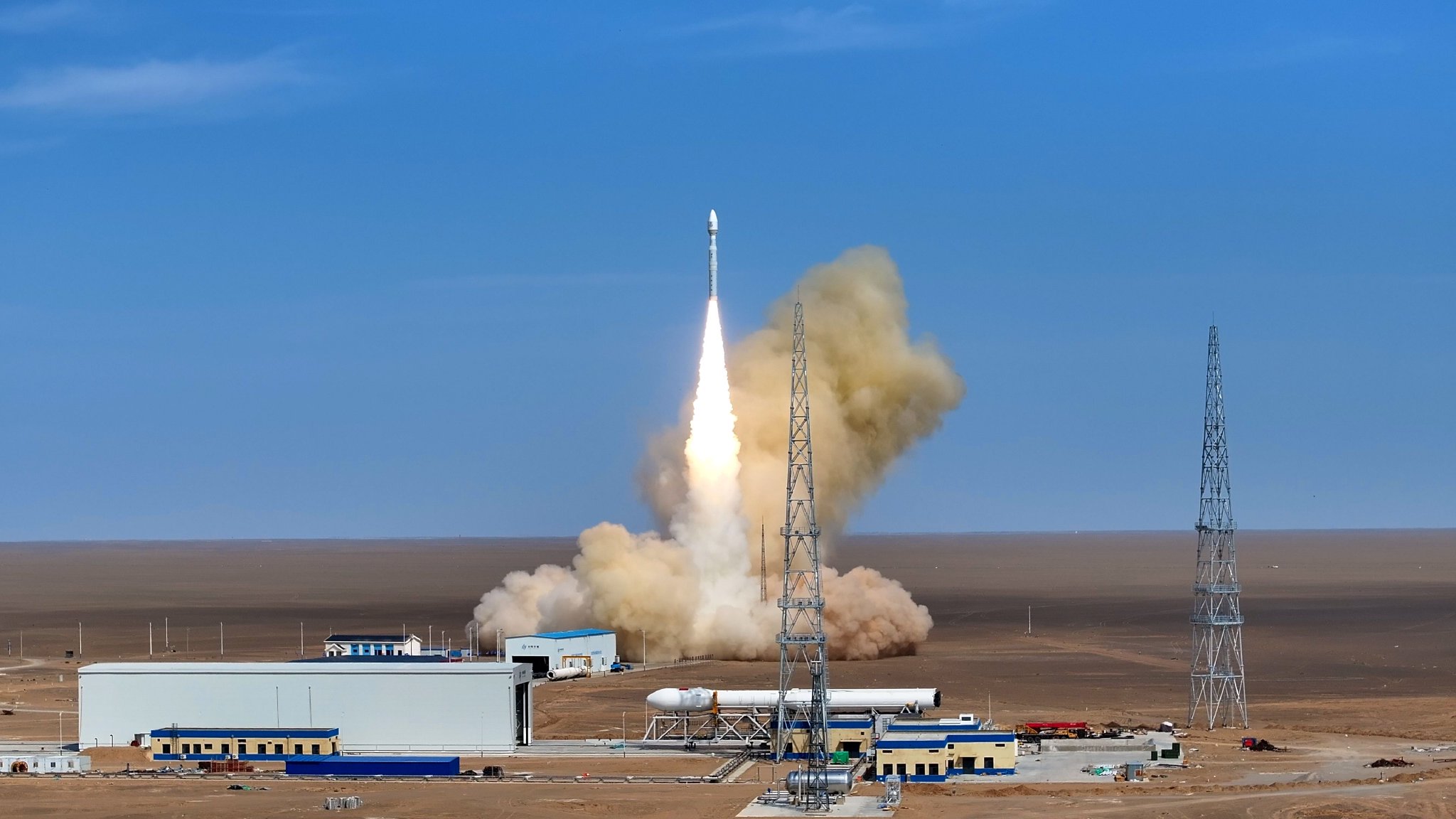
火箭制造与发射

Search documents
朱雀三号成功入轨,中国离重复使用火箭时代还有多远?
Guan Cha Zhe Wang· 2025-12-04 00:49
Core Viewpoint - The successful launch of the Zhuque-3 rocket marks a significant milestone in China's reusable rocket technology, despite challenges in achieving its expected payload capacity and issues with engine performance [1][11][29]. Group 1: Launch Details - On December 3, the Zhuque-3 rocket was launched from the Jiuquan Satellite Launch Center, successfully completing its flight plan and delivering a simulated payload into orbit [1]. - The first stage attempted a landing but experienced engine failure during descent, resulting in a crash approximately 67.2 meters from the intended landing zone [1]. Group 2: Development Background - Blue Arrow Aerospace, established in 2015, focuses on developing medium to large launch vehicles using liquid oxygen and methane as propellants, aiming to provide cost-effective and reliable launch services [3]. - The Zhuque-2 rocket, which successfully entered orbit in July 2023, was the first liquid oxygen-methane rocket to achieve this milestone, establishing Blue Arrow as a key player in the commercial space sector [3][4]. Group 3: Technical Specifications - The Zhuque-3 rocket features a diameter of 4.5 meters, a total length of 76.6 meters, and a launch weight of approximately 660 tons, with a low Earth orbit payload capacity of 21.3 tons [5]. - The rocket's first stage is equipped with four Tianque-12 engines, providing a thrust of about 900 tons [5]. Group 4: Challenges and Innovations - The Zhuque-3 rocket is constructed from high-strength stainless steel, which reduces manufacturing costs and enhances thermal resistance for multiple reuses [8][9]. - However, the rocket's first flight revealed issues with payload capacity, primarily due to the weight of the stainless steel structure, prompting design modifications to alleviate this problem [11][20]. Group 5: Future Prospects - Blue Arrow plans to enhance the Zhuque-3's capabilities with the development of the Tianque-12B engine, aiming for a thrust increase to 100 tons by 2027, which would significantly improve the rocket's payload capacity [23]. - The company is also preparing for future missions, including the launch of the Haolong-1 cargo spacecraft, which will further test the Zhuque-3's operational capabilities [23].

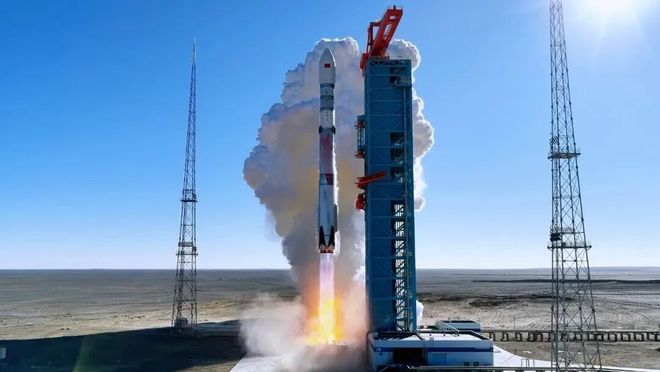
朱雀三号首飞成功入轨,卫星ETF易方达(563530)助力布局把握产业发展机遇
Mei Ri Jing Ji Xin Wen· 2025-12-03 06:52
Core Insights - The successful launch of the Zhuque-3 reusable rocket marks a significant milestone for China's private liquid rocket sector, achieving its first orbital flight [1] - The launch cost of Zhuque-3 is approximately 140 million RMB per launch, with a payload cost of 12,000 to 14,000 RMB per kilogram, making it competitive with SpaceX's Falcon 9 [1] - Future advancements in reusability could further reduce costs to around 10,000 RMB per kilogram, enhancing China's commercial rocket competitiveness in the international market [1] Industry Developments - The successful orbital insertion of Zhuque-3 is expected to catalyze further developments in the private rocket sector, with several upcoming launches planned, including Tianlong-3, Zhishenxing-1, and Lijian-2 [1] - The advancements in China's commercial rocket capabilities are likely to support rapid iterations in satellite technology [1]
万颗卫星上天难
经济观察报· 2025-09-07 09:20
Core Viewpoint - The Chinese commercial space industry is facing a significant bottleneck in rocket launch capacity, which is hindering the deployment of satellite constellations despite a growing demand for satellite services [2][4][10]. Group 1: Market Demand and Challenges - A major rocket launch order worth 616 million RMB from Shanghai Yuanxin Satellite Technology Co. has repeatedly failed to attract enough bidders, highlighting the shortage of capable private rocket companies [2][4]. - The total number of satellites planned by Yuanxin's "Qianfan Constellation" and China Star Network's "GW Constellation" has exceeded 30,000, indicating a substantial demand for launch services [3][4]. - The urgency of satellite launches is emphasized by the International Telecommunication Union (ITU) rules, which impose strict deadlines for satellite deployment to retain orbital and frequency resources [7][8]. Group 2: Current Launch Capacity - As of mid-2025, the Chinese commercial space sector has not produced a liquid rocket that can match the capabilities of SpaceX's Falcon 9, which poses a challenge for satellite companies needing reliable and cost-effective launch options [4][10]. - The recent bidding process by Yuanxin Satellite revealed that there are not enough qualified suppliers to meet the demand for large-capacity launch services, underscoring the industry's operational limitations [12][18]. Group 3: Potential Solutions and Developments - The market is looking towards several upcoming rockets, such as Tianbing Technology's "Tianlong-3," Blue Arrow Aerospace's "Zhuque-3," and CAS Space's "Lijian-2," which are expected to meet the large-scale constellation deployment needs but have yet to complete their first flights [5][23]. - The infrastructure for high-density launches is being developed, with new launch sites and production capabilities being established to support the anticipated increase in launch frequency [24][25]. - The capital market is becoming more accessible for companies in the commercial space sector, with firms like Blue Arrow Aerospace and CAS Space entering the IPO preparatory phase to secure funding for future growth [25].

谷神星一号运载火箭成功发射 中国航天“一日两箭”
Zhong Guo Xin Wen Wang· 2025-09-06 02:04
Core Insights - On September 5, China successfully launched the Ceres-1 rocket from the Jiuquan Satellite Launch Center, deploying multiple satellites including the Kaiyun-1, Yuxing-3 08, and Yunyang-1 27, marking the second rocket launch of the day [1][2] Group 1: Satellite Missions - The Kaiyun-1 satellite focuses on Earth observation and spatial perception, tasked with data collection and transmission to support various scientific research initiatives [1] - The Yuxing-3 08 satellite is primarily engaged in the in-orbit verification of new temperature-variable materials, and will later utilize its 5-meter resolution remote sensing camera for Earth imaging tasks [1] - The Yunyang-1 27 satellite is designed to gather information on atmospheric temperature, humidity, pressure, and ionospheric electron density [1] Group 2: Test Platforms and Technologies - The Aishen Star orbital test platform, developed by Xinghe Power Aerospace, is a commercial rocket upper stage that will continue to operate in orbit after completing its primary mission, conducting long-duration in-orbit tests using its atmospheric detection and visible light payloads [2] - The Aishen Star platform has undergone adaptive modifications to enhance its long-term operational capabilities in orbit, providing low-cost and efficient in-orbit testing and validation services for various new technologies, devices, and products [2] - On the same day, China also successfully launched the Long March 3B rocket, which deployed the Shiyan-29 satellite into its designated orbit [2]
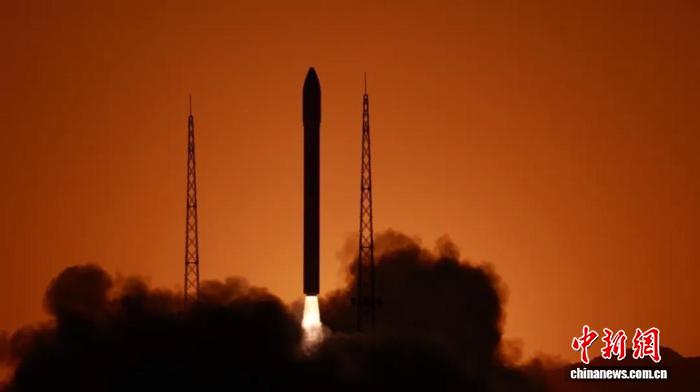
万颗卫星上天难
Jing Ji Guan Cha Wang· 2025-09-05 14:29
Core Viewpoint - The Chinese commercial space industry is facing a significant bottleneck in rocket launch capacity, which is hindering the deployment of satellite constellations necessary for various applications, including internet services and earth observation [1][2][3] Group 1: Market Demand and Challenges - Shanghai Yuanxin Satellite Technology Co., Ltd. has a budget of 616 million RMB for a rocket launch order to support its "Qianfan Constellation" project, but the bidding process has repeatedly failed due to insufficient qualified suppliers [1][2] - The total number of satellites declared by Yuanxin and another company has exceeded 30,000, indicating a high demand for launch services [2] - The urgency is compounded by the International Telecommunication Union (ITU) rules, which impose strict deadlines for satellite launches to retain orbital and frequency resources [4][5] Group 2: Current Launch Capacity - The current private rocket companies in China lack a large-capacity liquid rocket comparable to SpaceX's Falcon 9, which limits their ability to meet the growing demand for satellite launches [2][3] - The recent bidding results show that only a few private companies, such as Tianbing Technology and Blue Arrow Aerospace, have the potential to meet the launch requirements, but they have not yet completed their first flight tests [3][10] Group 3: Industry Developments - The market has seen significant contracts, such as a 990 million RMB deal signed by Aerospace Hongtu with an international client, indicating a thriving satellite industry despite the launch capacity issues [2][7] - The launch frequency and capacity of Chinese companies are lagging behind SpaceX, which completed 100 orbital launches in the first eight months of 2025 alone [6][11] Group 4: Future Prospects - The industry is witnessing a shift towards developing large-capacity, reusable liquid rockets, with companies like Tianbing Technology and Blue Arrow Aerospace focusing their resources on this goal [17][18] - The infrastructure for high-density launches is being developed, with new launch sites and facilities being established to support future rocket launches [20][21] - The successful completion of initial flights for the new generation of rockets is critical for the satellite companies to proceed with their deployment plans [18][21]
第十飞再受挫,“星舰”前景难料
Huan Qiu Shi Bao· 2025-08-25 23:00
Core Viewpoint - SpaceX has canceled the tenth test flight of its "Starship" super heavy rocket due to ground system issues, raising concerns about the future of the program after multiple failures in 2023 [1][4]. Group 1: Test Flight Details - The goal of the canceled tenth flight was for the first stage "Super Heavy" booster to detach and splash down in the Gulf of Mexico, while the second stage "Starship" was to enter space, reignite its engines, and deploy eight simulated satellites [3]. - The next launch window for the "Starship" is set to open on August 25 at 6:30 PM Central Time [3]. Group 2: Technical and Operational Challenges - The "Starship" is the largest rocket ever built, standing at 123 meters, and is designed to be fully reusable for missions, including potential manned Mars missions starting in 2029 [4]. - Since its first flight in April 2023, "Starship" has had nine test flights, with only four deemed successful, and all three test flights of the "Starship" V2 version this year have failed [4]. Group 3: Expert Opinions - Analysts express skepticism about the reliability of "Starship," noting that it has experienced more failures than successes, which puts significant pressure on upcoming test flights [5]. - Concerns have been raised about the design of "Starship," with some experts suggesting that its lightweight structure may lead to structural failures during heavy payload tests [5].
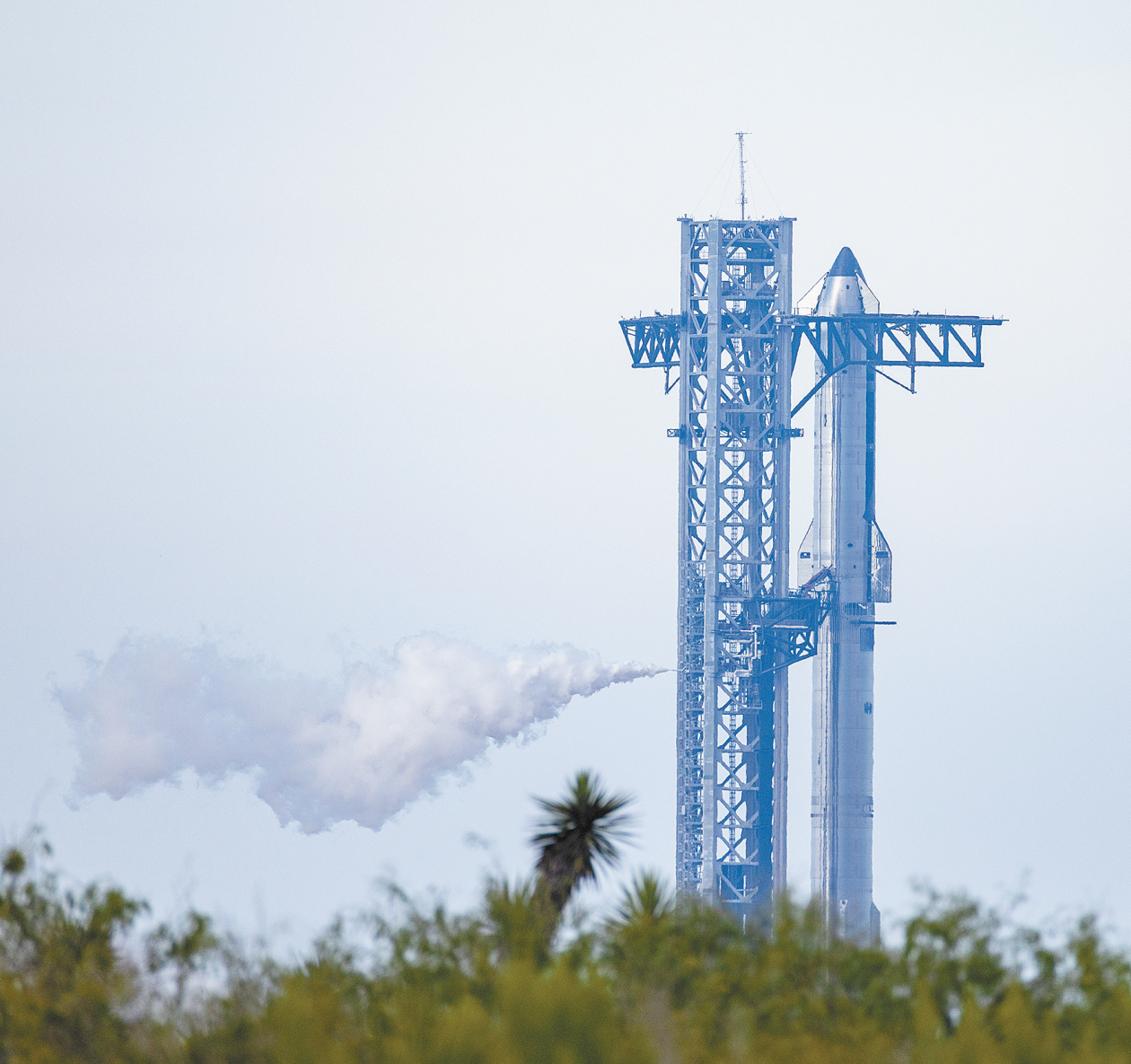
东方航天港:逐梦星辰的“海上摇篮”
Zhong Guo Zi Ran Zi Yuan Bao· 2025-08-25 07:43
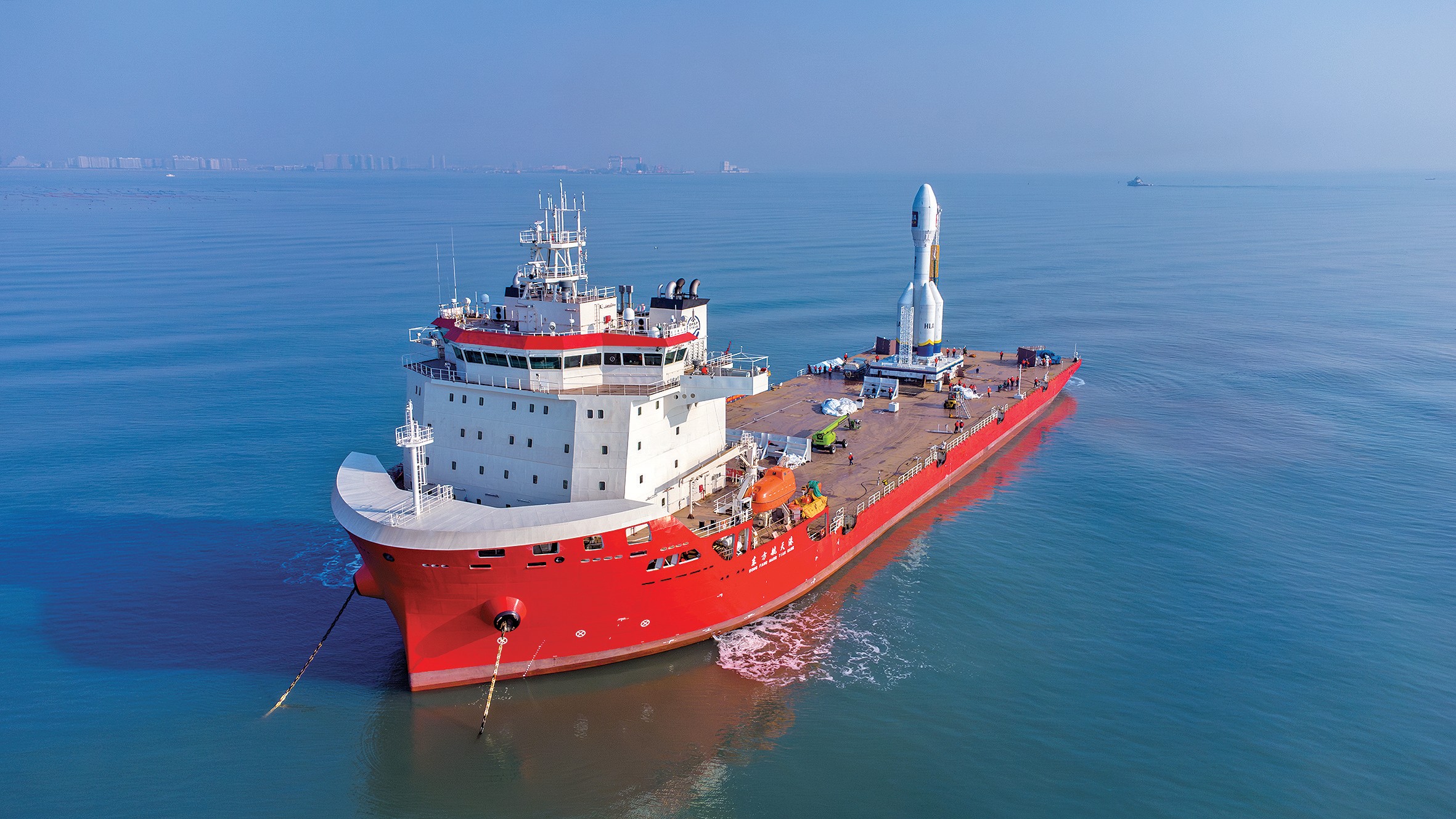
Core Viewpoint - The successful launch of the Jielong-3 rocket marks a significant advancement in China's commercial space capabilities, particularly in maritime rocket launches, indicating a shift towards efficient mass production of rockets [3][4][11]. Group 1: Launch Achievements - The Jielong-3 rocket successfully launched 11 satellites into LEO, marking the 17th maritime launch from the Dongfang Spaceport in Shandong Province [3]. - The Dongfang Spaceport is China's fifth rocket launch site and the only maritime launch port, having successfully supported 17 maritime launch missions [3][4]. - The Jielong-3 rocket's transition from customized to mass production is expected to enhance capacity and reduce costs, catering to the demand for low-cost, high-frequency commercial launches [4][11]. Group 2: Technological Innovations - The Jielong-3 rocket has entered a phase of intensive launches, with three missions scheduled within two months, showcasing its adaptability and operational efficiency [4]. - The successful maritime recovery test of the Yuanzheng-1 rocket represents a milestone in reusable rocket technology, making China the second country globally to achieve this capability after the United States [11][12]. - The Yuanzheng-1 rocket utilized a stainless steel body and anti-corrosion coatings to withstand harsh maritime conditions, demonstrating significant advancements in materials science [11][12]. Group 3: Industry Implications - The development of reusable rockets like the Yuanzheng-1 is projected to lower launch costs significantly, potentially bringing costs down to below $3,000 per kilogram, comparable to SpaceX's Falcon 9 [11][12]. - The successful integration of various technologies, including liquid oxygen-methane engines and intelligent navigation systems, is fostering the growth of a maritime aerospace industry cluster in regions like Qingdao and Yantai [12]. - The maritime recovery approach offers risk diversification advantages, as the designated splashdown area is away from shipping lanes and populated areas, aligning with international green aerospace trends [12][13]. Group 4: Competitive Landscape - The global maritime recovery landscape is characterized by the United States leading with SpaceX, while China is rapidly advancing with the Yuanzheng-1 and other technologies [13]. - Compared to the U.S., China is still in the verification phase for maritime recovery, but the Yuanzheng-1's technology path presents a potential latecomer advantage [12][13]. - Future developments in active stabilization technology are expected to further mitigate the impact of platform motion on launch precision, enhancing the capabilities of the Dongfang Spaceport [13].
突发!“星舰”取消试飞!
Zheng Quan Shi Bao· 2025-08-25 06:40
Core Viewpoint - SpaceX has canceled the planned tenth test flight of its "Starship" due to ground system issues, raising concerns about the rocket's reliability and the feasibility of upcoming missions, including a return to the Moon in 2027 and Mars exploration ambitions by Elon Musk [1][2][3]. Group 1: Test Flight Details - The "Starship" was scheduled for a test flight on August 24, aiming to launch from Texas with eight simulated satellites [2]. - Previous test flights in 2023 resulted in failures, including the destruction of the spacecraft and booster explosions [2]. - The rocket's design includes a 120-meter total length and a two-part structure, with both stages intended to be reusable [4]. Group 2: Industry Insights - Analysts express skepticism about the "Starship" rocket's reliability, noting that successful flights are fewer than failures [3]. - Concerns have been raised regarding the structural integrity of the rocket due to its lightweight design aimed at carrying heavy payloads [3]. - The recent executive order signed by former President Trump aims to foster a competitive commercial space industry, with SpaceX expected to be a significant beneficiary [3].
已连续三次失败,“星舰”仓促推进“第十飞”引多方质疑
Huan Qiu Shi Bao· 2025-08-24 22:58
Core Viewpoint - SpaceX is planning the tenth launch of its "Starship" Super Heavy rocket, facing skepticism due to three consecutive failures earlier this year [1][2]. Group 1: Launch Plans and Objectives - The upcoming launch is scheduled for 7:30 PM Eastern Time on the 24th, from Texas [1]. - The mission aims to deploy eight "simulated satellites" into orbit and test the rocket's payload delivery capabilities, without attempting the previous recovery method [2]. Group 2: Recent Failures and Criticism - The "Starship" V2 version has experienced multiple failures, including a significant explosion during a static fire test in June, damaging infrastructure [2][3]. - The Mexican government has threatened legal action against SpaceX due to debris from the rocket affecting its coastline, highlighting widespread criticism of the company's safety practices [2]. Group 3: Regulatory Support and Future Plans - Despite external criticism, the FAA has approved an increase in launch frequency from five to twenty-five times per year, indicating regulatory support for SpaceX [3]. - SpaceX has made adjustments to the rocket's fuel disperser component to address previous failures, as the company aims to meet ambitious timelines for deep space exploration, including a planned Mars mission by 2026 [3].
一箭7星!中科宇航力箭一号遥十运载火箭发射成功
Shang Hai Zheng Quan Bao· 2025-08-19 11:52
Core Viewpoint - The successful launch of the Kuaizhou-1A rocket by Zhongke Aerospace demonstrates its leading position in the commercial satellite launch market, showcasing high reliability and cost-effectiveness in delivering satellites into orbit [1][3][4]. Group 1: Launch Success and Capabilities - The Kuaizhou-1A rocket successfully launched seven satellites into their designated orbits, marking its eighth flight [1]. - The rocket has now delivered a total of 70 satellites into orbit, with a cumulative payload mass exceeding 7 tons [3]. - The rocket is recognized as the preferred choice for small and medium-sized satellite launches, maintaining the highest market share in the commercial launch service sector [3]. Group 2: Cost Competitiveness and Future Plans - The Kuaizhou-1A's modular design and scale production allow it to offer more attractive pricing compared to international competitors, with a focus on minimizing launch costs [3]. - The company aims to achieve 12 launches per year in the near term, with a future goal of increasing this capacity to 30 launches annually [3]. - There are plans to enhance capabilities for launching over 50 satellites in a single mission, addressing the growing demand for high-density satellite launches globally [3]. Group 3: International Cooperation and Market Reach - The successful launch of a Mexican satellite highlights the potential for broader international cooperation and recognition of the Kuaizhou-1A's reliability and cost-effectiveness [4]. - Zhongke Aerospace is the only domestic commercial rocket company that has successfully launched foreign satellites multiple times, with services extending across China, Europe, North America, South Asia, and the Middle East [4]. Group 4: Company Developments and IPO Plans - Zhongke Aerospace has completed its IPO counseling registration, with an estimated total valuation of approximately 11.1 billion yuan [6]. - The company, established in December 2018, focuses on the development of medium to large rockets, customized space launches, and suborbital scientific experiments [6].