百货业

Search documents
美股逼近历史高点,这份迟到的PCE报告,藏着年末行情密码?
Sou Hu Cai Jing· 2025-12-10 10:49
Core Viewpoint - The delayed release of the September PCE data has created significant tension in the U.S. stock market, with investors anxiously awaiting its implications for interest rate decisions by the Federal Reserve [2][20]. Market Sentiment - The market is currently experiencing a surge in optimism, driven by expectations of a potential interest rate cut by the Federal Reserve, leading to a notable decline in the U.S. dollar index and positive movements in Asian and European stock futures [4][6]. - This surge is characterized by a "fear of missing out" (FOMO) among investors, prompting them to buy stocks in anticipation of year-end gains, despite underlying economic uncertainties [6][16]. Economic Indicators - The core PCE index, which is a key inflation measure for the Federal Reserve, has shown a year-over-year increase of 2.7% as of August, remaining above the 2% target for 55 consecutive months. The upcoming September data is critical for future monetary policy [8][20]. - Recent economic indicators, such as ADP employment data and consumer confidence indices, have shown signs of weakness, raising concerns about a potential economic recession [9][10]. Consumer Behavior - Despite negative sentiment reflected in soft data, retail performance has been strong, indicating a divergence in consumer spending patterns. Lower-income consumers are gravitating towards discount stores, while higher-income consumers continue to purchase luxury goods [12][20]. Federal Reserve's Dilemma - The Federal Reserve faces a challenging decision: whether to cut interest rates to support employment while managing persistent inflation. Historical precedents suggest that missteps in such situations can lead to significant economic consequences [14][18]. - The market's current optimism may be overly exuberant, with potential risks if the PCE data does not align with expectations, which could lead to a reassessment of the Fed's monetary policy [16][18]. Upcoming PCE Data Impact - The market's focus is on the upcoming PCE data, with specific thresholds for core month-over-month increases determining the Fed's next steps. A rise of 0.2% would likely support a rate cut, while higher figures could disrupt current market expectations [18][20].


投21万亿日元救市 大把撒钱有用吗?
Sou Hu Cai Jing· 2025-11-26 01:12
Economic Overview - Japan's economy has entered a phase of negative growth, with a reported GDP decline of 1.8% year-on-year in Q3, marking a return to negative growth since Q1 2024. The primary cause is a sharp contraction in external demand, contributing -0.2 percentage points to economic growth [1] - The U.S. has increased tariffs on Japanese goods, particularly raising auto tariffs from 2.5% to 15%, severely impacting Japan's automotive industry and creating a vicious cycle of order shrinkage and economic recession [1] Domestic Demand and Consumption - Domestic demand remains weak, exacerbated by high inflation and declining real wages, which have led to reduced consumer spending. Personal consumption, which accounts for over half of Japan's economy, saw a slight increase of 0.1% quarter-on-quarter, while private residential investment fell by 9.4%, contributing -0.2 percentage points to economic growth [1] Political and Economic Response - In response to the economic challenges, Prime Minister Fumio Kishida's government approved a fiscal stimulus package worth 21.3 trillion yen (approximately 135.4 billion USD) aimed at addressing rising prices and boosting investment in sectors like semiconductors and AI. However, this plan relies heavily on fiscal expansion and monetary easing without addressing structural economic reforms [2] Structural Issues - Japan's government debt has reached approximately 263% of GDP, and further spending increases could raise long-term interest rates, intensifying debt repayment pressures and limiting investment in public welfare and innovation [3] - The government’s approach has been criticized for lacking prioritization, with resources spread across over ten industries, leading to a "follow-the-leader" strategy that fails to drive significant industrial breakthroughs [3] Long-term Economic Outlook - Japan's economy faces a dual pressure of weak external demand and sluggish domestic consumption, with limited effectiveness of policy tools due to high debt levels and structural deficiencies. Analysts suggest that Japan's economy may oscillate around the growth line for an extended period, with fiscal stimulus potentially providing only short-term relief [4] - For genuine economic recovery, Japan needs to focus on institutional reforms and technological innovation rather than relying on short-sighted policies or external confrontations, although the prospects for such a transformation appear bleak under the current circumstances [4]
一句话,重创日本经济!
Jin Tou Wang· 2025-11-24 10:35
Economic Impact - Japan's economy is facing significant challenges, with the Nikkei 225 index dropping over 4,000 points since November, a decline of more than 7% [1] - The tourism sector, a crucial pillar of Japan's economy, has been severely impacted, with 500,000 travel tickets canceled following travel warnings issued to Chinese tourists [2] - The reliance on Chinese tourists is highlighted, as they accounted for 30% of inbound visitors pre-pandemic, with a consumption share of 36.8% in 2019 [2][3] Financial Market Reactions - The Japanese yen has reached a 10-month low against the US dollar, trading at over 156 yen per dollar [2] - The bond market is experiencing turmoil reminiscent of the 2008 financial crisis, with 10-year government bond yields surpassing 1.8%, the highest since 2007 [1] Dependency on China - Over 1,400 products in Japan have more than half of their supply sourced from China, indicating a dependency level twice that of the US and six times that of Germany [4] - Despite government efforts to subsidize companies to reduce risk, there has been a lack of response, as alternatives like Vietnam do not match China's efficiency and quality [4] Education Sector Challenges - Chinese students represent a significant portion of Japan's international student population, with 123,000 expected in 2024, making up 36.7% of total international students [5] - The potential decline in Chinese students poses a survival threat to Japanese language schools and universities, as they struggle to find alternative sources of students [5] Seafood Export Issues - Japan's seafood exports to China have been halted, leading to a significant loss of revenue, with exports to China amounting to approximately 4 billion yuan in the first half of the year [5] Economic Policy Concerns - The Japanese government has introduced a massive economic stimulus plan worth 21.3 trillion yen, raising concerns about the reliance on debt to fund this initiative [6] - Japan's debt-to-GDP ratio exceeds 260%, the highest among major economies, causing investor anxiety and contributing to capital flight from Japan [6] Public Sentiment and Protests - Public dissatisfaction is growing, with a recent poll showing nearly equal support for and against Prime Minister Kishi's controversial statements regarding Taiwan [7] - Protests have emerged, with citizens demanding the retraction of statements that could harm Japan-China relations and calling for adherence to peace principles [7]
日本旅游业及品牌或受冲击,电影在华上映受影响!错误言论后果已现,搞事的高市错在哪?
Mei Ri Jing Ji Xin Wen· 2025-11-18 01:21
Core Viewpoint - Recent remarks by Japanese Prime Minister Sanae Takaichi regarding Taiwan have sparked widespread criticism and concern, as they disregard legal and historical facts, potentially jeopardizing regional stability and Japan's own interests [1][3]. Group 1: Political Context - Takaichi's statements violate the spirit of the four political documents between China and Japan, fundamentally damaging the political foundation of Sino-Japanese relations [3][11]. - The four political documents include the 1972 Japan-China Joint Communiqué, which acknowledges Taiwan as an inseparable part of China, and the 1978 Treaty of Peace and Friendship [3][5][11]. Group 2: Domestic and International Reactions - Takaichi's comments have drawn significant criticism domestically and internationally, with calls for her to resign from various Japanese political figures and public protests [16][17]. - The remarks have led to a decline in Japan's tourism and consumer stocks, as investors fear deteriorating Sino-Japanese relations will reduce the number of Chinese tourists visiting Japan [17][20]. Group 3: Economic Impact - The Tokyo stock market has seen declines in tourism-related stocks due to concerns over reduced Chinese tourist numbers, with a reported 1.8% annual decline in Japan's GDP for the third quarter [17][18]. - Chinese tourists accounted for 29.4% of all visitors to Japan in the first nine months of 2025, making their potential absence a significant economic concern [20]. - Takaichi's statements have also negatively impacted the release and box office performance of Japanese films in China, with several films being postponed and existing releases experiencing a sharp decline in ticket sales [22][24].

日本突发!集体跳水!
Sou Hu Cai Jing· 2025-11-17 14:14
Market Overview - The Tokyo stock market indices continued to decline on November 17, with the Nikkei 225 index closing down 0.10% and the Tokyo Stock Exchange index down 0.37% [1][2] - The Nikkei index fell by 52.62 points to close at 50,323.91 points, while the Tokyo Stock Exchange index dropped by 12.28 points to 3,347.53 points [2] Economic Indicators - Japan's GDP for the third quarter of this year decreased by 1.8% on an annualized basis, marking the first negative growth in six quarters [7] - The GDP decline was attributed to external demand, which reduced GDP by 0.2 percentage points, and a significant drop in housing investment by 9.4% compared to the previous quarter [7] Sector Performance - Tourism-related stocks, including department stores and transportation, experienced widespread declines due to concerns over deteriorating China-Japan relations affecting tourist numbers [1] - Notable declines included: - Mitsukoshi Isetan Holdings down 11.31% - Takashimaya down 6.18% - Shiseido down 9% - Oriental Land Company, operator of Tokyo Disneyland, down 5.68% [1][4] Trade Relations - China remains Japan's largest trading partner, with a projected trade total of $308.3 billion in 2024, including $156.25 billion in imports from China [6] - A significant reduction in Chinese tourists to Japan could lead to an estimated economic loss of 2.2 trillion yen, approximately 101.16 billion yuan [5]

广州首家市内免税店落地,免税经济能带来多少消费增量?
Xin Lang Cai Jing· 2025-08-28 03:16
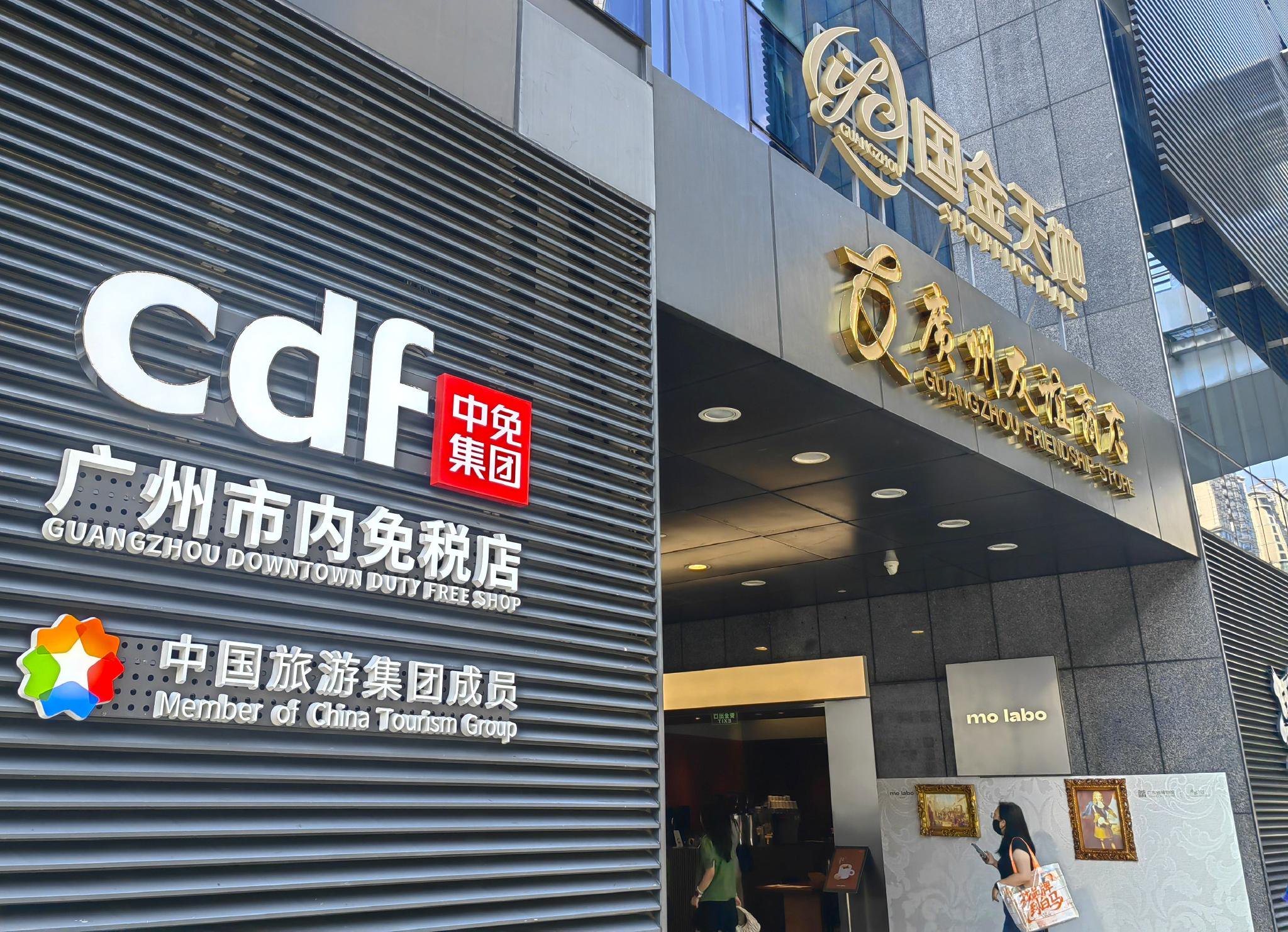
Core Viewpoint - The opening of Guangzhou's first city duty-free store marks a significant expansion in the duty-free market, targeting both outbound Chinese travelers and inbound foreign tourists, with the aim of boosting local consumption and tourism [1][3][5]. Group 1: Market Expansion - The city duty-free store in Guangzhou is part of a broader initiative to enhance the duty-free shopping experience, allowing travelers to purchase tax-free goods before departure [1][6]. - The store is strategically located in the CBD of Tianhe District, with a pickup point at Baiyun Airport, catering to travelers leaving within 60 days [1][5]. - The Chinese government is promoting the expansion of city duty-free stores, with plans to open additional stores in eight cities by August 2024 [1][3]. Group 2: Consumer Behavior - The store offers significant discounts, ranging from 50% to 88%, attracting consumers like Chen Jing, who purchased skincare and alcohol products before her trip to Bangkok [1][6]. - The flexibility of city duty-free stores, such as no shopping limits and a wider variety of products, contrasts with other types of duty-free stores [6][7]. - The store features local cultural products, including traditional crafts and brands, appealing to both local and international consumers [7][9]. Group 3: Economic Impact - The introduction of city duty-free stores is expected to stimulate not only retail sales but also related sectors such as tourism, hospitality, and entertainment [9][10]. - The duty-free shopping model is anticipated to generate significant economic benefits, with estimates suggesting that every 10,000 yuan in sales could create over 50,000 yuan in overall economic activity [10]. - The performance of the duty-free sector in Hainan has shown a strong correlation with increased tourism revenue, indicating potential growth for Guangzhou's new store [10]. Group 4: Industry Challenges - Despite the potential for growth, there are concerns that the requirement for travelers to pick up goods at the airport may limit purchase intentions, particularly for larger items [9][12]. - Traditional retail formats, such as department stores, face challenges from the evolving consumer landscape, necessitating adaptation to new business models, including the integration of duty-free shopping [12][13]. - The competition for attracting younger consumers is driving innovative marketing strategies, such as themed exhibitions and events, to enhance engagement and foot traffic [13].


合肥晔红百货有限公司成立 注册资本10万人民币
Sou Hu Cai Jing· 2025-08-28 02:10
Company Overview - Hefei Yehong Department Store Co., Ltd. has been established with a registered capital of 100,000 RMB [1] - The legal representative of the company is Chen Jinyu [1] Business Scope - The company engages in a variety of general business activities including the sale of daily necessities, wholesale of daily goods, and sales of plastic products [1] - Additional sales categories include maternal and infant products, wooden containers, daily glass products, daily wooden products, textile products, and miscellaneous daily items [1] - The company operates under the principle of self-regulation in accordance with laws and regulations that are not prohibited or restricted [1]
中央商场:8月25日召开董事会会议
Mei Ri Jing Ji Xin Wen· 2025-08-26 12:51
Company Overview - Central Plaza (SH 600280) announced the convening of its 10th Board of Directors meeting on August 25, 2025, to discuss the proposal for the reappointment of the accounting firm [1] - As of the report, Central Plaza has a market capitalization of 4 billion yuan [1] Revenue Composition - For the year 2024, Central Plaza's revenue composition is as follows: 88.32% from department stores, 10.54% from real estate, and 1.14% from tourism services [1]

复兴门百盛年底闭店 老百货问路转型
Bei Jing Shang Bao· 2025-08-20 16:04
Group 1 - The core point of the news is the termination of the long-term partnership between Baisheng Commercial and China Arts and Crafts Group, indicating a shift in the commercial landscape and urban renewal process in Beijing [1][3][4] - Baisheng Commercial will terminate leasing contracts for multiple floors and areas with a total area of approximately 17,240 square meters, with the termination date set for January 1 next year [3][4] - Baisheng Commercial is required to pay a penalty of 11.7012 million yuan to China Arts and Crafts Group, with additional penalties for late payment [3][4] Group 2 - The financial performance of Baisheng Group has been declining, with net profits dropping significantly from 2020 to 2024, except for a slight increase in 2023 [4] - The exit of Baisheng from the partnership reflects the challenges faced by traditional department stores in adapting to new retail trends and consumer preferences [6][8] - The transformation of old department stores in Beijing is part of a broader trend towards experiential retail, moving away from traditional sales models [8][9] Group 3 - China Arts and Crafts Group plans to upgrade the properties, focusing on cultural space innovation, asset value reconstruction, and IP ecosystem evolution [1][7] - The upcoming renovation of the China Arts and Crafts Building aims to position it as a cultural landmark along Chang'an Avenue, catering to high-net-worth individuals [7][10] - The urban renewal process in Beijing is evolving into a "cultural+" model, emphasizing the integration of culture and commerce [9][10]

复兴门百盛年底闭店,30年商业地标披露新活法
Bei Jing Shang Bao· 2025-08-20 10:24
Group 1 - The core point of the news is the termination of the long-term partnership between Baisheng Commercial and China Arts and Crafts Group, indicating a shift in commercial relationships and urban renewal processes towards a "cultural +" driven model [1][3][8] - Baisheng Commercial will terminate leasing contracts for multiple floors and areas with China Arts and Crafts Group, covering a total area of approximately 17,240 square meters, with the termination date set for January 1, 2026 [3][7] - Baisheng Commercial is required to pay a penalty of 11.7012 million yuan to China Arts and Crafts Group, with additional daily penalties for late payment [3][7] Group 2 - The performance of Baisheng Group has been declining, with net profits dropping significantly from 250 million yuan in 2020 to 175 million yuan in 2024, except for a slight increase in 2023 [7] - The exit of Baisheng from the market reflects a broader trend of traditional department stores struggling to adapt to new retail models and consumer preferences, leading to their decline [8][10] - The transformation of old department stores in Beijing is part of a larger urban renewal trend, with a focus on integrating cultural elements and modern leisure culture into commercial spaces [11][12] Group 3 - The upcoming renovation of the China Arts and Crafts Group building, set to start in 2026, aims to redefine its commercial value through cultural innovation and asset restructuring [9][13] - The urban renewal process is evolving into a "cultural operation +" model, emphasizing the monetization of cultural IP and the integration of culture with commerce [12][13] - The future of department stores is shifting from traditional sales models to experience-oriented spaces that offer unique consumer experiences and cultural engagement [10][13]