
船舶建造

Search documents
精耕深蓝,加快建设海洋强国——“中国经济圆桌会”聚焦海洋经济高质量发展
Xin Hua She· 2025-08-13 05:11
Core Viewpoint - The article emphasizes the importance of high-quality development of the marine economy in China, highlighting the need for innovation, efficient collaboration, industrial upgrades, harmony between humans and the sea, and win-win cooperation [3][6][31]. Group 1: Marine Economy Development - China's marine production value is expected to exceed 10 trillion yuan in 2024, more than doubling since 2012 [6]. - The country holds approximately one-third of the global shipping volume and container throughput, with a 50% share in the marine engineering equipment market [6]. - China has maintained over 50% of the global market share in shipbuilding completion, new orders, and backlog orders in the first half of this year, with new orders at a high of 68.3% [6]. Group 2: Technological Innovation and Industry Upgrades - The article discusses the shift in marine economy from "fishing" to "strategic deep blue" development, with a complete marine industry system covering all 15 major marine industries [6]. - There is a focus on enhancing marine technology and innovation, with significant advancements in deep-sea exploration and marine scientific research capabilities [20][25]. - The government plans to implement major projects to cultivate new productive forces in the marine sector, including large-scale utilization of marine energy and the development of marine biomedicine [25][27]. Group 3: Integration and Collaboration - The article highlights the integration of marine industries with urban development, particularly in Shandong, where port construction and logistics systems are being optimized [11][13]. - It emphasizes the importance of international cooperation in marine governance, with China actively participating in global marine ecological protection and scientific research [31][34]. - The growth of cruise tourism is noted, with a significant increase in passenger numbers and cruise ship calls, reflecting the rising popularity of maritime travel [34][35].

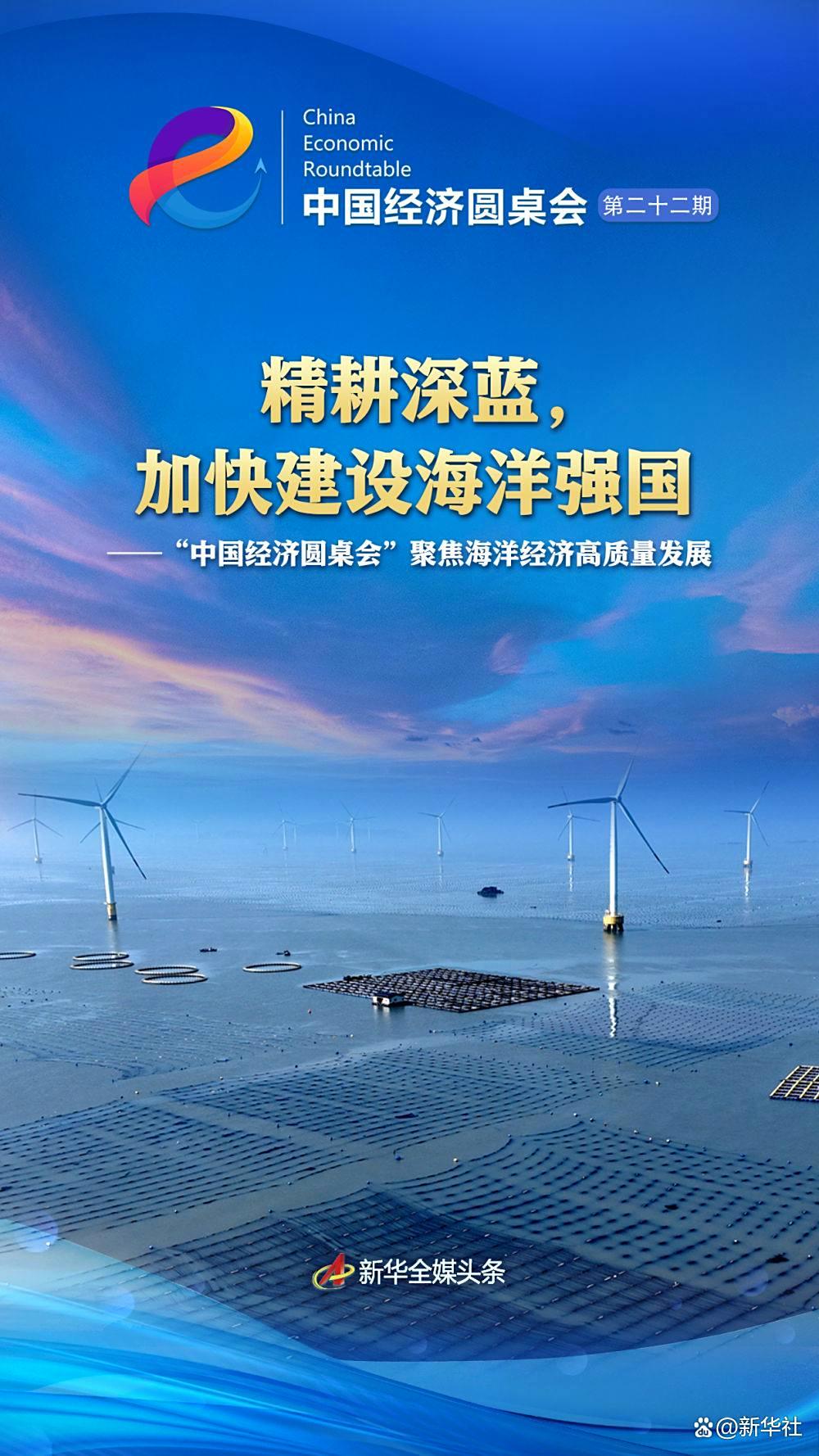
中国经济圆桌会·新华全媒头条|精耕深蓝,加快建设海洋强国——“中国经济圆桌会”聚焦海洋经济高质量发展
Xin Hua She· 2025-08-13 04:01
Core Viewpoint - The article emphasizes the importance of high-quality development of the marine economy in China, highlighting the need for innovation, efficient collaboration, industrial upgrades, and harmonious human-ocean relationships to build a strong marine nation [1][2]. Marine Economic Development - China's coastline spans over 18,000 kilometers, with a vast marine area of approximately 3 million square kilometers, serving as a strategic space and resource treasure for economic development [2]. - The marine economy has evolved from traditional fishing to a comprehensive approach that includes various sectors such as marine fisheries, shipbuilding, and deep-sea resource utilization [2]. - By 2024, China's marine production value is expected to exceed 10 trillion yuan, more than doubling since 2012, with significant shares in global shipping and marine equipment markets [2]. Integration of Marine Industries - The integration of marine industries is evident in the development of port infrastructure and the promotion of coastal industries, with projects like the construction of large-scale wind turbine blades in Shandong [3]. - Shandong aims to enhance its port services and develop high-end shipping services, transitioning from a "port cluster" to an "urban cluster" [3]. Marine Technology and Innovation - China has made significant advancements in marine technology, including the launch of its first domestically produced aircraft carrier and deep-sea exploration vehicles [5]. - The government is focusing on overcoming technological shortcomings and promoting the transformation of traditional marine industries while fostering emerging sectors like offshore wind energy and marine biotechnology [6]. Sustainable Marine Development - The article discusses the importance of sustainable marine development and global cooperation, with China actively participating in international marine governance and ecological protection efforts [8][9]. - Initiatives such as the establishment of the "Ocean Decade" China Committee and various training programs for developing countries highlight China's commitment to global marine collaboration [9]. Future Directions - The article outlines plans for the future, including the promotion of new marine production capabilities and the development of a modern marine industry system [7][10]. - Emphasis is placed on the need for tailored strategies for different marine areas and the integration of marine cities, industries, and ports to achieve high-quality marine economic development [4].
上海最全央国企名单,很多人都不知道,以为这些企业都在北京。
Sou Hu Cai Jing· 2025-07-30 11:58
Group 1: Central Enterprises in Shanghai - Shanghai is home to 7 central enterprises, including China Shipbuilding Group, China Baowu Steel Group, and China Ocean Shipping Group, which have significant contributions to their respective industries [3][4][7][9]. - China Shipbuilding Group has a registered capital of 110 billion yuan, employs 347,000 people, and has an annual revenue of 361.9 billion yuan [3]. - China Baowu Steel Group has a registered capital of 52.791 billion yuan, employs 260,000 people, and has an annual revenue of 1,087.7 billion yuan [4]. - China Ocean Shipping Group has a registered capital of 11 billion yuan, employs 130,000 people, and has an annual revenue of 651.7 billion yuan [7]. - China Eastern Airlines Group has a registered capital of 25.287 billion yuan, employs 75,000 people, and has an annual revenue of 84 billion yuan [9]. - Commercial Aircraft Corporation of China has a registered capital of 50.101 billion yuan, employs 10,000 people, and has an annual revenue of 10.5 billion yuan [11]. - China Electrical Equipment Group has a registered capital of 30 billion yuan, employs 15,000 people, and has an annual revenue of 100 billion yuan [13]. - Bank of Communications, the first state-owned commercial bank, has a registered capital of 74.2 billion yuan, employs 90,000 people, and has an annual revenue of 403.9 billion yuan [15]. Group 2: Other State-Owned Enterprises in Shanghai - Shanghai hosts 45 state-owned enterprises, with notable examples including Shanghai International Group, Shanghai Guosheng Group, and Shanghai Shentong Metro Group [17]. - Shanghai International Group has a registered capital of 30 billion yuan, employs 15,000 people, and has an annual revenue of 725 million yuan [17]. - Shanghai Guosheng Group has a registered capital of 20.066 billion yuan, employs 5,000 people, and has an annual revenue of 1 billion yuan [17]. - Shanghai Shentong Metro Group has a registered capital of 290 million yuan, employs 15,000 people, and has an annual revenue of 402 million yuan [17]. - China Pacific Insurance Group has a registered capital of 9.62 billion yuan, employs 110,000 people, and has an annual revenue of 455 billion yuan [17]. - Shanghai Pudong Development Bank has a registered capital of 29.352 billion yuan, employs 59,000 people, and has an annual revenue of 173.434 billion yuan [17]. - Guotai Junan Securities, one of China's largest securities firms, has a registered capital of 8.905 billion yuan, employs 14,000 people, and has an annual revenue of 35.471 billion yuan [17]. - Shanghai Automotive Industry Corporation has a registered capital of 11.575 billion yuan, employs 200,000 people, and has an annual revenue of 744 billion yuan [17]. - Shanghai Electric Group has a registered capital of 15.579 billion yuan, employs 29,000 people, and has an annual revenue of 117.6 billion yuan [17]. - Shanghai Huayi Group has a registered capital of 12.131 billion yuan, employs 11,600 people, and has an annual revenue of 38.937 billion yuan [17].




摩根士丹利:亚洲&新兴市场股市过山车迎来又一个高峰?随着改革推进,韩国综合股价指数(KOSPI)目标更新;中国 “反内卷” 行动 + 中印最新宏观 政策趋势
摩根· 2025-07-19 14:02
Investment Rating - The report maintains an optimistic outlook on the South Korean stock market despite potential foreign investor sell-off pressure and tariff risks, suggesting a cautious approach for investors in emerging markets [1][4]. Core Insights - The South Korean stock market has shown strong performance this year, with the MSCI Korea Index up nearly 40% in USD terms, and a projected price-to-earnings ratio of around 10 to 10.5 times, slightly above historical averages [4]. - The report emphasizes the importance of ongoing government reforms in South Korea, including real estate market cooling measures and capital market reforms, which are expected to benefit the stock market in the long term [5]. - The Indian stock market is highlighted as a key area of interest, particularly in the financial sector, with a recommendation for investors to focus on value stocks and high-yield equities [2][6]. Summary by Sections South Korean Market Performance - The South Korean stock market has rebounded with a 15% increase compared to last year's decline of 25%, supported by strong buying from pension funds and corporate buybacks [4]. - The report notes that the market's resilience is bolstered by ongoing reforms, although foreign investor activity may introduce volatility [4][24]. Government Reforms and Policies - The South Korean government is actively pursuing reforms aimed at cooling the real estate market and enhancing capital market regulations, which are expected to be resolved in the near term [5]. - Proposed reforms include updates to the Commercial Code and potential changes to dividend tax policies, which could further stimulate market growth [5]. Sector Focus - The report identifies financial stocks and high-yield equities as sectors with significant upside potential, particularly those offering dividend yields between 25% and 35% [6][7]. - The banking and financial sector has been upgraded to overweight due to anticipated benefits from ongoing reforms and pricing power [7]. Trade Relations and Tariff Issues - Ongoing trade negotiations between South Korea and the United States are critical, with potential tariff increases posing risks to the market if agreements are not reached [8][9]. - The report indicates that the U.S. has specific demands from South Korea, including the opening of agricultural markets and easing of data regulations, which could impact trade dynamics [12][13]. Economic Indicators and Inflation - Recent inflation data from India shows a CPI of 2.1%, prompting discussions on potential interest rate cuts by the Reserve Bank of India [17]. - The report also highlights the challenges facing China's economy, including demand weakness and export declines, which may affect broader market sentiment in emerging markets [20][21].