高端仪器

Search documents
2025科交会在广州举行 吸引600余所高校集中展示前沿技术
Nan Fang Ri Bao Wang Luo Ban· 2025-12-15 07:44
Group 1 - The 2025 Higher Education Technology Achievement Fair was held in Guangzhou, focusing on the theme "University-Enterprise Collaboration, Integrated Innovation: Supporting the Development of New Quality Productivity" and attracted over 600 universities to showcase cutting-edge technological achievements in strategic emerging industries [1] - The fair highlighted the transformation of high-tech achievements from theoretical research to practical applications, addressing both future explorations and current industrial pain points [1] - The Guangdong-Hong Kong-Macao Greater Bay Area has seen significant improvements in the efficiency of technology transfer from universities, with a 101% increase in authorized invention patents and a 255% increase in the number of transformed achievements from 2020 to 2024 [2] Group 2 - Major breakthroughs in critical fields such as seed industry, high-end instruments, and industrial software have been achieved by universities in the Greater Bay Area, exemplified by the development of new shrimp and scallop varieties that have significantly reduced reliance on imports and supported local industries [2] - The first atomic microwave electric field instrument and the world's first quantum terahertz camera were developed by a research team at South China Normal University, breaking foreign monopolies in high-end quantum measurement equipment [2][3] - The third-generation semiconductor wafer optical parameter testing system developed by Dongguan University of Technology addresses domestic technical gaps and supports the booming semiconductor industry in the Greater Bay Area [3] Group 3 - A series of high-value technological achievements have emerged from universities in the Greater Bay Area, with several projects generating over 100 million yuan in value, such as a patented technology for olefin dimerization that is expected to reduce production costs by 50% and generate an annual output value of 2.5 billion yuan [4] - The development of an EB virus vaccine by a team at Sun Yat-sen University has led to a project worth over 100 million yuan, showcasing the potential for significant financial returns from university research [4] - The Hong Kong University of Science and Technology (Shenzhen) has established a vibrant innovation and entrepreneurship ecosystem, successfully incubating over 170 projects and registering more than 80 companies within three years [7] Group 4 - The Greater Bay Area universities are constructing a "rainforest-style" innovation ecosystem that encourages technology transfer by breaking down policy and procedural barriers, thus enhancing the commercialization of research outcomes [6] - Shenzhen University has implemented a model that grants 100% empowerment to researchers, significantly boosting their motivation for technology transfer and resulting in the establishment of 24 new companies with contracts exceeding 100 million yuan [6] - Jinan University has developed a model that reduces the financial burden on companies through phased payments and revenue sharing, facilitating the successful implementation of major research outcomes [6] Group 5 - Universities in the Greater Bay Area are focusing on building platforms, providing professional services, and offering financial support to facilitate the final stages of technology transfer [7] - Guangdong University of Technology and other institutions are creating a comprehensive support system for the entire lifecycle of innovation and entrepreneurship, enhancing the maturation, incubation, and industrialization of technological achievements [7] - The establishment of verification centers for industrial internet applications aims to support early-stage technology validation, significantly increasing the success rate of technology transfer [7] Group 6 - The universities in the Greater Bay Area are becoming crucial players in the development of new quality productivity by focusing on key common technologies, frontier-leading technologies, and disruptive technologies, aligning with national strategic goals [8]
李迅雷专栏 | 中国不是日本,没有国家能代替中国崛起!明年对A股可以更乐观一些
中泰证券资管· 2025-12-10 11:32
Core Viewpoint - The article emphasizes the investment opportunities and macroeconomic trends arising from China's "14th Five-Year Plan" and the upcoming "15th Five-Year Plan," highlighting the importance of high-quality development and the need for structural reforms in the economy [5][6][13]. Group 1: Macroeconomic Trends - The global economy is facing significant changes, particularly due to the U.S.-China relationship, which is a crucial factor influencing both economies and the global landscape [6][9]. - China's economic growth is projected to achieve around 5% for the year, despite challenges such as a decline in fixed asset investment and lower consumer spending [10][11]. - The current economic environment is characterized by a long-term real estate cycle, with adjustments expected in the housing market, particularly in major cities [10][20]. Group 2: Investment Opportunities - The "15th Five-Year Plan" presents numerous investment opportunities, particularly in technology, consumer sectors, and infrastructure, as the government emphasizes economic construction and reform [13][19]. - The focus on technological self-reliance and innovation is highlighted as a key area for future growth, with significant potential for companies involved in AI and other advanced technologies [14][17]. - The article notes that consumer spending is expected to rise, driven by demographic changes and government policies aimed at boosting consumption [19][20]. Group 3: Market Outlook - The A-share market is anticipated to perform well, with a positive outlook for corporate earnings growth, despite current challenges in ROE [26][27]. - The article suggests that structural opportunities exist within the market, as companies adapt to changing economic conditions and consumer demands [27][28]. - A diversified asset allocation strategy is recommended, with gold being highlighted as a valuable asset for long-term investment [28].


中央强推“十五五”科学仪器领域发展,三省发文“表态”
仪器信息网· 2025-12-08 09:07
Core Insights - The article emphasizes the importance of advancing high-end instruments and key core technologies as part of China's 15th Five-Year Plan [3][4][5] Group 1: National Strategy - The Ministry of Science and Technology highlighted the need for a full-chain approach to tackle key core technologies in high-end instruments [3] - The central government has issued strategic directives to enhance technological innovation across various sectors, including high-end instruments, advanced materials, and biomanufacturing [4] Group 2: Regional Policies - Shandong Province's plan includes accelerating major technological innovation projects and overcoming critical common technologies in fields such as high-end instruments and advanced manufacturing [4] - Guangdong Province aims to strengthen strategic technological support and achieve breakthroughs in key areas like integrated circuits and high-end instruments through a robust laboratory system [4] - Chongqing's strategy focuses on cultivating emerging industries, particularly in smart medical equipment and instrumentation, to promote large-scale development of strategic emerging industry clusters [5]

高端装备与新材料产业圆桌共话创新突围路径
Zhong Guo Zheng Quan Bao· 2025-12-07 20:22
Core Insights - The high-end equipment and new materials sectors are crucial for high-quality development in manufacturing, directly impacting national security and economic growth [1] - A consensus emerged among industry leaders that long-term commitment is essential for tackling core technology challenges, while value-oriented approaches are necessary for industrial implementation and collaborative innovation is key for ecosystem development [1] Group 1: Key Challenges and Innovations - Core technology autonomy is fundamental for breakthroughs, with industry leaders identifying specific challenges and future focus areas for innovation [1] - The evolution of scientific instruments is driven by advancements in artificial intelligence, with a vision for "embodied intelligent scientific instruments" to enhance research efficiency and move towards "unmanned" laboratories [2] - In the maritime and offshore engineering sector, floating wind power technology is transitioning from demonstration to commercial viability, with cost reduction being the primary bottleneck for mass application [2] Group 2: Market Positioning and Value Creation - The transition from laboratory to industrial application is fraught with challenges, including user perception and cost control, necessitating patient capital and continuous investment in domestic high-end instrument sectors [3] - Successful industrialization requires aligning products with customer needs rather than merely focusing on technical specifications, emphasizing safety, reliability, and cost-effectiveness [3][4] - The R5-grade mooring chain developed by a company exemplifies the balance between safety and innovation, showcasing the importance of rigorous testing and validation in high-stakes environments [4] Group 3: Collaborative Ecosystem Development - Industry breakthroughs require collaboration across the supply chain, capital, and talent, fostering a symbiotic innovation ecosystem [4] - Emphasizing a "partner mindset," companies are encouraged to engage with upstream suppliers and downstream clients to create mutual value [4] - Talent development is critical for sustaining high-quality innovation, with a focus on nurturing skilled professionals within the organization [4] Group 4: Innovation Focus - Companies must avoid complacency and strive to push the boundaries of products and services, ensuring that innovations are grounded in practical applications [5] - Two core innovation directions are highlighted: addressing pain points to ensure product sales and focusing on market demand to enhance sales volume and quality [6]
为什么要全链条推动集成电路等重点领域关键核心技术攻关取得决定性突破
Xin Lang Cai Jing· 2025-12-03 13:20
Core Viewpoint - The article emphasizes the importance of overcoming key core technology challenges in critical sectors such as integrated circuits, industrial mother machines, high-end instruments, basic software, advanced materials, and biomanufacturing to ensure national security and promote high-quality economic development [1][5]. Group 1: Importance of Key Core Technologies - Key core technologies are essential for national security and high-quality economic development, necessitating a strong focus on improving the ability to tackle these challenges [1][5]. - Recent advancements have been made in areas like 5G, Beidou navigation, high-speed rail, and nuclear power, but significant gaps remain in integrated circuits and other critical fields that require intensified efforts [1][5]. Group 2: Systematic Approach to Innovation - A systematic and comprehensive approach to deploying key core technology initiatives is crucial for accelerating breakthroughs and shortening innovation cycles [2][6]. - Optimizing the organization of major technological innovations and fostering a collaborative development of innovation forces, resource allocation, and talent is essential for overcoming the current limitations [2][6]. Group 3: Addressing Fundamental Research Gaps - The root cause of the "bottleneck" technology issue lies in inadequate foundational theoretical research, which must be addressed to strengthen the basis for technological innovation and industrial development [3][7]. - Emphasizing original and disruptive innovation is necessary to avoid falling into a cycle of imitation and to secure a competitive edge in the global value chain [3][7]. Group 4: Collaborative Framework for Technology Advancement - A collaborative framework that leverages the advantages of a new type of national system is needed to effectively coordinate government, market, and societal resources in technology research and application [4][7]. - Implementing extraordinary measures to enhance goal orientation and demand-driven approaches will facilitate better collaboration among enterprises, universities, and research institutions [4][7]. Group 5: Incentives and Application of Innovations - Strengthening incentives for researchers to focus on high-quality, original, and disruptive technological innovations aligned with national strategic needs is critical [8]. - Promoting the application of self-innovated products and establishing policies for the first batch of applications will create a virtuous cycle that encourages research and development [9].
焦点访谈丨向着新目标前进:未来五年 打好关键核心技术攻坚战
Yang Shi Xin Wen Ke Hu Duan· 2025-12-02 06:40
Core Viewpoint - The article emphasizes the importance of key core technology breakthroughs in China's "14th Five-Year Plan" and outlines a strategic approach to achieve these breakthroughs through focused efforts in six critical areas [1][3][9]. Group 1: Strategic Focus Areas - The "14th Five-Year Plan" identifies six key areas for technology breakthroughs: integrated circuits, industrial mother machines, high-end instruments, basic software, advanced materials, and biomanufacturing [3][9][21]. - These areas are strategically chosen to address urgent technological challenges and leverage new opportunities in the context of global technological competition [9][11][19]. Group 2: New Approaches and Measures - The plan proposes a "new type of national system" to enhance coordination and resource allocation for technology innovation, ensuring a unified effort across government and market sectors [23][25]. - "Extraordinary measures" will be implemented to overcome existing institutional barriers, focusing on urgent issues and mobilizing all available resources to achieve targeted breakthroughs [25][27]. Group 3: Comprehensive Chain Integration - A "full-chain approach" is advocated, integrating research, technology development, and industrial cultivation to ensure a seamless transition from innovation to market application [27][29]. - The integration of various chains, including industry, innovation, funding, and talent, is crucial for addressing past disconnects and ensuring effective collaboration [29]. Group 4: Investment and Progress - China's R&D investment is projected to exceed 3.6 trillion yuan in 2024, reflecting a 48% increase from 2020, with a focus on strengthening foundational research and innovation capabilities [19][21]. - The country has achieved significant milestones in key technology areas, moving from a position of following to leading in certain sectors, such as the production of ultra-thin steel materials [17][19].
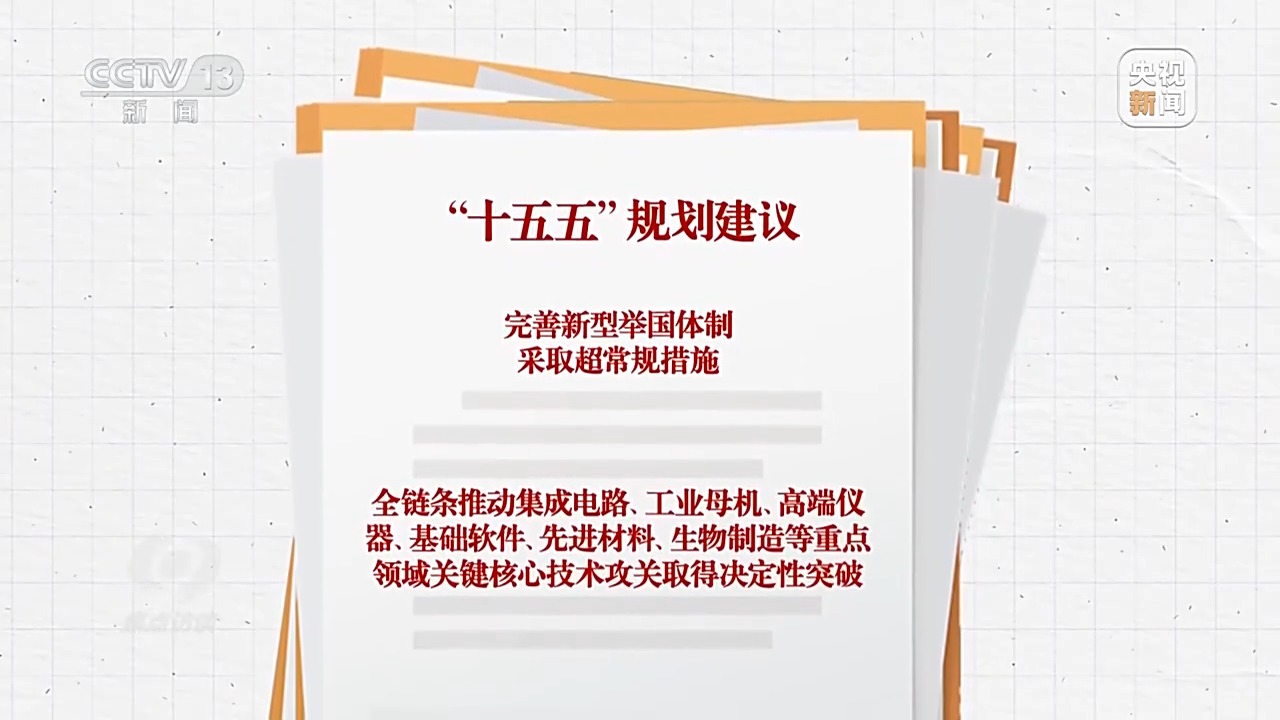
厚实家底支撑核心技术攻关底气 “新提法”“新目标”新在何处?解读↓
Yang Shi Wang· 2025-12-02 04:32
Core Insights - The "14th Five-Year Plan" emphasizes the importance of key core technology breakthroughs, highlighting it as a crucial element for achieving high-quality development in China [1][3][12] - The plan outlines a shift from a broad approach to a more targeted strategy, focusing on six key areas for technological advancement [6][8][19] Summary by Categories Key Areas of Focus - The six major fields identified for concentrated efforts are integrated circuits, industrial mother machines, high-end instruments, basic software, advanced materials, and biomanufacturing [8][9][12] - These areas are critical for overcoming existing technological bottlenecks and seizing new opportunities presented by technological revolutions [9][12] Strategic Approach - The plan introduces a "new proposal" and "new goals" for tackling key core technologies, emphasizing a comprehensive and integrated approach [3][5] - The strategy involves a "new type of national system" that promotes collaboration and resource allocation across various sectors to enhance innovation [19][20] Investment and Resources - By 2024, China's total R&D investment is projected to exceed 3.6 trillion yuan, a 48% increase from 2020, with a research intensity of 2.68%, surpassing the EU average [18] - The plan aims to strengthen both foundational research and the mechanisms that facilitate rapid technological advancement [18][20] Implementation Mechanisms - The strategy calls for "super-normal measures" to break existing constraints and accelerate reforms in technology development [20][21] - A full-chain approach is emphasized, ensuring that every link from research and development to industrial application is effectively integrated [21]
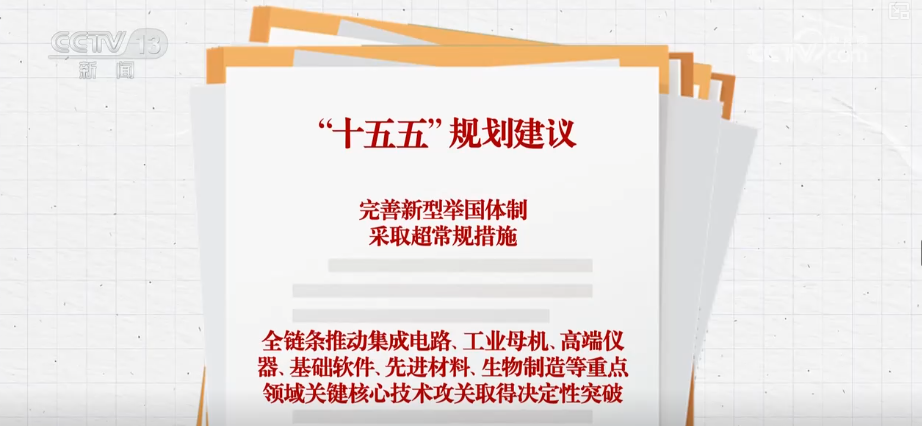
焦点访谈|未来五年,打好关键核心技术攻坚战
Yang Shi Wang· 2025-12-01 13:23
Core Insights - The article emphasizes the importance of tackling key core technologies as a strategic priority for China's high-quality development, particularly highlighted in the "14th Five-Year Plan" [1][4][10] - The focus will be on six critical areas: integrated circuits, industrial mother machines, high-end instruments, basic software, advanced materials, and biomanufacturing, which are deemed essential for overcoming technological bottlenecks and seizing new opportunities [6][8][14] Group 1: Strategic Framework - The "14th Five-Year Plan" proposes a new approach to technology development, emphasizing a comprehensive and targeted strategy rather than a broad, unfocused one [4][6] - The plan aims to establish a "new type of national system" that coordinates resources across government and market sectors to enhance innovation capabilities [16][18] - The strategy includes "extraordinary measures" to break existing barriers and accelerate reforms necessary for technological breakthroughs [18][20] Group 2: Implementation Tactics - The focus on "full-chain promotion" ensures that every aspect of the technology development process, from research to industrialization, is integrated and efficient [20] - The article highlights the need for a robust support system that combines funding, talent, and industry collaboration to facilitate rapid advancements in technology [12][14] - The commitment to investing in foundational research and creating a conducive environment for innovation is underscored, with projected R&D spending exceeding 3.6 trillion yuan by 2024, a 48% increase from 2020 [14] Group 3: Future Vision - The envisioned future includes advanced materials and technologies that enhance everyday life, such as smart buildings and sustainable food production methods [22] - The successful execution of the outlined strategies is expected to lead to significant advancements in various sectors, ultimately transforming the technological landscape of China [10][22]
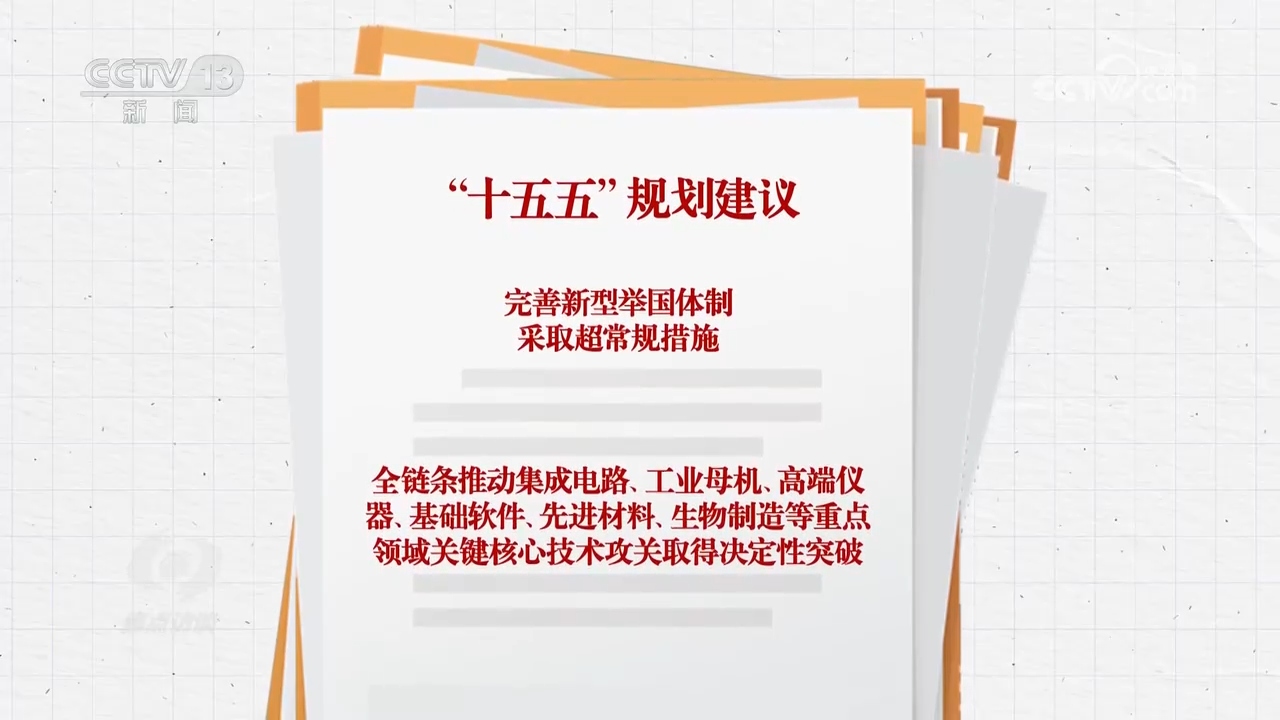
学习规划建议每日问答丨为什么要全链条推动集成电路、工业母机、高端仪器、基础软件、先进材料、生物制造等重点领域关键核心技术攻关取得决定性突破
Xin Hua She· 2025-11-29 03:30
Core Viewpoint - The article emphasizes the importance of overcoming "bottleneck" technologies in key areas such as integrated circuits, industrial mother machines, high-end instruments, basic software, advanced materials, and biomanufacturing to ensure national security and promote high-quality economic development [1][2][3]. Group 1: Importance of Key Core Technologies - Key core technologies are crucial for national security and high-quality economic development, necessitating enhanced capabilities in technology breakthroughs [1]. - Accelerating breakthroughs in these areas is essential for achieving competitive advantages and ensuring self-reliance in strategic industries [2]. Group 2: Challenges in Fundamental Research - The root cause of "bottleneck" technology issues lies in inadequate foundational theoretical research, which must be addressed to strengthen the basis for technological innovation and industrial development [3]. - There is a need to focus on original and disruptive innovations rather than merely imitative ones to avoid falling into a cycle of "catch-up" [3]. Group 3: Collaborative Framework for Technology Advancement - A collaborative framework is necessary to leverage the advantages of a new type of national system, integrating government, market, and social forces to enhance research and development efforts [4]. - Emphasizing mission-oriented approaches and incentivizing researchers to focus on national strategic needs will drive high-quality and original technological innovations [4].
中泰国际李迅雷解读“十五五”三大亮点:科技自强、提振消费与全国统一大市场
Xin Lang Zheng Quan· 2025-11-28 10:35
Core Insights - The upcoming "14th Five-Year Plan" will focus on high-quality development, emphasizing technological self-reliance, boosting consumption, and building a unified national market [1][3] Group 1: Technological Self-Reliance - The first major highlight of the "14th Five-Year Plan" is to accelerate technological self-reliance, focusing on key areas such as integrated circuits, industrial mother machines, high-end instruments, and biomanufacturing [3] - The development of these industries is expected to provide substantial structural investment opportunities for investors [3] Group 2: Domestic Market and Consumption - The second highlight is the construction of a strong domestic market aimed at significantly boosting consumption [3] - New consumption sectors such as health and elderly care, as well as smart living, are projected to show immense potential due to changes in population structure and consumption habits [3] Group 3: Unified National Market - The third highlight involves the construction of a unified national market, which aims to eliminate barriers that hinder its development [3] - This initiative is expected to optimize the business environment and create favorable conditions for improving corporate profitability [3] Group 4: Economic Outlook - Looking ahead to the first year of the "14th Five-Year Plan," it is anticipated that proactive fiscal policies will continue to support stable economic operations [3] - The deep integration and application of emerging technologies like artificial intelligence are expected to inject new momentum into economic development [3] - Under the guidance of the new plan, China's economic development is expected to enter a phase characterized by higher quality, greater efficiency, and enhanced sustainability [3]