
水产养殖

Search documents
湖州省级未来农场与数字农业工厂累计创建数全省第一
Xin Lang Cai Jing· 2026-01-02 23:43
Core Insights - The provincial agricultural and rural affairs department announced the evaluation results for the 2025 provincial future farms and digital agricultural factories, with the city adding 1 future farm and 14 digital agricultural factories, leading the province in both categories [1] Group 1: Future Farms - The newly added provincial future farm is the Zhangda Aquaculture Future Farm in Nanxun District, which exemplifies a combination of advanced technology and innovative models [1] - The future farm utilizes a collaborative model involving government, companies, banks, cooperatives, and farmers, enabling local farmers to benefit from a diversified income structure of "rent + dividends + wages" [1] Group 2: Digital Agricultural Factories - The 14 new provincial digital agricultural factories include the Deqing County Xingfu Qingyu Tang Digital Aquaculture Farm, which features a spacious digital control center displaying real-time data on water temperature, dissolved oxygen, and pH levels [1] - The digital aquaculture farm employs high-density farming in land-based honeycomb pools, achieving the output of a traditional 1-acre fish pond within just 30 square meters of farming area through digital management and automated control [1]
省水产科技小院集群成立
Xin Lang Cai Jing· 2026-01-02 23:42
Group 1 - The core viewpoint of the news is the establishment of the Fujian Province Aquatic Technology Small Courtyard Cluster, aimed at enhancing the high-quality development of the aquatic industry through collaborative innovation and resource integration [1][2] - The cluster includes 15 technology small courtyards focusing on key aquatic products such as abalone, yellow croaker, and kelp, with a chief expert system led by Professor Chen Xinhua from Fujian Agriculture and Forestry University [1] - A total of 2 technology small courtyard clusters have been established in the rice and aquatic sectors since 2019, with an investment of 20.75 million yuan, covering 86 technology small courtyards across 56 counties in Fujian [2] Group 2 - The initiative aims to address the systemic and complex innovation needs of modern agriculture by promoting collaboration and integration among various technology small courtyards, which are likened to "small boats" that need to unite for greater impact [2] - The province plans to further leverage the cluster platform to integrate innovation forces from universities and enterprises, creating sustainable industry technology communities that contribute to national food security and the "Great Food Concept" [3]
“媒体+”助力茂名罗非鱼亮相北京王府井大街 借“年鱼经济”助推品牌“破圈”
Nan Fang Nong Cun Bao· 2026-01-02 02:35
Core Viewpoint - The promotion of Maoming tilapia in Beijing's Wangfujing area aims to leverage the "New Year Fish Economy" to enhance brand visibility and market penetration during the peak consumption season [2][18]. Group 1: Promotion Activities - The promotional campaign for Maoming tilapia features advertisements displayed on four screens in a prime commercial area, running from New Year's Day until just before the Spring Festival [3][4]. - The campaign emphasizes the health benefits and quality of Maoming tilapia, aiming to establish it as a staple for family dining during the New Year celebrations [2][30]. Group 2: Market Strategy - This initiative is part of a broader agricultural brand strategy to expand the domestic market for tilapia, enhancing brand influence and market recognition [12][14]. - Maoming, known as the "Tilapia Capital of China," is the largest tilapia farming region and export processing base in the country, with a reputation for high-quality products [16][18]. Group 3: Economic Context - The campaign is strategically timed to coincide with the rising trend of the "New Year Fish Economy," which capitalizes on increased consumer spending during festive periods [17][22]. - The initiative aims to transition Maoming tilapia from primarily export-focused sales to a balanced approach that includes both domestic and international markets [18][19]. Group 4: Future Plans - Maoming plans to continue its promotional efforts by integrating festive consumption, online and offline marketing, and partnerships with the restaurant industry to drive high-quality development in the tilapia sector [34][35]. - The establishment of a comprehensive industry chain from breeding to processing and sales is a key focus for Maoming's tilapia industry, supported by the development of a big data platform and modern industrial parks [32][33].



鲜美正当时!青岛这一码头,每天上岸十多万斤,不少已经十成肥!价格打听好了
Xin Lang Cai Jing· 2026-01-01 23:53
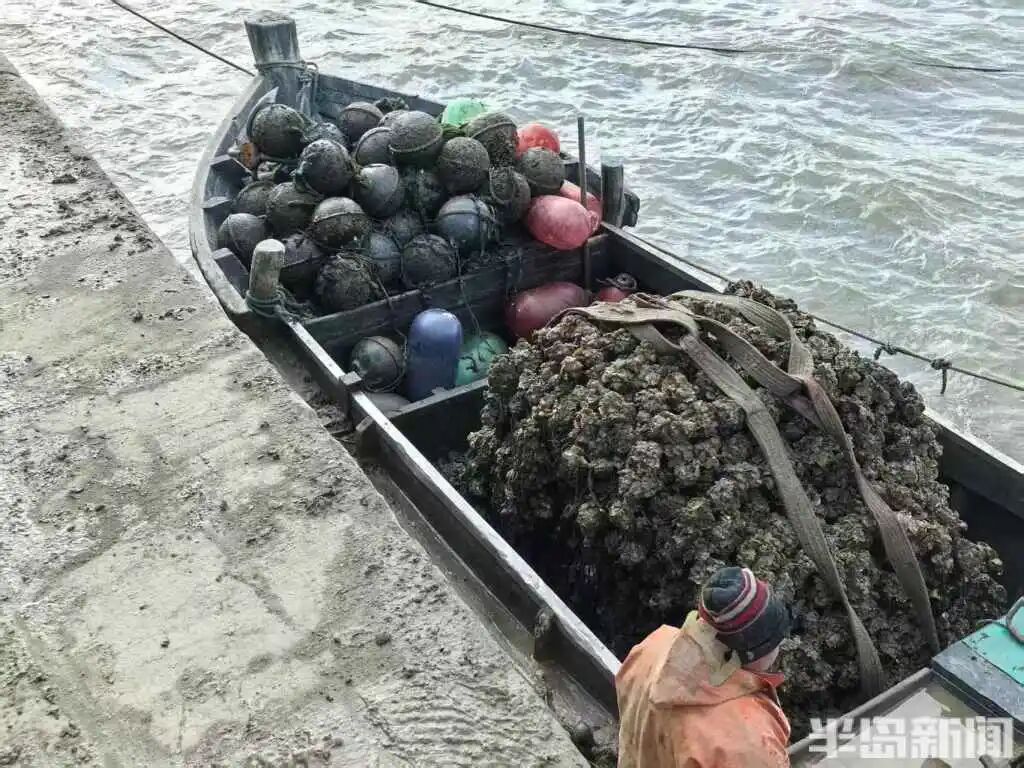
本文转自【半岛都市报】; 越冷越肥 眼下海蛎子又到了 肥美的季节 青岛的小伙伴们有口福了 今年青岛即墨区神汤沟村 海蛎子迎来了大丰收 大部分九成肥 不少已经十成肥 渔民们冒着刺骨的寒风 出海收获海蛎子 一众收购商早已守在岸边 据悉 码头上每天上岸十多万斤海蛎子 仍然供不应求 渔民冯先生说,因为周边水资源环境好,村里几乎家家户户都养殖海蛎子,面积超过3000亩,是青岛地区有名的牡蛎村。入冬以后,海蛎子就迎 来了收获季。 几乎供不应求 2026年1月1日 在即墨区神汤沟村 今年的海蛎子长势非常好,大部分九成肥,不少已经十成肥。"迎来了大丰收,每家的收获都不错。"冯先生说,一般养殖面积小一点的,十多亩 也能收获十多万斤,他今年就收获了15万斤左右。有些渔民承包的面积比较大,能收获四五十万斤。 "周边的几个村情况也不错,但是今年我们村算是最出众的。"冯先生说,今年行情好,村民都来不及清洗,直接在码头上就卖给了商贩。码头上 批发价一斤1.5元左右,清洗好的海蛎子一斤2.5元左右。除去各类开支,一家挣个十万八万没问题,养殖面积大的村民,能挣四五十万元。 "非常好卖,几乎是供不应求。"冯先生说,周边一些海域,产量都不如他们 ...
三峡库区乡村新貌:农产品出海,游客、年轻人进山
Zhong Guo Xin Wen Wang· 2026-01-01 01:16
Group 1: Tourism Development - The local government is promoting a four-season tourism strategy, including activities like flower viewing in spring, water activities in summer, and hiking in autumn and winter [2][4] - The number of tourists in Pinghe Township is expected to increase significantly, with local accommodations and dining facilities expanding to meet demand, raising daily capacity to nearly 3,000 visitors [3] - In 2023, Pinghe Township attracted nearly 100,000 tourists, generating approximately 6 million yuan in tourism revenue [3] Group 2: Agricultural Innovation - Pinghe Township is focusing on "agriculture + tourism" and "agriculture + education" models, with plans to expand strawberry cultivation from 30 acres to potentially hundreds of acres, targeting both domestic and international markets [5] - A fish farming initiative has transformed previously idle ponds into productive sites, generating over 200,000 yuan in sales from fish sold to regions like Hubei and Hunan [6] - The return of young people to their hometowns is contributing to agricultural and tourism development, fostering a new wave of rural revitalization [7]

玉山县怀玉乡农特产品开发有限公司成立,注册资本1000万人民币
Sou Hu Cai Jing· 2025-12-31 16:51
天眼查显示,近日,玉山县怀玉乡农特产品开发有限公司成立,法定代表人为陈颖,注册资本1000万人 民币,由玉山县农文旅发展有限公司全资持股。 来源:市场资讯 企业名称玉山县怀玉乡农特产品开发有限公司法定代表人陈颖注册资本1000万人民币国标行业农、林、 牧、渔业>渔业>水产养殖地址江西省上饶市玉山县冰溪街道新建北路东侧一层1-3号企业类型有限责任 公司(非自然人投资或控股的法人独资)营业期限2025-12-31至无固定期限登记机关玉山县市场监督管 理局 序号股东名称持股比例1玉山县农文旅发展有限公司100% 经营范围含许可项目:建设工程施工,食品销售(依法须经批准的项目,经相关部门批准后在许可有效 期内方可开展经营活动,具体经营项目和许可期限以相关部门批准文件或许可证件为准)农副产品销 售,信息咨询服务(不含许可类信息咨询服务),鲜蛋批发,鲜蛋零售,新鲜水果批发,新鲜水果零 售,新鲜蔬菜批发,新鲜蔬菜零售,水产品零售,食用农产品批发,食用农产品零售,食用农产品初加 工,停车场服务,水产品批发(除依法须经批准的项目外,凭营业执照依法自主开展经营活动) ...
水产养殖板块下跌,*ST佳沃下跌4.75%
Mei Ri Jing Ji Xin Wen· 2025-12-31 03:16
Group 1 - The aquaculture sector experienced a decline on December 31, with *ST Jiawo dropping by 4.75%, Zhongshui Fishery decreasing by 1.6%, and Tongwei Co., Ltd. falling by 1.57% [1]


年终特写:浙江千岛之城“同心奔共富”
Xin Lang Cai Jing· 2025-12-30 15:02
Core Insights - Zhoushan, known as the "City of a Thousand Islands," faces challenges in retaining residents and attracting industries despite its rich natural resources [1] - The local government has implemented the "Same Heart, Same Boat" initiative to promote common prosperity, focusing on integrating resources and enhancing community engagement [1][2] - The establishment of the "Nine Zhoushan Aquaculture Common Prosperity Laboratory" aims to improve fish farming efficiency and reduce losses through data-driven solutions [2][3] Group 1 - Zhoushan has 2,085 islands, with 141 inhabited islands, presenting both opportunities and challenges for development [1] - The "Same Heart, Same Boat" initiative has led to the creation of various community projects, including the "Same Heart Archery Museum," which has increased local tourism and cultural activities [2] - The local government has mobilized resources to address issues of fragmented support and resource integration in island communities, resulting in the activation of 38 idle resources and the establishment of 67 new youth-oriented businesses [2] Group 2 - The "Nine Zhoushan Aquaculture Common Prosperity Laboratory" was established to address challenges in fish farming, providing scientific support to local fishermen [2][3] - The local government has coordinated nearly 141 million yuan for over 50 projects benefiting more than 60,000 residents, demonstrating a commitment to improving living standards [4] - The "Same Heart, Same Boat" initiative has facilitated the integration of various resources to support high-quality development in Zhoushan, including the establishment of a service team for local enterprises to expand internationally [6]
新华视点丨奋力谱写城乡协调发展新篇章
Xin Hua She· 2025-12-30 06:33
Group 1 - Urban-rural coordinated development is a key engine for promoting Chinese-style modernization, with various regions adapting to local conditions to stimulate endogenous motivation and achieve integrated development [2] - Shanghai's "ice and snow economy" is gaining traction in shopping malls, transforming cold resources into a vibrant winter economy by linking markets and brand consumption [4] - Yiwu, known as the "world supermarket," is preparing for the next Christmas season, exporting nearly 80% of global Christmas supplies across over 100 countries and regions [5][9] Group 2 - In Cangzhou, Hebei, a unique market event is set to launch on December 27, 2026, featuring interactive and experiential activities that celebrate traditional culture [7] - Heilongjiang's Suiling County is enhancing agricultural facilities, with a vegetable industry park yielding over 21,000 pounds of produce and generating a net income of 60,000 yuan [9] - The province's facility agriculture area reached 427,000 acres by the end of Q3 2025, marking an 11% year-on-year increase, contributing significantly to farmers' income [9]

元旦备货叠加腌腊需求增加,短期内生猪价格或震荡偏强
Guotou Securities· 2025-12-30 02:55
Investment Rating - The industry investment rating is "Leading the Market - A" [6] Core Insights - The report indicates that the short-term pig prices may fluctuate strongly due to increased demand for New Year stocking and cured meat [21][22] - The white feather broiler market is experiencing upward momentum, with prices reaching a yearly high, driven by tight supply and farmer holding back stock [35] - The report highlights investment opportunities in the aquaculture sector, noting favorable price trends for certain aquatic products [41] Summary by Sections 1. Industry Overview - The agricultural sector increased by 0.25% during the latest trading week, ranking 23rd among the primary industries [13] - The performance of sub-sectors such as animal health showed significant gains, with notable increases in specific stocks [16] 2. Industry Data Tracking 2.1. Pig Farming - Average pig price is 11.50 CNY/kg, with a week-on-week decrease of 0.26% but a two-week increase of 1.02% [20] - The average price for piglets is 307 CNY/head, with a consistent week-on-week increase of 0.33% [21] - Daily slaughter volume is 237,000 heads, reflecting a week-on-week increase of 3.50% [21] 2.2. Poultry Farming - The average price for white feather broilers is 7.82 CNY/kg, up 6.39% week-on-week [35] - The price for meat chicken chicks is 3.59 CNY/bird, with a week-on-week increase of 1.70% [35] - The market is characterized by tight supply and rising costs, leading to increased prices for processed chicken products [35] 2.3. Crop Sector - Corn prices averaged 2341.10 CNY/ton, down 0.45% week-on-week [38] - Domestic wheat prices averaged 2513.22 CNY/ton, down 0.16% week-on-week [38] - Sugar prices saw a slight rebound, averaging 5274.50 CNY/ton, up 1.12% week-on-week [38] 2.4. Aquaculture Sector - Prices for various aquatic products showed positive trends, with carp at 20.00 CNY/kg (up 11.11% year-on-year) and tilapia at 22.00 CNY/kg (up 10.00% year-on-year) [41] - The report suggests monitoring investment opportunities in the aquaculture sector due to favorable market conditions [41]