医疗健康

Search documents
【今晚播出】沉浸未来:虚拟现实与医疗的全球探索 | 两说
Di Yi Cai Jing Zi Xun· 2025-09-24 04:50
Core Insights - The article discusses the potential of virtual reality (VR) to transform the medical field, moving beyond gaming applications to impact areas such as trauma treatment and neurological rehabilitation [1] Group 1: Technology and Healthcare - The integration of immersive technologies in healthcare is explored, highlighting how they can reshape the medical industry [1] - The discussion includes the role of cognitive reversal and digital therapies in addressing mental health issues and the challenges posed by an aging global population [1] Group 2: Expert Perspectives - Dr. Walter Greenleaf, a neuroscientist and expert in VR and digital health from Stanford University, provides insights into the ongoing technological and medical interplay [1] - The conversation emphasizes the importance of understanding who will take the lead in this evolving landscape of technology and healthcare [1]
【今晚播出】沉浸未来:虚拟现实与医疗的全球探索 | 两说
第一财经· 2025-09-24 04:41
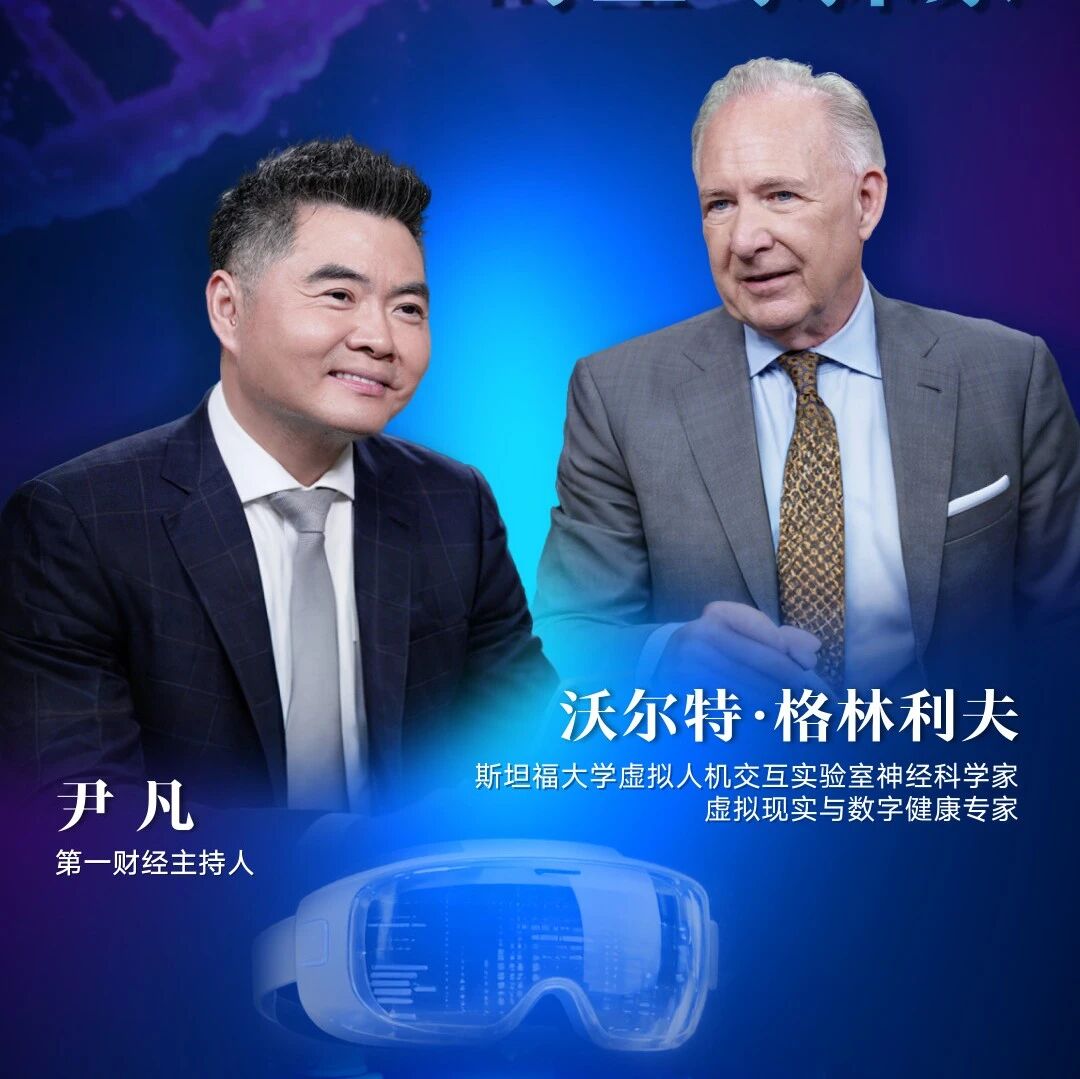
Core Viewpoint - The article discusses the transformative potential of virtual reality (VR) in the medical field, exploring its applications from trauma treatment to neurological rehabilitation, and how technology is reshaping human health [1]. Group 1: Virtual Reality in Medicine - Virtual reality is not just limited to gaming; it has the potential to significantly impact the future of medicine [1]. - The discussion highlights how immersive technologies can reshape the healthcare industry, addressing global challenges such as aging populations and mental health [1]. Group 2: Expert Insights - Dr. Walter Greenleaf, a neuroscientist and expert in virtual reality and digital health from Stanford University, provides insights into the role of VR in cognitive reversal and digital therapies [1][3]. - The conversation is facilitated by Yin Fan, a host from First Financial, indicating a collaboration between academia and media to disseminate knowledge on this topic [3]. Group 3: Broadcast Information - The program featuring this discussion will premiere on September 24 at 22:30 on Dongfang TV and will be rebroadcast on September 27 at 22:00 on First Financial [5].

(经济观察)“投资海南”引外商 全岛封关释利好
Zhong Guo Xin Wen Wang· 2025-09-21 05:29
Group 1 - Singapore's Perennial Group plans to establish the first wholly foreign-owned hospital in Hainan Free Trade Port, focusing on high-end medical and health services, with operations expected to start in 2028 [1] - The establishment of Hainan Lausanne Tourism University marks the second independent overseas higher education institution in Hainan, enhancing international educational collaboration [1] - The influx of high-consumption tourists and expatriates in Sanya is driving demand for premium healthcare services, supported by Hainan's Free Trade Port policies [1] Group 2 - Sanya utilized 2.81 billion RMB in foreign investment in the first eight months of the year, reflecting a 6.8% year-on-year increase, indicating a growing trend of foreign investment in Hainan [2] - Since the release of the Hainan Free Trade Port construction plan, actual foreign investment has reached 102.5 billion RMB, with an annual growth rate of 14.6% [2] - The upcoming full island closure operation on December 18 will enhance the "zero tariff" policy and facilitate trade, attracting more investment from trade-oriented enterprises [2] Group 3 - The "zero tariff" policy in Hainan Free Trade Port will allow market participants to enjoy both existing tariff benefits and new zero-tariff policies, enhancing investment attractiveness [3] - Hainan has the shortest negative list for foreign investment in China, with the most extensive encouragement for foreign investment across various industries [3] - The upcoming closure will further liberalize investment and trade, aligning with international high-standard economic and trade rules [3]
投中信息计8月并购宣布
投中信息· 2025-09-18 13:18
Market Overview - In August 2025, China's M&A market showed signs of recovery with a slight increase in the number and value of announced transactions, indicating initial market warming[16] - The completed transactions stage experienced a decline in both transaction volume and value, with a significant year-on-year increase of 36.12% in total transaction value, reflecting a concentration of funds towards high-quality assets[22] Transaction Statistics - A total of 420 M&A transactions were disclosed in August 2025, representing a month-on-month increase of 2.94% but a year-on-year decrease of 17.49%[26] - The total disclosed transaction amount reached $18.907 billion, marking a month-on-month increase of 15.48% but a year-on-year decrease of 11.14%[26] Completed Transactions - In August 2025, 267 M&A transactions were completed, showing a month-on-month decline of 9.49% and a year-on-year decline of 16.30%[31] - The total transaction amount for completed deals was $14.262 billion, with a month-on-month increase of 9.33% and a year-on-year increase of 36.12%[31] Private Equity Fund Exits - In August 2025, 49 private equity funds achieved exits through M&A, setting a record for the highest number of exits in a single month, with a total capital recovery of 13.347 billion yuan[37] - The exit activities were particularly active in the electronic information and healthcare sectors[16] Regional Insights - Zhejiang province ranked first in both the number and scale of M&A cases in August 2025, becoming a key driver of market activity[64] - The majority of M&A transactions were concentrated in the electronic information, energy and mining, healthcare, and financial sectors[64] Major Transactions - Notable transactions included Cartech Holding Company acquiring a 43% stake in Autohome Inc. for $1.8 billion, marking the largest scale change of control in China's automotive media sector[54] - Other significant deals included the acquisition of 15.60% of Changjiang Securities by Changjiang Industry Investment Group for $984 million and the acquisition of 84% of Jiangxi Jinsan Molybdenum by Zijin Mining for $826 million[62]
在变革中寻找永恒——丹纳赫之道的启示
首席商业评论· 2025-09-16 04:16
Core Insights - Danaher Corporation is a prime example of a low-profile, pragmatic, and innovative company that has transformed from a traditional manufacturing giant to a leader in life sciences through unique mergers, integrations, and enhancements [2][4] - The success of Danaher is attributed to its clear strategic understanding and extreme execution focus, showcasing foresight and solid insights from leveraged acquisitions to international expansion [4][6] Danaher's Business Model - Danaher operates as a hybrid of a perpetual merger fund and a management consulting firm, achieving significant success in both capital markets and the real economy [4] - The company has evolved from starting with million-dollar loans to becoming a multinational enterprise with a market value of over 100 billion dollars, marking its journey as a miracle in business history [4] DBS Framework - The DBS (Danaher Business System) is the core of Danaher's success, functioning as a comprehensive business operating system rather than just a collection of management tools [4][5] - DBS emphasizes continuous evolution, transforming complex management theories into executable, quantifiable, and replicable actions [5][8] M&A Strategy - Danaher's acquisition strategy is characterized by a market-first approach, focusing on high-growth industries and ensuring each transaction creates shareholder value through strict valuation discipline [6][8] - The post-merger integration led by DBS is crucial for Danaher's acquisition success, ensuring efficient integration of acquired companies through a structured approach [6][8] Leadership and Talent Development - Danaher has established a complete talent development system, ensuring cultural transmission and organizational vitality through various leadership tools and programs [8][10] - The company’s focus on leadership development is a distinctive feature of the DBS, contributing to its operational efficiency and strategic execution [8][10] Lessons for Chinese Enterprises - Danaher's experience offers significant lessons for Chinese companies, emphasizing the importance of understanding the underlying logic of success rather than mere imitation [10][12] - The potential of the Chinese market provides new growth opportunities for Danaher, while Chinese enterprises can inject new vitality into the Danaher model through their learning practices [10][12] Long-term Value Creation - The fundamental success of Danaher lies in its commitment to long-termism and the power of compound growth, highlighting that true business success is about cultivating the ability to create sustained value [12][13] - In the face of global competition, Chinese enterprises are encouraged to establish their own business systems, adapting management methods and tools that suit their unique characteristics [10][13]


走进服贸会丨共享开放合作机遇 共促服务贸易升级
Ren Min Ri Bao· 2025-09-15 07:46
Group 1 - The 2025 China International Service Trade Fair concluded with over 900 achievements in sectors such as construction, information technology, and finance, highlighting the growing importance of service trade in global commerce [1][9] - The fair attracted over 80 countries and international organizations, with an internationalization rate exceeding 20%, showcasing new cooperation opportunities [2][4] - The event served as a platform for project incubation and resource connection, facilitating collaborations between Chinese and international enterprises [4][5] Group 2 - The fair featured nine thematic exhibition areas and nearly a hundred forums, demonstrating rapid advancements in digital innovation and green development [6] - Various companies showcased innovative products, with a focus on enhancing collaboration and optimizing localized services in the Chinese market [6][7] - Reports released during the fair indicated a shift in China's service trade from traditional sectors to high-value-added areas, injecting momentum into global service trade growth [7][8] Group 3 - China has become the world's second-largest service trade nation, maintaining stable growth and diversifying its service trade landscape [8] - The fair highlighted China's commitment to opening its service market, which is reshaping global consumption and trade patterns [8][9] - The proactive expansion of quality service imports and the implementation of cross-border service trade negative lists are part of China's strategy to enhance international cooperation in service trade [9]
2025年服贸会朝阳区成交金额28.4亿美元,居北京各区之首
Xin Jing Bao· 2025-09-15 03:24
Core Insights - The 2025 China International Fair for Trade in Services (CIFTIS) concluded with Chaoyang District achieving a transaction amount of $2.84 billion, the highest among all districts in the city [1] Group 1: Event Highlights - During the "Charming Chaoyang Night" event, Chaoyang District gathered key exhibitors, transaction group representatives, major investment companies, international business associations, and multinational corporations for promotional activities, policy interpretations, and interactive exchanges [1] - Chaoyang District organized an international think tank forum on traditional Chinese medicine and health industry in collaboration with municipal departments, focusing on hot topics such as healthcare and artificial intelligence [1] Group 2: Achievements - At the 2025 CIFTIS, Chaoyang District achieved 7 investment and transaction results, 2 strategic agreements, 4 innovative projects launched, and 1 authoritative project release [1]
共享开放合作机遇 2025年服贸会达成各类成果超九百项
Ren Min Ri Bao· 2025-09-15 01:05
Group 1 - The 2025 China International Service Trade Fair concluded with over 900 achievements in sectors such as construction, information technology, and finance, highlighting the increasing importance of service trade in global commerce [1][2] - The fair attracted over 80 countries and international organizations, with an internationalization rate exceeding 20%, showcasing new cooperation opportunities [2][3] - The event served as a platform for project incubation and resource connection, facilitating collaboration between Chinese and foreign enterprises in various sectors, including cultural tourism and healthcare [2][3][4] Group 2 - The fair featured nine thematic exhibition areas and nearly 100 forums, demonstrating the acceleration of digital innovation and green development in service trade [4][5] - Reports released during the fair indicated that China's service trade is transitioning from traditional sectors to high-value-added areas, injecting momentum into global service trade growth [5][6] - China's policies of continuous opening are reshaping global consumption and trade patterns, positioning the country as a core growth engine for global service trade [6][7]
二〇二五年服贸会达成各类成果超九百项 共享开放合作机遇 共促服务贸易升级(走进服贸会)
Ren Min Ri Bao· 2025-09-14 22:07
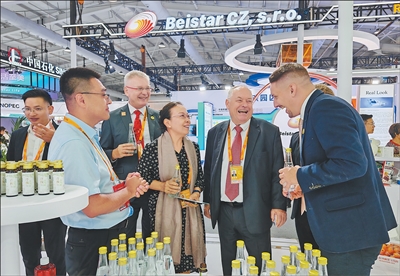
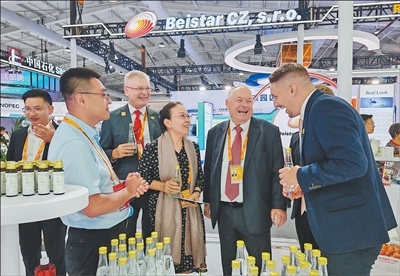
Core Viewpoint - The 2025 China International Service Trade Fair highlighted the increasing importance of service trade in global trade, focusing on digitalization, intelligence, and sustainability, resulting in over 900 achievements across various sectors [1] Group 1: International Participation and Cooperation - The fair attracted over 80 countries and international organizations, with an internationalization rate exceeding 20%, showcasing new cooperation opportunities [2] - Latvia emphasized the importance of the fair for promoting its cultural and tourism products in China, aiming to enhance brand recognition [2] - Pakistan's participation led to new collaborations, with local businesses seeking opportunities in China's rapidly developing digital industry [2] - France noted the fair as a platform for project incubation and resource connection, facilitating joint innovation between French and Chinese enterprises [2][3] Group 2: Technological Innovation and Market Development - The fair featured nine thematic exhibition areas and over a thousand companies, showcasing advancements in digital innovation and green development [4] - Companies like Canva and Johnson & Johnson presented innovative products, highlighting the fair's role in supporting the entire cycle of innovation from development to market [4] - Czech company Bestar showcased a patented thermal energy storage technology, aligning with China's green development goals [5] Group 3: Reports and Insights on Service Trade - The fair released several authoritative reports, indicating a shift in China's service trade from traditional to high-value sectors, contributing to global service trade growth [6] - China is recognized as the world's second-largest service trade nation, maintaining stable growth and diversifying its service trade landscape [6] - The fair underscored China's role as a stabilizing force in global service trade growth and economic recovery, emphasizing sustainable cooperation through rule alignment and capacity building [7]
共享开放合作机遇 共促服务贸易升级(走进服贸会)
Ren Min Ri Bao· 2025-09-14 22:03
Core Insights - The 2025 China International Service Trade Fair concluded with over 900 achievements in various sectors, emphasizing the growing importance of service trade in global commerce and China's commitment to opening its service market [1][6]. Group 1: Event Overview - The fair attracted over 80 countries and international organizations, with an internationalization rate exceeding 20%, showcasing a collaborative environment for sharing new opportunities [2]. - The event featured nine thematic exhibition areas, thousands of enterprises, and nearly a hundred forums, highlighting the acceleration of digital innovation and green development [4]. Group 2: International Participation - Latvia's ambassador emphasized the importance of the fair for promoting Latvian cultural and tourism products in China, aiming to enhance brand recognition [2]. - Pakistan's Bitso CEO noted the fair's role in helping local businesses find opportunities and increase visibility in the rapidly developing Chinese digital market [2]. - The French "Belt and Road" Promotion Association president highlighted the fair as a platform for project incubation and resource connection, benefiting French service industries like sports, education, and healthcare [2]. Group 3: Technological and Green Innovations - Czech company Bestar showcased patented thermal energy storage technology, aligning with China's green development goals [5]. - Johnson & Johnson presented innovative healthcare products, benefiting from the fair's extensive influence to connect global medical resources with Chinese clinical needs [4][5]. Group 4: Reports and Future Outlook - The fair released several authoritative reports, including the "Global Service Trade Inclusive Development Trend Report 2025," indicating a shift in China's service trade towards high value-added sectors [5]. - China's position as the world's second-largest service trade nation is reinforced by stable growth and diversification in new fields, with expectations for increased international cooperation [6].