太阳能光伏

Search documents
天合光能董事长高纪凡:未来两三年,公司解决方案的业务比例将增至50%以上
news flash· 2025-06-10 08:25
Core Viewpoint - Trina Solar's Chairman and CEO Gao Jifan announced that over one-third of the company's business currently comes from solutions, with expectations to increase this proportion to over 50% in the next two to three years [1] Group 1 - Trina Solar is actively expanding its solutions business, indicating a strategic shift towards integrated energy solutions [1] - The company aims to enhance its revenue stream from solutions, reflecting a growing trend in the solar industry towards comprehensive service offerings [1]

白马湖实验室钙钛矿太阳能电池同时刷新两项世界纪录
Zhong Guo Neng Yuan Wang· 2025-06-09 07:02
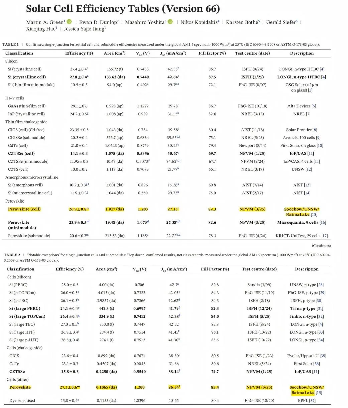
《太阳能电池效率表》(第66版)部分截图 在太阳能电池研发领域,0.1cm²小面积电池是探索材料性能极限的试金石,验证新型材 料与工艺的可行性,为技术拓展指明方向;而1cm²电池的转换效率则是评估电池性能与技 术潜力的核心指标,更贴近工业生产实际,是连接实验室研究与大规模制造的桥梁。 然而,钙钛矿太阳能电池面积从0.1cm²扩大至1cm²时,常遭遇电荷传输效率下降、复合 损失加剧、界面缺陷增多等难题,致使效率大幅下滑。白马湖实验室团队在电池面积扩大工 艺过程中的效率损耗极小,与该领域以往成果形成鲜明对比,这也被《太阳能电池效率表》 (第66版)着重指出。这一突破性进展表明,白马湖实验室研究团队不仅充分挖掘了材料的 高效潜力,更通过精准优化电池界面特性,有效控制电荷传输和复合损失,为钙钛矿太阳能 电池的产业化应用筑牢根基,有望加速清洁能源领域的技术革新。 此次技术突破并非偶然,自2024年12月白马湖实验室以26.8%的小面积电池稳态光电转 换效率认证打破世界纪录后,其团队秉持严谨科研精神,针对钙钛矿材料稳定性、界面工程 优化等难题,通过无数次实验、数据分析与工艺改进,历时六个月日夜攻关,最终实现效率 新突破。 ...


当“造车人”邂逅“追光者” 六安开发区如何跑出“智造”加速度?
Zhong Guo Xin Wen Wang· 2025-06-09 01:42
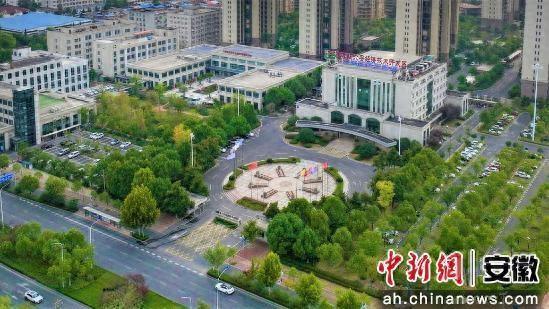
Core Insights - The article highlights the industrial transformation driven by innovation in the Liu'an Economic and Technological Development Zone, showcasing the growth of high-tech manufacturing and the emergence of new industries in the region [1][10]. Group 1: Innovation-Driven Industrial Engine - Liu'an Economic and Technological Development Zone is experiencing significant industrial expansion, particularly in the new energy vehicle (NEV) parts manufacturing sector, with companies like Anhui Kaisting Technology Co., Ltd. leading the way [3][5]. - The company has adopted advanced equipment and technology to optimize processes, achieving precision control of automotive parts within millimeter-level tolerances, which is critical for the NEV industry [5][6]. - A testing base for high-end NEV parts has been established, equipped with over 40 testing instruments, significantly reducing testing cycles and costs for local companies [8][6]. Group 2: Industry Growth and Economic Impact - By 2024, the Liu'an Development Zone aims to consolidate its position as a key growth area, with 47 NEV supporting enterprises and a 40% increase in output value for new generation information technology companies [8]. - The new materials and equipment manufacturing industries have achieved output values exceeding 5 billion and 10 billion respectively, marking a significant milestone in the region's industrial development [8]. Group 3: Service Innovation and Institutional Breakthroughs - Liu'an Development Zone has established a comprehensive service system to support enterprise development, including innovative recruitment initiatives like "Union Chairman Live Streaming Job Fair" to connect employers and job seekers [17][18]. - The zone has also implemented financial reforms, introducing "Landing Loans" to assist new enterprises in overcoming initial financing challenges, thereby supporting businesses throughout their lifecycle [20].
中国光伏商城www.pvshop.cn
Sou Hu Cai Jing· 2025-06-09 01:02
Group 1: Global Recognition Day and Its Importance - The theme for World Accreditation Day 2025 is "Empowering Small and Medium Enterprises" [1] - Established in 2008, World Accreditation Day aims to promote the development of certification and accreditation activities globally [1] - Recognition plays a crucial role in reducing trade and business costs, providing trust within supply chains [1] Group 2: International Mutual Recognition and Economic Impact - The international mutual recognition system covers economies that account for 96% of global GDP, supporting cross-border trade [2] Group 3: Trends in Quality Recognition in the New Energy Sector - The focus is shifting from single product performance to a comprehensive assessment of technology, environmental impact, and social benefits [4] - Companies are required to embed certification requirements during the R&D phase and utilize digital tools to enhance quality credibility [4] Group 4: Key Characteristics of Quality Recognition in 2025 - Global standardization and certification systems are being accelerated, with major economies collaborating to reduce trade barriers [5] - Lifecycle quality assessment is becoming central, with policies like the EU's Carbon Border Adjustment Mechanism (CBAM) enforcing carbon footprint tracking [6] - Safety standards are being upgraded, particularly for power batteries, with new national standards imposing higher requirements [7] - Mandatory certification for charging facilities will be enforced starting March 2025, with unapproved products banned from production and sale by August 2026 [8] - Stricter dual credit policies are increasing the difficulty of obtaining new energy credits, pushing for technological optimization [9] - New standards require comprehensive environmental management throughout the product lifecycle, emphasizing green supply chain management [10] Group 5: Differentiated Quality Competition in Niche Markets - In the power battery sector, safety certifications and fast charging cycle life are critical indicators for competition [11] - Hydrogen energy certification and pressure testing standards will influence commercialization, with Japan and China potentially leading in this area [11] - In the photovoltaic sector, parameters like PID resistance and bifacial generation rates will distinguish high-end from low-end markets [12] Group 6: Policy-Driven Quality Standards - New regulations in China may mandate transparency in battery health data, compelling companies to optimize battery management systems [13] - U.S. and EU regulations are reshaping supply chain quality competition through local production requirements and recycling material quotas [13] Group 7: Consumer Awareness and Brand Trust - The proliferation of quality transparency tools such as blockchain traceability and third-party evaluation platforms is influencing purchasing decisions [14] - A "zero-defect culture" is emerging, with companies enhancing defect repair capabilities through over-the-air updates, challenging traditional recall models [14]
新股消息 | 晶澳科技(002459.SZ)拟港股IPO 中国证监会要求补充说明公司及下属公司存在未决诉讼等事项
智通财经网· 2025-06-06 11:54
Group 1 - The China Securities Regulatory Commission (CSRC) has requested JinkoSolar Technology Co., Ltd. to provide supplementary information regarding pending litigation and safety production-related administrative penalties before its overseas listing [1][2] - JinkoSolar's main business includes the research, production, and sales of solar photovoltaic silicon wafers, cells, modules, and energy storage systems, as well as the development, construction, and operation of solar power plants [2] - According to Frost & Sullivan, JinkoSolar ranked third globally in photovoltaic module shipments in 2024, with a market share of 12.3%, and has maintained a position in the global top four for ten consecutive years since 2015 [2] Group 2 - As of December 31, 2024, JinkoSolar's products are sold in 178 countries and regions worldwide, with over half of its sales revenue coming from international markets [2] - The company has established 16 overseas sales offices and seven regional operation centers globally [2]

年增长率11%!2035年全球可再生能源装机容量将达到11.2TW
Sou Hu Cai Jing· 2025-06-03 23:06
太阳能光伏和风能是可再生能源领域的重要贡献者,分别占2024年总装机容量的56%和33%。亚太地区是这两种能源的最大市场。 1 September 1 17 11 17 全球可再生能源装机容量预计将从2024年的3.42太瓦(TW)到2035年达到11.2太瓦(TW),其中太阳能和风能占主导地位。 根据GlobalData的《可再生能源:战略情报》,这反映了从2024年到2035年的累计年增长率(CAGR)为11%。产能的增加将主要受到成本下降和强有力的 政策支持的推动。 GlobalData指出,全球可再生能源市场从2015年的0.93TW扩大到2024年底的3.42TW,复合年增长率为16%。 展望未来,到2030年,陆上风电行业预计将增长到1869亿美元,海上风电行业将增长到1504亿美元。这些数据表明,陆上风电的复合年增长率为4%,海上 风电的复合年增长率为14%,表明这些可再生能源的增长轨迹强劲。 (素材来自:GlobalData 新能源网综合) 太阳能光伏投资将超过陆上和海上风能行业。 仅在2024年,太阳能就获得了3291亿美元的投资,而陆上风电和海上风电的投资分别为1512亿美元和696亿美元 ...

本周四签到!200+大咖和上下游,共探柔性钙钛矿、BIPV、钙钛矿消费电子、叠层等
DT新材料· 2025-05-18 15:13
Core Viewpoint - The article discusses the upcoming Third Perovskite Materials and Devices Industry Development Forum, highlighting its significance in advancing perovskite solar cell technology and industry collaboration [1][14]. Event Details - The forum will take place from May 23 to 24, 2025, at the Shangri-La Hotel in Suzhou, Jiangsu [1][6]. - The event is organized by the Chinese Academy of Sciences, Ningbo Institute of Materials Technology and Engineering, and Huazhong University of Science and Technology, among others [2][3]. Agenda Highlights - The forum will feature keynote speeches and specialized reports on topics such as cost competitiveness of perovskite photovoltaics, industrialization challenges, and innovative applications [14][15]. - Notable speakers include experts from Shanghai Jiao Tong University, Huazhong University of Science and Technology, and various leading companies in the solar energy sector [14][15]. Participating Organizations - A diverse range of companies and institutions will participate, including major players like LONGi Green Energy, Trina Solar, and various universities and research institutes [9][10][12]. - The event aims to foster collaboration among industry leaders, researchers, and policymakers to address challenges in perovskite solar cell commercialization [14][15]. Logistics and Accommodation - Attendees can register on May 22, with detailed transportation options provided for reaching the venue from nearby airports and train stations [6][7]. - Special accommodation rates are available at the Shangri-La Hotel and nearby hotels for participants [7][8].
柔性钙钛矿太阳能电池产业化难点梳理
DT新材料· 2025-05-16 16:08
Core Viewpoint - The article discusses the upcoming third Perovskite Materials and Devices Industry Development Forum, focusing on the advancements and challenges in the flexible perovskite photovoltaic sector, highlighting its potential applications and the need for collaborative solutions to overcome existing technical barriers [1][2]. Group 1: Forum Overview - The forum will take place on May 23-24 in Suzhou, featuring discussions on flexible perovskite photovoltaics, tandem cells, and applications in smart IoT and wearable devices [1]. - Notable experts and companies in the field, including researchers and emerging enterprises, will present their findings and innovations [1]. Group 2: Market Potential - Flexible perovskite technology is being integrated into various urban applications, with examples such as the "energy tree" at the Dubai Expo, which improved power generation efficiency by over 12% [2]. - The flexible perovskite market is projected to exceed 100 billion yuan by 2030, with diverse applications in BIPV, wearable electronics, portable energy, and vehicle-mounted photovoltaics [2]. Group 3: Technical Challenges - The industry faces significant challenges, including the need for low-temperature processes compatible with flexible substrates, as current polymer substrates have temperature limits around 150°C [3]. - There is a lack of consensus on precursor liquid formulations and processing methods, which complicates the production of flexible perovskite devices [3][4]. - The conflict between the physical properties of functional layers and packaging materials presents systemic obstacles, with high-performance packaging materials being scarce and costly [4]. Group 4: Production and Reliability - The precision of laser processing and thermal control is inadequate for large-area flexible substrates, leading to reliability issues in device performance [4]. - The roll-to-roll manufacturing process is seen as the ultimate goal, but the supporting ecosystem is still immature, with many domestic equipment providers lacking the necessary precision and consistency [5]. Group 5: Expert Contributions - Various experts will present their research and practical experiences at the forum, addressing key industry pain points from materials, processes, packaging, electrodes, testing, to market implementation [5][6][7][8][9][10][11].
南昌大学教授、九江市柔烁光电技术总监胡笑添:可印刷柔性光伏器件
DT新材料· 2025-05-15 14:54
Core Viewpoint - The third Perovskite Materials and Devices Industry Development Forum will be held on May 23-24 in Suzhou, focusing on flexible perovskite photovoltaics, perovskite tandem cells, and applications in smart IoT and wearable devices under indoor low-light conditions [1][2]. Group 1: Forum Overview - The forum is organized by the Ningbo Institute of Materials Technology and Engineering, Huazhong University of Science and Technology, and DT New Materials, with support from Suzhou University and Wuhan Jiuyue Optoelectronics Technology Co., Ltd [1][9]. - Notable experts and scholars, including Ye Jichun, Chen Wei, and Hu Xiaotian, will present at the forum, alongside emerging companies in the flexible field and leading rigid perovskite module enterprises [1][2]. Group 2: Key Topics and Challenges - The forum will address the challenges in the commercialization of flexible printable photovoltaic devices, such as material brittleness, interface instability, and limited choices for flexible transparent electrodes [2]. - Discussions will focus on achieving high efficiency and stability in large-scale production, optimizing the interface engineering of tandem cells, and developing high-performance flexible transparent electrodes [13]. Group 3: Future Applications - The most promising application areas for perovskite technology in the next 3-5 years include tandem photovoltaics, flexible photovoltaic applications for building-integrated photovoltaics (BIPV), and advanced consumer electronics like smart IoT and wearable devices [12][13]. - The forum aims to explore feasible commercialization paths for perovskite technology, particularly in overcoming current technical bottlenecks [13].
光伏周价格 | 硅料硅片价格尚未企稳,电池片跌幅逐渐收窄
TrendForce集邦· 2025-05-15 07:15
Core Viewpoint - The article discusses the recent price trends and dynamics in the photovoltaic (PV) industry, highlighting a general decline in prices across various segments, including polysilicon, wafers, cells, and modules, due to supply-demand imbalances and inventory pressures [2][3][21]. Polysilicon Segment - The mainstream transaction prices for N-type polysilicon are reported at 38 RMB/KG for re-investment material, 36 RMB/KG for dense material, and 34.5 RMB/KG for granular silicon [5][6]. - The trading volume of polysilicon remains low as downstream demand is insufficient to stimulate purchasing, leading to a cautious procurement approach [6][9]. - Inventory levels have increased, surpassing 300,000 tons, prompting manufacturers to consider production cuts to alleviate price pressures [8][9]. Wafer Segment - The mainstream transaction prices for N-type wafers are 0.95 RMB/piece for M10, 1.30 RMB/piece for G12, and 1.10 RMB/piece for G12R [11]. - Wafer prices have been declining for several weeks, forcing some manufacturers to adjust their operating rates, but this has not significantly impacted the overall market [12][14]. - Inventory levels are around 20 GW, with a high proportion of 183N and 210RN wafers, indicating a shift in demand structure [13]. Cell Segment - The mainstream transaction prices for N-type cells are 0.260 RMB/W for M10, 0.280 RMB/W for G12, and 0.260 RMB/W for G12R [16]. - Manufacturers are initiating production cuts to maintain prices, but the supply-demand balance remains tight, particularly for 183N cells [16][17]. - Inventory pressure is relatively light compared to other segments, with stable turnover days [17]. Module Segment - The mainstream transaction prices for modules are 0.68 RMB/W for 182mm TOPCon and 0.84 RMB/W for 210mm HJT [18]. - Demand for high-power modules is supported by short-term factors, while low-power products face intense competition [19]. - Prices for concentrated and distributed projects have stabilized, but overall market conditions suggest limited potential for price recovery without significant upstream production cuts [20].