软件

Search documents
170亿机构掌门人发出警告:不必等到AI冲击 仅“恐慌”就足以引爆软件业违约潮
智通财经网· 2026-02-24 11:12
近年来私募信贷市场迅猛发展,规模已达1.8万亿美元。Lemssouguer认为,监管趋严并不意味着该领域 机会减少,但此前资金对软件行业的扎堆布局显然已经过度。 智通财经APP获悉,Arini Capital Management创始人Hamza Lemssouguer近日在一次采访中表示,仅是 对人工智能(AI)颠覆潜力的担忧,就足以推高软件企业的融资成本,进而给这个高负债行业带来连锁问 题。 软件企业普遍债务规模远超盈利水平,且融资高度依赖私人信贷机构。这也将相关机构推至风口浪尖: Blue Owl Capital因投资者大规模撤资,已关闭旗下一只基金并进行资产出售。 Lemssouguer警告,随着直接放贷机构开始削减对软件行业的敞口,冲击或将进一步加剧。Arini Capital Management虽然也开展直接贷款业务,但对监管机构加强系统性风险审查持欢迎态度。 "考虑到行业扩张规模,私募信贷市场体量已足够大,理应受到关注与重视,这是健康的发展方 向,"Lemssouguer表示,"所有行业都会经历周期轮动,如今轮到私募信贷行业了。" Lemssouguer在接受采访时称:"我们不必等到AI真正形 ...
CitriniResearch:《2028年全球智能危机》研究报告
欧米伽未来研究所2025· 2026-02-24 09:59
这份报告在发布后迅速引发广泛关注——准确说,不是因为它预言了灾难,而是因为它的论证框架在当下已令人不安地成立。 报告构建的虚构现实始于一个听起来相当乐观的起点:到2026年10月,标普500指数逼近8000点,纳斯达克突破3万点。AI驱动的裁员最 初如教科书所示,完美地压缩了成本、扩张了利润率、推高了股价。名义GDP保持中高个位数增长,生产率以1950年代以来前所未见的 速度攀升。计算资源的所有者财富暴增,而真实工资增长则迅速坍塌。 "21 世纪关键技术 " 关注科技未来发展趋势,研究 21 世纪前沿科技关键技术的需求,和影响。将不定期推荐和发布世界范围重要关键技术研究进展和未来趋势 研究。 2026年2月22日,宏观研究机构CitriniResearch与分析师Alap Shah联合发布了一篇题为《2028年全球智能危机》( The 2028 Global Intelligence Crisis )的分析报告。报告以一种罕见的叙事形式呈现:虚构一份写于2028年6月30日的"宏观备忘录",以回溯视角重建从AI 大繁荣到经济系统性崩溃的完整路径。作者明确声明,这不是预测,而是一次对"被严重低估的左尾风险"的刻 ...


马上"红" | 谈股论金
水皮More· 2026-02-24 09:41
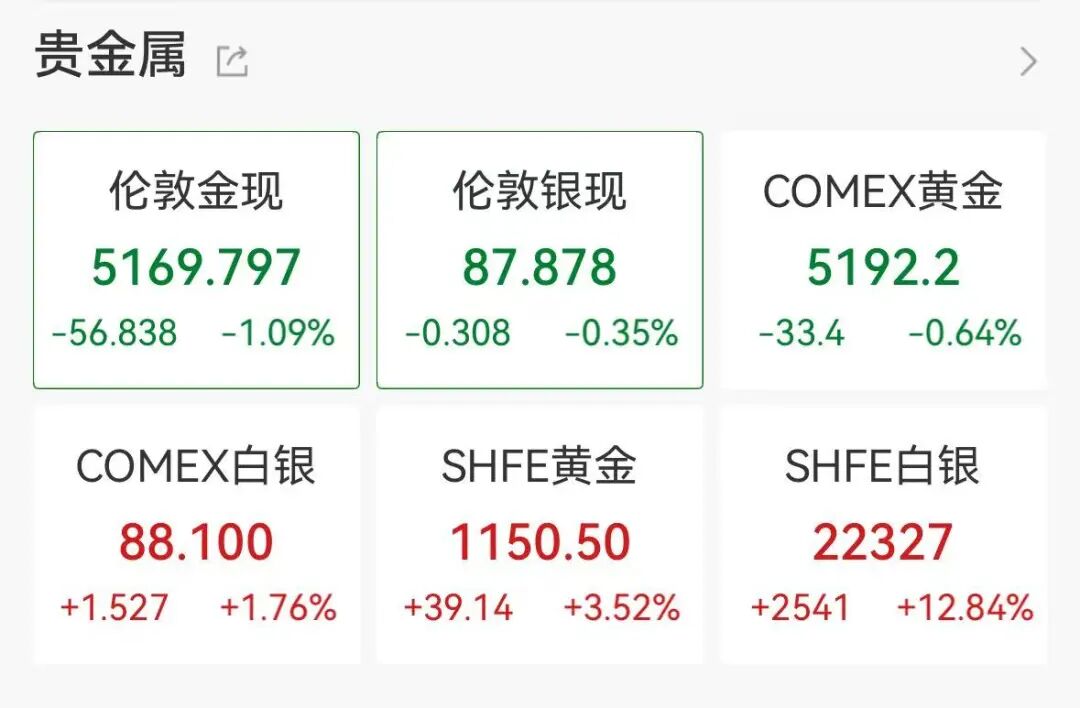
Market Overview - A-shares experienced a positive start to the year, with the Shanghai Composite Index rising by 0.87% to close at 4117.41 points, the Shenzhen Component Index increasing by 1.36% to 14291.57 points, and the ChiNext Index up by 0.99% to 3308.26 points [2][3] - The total trading volume across the Shanghai, Shenzhen, and Beijing markets reached 22.184 billion, an increase of 2.193 billion compared to the previous trading day [2][3] Market Sentiment - Despite the overall gains, the market showed a high open followed by a decline, with the K-line patterns indicating a bearish sentiment [3] - The increase in the indices was seen as a mere compensation for previous losses rather than a reward, as the gains did not recover the significant drop experienced before the holiday [3] Sector Performance - The oil service engineering sector led the market with a substantial increase of 12%, followed by the oil and gas development sector with a 7.53% rise, and precious metals with a 7.01% increase [4] - The "Big Three Oil" companies significantly contributed to the index's rise, accounting for approximately 13.50 points of the Shanghai Composite Index's total increase of 35.34 points, indicating their dominant influence on market performance [4] Capital Flow - The market saw a net inflow of 4 billion in the Shanghai market, while the Shenzhen market experienced a net outflow of approximately 7 billion [3] Technology Sector Trends - The previously high-profile sectors of robotics and AI applications faced declines, attributed to profit-taking after prior gains, leading to a weak performance in related fields such as film, digital media, software development, and gaming [5] - The ChiNext Index fell by 0.61%, reflecting a broader trend of capital withdrawal from technology stocks [5] Hong Kong Market Dynamics - The Hong Kong market exhibited a stark contrast, with the Hang Seng Index dropping by 1.8% and the Hang Seng Tech Index declining over 2%, influenced by short-term capital movements targeting southern funds [5] - The volatility in the Hong Kong market is partly a reflection of the U.S. market's fluctuations, particularly in technology stocks, which have faced significant pressure [5] Geopolitical Influences - Geopolitical factors, particularly the U.S. pressure on Iran, have impacted global precious metals and oil prices, with gold prices rising to 5200 as a safe-haven asset [6] - The recent U.S. Supreme Court decision to reject Trump's tariff proposal is seen as a positive development for future U.S.-China trade negotiations, potentially easing trade tensions [6]

Citrini“反乌托邦研报”重塑AI投资:“AI末日叙事”在美国,阿尔法在亚洲算力链
Zhi Tong Cai Jing· 2026-02-24 09:28
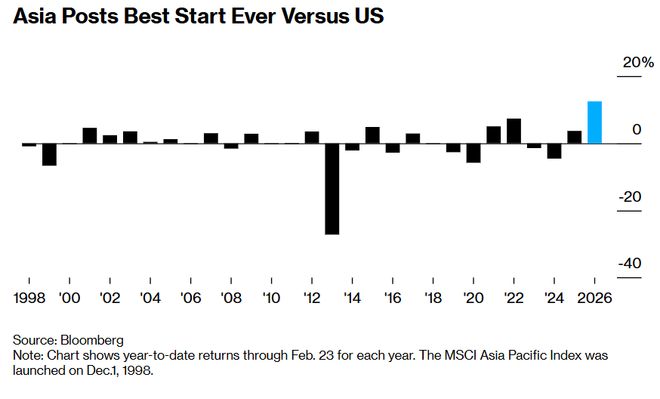
Core Viewpoint - Citrini Research's "2028 AI Doomsday Prediction" forecasts a dystopian future shaped by AI, predicting a surge in global AI productivity by 2028 but leading to a "global economic plague" due to the disruption of white-collar jobs, causing panic in financial markets [1][7] Group 1: Market Reactions - The report triggered panic selling across various sectors, including software, wealth management, and logistics, as investors feared the impact of AI tools like Claude Cowork and OpenClaw on performance [1][8] - The report's dystopian narrative has led to a significant shift in investor sentiment, with a "shoot first, ask questions later" approach dominating the market [1][8] - Following the report, Asian technology stocks, particularly those related to AI infrastructure, have attracted global investors, contrasting with the turmoil in the U.S. tech sector [2][10] Group 2: Investment Opportunities - Citrini Research emphasizes that semiconductor companies and AI data center participants will be the key beneficiaries of the global AI investment theme [2][11] - The report highlights that Asia, with major players like TSMC and SK Hynix, is positioned to benefit significantly from the "AI disruption" trend, while the U.S. tech sector faces turbulence [1][9] - The report suggests that the AI capital expenditure theme will support the resilience of Asian technology stocks, particularly in hardware manufacturing [23] Group 3: Economic Implications - The report outlines a mechanism where AI-driven job displacement leads to reduced wages and consumer spending, resulting in a "Ghost GDP" scenario where productivity increases but money circulation declines [7][9] - The narrative posits a conflict between market prosperity and real economic decline, challenging the prevailing notion that AI will solely drive productivity and profitability [7][9] - Concerns are raised about the vulnerability of traditional software business models to AI disruption, particularly in the U.S., while hardware manufacturing in Asia remains a more stable investment [9][21] Group 4: Regional Performance - The MSCI Asia Pacific Information Technology Index has outperformed U.S. indices, reflecting a significant divergence in market performance driven by AI-related investments [10][15] - Asian markets, particularly those in South Korea and Taiwan, have seen substantial gains, with the KOSPI index rising significantly due to strong semiconductor demand [18][22] - The report indicates that the correlation between Asian and U.S. tech stocks has dropped to its lowest level since 2017, highlighting a decoupling trend [15][18]
马年全年展望:三重支撑夯实基础,结构性重估可期
Xin Lang Cai Jing· 2026-02-24 09:13
Market Overview - During the Spring Festival period (February 16 to 23), the Hong Kong stock market showed a fluctuating upward trend, with the Hang Seng Index rising by 1.94% [1] - The materials and energy sectors performed strongly, with increases of 7.37% and 4.66% respectively, driven by rising international precious metal and energy prices alongside heightened geopolitical risks [1] - In contrast, both essential and non-essential consumer sectors experienced slight declines, indicating cautious expectations regarding the pace of consumer recovery [1] Sector Performance - The technology sector underperformed overall, with the Hang Seng Technology Index only increasing by 0.47% for the week, although it showed signs of recovery with a significant rise of 3.64% on February 23 [1] - The structural characteristics observed in the Hong Kong market during the holiday period may also reflect in the A-share market post-holiday, with cyclical industries linked to resource sectors expected to gain traction [1][2] A-share Market Outlook - The A-share market is anticipated to focus on two main lines post-holiday: resource products and technology manufacturing [2] - The recent market differentiation is not merely a short-term rotation but reflects a shift in risk preference from high-valuation growth sectors to more comfortable valuation ranges [3] - The strong performance of resource sectors indicates a growing consensus among global investors regarding the strategic value of assets like precious metals and oil amid geopolitical risks and a weak dollar [5] Economic and Industry Fundamentals - The Chinese economy is at a convergence point between the bottom of the inventory cycle and a new round of industrial upgrades, with industrial profits expected to improve in 2026 [6] - High-tech manufacturing is projected to be a core support for profit recovery, with significant growth in profits expected in sectors like electronic equipment and smart consumer devices [7] - The liquidity environment remains supportive, with a stable monetary policy and a trend of declining risk-free interest rates enhancing the attractiveness of equity assets [7] Long-term Market Drivers - The market's cautious expectations regarding economic growth may lay the groundwork for future recovery, with policies aimed at boosting domestic demand and consumption being prioritized [8] - The ongoing evolution of new industries, particularly in technology, is expected to support long-term growth, with no significant bubbles observed in the technology sector despite recent valuation increases [8] - The market is likely to experience structural revaluation supported by a recovering profit cycle, declining interest rates, and the acceleration of new productive forces transitioning from policy planning to industrial implementation [9]
软件困局:OpenAI与Anthropic是友敌还是死敌?
Xin Lang Cai Jing· 2026-02-24 09:08
Group 1 - OpenAI is perceived as a potential threat to enterprise software companies like ServiceNow, Salesforce, and Snowflake, as it aims to replace their software with its own AI products and agents [2][4][11] - OpenAI announced a new series of partnerships with consulting firms to enhance its sales of cutting-edge AI management software, although the incremental value of these partnerships remains unclear [3][11] - The stock prices of software companies, including Salesforce and ServiceNow, have seen significant declines, with drops between 3% to 9% on a recent day, contributing to an overall market decline of 1.2% in the Nasdaq index [4][11][12] Group 2 - PayPal's stock has plummeted 85% over the past five years, leading to a market capitalization of approximately $41 billion, raising questions about potential acquisition interest from competitors [12][13] - Stripe, a competitor of PayPal, may find it challenging to acquire PayPal due to cultural differences, despite PayPal owning Braintree, a competitor of Stripe [12][13] - Block, led by Jack Dorsey, could consider acquiring PayPal, but regulatory concerns may arise due to its direct competition with PayPal's Venmo [13]



风声鹤唳,一篇报告引爆华尔街的AI恐慌
Guan Cha Zhe Wang· 2026-02-24 08:48
Core Viewpoint - The report by Citrini titled "Global Intelligence Crisis" predicts a negative cycle driven by advancements in artificial intelligence, leading to significant job losses in white-collar sectors and a structural impact on consumer spending and corporate profits [4][6]. Group 1: Market Reaction - On February 23, the Dow Jones Industrial Average fell by 800 points, reflecting the market's panic triggered by the report [1][7]. - Major tech stocks, including DataDog, CrowdStrike, and Zscaler, experienced declines of over 9%, while IBM saw a 13% drop, marking its worst single-day performance since 2000 [8]. - Companies like American Express and KKR, mentioned in the report, also faced significant stock price declines [8]. Group 2: Predictions of Job Displacement - The report outlines a cycle where increased AI capabilities lead to reduced labor demand, resulting in layoffs and decreased consumer spending, which in turn pressures companies to invest more in AI [4][6]. - Various intermediary industries, such as travel booking and insurance, are predicted to be disrupted as AI can perform tasks more efficiently and at lower costs [5]. Group 3: New Job Creation vs. Job Loss - While AI is expected to create new roles such as prompt engineers and AI safety researchers, the report emphasizes that for every new job created, many more will be eliminated, often at lower salaries [6]. - The inherent premium of human intelligence, due to its scarcity, is diminishing, leading to a revaluation of labor in the economy [6]. Group 4: Broader Economic Implications - The report suggests that the financial sector, particularly underwriting institutions, will need to reassess the creditworthiness of high-quality loans due to the structural impact on white-collar income and spending [4]. - The rapid pace of AI disruption poses a risk to credit markets, as highlighted by analysts who note that a swift shock could render existing protective mechanisms ineffective [9]. Group 5: Defensive Asset Movement - Following the market turmoil, there was a notable shift towards defensive assets, with U.S. Treasury yields falling to their lowest levels since late November, and gold and silver prices rising significantly [14]. - This shift indicates a growing caution among investors regarding future market conditions [14].

摩根大通CEO:美国信贷环境重现2008年征兆,AI相关软件行业面临违约潮风险
Hua Er Jie Jian Wen· 2026-02-24 08:39
Core Viewpoint - Jamie Dimon, CEO of JPMorgan Chase, expressed significant anxiety over high asset prices and intense competition in the banking sector, warning that the current environment bears similarities to the period leading up to the 2008 financial crisis [1][2] Group 1: Economic Concerns - Dimon highlighted that the credit cycle is bound to reverse, which could lead to unexpected borrower defaults affecting various industries [1] - He criticized the complacency in the market, where high asset prices and trading volumes are perceived as stable, increasing overall economic risk [1][2] - The current market conditions remind Dimon of the pre-2008 crisis, where excessive leverage and profit-seeking behavior were prevalent [2] Group 2: AI and Credit Quality - Dimon pointed out the potential threat of artificial intelligence (AI) developments on credit quality in specific industries, particularly the software sector [1][3] - The recent volatility in the market due to AI concerns has led to increased scrutiny of certain loans by JPMorgan Chase [3] - Despite the AI-related worries, Dimon remains confident in JPMorgan's competitive position, predicting that the bank will emerge as a winner in most sectors affected by AI [3] Group 3: Leadership Transition - The topic of Dimon's succession plan was raised during the investor meeting, but he refrained from providing a specific timeline for his retirement [5] - Dimon indicated that he would continue as CEO for several more years before potentially taking on a role as executive chairman, with the final decision resting with the JPMorgan board [5]

“AI末日报告”作者发声:市场恐慌超预期,呼吁征收“AI税”来应对失业
硬AI· 2026-02-24 07:54
硬·AI 作者 | 张雅琦 编辑 | 硬 AI 一份关于AI冲击的情景推演报告在周末引发全球市场抛售风暴之后,报告共同作者Alap Shah周二公开发 声,坦言市场反应远超预期,并呼吁政府对AI征税,以应对可能到来的大规模失业浪潮。 一份AI冲击情景报告引爆全球抛售,IBM单日暴跌13%创25年之最。报告作者Shah直言市场反应"远超预期",并警告未 来18个月白领岗位或减少5%,呼吁政府对AI征税以遏制失业负反馈循环——若就业消失速度快于预期,整体消费经济都 将面临风险。他表示,"如今人人满仓AI,增量买家不多了。" 01 市场反应远超预期 这份由Citrini Research在社交媒体发布的报告,叠加Nassim Taleb的市场警告及AI初创公司Anthropic的 相关声明,共同触发大规模抛售。IBM股价单日大跌13%,创25年来最大单日跌幅;DoorDash、美国运 通、KKR及黑石跌幅均超6%;相关软件ETF下挫4.8%,较去年9月高点的累计跌幅已扩大至约35%。 Shah坦言对市场反应感到意外。 "我原本预计会有小幅反应,但绝对比我们预期的要大," 他在周二表 示。 他分析称,考虑到美国市场所 ...


A股超4000股上涨,逾百股涨停,化肥农药板块爆发,港股科网股集体回调
2 1 Shi Ji Jing Ji Bao Dao· 2026-02-24 07:39
Group 1 - On February 24, the first trading day after the Spring Festival, the A-share market experienced a rise, with all three major indices closing higher and over 4,000 stocks increasing in value, including 109 stocks hitting the daily limit [1] - Oil and gas stocks showed strong performance, with companies like Tongyuan Petroleum and Xinjing Power hitting the daily limit, while several others also saw significant gains [1] - The fertilizer and pesticide sector continued to strengthen in the afternoon, with multiple companies, including Liuguo Chemical and Yuntianhua, reaching the daily limit, driven by a rise in domestic urea prices [1] Group 2 - The electric equipment sector saw a strong performance, with multiple stocks hitting the daily limit, and reports indicated that many transformer factories are operating at full capacity, with some orders extending to 2027 [2] - Precious metals experienced a collective rise, with the sector increasing over 4%, and specific stocks like Xiaocheng Technology and Hunan Silver hitting the daily limit [2] - The main silver futures contract saw a significant increase of over 14%, with the price reported at 23,001 yuan per kilogram [3] Group 3 - The cultivated diamond concept stocks surged, with companies like Sifangda and Huanghe Xuanfeng hitting the daily limit, while the fiberglass sector remained active with International Composites achieving a historical high [5] - The software and cultural media sectors faced declines, with several companies, including Light Media and Wanda Film, hitting the daily limit downwards [5] - The Hong Kong stock market opened lower, with the Hang Seng Index dropping 1.81% and major tech stocks experiencing significant declines [5] Group 4 - Large model stocks performed well against the trend, with Zhiyu experiencing a rise of over 12%, and its market value briefly exceeding 300 billion HKD [6]