
农业种植

Search documents
从“葡萄藤”到“产业链” 盘城街道城乡融合的“双向奔赴”
Xin Hua Ri Bao· 2025-12-16 22:03
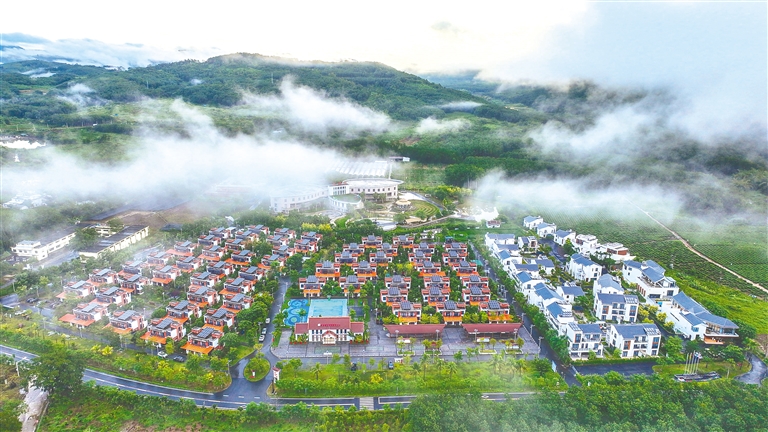
在南京江北新区盘城街道,一幅城乡深度融合的生动画卷正徐徐展开。这里,不再是简单的城市扩张或 乡村保留,而是一场以产业为纽带、以服务为基石、以人才为引擎的"双向奔赴"。盘城街道通过系统性 的探索与实践,正将城乡二元结构转化为互补共生的有机整体,走出一条富有特色的城乡融合发展新路 径。 城乡产业链协同并进 保障"一体化",关爱"零距离"。街道便民服务中心打造的"零工驿站",将招聘会开进小区、夜市甚至音 乐节,全年促成815人达成就业意向,并创新开发"陪诊服务"培训,拓展灵活就业渠道。构建起立体化 的"一老一小"关爱体系:"时间银行"互助养老完成1342单服务,为全街近万名老人购买意外险;"葡萄 树下的童年"未成年人保护工作品牌,为未成年人成长保驾护航。医疗保障网同样坚实,居民医保参保 率达108%,报销流程便捷高效,基金安全监管有力。 青春力量"下沉"乡村 激发内生增长新动能 城乡融合,关键在于产业协同。盘城街道摒弃了产业发展的"单线思维",推动都市经济动能与乡村特色 资源深度融合,构建起城乡互补、上下游联动的现代产业体系。 乡村新业态"出圈",都市消费力"下沉"。传统的葡萄种植园旁,"外婆桥.咖啡与茶"悄然成为 ...
粮食稳产、乡村焕新,“十四五”威海农业农村局交出亮眼答卷
Qi Lu Wan Bao· 2025-12-16 12:27
Core Viewpoint - The Weihai Municipal Government is focused on achieving high-quality agricultural and rural development during the "14th Five-Year Plan" period, emphasizing the integration of urban and rural areas and the enhancement of agricultural productivity and rural living conditions [1] Group 1: Agricultural Production - Grain and important agricultural product production remains stable, with a total of 199.05 thousand acres of high-standard farmland newly built or renovated, and continuous increases in grain sowing area and total output for four consecutive years [1] - The mechanization rate for major crops has reached 93.22%, and the city has been recognized as a provincial model for agricultural mechanization development [1] - The annual vegetable output remains above 1 million tons, with stable production of meat, eggs, and milk at around 360 thousand tons [1] Group 2: Poverty Alleviation - A dynamic monitoring system for poverty prevention has been established, identifying 236 households and 479 individuals for targeted assistance [2] - A total of 6.34 billion yuan has been invested in poverty alleviation projects, with 376 projects completed, generating 2.04 billion yuan in income for beneficiaries [2] - The employment scale for poverty alleviation labor has remained stable at over 3,000 individuals annually [2] Group 3: Rural Revitalization - The construction of rural revitalization areas has progressed, with 101 areas established and a coverage rate of 55% for villages [3] - 15 areas have been approved as provincial rural revitalization areas, and the city has been recognized for its effective practices in national media [3] Group 4: Specialty Industries - The development of specialty agricultural products, including apples and ginseng, has expanded, with modern orchards covering 350 thousand acres [4] - The area for ginseng cultivation is 55 thousand acres, accounting for 60% of the national production [4] - The number of agricultural industrial parks has increased to 10, with 196 leading enterprises recognized at the national level [4] Group 5: Rural Living Environment - The implementation of village cleanliness initiatives has led to recognition for advanced counties in rural cleanliness [5] - Significant improvements in rural infrastructure, including road hardening and drinking water upgrades, have been achieved [6] Group 6: Comprehensive Rural Reform - The reform of rural collective property rights has been completed in 2,713 villages, with a land circulation area of 1.233 million acres [7] - The number of farmer cooperatives and family farms has reached 4,300 and 3,537 respectively, enhancing service capabilities for farmers [7] - Future plans include the development of a modern agricultural framework to support the integration of urban and rural areas [7]
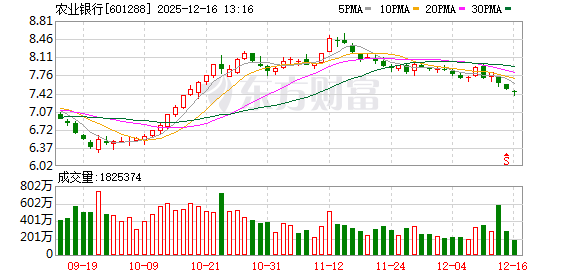
甘肃田野调研:从温室大棚到绿电基地 农业银行的“下沉”与“上升”
Mei Ri Jing Ji Xin Wen· 2025-12-16 05:17
Core Viewpoint - Agricultural Bank of China has become the world's largest commercial bank by market capitalization, reaching approximately 2.74 trillion RMB (about 386.9 billion USD) as of October 30, 2025, reflecting its strategic positioning in serving rural revitalization and the real economy [2]. Financial Performance - For the first three quarters of 2025, Agricultural Bank reported operating income of 550.8 billion RMB and net profit of 222.3 billion RMB, representing year-on-year growth of 1.97% and 3.28% respectively [2]. - The total asset scale of the bank exceeded 48 trillion RMB by the end of the reporting period [2]. County-Level Business Growth - As of September 2025, the bank's county-level loan balance reached 10.90 trillion RMB, growing by 10.57% since the beginning of the year, maintaining over 40% of the bank's total loan proportion [3][18]. - The bank's non-performing loan ratio improved to 1.27%, a decrease of 3 basis points from the beginning of the year [3]. Rural Financing Initiatives - The "Fumin Loan" program has disbursed 273.29 billion RMB, benefiting 321,600 rural households across 14 cities in Gansu province [5]. - The "Huinong e-loan" program has provided 930.92 billion RMB in loans, serving 1,168,700 rural households [5]. Innovative Financial Products - The "Electricity Bill e-loan" product allows small enterprises to secure loans based on their electricity usage data, addressing financing challenges for new businesses [11]. - The "Live Asset Mortgage Loan" has evolved into the "Smart Livestock Loan," utilizing AI technology for monitoring livestock, enhancing efficiency in the lending process [13]. Strategic Partnerships and Projects - Agricultural Bank has established a strategic partnership with China Green Development Group, facilitating financing for multiple renewable energy projects, with a total approval amount of 25.84 billion RMB since 2021 [18]. - The bank's rapid loan approval process has been highlighted in projects like the 300 MW compressed air energy storage project, where it completed a 9 billion RMB loan approval swiftly [14][16]. Conclusion - Agricultural Bank's focus on county-level business and innovative financial products positions it as a leader in rural finance, contributing to its competitive advantage and potential for revenue growth in the future [18].


黑龙江北大荒农业股份有限公司第七届董事会第三十三次会议(临时)决议公告
Shang Hai Zheng Quan Bao· 2025-12-15 19:10
黑龙江北大荒农业股份有限公司(以下简称:"公司")于2025年12月15日召开第七届董事会第三十三次 会议(临时),会议通知于2025年12月9日以专人送达、传真和电子邮件的形式发出,本次会议以通讯 表决方式,全部董事均参加了会议。会议符合《公司法》及《公司章程》的有关规定,会议的召开及议 案事项合法有效。本次会议决议通过以下议案: 一、关于修改《董事会战略与可持续发展委员会工作制度》的议案 原《董事会战略委员会工作制度》修改为《董事会战略与可持续发展委员会工作制度》。 同意9票,反对0票,弃权0票。 证券代码:600598 证券简称:北大荒 公告编号:2025-036 黑龙江北大荒农业股份有限公司 第七届董事会第三十三次会议(临时)决议公告 本公司董事会及全体董事保证本公告内容不存在任何虚假记载、误导性陈述或者重大遗漏,并对其内容 的真实性、准确性和完整性承担个别及连带责任。 同意9票,反对0票,弃权0票。 六、关于修订《固定资产管理制度》的议案 同意9票,反对0票,弃权0票。 七、关于修订《金融及衍生品交易管理制度》的议案 二、关于修订《发展战略管理制度》的议案 同意9票,反对0票,弃权0票。 三、关于修 ...

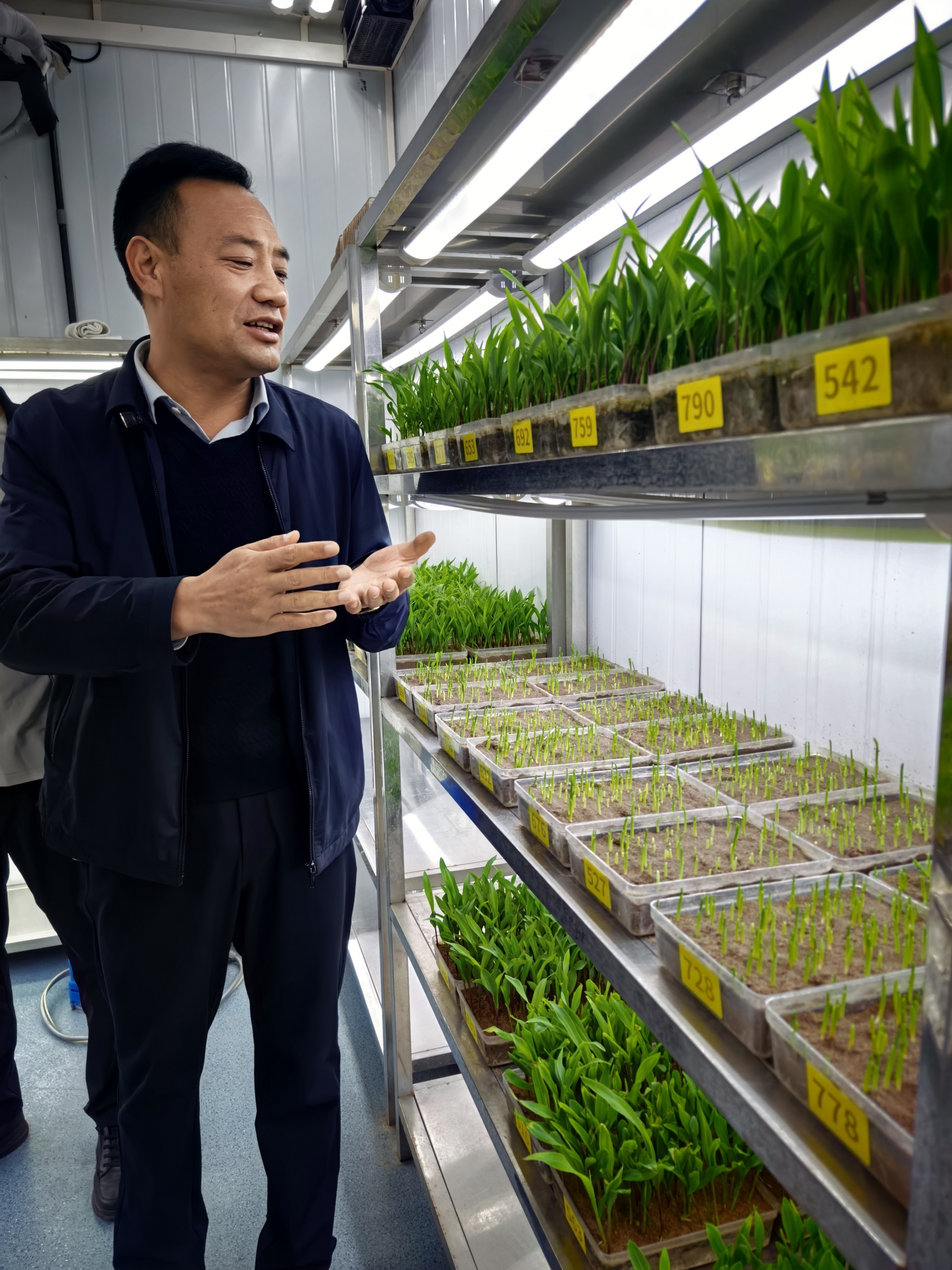
甘肃田野调研:从温室大棚到绿电基地,农业银行的“下沉”与“上升”
Mei Ri Jing Ji Xin Wen· 2025-12-15 12:06
Core Viewpoint - Agricultural Bank of China has become the world's largest commercial bank by market capitalization, reaching approximately 2.74 trillion RMB (about 386.9 billion USD) as of October 30, 2025, reflecting its strategic positioning in serving rural revitalization and the real economy [1]. Financial Performance - For the first three quarters of 2025, Agricultural Bank reported operating income of 550.8 billion RMB and net profit of 222.3 billion RMB, representing year-on-year growth of 1.97% and 3.28% respectively [1]. - The total asset scale of the bank exceeded 48 trillion RMB by the end of the reporting period [1]. County-Level Business Growth - As of September 2025, the bank's county-level loan balance reached 10.9 trillion RMB, a growth of 10.57% from the beginning of the year, maintaining over 40% of the bank's total loan portfolio [2][21]. - The bank's non-performing loan ratio improved to 1.27%, a decrease of 3 basis points from the start of the year [2]. Rural Financing Initiatives - The "Fumin Loan" program has disbursed 273.29 billion RMB, benefiting 321,600 farmers across 14 cities in Gansu province [4]. - The "Huinong e-loan" program has provided 930.92 billion RMB in loans, serving 1,168,700 farmers [4]. Innovative Financial Products - The bank has introduced innovative products like "Electricity Bill e-loan," which uses actual electricity usage data as a basis for credit assessment, facilitating financing for small and micro enterprises [11]. - The "Live Asset Mortgage Loan" has evolved into the "Smart Animal Husbandry Loan," utilizing AI technology for livestock identification, enhancing efficiency in loan management [16]. Strategic Partnerships and Projects - Agricultural Bank has established a strategic partnership with China Green Development Group, supporting multiple renewable energy projects with a total approval amount of 25.84 billion RMB since 2021 [21]. - The bank's rapid loan approval process has been highlighted in projects like the 300MW compressed air energy storage project, where it completed a 9 billion RMB loan approval swiftly [17][20].
合辑 | 向总书记汇报 实干者说
Guang Xi Ri Bao· 2025-12-15 10:00
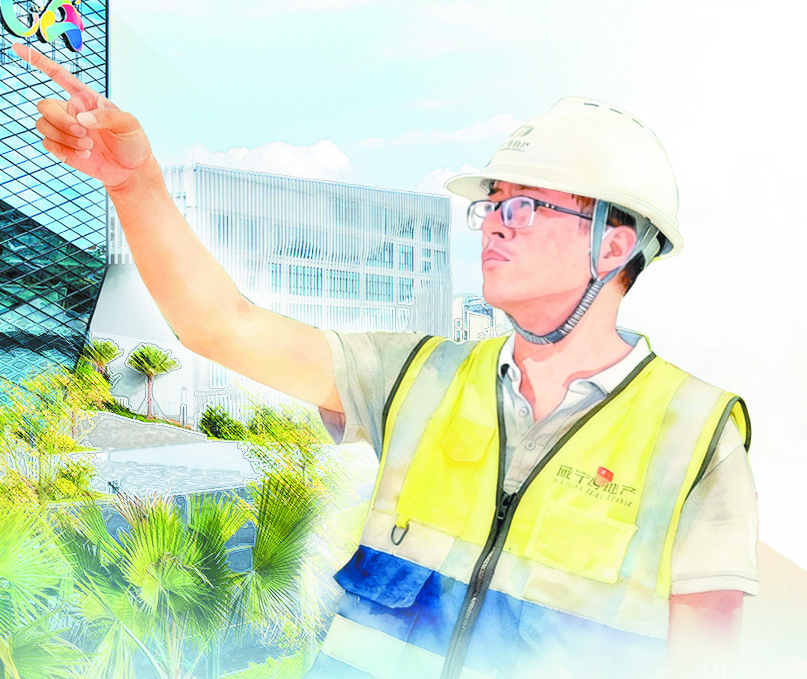
编者按 2023年12月14日至15日,习近平总书记视察广西时,提出殷殷嘱托:解放思想、创新求变,向海图强、开放发展,奋力谱写中国式现代化广西篇章。这 一重要指示为广西发展指明了前进方向。 征途漫漫,惟有奋斗。加快推进广西高质量发展,"干是不二选择"。千千万万扎根一线的实干者,既是广西发展的建设者,更是时代变迁的见证者。 在"十四五"规划即将收官之际,我们选取10位平凡却不凡的基层各界代表,请他们讲述亲身实干故事。读者朋友可从中领略到八桂儿女牢记嘱托、感恩奋进 的生动实践。他们岗位不同、职责各异,却都以实干为笔、创新为墨,在八桂大地上书写各自的精彩,共同绘就广西蓬勃发展的壮美画卷。 汗水化基石 蓝图变现实 讲述人:喻如安(南A中心展示中心建设项目部项目经理) 我们一切的努力,都为了践行"共享AI,未来已来"的愿景。 习近平总书记在视察广西时强调,广西要主动作为、发挥支点作用,加强信息化建设和应用,为推进高水平对外开放、促进同东盟合作不断注入新动 力。作为中国—东盟国家人工智能应用合作中心(简称南A中心)展示中心建设项目部的一员,我亲眼见证了南A中心从蓝图变为现实。当南A中心顺利投 入试运营时,我内心充满了自豪 ...
浙江诸暨农商银行金融助力乡村特色产业升级
Zheng Quan Ri Bao· 2025-12-15 06:43
Core Viewpoint - The development of the Xiangfei industry in Zhaojiatown, Zhejiang, is significantly supported by financial services, particularly from Zhuji Rural Commercial Bank, which has tailored financial products to meet the needs of local farmers and cooperatives, enhancing the quality and brand of Xiangfei products [1][2][3] Group 1: Industry Development - Xiangfei, a rare nut native to China, has a high fat content of about 50% and is cultivated primarily in Zhaojiatown, which is home to over 2,700 ancient Xiangfei trees [1] - The establishment of the "Zhongfei Union" mechanism in Zhaojiatown has facilitated the integration of agricultural experts and e-commerce talents to improve planting techniques and sales channels for Xiangfei [1] Group 2: Financial Support - Zhuji Rural Commercial Bank has created a specialized financial branch for the Xiangfei industry, implementing initiatives like "thousand visits" labor competitions to increase credit investment [1][2] - The bank has provided a total of 1.3 million yuan in credit to the Zhaojiamingle Fruit Industry Cooperative, which has developed nearly 200 acres of Xiangfei planting base and achieved sales of nearly 2 million yuan this year [2][3] Group 3: Financial Products and Strategies - The bank has launched the "Xiangfei Loan" product, simplifying approval processes and offering lower interest rates to meet the financial needs of farmers and cooperatives [2] - As of November, Zhuji Rural Commercial Bank has issued loans to 458 Xiangfei businesses, totaling 127 million yuan, supporting the entire Xiangfei industry chain [3]
民生答卷绘新景 同心齐唱幸福歌
Hai Nan Ri Bao· 2025-12-15 01:35
Core Viewpoint - Hainan is accelerating the construction of a shared and prosperous free trade port, focusing on people-centered development to ensure that the benefits of economic growth reach the populace, thereby enhancing overall well-being [7]. Group A: Employment and Economic Stability - Hainan has established employment stations to assist job seekers, resulting in the creation of a labor team for agricultural work, which has alleviated immediate employment challenges for local businesses [8][9]. - The province has implemented various measures to stabilize employment, achieving a total of 684,400 new urban jobs during the 14th Five-Year Plan period, with an urban survey unemployment rate maintained below 5.5% [11]. - The "Hainan Good Employment" app has gained popularity, with 4.0059 million job postings and 294,500 registered job seekers, reflecting the province's commitment to providing accessible employment services [11]. Group B: Social Welfare and Education - Hainan is enhancing elderly care and children's education, with initiatives like regional elderly service centers and group-based schooling to ensure quality services for the elderly and children [12][13]. - The province has established 189 educational groups to improve resource distribution in education, allowing more children to access quality schooling close to home [13]. - Digital education resources have been expanded, with 3.5 million digital education resources and 6 million test questions available, promoting equitable education across the province [13]. Group C: Infrastructure and Living Conditions - Hainan is actively improving living conditions through the construction of affordable housing, with 117,000 affordable housing units planned and 2,187 old urban communities being renovated [16]. - The province has developed "pocket parks" to enhance urban green spaces, with 49 parks renovated this year, ensuring residents have access to green areas within walking distance [16]. - Infrastructure improvements include the construction of 2,815.79 kilometers of urban gas pipelines and a comprehensive underground utility corridor in Haikou, enhancing urban resilience [16]. Group D: Cultural and Recreational Development - Hainan is diversifying its cultural and recreational offerings, with events like the Hunan Satellite TV New Year's concert and government-issued consumer vouchers to stimulate local spending [18]. - The province is fostering a vibrant cultural scene, with activities such as marathons and other community events contributing to a lively atmosphere [18].
经济日报财经早餐【12月15日星期一】
Jing Ji Ri Bao· 2025-12-14 22:37
Group 1 - During the "14th Five-Year Plan" period, China's machinery industry has an average annual growth rate of 7.1%, with a growth rate of 8.7% in the first three quarters of this year, surpassing the national industrial and manufacturing average levels [1] - The Ministry of Agriculture and Rural Affairs reported that over 700 billion yuan has been allocated for high-standard farmland construction during the "14th Five-Year Plan," supporting the establishment and enhancement of 4.6 million acres of farmland, which significantly contributes to national food security [1] - The Ministry of Commerce, the People's Bank of China, and the financial regulatory authority jointly issued a notice to enhance collaboration between commerce and finance, aiming to boost consumption through targeted measures [1] - The "Xuelong" vessel successfully completed material unloading and personnel landing at Zhongshan Station as part of China's 42nd Antarctic expedition [1] - The "14th Five-Year" development achievement report for China's oil and gas industry indicates a significant transition towards a modern oil and gas industry, with a projected natural gas production of 300 billion cubic meters by 2030 [1] - The China Academy of Information and Communications Technology reported that the artificial intelligence industry in China is accelerating, with the core industry scale expected to exceed 1 trillion yuan by 2025 [1] Group 2 - China National Offshore Oil Corporation announced the full production of the second development project of the Liuhua oil field, marking a significant advancement in deepwater complex reservoir development in China [2]

以实干实绩展现新担当新作为
Shan Xi Ri Bao· 2025-12-14 01:08
会议提出,制定一体推进教育科技人才发展方案。西安培华学院智能科学与工程学院副教授路陈红 表示:"作为一名高校科研人员,我将聚焦国家发展战略、对接地方产业需求,在人工智能等领域持续 攻关,深化拓展'人工智能+',加紧培育壮大新动能。积极利用'三项改革'等政策,推动更多科技成果 从'书架'走向'货架'。同时,作为一名高校教师,我将不断改进教学方式方法,引导更多学生把论文写 在祖国大地上,加强拔尖创新人才培养,把培养国家重大战略急需人才摆在突出位置,为加快建设教育 强国、科技强国、人才强国贡献力量。" "会议为全面推进乡村振兴、守牢不发生规模性返贫底线指明了方向。我们驻村工作队深感责任重 大。"渭南市华州区金堆镇东西坪村驻村第一书记刘斌说,"近年来,东西坪村依托帮扶力量,形成了西 红柿、中药材多业态产业矩阵,动态完善了全村基础设施,并建立起汛期道路应急抢修与维护长效机 制,夯实了发展的硬件基础。我们将持续推动常态化帮扶,通过订单农业、入股分红、公益岗位等方式 提高村民收入,同时加强对易地搬迁户的技能培训,促进其高质量充分就业,努力让乡亲们的日子越过 越红火,在共同富裕的道路上迈出更坚实的步伐。" "会议提出,统筹推 ...