农产品贸易

Search documents
美国代表团收获不少!中方取消一项禁令,签下370亿的大额订单
Sou Hu Cai Jing· 2025-11-07 20:12
Core Insights - A significant deal worth 37 billion RMB has been finalized, marking a notable shift in US-China agricultural trade relations after a period of tension and tariffs [1][8] - The deal includes a variety of agricultural products, primarily soybeans and corn, which are crucial for both countries' economies [8][12] Trade Dynamics - The US agricultural sector, particularly soybean farmers, faced challenges due to reduced exports to China, which traditionally accounted for 60% of their market [2][8] - China's need for soybeans led to increased prices from alternative suppliers, impacting domestic livestock and food prices [4][8] Negotiation Process - Initial tensions were marked by tariffs and trade barriers, but a series of five rounds of negotiations focused on principles of equality, respect, and mutual benefit [5][10] - The US agreed to lift most additional tariffs, while China restored import qualifications for US agricultural products based on compliance with safety standards [8][10] Economic Implications - The deal is expected to alleviate inventory pressures for US farmers and stabilize prices for Chinese consumers, benefiting the agricultural supply chain in both countries [8][12] - Future procurement arrangements are anticipated, which could enhance supply chain stability over the coming years [8][12] Political Context - Despite the positive developments, uncertainties remain regarding the stability of trade policies and potential future tariff increases from the US [10][12] - The agreement reflects a temporary resolution in the ongoing trade tensions, emphasizing the importance of continued dialogue and cooperation [12]


中美刚签大豆订单,不到72小时,再送川普大礼,背后战略耐人寻味
Xin Lang Cai Jing· 2025-11-07 15:27
Core Insights - The recent trade truce between China and the U.S. has led to a normalization of trade relations, with the U.S. reducing tariffs on China and China resuming soybean imports from the U.S. [3][5] - China has made a rare inquiry about purchasing U.S. wheat, marking its first interest in U.S. wheat in nearly a year, which is seen as a goodwill gesture towards the U.S. [3][5] - The inquiry has caused a significant impact on U.S. futures markets, with Chicago wheat futures rising by 1.8%, reaching a new high since July [5] Trade Dynamics - The inquiry for U.S. wheat follows China's recent soybean orders, indicating a strategic approach to gauge U.S. responses and potentially create a trade surplus for the U.S. [5][7] - The U.S. benefits politically from increased agricultural imports from China, which could enhance Trump's domestic standing amid political struggles [7][9] - China's diversified grain import strategy aims to ensure food security and stability, reducing reliance on any single country, including the U.S. [11][12] Global Context - The global agricultural landscape is affected by climate change and geopolitical tensions, necessitating China's imports to balance domestic supply and demand [12] - China's position as a major consumer market with significant purchasing power is crucial for U.S. economic interests [9][12] - Despite external pressures, China maintains a strategic focus on its trade relations with the U.S., emphasizing the importance of cooperation over conflict [14]
(第八届进博会)巴西马托格罗索州:进博会上实现“芝麻开门”
Zhong Guo Xin Wen Wang· 2025-11-07 13:46
Core Points - The event marked the opening of the Mato Grosso state exhibition at the 8th China International Import Expo, highlighting international cooperation and global trade strategies [1][3] - A cooperation agreement for importing sesame between China and Brazil was signed, with the first batch of Brazilian sesame entering the Chinese market in June 2023 [3] - The Mato Grosso state delegation included three sesame companies to promote their products to Chinese importers and consumers [3] Group 1 - The cooperation agreement is significant for Mato Grosso, as it is the largest sesame-producing region in Brazil [3] - The state aims to strengthen trade relations with China, exporting various agricultural products including corn, sesame, cotton, and beef [3] - The "Invest Mato Grosso" office was officially established in Shanghai to promote products and attract investments [5] Group 2 - Two cooperation agreements were signed during the event: one with the Brazilian center in Yangpu District and another with IEST Group to enhance trade and investment exchanges [5] - The Mato Grosso Secretary of Economic Development expressed hopes to leverage the Shanghai office to better access opportunities in the Chinese market and expand to other Asian countries [5]

聚焦进博|美国谷物协会:时刻准备着满足中国市场需求
Guo Ji Jin Rong Bao· 2025-11-07 13:02
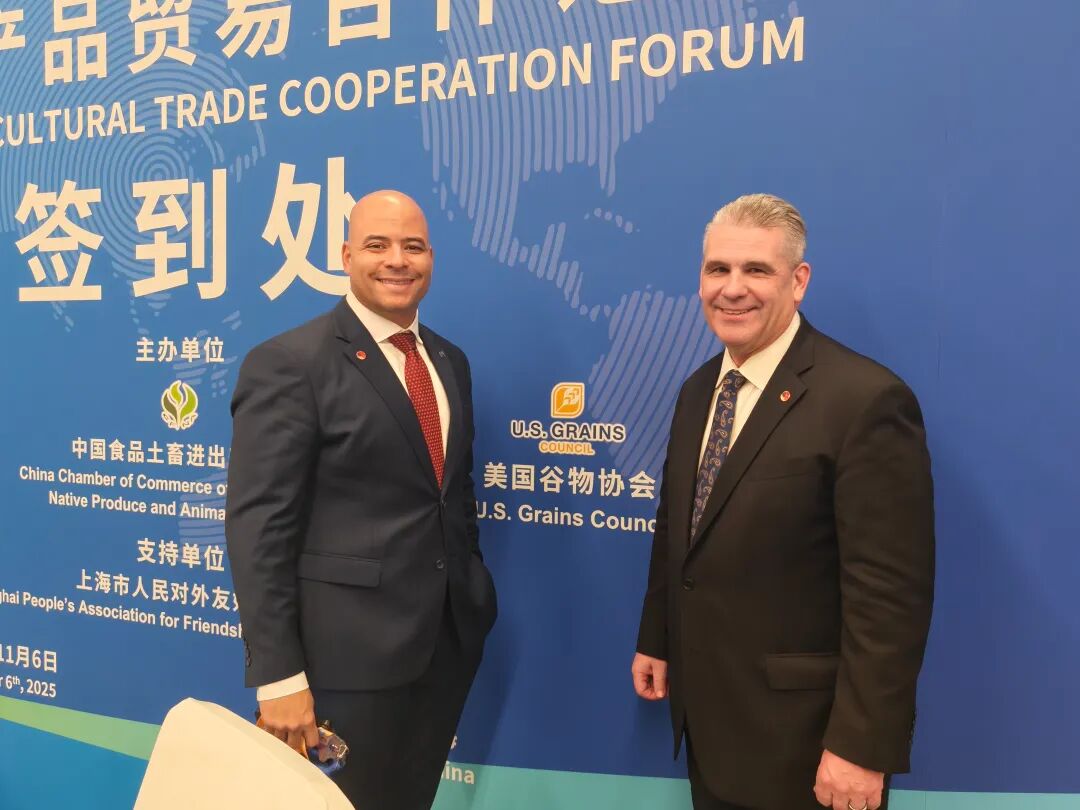
Core Insights - The article discusses the ongoing collaboration between the U.S. and China in agricultural trade, emphasizing mutual respect and long-term partnership [1][4][10] Group 1: U.S. Grain Association's Role - The U.S. Grains Council has been participating in the China International Import Expo for the seventh time, highlighting its 43-year presence in China [1][4] - The Council aims to promote the global use of U.S. barley, corn, sorghum, and related products, including ethanol and soluble distillers grains [4] - The Council's Beijing office focuses on enhancing trade exchanges and cooperation between the two countries [4] Group 2: Importance of the Chinese Market - The Chinese market is deemed crucial not only currently but has been significant over the past 43 years [6] - The Council's leadership emphasizes that agricultural trade between the U.S. and China meets the demand for high-quality living standards and sets a global cooperation example [6][8] Group 3: Commitment to Quality and Reliability - The U.S. is positioned as a reliable supplier of high-quality grains, ready to meet China's market demands [10] - The Council's competitive edge lies in continuous technological innovations that enhance production efficiency and sustainability [12] - Despite challenges like tariffs, the focus remains on maintaining strong relationships with Chinese buyers and stakeholders [12] Group 4: Long-term Vision - The U.S. Grains Council is committed to long-term development, emphasizing resilience through changing trade conditions [12] - The organization continues to facilitate exchanges and visits between U.S. suppliers and Chinese buyers to ensure open communication [12]
聚焦进博|继续推动中美农贸“压舱石”作用
Guo Ji Jin Rong Bao· 2025-11-07 13:01
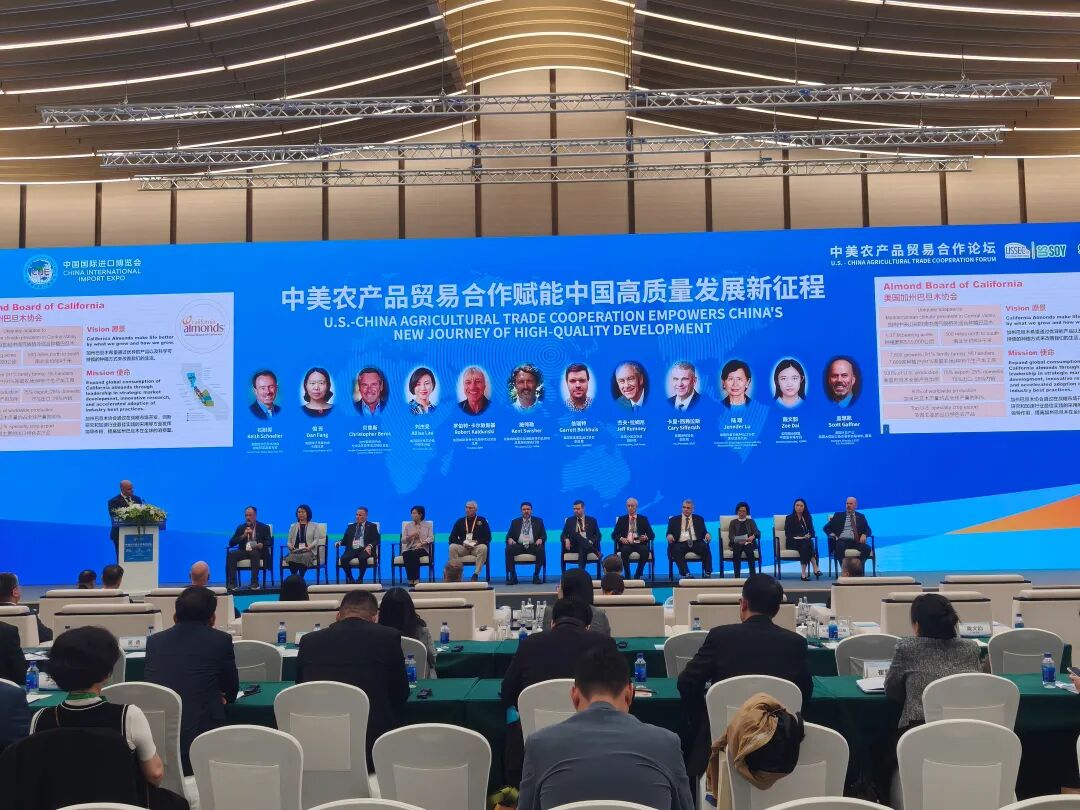
Core Insights - The forum aimed to strengthen agricultural trade cooperation and mutual trust between China and the U.S., addressing global food security and sustainable development amidst geopolitical challenges [1][3][4] Group 1: Forum Overview - The "U.S. Agricultural Trade Delegation" participated in the China International Import Expo, focusing on enhancing agricultural trade cooperation [1] - The forum received strong support from local associations and concluded successfully on November 7 [1] Group 2: Agricultural Trade Significance - China is the world's largest soybean importer, with an expected import volume of 105 million tons in 2024, highlighting the importance of U.S.-China soybean trade [3] - The U.S. Department of Agriculture predicts global soybean production will reach 427 million tons by 2025-2026, with the U.S. contributing over 25% [3] Group 3: Perspectives from Industry Leaders - U.S. Soybean Export Council CEO expressed optimism about the recovery of U.S.-China agricultural trade, emphasizing agriculture as a bridge for international cooperation [3] - Chinese officials highlighted the mutual benefits of agricultural cooperation, which is crucial for the healthy development of bilateral relations [3][5] Group 4: Consumer Trends and Market Opportunities - The forum discussed the need to enhance understanding of Chinese consumer demands, which are increasingly driving supply [8] - Various U.S. agricultural representatives shared insights on their products and the importance of meeting the high-quality standards expected by Chinese consumers [6][7]
海关总署:自2025年11月10日起恢复美国3家企业大豆输华资质
Jing Ji Guan Cha Wang· 2025-11-07 11:58
经济观察网据央视新闻客户端消息,海关总署今天发布公告:基于对美方整改措施的评估结果,依据我 国相关法律法规和国际植物检疫措施标准,海关总署决定废止海关总署2025年第30号公告(关于暂停美 国CHS Inc.等3家企业大豆输华资质的公告),自2025年11月10日起恢复CHS Inc.等3家企业大豆输华资 质。 ...
继续推动中美农贸“压舱石”作用
Guo Ji Jin Rong Bao· 2025-11-07 11:40
Group 1 - The core focus of the "China-U.S. Agricultural Trade Cooperation Forum" is to enhance agricultural trade cooperation and mutual trust between China and the U.S., contributing to global food security and sustainable development goals [1][2] - The forum emphasizes the importance of U.S.-China soybean trade, with China projected to import 105 million tons of soybeans in 2024, maintaining its status as the largest soybean importer globally [2] - The U.S. Department of Agriculture forecasts global soybean production to reach 427 million tons in the 2025-2026 period, with the U.S. contributing over 25% and China maintaining imports around 100 million tons [2] Group 2 - U.S. agricultural representatives express optimism about the recovery of agricultural trade relations, highlighting agriculture as a bridge for international cooperation and trust [2] - The Chinese Ministry of Commerce emphasizes the mutual benefits of agricultural cooperation, stating that stable economic relations foster agricultural collaboration, which in turn promotes healthy bilateral relations [2] - The forum participants discuss the need to strengthen cooperation and investment to achieve long-term win-win outcomes, focusing on expanding trade and market opportunities [3] Group 3 - The California Almond Association highlights its significant investment in the Chinese market over the past 30 years, with China being a key destination for its almond exports [4] - The California Wine Association, participating for the first time, notes that California produces 85% of U.S. wine and aims to meet the diverse and high-quality demands of Chinese consumers [4] - The Wisconsin Ginseng Growers Association reports that 65% of its ginseng production is exported directly to China, showcasing a long-standing trade relationship [4] Group 4 - The U.S. Rice Industry Association emphasizes its commitment to sustainability and high quality, with American rice being non-GMO and traceable from farm to table [5] - Participants note a trend of "consumer-driven supply" in the Chinese market, indicating the need for improved insights into Chinese consumer demands as a competitive advantage [5]
路易达孚连续第八年参加进博会
Zhong Guo Jing Ji Wang· 2025-11-07 08:27
Group 1 - The eighth China International Import Expo (CIIE) was held in Shanghai from November 5 to 10, showcasing a variety of products from the company, including animal nutrition solutions, food ingredients, and instant coffee products [1] - The company launched its "Soyadoc" specialty feed protein brand, featuring a comprehensive range of animal nutrition products, including super fermented soybean meal, yeast hydrolyzed protein, plant-based fish meal protein, and fortified phospholipids, all making their global debut [1] - The company's animal nutrition products aim to enhance the efficiency of animal nutrition utilization, improve animal health, and optimize breeding cost-effectiveness, leveraging the innovation capabilities of its Shanghai R&D center and integrated production facilities [1] Group 2 - The company emphasized that China's open policies have created numerous opportunities for collaboration with regional partners, with the CIIE serving as a key platform for deepening engagement with the vibrant Chinese market [2] - The company is committed to investing in innovation in China to create shared value and achieve long-term development [2]
国信期货油脂油料周报:粕强油弱凸显,马棕油等待报告指引-20251107
Guo Xin Qi Huo· 2025-11-07 07:59
1. Report Industry Investment Rating No information provided in the report. 2. Core Viewpoints of the Report - This week, the CBOT soybean market fluctuated with news of China's soybean purchases from the US, and the domestic soybean meal market followed suit. The soybean oil market was weak, and the palm oil market awaited the MPOB report. The domestic vegetable oil market showed a differentiated trend [6][60]. - Next week, the protein - meal market will focus on the USDA report, with expectations of a significant reduction in US soybean inventory. The domestic soybean meal market has high inventory pressure and is driven by cost. The oil market will pay attention to the MPOB report and 11 - day export data in November. The overall oil market is weakly operating, awaiting the guidance of the two reports [125][126]. 3. Summary by Directory 3.1 Protein Meal Market Analysis 3.1.1 Weekly Market Review - The CBOT soybean price first rose and then fell this week. The domestic soybean meal market followed the trend of US soybeans, with the futures price rising first and then falling. Although the domestic soybean meal inventory reached a new high, the oil mills' willingness to support the price of soybean meal increased due to losses [6]. 3.1.2 US Market - US Soybean Export Situation - As of the week ending October 30, 2025, the US soybean export inspection volume was 965,063 tons, a decrease from the previous week and the same period last year. The cumulative export inspection volume in the 2025/26 season decreased by 40.0% year - on - year, and the export reached 17.0% of the annual target [13]. 3.1.3 North American Market - South American Weather - As of October 30, 2025, the sowing progress of Brazilian soybeans in the 2025/26 season was 47%, higher than that of the previous week but lower than the same period last year. Some regions had problems such as excessive rainfall or insufficient rainfall [24]. 3.1.4 Domestic and Foreign Oilseed Markets - Chinese importers increased their purchases of Brazilian soybeans due to price advantages. The US Department of Agriculture will release a production report and a supply - demand report on November 14, which will adjust the production expectations of major crops [24][31]. 3.1.5 Soybean - Port Inventory and Pressing Profit - As of the end of the 44th week, the domestic port's imported soybean inventory was about 8.4022 million tons, and the theoretical inventory at the end of next week is expected to be 5.04 million tons. The domestic soybean pressing is still in a loss situation, but the loss has narrowed [37]. 3.1.6 Soybean - Import Cost and Domestic - Foreign Price Difference - The cost of US Gulf soybeans arriving at the port in December (with additional tariffs) is 4,891 yuan/ton, and that of Brazilian soybeans arriving in November is 3,949 yuan/ton. The Brazilian premium dropped significantly this week [41]. 3.1.7 Soybean Meal - Soybean Starting Rate and Soybean Meal Inventory - As of the end of the 44th week, the average starting rate of domestic soybean oil mills was 61.59%, a decrease of 4.83% from the previous week. The domestic soybean meal inventory was 1.208 million tons, an increase of 156,000 tons from the previous week [45]. 3.1.8 Soybean Meal and Rapeseed Meal - Weekly Apparent Consumption - The estimated apparent consumption of soybean meal in the 44th week was 1.6624 million tons, a decrease from the previous week [47]. 3.1.9 Rapeseed Meal - Rapeseed Starting Rate and Pressing Volume - As of the end of the 44th week, the starting rate of domestic imported rapeseed processing enterprises was 1.47%, an increase of 0.49% from the previous week. The pressing volume of imported rapeseed was 0.6 million tons, an increase of 0.2 million tons from the previous week [53]. 3.2 Grease Market Analysis 3.2.1 Weekly Market Review - This week, the US soybean oil was in a low - level shock, and the Malaysian palm oil oscillated downward. The domestic vegetable oil market showed a differentiated trend. The soybean oil rose slightly, the palm oil was weak, and the rapeseed oil rebounded slightly [60]. 3.2.2 International Grease Information - The MPOB will release monthly supply - demand data on November 10. It is estimated that the Malaysian palm oil inventory in October will reach 2.44 million tons, a month - on - month increase of 3.4%. Indian edible oil imports in October are estimated to have dropped to a five - month low [64][65]. 3.2.3 Three Major Vegetable Oil Futures and Spot Price Trends - The futures and spot prices of the three major vegetable oils showed different trends, with the overall performance of rapeseed oil > soybean oil > palm oil this week, and the soybean - palm oil price difference continued to rise [98]. 3.2.4 Domestic Grease Inventory - As of the end of the 44th week, the total inventory of the three major domestic edible oils was 2.5728 million tons, a week - on - week decrease of 58,200 tons. Among them, the soybean oil inventory was 1.4618 million tons, the palm oil inventory was 0.5383 million tons, and the rapeseed oil inventory was 0.5728 million tons [81]. 3.2.5 Grease Basis Analysis - The basis of soybean oil, palm oil, and rapeseed oil showed different trends, with the basis of each variety fluctuating [89][92][95]. 3.2.6 Grease and Oilseed Variety Arbitrage Relationship - This week, the oil - meal ratio of soybeans and rapeseed decreased, and the price difference between the main contracts of soybean meal and rapeseed meal narrowed [103]. 3.2.7 Protein Meal Inter - Monthly Spread Arbitrage Relationship - This week, the 1 - 5 spread of soybean meal continued to rise [108]. 3.2.8 Grease Inter - Monthly Spread Arbitrage Relationship - This week, the 1 - 5 spread of soybean oil rebounded slightly, the 1 - 5 spread of palm oil fluctuated narrowly, and the 1 - 5 spread of rapeseed oil also fluctuated narrowly [111]. 3.3 Market Outlook 3.3.1 Seasonal Analysis - The seasonal analysis of the US soybean, soybean meal, domestic soybean meal, and other markets shows their historical price trends in different months [115][116][118]. 3.3.2 Next - Week Market Outlook - **Technical Level**: The short - term and medium - term indicators of soybean meal and rapeseed meal are bullish, and the long - term indicators are entangled. The short - term, medium - term, and long - term indicators of soybean oil and rapeseed oil are entangled. The short - term and medium - term indicators of palm oil are bearish, and the long - term indicators are entangled [124]. - **Fundamentals**: The protein - meal market focuses on the USDA report, with expectations of a significant reduction in US soybean inventory. The domestic soybean meal market has high inventory pressure and is driven by cost. The oil market pays attention to the MPOB report and 11 - day export data in November. The overall oil market is weakly operating, awaiting the guidance of the two reports [125][126].
中国买家杀了个回马枪,订了20船巴西大豆!
Sou Hu Cai Jing· 2025-11-07 07:38
Core Viewpoint - The article discusses the shifting dynamics in China's soybean imports, highlighting a recent decision by Chinese importers to purchase approximately 20 shipments of Brazilian soybeans due to lower prices, despite expectations of increased U.S. soybean exports to China amid easing trade tensions [1][3]. Group 1: Market Dynamics - Chinese buyers previously slowed down Brazilian soybean purchases due to high prices, but have resumed buying as prices have decreased, making Brazilian soybeans more attractive compared to U.S. soybeans [3][5]. - The price of U.S. soybeans has risen to a near 15-month high due to positive signals regarding U.S.-China trade negotiations, which has led to a decrease in the premium of Brazilian soybeans [3][5]. Group 2: Supply and Demand - China's annual soybean import demand is around 100 million tons, with over 80 million tons of South American soybeans exported to China this year, significantly reducing the domestic supply gap to approximately 10 million tons [7]. - The renewed purchases of Brazilian soybeans by Chinese buyers indicate a further reduction in market space for U.S. soybeans, as the market share of U.S. soybeans in China has been declining in recent years [7]. Group 3: Price Trends - The expectation of sufficient imported soybean supply limits the likelihood of significant increases in soybean meal prices, especially with the recent announcement of tariff adjustments on U.S. imports [9][10]. - The stable demand for soybean meal, supported by high inventory levels and strong livestock populations, suggests that while there is potential for price increases, significant fluctuations are unlikely in the short term, with prices expected to range between 2,900 and 3,300 yuan per ton [10].