
核电

Search documents
【12366热点速递】近期关于跨区域建筑服务类问题热点答疑(四)
蓝色柳林财税室· 2026-01-20 15:31
欢迎扫描下方二维码关注: (2) 进入功能界面显示已采集的报告信息,可进行条件查询、新增、延期、修改、作废操作。 | 4- (22) 第三· 國家國中國學習的歌 用区域污胶事项 | | | | | | | | --- | --- | --- | --- | --- | --- | --- | | 酒店等有地 高水库 | | 喷油 固水库 1 | | | | 原稿 日前 MIT V | | 新时报免 | | | | | | | | 用地 同区域环保等国家和国际 现金 高以利亚教育 | | ANNESSM (8) ANTER | 01500 | | | 1999 1997: | | - EMELE NEW (2007). 1383-1939 | | 80 | 80 | 801-85-21 | 8 | HAR RE TER TRE | | 2 2008 ADDR (AVE / 1 1000 412 8 | | BH10 (SMALE) | 2001-02-14 | 801-01-14 | 150 | HAN NOT THE 下载 | | I 2005-0000 (2007) - 1100-1239 | | CARD ...


53位创作者深入探访12项国之重器 快来看看这些十几亿人“参与”的大项目!
Zheng Quan Ri Bao Wang· 2026-01-20 12:41
Group 1 - The "15th Five-Year Plan" is set to launch as the "14th Five-Year Plan" concludes, emphasizing the importance of major national projects as symbols of national strength and innovation [1] - The China Listed Companies Association (CLCA) collaborates with Douyin to explore major national projects, inviting 53 quality content creators to visit 12 leading industry companies [1] - The initiative aims to showcase the highlights of listed companies and create engaging content that tells the story of Chinese enterprises through unique perspectives [1][5] Group 2 - Douyin creators have gained significant attention by providing immersive experiences of major national projects, such as the Ningbo-Zhoushan underwater tunnel, which is the world's longest underwater high-speed rail tunnel at 11.21 kilometers [2] - The videos produced have garnered over 30 million views, allowing viewers to appreciate China's infrastructure capabilities and technological advancements [3] - The creators also highlight how technology transforms lives, showcasing projects like advanced irrigation systems in Yunnan that have turned previously arid land into a thriving agricultural region [3] Group 3 - The collaboration has resulted in 56 exclusive deep-dive videos, with a total follower count exceeding 170 million, and the hashtag IAmInThe14thFiveYears has reached nearly 1.8 billion views [6] - Topics related to China's railway construction and wind power leadership have frequently topped trending lists on Douyin, indicating strong public interest and engagement [6] - The CLCA aims to continue exploring ways to effectively communicate the stories of listed companies, emphasizing craftsmanship, social responsibility, and patriotism [6]




试验故障!日本最大核电站重启搁浅,再次引发安全疑虑
第一财经· 2026-01-20 12:39
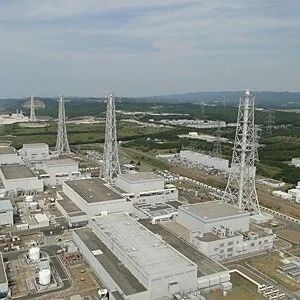
2026.01. 20 本文字数:2393,阅读时长大约4分钟 作者 | 第一财经 潘寅茹 封图 | 日本柏崎刈羽核电站(来源:日本原子能规制委员会网站) 据央视新闻报道,日本东京电力公司已放弃原定20日重启柏崎刈羽核电站6号机组的计划。 17日东电在声明中称,柏崎刈羽核电站6号机组反应堆在日前进行的控制棒抽出试验中发生防抽出功 能故障,本次故障导致6号机组重启推迟。 这项试验是核反应堆重启前检查的一个环节。通常情况下,在一根控制棒被抽出的状态下,再抽出其 他控制棒时,防抽出功能就会启动,警报会响起。而在17日的试验中,警报并未响起。 公开信息显示,位于日本北部新潟县的柏崎刈羽核电站总装机容量约821.2万千瓦,是日本最大的核 电站。2011年"3·11"东日本大地震引发福岛第一核电站事故后,日本境内所有的核电机组一度全 部停运,柏崎刈羽核电站也于2012年关闭。一旦顺利重启,柏崎刈羽核电站将成为东电旗下 自"3.11"福岛核事故以来首个重启的核电站。 目前,东电官网并未给出柏崎刈羽核电站重启的时间表。 争议不断 尽管日本政府与核电站的运营方都先后砸下重金,但当地民众依旧对东电和日本政府不放心。去年底 的投票 ...
中国广核:目前暂未涉及核聚变相关业务
Ge Long Hui· 2026-01-20 09:48
Core Viewpoint - China General Nuclear Power Corporation (CGN) is currently not involved in nuclear fusion-related business and is focused on promoting market-oriented trading policies for nuclear power to ensure sustainable development in the industry [1] Group 1: Company Position - CGN is actively communicating with the national government and relevant provincial regions regarding market-oriented trading for nuclear power [1] - The company aims to accelerate the development of trading policies that cater to the characteristics of nuclear power [1] - CGN is committed to tracking the implementation of market-oriented trading plans for nuclear power and adapting to market changes to secure more electricity generation [1] Group 2: Industry Context - The company supports the establishment of a scientifically sound and reasonable national unified electricity market [1] - CGN is striving for increased output and full capacity operation of its nuclear power units [1]

中国广核(003816.SZ):目前暂未涉及核聚变相关业务
Ge Long Hui A P P· 2026-01-20 09:39
Core Viewpoint - China General Nuclear Power Corporation (CGN) is currently not involved in nuclear fusion-related business and is focused on promoting market-oriented trading policies for nuclear power to ensure sustainable development in the industry [1] Group 1: Company Positioning - The company is actively communicating with national and regional authorities to accelerate the development of market-oriented trading policies specific to nuclear power [1] - CGN aims to secure more grid-connected electricity generation and strives for higher operational efficiency of its nuclear power units [1] Group 2: Industry Context - The company is closely monitoring the implementation of market-oriented trading schemes for nuclear power and is adapting to changes in market conditions [1] - CGN supports the establishment of a scientifically sound and reasonably unified national electricity market [1]
试验故障!日本最大核电站重启搁浅,再次引发安全疑虑
Di Yi Cai Jing· 2026-01-20 06:21
尽管日本政府与核电站的运营方都先后砸下重金,但当地民众依旧对东电和日本政府不放心。 据央视新闻报道,日本东京电力公司已放弃原定20日重启柏崎刈羽核电站6号机组的计划。 17日东电在声明中称,柏崎刈羽核电站6号机组反应堆在日前进行的控制棒抽出试验中发生防抽出功能 故障,本次故障导致6号机组重启推迟。 尽管日本政府与核电站的运营方都先后砸下重金,但当地民众依旧对东电和日本政府不放心。去年底的 投票前,约300名当地居民在新潟县议会外抗议反对柏崎刈羽核电站的重启,认为当地电力供给充足, 没有必要冒险重启核电站。在这些民众看来,一旦发生事故,他们是首当其冲的受害者。新潟县去年10 月公布的一项调查显示,60%的居民认为柏崎刈羽核电站重启条件尚未满足,近70%的居民担心东电欠 缺运营能力。 加速重启背后 根据日本原子能规制委员会的数据,截至2026年1月14日,日本境内已有7家核电站的13个机组恢复运 行;停运机组达20台,涉及8家核电站。 这项试验是核反应堆重启前检查的一个环节。通常情况下,在一根控制棒被抽出的状态下,再抽出其他 控制棒时,防抽出功能就会启动,警报会响起。而在17日的试验中,警报并未响起。 公开信息显 ...
核电板块震荡走弱,博菲电气等多股跌停
Xin Lang Cai Jing· 2026-01-20 05:46
核电板块震荡走弱,博菲电气、华菱线缆、西部材料跌停,高澜股份、弘讯科技、再升科技、斯瑞新 材、理工光科、方大炭素等跟跌。 ...

能源央企重组从规模扩张到生态构建
Zhong Guo Dian Li Bao· 2026-01-20 03:49
Group 1 - The core point of the news is the successful restructuring between China Petroleum & Chemical Corporation and China Aviation Oil Group, signaling a clear direction for future strategic mergers and professional integration among state-owned enterprises [1] - The restructuring and integration aim to enhance the operational efficiency of state-owned capital, with significant growth in total assets from 68.8 trillion yuan at the end of the 13th Five-Year Plan to an expected 91 trillion yuan by the end of 2024, reflecting an annual growth rate of 7.3% [2] - During the 14th Five-Year Plan, state-owned enterprises are projected to increase their value-added and total profits by over 40% and 50% respectively compared to the 13th Five-Year Plan, with improvements in labor productivity and return on net assets [2] Group 2 - The restructuring is not only about scale expansion but also about a systematic transformation towards new productive forces, with state-owned enterprises investing 8.6 trillion yuan in strategic emerging industries since the 14th Five-Year Plan, significantly increasing revenue contributions [3] - State-owned enterprises have contributed over 10 trillion yuan in taxes and fees since the 14th Five-Year Plan, accounting for approximately 80% of crude oil, 70% of natural gas, and 60% of electricity supply [3] Group 3 - Three types of restructuring models are identified: horizontal mergers for synergy, vertical integration to streamline supply chains, and professional integration to enhance quality [4][5][6] - Horizontal mergers focus on deepening integration within business segments, exemplified by China Shenhua Energy's acquisition of key subsidiaries to enhance competitiveness [4] - Vertical integration aims to connect upstream and downstream sectors, as seen in the merger of China National Nuclear Corporation and China Nuclear Engineering Corporation, creating a complete nuclear power industry chain [5] Group 4 - Future restructuring will increasingly focus on technological breakthroughs and the development of new productive forces, with a dual approach of exiting inefficient businesses while investing in strategic emerging industries [8] - Professional integration is expected to deepen, targeting specific key areas and high-end niche markets, such as inspection and testing, industrial software, and data services [8] - The construction of open and collaborative industrial ecosystems will become a significant development direction, with state-owned enterprises potentially transforming into industry organizers or service providers [9] Group 5 - Key areas for future restructuring activity are anticipated to include strategic mineral resources, high-end manufacturing, digital technology, green and low-carbon energy, and life sciences [10]


从海底到太空:53位自媒体创作者用镜头解码大国重器的硬核与温度
Huan Qiu Wang· 2026-01-20 03:15
Core Insights - The recent initiative on Douyin showcasing China's heavy machinery has garnered significant attention, with over 4 billion views and 60 million likes in just one month, highlighting the public's interest in the country's industrial capabilities [1][12] - The collaboration between Douyin and the China Listed Companies Association has allowed creators to explore and present advanced industrial projects, bridging the gap between technical expertise and public understanding [1][12] Group 1: Heavy Machinery and Infrastructure - The Ningbo-Zhoushan Railway's underwater tunnel, featuring the "Yongzhou" shield machine, operates at a depth of 58 meters and can withstand water pressure of up to 8.48 MPa, showcasing China's advancements in construction technology [2] - The construction of the intelligent irrigation system in Yunnan has transformed previously unproductive farmland, increasing irrigation efficiency from 40% to 90% and reducing costs significantly [3] - The Qinshan Nuclear Power Station is now producing medical isotopes domestically, marking a significant step in reducing reliance on foreign technology [4] Group 2: Renewable Energy and Aerospace - China's wind power capacity has reached 520 million kilowatts, maintaining its position as the world's leader for 14 consecutive years, with significant advancements in turbine technology [4] - The Zhuque-3 rocket, China's first recoverable orbital rocket, has been documented extensively, showcasing the country's progress in aerospace technology [6] - The C919 aircraft, a product of domestic innovation, features improved fuel efficiency and advanced monitoring systems, significantly reducing operational costs for airlines [6] Group 3: Communication and Public Engagement - Creators have effectively translated complex technical concepts into relatable narratives, enhancing public understanding of advanced technologies [7][8] - The emotional connection established by creators through personal stories and relatable analogies has increased audience engagement, with videos on Douyin achieving high viewership and interaction rates [8][11] - The initiative has highlighted the dedication of engineers and workers behind these projects, emphasizing their contributions to China's technological advancements [9][10][11]
广发证券:公用事业化加速推进 红利价值日益凸显
智通财经网· 2026-01-20 02:07
Core Viewpoint - The report from GF Securities highlights a significant shift in China's electricity consumption from secondary industries to tertiary industries and urban-rural residents, primarily driven by wind and solar energy contributions. The performance of thermal power companies is expected to diverge significantly in 2025, with northern companies showing better stock performance due to high growth in earnings. The improvement in free cash flow for thermal power companies suggests a potential shift towards a "public utility" model [1][2]. Group 1: Electricity Consumption Trends - The increase in electricity consumption is transitioning from secondary industries to tertiary industries and urban-rural residents, with projected contributions of 34.6%, 47.6%, and 50.2% from 2023 to 2025 respectively [1] - The growth in electricity generation is primarily attributed to wind and solar energy, with wind and solar expected to contribute 86.2% of the total increase from January to November 2025, compared to 35.8% and 44.7% in 2023 and 2024 respectively [1] - The long-term electricity proportion is decreasing, with adjustments made by two ministries reducing the 2026 long-term electricity ratio to 70% from the previous 80%, allowing for more flexible market adjustments [1] Group 2: Thermal Power Sector Insights - In 2025, stock performance among thermal power companies is expected to vary significantly, with northern companies like Jintou Energy and Jingneng Power seeing stock price increases of 60%-70% in the first half of the year [2] - The long-term electricity price for 2026 is approaching its lower limit, with limited future declines expected; an increase in coal power capacity prices could lead to a near 2 cents per kilowatt-hour increase in revenue [2] - The improvement in free cash flow for thermal power companies indicates a significant potential for increased dividend payouts, suggesting a shift towards a "public utility" model [2] Group 3: Hydropower Sector Developments - The abundant rainfall in the second half of 2025 in the Pearl and Yangtze River basins is expected to boost hydropower generation, with Changjiang Electric reporting a net profit of 34.2 billion yuan for 2025, a 5% year-on-year increase [3] - High reservoir levels at the end of 2025 are anticipated to support electricity generation during the dry season in the first half of 2026, with water power expected to maintain profit growth over multiple quarters [3] - The peak period for hydropower project commissioning is approaching, with several power stations in the Dadu River basin set to commence operations, and ongoing asset securitization processes are also noteworthy [3] Group 4: Green Energy and Nuclear Power Insights - The green energy sector has not yet fully transitioned from installation to revenue and profit, but the introduction of policy 136 is expected to enhance the stability of return on equity (ROE) in this sector [4] - The nuclear power sector is seeing continued approvals for new units, with a focus on market-driven electricity pricing [4] - The gas sector is recovering in terms of gross margins, with an emphasis on increasing sales volume [4] Group 5: Investment Opportunities in Public Utilities - Recommended stocks in the thermal power sector include Huaneng International Power, Huadian International Power, Guodian Power, and others known for high dividends and effective market management [5] - In the hydropower sector, companies like Changjiang Electric and Guikang Electric are highlighted for their strong performance and asset injection potential [5] - The gas sector is represented by Jiufeng Energy, which is capitalizing on coal-to-gas initiatives [5] - High ROE and low price-to-book ratio green energy stocks include Longyuan Power and Fuyuan Co., while China General Nuclear Power is noted for its policy adjustments [5]
