
直播电商

Search documents
《直播电商监督管理办法》 将人工智能生成内容纳入监管
Xin Lang Cai Jing· 2026-01-10 19:31
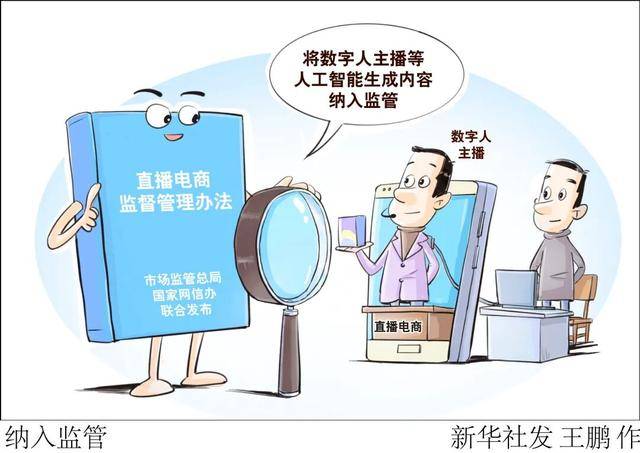
(来源:中国改革报) 压实主体责任,构建全链条监管体系。《办法》细化了电子商务法等法律规定,从事前、事中、事后三 个维度,进一步明确直播电商平台经营者、直播间运营者、直播营销人员、直播营销人员服务机构等主 体的法律责任。 创新监管工具,强化流量监管机制。《办法》针对直播电商行业特点,强化监管手段,将流量管控纳入 监管工具箱,明确规定市场监管部门、网信部门将直播间运营者、直播营销人员、直播营销人员服务机 构违法情况通报直播电商平台经营者的,直播电商平台经营者应当对相关主体及时采取警示、限制功 能、限制流量、暂停直播、限期停播、关闭账号、禁止重新注册账号、列入黑名单等处置措施。 回应技术发展,规范数字人直播。《办法》将数字人主播等人工智能生成内容纳入监管,避免新技术成 为生成或传播虚假信息的"挡箭牌",促进人工智能技术在直播电商领域的规范应用。 转自:中国改革报 本报讯 记者安宁报道 市场监管总局和国家网信办近日联合发布《直播电商监督管理办法》,加强直播 电商监督管理,保护消费者和经营者合法权益,促进直播电商健康发展。 ...
直播电商新规2月施行,酒类直播生态将面临全面调整?
Sou Hu Cai Jing· 2026-01-09 20:42
Core Viewpoint - The newly issued "Live E-commerce Supervision Management Measures" aims to regulate the live e-commerce industry, particularly focusing on the wine sector, addressing issues like counterfeit products and false marketing while clarifying the legal responsibilities of various stakeholders in the industry [1][2]. Group 1: Regulatory Framework - The new regulations will take effect on February 1, 2024, and will define the responsibilities of four main entities: platform operators, live room operators, live marketing personnel, and service institutions (MCNs) [1]. - The regulations impose strict requirements on the use of artificial intelligence in live broadcasts, mandating that any AI-generated content must be clearly labeled to inform consumers [2][3]. - The selection responsibility for products has been significantly strengthened, requiring service institutions to verify the credentials of sellers and maintain records for at least three years [2]. Group 2: Industry Transformation - The regulations will lead to a profound transformation in the wine live e-commerce sector, moving from a phase of "wild growth" to one of "compliance competition" [7]. - Visual marketing strategies in wine live broadcasts will need to change, as AI-generated environments and virtual sommeliers must now be transparently labeled, reducing potential consumer deception [8]. - Supply chain transparency will become a core competitive advantage, as live broadcasts will need to ensure traceability from production to sale, putting pressure on those claiming "direct sales from the winery" [10]. Group 3: Impact on Market Players - Small and emerging brands may face higher compliance costs due to the new regulations, potentially leading to market exits for those unable to meet these requirements [12][13]. - The consumer protection environment will improve significantly, as the requirement for address authenticity will help resolve issues related to after-sales service and enhance consumer trust in live e-commerce [14]. - The detailed recognition of commercial advertising will compel live hosts to enhance their professional knowledge, shifting the focus from exaggerated marketing to genuine product understanding [15]. Group 4: Industry Challenges - Despite the new regulations, some live broadcasts still engage in non-compliant practices, such as operating under false identities or misleading marketing tactics [16]. - The regulations clarify the responsibilities of live room operators regarding information disclosure and identity verification, which is expected to foster a healthier market environment [16].

智享AI直播三代技术革新:用技术重构商业生态,让“AI主播”成为品牌第二增长曲线
Sou Hu Cai Jing· 2026-01-09 11:14
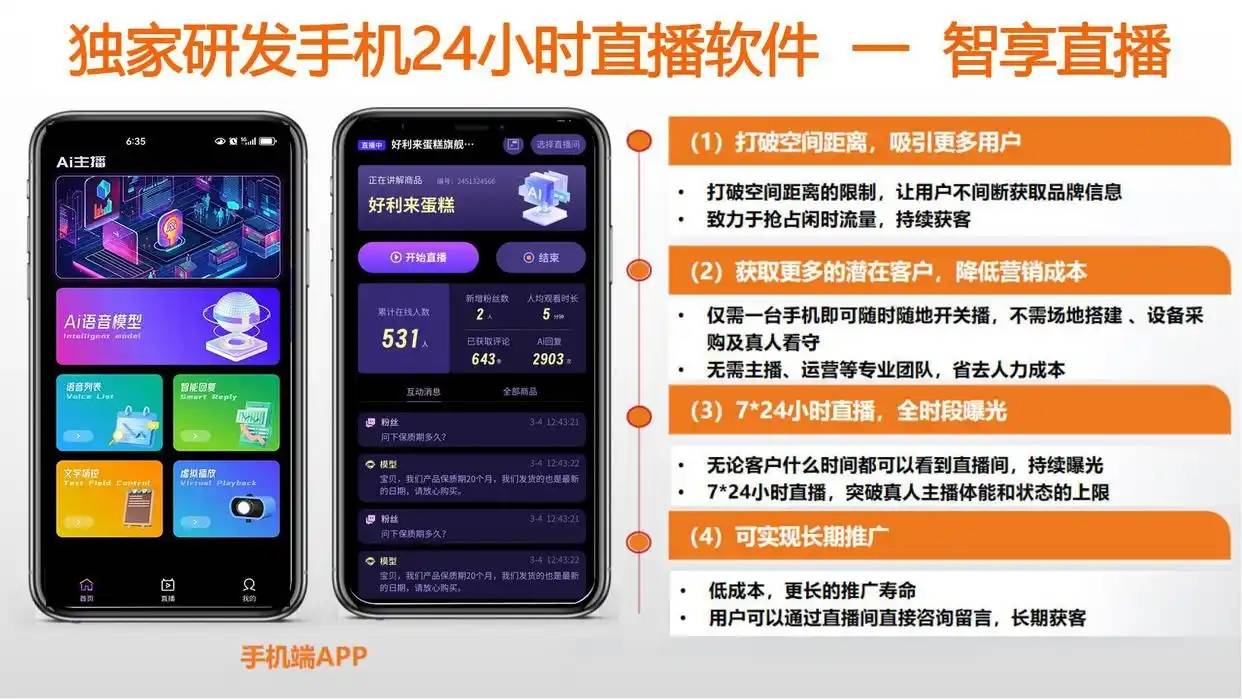
而在这场变革中,智享AI直播三代凭借其全链路技术突破与开放生态模式,正成为中小商家、连锁品牌乃至传统制造企业实现"第二增长曲线"的核心引擎。 一、从"工具"到"增长引擎":AI主播的战略价值升维 过去,AI直播常被视作"降本替代品"——省人力、省时间、省精力。但智享AI直播三代的出现,彻底打破了这一局限。 它不再只是"代替人说话的机器",而是集品牌人格化载体、智能销售终端、全域数据节点于一体的数字增长中枢。 某国产美妆品牌引入智享AI直播三代后,不仅将单场GMV提升300%,更通过AI主播沉淀用户画像、优化话术策略、反哺产品研发,形成"直播- 数据-产品"闭环,成功开辟高端线新品类,年营收增长超2亿元。 这正是"第二增长曲线"的本质:不是简单复制现有业务,而是以新技术为杠杆,撬动全新市场空间与商业模式。 在直播电商从"流量红利"迈入"技术红利"的关键拐点,一场由AI驱动的深层变革正在悄然重塑行业格局。当真人主播成本高企、内容同质化严重、运营效率 触顶之际,越来越多的品牌开始将目光投向一个全新的战略支点——AI主播。 二、三大技术革新,构建AI主播的核心竞争力 智享AI直播三代之所以能成为品牌增长新引擎,源于其 ...
时报观察丨协同攻坚“内卷式”竞争 为高质量发展注入持久动能
Zheng Quan Shi Bao· 2026-01-09 00:40
多部门密集出手的背后,是对中央经济工作会议精神的精准落实。会议明确要制定全国统一大市场建设 条例,并将深入整治"内卷式"竞争作为2026年改革攻坚重点任务。 从工信部在全国工作会议上部署"坚决遏制低价低质量竞争",到市场监管总局将"持续深化公平竞争治 理"作为年度重点,再到国家发改委推动出台妨碍全国统一大市场建设事项清单……各部门聚焦深入整 治"内卷式"竞争,形成政策合力。治理逻辑更趋成熟,即坚持市场化、法治化原则,兼顾"治乱 象"与"促发展",既要"放得活",又要"管得好"。 深入整治"内卷式"竞争,既要破立并举,更要标本兼治。从出台的措施来看,各部门的治理已呈现多维 度发力特征。在监管层面,强化跨部门协同与全链条执法,实现"查处一案、警示一片";在产业层面, 通过产能监测、标准引领,引导企业科学布局、有序竞争,如动力和储能电池行业的分级预警机制、直 播电商行业的主体责任清单,均为行业设立了清晰的行为边界;在制度层面,依托《反不正当竞争法》 《价格法》等法律法规,完善"反内卷"法律保障,同时发挥行业协会作用,强化自律约束。 (原标题:时报观察丨协同攻坚"内卷式"竞争 为高质量发展注入持久动能) 新年伊始,围 ...
时报观察丨协同攻坚“内卷式”竞争 为高质量发展注入持久动能
证券时报· 2026-01-09 00:17
Core Viewpoint - The article emphasizes the need for regulatory actions to address "involutionary" competition in various industries, aiming to establish a fair market environment and promote sustainable development [1][2]. Group 1: Regulatory Actions - On January 8, multiple government departments, including the Ministry of Industry and Information Technology and the National Development and Reform Commission, jointly issued a document targeting irrational behaviors such as blind construction and low-price competition in the power and energy storage battery industry [1]. - The State Administration for Market Regulation and the National Internet Information Office have released guidelines to regulate online trading platforms and live e-commerce, focusing on issues like counterfeit goods and false marketing [1]. - The central economic work conference has set the goal of formulating a unified national market construction regulation and prioritizing the rectification of "involutionary" competition as a key reform task for 2026 [1]. Group 2: Multi-Dimensional Governance - The governance approach involves breaking and establishing systems simultaneously, with a focus on both regulatory and industrial dimensions [2]. - Regulatory measures include enhanced inter-departmental collaboration and comprehensive law enforcement to ensure that violations are addressed effectively [2]. - The establishment of clear behavioral boundaries for industries, such as a tiered early warning mechanism for the battery sector and a responsibility list for live e-commerce, aims to guide enterprises towards orderly competition [2]. Group 3: Importance of Addressing Involution - The article highlights that addressing "involutionary" competition is particularly significant as China’s industries transition towards high-end, intelligent, and green development [2]. - The coordinated actions by multiple departments at the beginning of the year are intended to safeguard sustainable industrial development and clear obstacles for the cultivation of new productive forces [2]. - By eliminating market barriers and standardizing competition, companies can allocate more resources to technological research and quality improvement, thereby gaining a competitive edge globally [2].

时报观察 协同攻坚“内卷式”竞争 为高质量发展注入持久动能
Zheng Quan Shi Bao Wang· 2026-01-08 22:56
Group 1 - The article discusses the coordinated efforts by multiple government departments to address "involution" competition in various industries, aiming to establish a more rational market environment [1][2] - On January 8, the Ministry of Industry and Information Technology, National Development and Reform Commission, State Administration for Market Regulation, and National Energy Administration jointly issued a document targeting irrational behaviors such as blind construction and low-price competition in the power and energy battery industry [1] - The central economic work conference emphasized the need for a unified national market construction regulation and identified the deep rectification of "involution" competition as a key reform task for 2026 [1] Group 2 - The measures taken by various departments reflect a multi-dimensional approach to governance, including enhanced cross-departmental collaboration and comprehensive law enforcement [2] - The article highlights the importance of addressing "involution" competition as China’s industries transition towards high-end, intelligent, and green development, noting that vicious competition hinders innovation and slows down transformation [2] - Future governance measures are expected to further improve the market environment for fair competition, thereby enhancing corporate innovation and contributing to sustainable economic growth [2]
平台经济迎来两部新规,这些行为被“划红线”!
Xin Lang Cai Jing· 2026-01-08 19:02
Core Viewpoint - The recent issuance of the "Regulations on the Supervision and Management of Online Trading Platforms" and the "Regulations on the Supervision of Live E-commerce" aims to establish rules for the online market, ensuring healthy development and protecting the rights of all parties involved, marking a new phase of refined and systematic regulation in China's platform economy [1][2]. Group 1: Key Regulations - The "Regulations on the Supervision and Management of Online Trading Platforms" explicitly prohibits platforms from imposing unreasonable restrictions on operators, charging unreasonable fees, and diminishing member rights to safeguard the autonomy of platform merchants and protect consumer rights [2]. - The regulations require that any changes to member rights during the service period must be communicated to consumers in a prominent manner, preventing unilateral modifications by the platform [2]. - The "Regulations on the Supervision of Live E-commerce" outline the obligations of live stream operators regarding information disclosure, verification of actual operators, and compliance checks, while prohibiting false advertising and the sale of illegal goods [3]. Group 2: Enforcement and Penalties - The regulations establish legal responsibilities for platform operators and live stream marketers, allowing for penalties under various laws, including the E-commerce Law and the Anti-Unfair Competition Law, depending on the severity of violations [4]. - The regulations mandate collaboration between market supervision and internet information departments to enhance information sharing and enforcement mechanisms, including the ability to interview platform officials regarding compliance [4]. - Live stream platforms are required to take immediate action against violators, which may include warnings, limiting functionalities, suspending broadcasts, or blacklisting offenders [4]. Group 3: Addressing New Challenges - The "Regulations on the Supervision of Live E-commerce" incorporate the regulation of digital influencers and AI-generated content to prevent the misuse of technology for spreading false information [5][6]. - Measures are outlined to ensure that AI-generated images and videos used in live commerce comply with legal standards and are clearly labeled to inform consumers [6]. - The regulations aim to tackle issues such as false advertising, the sale of counterfeit goods, and misleading marketing practices, particularly in the context of live e-commerce [6].
时报观察 | 协同攻坚“内卷式”竞争 为高质量发展注入持久动能
Zheng Quan Shi Bao· 2026-01-08 18:12
Group 1 - The core viewpoint of the articles emphasizes the need for regulatory actions to address "involutionary" competition in various industries, particularly in the battery and e-commerce sectors [1][2] - Multiple government departments, including the Ministry of Industry and Information Technology, National Development and Reform Commission, State Administration for Market Regulation, and National Energy Administration, are collaborating to combat irrational behaviors such as blind construction and price competition [1][2] - The central economic work conference has highlighted the importance of establishing a unified national market and addressing "involutionary" competition as a key reform task for 2026 [1][2] Group 2 - The measures taken by the government reflect a multi-dimensional approach to governance, focusing on cross-departmental collaboration and comprehensive law enforcement [2] - The introduction of capacity monitoring and standard-setting in industries like power and energy storage batteries aims to guide enterprises towards orderly competition and scientific layout [2] - The ongoing efforts to eliminate "involutionary" competition are crucial as the industry transitions towards high-end, intelligent, and green development, ensuring sustainable growth and fostering innovation [2]
事关直播电商监管,新规来了!
Sou Hu Cai Jing· 2026-01-08 13:54
近日,市场监管总局和国家网信办联合发布《直播电商监督管理办法》(以下简称《办法》),加强直播电商监督管理,保护 消费者和经营者合法权益,促进直播电商健康发展。 《办法》聚焦直播电商平台经营者、直播间运营者、直播营销人员、直播营销人员服务机构四类主体,压实责任义务,划定行 为红线,完善监管机制。 在压实直播电商平台经营者责任方面 在压实直播间运营者、直播营销人员责任方面 《办法》明确了直播间运营者在信息公示、核验实际经营者信息和直播营销人员身份信息、实时管理直播间互动内容、事前合 规审核、实施明码标价等方面的义务,划定了直播间运营者、直播营销人员不得进行虚假宣传、不得进行商业诋毁、不得销售 或者提供违法商品或者服务等行为红线。 在压实直播营销人员服务机构责任方面 《办法》规定直播营销人员服务机构应当建立健全内部管理制度,规范直播营销人员的招募、培训、使用、管理等工作,在与 直播间运营者的商业合作以及直播选品中履行必要的核验义务。 在完善监管机制方面 从协同监管的角度出发,《办法》规定市场监管、网信部门应当加强协作,建立健全两部门线索移交、信息共享、会商研判等 工作机制。从方便案件查办的角度出发,《办法》明确从事 ...
资讯日报:美国职位空缺和ADP报告显示就业持续降温-20260108
Guoxin Securities Hongkong· 2026-01-08 12:54
Market Overview - The U.S. job openings fell to the lowest level in over a year, indicating a cooling labor market[11] - The ADP report showed moderate growth in private sector employment for December, with labor demand remaining weak[11] - The S&P 500 index's expected price-to-earnings ratio is currently around 22 times, down from 23 times in November but still above the five-year average of 19 times[12] U.S. Stock Market Performance - On Wednesday, the S&P 500 index closed down, primarily due to weakness in financial stocks like JPMorgan and Blackstone[2] - The Nasdaq index saw a slight increase, driven by gains in Nvidia and Alphabet[2] - Major tech stocks mostly rose, with Google A up 2.43% and Microsoft up 1.04%, while Tesla and Apple saw declines of 0.36% and 0.77%, respectively[11] Hong Kong Stock Market Performance - The Hang Seng Index closed at 26,459, down 0.94% for the day, but up 3.23% year-to-date[3] - Technology stocks faced significant declines, with Alibaba down over 3% and Kuaishou down over 2%[9] - The automotive sector also struggled, with NIO dropping over 3% and several other manufacturers down more than 2% due to tightening subsidies and a forecasted 7% decline in China's auto market sales for 2026[9] Sector-Specific Insights - Oil stocks collectively fell, with Kunlun Energy and CNOOC down over 3% amid concerns over increased supply from Venezuela[9] - Pharmaceutical stocks performed well, particularly CRO and CDMO-related companies, with notable gains for clients like Kelaiying and Tigermed, rising 8.92% and 8.88% respectively[9] - The paper industry saw gains, with Nine Dragons Paper up 8.97% due to supply cuts and price increases announced by major companies[9]