城市更新

Search documents
住建部城市更新工作培训班在南京开班,参会代表点赞——
Nan Jing Ri Bao· 2025-09-11 02:31
Core Insights - The article highlights the successful urban renewal initiatives in Nanjing, showcasing projects like Xiaoxihu and Shiliu New Village as exemplary models for integrating historical preservation with modern living needs [1][2][4] Group 1: Urban Renewal Training and Initiatives - The Ministry of Housing and Urban-Rural Development held a training session in Nanjing, focusing on urban renewal planning and implementation, attended by 120 participants from across the country [1] - Nanjing is recognized as one of the first pilot cities for urban renewal in China, with 15 practices included in a national replicable experience list [1][2] Group 2: Xiaoxihu Project - Xiaoxihu is noted for its harmonious blend of historical and modern elements, serving as a model for "historical and cultural preservation + livelihood improvement" [2] - The project employs a small-scale, incremental renewal approach, featuring innovative solutions like micro underground conduits to maintain traditional street patterns while addressing modern infrastructure needs [2][3] Group 3: Guochuang Park - Guochuang Park has transformed from an old industrial site into a modern innovation hub, housing over 130 companies with a 90% occupancy rate and generating an annual output value exceeding 1 billion yuan [3] - The park's model of integrating market participation with heritage preservation and modern industry is highlighted as a potential reference for similar projects in other regions [3] Group 4: Shiliu New Village - Shiliu New Village has undergone significant transformation from a problematic area to a modern residential community, with 70% of residents opting for relocation back to the updated site [4] - The project emphasizes a collaborative approach involving residents in the urban renewal process, showcasing innovative solutions to common urban challenges [4]
大吉巷、隆福寺重塑北京商业新场景
Bei Jing Shang Bao· 2025-09-02 16:30
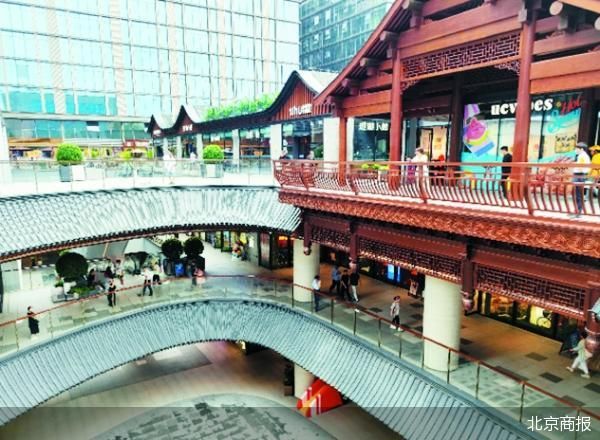
Core Insights - Beijing's urban renewal initiatives are leveraging cultural elements to enhance commercial spaces, contributing to high-quality development in the city [1] Group 1: Urban Renewal Projects - The Zhonghai Dajixiang project has transformed historical buildings into a "city cultural salon," attracting over 5 million visitors since its opening [3] - The project recorded over 200,000 visitors on its opening day and maintained high foot traffic, becoming a popular commercial landmark [3] - Zhonghai Dajixiang preserves significant historical architecture, including the residence of Kang Youwei, and aims to create a cultural new landmark by connecting with surrounding attractions [3][4] Group 2: Future Plans and Developments - Zhonghai Dajixiang is designed to be a sustainable and evolving commercial space, with plans for seasonal and thematic events based on community preferences [4] - The renovation of the Longfu Temple aims to attract a younger demographic by incorporating trendy brands and cultural activities, with an expected foot traffic of 100,000 to 200,000 visitors during its opening weekend [6] - Longfu Temple will host a series of unique events, including a food carnival and collaborations with platforms like Beijing Fashion Week, to enhance its appeal as a cultural consumption landmark [6]

北京文化消费焕发新动能 地标撑起消费“新骨架”
Bei Jing Qing Nian Bao· 2025-09-01 00:54
Group 1: Overview of Cultural Consumption in Beijing - The cultural consumption market in Beijing has shown a "dual increase" in both quantity and quality in 2023, with 180 million tourists received in the first half of the year, a year-on-year increase of 7.1%, and total tourism expenditure reaching 338.17 billion yuan, up 8.8% [1] - The integration of cultural and tourism sectors, urban renewal, and the emergence of new economic drivers have contributed to a vibrant cultural consumption landscape in Beijing [1] Group 2: New Business Models and Consumer Engagement - The "performance + tourism" model has become a highlight of cultural consumption in Beijing, with 102 large-scale performances held in the first half of the year, generating ticket sales of 1.5 billion yuan, representing year-on-year growth of approximately 13% and 35% respectively [2] - The deep integration of intangible cultural heritage (ICH) with tourism has created new experiences for visitors, with 365 ICH projects along the central axis of Beijing becoming a key attraction [2] - The launch of the "music map" and over 400 outdoor music events has extended music consumption into urban spaces, enhancing cultural engagement for both residents and tourists [2] Group 3: Diverse Cultural Tourism Products - Beijing has introduced a variety of cultural tourism products, including 105 themed travel routes and 25 rural tourism routes, enhancing the "Wander Beijing" brand [3] - The Beijing International Cultural Tourism Consumption Expo achieved sales of 211 million yuan, showcasing successful integration of culture, commerce, and tourism [3] Group 4: Urban Renewal Projects - Urban renewal projects like Zhonghai Dajixiang and Longfu Temple have transformed historical areas into cultural consumption landmarks, preserving historical context while injecting modern commercial vitality [4][6] - Zhonghai Dajixiang, a 360,000 square meter complex, has become a model for urban renewal, combining cultural preservation with commercial operations [4] - Longfu Temple, which has undergone extensive renovation since 2012, focuses on cultural heritage and innovation, featuring immersive experiences and unique retail offerings [6][7] Group 5: Consumer Engagement and Foot Traffic - Zhonghai Dajixiang attracted over 500 million visitors since its opening, with daily foot traffic exceeding 60,000, indicating strong market acceptance of this urban renewal model [5] - Longfu Temple is set to open on September 17, 2023, with plans for promotional events and collaborations with major platforms to enhance its role as a new cultural consumption landmark in Beijing [7]

城市更新需下好融资这盘棋
Zheng Quan Ri Bao· 2025-08-31 17:24
Core Viewpoint - The recently published "Opinions on Promoting High-Quality Urban Development" outlines measures to optimize urban systems, cultivate new growth drivers, activate existing urban resources, and establish a sustainable financing system for urban construction and operation. Group 1: Urban Development Transition - Urban development is shifting from large-scale expansion to a focus on improving existing resources, with sustainable financing being key to overcoming investment bottlenecks in urban renewal [1][5]. - Urban renewal is essential for high-quality urban development and involves multiple dimensions such as the renovation of old neighborhoods, historical preservation, infrastructure upgrades, and public service enhancements [1]. Group 2: Central Government Support - The central government will support key urban renewal projects through special funds, focusing on infrastructure like water supply, gas, heating, and sewage treatment [2]. - Local governments are encouraged to seek additional funding sources, including special national bonds and subsidies, to enhance urban renewal efforts [2]. Group 3: Financial Institution Engagement - Financial institutions are urged to provide long-term funding solutions to match the extended timelines of urban renewal projects, which often span several years [2]. - Innovative financing tools are encouraged to facilitate the provision of long-term loans and bonds for urban renewal projects [3]. Group 4: Encouraging Social Capital Participation - Clear responsibility mechanisms and reasonable return models are necessary to attract social capital into urban renewal projects [4]. - The establishment of platforms for cooperation among government, banks, and enterprises is suggested to enhance social capital's expectations of profitability in urban renewal [4]. Group 5: Sustainable Financing System - The sustainability of the financing system is crucial for advancing urban renewal, with the "Opinions" providing policy guidance to address financing challenges [5]. - Local governments are advised to implement targeted strategies in fiscal funding, financial innovation, and activation of social capital to ensure the success of urban renewal initiatives [5].
重磅文件公布!支持老旧住房自主更新、原拆原建
第一财经· 2025-08-29 01:38
Core Viewpoint - The article emphasizes that urban renewal will be a crucial driver for high-quality urban development in China, transitioning from rapid urbanization to a focus on improving existing urban resources and infrastructure [2][4]. Summary by Sections Urban Renewal as a New Growth Driver - Urban renewal is identified as a new momentum for urban development, aimed at activating the potential of existing urban resources [2]. - The focus will shift from large-scale expansion to enhancing quality, with strict control over new supply and promoting the functional replacement of existing spaces [3]. Key Components of Urban Renewal - Important aspects of urban renewal include the transformation of urban villages, dilapidated housing, and old residential areas, which can enhance land use efficiency and promote industrial upgrades [4]. - The government aims to improve safety management of buildings and infrastructure through comprehensive safety management systems [4]. Implementation Strategies - Urban renewal should be tailored to local conditions and guided by specific issues, with a scientific approach to planning and implementation [4]. - A national survey indicated significant issues such as imbalanced job-housing distribution and a shortage of affordable housing, necessitating systematic solutions in urban renewal [5]. Housing Security and Public Services - The government plans to increase housing security supply, particularly for new citizens and young people, through various strategies including the development of affordable rental housing [5]. - Enhancements in public service quality and accessibility are also highlighted, including the establishment of efficient employment services and social security systems [5]. Local Government Initiatives - Various local governments have begun to outline their urban renewal strategies for the 14th Five-Year Plan period, with specific plans released by cities like Shanghai and Beijing [6][7]. - Jiangsu Province has proposed a dynamic project database to prioritize funding and support for urban renewal projects [7]. Policy Coordination - The article stresses the need for coordinated policies across different sectors, including land use, planning, and finance, to effectively implement urban renewal initiatives [3][7].
城市高质量发展路线图公布,支持老旧住房自主更新、原拆原建
Di Yi Cai Jing Zi Xun· 2025-08-29 00:41
Core Viewpoint - The "Opinions" released by the Central Committee and the State Council emphasize that urban renewal will be a crucial driver for high-quality urban development, transitioning from rapid urbanization to stable development, focusing on improving existing urban resources rather than expanding new ones [1][2][4] Group 1: Urban Renewal as a New Growth Driver - Urban renewal is identified as a new momentum for urban development, aimed at activating the potential of existing urban resources [1] - The plan includes a comprehensive assessment of urban assets such as buildings, facilities, and land, and emphasizes the need for a mechanism to adapt planning to the conversion and mixed-use demands of buildings [1][3] Group 2: Key Components of Urban Renewal - Important components of urban renewal include the renovation of urban villages, dilapidated housing, and old residential areas, which can enhance urban development, improve land use efficiency, and address safety concerns [2][3] - The "Opinions" advocate for steady progress in the renovation of urban villages and dilapidated housing, supporting self-renovation of old housing [2][3] Group 3: Addressing Urban Issues - The urban renewal strategy must be tailored to local conditions and guided by problem identification, aiming to create a favorable urban environment that promotes integration of industry and city [3] - A survey of nearly 1 million residents across 299 cities revealed issues such as imbalance in job-housing proximity and a shortage of affordable housing, which need systematic solutions through urban renewal [3] Group 4: Enhancing Public Services - The "Opinions" also highlight the need to improve the quality and balance of public services, including employment services and social security systems for various employment groups [4] - The focus is on increasing the supply of affordable housing and promoting flexible employment participation in housing funds [4] Group 5: Local Government Initiatives - Various local governments have begun to implement urban renewal plans in line with the "14th Five-Year Plan," with cities like Shanghai and Beijing outlining specific strategies and policies for urban renewal [5][6] - Jiangsu Province has proposed a dynamic project database for urban renewal, which will prioritize projects for funding and support [6] Group 6: Policy Coordination - The "Opinions" call for a coordinated approach among central, provincial, and municipal levels to enhance the effectiveness of urban planning, construction, and governance [6] - There is an emphasis on establishing legal frameworks and policies to ensure the coherence of urban development initiatives [6]
城市高质量发展路线图公布 支持老旧住房自主更新、原拆原建
Di Yi Cai Jing· 2025-08-29 00:40
Core Viewpoint - The "Opinions" released by the Central Committee and State Council emphasize that urban renewal will be a crucial driver for high-quality urban development, transitioning from rapid urbanization to stable development, focusing on improving existing urban resources [1][2]. Group 1: Urban Renewal as a New Growth Driver - Urban renewal is identified as a new growth driver, aimed at activating the potential of existing urban resources, including buildings, facilities, and land [1]. - The plan includes the renovation of old factories, inefficient buildings, and idle commercial facilities, establishing a mechanism for planning adjustments that align with functional transformations [1][2]. Group 2: Key Components of Urban Renewal - Important components of urban renewal include the transformation of urban villages, dilapidated housing, and old residential areas, which can enhance urban development, improve land use efficiency, and address safety concerns [2]. - The "Opinions" advocate for steady progress in the renovation of urban villages and dilapidated housing, supporting self-renovation of old housing [2][3]. Group 3: Addressing Urban Issues - The urban renewal strategy must be tailored to local conditions and guided by existing problems, aiming to create a favorable urban environment that promotes integration of industry and city [3]. - A survey of nearly 1 million residents across 299 cities highlighted issues such as imbalance in job-housing distribution and a shortage of affordable housing, which need systematic solutions through urban renewal [3]. Group 4: Enhancing Public Services - The "Opinions" also stress the need to improve the quality and balance of public services, including employment services and social security systems for various employment groups [4]. - The focus is on increasing the supply of affordable housing and promoting flexible employment participation in housing provident fund systems [4]. Group 5: Local Government Initiatives - Local governments are actively planning urban renewal initiatives, with cities like Shanghai and Beijing outlining specific strategies and policies to enhance urban renewal efforts [5][6]. - By 2026, a comprehensive urban renewal project database will be established, allowing prioritized access to funding and support for projects [6]. Group 6: Policy Coordination - The "Opinions" call for a coordinated approach among central, provincial, and municipal levels to enhance policy synergy in urban planning, construction, and governance [6].
“十五五”期间武汉新增多个城市更新项目 强化景中村和绿中村生态化改造
Chang Jiang Ri Bao· 2025-08-29 00:39
Core Insights - Wuhan is focusing on urban renewal as part of its "15th Five-Year Plan," with a roadmap for the next five years emphasizing quality improvement of existing urban areas [1][2] Group 1: Urban Renewal Achievements - Wuhan has established a Housing and Urban Renewal Bureau, becoming the first city in Hubei to do so, and has reported significant achievements in "quality improvement of existing stock" [1] - Over the past period, 1,517,000 square meters of urban villages have been transformed, and 608 old residential communities have been renovated, with a goal of covering all old residential communities built before 2000 within the year [1] - More than 50 historical buildings have been restored, with areas like Baguang House and Doujiying becoming popular tourist spots [1] Group 2: Future Urban Renewal Plans - The city plans to focus on six major actions during the "15th Five-Year Plan," including the integration of industry and city, improvement of old commercial streets, and renovation of old factory areas [2] - Emphasis will be placed on creating age-friendly environments, improving old housing, and enhancing community construction [2] - The plan includes green and low-carbon initiatives, such as the development of ecological corridors and comprehensive water system management [2] - Historical preservation efforts will involve revitalizing historical districts and creating three historical axes [2] - Digital empowerment will be a focus, with the establishment of smart charging facilities and platforms for urban renewal and old housing replacement [2]
湖北五年投近3500亿元推进城市更新,惠及居民270万户
2 1 Shi Ji Jing Ji Bao Dao· 2025-08-28 15:27
Core Insights - Hubei's urbanization rate has increased from 62.89% in 2020 to 66.35% in 2024, marking a new stable development phase in urbanization [1] - The province has implemented over 7,800 urban renewal projects with nearly 350 billion yuan invested, benefiting 2.7 million households [1][2] - Hubei is focusing on sustainable urban renewal, emphasizing the construction of "pocket parks" and improving public spaces [1][2] Urban Renewal Achievements - Over 10,000 elevators have been installed, and the complete community coverage rate has reached 30% [2] - 19 national historical and cultural districts have been updated, doubling the number of historical buildings to 4,455 [2] - Hubei has built 5,100 kilometers of greenways, increasing per capita park green space by 1.95 square meters [2] Financial Support and Mechanisms - Hubei has established a financing coordination mechanism for urban real estate, with 855 "white list" projects approved, amounting to 311.69 billion yuan in credit [3] - The province has implemented a planning and policy innovation approach to support urban renewal, including a comprehensive land space planning mechanism [3] City-Specific Initiatives - Wuhan has established a Housing and Urban Renewal Bureau, focusing on top-level design and system innovation, with a special plan for 2035 [4] - Yichang is innovating with a "resident-led renewal" model and an "efficiency-based sewage fee" mechanism, enhancing sewage collection rates [5] Future Directions - Hubei aims to shift from "investment in objects" to "investment in people" during the 14th Five-Year Plan, focusing on sustainable renewal and major project implementation [5][6]
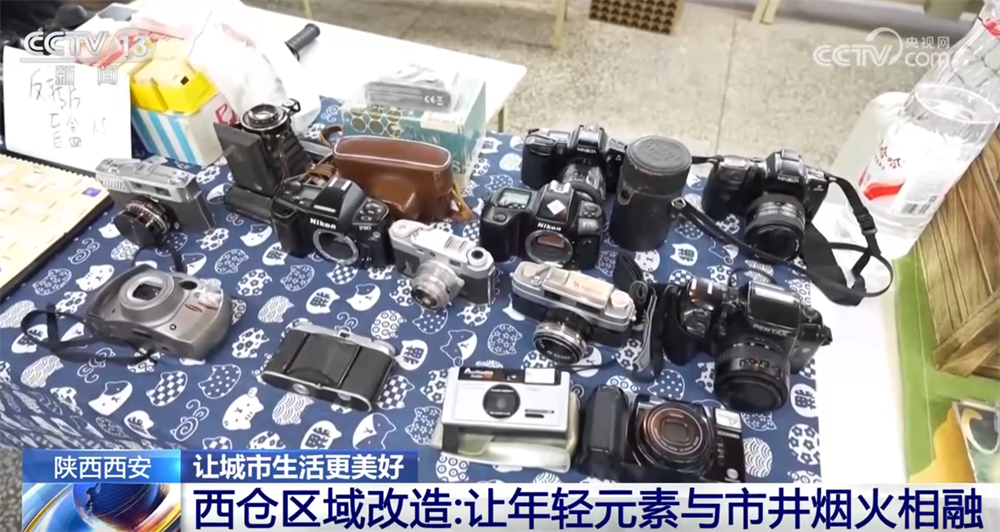
“微更新 轻改造”为城市发展添活力 老街巷、老厂房、老社区重“焕”生
Yang Shi Wang· 2025-08-26 14:36
Core Viewpoint - The "micro-update and light renovation" model emphasizes small-scale, low-cost urban transformations that preserve historical context while enhancing functionality [1] Group 1: Urban Renewal in Shaanxi - Various regions in Shaanxi have adopted the "micro-update and light renovation" concept to revitalize old streets, factories, and communities [1][6] - The West Cang area in Xi'an has been transformed into a cultural park, integrating young elements with traditional urban life, attracting numerous visitors [2][4] - The former Northwest Cotton Factory has been repurposed into a textile industrial museum, while old warehouses have been converted into creative districts [8] Group 2: Community Engagement and Development - In Xi'an, local residents are actively involved in the development of old streets, with individuals like Ju A Qiao renovating their homes to open creative cafes [10] - In Yan'an, pocket parks have been created to enhance community life, addressing local recreational needs through small-scale, targeted improvements [11][13] - The focus in Yan'an is on transforming neglected urban corners, repairing roads, and upgrading old neighborhoods to improve residents' quality of life [13]