石油贸易

Search documents
还是来了,对印度加征俄油税后,万斯表态,拟对中国加征新关税
Sou Hu Cai Jing· 2025-08-11 10:20
Group 1 - The U.S. has imposed a 25% tariff on Indian imports, raising the total tariff rate to 50%, making India one of the countries with the highest tariffs from the U.S. [2][6] - This tariff is based on "secondary sanctions," targeting India's imports of Russian oil, which the U.S. claims supports Russia's war efforts [4][8] - India's response highlights the unfairness of the U.S. actions, emphasizing that its energy procurement is based on market factors and aimed at ensuring energy security [9][10] Group 2 - The U.S. aims to weaken the Russian economy and create a precedent for broader sanctions through its actions against India [10][12] - India, as the third-largest crude oil importer, plays a significant role in influencing international oil prices and geopolitical dynamics [12] - The U.S. is exploring similar sanctions against China, which also imports significant amounts of Russian oil, indicating a potential shift in U.S. trade policy [18][20] Group 3 - The differences in energy import strategies between India and China highlight vulnerabilities; India sells refined oil to Europe, while China primarily uses Russian oil for domestic purposes [14][16] - The U.S. defense sector's reliance on Chinese rare earth materials complicates its ability to impose tariffs on China without facing significant repercussions [16][17] - The potential for U.S. tariffs on Chinese imports of Russian oil reflects ongoing political pressures and strategic testing of China's response [20][22] Group 4 - China has developed a multi-layered response system to U.S. threats, including tariffs on U.S. goods and export controls on critical materials [24][26] - The strategic significance of China's supply chain resilience is underscored by its efforts to reduce dependency on U.S. trade and enhance self-sufficiency in key industries [26] - The U.S. tariffs on India and potential tariffs on China represent a clash between unilateral dominance and the trend towards multipolarity in global trade [26][27]

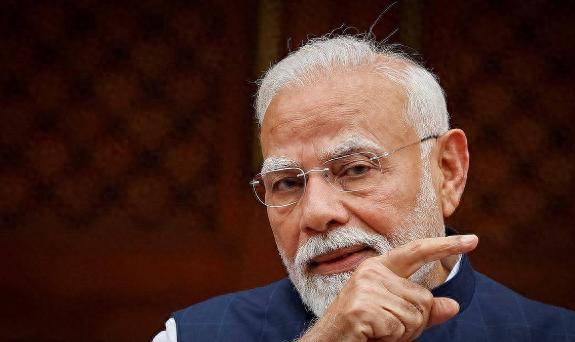
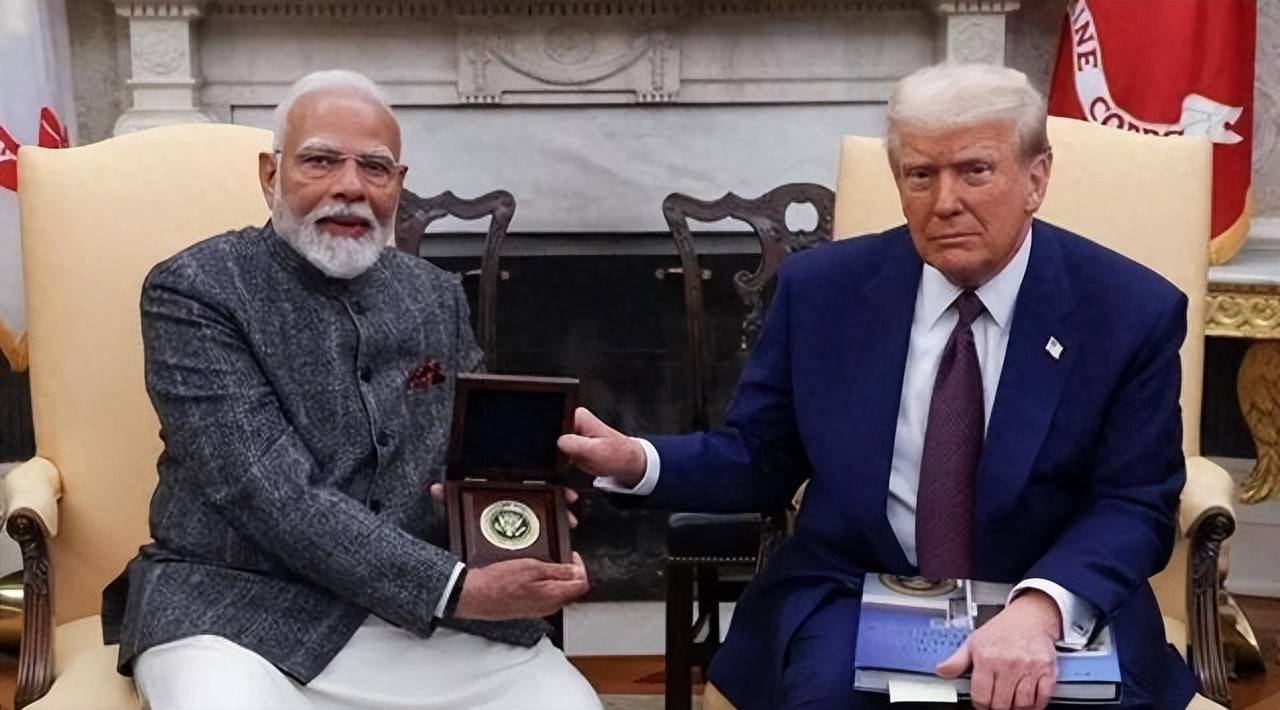
特朗普没想到,莫迪如此强硬,接连三招反制,还要切断美国财路
Sou Hu Cai Jing· 2025-08-11 07:21
Core Viewpoint - The article discusses the escalating trade tensions between the United States and India, primarily due to India's continued oil trade with Russia, which the U.S. perceives as undermining its sanctions against Russia. The U.S. has announced a significant increase in tariffs on Indian goods, prompting a strong response from the Indian government, highlighting the growing rift in U.S.-India relations and the complexities of global power dynamics [2][3][5]. Group 1: Tariff Imposition and Economic Impact - Trump announced an additional 25% tariff on Indian goods, bringing the total tariff rate to 50%, targeting steel, aluminum, and certain agricultural products, affecting hundreds of billions of dollars in trade [3]. - India has significantly increased its oil imports from Russia, accounting for over 40% of its total imports in 2024, which has led to substantial profits for Indian oil companies [3][5]. - The Indian government estimates that halting oil trade with Russia could result in an economic loss of at least $200 billion, necessitating a shift to more expensive oil sources [5]. Group 2: India's Response Strategies - India has adopted a three-pronged approach to counter the U.S. tariffs, starting with diplomatic measures, including the cancellation of a planned visit by its Defense Minister to the U.S. [5][6]. - The second strategy involves freezing multiple military procurement projects from the U.S., valued at over $50 billion, as a direct response to the tariffs [6]. - The third strategy focuses on strengthening ties with multilateral organizations like BRICS and the Shanghai Cooperation Organization (SCO) to seek external support and diversify trade partnerships [8][9]. Group 3: Consequences for U.S.-India Relations - The imposition of tariffs has led to a cooling of U.S.-India relations, with India signaling that it will not yield to U.S. pressure, potentially resulting in significant losses for U.S. defense contractors [9]. - The U.S. Chamber of Commerce has warned that high tariffs could adversely affect American exporters, as India may retaliate with its own tariffs on U.S. agricultural and technology products [9]. - Indian economists suggest that while high tariffs may temporarily raise prices, they could ultimately drive domestic industry upgrades in India [9].
泰山石油中标:东平县疾病预防控制中心东平县疾病预防控制中心采购汽油项目成交公告
Sou Hu Cai Jing· 2025-08-11 02:25
Group 1 - The procurement project for gasoline by the Dongping County Center for Disease Control and Prevention was awarded to Sinopec Shandong Taishan Petroleum Co., Ltd. [1][2] - The winning bid amount for the project is 20 million [2] - Sinopec Shandong Taishan Petroleum Co., Ltd. has participated in 2,840 bidding projects and has invested in 18 enterprises [1] Group 2 - The company holds 6 trademark registrations and 12 patents, along with 69 administrative licenses [1]

和顺石油: 湖南和顺石油股份有限公司证券投资管理制度
Zheng Quan Zhi Xing· 2025-08-08 16:23
Core Viewpoint - The document outlines the securities investment management system of Hunan Heshun Petroleum Co., Ltd., emphasizing the need for risk control, compliance with laws, and safeguarding the interests of the company and its shareholders [1][2]. Group 1: Securities Investment Principles - Securities investment must comply with national laws and regulations, and should be conducted in a legal, prudent, safe, and effective manner [2]. - Investment scale should align with the company's asset structure and risk tolerance, ensuring it does not affect the normal operation of the main business [2]. - Securities investment funds must come from the company's own idle funds, and fundraising funds cannot be used for securities investment [2]. Group 2: Approval Authority - Securities investments exceeding 10% of the latest audited net assets require board approval, while those exceeding 50% also need shareholder approval [3]. - The board can authorize management to make investment decisions within a 12-month period, with specific limits on transaction amounts [3]. Group 3: Business Management and Risk Control - The management is responsible for formulating and implementing investment plans, while the finance department manages the funds and maintains records [4][5]. - The audit department conducts biannual audits of the investment activities, and the audit committee can investigate investment transactions at any time [5][6]. Group 4: Information Disclosure - The company must adhere to disclosure regulations set by the China Securities Regulatory Commission and the Shanghai Stock Exchange, providing necessary information about securities investments [6][7]. - Disclosure should include investment purposes, amounts, funding sources, approval procedures, impacts on the company, and risk control measures [7].

和顺石油:8月8日召开董事会会议
Mei Ri Jing Ji Xin Wen· 2025-08-08 10:48
Group 1 - The company, Heshun Petroleum, announced the convening of its fourth board meeting on August 8, 2025, to discuss the establishment of a securities investment management system [2] - For the year 2024, Heshun Petroleum's revenue composition is as follows: retail accounts for 55.48%, wholesale for 43.07%, and other businesses for 1.45% [2]
“最后通牒”进入倒计时 白宫会对俄罗斯动真格吗?
Yang Shi Xin Wen· 2025-08-07 10:49
Core Points - The meeting between Russian President Putin and US Middle East envoy Wittekov is crucial, with a deadline for a "last ultimatum" approaching on August 8, raising questions about potential US actions against Russia [1][2] - If the talks yield no positive results, the US may consider various policy options to respond to Russia [1] Group 1: Potential US Actions - One possible action is to impose additional tariffs directly on Russia, although the impact may be limited due to the relatively small annual trade volume of over $3 billion between the US and Russia [1] - Another option could involve secondary sanctions on Russia's energy trade partners, with previous discussions indicating potential tariffs as high as 500% [1] - Targeted sanctions against specific Russian industries, such as the shipping fleet, are also being considered, with recent reports suggesting more stringent measures [1] Group 2: Comprehensive Strategy - The US may ultimately adopt a comprehensive approach depending on the outcomes of the talks, indicating a flexible response strategy [2]
【环球财经】美国将对印度输美产品征收额外25%关税
Xin Hua Cai Jing· 2025-08-06 16:56
Core Points - The U.S. President Trump signed an executive order imposing an additional 25% tariff on Indian products due to India's import of Russian oil, which he claims poses a threat to U.S. national security and foreign policy [1][2] - The new tariffs will take effect 21 days after the announcement, resulting in a total tariff rate of 50% on Indian goods exported to the U.S. [1] - India has defended its oil imports from Russia, stating that it is based on market factors and aimed at ensuring energy security for its 1.4 billion people [2] Group 1 - The executive order is a response to India's direct or indirect import of Russian oil amid the ongoing Russia-Ukraine conflict [1] - Trump's administration has previously threatened to increase tariffs on Indian products due to India's significant purchases of Russian oil [1][2] - The U.S. sees India's oil imports as a means of providing "fuel" to Russia's war efforts, leading to heightened tensions in trade relations [1] Group 2 - India's Ministry of External Affairs criticized the U.S. tariffs as "unfair, unjust, and unreasonable," indicating that India will take necessary measures to protect its national interests [1][2] - The U.S. had previously encouraged India to import Russian oil to stabilize the global energy market after traditional supplies shifted to Europe [2] - The ongoing trade negotiations between the U.S. and India have stalled due to disagreements over tariffs and non-tariff barriers, with the focus now shifting to India's oil imports from Russia [2]
美国将大幅提高对印度关税,印度扛得住吗
Sou Hu Cai Jing· 2025-08-05 16:34
Group 1 - The trade tensions between the US and India are escalating, with the US imposing a 25% tariff on Indian goods, which is part of a broader strategy by President Trump to prioritize American interests [1][2] - The ongoing trade negotiations between the two countries have stalled, particularly over agricultural products, which are a significant point of contention [2][3] - India's average tariff rate is significantly higher than that of the US, with an average of 17% compared to the US's 3.3%, and agricultural tariffs reaching as high as 39% [2] Group 2 - India's import of Russian oil has become a focal point of the trade dispute, with Trump accusing India of profiting from reselling this oil on the open market [1][4] - In response to the tariffs, Indian Prime Minister Modi has called for a promotion of domestic products, aligning with his "Make in India" initiative to bolster local manufacturing [5][6] - The potential impact of the tariffs could lead to a significant decrease in India's exports to the US, with estimates suggesting a drop of nearly 30%, affecting sectors like apparel and pharmaceuticals [6][7] Group 3 - The trade relationship between the US and India is crucial, with the US being India's largest export destination, accounting for 18% of India's total exports in 2024, up from 6% in 2006 [6] - The imposition of tariffs could result in a revenue loss for India ranging from $7 billion to $10 billion, particularly affecting the jewelry and pharmaceutical sectors [7] - Investors are reacting cautiously to the trade tensions, as evidenced by a slight decline in Indian stock indices following the announcement of the tariffs [7]
泰山石油:主营成品油批发零售及非油品业务
Sou Hu Cai Jing· 2025-08-05 03:52
Core Viewpoint - The company has not disclosed specific revenue and gross margin data related to its hydrogen energy business, nor has it confirmed exclusive collaboration with Feicheng [1]. Group 1: Company Business Overview - The company primarily engages in wholesale and retail of refined oil products and non-oil businesses, which include car wash services, property management, leasing of housing and land use rights, advertising publication and production, emerging energy technology research and development, and sales of charging piles [1]. Group 2: Hydrogen Energy Business - The company did not provide details on the revenue share and gross margin of its hydrogen energy segment in its 2024 semi-annual and annual reports [1]. - There is no clear indication that the company's hydrogen energy business is exclusively partnered with Feicheng [1].
石油与化工指数高位回落
Zhong Guo Hua Gong Bao· 2025-08-05 02:43
Group 1: Chemical Sector Performance - The chemical index and oil index primarily experienced a decline, while the chemical machinery index and chemical pharmaceutical index saw increases [1] - The chemical raw materials index fell by 1.60%, the chemical machinery index rose by 1.066%, the chemical pharmaceutical index increased by 5.11%, and the pesticide and fertilizer index dropped by 2.05% [1] - In the oil sector, the oil processing index decreased by 3.82%, the oil extraction index fell by 2.09%, and the oil trading index declined by 2.83% [1] Group 2: Oil Price Trends - International crude oil prices initially rose and then fell, with the overall average price significantly higher than the previous week [1] - As of August 1, the WTI crude oil futures settled at $67.33 per barrel, up 3.33% from July 25, while Brent crude oil futures settled at $69.67 per barrel, up 1.80% from July 25 [1] Group 3: Petrochemical Product Price Changes - The top five petrochemical products with price increases included liquid chlorine up 12.72%, soft foam polyether up 10.42%, epoxy chloropropane up 8.84%, coke up 8.06%, and epoxy propane up 7.47% [1] - The top five petrochemical products with price declines included methyl acrylate down 5.88%, natural rubber down 5.77%, battery-grade lithium carbonate down 5.48%, butadiene rubber down 4.78%, and butadiene down 4.71% [1] Group 4: Capital Market Performance of Chemical Companies - The top five listed chemical companies with the highest stock price increases were Upwind New Materials up 39.37%, Honghe Technology up 22.07%, Songjing Co. up 19.97%, Ketaobiotech up 18.88%, and Asia-Pacific Industry up 17.43% [2] - The top five listed chemical companies with the largest stock price declines were Poly United down 16.35%, Weike Technology down 13.75%, Gaozheng Mining down 13.75%, New Tide Energy down 12.99%, and Yahua Group down 11.80% [2]