Semiconductors

Search documents
Helium stocks of South Korea's chipmakers to last until June, sources say
Reuters· 2026-03-31 07:15
Group 1 - South Korea has sufficient helium stocks to last until at least June, alleviating concerns over supply disruptions due to the Iran war [1][4] - The prices of helium have increased sharply following disruptions in natural gas processing in Qatar, the largest supplier of liquefied natural gas [2][5] - Samsung Electronics and SK Hynix, which account for approximately two-thirds of the global memory chip supply, have four to six months of helium inventory [4][6] Group 2 - Companies are paying premiums to secure helium inventory, primarily from the United States, with securing stock being the top priority despite price increases [3][5] - The helium supplier sources from both the United States and Qatar, which helps mitigate the impact of disruptions in Qatar [5] - Taiwan has reported stable helium supplies, but some companies in the chipmaking supply chain are beginning to feel production impacts [6]


Can Micron stock really jump 100%? Here's what analysts say after crash
Invezz· 2026-03-31 07:12
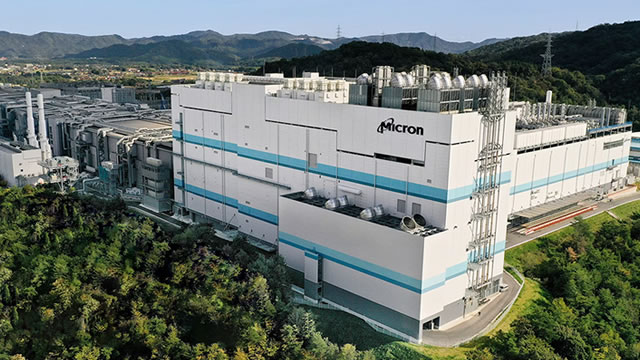
Core Viewpoint - Micron stock has experienced a significant decline despite reporting record fiscal second-quarter results, raising questions about its future potential and the validity of claims regarding a potential 100% upside [1][2]. Financial Performance - Micron reported fiscal Q2 2026 revenue of $23.86 billion, a substantial increase from $8.05 billion a year earlier [3]. - The company forecasts fiscal Q3 revenue to be approximately $33.5 billion and expects capital spending for fiscal 2026 to exceed $25 billion [3]. Market Reaction - Following the earnings report, Micron's stock fell nearly 30% from its all-time high on March 18, primarily due to concerns over increased capital expenditures and potential easing of the tight memory market [4][6]. - Investors are worried that advancements in AI technology may lead to greater efficiency with less memory, potentially moderating future demand for memory chips [5][6]. Analyst Perspectives - The average 12-month price target for Micron is $536.55, with a high target of $700 and a low target of $400, suggesting an average upside of about 50.2% and a potential upside of roughly 96% based on the highest target [7]. - Some analysts have set even more aggressive targets, with J.P. Morgan at $550 and Barclays at $675, indicating a bullish outlook despite recent volatility [8]. Industry Context - Micron is viewed as a key beneficiary of AI infrastructure spending, particularly in DRAM, NAND, and high-bandwidth memory [9]. - However, concerns about the sustainability of the current chip cycle and the implications of higher capital spending have led to a divided sentiment among investors [9].

摩尔线程斩获6.6亿元合同订单:为国内AI算力的规模化落地提供新的实践样本
IPO早知道· 2026-03-31 06:36
Core Viewpoint - The article highlights that Moer Technology has successfully transitioned from single product capabilities to large-scale cluster delivery capabilities, evidenced by a significant contract for the KUAE intelligent computing cluster valued at 660 million yuan [2]. Group 1: Contract and Financial Impact - Moer Technology signed a product sales agreement for the KUAE intelligent computing cluster, with a total contract value of 660 million yuan [2]. - The company states that this contract is part of its regular business operations and is expected to positively impact its financial performance upon successful execution [2]. Group 2: Competitive Advantage and Market Position - The core competitiveness of the KUAE cluster lies not only in its computing power but also in system stability, continuous training capabilities, and overall operational efficiency [2]. - The order signifies that Moer Technology has overcome engineering barriers for large-scale clusters, indicating a shift towards larger-scale commercial delivery of its products [2]. - The large-scale commercialization of the KUAE cluster is expected to solidify Moer Technology's market position in intelligent computing infrastructure and enhance its competitive advantage in high-performance training scenarios for domestic GPUs [4].

圣邦股份(300661):跟踪报告之八:平台型模拟芯片公司,受益于行业涨价潮
EBSCN· 2026-03-31 05:44
Investment Rating - The report maintains a "Buy" rating for the company, indicating a positive outlook for future performance [5]. Core Insights - The company reported a revenue of 3.898 billion yuan for 2025, representing a year-on-year growth of 16.46%, and a net profit attributable to shareholders of 547 million yuan, up 9.36% year-on-year [1]. - The company is a leading player in the domestic analog integrated circuit design industry, with a comprehensive product matrix covering various fields such as signal chains, power management, and sensors, offering over 6,800 products [1]. - The company is expected to benefit from a price increase cycle in the analog chip industry, with major players like Texas Instruments announcing significant price hikes [2]. Summary by Sections Financial Performance - In Q4 2025, the company achieved a revenue of 1.097 billion yuan, a year-on-year increase of 21.65% and a quarter-on-quarter increase of 11.78%. The net profit for the same quarter was 204 million yuan, showing a year-on-year decline of 5.35% but a quarter-on-quarter increase of 43.14% [1]. - The gross margin for Q4 2025 was 33.82%, down 0.65 percentage points year-on-year but up 2.19 percentage points quarter-on-quarter [1]. Research and Development - The company invested 1.045 billion yuan in R&D in 2025, accounting for 26.81% of its revenue. It launched nearly 900 new products with complete independent intellectual property rights [2]. Market Outlook - The report predicts a gradual recovery in downstream market demand, with a revised net profit forecast for 2026 at 823 million yuan, a 24% decrease from previous estimates. However, net profit forecasts for 2027 and 2028 are set at 1.124 billion yuan and 1.3 billion yuan, respectively [3]. Valuation Metrics - The company’s projected revenue growth rates for 2026 and 2027 are 29.82% and 25.16%, respectively, with a projected net profit growth rate of 50.47% for 2026 [4]. - The report provides a valuation summary indicating a P/E ratio of 54 for 2026 and a P/B ratio of 7.4 [4].

陕西功率器件专精特新“小巨人”启动IPO辅导备案
是说芯语· 2026-03-31 04:08
Core Viewpoint - Longteng Semiconductor has officially initiated the listing guidance filing process, marking a significant step towards capital market entry and indicating accelerated development in the domestic power semiconductor industry [1]. Industry Overview - Power semiconductor devices are critical components in power electronic circuits, responsible for energy conversion, control, and transmission. Their characteristics enable high voltage and current handling, making them essential in strategic emerging fields such as renewable energy generation, electric vehicles, and industrial control [2][3]. - The domestic power semiconductor industry is currently in a golden period of high-quality development, with the market size projected to reach 105.775 billion yuan in 2024, maintaining its position as the largest consumer market globally [5]. Company Position - Longteng Semiconductor is a key player in the domestic power semiconductor sector, possessing a comprehensive product portfolio that includes four major types of power MOSFETs. The company has over 500 product models widely used in automotive electronics, renewable energy generation, energy storage, and industrial applications [6]. - The company has established its own production line, achieving a leap from design to manufacturing, and is currently advancing the construction of its second-phase production line to enhance its full industry chain ecosystem [3][6]. Competitive Landscape - The global power semiconductor market is highly concentrated, with international giants like Infineon, ON Semiconductor, and STMicroelectronics dominating the market. Domestic companies, including Longteng Semiconductor, are gradually making breakthroughs in niche areas but still lag behind in technology and market share compared to leading global firms [7]. Future Outlook - As more domestic companies like Longteng Semiconductor emerge, the domestic power semiconductor industry is expected to transition from "catching up" to "keeping pace" and eventually "leading," providing robust support for the upgrade of the renewable energy industry and the transformation of industrial intelligence [9].
天数智芯2025年推理业务收入同比大增238%,领跑AI商业化核心赛道
IPO早知道· 2026-03-31 03:05
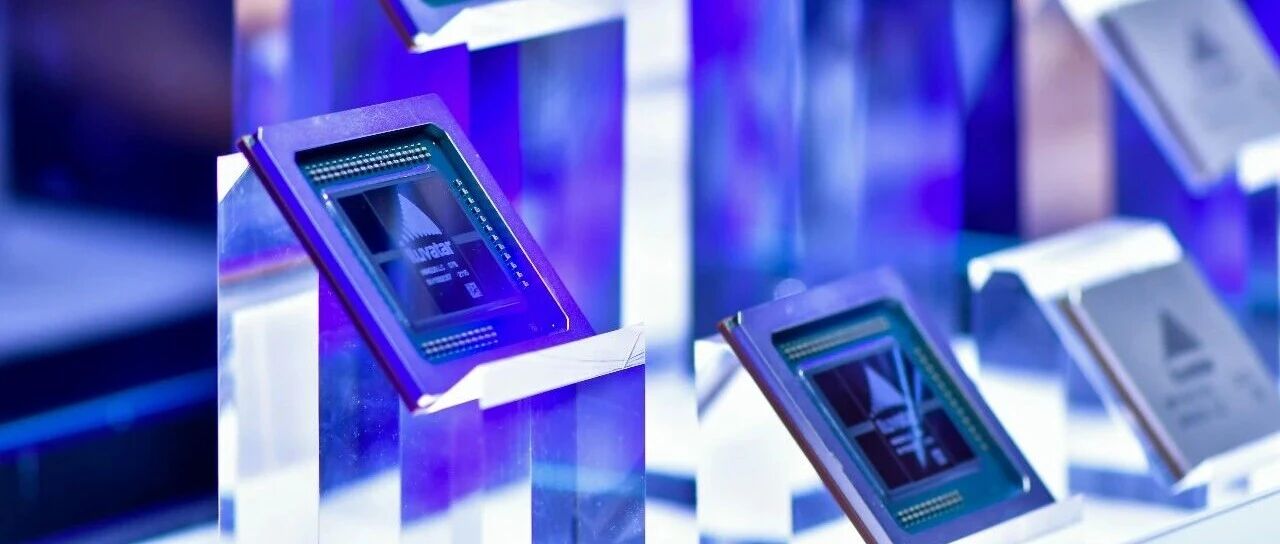
Core Viewpoint - The article highlights the robust financial performance and growth potential of TianShu ZhiXin (9903.HK) following its IPO, emphasizing its strategic positioning in the AI industry and the successful implementation of its general GPU technology across various sectors [3][10]. Financial Performance - In 2025, TianShu ZhiXin achieved a revenue of 1.034 billion yuan, representing a year-on-year growth of 91.6% [4]. - The gross profit reached 558 million yuan, with a significant increase of 110.5%, indicating improved product competitiveness and profitability [4]. - The adjusted net loss narrowed by 32.1% year-on-year, reflecting enhanced operational efficiency while continuing to invest in core technologies [4]. Core Business Growth - The general GPU business generated revenue of 923 million yuan in 2025, marking a remarkable growth of 149.6% and accounting for 89.3% of total revenue, positioning it as the main driver of performance [5]. - The ZhiKai inference series performed exceptionally well, with revenue of 339 million yuan, a year-on-year increase of 238.2%, benefiting from the surging demand for inference computing power across various sectors [9]. - The TianYuan training series generated 584 million yuan, up 116.7%, with its optimized cluster architecture meeting large-scale training needs [9]. Product and Market Expansion - TianShu ZhiXin has launched the TongYuan series of edge computing products targeting robotics and smart terminals, expanding its product offerings and growth potential [9]. - By the end of 2025, the company served over 340 industry clients and implemented more than 1,000 product solutions across key sectors such as internet, AI models, finance, and healthcare, demonstrating a growing customer base and scaling effects [9]. Technological Advancements - The company has established core barriers to growth through technological and ecosystem development, focusing on optimizing large model inference performance and implementing technologies like PD separation and lossless quantization [10]. - A new software development platform has improved code migration efficiency by over 80%, lowering the usage threshold for clients [10]. - The AI industry is entering a new efficiency-driven phase, with TianShu ZhiXin's dual focus on training and inference, integrated cloud-edge solutions, and comprehensive competition aligning with industry trends [10]. Market Outlook - As a leading domestic general GPU enterprise, TianShu ZhiXin is poised to benefit from the trillion-yuan market space in AI computing, aiming for dual enhancements in performance and value, thus providing sustainable long-term returns for investors [10].
一场“产业派”的长跑,合创资本再迎IPO高光时刻
投中网· 2026-03-31 02:41
Core Viewpoint - Fourier Semiconductor successfully went public on March 31, with an initial price of HKD 40 per share, and saw a first-day increase of 112.62%, highlighting its leadership in the smart audio amplifier chip sector in China [3][5]. Group 1: Company Overview - Fourier Semiconductor is a leading company in the smart audio amplifier chip field, with products widely used in smartphones, audio devices, and automobiles, serving global brands like Xiaomi, Transsion, and Samsung [3][13]. - The company has achieved significant milestones, including being adopted by nine of the top ten global smartphone manufacturers and eight of the top ten Chinese television manufacturers by 2024 [13]. Group 2: Investment Journey - Hecapital, the investment firm behind Fourier, made an early investment in the company, marking a nine-year journey characterized by long-term commitment and support through various development stages [4][5]. - The investment strategy involved thorough industry research, identifying smart audio amplifier chips as a growing market, and recognizing the potential of Fourier's founding team [9][10]. Group 3: Development Stages - The development journey of Fourier can be divided into three main stages: product validation, customer onboarding, and scaling production [11]. - The first stage involved overcoming technical challenges related to audio chip design, requiring extensive acoustic knowledge [11]. - The second stage focused on customer validation, particularly with smartphone manufacturers, which typically have a lengthy verification process [11]. - The final stage saw Fourier transitioning from small manufacturers to major brand clients, with significant recognition from industry players during its B-round financing in 2021 [11]. Group 4: Technological Advancements - Fourier has broken industry barriers with several "China first" innovations, including the first integrated ASIC DSP portable audio amplifier chip in 2017 and the first automotive-grade audio amplifier chip certified by AEC-Q100 in 2023 [14]. - The company emphasizes high quality at competitive prices, positioning itself as a strong competitor against foreign brands [14]. Group 5: Future Outlook - Following its IPO, Fourier aims to expand its product offerings beyond smartphones to include tablets, laptops, smart wearables, televisions, and smart vehicles [15]. - The rise of AI and voice interaction is expected to drive new demand for smart audio amplifier chips, with Fourier already exploring products for robotics [15]. Group 6: Investment Philosophy - Hecapital's investment philosophy is characterized by a focus on deep industry research, identifying promising projects early, and providing substantial support beyond just capital [19][20]. - The firm’s approach has proven effective, as demonstrated by its successful partnership with Fourier, which reflects a commitment to long-term investment and active involvement in the growth of portfolio companies [21].

AMD下一代CPU:192核
半导体行业观察· 2026-03-31 02:23
Core Insights - AMD is set to launch its EPYC Zen 6 data center CPU, codenamed Venice, with engineering samples already leaked online [1][2] - The upcoming architecture is expected to significantly increase core counts and performance, with flagship products potentially reaching up to 256 cores by 2027 [3][4] - AMD aims to capture over 50% of the server CPU market share, having already secured partnerships with major social media and SaaS companies [7] Group 1: CPU Specifications and Testing - Six different test results for the EPYC Zen 6 samples have been published, showcasing various configurations including CPUs with 64, 128, and 192 cores [1][2] - The samples indicate a high core density, with the 64-core and 128-core models featuring 32 cores per CCD, while the 192-core model has 24 cores per CCD [2] - The peak clock speed for one of the 64-core samples reached 3.54GHz, confirming performance expectations [2] Group 2: Architectural Advancements - The Zen 6 architecture will utilize TSMC's 2nm process and is expected to support new AI data types and pipelines, enhancing its capabilities in AI applications [5][6] - AMD plans to improve L3 cache capacity to 48MB and increase thread density by 1.3 times, which translates to a potential increase from 192 to 256 cores [6] - The introduction of the 5th generation Infinity Fabric architecture and 224G SerDes technology is also anticipated, with a focus on 2.5D packaging for the EPYC Venice chips [6] Group 3: Market Position and Growth - AMD's focus on AI as a revenue driver for its data center segment is evident, with the MI450 Helios server being a key component of this strategy [4][5] - The adoption of EPYC processors in public cloud environments has tripled year-over-year, indicating strong market demand and competitive positioning against Intel [7] - The server CPU market is growing at a slower pace compared to the AI GPU market, but AMD expects CPU sales to rise alongside GPU cluster deployments [8]


端侧AI时代,存储变了:江波龙全面出击
半导体行业观察· 2026-03-31 02:23
Core Viewpoint - The article emphasizes that artificial intelligence (AI) is becoming a reality, with significant investments in infrastructure and models, and anticipates that 2026 will mark a year of large-scale AI deployment, particularly in edge applications [1][2]. Group 1: AI Storage Needs - The core tasks of storage systems in AI training focus on handling massive data throughput and high-frequency checkpoint writes to prevent I/O bottlenecks, which has led to a demand for high bandwidth memory (HBM) and large SSDs [3]. - In edge AI applications, the focus shifts to inference, requiring innovations in power consumption, performance, and size due to the close integration with application scenarios [3][4]. - The need for efficiency in both training and inference is highlighted, with a call for a layered approach to storage processing to address high costs and token expenses in edge AI [3][4]. Group 2: Customized Storage Solutions - Edge AI requires deeply integrated, customized storage solutions rather than generic products, focusing on high-performance capacity and system-level integration [5][7]. - The company has developed a comprehensive capability across the entire supply chain, including chip design and manufacturing, to provide tailored storage services for edge AI applications [7][8]. Group 3: Product Innovations - The company showcased its new PCIe Gen5 mSSD, designed for edge AI devices, featuring a compact size and high performance, with read/write speeds reaching up to 11GB/s and 10GB/s, respectively [9][10]. - The mSSD's innovative cooling solution allows for sustained high performance, significantly improving thermal management compared to conventional SSDs [13][14]. Group 4: Intelligent Storage Solutions - The introduction of the Storage Processing Unit (SPU) and the Intelligence Storage Agent (iSA) creates a synergistic hardware-software ecosystem for edge AI storage, enhancing storage scheduling efficiency [16][19]. - The SPU, designed specifically for AI applications, balances capacity and cost, offering significant advantages over traditional storage solutions [16][19]. Group 5: Advanced Caching Technology - The High Level Cache (HLC) technology integrates with SPU to optimize performance and cost in edge AI devices, allowing for efficient data management and reduced DRAM requirements [21][22]. - The HLC technology has demonstrated significant performance improvements in real-world applications, achieving response times comparable to higher-capacity configurations [22]. Group 6: System in Package (SiP) Technology - The company has developed a complete SiP design process, enabling the integration of multiple chips into a single package, which is crucial for compact edge AI devices [25][26]. - This technology not only reduces hardware size but also enhances thermal management and structural layout, making it a competitive solution for various edge AI applications [26]. Conclusion - The advancements in storage technology and the strategic focus on edge AI applications position the company as a leader in the evolving landscape of AI, emphasizing the importance of innovation and collaboration in driving industry growth [28].

1纳米,大战打响
半导体行业观察· 2026-03-31 02:23
Core Viewpoint - TSMC has confirmed its next-generation 1.4nm process, named "A14," with a roadmap targeting trial production by 2027 and full-scale production by 2028 to maintain its competitive edge against Intel and Samsung [1][2]. Group 1: A14 Process Details - The A14 process is based on TSMC's second-generation GAAFET architecture, offering a performance improvement of 15% at the same power level compared to the 2nm process, with power consumption potentially reduced by up to 30% [1][4]. - Logic density is expected to increase by over 20%, enabling the production of smaller and more efficient AI accelerators and mobile chipsets [1][2]. - TSMC plans to utilize existing low numerical aperture EUV equipment initially, transitioning to ASML's next-generation high numerical aperture EUV equipment around Q3 2027 [2]. Group 2: Competitive Landscape - A14 is anticipated to be a key production base for the upcoming "iPhone 20" and next-generation AI server chipsets, giving TSMC a competitive advantage as Samsung has pushed its 1.4nm production target to 2029 [2][12]. - Analysts view the naming of the A14 process as a significant milestone, marking the beginning of a new era in semiconductor technology, particularly in energy efficiency, which is crucial for AI applications [2][4]. Group 3: Technical Innovations - The A14 process will initially lack a strong power rail (SPR) back power delivery network, focusing on applications that do not require such enhancements, thus avoiding additional costs [9][11]. - TSMC's NanoFlex Pro technology will allow designers to optimize power performance flexibly, with plans for mass production starting in 2028 [11]. - The A14 series will eventually include versions with back power delivery (A14P) and higher performance (A14X) expected after 2029 [11]. Group 4: Industry Challenges and Future Directions - The semiconductor industry faces increasing complexity in developing chips at 2nm and below, with challenges in device scaling, manufacturing yield, and the need for new materials and processes [17][26]. - The transition to advanced nodes requires careful management of various factors, including thermal effects, signal integrity, and the integration of heterogeneous components [22][29]. - Future advancements in 3D integration and chip stacking technologies are expected to further enhance performance and reduce power consumption, although significant challenges remain [27][28].