奢侈品

Search documents
麦格理:微降普拉达目标价至59港元 指市场对Miu Miu增长放缓过虑
Zhi Tong Cai Jing· 2025-12-22 07:15
Group 1 - Macquarie has adjusted Prada's net profit forecasts for 2025 to 2027 down by 1.5%, 1.3%, and 1.3% respectively, considering currency headwinds [1] - The target price for Prada has been reduced by 2% from HKD 60 to HKD 59, while maintaining an outperform rating based on a 20x P/E ratio for 2025 [1] - For the fourth quarter, retail sales are expected to grow by 7% year-on-year at constant exchange rates, while reported retail and group sales are projected to increase by 0.2% and 0.9% respectively [1] Group 2 - The group is expected to show resilience in the fourth quarter amid macro uncertainty and market share gains, with a projected 1% year-on-year increase in retail sales for the Prada brand [2] - Miu Miu is anticipated to achieve a robust 20% year-on-year growth in retail sales for the fourth quarter, with plans to expand retail space by 10% to 15% next year, which may drive further growth [2] - Macquarie believes the forecasted EBIT impact of EUR 50 million to 100 million from Versace over the next two years is conservative and has potential for upside [2]

普拉达:Q4零售增长预测及目标价下调情况
Sou Hu Cai Jing· 2025-12-22 06:53
Group 1 - Macquarie published a report on Prada, lowering the target price but maintaining the rating [1] - For the fourth quarter, retail sales are expected to grow by 7% year-on-year at constant exchange rates, while retail and group sales are projected to increase by 0.2% and 0.9% year-on-year at reported exchange rates, respectively [1] - Concerns regarding the slowdown in the growth of the Miu Miu brand are considered excessive, as it has grown approximately 150% over the past two years [1] Group 2 - Management is satisfied with the group's balance sheet, generating €1 billion in free cash flow annually and planning to maintain a 50% dividend payout ratio [1] - Due to adverse currency effects, Macquarie has lowered its net profit forecasts for the group for 2025-2027 by 1.5%, 1.3%, and 1.3% respectively [1] - The target price has been reduced from HKD 60 to HKD 59 based on an unchanged 20x price-to-earnings ratio for 2025, with a rating of "outperform" [1]
普拉达早盘跌超5% 大摩预计Miu Miu品牌增长率将显著放缓
Zhi Tong Cai Jing· 2025-12-22 03:18
Core Viewpoint - Prada's stock has seen a decline of over 5%, currently trading at 44.84 HKD, with a trading volume of 13.08 million HKD, as analysts express concerns about the brand's ability to maintain growth amidst a new wave of creativity in the luxury fashion sector [1] Group 1: Brand Performance - Morgan Stanley reports that while the Prada brand remains robust, the growth rate of the Miu Miu brand is expected to slow significantly, with a projected year-on-year growth of only 17% in Q4, down from 29% in Q3 and 49% in the first half of the year [1] - Citigroup forecasts that Prada's sales for Q4 FY2025 will see a year-on-year increase of 6% at constant exchange rates, but a reported decline of 1% to 1.59 billion EUR [1] - Retail sales by brand are expected to remain flat for Prada (with a 1% decline in Q3) and a 20% year-on-year growth for Miu Miu (down from 29% growth in Q3) [1] Group 2: Financial Projections - The EBIT for the second half of the year is projected to decline by 3% to 685 million EUR, with the EBIT margin expected to narrow by 100 basis points to 23.4% year-on-year [1]
港股异动 | 普拉达(01913)早盘跌超5% 大摩预计Miu Miu品牌增长率将显著放缓
智通财经网· 2025-12-22 03:16
Group 1 - Prada's stock dropped over 5% in early trading, currently down 4.8% at HKD 44.84 with a trading volume of HKD 13.08 million [1] - Morgan Stanley's report indicates that while the Prada brand remains strong, the growth rate of the Miu Miu brand is expected to slow significantly, with a projected year-on-year growth of only 17% in Q4, compared to 29% in Q3 and 49% in the first half of the year [1] - Citigroup forecasts that Prada's sales for Q4 FY2025 will see a year-on-year increase of 6% at constant exchange rates, but a reported decline of 1% to EUR 1.59 billion; retail sales by brand are expected to remain flat for Prada (down 1% in Q3) and a 20% increase for Miu Miu (compared to 29% growth in Q3) [1] Group 2 - The EBIT for the second half is expected to decline by 3% to EUR 685 million, with the EBIT margin narrowing by 100 basis points year-on-year to 23.4% [1]
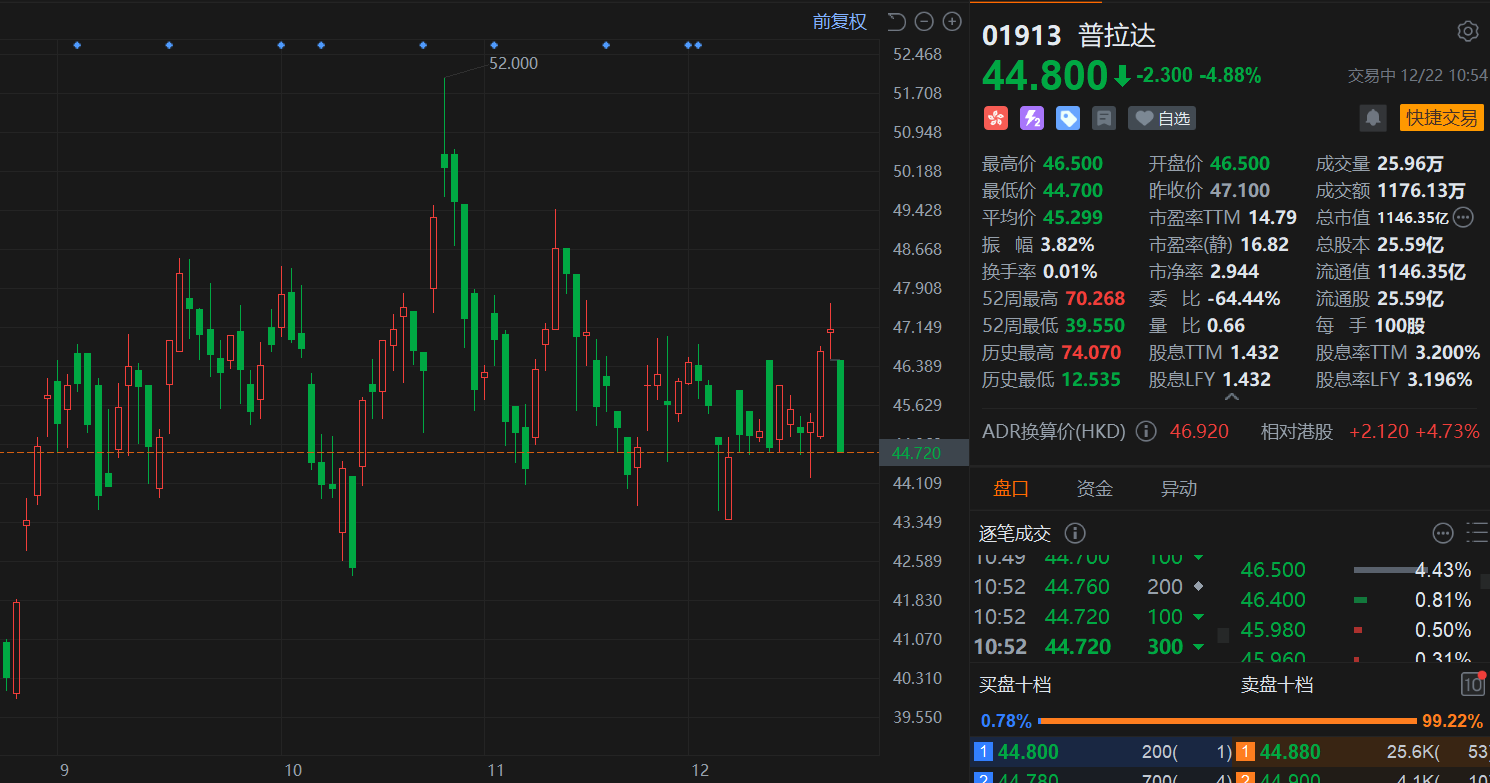
港股异动丨奢侈品股普拉达跌超5% 大摩料其增长放缓,降目标价至51港元
Ge Long Hui· 2025-12-22 03:09
Core Viewpoint - Prada's stock has been declining, with a drop of over 5% during trading, currently priced at 44.8 HKD, resulting in a market capitalization of 114.6 billion HKD. Morgan Stanley analysts suggest that Prada may struggle to maintain its growth momentum amid a new wave of creativity in the luxury fashion sector, particularly as the development pace of its Miu Miu brand slows down. The firm has lowered its target price for Prada's Hong Kong-listed shares from 53 HKD to 51 HKD while maintaining a rating in line with the market [1]. Company Summary - Prada's stock opened lower and experienced a decline of over 5%, currently trading at 44.8 HKD, with a total market value of 114.6 billion HKD [1]. - Morgan Stanley's report indicates that Prada may be one of the few luxury companies to experience a slowdown in growth in the last quarter of the year, particularly due to the slowing development of its Miu Miu brand [1]. - The target price for Prada's shares has been adjusted from 53 HKD to 51 HKD, with a market-perform rating maintained [1].

奢侈品股普拉达跌超5% 大摩料其增长放缓,降目标价至51港元
Ge Long Hui· 2025-12-22 03:07
Group 1 - Morgan Stanley analysts report that Prada may struggle to maintain its growth momentum amid a new wave of creativity in the luxury fashion sector [1] - The slowdown in the development pace of Prada's Miu Miu brand is highlighted as a contributing factor to the anticipated growth deceleration [1] - Morgan Stanley has lowered the target price for Prada's Hong Kong-listed shares from HKD 53 to HKD 51, while maintaining a rating in line with the market [1]
三里屯商圈焕新 北京时尚消费趋于体验驱动
Bei Jing Shang Bao· 2025-12-21 15:55
Core Insights - The transformation of the Sanlitun business district reflects the evolution of Beijing's fashion commerce, showcasing a blend of local culture and international trends [3][4] - LVMH's Greater China President, Wu Yue, emphasizes the growing importance of Chinese consumers in the global fashion landscape, highlighting the integration of local culture with international fashion [1][5] Group 1: Market Evolution - Sanlitun's development over the past 20 years has synchronized with the upgrade of China's fashion market, demonstrating a successful combination of internationalization and localization [3] - The area has evolved from a diplomatic hub to a forefront of urban internationalization, facilitating cultural exchange and interaction [3] Group 2: Consumer Behavior - The shift in consumer demand from "product-oriented" to "experience-driven" is a key trend, with emotional value becoming a crucial link in this transformation [4][10] - Retail development must focus on continuous interaction with consumers, adapting to their evolving needs and preferences [10] Group 3: Future Outlook - The significance of the Chinese market in the international fashion scene is expected to increase, with a historical shift from industrial exports to a vibrant fashion industry [11][12] - International high-end brands are adopting a long-term strategy, expressing confidence in the growth of the Chinese consumer base, which will further propel the global fashion industry [5][12]

如果欧洲没收俄2100亿欧元,后果有多严重?
Sou Hu Cai Jing· 2025-12-21 14:54
Group 1 - The core issue is the European Union's struggle to provide financial aid to Ukraine amidst internal divisions and external pressures, leading to a reliance on joint debt rather than utilizing frozen Russian assets [1][3][7] - Initially, the EU aimed to use €210 billion of frozen Russian assets to support Ukraine, but faced strong opposition from Russia, which labeled the plan as "robbery" and warned of severe consequences [3][5] - After lengthy negotiations, the EU ultimately decided to raise €900 million through joint debt, bypassing Hungary's opposition by excluding it from financial contributions [7][8] Group 2 - The EU's internal divisions are evident, with member states split into three factions: those advocating for strong action against Russia, like the Baltic states and Poland; the hesitant major powers like Germany; and those opposed, such as Hungary and Slovakia [10][12][15] - Hungary's reliance on Russian gas makes it resistant to sanctions, highlighting the conflict between national interests and collective EU action [15][17] - The EU's decision-making process, which requires unanimous consent, complicates collective action and exposes the weaknesses in its governance structure [17][19] Group 3 - The EU's perceived strength is undermined by its inability to act cohesively, as seen in its response to the U.S. Inflation Reduction Act, where member states prioritize their own industries over collective interests [19][21] - Internal divisions and a lack of consensus among EU countries hinder its ability to respond effectively to external pressures, revealing a fundamental issue of fragmented interests [25][27] - The EU's aspiration to become a significant independent global player is challenged by its current inability to unify and act decisively, raising questions about its future effectiveness [27]

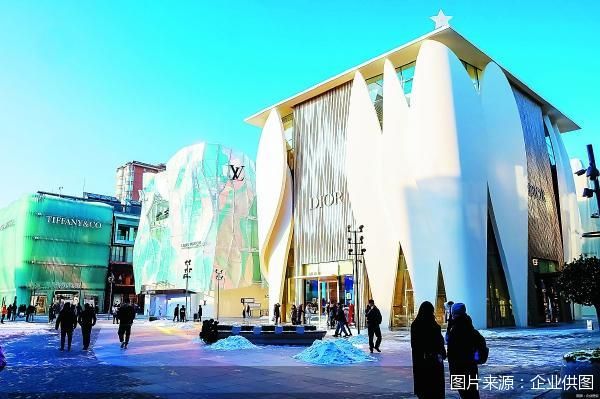
三里屯商圈焕新 北京时尚消费趋于“本土融合+体验驱动”
Bei Jing Shang Bao· 2025-12-21 09:00
Group 1 - The core viewpoint of the article highlights the transformation of the Sanlitun business district, showcasing its evolution into a vibrant fashion cultural space with the introduction of high-end luxury brands [1][4] - The Sanlitun area reflects the synchronization of Beijing's fashion commercial development with the upgrading of the Chinese fashion market, emphasizing the organic combination of internationalization and localization [4][9] - The fashion market is characterized by its ability to integrate diverse cultural elements, breaking down geographical and cultural boundaries, thus becoming a significant medium for global cultural exchange [7][8] Group 2 - Sanlitun Taikooli is noted for its unique "indoor-outdoor integrated" commercial model, which fosters community development and enhances the overall vitality of the surrounding area [7][10] - The shift in consumer behavior from a "product-oriented" approach to an "experience-driven" model is identified as a key change, with emotional needs acting as a crucial link in this transformation [7][10] - The importance of continuous interaction with consumers is emphasized as essential for retail progress, highlighting the dynamic nature of consumer demands in the Chinese market [10][11] Group 3 - The future significance of the Chinese market in the international fashion landscape is expected to grow, with high-end brands maintaining a long-term confidence in the development of Chinese consumers [8][11] - The integration of local culture with international trends is seen as a natural progression, especially with the increasing fashion consciousness among younger demographics [9][10] - The historical evolution of Beijing's fashion industry is traced from industrial exports to a vibrant commercial landscape, indicating a significant shift in its global standing [8][11]
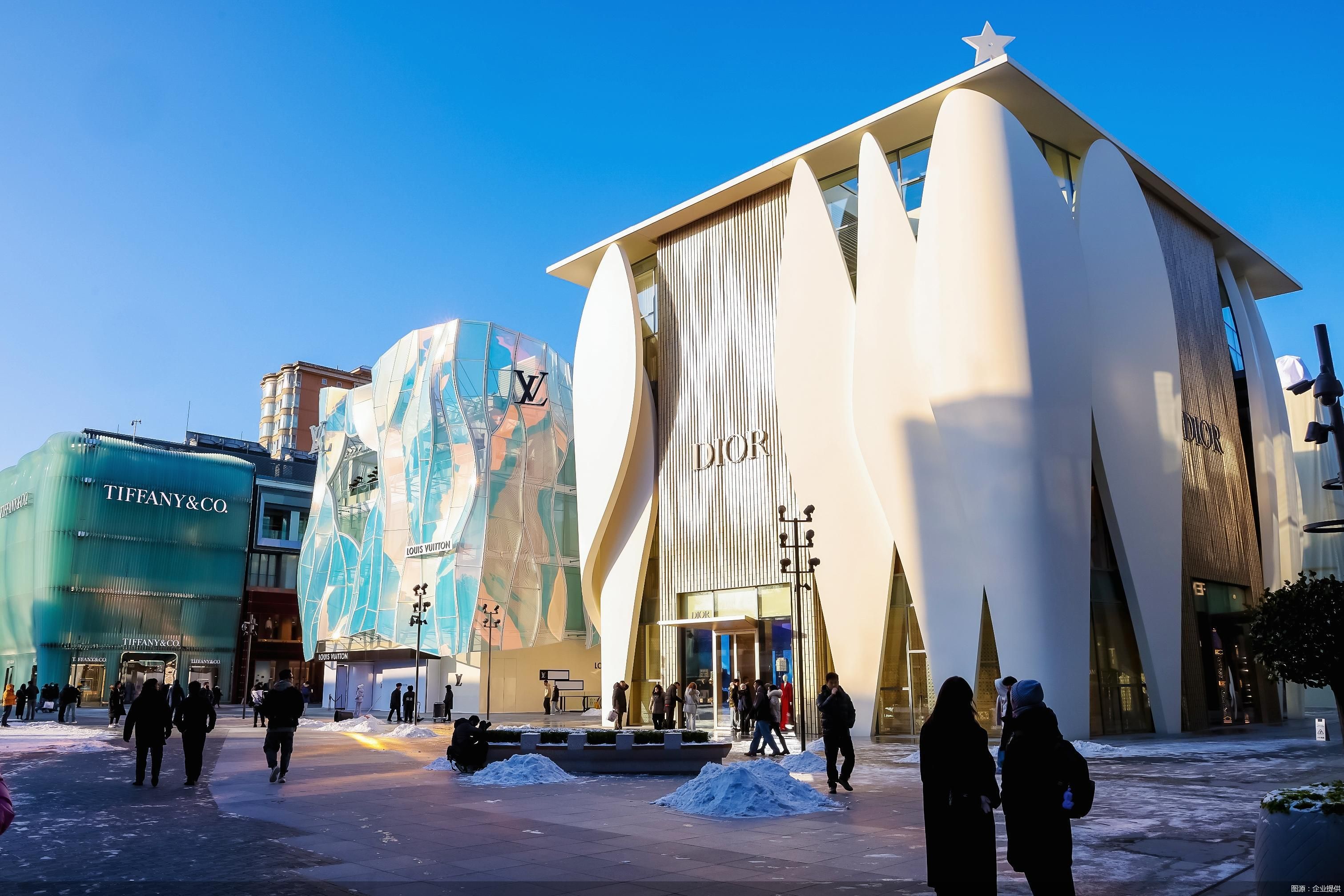
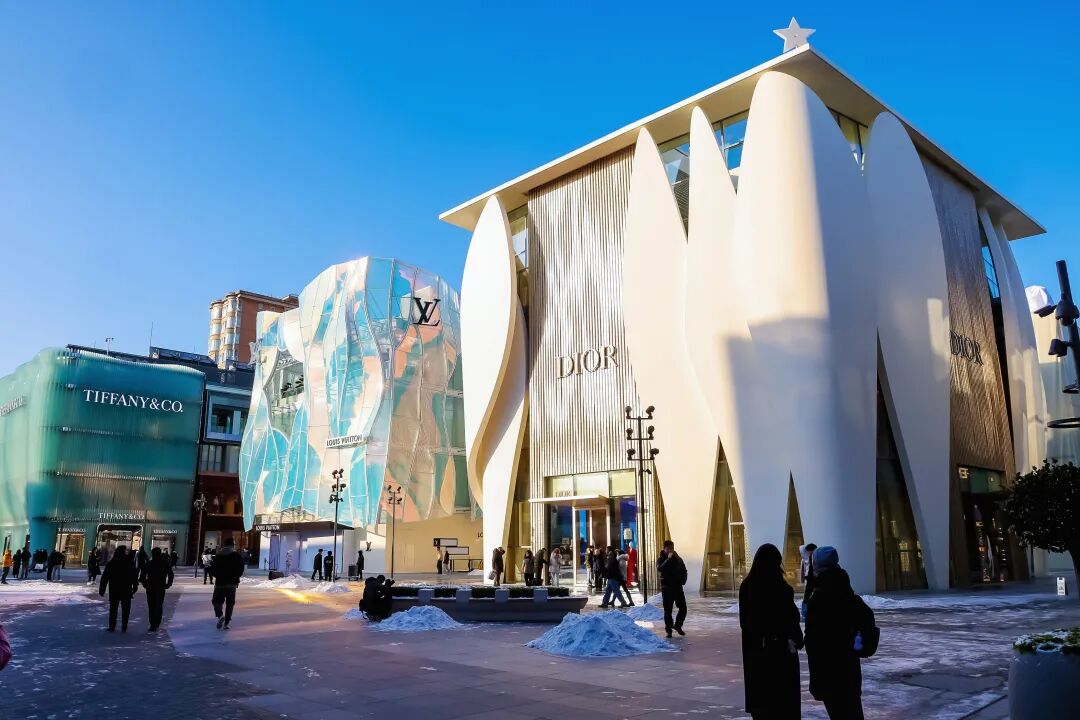
北京三里屯商圈焕新!迪奥之家中国首店、路易威登…
Bei Jing Shang Bao· 2025-12-21 08:10
Core Insights - The transformation of the Sanlitun business district reflects the evolution of Beijing's fashion market, showcasing a blend of local culture and international trends [3][6] - The emergence of high-end luxury stores in Sanlitun, such as Tiffany, Dior, and Louis Vuitton, signifies the area's status as a dynamic "fashion cultural field" [1][3] - The shift in consumer behavior from "product-oriented" to "experience-driven" is crucial, with emotional value becoming a key driver of retail growth [5][8] Group 1: Market Evolution - Sanlitun has evolved over the past two decades, aligning its development with the upgrading of China's fashion market [3] - The area has become a hub for international and local cultural exchange, enhancing its appeal as a fashion destination [3][6] - The integration of indoor and outdoor commercial spaces in Sanlitun sets it apart from other shopping districts, fostering community development [5] Group 2: Consumer Behavior - The retail industry must engage in continuous interaction with consumers to adapt to their changing needs and preferences [5][8] - Emotional engagement is essential for driving consumer experiences, making retail spaces social "stages" for interaction [8] - The demand for fashion and lifestyle products is increasingly influenced by the younger generation's evolving tastes [8][9] Group 3: Future Outlook - China's influence in the international fashion landscape is expected to grow, with high-end brands expressing long-term confidence in the Chinese market [6][9] - The fashion sector's impact extends beyond clothing, influencing various industries such as commerce, technology, and education [6] - The ongoing integration of local culture with global trends will continue to shape the future of fashion in Beijing [8]