体验驱动

Search documents
排队8小时、产品近100款 ,实探喜茶“史上最卷”门店
东京烘焙职业人· 2026-03-04 08:33
Core Viewpoint - The opening of Heytea Lab 2.0 in Shanghai signifies a shift in the tea beverage industry towards experiential and high-end offerings, reflecting a competitive evolution in the market [4][19][32]. Group 1: Store Opening and Consumer Response - Heytea Lab 2.0 opened on February 28, 2023, and attracted massive crowds, with reports of wait times reaching up to 8 hours [5][18]. - The store featured a promotional "buy one get one free" offer for the first week, contributing to its popularity [5][18]. - The store's design emphasizes an experimental and unfinished aesthetic, enhancing the consumer experience [15][16]. Group 2: Unique Offerings and Product Variety - The store combines four experimental sections: Bake Lab, Cake Lab, Tea Lab, and Gelato Lab, offering nearly 100 different products [7][10]. - Exclusive and localized products, such as "岩兰·崇明米酿" and "流心蛋," are designed to attract consumers seeking unique experiences [11][12][14]. - The introduction of high-margin items like cakes and ice creams aims to increase average transaction values [23][24]. Group 3: Industry Trends and Strategic Shifts - The tea beverage industry is transitioning from rapid expansion to a focus on maximizing the value of existing stores, as growth rates have slowed to single digits [20][21]. - Brands are exploring diversified store formats, with Heytea Lab 2.0 exemplifying the "tea + " model to enhance customer engagement and revenue [23][27]. - The success of flagship stores is increasingly tied to brand identity and consumer experience rather than sheer volume of locations [27][28]. Group 4: Market Implications - The overwhelming response to Heytea Lab 2.0 indicates a consumer willingness to invest time and money in premium products and experiences [31]. - This trend suggests a potential pathway for the industry to evolve towards higher-end, experience-driven offerings, moving beyond traditional price-sensitive models [32][33].


2025年5月以来携程入境团队人次实现5倍增长
Bei Jing Shang Bao· 2026-01-06 13:17
Group 1 - The core viewpoint is that the inbound tourism market in China is entering a "golden window period," with inbound group travel becoming a new growth engine for tourism companies [1] - Policies such as visa exemptions and transit visa waivers are continuously optimized, facilitating foreign tourists' travel to China [1] - The inbound tourism market in China is expected to reach a scale of $180 billion by 2030, but its current contribution to GDP is still less than 0.5%, indicating significant growth potential [1] Group 2 - The tourism platform is becoming a key hub connecting domestic travel agencies with international customers by building a global product matrix and implementing refined scenario operations and cross-border integrated marketing [1] - Ctrip's inbound team travel has seen a fivefold increase in visitor numbers since May 2025, with daily order volume increasing eightfold, demonstrating strong momentum [1] - The tourism industry is undergoing a profound transformation from "traffic-driven" to "experience-driven" due to the deep application of AI technology and the rapid growth of the inbound tourism market [1] Group 3 - Personalized travel demands are being captured and responded to more accurately through multimodal AI technology, which can understand text, voice, images, and videos [2] - AI has improved recommendation effectiveness by 8%, significantly enhancing product recommendation rates for merchants, with a 20-fold increase in efficiency compared to previous manual operations [2] - Ctrip's AI-driven "Smart Engine 3.0" has achieved large-scale application, bringing over 10% order growth to merchants and enabling core partners to achieve a GMV growth rate that outpaces the market by 38% [2]

王府井:积极推动自身从传统百货向现代化零售集团转变
Zheng Quan Ri Bao Wang· 2025-12-30 14:16
Core Viewpoint - Wangfujing (600859) recognizes a significant shift in consumer trends from scale expansion to "consumption stratification" and "experience-driven" models, prompting the company to transition from traditional department stores to a modern retail group [1] Group 1: Strategic Transformation - The company is actively promoting its transformation by creating a comprehensive cultural, commercial, and travel complex that integrates high-quality, cost-effective products with rich entertainment experiences [1] - The focus is on attracting foot traffic through non-standard business formats and creating value through differentiated experiences [1] Group 2: Consumer Demand - The strategy aims to meet current consumer demands for both "quality-price ratio" and "emotional value" [1]

三里屯商圈焕新 北京时尚消费趋于体验驱动
Bei Jing Shang Bao· 2025-12-21 15:55
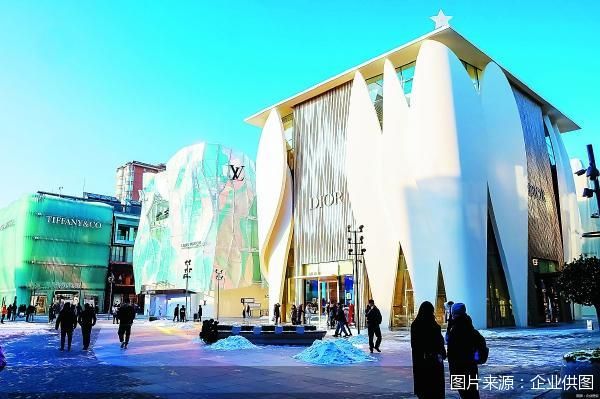
Core Insights - The transformation of the Sanlitun business district reflects the evolution of Beijing's fashion commerce, showcasing a blend of local culture and international trends [3][4] - LVMH's Greater China President, Wu Yue, emphasizes the growing importance of Chinese consumers in the global fashion landscape, highlighting the integration of local culture with international fashion [1][5] Group 1: Market Evolution - Sanlitun's development over the past 20 years has synchronized with the upgrade of China's fashion market, demonstrating a successful combination of internationalization and localization [3] - The area has evolved from a diplomatic hub to a forefront of urban internationalization, facilitating cultural exchange and interaction [3] Group 2: Consumer Behavior - The shift in consumer demand from "product-oriented" to "experience-driven" is a key trend, with emotional value becoming a crucial link in this transformation [4][10] - Retail development must focus on continuous interaction with consumers, adapting to their evolving needs and preferences [10] Group 3: Future Outlook - The significance of the Chinese market in the international fashion scene is expected to increase, with a historical shift from industrial exports to a vibrant fashion industry [11][12] - International high-end brands are adopting a long-term strategy, expressing confidence in the growth of the Chinese consumer base, which will further propel the global fashion industry [5][12]

一条街,2000万人次涌入!消费新爆点,来了
Sou Hu Cai Jing· 2025-12-10 10:13
Group 1 - Consumption is a key driver of China's economic growth, with retail industry playing a significant role in promoting consumption and investment, as highlighted in the "14th Five-Year Plan" [1] - The Ministry of Commerce emphasizes the need for the retail industry to shift from price-driven and product-driven models to quality-driven and experience-driven approaches for high-quality development [5] - By the end of 2025, retail sales in various sectors such as convenience stores, supermarkets, and specialty stores are projected to grow by 6.4%, 4.4%, 0.9%, 4.8%, and 1.5% respectively [7] Group 2 - In Hangzhou, the introduction of 153 new flagship stores in the first half of the year indicates a 39.1% year-on-year increase, showcasing a trend of high-quality growth in the retail sector [13] - The Lakefront business district in Hangzhou has become a hub for new brands, with over 100 new brands added this year, reflecting the city's vibrant retail environment [11] - In Guiyang, the Qingyun Road pedestrian street has attracted over 20 million visitors this year, generating total sales exceeding 700 million yuan, driven by unique cultural and creative stores [21]

新制造品牌爱开实体店
Nan Fang Du Shi Bao· 2025-11-30 23:08
Group 1 - The core viewpoint of the article emphasizes the shift from "traffic-driven" to "experience-driven" growth in the industry [2] - The article highlights that technology-driven lifestyle brands are becoming the new favorites for investment and business development [2] - The investment logic is increasingly focused on the combination of technology, brand strength, and supply chain efficiency [2]
从线上走向实体:影石、拓竹和徕芬,深圳新制造为何爱开店?
Nan Fang Du Shi Bao· 2025-11-28 13:03
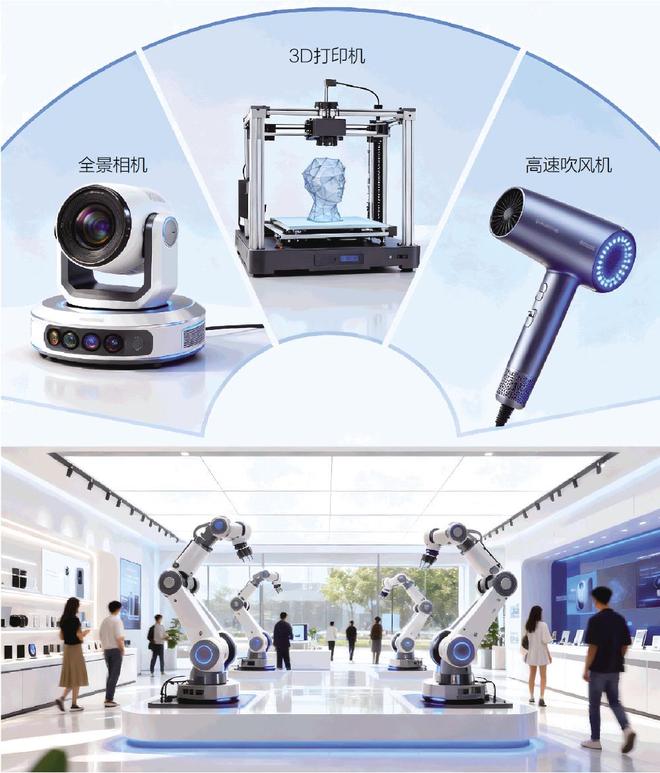
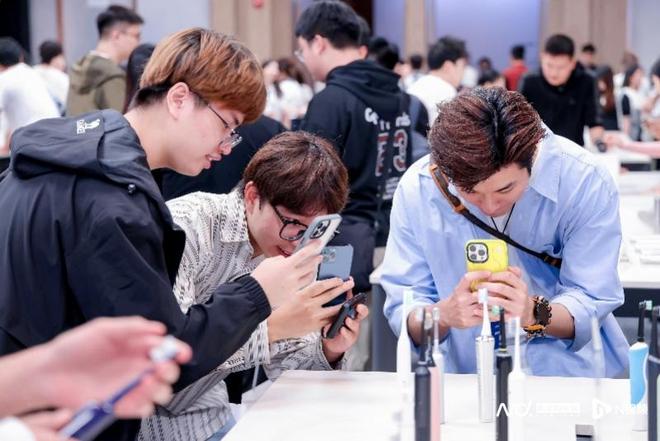
Core Insights - A new commercial landscape is emerging in Shenzhen, where "internet celebrity hardware" is transitioning from online platforms to physical retail spaces, marking a collective experiment in rebuilding trust in hard-tech consumer products [1][2] - Companies like Insta360, Bambu Lab, and Leifeng are opening flagship stores in key locations, indicating a shift from online dominance to a focus on offline experiences and brand ecosystems [1][10] Group 1: Company Strategies - Insta360, Bambu Lab, and Leifeng represent three distinct paths in Shenzhen's new manufacturing landscape, focusing on local market penetration, broadening consumer reach, and establishing long-term brand presence [2][10] - Leifeng has invested over 1 billion yuan in advertising from 2022 to 2024, with a significant portion allocated to the 2023 Double Eleven shopping festival, highlighting the reliance on online marketing strategies [2][3] - Bambu Lab emphasizes product and ecosystem quality over aggressive marketing, aiming to create a community around its 3D printing technology [2][10] Group 2: Consumer Experience - For high-ticket personal care products like those from Leifeng, the in-store experience is crucial for consumer decision-making, as tactile and sensory feedback cannot be fully conveyed online [3][9] - Leifeng's flagship store in Shenzhen integrates sales, experience, and after-sales services, allowing customers to test products and receive personalized services [5][10] - Bambu Lab's store features interactive displays, allowing consumers to see and experience 3D printing technology firsthand, addressing trust issues associated with complex tech products [7][10] Group 3: Market Trends - The shift towards offline experiences is driven by the realization that online traffic alone cannot sustain growth, prompting brands to explore experiential retail as a new growth avenue [2][9] - The presence of high-end stores in Shenzhen's core shopping districts serves as a testament to brand strength and long-term investment commitment [10][12] - The trend indicates a broader movement in the consumer market towards hard-tech products, which are gaining popularity as they offer tangible benefits and experiences [14][15] Group 4: Investment Implications - The investment landscape is evolving, with a greater emphasis on companies that possess technological barriers, efficient supply chains, and strong brand potential, rather than just online traffic metrics [15][16] - The establishment of flagship stores is seen as a critical test of a brand's product strength, cash flow, and operational capabilities [15][16] - The success of brands like Leifeng, Bambu Lab, and Insta360 in physical retail is paving the way for a new narrative in consumer investment, focusing on comprehensive strength rather than just online success [16][17]
千机科技胡龄月:无人机是会讲故事的文化画布
2 1 Shi Ji Jing Ji Bao Dao· 2025-11-28 12:12
Core Insights - The article emphasizes the integration of technology, art, and media through drone performances, positioning them as a new cultural expression and a significant part of urban cultural content systems [1][2][3] Company Overview - Qianji Technology has executed over 3,000 performances, achieving more than 80 billion exposures globally and establishing a presence in over 30 countries [1][3] - The company has a valuation of 1 billion yuan, making it one of the few highly recognized cultural technology enterprises in the low-altitude economy sector [3] Industry Trends - The cultural industry in China is shifting from traditional media to immersive experiences, with drone performances being a key driver of this change [2][4] - The national cultural industry scale has surpassed 6 trillion yuan, with "cultural + technology," nighttime economy, and immersive performances being the fastest-growing segments [2][4] Market Potential - The global drone performance market is growing at an annual rate of over 30%, making it one of the fastest-growing segments in the cultural industry [4] - There is a strong demand for urban cultural content upgrades, particularly in nighttime economy, festival expressions, and city IP development [4] Strategic Positioning - Qianji Technology aims to embed drone performances into urban cultural systems through collaborations with local governments and cultural projects, promoting the Greater Bay Area as a significant cultural stage [4][6] - The company emphasizes its role not just as a technology provider but as a cultural service entity that tells Chinese stories through light and shadow [2][3] Challenges and Responses - The industry faces challenges related to safety and regulation, with Qianji Technology working on establishing industry standards in collaboration with local authorities [6][7] - The company acknowledges that the core challenge lies in content innovation and artistic expression rather than just technical capabilities [6][8]
报告:中国出境游市场呈现“短途优先、体验驱动”格局
Zhong Guo Xin Wen Wang· 2025-11-19 12:18
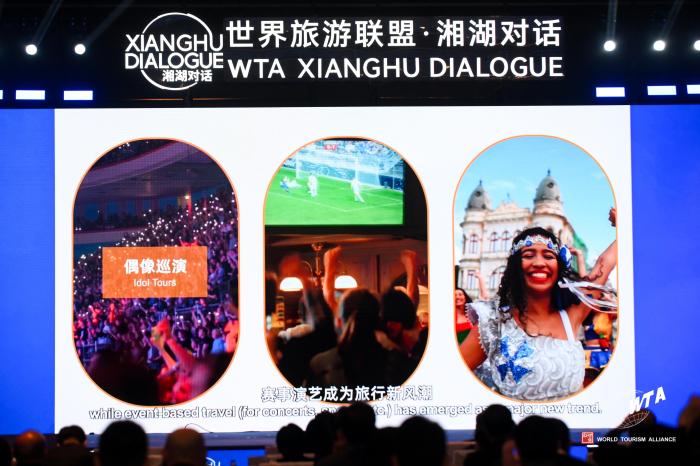
Core Insights - The report highlights a new trend in China's outbound tourism market characterized by "short-distance priority and experience-driven" travel [3][4] - The global tourism industry continues to grow, with experiential travel being a significant driver, particularly through sports events and entertainment performances [2][3] Summary by Categories Market Trends - From Q3 2024 to the end of Q2 2025, short-distance travel to Southeast Asian countries like Malaysia, Indonesia, and Vietnam is expected to see significant growth among Chinese tourists [3][4] - Long-distance travel shows a divergence in destination popularity, with a decline in interest for North America (USA and Canada) due to visa policies and flight costs, while Italy in Europe is gaining popularity for its cultural experiences [3][4] Destination Insights - Northern and Eastern Europe remain popular among Chinese tourists, showcasing the appeal of European culture, art, and natural scenery [3] - Emerging destinations in Asia and the Middle East, such as Kazakhstan, Cambodia, Saudi Arabia, and Qatar, are rapidly gaining traction, reflecting a growing demand for short trips and exploratory travel [3][4] - African and Latin American countries like Morocco, Egypt, South Africa, and Mexico are also seeing increased interest, indicating a diverse pursuit of unique cultural experiences and high-quality vacations [3][4] Impact of Events - The hosting of concerts and sports events significantly boosts the attractiveness of destinations, with Malaysia expecting to see an increase in Chinese visitors from 3.8 million in 2024 to 5 million in 2025 due to major events [4] - Middle Eastern countries are also leveraging large-scale events to attract international tourists, further enhancing destination popularity [4]
向潮玩“取经”,文博文创最该学什么?
Xin Jing Bao· 2025-09-06 10:33
Group 1: Core Insights - The explosive growth of the潮玩 (trendy toys) economy has become a significant phenomenon in the cultural and tourism consumption sector, with notable sales figures such as the first-day revenue of 7 million yuan for the film-related merchandise of "浪浪山小妖怪" and a market capitalization exceeding 100 billion HKD for the "first stock of trendy toys," Pop Mart [1][3] - The cultural and creative products (文博文创) are developing rapidly, but they still have considerable room for improvement compared to the massive communication power exhibited by trendy toy IPs like Labubu [1][3] - There are essential differences between潮玩 and文博文创, particularly in their consumer groups and purchasing motivations, which cannot be simply equated or directly replicated [3][6] Group 2: Consumer Behavior - Consumers of文博文创 primarily seek cultural experiences, with motivations ranging from the enjoyment of "excavating cultural relics" to using creative products for historical enlightenment for children [5][6] - The experience-driven consumption logic of文博文创 is evident, as consumers engage with historical knowledge through the process of purchasing and experiencing blind boxes, even if the items are ultimately left unused [6][9] - Understanding the cultural significance of文博 products requires a certain level of knowledge and aesthetic appreciation, which may not be accessible to all consumers, particularly foreign tourists [6][9] Group 3: Market Strategies -文博文创 can learn from潮玩 in terms of enhancing interactivity, fun, and topicality in product design, such as through cultural restoration experience blind boxes [15][17] - Expanding the sales and display of文博 products in various cultural and tourism venues can create a service network that lowers consumer recognition barriers [15][17] - Implementing systematic IP operations centered around cultural relics can help integrate story creation, product development, and precise communication, fostering a vibrant IP ecosystem [15][17] Group 4: Unique Pathways - The core attributes and operational logic of文博文创 differ significantly from潮玩, making direct replication of the latter's model impractical [17][18] -文博文创 can adopt methods from潮玩, such as community building among cultural enthusiasts and enhancing interaction through creative competitions and exhibitions, while maintaining cultural integrity [17][18] - By leveraging creativity and preserving cultural roots,文博文创 can carve out a unique path that balances social and economic benefits, distinct from潮玩 [17][18]