机器人制造

Search documents
优必选(呼和浩特)科技有限公司成立
Zheng Quan Ri Bao Wang· 2025-12-24 10:45
(编辑 郭之宸) 本报讯 (记者袁传玺)天眼查App显示,近日,优必选(呼和浩特)科技有限公司成立,注册资本1000万元,经营范围含 工业机器人制造、智能机器人销售、服务消费机器人制造、智能机器人的研发、信息技术咨询服务、人工智能理论与算法软件 开发、人工智能行业应用系统集成服务、人工智能应用软件开发、通信设备制造等,由优必选(09880.HK)全资持股。 ...
万凯新材:控股孙公司与关联方灵心巧手签署业务合同
Xin Lang Cai Jing· 2025-12-24 08:48
万凯新材公告,公司控股孙公司轻镁智塑与关联方灵心巧手签署《采购合同》,轻镁智塑向灵心巧手提 供人形机器人手臂相关的轻量化零部件与结构件产品以及人形组装服务,合同总金额为含税价人民币 1000万元。同时,预计双方2026年度将发生同一类别关联交易5000万元。 ...
亿纬锂能双线出击:钠电补位锂电短板,机器人重构制造生态
Nan Fang Du Shi Bao· 2025-12-23 15:25
Core Viewpoint - The construction of the "EVE Sodium Energy Headquarters and Jinyuan Robot AI Center" marks a significant step for EVE Energy, aiming to transition from a leading lithium battery supplier to a provider of comprehensive hydrogen-lithium-sodium electrochemical energy storage solutions and industrial intelligent factory services [2][4]. Group 1: Sodium Battery Development - EVE Energy's sodium battery project has a total investment of approximately 1 billion yuan, with a planned construction area of 90,000 square meters and a target annual production capacity of 2 GWh [6]. - The company emphasizes that sodium batteries are not a replacement for lithium batteries but serve as a complementary solution, particularly suitable for large-scale energy storage and backup power for AI data centers due to their safety and long cycle life [8]. - The concept of "zero-carbon sodium batteries" is introduced, aiming for natural degradation of batteries at the end of their life cycle, aligning with sustainable energy goals [8]. Group 2: Robotics and AI Center - The Jinyuan Robot AI Center will cover a 50,000 square meter area, focusing on the entire chain from research and development to manufacturing and training [9]. - EVE Energy's approach to robotics is driven by specific tasks and scenarios, aiming to replace high-risk and repetitive jobs in manufacturing, with seven series of industrial robots already developed for various applications [9][11]. - The integration of self-developed automation equipment with robotics is highlighted as a unique advantage, ensuring data security and alignment with real manufacturing processes through private cloud environments [11]. Group 3: Strategic Ambitions - EVE Energy aims to play three roles: core component supplier, complete machine integrator, and provider of intelligent solutions for industrial scenarios, particularly in high-reliability sectors like new energy and pharmaceuticals [11]. - The dual strategy of expanding into both upstream material innovation and downstream intelligent manufacturing reflects the ambition of leading Chinese manufacturing enterprises to create a closed-loop ecosystem of "technology + equipment + solutions" [12].



银河通用机器人拿下1000 台机器人订单,推进具身智能工业场景深度应用
Huan Qiu Wang Zi Xun· 2025-12-23 06:17
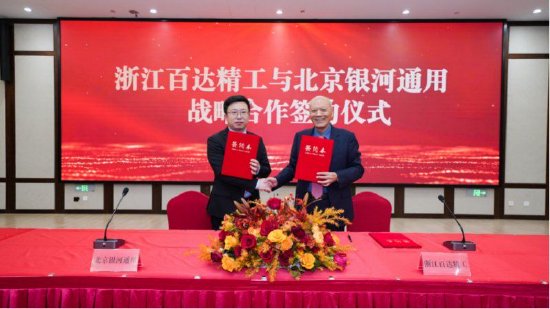
Core Insights - Galaxy General Robotics and Baida Precision Engineering have signed a strategic cooperation agreement to deploy over 1,000 embodied intelligent robots in industrial precision manufacturing [1][3][4] - This collaboration aims to drive the large-scale application of embodied intelligent robots in complex industrial scenarios, marking a significant step for intelligent manufacturing in China [3][11] - The partnership will focus on core hardware innovation and supply chain optimization, enhancing the industrial ecosystem [3][4] Company Overview - Galaxy General Robotics is recognized as a leading company in the field of embodied intelligent robots, having developed a robust data system and high-quality datasets for robot training [6][14] - Baida Precision Engineering specializes in the research, manufacturing, and sales of core automotive and home appliance components, emphasizing technological innovation and smart manufacturing [15] Industry Context - The collaboration aligns with China's push for advanced manufacturing and the integration of artificial intelligence into the manufacturing sector, as outlined in the "14th Five-Year Plan" [3][11] - The deployment of 1,000 robots signifies a pivotal moment in the transition to a new type of productive force in the industrial sector, reshaping production organization and manufacturing structures [12][13] Technological Advancements - Galaxy General Robotics has developed end-to-end embodied large models that enable robots to perform tasks autonomously across various industrial scenarios without frequent adjustments [6][9] - The partnership will address key technological challenges in precision manufacturing, focusing on multi-modal perception, adaptive decision-making, and high-precision operations [11][12] Market Position - Galaxy General Robotics has recently completed a $300 million financing round, achieving a valuation exceeding 20 billion RMB, making it the highest-valued humanoid robotics company in China [8][9] - The collaboration with Baida Precision Engineering is expected to create a replicable and scalable solution for the precision manufacturing industry, setting a benchmark for smart factory implementations [12][11]


银河通用机器人拿下1000台机器人订单
Xin Lang Cai Jing· 2025-12-23 00:49
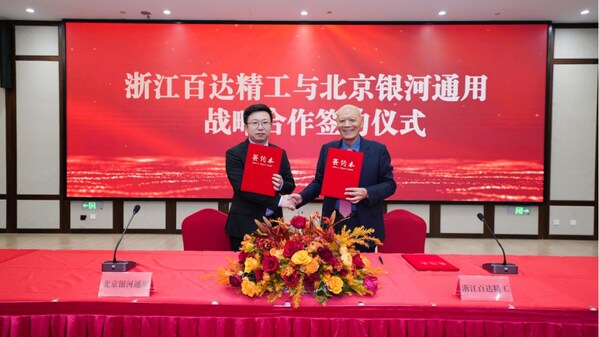
Core Insights - Galaxy General Robotics and Baida Precision Engineering have signed a strategic cooperation agreement to deploy over 1,000 embodied intelligent robots within Baida's ecosystem, focusing on complex scenarios in industrial precision manufacturing [1] Group 1 - The partnership aims to explore large-scale deep applications of embodied intelligent robots [1] - The deployment will occur within Baida Precision Engineering and its ecological system [1]
银河通用机器人拿下1000 台机器人订单
Bei Jing Shang Bao· 2025-12-23 00:21
北京商报讯(记者 魏蔚)12月23日,北京商报记者获悉,银河通用机器人(以下简称"银河通用")与 精密制造的工业企业百达精工签署战略合作,双方将围绕工业精密制造的复杂场景,开展具身智能机器 人的规模化深度应用,在百达精工及其生态体系内部署超过1000台银河通用具身智能机器人。双方将推 动具身智能机器人在工业核心零部件精密加工制造的全流程规模化落地应用。双方还就核心硬件创新与 供应链优化达成合作共识,银河通用将引入百达精工在核心零部件领域的技术成果。 ...
从产教融合看职业教育新前景(大数据观察·点读“十四五”)
Ren Min Wang· 2025-12-22 22:23
Core Viewpoint - The article discusses the innovative educational model in Suzhou, focusing on the integration of vocational education and industry, highlighting the establishment of industry-education integration alliances to cultivate high-level talents in robotics and intelligent manufacturing. Group 1: Industry-Education Integration - The "dual identity" model allows educators to work simultaneously in schools and companies, enhancing their teaching and research capabilities through real-world applications [10][11] - The Wu Zhong Economic and Technological Development Zone has over 1,000 companies in the "robotics + artificial intelligence" sector, accounting for more than 60% of the national service robot output [12] - The establishment of industry-education integration alliances aims to address innovation capacity and talent system issues within the rapidly growing robotics industry [12] Group 2: Talent Development and Curriculum - The curriculum is tailored to meet industry needs, with a "dual mentor system + real projects" approach that includes practical training in actual production environments [13][14] - Students are engaged in hands-on projects, such as designing and manufacturing high-temperature vacuum heating furnaces, which enhances their practical skills and problem-solving abilities [15][16] - The integration of educational resources with industry practices has led to a significant increase in the number of high-quality skilled talents, with 31.51% of graduates becoming technical engineers within three years [16] Group 3: Economic Impact - The collaboration between educational institutions and industries has resulted in improved economic performance, with Taicang City achieving a 4.3% year-on-year growth in industrial output value in 2024 [17] - High-end equipment manufacturing, advanced materials, aerospace, and biomedicine sectors accounted for 77.4% of the industrial output value in Taicang City [17] - The effectiveness of the industry-education integration model is expected to further enhance the prospects of vocational education and industrial development in the region [17]
闫维新最新发声,人形机器人未来六大发展方向!
中国基金报· 2025-12-22 16:02
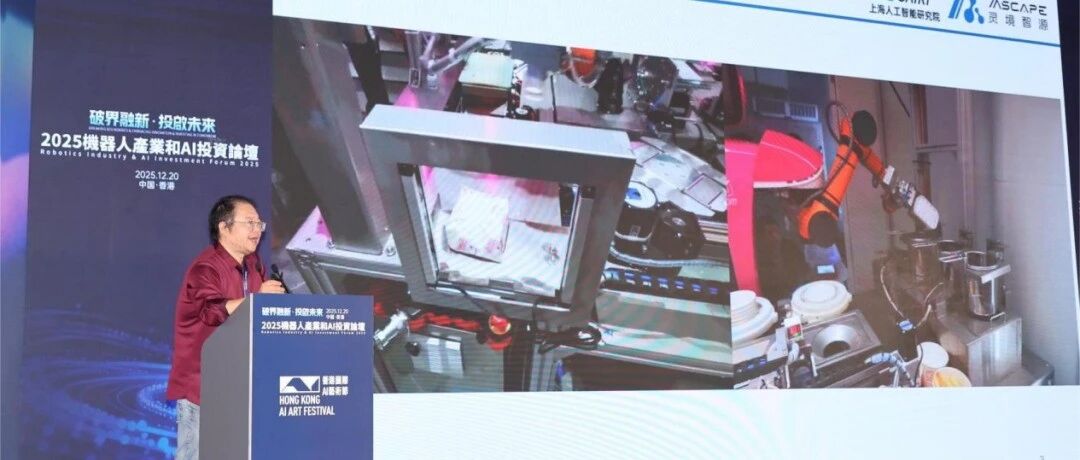
Core Viewpoint - Humanoid robots are considered a significant direction in the Fourth Industrial Revolution, with potential development in six major areas: special operations, industrial collaboration, teaching and research, interactive services, household management, and elderly care [1][5][6]. Group 1: Development Characteristics - Humanoid robots are not limited by biological evolution and can perform complex tasks through parallel processing, which is a core advantage [2][4]. - They possess three key characteristics: stronger evolutionary capabilities, clear division of development labor, and a combination of high energy density and high power density for extended operation [4]. - The evolution of humanoid robots has gone through four generations: pure remote control, fixed trajectory movement, mobile + force control, and autonomous perception and decision-making [4]. Group 2: Future Development Directions - The six major development areas for humanoid robots include: 1. Special operations, replacing humans in hazardous tasks such as biochemistry and dangerous environments [6]. 2. Industrial collaboration, performing precise actions that traditional robots cannot achieve [6]. 3. Teaching and research, enhancing movement and decision-making capabilities [6]. 4. Interactive services, providing personalized services [6]. 5. Household management, although requiring safety and ethical constraints [6]. 6. Elderly care, focusing on rehabilitation and care for the elderly [6]. Group 3: Technical Integration and Future Prospects - Humanoid robots are seen as a convergence of multi-industry technologies, with their application scenarios still evolving as capabilities improve [6]. - The integration of tactile, visual, and force control is essential for tasks like assembly and cable handling, which require sophisticated coordination [7]. - Future advancements will focus on developing "smart hands" that can perform intricate tasks, such as cooking and elder care, with high tactile sensitivity and joint force perception [8].
银河通用获百达精工千台机器人订单,共建智能生产新体系
Xin Lang Ke Ji· 2025-12-22 14:41
Core Viewpoint - Galaxy General Robotics has signed a strategic cooperation agreement with precision manufacturing company Baida Precision, aiming to deploy over 1,000 embodied intelligent robots in Baida's ecosystem, marking a significant step towards large-scale application in complex industrial manufacturing scenarios [1] Group 1: Strategic Cooperation - The partnership will focus on the deep application of embodied intelligent robots in complex scenarios of industrial precision manufacturing [1] - Baida Precision will provide Galaxy General with access to its entire production line in high-precision component manufacturing, serving as a verification site for industrial-grade complex working conditions [1] Group 2: Production System Development - The collaboration aims to go beyond single-point automation replacement, striving to build a new production system characterized by "system symbiosis" [1] - The integration of Galaxy General's robots into Baida Precision's entire process—from raw material storage to precision processing and quality inspection—will explore new paradigms of intelligent manufacturing, such as flexible production [1] Group 3: Significance of the Order - The order of 1,000 robots is seen as a starting point for scaling and a milestone in combining technological depth with scenario complexity [1] - This cooperation is recognized as a validation of Galaxy General's embodied large model empowering core industrial productivity and a firm practice of transforming embodied intelligence into a new form of productive force [1]
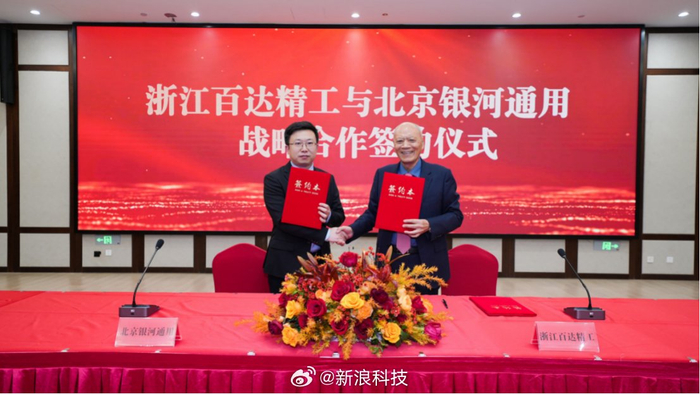
银河通用获1000台机器人订单,宣布战略合作百达精工
Xin Lang Ke Ji· 2025-12-22 14:40
本次战略合作中,百达精工向银河通用全面开放其在高精度零部件制造领域的全场景产线,为银河通用 提供工业级复杂工况的验证场。双方的合作将超越单点自动化替代,致力于构建"系统共生"的新型生产 体系。通过将银河通用的具身智能机器人深度嵌入百达精工从原料仓储、精密加工到质量检测的全流 程,共同探索柔性生产等智能制造新范式,解决工业制造中高重复性、高负荷和精密作业的难题。 新浪科技讯 12月22日晚间消息,银河通用机器人宣布与精密制造企业百达精工签署战略合作,双方将 围绕工业精密制造的复杂场景,开展具身智能机器人的规模化深度应用,在百达精工及其生态体系内部 署超过1000台银河通用具身智能机器人。 银河通用联合创始人姚腾洲表示:"一千台订单是规模化的起点,更是技术深度与场景复杂度结合的里 程碑,这次合作不仅是对银河通用具身大模型赋能工业核心生产力的认可,更是对具身智能真正转变为 新质生产力的坚定实践"。(文猛) ...