玩具

Search documents
新国标筑牢玩具安全防线
Jing Ji Ri Bao· 2026-01-05 22:09
Core Insights - The toy market in China is steadily expanding, with a focus on quality and safety standards, as the Ministry of Industry and Information Technology has revised four mandatory national standards for toy safety [1][5][6] Industry Development - The toy industry is experiencing a transformation, emphasizing the "three products" strategy: increasing variety, improving quality, and creating brands, which solidifies China's position as a global toy production and trade center [1][4] - The collectible toy market, represented by blind boxes and figurines, is growing rapidly, with retail sales of trendy and collectible toys expected to reach 55.83 billion yuan in 2024 [2][3] - The domestic toy retail market is projected to reach 97.85 billion yuan in 2024, a 25.5% increase from 2020, with exports expected to reach 39.87 billion USD, a 19.1% increase from 2020 [3] Technological Advancements - The integration of AI technology into traditional toys is reshaping product forms and value chains, with the AI toy market expected to grow from 24.6 billion yuan in 2024 to 29 billion yuan in 2025 [3][4] - New materials and technologies are enhancing the variety and quality of toy products, with a comprehensive coverage of various materials and innovative products leading market trends [3] Safety Standards and Regulations - The revised national standards for toy safety include stricter limits on harmful substances and new technical requirements for various toy categories, enhancing safety for children [5][6][7] - A transitional period of 12 months for production and an additional 12 months for sales of existing inventory will ensure a smooth implementation of the new standards [8] - The regulatory focus will be on high-risk products, including magnetic toys and blind boxes, with targeted measures to address quality safety issues [9]
乐高加芯片,积木"成精"了|直击CES
Xin Lang Ke Ji· 2026-01-05 21:40
Core Insights - LEGO Group launched the "LEGO SMART Play" intelligent platform at the 2026 CES, marking the most significant evolution of the LEGO brick system since the introduction of LEGO minifigures in 1978 [1] Group 1: Product Features - The "Smart Brick" appears as a standard 2´4 LEGO brick but contains a custom chip measuring 4.1 mm, equipped with an accelerometer, gyroscope, light sensor, micro-speaker, and LED array, allowing it to sense movements and play corresponding sounds and lights without the need for screens, apps, or internet connectivity [3] - The Smart Bricks can communicate with each other through a Bluetooth mesh network called BrickNet, utilizing proprietary technology for "neighbor position measurement" to detect distance and direction between bricks [3] - The accompanying smart tags, embedded in NFC 2´2 tiles, inform the Smart Bricks of their current identity, enabling them to trigger specific sounds and effects, such as lightsaber sounds and the "Imperial March" when characters are placed in certain positions [3] Group 2: Product Launch and Pricing - The initial three sets are themed around "Star Wars," including Luke's Red Five X-wing (584 pieces, priced at $99.99), Darth Vader's TIE Fighter (473 pieces, priced at $69.99), and the Throne Room Duel with A-wing (962 pieces, priced at $149.99), featuring iconic sounds and effects from the franchise [5] - The X-wing set includes smart versions of Luke and Leia, while the TIE Fighter produces sounds of the dual ion engines and lightsaber swishes, and the Throne Room set plays the "Imperial March" when the Emperor is placed on the throne [5]


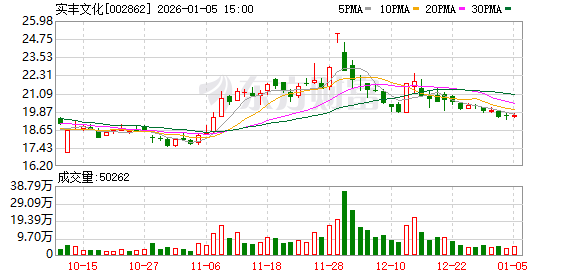
实丰文化近1.2亿元业绩补偿款难收:只拿到不足300万元 最近两个月更是“分文未入”
Mei Ri Jing Ji Xin Wen· 2026-01-05 15:43
Core Viewpoint - The company Shifeng Culture has reported significant delays in receiving performance compensation from the guarantors related to its investment in Chaolong Optoelectronics, with only 2.846 million yuan paid out of the promised 115 million yuan [2][3][4]. Group 1: Performance Compensation Issues - The guarantors are obligated to pay a total of 115 million yuan in performance compensation, but only 2.846 million yuan has been received to date, indicating a failure to meet the agreed payment schedule [2][3]. - The guarantors have proposed a repayment plan divided into four installments, with the last payment due by December 30, 2025, but the company has expressed concerns over the guarantors' ability to fulfill these obligations [3][4]. - Despite multiple reminders and communication efforts from the company, no further payments have been made in the last two months, maintaining the total received at 2.846 million yuan since October 2025 [4][5]. Group 2: Financial Performance of Chaolong Optoelectronics - Chaolong Optoelectronics has reported losses for both 2023 and 2024, failing to meet the performance commitments of a minimum net profit of 15 million yuan in 2024 [3][6]. - The company attributes the poor performance to declining prices in the photovoltaic component market, increased operational costs, and the challenges of business expansion [6][5]. - The guarantors have faced regulatory scrutiny from the China Securities Regulatory Commission due to their failure to comply with performance compensation commitments [6].

实丰文化近1.2亿元业绩补偿款难收:只拿到不足300万元,最近两个月更是“分文未入”
Mei Ri Jing Ji Xin Wen· 2026-01-05 15:41
Core Viewpoint - Shifeng Culture has reported significant delays in receiving performance compensation from the guarantors related to its investment in Chaolong Optoelectronics, with only 2.846 million yuan paid out of the promised 115 million yuan as of now [1][3]. Group 1: Performance Compensation Issues - The guarantors are obligated to pay a total of 115 million yuan in performance compensation, but only 2.846 million yuan has been received to date, indicating a failure to meet the payment schedule [1][2]. - The guarantors have proposed a repayment plan divided into four installments, with the last payment due by December 30, 2025, but have cited difficulties in raising funds for the short-term payments [2][4]. - Despite multiple reminders and communications from Shifeng Culture, the guarantors have not made any payments in the last two months, maintaining the total at 2.846 million yuan since October 2025 [3][4]. Group 2: Financial Performance of Chaolong Optoelectronics - Chaolong Optoelectronics has reported losses for both 2023 and 2024, failing to meet the performance commitments of a minimum net profit of 15 million yuan in 2024 [2][4]. - The decline in performance is attributed to a combination of falling prices in the photovoltaic component market, increased operational costs, and the company's ongoing business expansion phase [4]. - Shifeng Culture's investment in Chaolong Optoelectronics, which began in late 2022, has been impacted by intense competition and overcapacity in the photovoltaic industry, leading to significant financial losses [4].
人气高、消费旺、活力足!义乌市场“热气腾腾”迎新年
Sou Hu Cai Jing· 2026-01-05 04:56
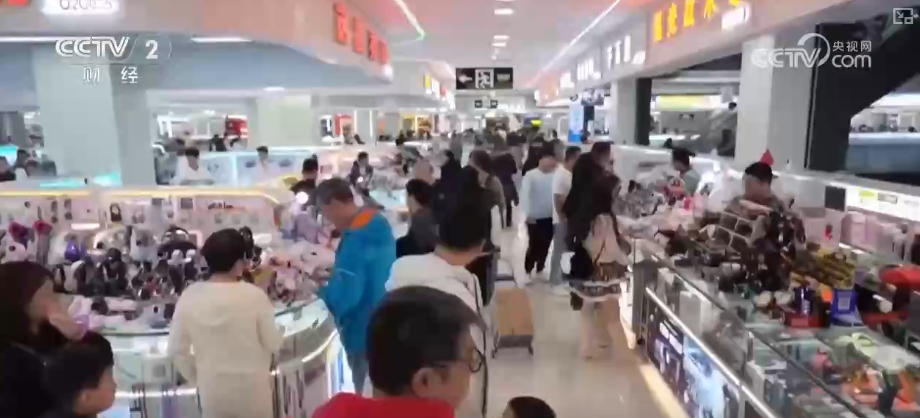
Group 1 - The 2026 New Year holiday period saw a bustling atmosphere in Yiwu International Trade City, with both domestic and international buyers actively shopping, indicating a strong consumer sentiment at the start of the year [3][4] - Orders for popular products, such as plush toys with auspicious meanings, have surged, with one vendor reporting an order exceeding 200,000 yuan, reflecting high demand and a robust supply chain response [6] - The influx of visitors during the holiday has led to a significant increase in sales, with one store reporting a 50% rise in sales compared to normal days, driven by social media recommendations [8] Group 2 - The Yiwu Import Commodity Museum showcased a variety of global products, attracting tourists eager to experience international shopping, highlighting the city's role as a global trade hub [11] - New product launches, such as the Aoki character and plush blind boxes, have generated considerable interest, with one pop-up store attracting over 600 visitors in a single morning, demonstrating the effectiveness of innovative marketing strategies [13] - The overall market sentiment in Yiwu is optimistic, with businesses preparing for a vibrant year ahead, as indicated by the enthusiasm from both consumers and vendors [13]

全球潮玩进化论:在不同坐标里,拆开相似的快乐
Sou Hu Cai Jing· 2026-01-04 07:16
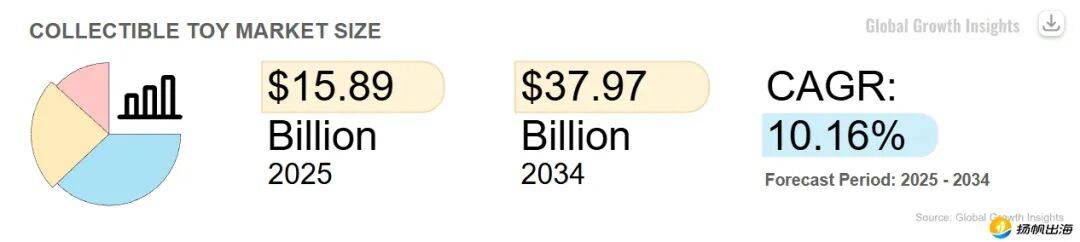
Core Insights - The toy market is experiencing significant growth, particularly in collectible toys, with the global market expected to reach approximately $15.89 billion in 2025 and grow to $37.97 billion by 2034, reflecting a compound annual growth rate (CAGR) of about 10.16% from 2025 to 2034 [1][3] - The trend of adult consumers collecting trendy toys is becoming mainstream, with emotional expression and personal interests driving this consumption shift [3][4] - The U.S. toy market is witnessing structural changes, with adult consumers aged 18 and above increasing their spending by approximately 12% year-on-year in Q1 2025, reaching about $1.8 billion [4] Market Trends - The collectible toy segment, particularly trendy toys, has gained a significant share of over 36% in global consumer preferences, with around 40% of buyers prioritizing limited edition items [1][3] - Emotional support toys are becoming popular, with social media platforms like TikTok showcasing their role in emotional well-being, leading to increased consumer discussions and purchases [3][4] - In the U.S., the toy industry saw a 7% year-on-year sales increase in the first three quarters of 2025, driven by adult consumers and collectible toys [4] Brand Strategies - Brands like Relatable are capitalizing on the emotional support trend by creating products that resonate with consumers' emotional needs, such as the "Emotional Support Pals" series [6][9] - Established IPs are crucial for driving toy sales, as they lower consumer decision-making costs and facilitate long-term purchasing choices [10] - Chinese brand Pop Mart reported a revenue of approximately 13.88 billion RMB in the first half of 2025, a 204.4% increase year-on-year, with significant growth in overseas markets [17][19] Regional Insights - The French toy market reached a total sales volume of 4.3 billion euros in 2024, with around 5 million active collectors spending an average of over 500 euros annually [12] - In Germany, popular brands include LEGO and Playmobil, reflecting consumer preferences for familiarity and quality [14] - The UK toy market saw a sales increase of over 1 billion pounds in the first half of 2025, with licensed toys related to movies and TV shows growing at nearly double the rate of other toys [14] Global Expansion - Chinese brands are increasingly entering the global toy market, with Pop Mart leading the way through social media and limited edition strategies [17][19] - 52TOYS is adopting a dual approach of self-owned and licensed IPs, achieving rapid growth with overseas revenue exceeding 1.47 billion RMB [21] - TOPTOY is exploring overseas markets by leveraging existing channels and localizing production, showing a flexible approach to international retail [23]

中国跨境电商交易会:【广东产业带】大佬云集,广东卫冕跨境第一!
Sou Hu Cai Jing· 2026-01-04 04:21
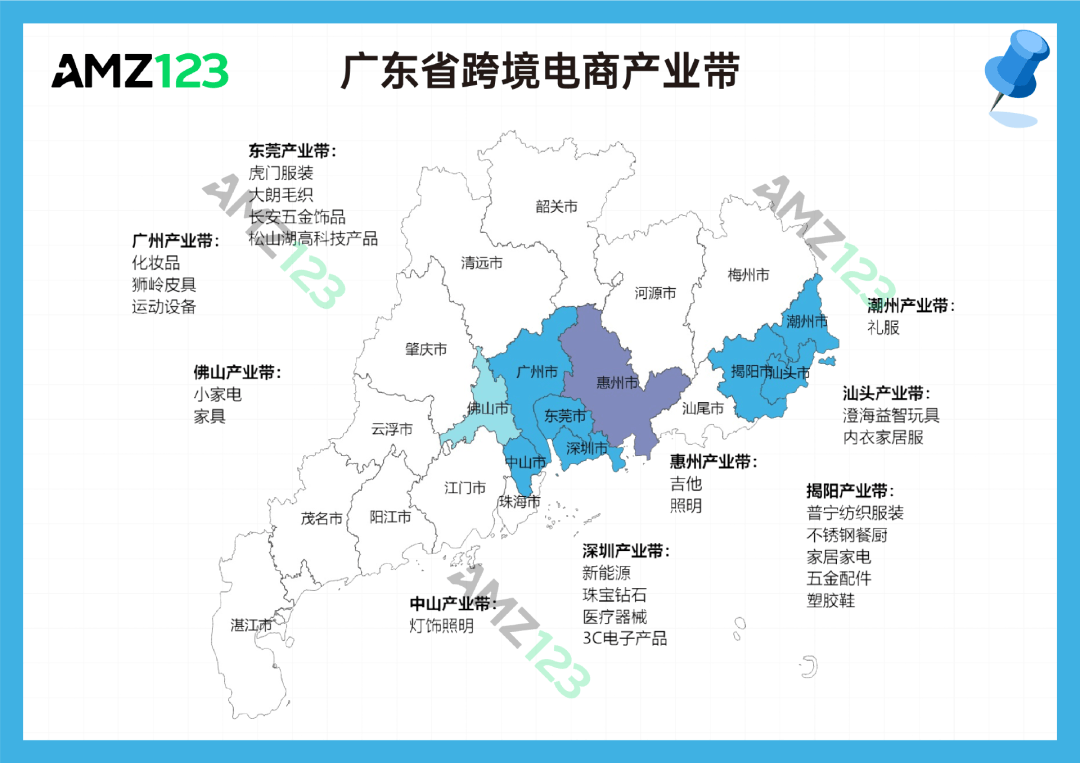
Core Insights - Guangdong has emerged as a leader in China's cross-border e-commerce, with its import and export scale growing from 11.3 billion yuan in 2015 to 745.4 billion yuan in 2024, an increase of approximately 66 times over nine years, accounting for over one-third of the national total [1][21][30] - The province's cross-border e-commerce exports have an average annual growth rate of 51.4%, the highest in the country, supported by a robust manufacturing base and an open economic framework [1][22][30] - Guangdong's cross-border e-commerce is transitioning from "platform distribution + foreign trade wholesale" to "brand export + digital supply chain" [1][21] Industry Overview - The success of Guangdong's cross-border e-commerce is attributed to its comprehensive and systematic manufacturing landscape, particularly in the Pearl River Delta, which has developed stable and specialized industrial belts [4][21] - The region has three main "outbound arteries": the 3C "hardcore belt" in Shenzhen, Dongguan, and Huizhou; the lifestyle belt in Guangzhou and Foshan; and the creative corridor of lighting and toys in Zhongshan, Jiangmen, and Chaozhou [7][12][17] 3C "Hardcore Belt" - The Shenzhen-Dongguan-Huizhou area is known for its dense network of factories and supply chains for electronic products, with Shenzhen housing over 80,000 cross-border e-commerce entities, accounting for about half of the national total [8][9] - Companies like UGREEN and GMKtec exemplify the successful integration of manufacturing and operations, leveraging local supply chains to build strong brands [11][12] Lifestyle Belt - The Guangzhou-Foshan area focuses on fashion and home appliances, with Guangzhou's textile and apparel exports reaching 46.09 billion yuan in 2024, supported by a high-frequency supply chain [12][14] - Brands like SHEIN have established flexible supply chains in Guangzhou, connecting global demand directly to local production [12][14] Creative Corridor - The Zhongshan area is recognized as the "Lighting Capital," with over 30,000 lighting businesses and significant export volumes, while Chaozhou is known for its toy manufacturing, with over 50,000 toy companies [17][18] - The integration of creative design and cross-border e-commerce has transformed local products into recognizable brands on platforms like Amazon [18][19] Infrastructure and Logistics - Guangdong has implemented 166 cross-border trade facilitation measures over the past eight years, enhancing customs efficiency and expanding shipping routes [22][23] - The province's logistics capabilities, including major ports and airports, support a multi-tiered outbound system for cross-border e-commerce [22][24] Economic and Policy Environment - The provincial government actively promotes cross-border e-commerce as a key strategy for foreign trade transformation, establishing comprehensive support systems for businesses [28][29] - The combination of experienced entrepreneurs and a new generation of digital-savvy operators is driving innovation in cross-border e-commerce [26][27] Challenges Ahead - The industry faces challenges in transitioning from volume-based sales to brand-building, as many early sellers struggle to establish lasting brand recognition [31][32] - Rising costs and labor shortages in the Pearl River Delta are prompting a shift in production to lower-cost regions, complicating supply chain management [33][34] Conclusion - Guangdong's early adoption of cross-border e-commerce and its ability to adapt to challenges position it as a likely leader in the next chapter of China's cross-border e-commerce landscape [35]
观察·透视外国游客购物清单上主力产品 解码“中国购”新亮点、新趋势
Yang Shi Wang· 2026-01-03 06:54
Core Insights - The article highlights the increasing influx of foreign tourists to Shenzhen's Huaqiangbei, driven by the optimized visa policies and the appeal of "Chinese manufacturing" products [1][10][14] Group 1: Foreign Tourist Behavior - Foreign tourists are actively purchasing a variety of products, including toys, technology items, and personal care gadgets, often expressing satisfaction with the prices [6][7][13] - Many tourists arrive with empty bags or suitcases specifically to shop, indicating a strong demand for "Chinese-made" goods [8][10] - The average daily foot traffic of foreign visitors to Huaqiangbei exceeds 7,000, with a notable increase in foreign visitors after major trade events [14][46] Group 2: Popular Products - The most sought-after products among foreign tourists include AI glasses, drones, translation devices, and portable cameras, reflecting a trend towards innovative and high-tech items [21][19] - The sales of "Huaqiangbei-made" AI glasses have seen a remarkable year-on-year increase of 270% in overseas markets during the first half of 2025 [19] Group 3: Market Dynamics - The shopping experience in Huaqiangbei is enhanced by the availability of translation devices, making communication easier for foreign visitors [17] - The overall transaction volume in Huaqiangbei is projected to exceed 400 billion yuan in 2025, indicating a robust market for electronic products [46] Group 4: Comparative Insights - Foreign tourists find prices in Huaqiangbei significantly more attractive compared to those in Europe, contributing to the area's popularity as a shopping destination [13][14] - The article also mentions Yiwu, known as the "world supermarket," where foreign visitors are also drawn to innovative products and flexible pricing strategies [22][25]
泡泡玛特-老铺黄金的争议点与解决方向
2025-12-31 16:02
Summary of Conference Call Records Companies Involved - Pop Mart - Laopu Gold Core Insights and Arguments - Both Pop Mart and Laopu Gold utilize consumer-driven marketing for brand promotion, focusing on aesthetic superiority rather than cost-effectiveness to attract consumers, creating a unique "breaking the circle effect" [1][2] - For the second and third quarters of 2025, both companies expect significant profit growth to approximately 13 billion, driven by increased confidence from rising stock prices. However, recent stock price declines have raised doubts about the 30% growth forecast for 2026 [1][2] - There is a notable divergence in market expectations regarding the 30% growth forecast for 2026. While overseas markets continue to show high growth (Pop Mart over 100%, Laopu Gold 150-200% after price increases), the growth rate has declined compared to earlier in the year, raising concerns about sustainability [1][4] - The inability to predict future performance through traditional store-opening methods adds significant uncertainty to the future performance of both companies. There is intense debate between bullish and bearish perspectives regarding their business models and the decline in overseas growth [1][4] Important but Possibly Overlooked Content - Investor confidence is primarily influenced by stock performance and specific sales data. Sales data from January and February 2026, expected in March-April, will provide trend guidance. An increase in stock prices could also enhance market confidence, but the long-term growth potential still requires validation [5] - Pop Mart focuses on building intellectual property (IP) as its core competitive advantage, while Laopu Gold is the world's first jewelry brand primarily made of gold. Both companies have distinct characteristics and have achieved some success overseas, supported by a loyal fan base [3][5] - Investors should recognize the value of these companies and understand their development direction aligns with national policies promoting consumption. Despite short-term uncertainties, there is potential for significant growth if key data points, such as sales figures and stock trends, are monitored [7][6]
明年“国补”范围有增有减,补贴力度有变;泽连斯基否认会谈破裂:与美国对话每天都在继续;伊朗外长:伊朗不会放弃和平核技术|早报
Di Yi Cai Jing· 2025-12-31 00:11
Group 1 - The Chinese government will adjust the scope and intensity of the "national subsidy" policy for the replacement of old consumer goods in 2026, maintaining overall stability while making some changes compared to 2025 [2] - The State Council has released the implementation regulations for the Value-Added Tax (VAT) Law, which will take effect on January 1, 2026, impacting approximately 6 trillion yuan in VAT revenue [4] - The Ministry of Finance and the State Taxation Administration announced a reduction in the VAT rate for individuals selling homes from 5% to 3% starting January 1, 2026, for properties held for less than two years [5] Group 2 - The Ministry of Education plans to introduce policies next year to promote the integration of artificial intelligence in education, aiming to develop a future-oriented educational system [6] - The Ministry of Civil Affairs will establish a minimum living guarantee standard filing system to prevent issues like "raising standards while reducing beneficiaries" [7] - The successful launch of the Shijian-29 satellite by China on December 31, 2025, marks the 623rd flight of the Long March series of rockets [8] Group 3 - The U.S. government has approved South Korean companies to export chip manufacturing equipment to China, indicating a temporary easing of restrictions [11] - Meta has acquired Manus, marking its third-largest acquisition in history, which recognizes Manus's work in the field of general AI agents [17] - The U.S. stock market experienced a slight decline, with the S&P 500 index falling for the third consecutive day, reflecting mixed performance among large tech stocks [18]