
量子计算

Search documents
宇树科技完成IPO辅导,国产机器人链条再迎催化 ;数据传输速率再创新高,我国星地通信技术取得突破——《投资早参》
Mei Ri Jing Ji Xin Wen· 2025-11-17 00:04
Important Market News - Huawei is set to release a breakthrough technology in the AI field on November 21, which is expected to improve the utilization efficiency of computing resources from the industry average of 30%-40% to 70%, significantly unlocking the potential of computing hardware [1] Industry Opportunities - Yushu Technology completed its IPO guidance on November 10 and passed the acceptance check on November 15, with plans to disclose its prospectus in the next 1-2 weeks. The company focuses on the independent research, production, and sales of quadruped/humanoid robots and dexterous robotic arms. Since 2020, Yushu Technology has maintained profitability, with annual revenue exceeding 1 billion yuan. The company’s recent product updates include the G1-D humanoid robot and the H2 full-size humanoid robot. Following its latest financing round, Yushu Technology's valuation exceeded 12 billion yuan. The humanoid robot industry is expected to enter a critical phase in 2025, driven by performance upgrades and cost reductions from leading companies [2][2] - The satellite communication industry is experiencing significant growth, with the current market size estimated at 40-50 billion yuan, projected to exceed 200-400 billion yuan by 2030, with an annual compound growth rate of 10%-28%. The industry is transitioning from "concept validation" to "scale application," with advancements in technology and cost reductions expected to drive a new communication landscape [3][3] - IBM announced significant progress towards achieving quantum advantage by the end of 2026 and fault-tolerant quantum computing by 2029. The company introduced its most advanced quantum processor, "Eagle," expected to be delivered by the end of 2025. The advancements in quantum computing are seen as a strategic focus in global technology competition [4][4] Stock Movements - China Aluminum announced that its current director and vice president plans to reduce his holdings by up to 57,500 shares, approximately 0.00034% of the company's total share capital, due to personal financial needs [5] - Guochuang High-tech announced that a major shareholder plans to reduce its holdings by up to 9,163,252 shares, not exceeding 1% of the total share capital, within three months starting from December 9, 2025 [6] - Xinong Co. announced that its director plans to reduce his holdings by up to 300,000 shares, approximately 0.1925% of the total share capital, due to personal financial needs [6] - Chahua Co. announced that a major shareholder plans to reduce its holdings by up to 7,254,600 shares, not exceeding 3% of the total share capital, due to funding needs [7] - Yifeng Pharmacy announced that two vice presidents plan to reduce their holdings by a total of up to 213,900 shares, not exceeding 25% of their respective holdings, due to personal financial needs [8]

努力实现量子计算机“工程化突破”(迈向“十五五”的创新图景)
Ren Min Ri Bao· 2025-11-16 22:10
Core Insights - The article highlights the significant advancements made by the team in developing China's third-generation autonomous superconducting quantum computer "Benyuan Wukong," which has provided quantum computing services to over 36 million users across 163 countries and regions, completing 710,000 global quantum computing tasks as of October 2025 [2]. Group 1: Quantum Computing Development - Quantum computers are recognized for their powerful computing capabilities, including parallelism and exponential acceleration, which can significantly impact fields such as artificial intelligence, new drug development, and financial engineering [2]. - The team faced challenges in achieving "engineering breakthroughs" in quantum computing, which was previously a blank slate in China, necessitating a trial-and-error approach to transform theoretically feasible technologies into repeatable engineering solutions [2]. Group 2: Measurement and Control Systems - The quantum computing measurement and control system serves as the "nerve center" of the quantum computer, responsible for signal generation, acquisition, and control [3]. - Initial reliance on imported high-end instruments led to high costs and compatibility issues, prompting the team to develop the first domestic quantum computing measurement and control system, "Benyuan Tianji," in December 2018, marking a significant technological breakthrough [3]. - Subsequent iterations of the measurement and control system, including "Benyuan Tianji 2.0" and "Benyuan Tianji 3.0," have improved signal control precision and expanded support for over 100 superconducting qubits, with "Benyuan Tianji 4.0" set to support over 500 qubits by 2025 [3]. Group 3: Overcoming Technical Challenges - The development of high-density microwave interconnect modules posed significant challenges, as quantum chips require operation at extremely low temperatures, necessitating precise signal transmission while isolating heat [4]. - The team collaborated with the China Electronics Technology Group to develop a fully domestically produced high-density microwave interconnect module, significantly reducing costs compared to imported alternatives [4]. Group 4: Future Prospects and Applications - Quantum computing is viewed as a key technology for the next information revolution, with the team committed to continuous advancements in quantum technology [4]. - The article emphasizes the importance of scientific innovation as a core element of new productive forces, showcasing the team's efforts in breaking foreign monopolies and achieving technological upgrades in quantum measurement and control systems [5]. - "Benyuan Wukong" has applications across various fields, including a breast cancer detection system in biomedicine, AI model tuning tasks, and large-scale quantum computational fluid dynamics simulations in aerospace [6].
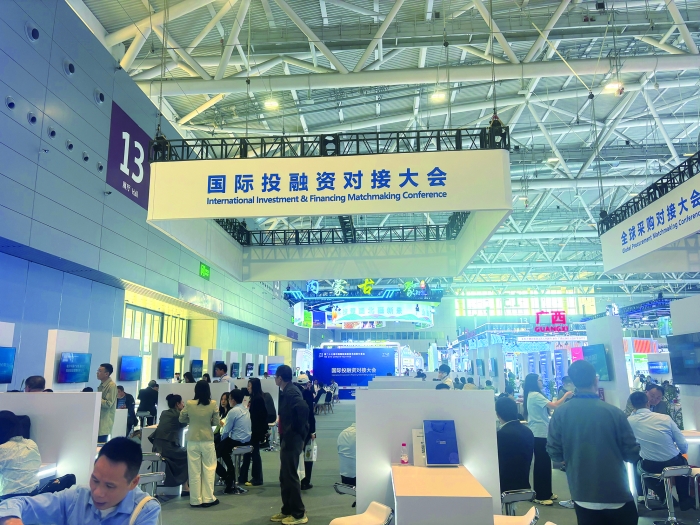
3天1700亿元! 从高交会成绩单看科技创新的“中国机遇”
Shang Hai Zheng Quan Bao· 2025-11-16 17:55
Core Insights - The 27th China International High-Tech Achievements Fair (High-Tech Fair) concluded with a record-breaking intention transaction and financing amount exceeding 170 billion yuan, reflecting strong momentum in China's high-tech innovation [2][5] - The event attracted over 450,000 attendees from more than 120 countries, showcasing over 5,000 new products and achievements, and facilitating 1,023 supply-demand matches and financing project signings [2][5] Group 1: Event Overview - The High-Tech Fair featured various cutting-edge sectors including artificial intelligence, semiconductors, consumer electronics, new energy vehicles, and low-altitude economy, highlighting the forefront of new productive forces [2] - Major state-owned enterprises and leading companies such as BYD, Tencent, and Huawei presented advanced technologies and products, showcasing China's innovative capabilities [5][6] Group 2: Industry Highlights - The robotics sector was prominently featured, with over 90% of physical exhibits showcasing high-tech products, including humanoid robots and exoskeletons, attracting significant attention from international buyers [3][4] - The renewable energy sector also performed well, with over 80 international procurement teams engaging in discussions with domestic companies during specialized events [3][4] Group 3: Investment Opportunities - The fair facilitated global procurement and investment matching, attracting over 1,036 procurement teams from countries like the UK, Russia, and Canada, indicating strong international interest in Chinese innovations [7][8] - Companies like Zero Point and Kenjing Technology reported strong overseas demand for their robotic products, with intentions for applications in various local scenarios [8]

晚报 | 11月17日主题前瞻
Xuan Gu Bao· 2025-11-16 14:29
Aviation Industry - China Southern Airlines' C919 aircraft successfully arrived at Dubai Al Maktoum International Airport on November 14, preparing for the Dubai Airshow from November 17 to 21, 2025. The C919 has received over 1,000 domestic and international orders, marking a significant milestone in China's aviation industry development [1] - Boeing predicts that the Middle East will require 3,000 new passenger aircraft over the next 20 years, valued at over $500 billion. China's fleet is expected to grow at an average annual rate of 4.4%, with a projected total of 9,323 jet aircraft by 2043, making it the largest single aviation market globally [1] Animation Industry - Bilibili held an online launch event for 40 domestic animation works for 2025-2026, including new titles and updates on various IP sequels. The return of "The King's Avatar" TV animation and the announcement of "Chinese Folktales 2" set for January 1, 2026, were highlighted [2] - Since 2018, Bilibili has launched over 3,000 domestic creations, with nearly 970 million hours of viewing time in the past year. The platform's user base reached 330 million, with a 104% year-on-year increase in viewing time for domestic content in Q3 [2] Robotics Industry - CITIC Securities reported the completion of the IPO guidance for Yushu Technology Co., which is positioned to strengthen its industry-leading status in humanoid robotics. The company is noted for its continuous technological and product iterations [3][7] - The demand for domestic production of key systems like aviation engines is expected to drive the expansion of the domestic aviation market and upgrade the industry chain [1] Commercial Space Industry - Blue Origin's "New Glenn" rocket successfully launched on November 13, marking its second flight and the first successful sea recovery of its first stage, making Blue Origin the second company globally to master orbital rocket recovery technology after SpaceX [4] Satellite Internet - The Chinese Academy of Sciences conducted a successful high-rate communication experiment, achieving data transmission rates of 6.0 Gbps in the X-band and 20 Gbps in the Ka-band, indicating significant technological advancements in satellite communication [5] - The satellite communication market is currently valued at approximately 40-50 billion yuan, with projections to exceed 200-400 billion yuan by 2030, reflecting a compound annual growth rate of 10%-28% [5] Quantum Technology - IBM announced significant progress towards achieving quantum advantage by the end of 2026 and fault-tolerant quantum computing by 2029, introducing its most advanced quantum processor, "Quantum Nighthawk," expected to be delivered by the end of 2025 [6] - China's "Zuchongzhi 3" superconducting quantum computer has successfully manipulated 105 qubits, becoming the highest-performing superconducting quantum computing prototype globally [6] Physical AI - Yushu Technology's founder emphasized that AI technology will enable robots to truly "understand the world" in the next decade, with their humanoid robots capable of performing most work actions through offline pre-learning and real-time imitation [7] - The emergence of Physical AI aims to enhance autonomous machines' capabilities in real-world physical interactions, bridging the gap between virtual and embodied intelligence [7]



“新格伦”火箭搭载火星探测器升空,第一级实现海上回收;首台!超导量子计算机有新进展丨智能制造日报
创业邦· 2025-11-15 03:49
Group 1 - China's successful development of high-rate microwave communication technology between satellites and ground, achieving data transmission rates of 6.0 Gbps in X-band and 20 Gbps in Ka-band, setting new records [2] - Blue Origin's "New Glenn" rocket successfully launched a Mars probe for NASA, with the first stage achieving a sea recovery, marking a significant milestone in reusable rocket technology [2] - The first superconducting quantum computer in China, "Tianyan-287," has been built, demonstrating quantum computing superiority by processing specific problems 450 million times faster than the fastest supercomputer [2] - The world's first 100-ton hybrid cycle liquid oxygen kerosene rocket engine, "Red Dragon No. 1," was unveiled, featuring high performance and reliability, capable of over 20 reuses, which will significantly reduce launch costs for China's commercial space industry [2]

“天衍-287”搭建完成 量子计算迈出重要一步
Zheng Quan Ri Bao Wang· 2025-11-14 10:59
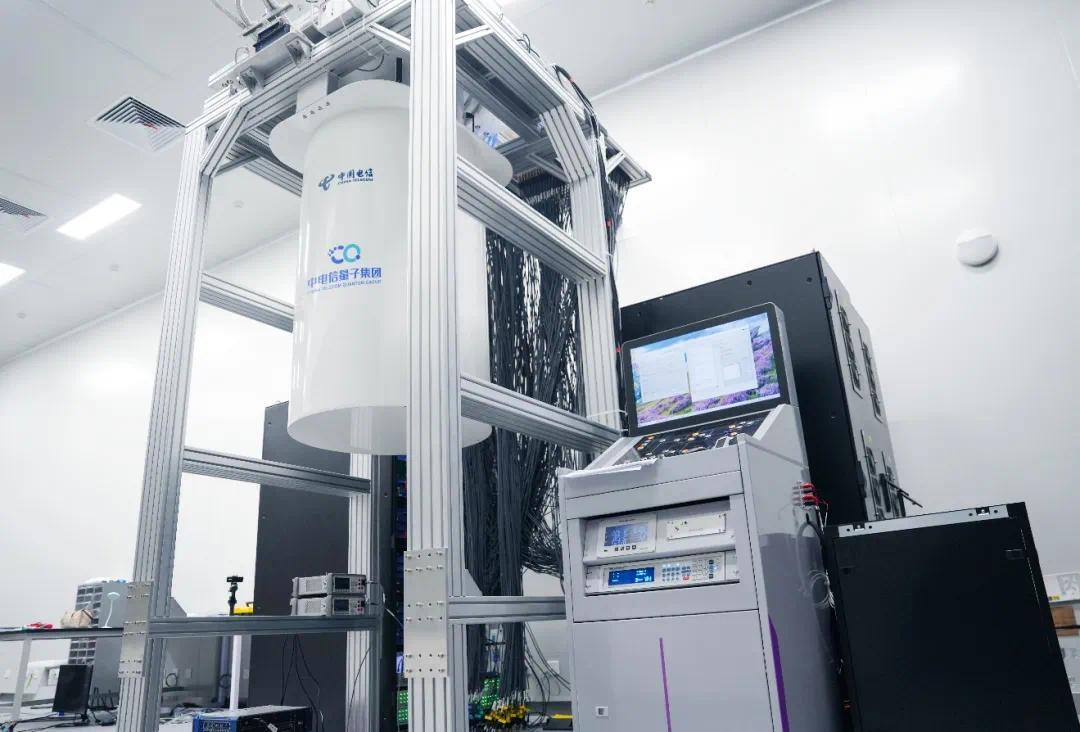
Core Insights - China Telecom has successfully built the superconducting quantum computer "Tianyan-287," which utilizes the same chip as "Zuchongzhi No. 3" and demonstrates "quantum computing superiority" by processing specific problems 450 million times faster than the fastest supercomputers [1][2] - The "Tianyan-287" quantum computing system is set to connect to the "Tianyan" quantum computing cloud platform, marking it as China's first cloud platform with quantum computing superiority, a significant step towards practical applications of quantum computing [1][2] Technical Aspects - "Tianyan-287" features 105 data qubits and 182 coupling qubits, developed by China Telecom's subsidiary, China Telecom Quantum Information Technology Group, in collaboration with GuoDun Quantum Technology Co., Ltd [2] - The construction of the quantum computer showcases breakthroughs in "fully domestic," "AI empowerment," and "super fusion" technologies, with all critical components sourced from domestic manufacturers, establishing a fully localized superconducting quantum computing supply chain [2] System Integration - The integration and debugging of the entire system were key focuses during the construction process, ensuring the stability of the domestic quantum "refrigerator" under high thermal loads, which is essential for the superconducting chip's low-temperature and low-noise operational environment [2] Industry Implications - The quantum computing cloud platform serves as a crucial infrastructure for future applications and is a strategic pivot for building a complete quantum industry ecosystem, facilitating the transition of quantum computing from laboratory research to practical applications [3] - The platform aims to provide computational support to various industry users and research institutions, expanding the application boundaries of quantum computing and enhancing China's core competitiveness and influence in this international frontier [3]


快4.5亿倍,量子计算,大消息
Zheng Quan Shi Bao· 2025-11-14 10:49
Core Viewpoint - The successful construction of the "Tianyan-287" superconducting quantum computer, which utilizes the same chip as the "Zuchongzhi No. 3," marks a significant milestone in China's quantum computing capabilities, demonstrating "quantum computing superiority" by processing specific problems 450 million times faster than the fastest supercomputers [1][3]. Group 1: Quantum Computing Development - Quantum computing is seen as a key technology for the next information revolution, with "quantum computing superiority" being a critical performance indicator that validates the feasibility of quantum systems surpassing traditional supercomputers [3]. - The "Tianyan-287" quantum computer features 105 data qubits and 182 coupling qubits, showcasing its advanced capabilities and is built by a collaboration between China Telecom Quantum Group and GuoDun Quantum [3][4]. Group 2: Technological Breakthroughs - The construction process of the quantum computer highlights three technological breakthroughs: "fully domestic production," "AI empowerment," and "super fusion," with all hardware components sourced from domestic manufacturers [4]. - An AI-enabled automatic calibration system for superconducting chip parameters was developed, allowing for efficient and precise maintenance of the quantum computing system [5]. Group 3: Cloud Platform Integration - The "Tianyan" quantum computing cloud platform will provide global access to quantum computing services, effectively lowering the technical application threshold and accelerating the transition from laboratory research to practical applications [6]. - The cloud platform has already achieved over 37 million visits and serves users from more than 60 countries, with over 2.7 million experimental tasks completed [6]. Group 4: Industry Trends - The current landscape of quantum computing in China shows a positive trend with breakthroughs in hardware, software tools, and collaborative industry efforts, indicating a shift from research breakthroughs to commercial applications [7]. - The main challenge for quantum computing remains identifying genuinely useful applications, with expectations for substantial progress in the next 5 to 10 years as the commercialization race accelerates [8].
快4.5亿倍!量子计算,大消息!
Zheng Quan Shi Bao· 2025-11-14 09:25
Core Insights - The latest achievement in quantum computing is the completion of the "Tianyan-287" superconducting quantum computer, which utilizes the same chip as the "Zuchongzhi No. 3" and demonstrates "quantum computing superiority" by processing specific problems 450 million times faster than the fastest supercomputers [1][3] - This quantum computing system will be integrated into the "Tianyan" quantum computing cloud platform, marking China's first cloud platform with quantum computing superiority, which will be open for global application services [1][3] Group 1: Quantum Computing Development - Quantum computing is considered a key technology for the next information revolution, with "quantum computing superiority" being a critical performance indicator that validates the feasibility of quantum systems surpassing traditional supercomputers [3] - The "Tianyan-287" quantum computer features 105 data qubits and 182 coupling qubits, developed by China Telecom's quantum group in collaboration with Guodun Quantum [3][4] - The construction process of the quantum computer highlights three technological breakthroughs: "fully domestic," "AI empowerment," and "super fusion" [4] Group 2: Technological Innovations - The quantum computer's hardware and components are entirely domestically produced, establishing a fully domestic supply chain for superconducting quantum computing [4] - An AI-enabled automatic calibration system for superconducting chip parameters was developed, enhancing the efficiency and precision of the quantum computing system [4] - The integration of the superconducting quantum computer with the "Tianyi Cloud" supercomputing platform allows for high-bandwidth, low-latency interactions, facilitating collaborative scheduling of computing resources [4][5] Group 3: Cloud Platform and Market Impact - The "Tianyan" quantum computing cloud platform has been launched, combining supercomputing capabilities with 176 qubits of superconducting quantum computing, creating a comprehensive quantum computing product system [6] - The platform has achieved over 37 million visits and serves users in more than 60 countries, with over 2.7 million experimental tasks completed [6] - The current landscape of quantum computing in China shows a positive trend with breakthroughs in hardware, software, and industrial collaboration, indicating a shift from research breakthroughs to commercial applications [6][7]
彩讯股份(300634.SZ):中科酷原已推出国内首台原子量子计算机“汉原1号”
Ge Long Hui· 2025-11-14 07:27
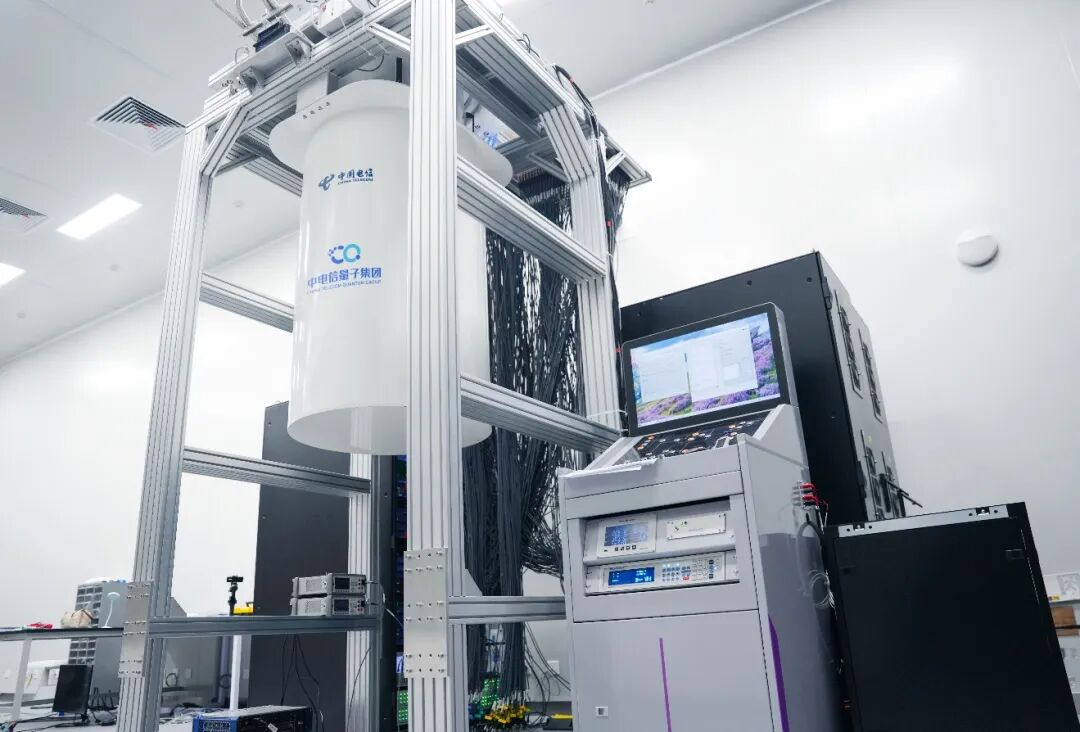
Group 1 - The core point of the article is that Zhongke Kuyuan has launched the first atomic quantum computer in China, named "Hanyuan No. 1" [1] Group 2 - The company, CaiXun Co., Ltd. (stock code: 300634.SZ), announced this development on an investor interaction platform [1]
快4.5亿倍!量子计算大消息
Shang Hai Zheng Quan Bao· 2025-11-14 05:28
Core Insights - The "Tianyan-287" superconducting quantum computer, equipped with the same chip as "Zuchongzhi No. 3," has been successfully built, showcasing "quantum computing superiority" by processing specific problems 450 million times faster than the fastest supercomputers [1][2] - This marks China's first quantum computing cloud platform with "quantum computing superiority," indicating significant progress in the practical application of quantum computing [1] Group 1: Technological Advancements - The "Zuchongzhi No. 3" chip features 105 data qubits and 182 coupling qubits, achieving a speed 15 orders of magnitude faster than current classical algorithms for quantum random circuit sampling tasks [2] - The construction of the quantum computer involved three key technological breakthroughs: domestically produced components, AI-enabled calibration systems, and a fully integrated quantum computing ecosystem [3] Group 2: Future Applications and Goals - The quantum computing platform aims to provide computational support for various industries and research institutions, enhancing China's competitiveness in the international quantum computing arena [4] - The upcoming 2025 Quantum Science and Industry Conference will showcase advancements in quantum technology and applications across multiple sectors, including finance, healthcare, and energy [5]