锂矿

Search documents
未知机构:2025年年中以来储能系统大规模落地推动锂需求与价格实质性转变但在锂价翻倍-20260224
未知机构· 2026-02-24 04:50
Summary of Key Points from Conference Call Records Industry Overview - The lithium market is experiencing significant changes due to the large-scale deployment of energy storage systems since mid-2025, which has driven demand and price shifts for lithium [1][2][3] - The global energy storage system shipment volume is expected to increase by 76% year-on-year in 2025, reaching 612 GWh, with a projected further increase of 50% in 2026 [2][3] Core Insights and Arguments - Lithium carbonate prices peaked at $22,350 per ton in January 2025, marking a new high for 2023 after years of oversupply and low prices [1] - The current surge in lithium prices is deemed excessive, with Morgan Stanley predicting a drop to $15,000 per ton by the second half of 2026 due to weakened demand from the electric vehicle (EV) sector and plans by producers to restore supply [1][6] - The energy storage sector contributed 54% of the increase in lithium demand in 2025, but the growth rate is expected to return to 10% annually from 2027 to 2030 [3][4] Electric Vehicle Market Dynamics - The global EV market is showing signs of significant slowdown, with a projected growth rate drop from 28% in 2025 to 10.4% in 2026 [4] - In January 2025, EV sales in China fell by 20% year-on-year, influenced by the withdrawal of incentive policies and reduced subsidies [2][4] - The demand for lithium from the EV sector accounts for 56% of total lithium demand, indicating that weakness in this area will directly impact lithium prices [2][3] Supply Chain and Production Adjustments - Several mining companies, particularly in Australia, are evaluating the feasibility of restarting previously halted lithium projects due to rising prices [2][5] - Notable projects include the Ningde Times' Jianxiawo lithium mine, which has received environmental permits and is expected to resume production soon [5] - The global lithium supply is projected to increase by 23% in 2026, with significant contributions from China and Argentina [5] Risks and Challenges - There are potential risks in the energy storage market, including a significant divergence between shipment and installation volumes, which could lead to an oversupply of lithium by 2027 [3] - The expiration of tax incentives in the U.S. and stricter raw material sourcing requirements may lead to a contraction in the U.S. energy storage market [3] - The overall outlook for lithium remains cautious, with the possibility of a market shift from shortage to surplus if the EV market continues to weaken [6] Conclusion - Despite the ongoing growth logic in the energy storage sector, the rapid increase in lithium prices has surpassed its potential for further growth, leading to a forecasted decline in prices by late 2026 [6] - The balance of risks includes both upward pressures from potential supply delays and downward pressures from a deteriorating EV market and internal rate of return challenges in storage projects [6]

未知机构:摩根士丹利当前锂价已过度上涨存在下行预期碳酸锂价格将跌至15万美元-20260224
未知机构· 2026-02-24 04:10
Summary of Key Points from the Conference Call Industry Overview - The focus is on the lithium industry, particularly the pricing and demand dynamics of lithium carbonate, which has seen significant fluctuations in recent years [1][2]. Core Insights - Morgan Stanley indicates that the current lithium prices have risen excessively, predicting that lithium carbonate prices will drop to $15,000 per ton by the second half of 2026 [1][2]. - After years of oversupply and low prices, lithium carbonate prices peaked at $22,350 per ton in January 2023, marking a new high for the year [3]. - The surge in lithium prices is attributed to a substantial increase in global energy storage system shipments, which are expected to grow by 76% year-on-year in 2025, with a further 50% growth anticipated in 2026 [3]. Demand Dynamics - The demand for lithium in energy storage systems is projected to account for 25% of total lithium demand by 2025, with a significant increase in consumption expected [4]. - The electric vehicle (EV) sector, which currently represents 56% of lithium demand, is experiencing a slowdown, impacting overall lithium demand growth [6]. - In January 2023, EV sales in China dropped by 20% year-on-year, reflecting a broader trend of declining growth in the EV market due to the withdrawal of incentive policies and reduced subsidies [3][6]. Supply Side Adjustments - Lithium mining companies are responding to market changes, with several considering the restart of previously halted lithium projects due to rising prices [4][6]. - Notable projects include the approval of environmental permits for the Ningde Times lithium mine, which is expected to resume production soon [4]. - The supply of lithium is projected to increase by 23% year-on-year in 2026, with significant contributions from China and Argentina [7]. Risks and Challenges - There are potential risks in the energy storage market, including a significant disparity between shipment volumes and installed capacity, which could lead to an oversupply of lithium by 2027 [5]. - The U.S. energy storage market may contract due to the expiration of tax incentives and stricter material sourcing requirements, with a projected 11% decline in large-scale installations in 2026 [5]. - The overall lithium demand growth rate is expected to decline from 29% in 2025 to 18% in 2026, primarily due to the slowdown in the EV sector [6]. Conclusion - Morgan Stanley's outlook suggests that while the growth logic for energy storage remains, the excessive rise in lithium prices limits further upward potential. The forecast indicates a significant price drop by late 2026, driven by a combination of supply recovery and weakening demand from the EV sector [7].
长江有色:资金涌入、情绪回暖,24日碳酸锂或上涨
Xin Lang Cai Jing· 2026-02-24 03:57
Group 1 - The core viewpoint of the articles highlights a strong upward trend in lithium carbonate prices, driven by optimistic market sentiment and supply constraints [1][2]. - Major investment banks have released bullish reports on the lithium market, predicting a new upward cycle and significantly raising price forecasts for lithium carbonate [1]. - There is a notable divergence between "effective capacity" and "nominal capacity" in the supply side, with some production being halted due to environmental reviews, leading to expectations of tight supply in the short term [1]. Group 2 - The demand for energy storage systems has surged, becoming a major contributor to lithium demand growth, effectively offsetting the slowdown in traditional battery growth [1]. - Despite the strong price increase, there are sharp market divergences, with bearish views suggesting that high prices may stimulate the restart of idle and delayed capacities, potentially leading to oversupply [2]. - The market is entering a complex pricing phase focused on "effective supply," and investors should monitor the resumption of production in major lithium mining regions and the acceptance of high prices by downstream companies [3].


碳酸锂数据日报-20260224
Guo Mao Qi Huo· 2026-02-24 03:30
Group 1: Report Industry Investment Rating - No information provided Group 2: Core Viewpoints of the Report - In January 2026, the new energy vehicle market operated smoothly, with production and sales of 1.041 million and 0.945 million vehicles respectively, and exports of 0.302 million vehicles, a year-on-year increase of 100%. In February, affected by the Spring Festival, both supply and demand decreased, and it is expected that both supply and demand will increase in March. In the short term, the pre - holiday stocking demand of downstream enterprises is basically completed, and the pre - holiday market may be dull, fluctuating in the range of 130,000 - 150,000. It is recommended to control risks before the festival due to the battery rush - export demand at the end of the quarter [3] Group 3: Summary by Relevant Catalogs Lithium Compounds - The average price of SMM battery - grade lithium carbonate is 143,750 yuan, up 1,250 yuan; the average price of SMM industrial - grade lithium carbonate is 140,250 yuan, up 1,250 yuan [1] Lithium Ore - The price of lithium spodumene concentrate (CIF China, Li20: 5.5% - 6%) is 2,000 yuan; the price of lithium mica (Li20: 1.5% - 2.0%) is 3,125 yuan, up 60 yuan; the price of lithium mica (Li20: 2.0% - 2.5%) is 4,640 yuan, up 65 yuan; the price of phospho - lithium - aluminum stone (Li20: 6% - 7%) is 13,340 yuan, up 90 yuan; the price of phospho - lithium - aluminum stone (Li20: 7% - 8%) is 14,300 yuan, up 100 yuan [1][2] Cathode Materials - The average price of lithium iron phosphate (power type) is 52,015 yuan, up 305 yuan; the average price of ternary material 811 (polycrystalline/power type) is 200,850 yuan, up 400 yuan; the average price of ternary material 523 (single - crystal/power type) is 176,400 yuan, up 400 yuan; the average price of ternary material 613 (single - crystal/power type) is 177,900 yuan, up 500 yuan [2] Price Spreads - The price spread between battery - grade and industrial - grade lithium carbonate is 3,500 yuan; the price spread between battery - grade lithium carbonate and the main contract is - 8,890 yuan, down 1,970 yuan; the price spread between the near - month and the first - continuous contract is - 1,740 yuan, down 160 yuan; the price spread between the near - month and the second - continuous contract is - 2,140 yuan, down 720 yuan [2] Inventory - The total inventory (weekly, tons) is 102,932 tons, down 2,531 tons; the inventory of smelters (weekly, tons) is 16,920 tons, down 1,436 tons; the inventory of downstream enterprises (weekly, tons) is 44,492 tons, up 835 tons; the inventory of others (weekly, tons) is 41,520 tons, down 1,930 tons; the registered warehouse receipts (daily, tons) is 38,759 tons, up 1,477 tons [2] Profit Estimation - The cash cost of purchasing lithium spodumene concentrate externally is 145,499 yuan, and the profit is - 3,706 yuan; the cash cost of purchasing lithium mica concentrate externally is 142,147 yuan, and the profit is - 3,742 yuan [3]
2026年锂行业策略:如日之升,锂矿二次迸发大时代
Orient Securities· 2026-02-23 10:45
Investment Rating - The report maintains a "Positive" outlook for the lithium industry [5] Core Viewpoints - The lithium industry is expected to transition from a state of "realistic oversupply" to "future tightness," marking 2026 as a pivotal year for price recovery [19] - The financial attributes of lithium have strengthened, with market expectations likely to lead pricing ahead of fundamental improvements [20] - The absolute price heights may be difficult to replicate, but a gradual increase in the price floor is more certain [21] Summary by Sections 1. Overall Viewpoint Discussion - 2026 is anticipated to be a turning point for lithium prices, moving from a low base to a higher equilibrium due to limited supply elasticity and sustained demand growth [19] - The demand for lithium is projected to maintain a compound growth rate of over 20%, driven by the expansion of renewable energy installations and AI-related infrastructure [19] 2. 2025 Lithium Price Review - In Q1 2025, lithium prices experienced fluctuations due to supply constraints and strong demand expectations, with prices peaking at approximately 78,500 CNY/ton [22] - Q2 2025 saw a decline in prices due to a supply-demand imbalance, with prices dropping to around 60,400 CNY/ton by the end of June [29] - Q3 2025 marked a recovery in prices, driven by supply-side disruptions and seasonal demand increases, with prices reaching approximately 72,700 CNY/ton by September [36] 3. Demand Analysis - The demand for lithium batteries is expected to grow significantly, with energy storage becoming a core growth driver, potentially surpassing 30% of total lithium demand by 2026 [8] - The global electric vehicle market is projected to continue its growth trajectory, although at a slightly reduced pace [19] 4. Supply Analysis - Capital expenditures in the lithium sector have decreased significantly, leading to a structural delay in new project approvals and expansions [10] - The report anticipates limited new supply additions in the coming years, with a projected net increase of 448,000 tons of lithium carbonate equivalent (LCE) in 2026 [18] 5. Supply-Demand Balance Analysis - The report suggests that the lithium market may not require a complete supply clearing to reverse the current trends, as both supply and demand are expected to increase [38] - Inventory levels are seen as a lagging indicator rather than a decisive factor in price movements [39] 6. Investment Recommendations - Companies with expansion projects in the next three years are highlighted as potential investment opportunities, including Dazhong Mining, Guocheng Mining, and Shengxin Lithium Energy [12] - Companies with diversified business models that can stabilize profits amid lithium price fluctuations are also recommended, such as Zhongmin Resources and Yahua Group [12]


外资巨头上调锂价预测,这3家龙头企业被重点提及(名单)
Mei Ri Jing Ji Xin Wen· 2026-02-23 00:50
Group 1 - UBS has significantly raised its price forecasts for lithium spodumene and lithium carbonate, predicting a price of $3,131 per ton for spodumene (up 74%) and $26,000 per ton for lithium carbonate, indicating a strong bullish outlook for the lithium market [3] - The report highlights that the global lithium demand is expected to double to 3.4 million tons by 2030, driven by the electric vehicle (EV) market and battery energy storage systems (BESS) [3][6] - UBS emphasizes that the lithium industry is entering its third major pricing cycle, supported by strong structural demand and delayed supply responses [6] Group 2 - The report identifies three leading Chinese lithium companies: Tianqi Lithium, Ganfeng Lithium, and China Salt Lake, and has raised their performance expectations [10] - Tianqi Lithium is characterized as a "resource-dominant" company, leveraging its control over high-quality lithium resources to maintain profitability [10][11] - Ganfeng Lithium is noted for its "full industry chain synergy," covering lithium extraction, processing, battery manufacturing, and recycling, which positions it well for future growth [10][11] Group 3 - The report indicates that the cost of a single battery has decreased to $55 per kWh, nearly a 50% reduction since 2020, with manufacturing costs continuing to decline at about 10% annually [2] - UBS forecasts that by 2030, Chinese automakers could capture approximately 35% of the global EV market share due to lower battery costs [2] - The demand for energy storage is expected to escalate globally, with projections indicating that by 2035, energy storage will account for 42% of global lithium demand [6]
瑞银唱多“中国锂”,上调锂价预测
Mei Ri Jing Ji Xin Wen· 2026-02-22 11:10
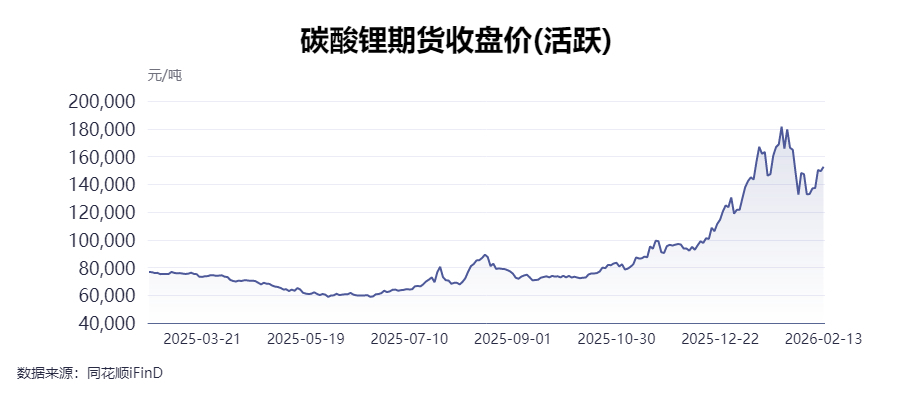
Group 1: Market Outlook - UBS has significantly raised its price forecasts for lithium spodumene and lithium carbonate, predicting a price of $3,131 per ton for spodumene (up 74%) and $26,000 per ton for lithium carbonate, which is approximately 185,000 RMB per ton [3] - The report indicates that the global lithium demand is expected to double to 3.4 million tons by 2030, marking the beginning of the third lithium price supercycle [3][6] - UBS believes that the electric vehicle (EV) industry is approaching a "triple balance," where costs, range, and charging times are converging, thus driving demand for lithium [2][6] Group 2: Demand Drivers - The demand for lithium is being driven by the explosive growth in energy storage systems (BESS) and electric vehicles, with UBS projecting that by 2035, energy storage will account for 42% of global lithium demand [6] - The cost of battery production has decreased significantly, with the total cost per kilowatt-hour dropping to $55, nearly a 50% reduction since 2020, and an annual decline of about 10% expected to continue [2][6] Group 3: Company-Specific Insights - UBS has raised expectations for three major Chinese lithium companies: Tianqi Lithium, Ganfeng Lithium, and China Salt Lake, aligning with a cyclical investment strategy [10] - Tianqi Lithium is characterized as a "resource-dominant" company, leveraging its control over high-quality lithium resources to maintain profitability [11] - Ganfeng Lithium is noted for its "full industry chain synergy," covering lithium extraction, processing, battery manufacturing, and recycling [11] - China Salt Lake is recognized for its "cost advantage," focusing on lithium extraction from salt lakes and maintaining low production costs through innovative technology [12]
瑞银唱多“中国锂” 上调锂价预测 业内称其对供给释放判断偏保守、储能需求预估偏高
Mei Ri Jing Ji Xin Wen· 2026-02-22 11:10
Group 1 - UBS has a positive outlook on "China Lithium," significantly raising price forecasts for lithium spodumene and lithium carbonate, indicating the market has entered a third lithium price supercycle [1][3] - The report highlights that the demand for lithium will continue to grow due to the gradual realization of the "triple balance" in electric vehicles and the global explosion in energy storage demand [2][6] - UBS predicts that global lithium demand will double to 3.4 million tons by 2030, with energy storage expected to account for 42% of global lithium demand by 2035 [3][6] Group 2 - UBS has raised expectations for three Chinese lithium companies: Tianqi Lithium, Ganfeng Lithium, and China Salt Lake, aligning with a cyclical investment strategy [10] - Tianqi Lithium is characterized as a "resource-dominant" company, leveraging its control over high-quality lithium resources to maintain profitability [10][11] - Ganfeng Lithium is noted for its "full industry chain synergy," covering lithium extraction, processing, battery manufacturing, and recycling, which enhances its market position [10][11]
碳酸锂期现 “劈叉”!
Xin Lang Cai Jing· 2026-02-19 01:22
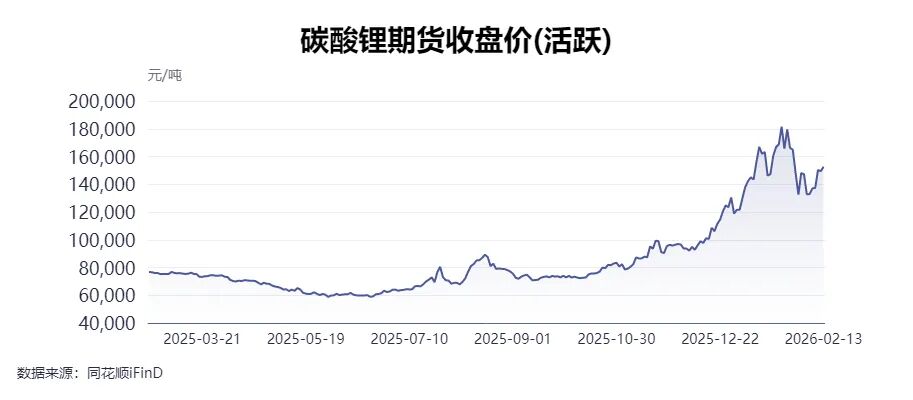
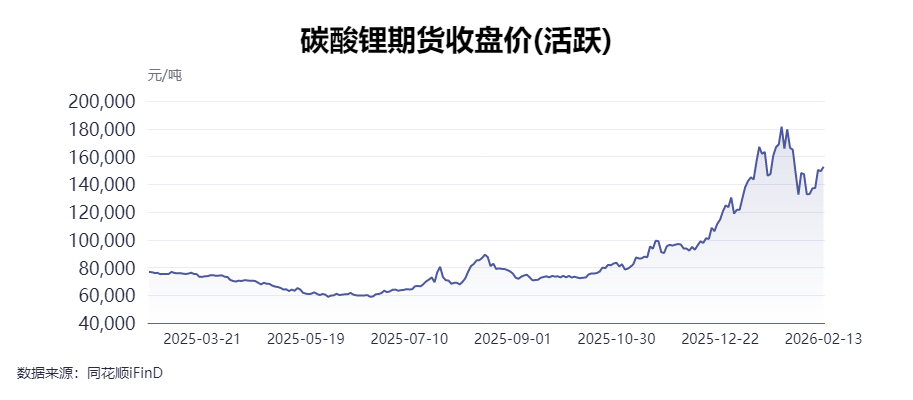
(来源:矿权资源网) 另一方面,期货市场对供应端风险的定价更趋理性。从产业实单来看,尼日利亚动荡尚未影响实际进口 节奏,10月我国从该国进口锂辉石11万吨,虽环比减少8%,但仍保持高位水平;国内供应端也呈现边 际宽松迹象,部分前期检修的锂盐产能已逐步复产,对冲了海外潜在风险。此外,全球储能电芯前三季 度出货410.45GWh,同比增长98.5%,新能源汽车1-10月产量同比增长33.1%且10月销量占比首超50%, 这些长期需求数据虽支撑行业信心,但期货市场更关注短期兑现节奏,导致期现走势出现分化。 来源:矿权资源网 对于后市走势,机构普遍认为短期期现分化或持续,但中长期偏强格局未改。短期核心变量在于尼日利 亚局势的发酵程度——若当地实施采矿暂停令,全球锂矿潜在供应量将减少约5%,可能引发现货价格 进一步冲高;若仅针对非法采矿整顿,价格或回归震荡。从中长期看,中信期货指出,锂资源供应回升 速度滞后于需求增长,2026年供需紧平衡格局仍将延续,叠加新能源汽车以旧换新、储能经济性提升等 政策红利,碳酸锂行业有望开启新一轮上行周期。 长江有色金属网数据显示,长江综合2025年12月9日,电池级碳酸锂99.5%均价报 ...
万斯正式向中方下达战书,50多国齐聚华盛顿,把高市早苗高兴坏了
Sou Hu Cai Jing· 2026-02-18 16:47
Core Viewpoint - The U.S. Vice President announced a significant decision to establish a "critical mineral price floor" and impose "adjustment tariffs" in collaboration with allies, aiming to challenge China's dominance in the global mineral market [3][5][6]. Group 1: Meeting Overview - The "critical minerals ministerial meeting" was convened in Washington, attended by representatives from 55 countries, including Germany, Brazil, India, and Japan, indicating a united front against China's market monopoly [3][5]. - The meeting focused on creating a new "critical mineral trade alliance" to ensure that mineral market prices are not controlled by a single country but managed collectively by alliance members [3][5]. Group 2: Strategic Implications - The U.S. government's policy shift reflects a strategic change from the previous administration's "America First" approach to a multilateral strategy in response to China's stronghold in the mineral sector [6][10]. - The establishment of a price floor aims to stabilize mineral prices, which is crucial for the U.S. economy and national security, particularly for industries like high-tech weapons, semiconductors, and electric vehicles [8][14]. Group 3: Japan's Role - Japan plays a critical role in this alliance due to its significant demand for essential minerals like rare earths and lithium, and it has expressed a strong commitment to countering China's influence [10][12]. - The collaboration between the U.S. and Japan in the mineral supply chain has been ongoing since 2025, focusing on joint resource development and risk-sharing [12]. Group 4: Challenges and Responses - The proposed alliance aims to reshape the global supply chain and ensure supply security for the U.S. and its allies, while also providing private financing support for member countries [14][16]. - China's response emphasizes its constructive role in maintaining global supply chain stability, despite facing increased external pressure from the U.S. and its allies [16][19].