财富管理

Search documents
盈米基金、阿里云发布行业首个理财智能体评测标准和模型,AI投顾进入实战阶段
Sou Hu Wang· 2025-09-27 02:25
Core Insights - The launch of FinMCP-Bench (FinBench) and the Dianjin-Qieman model marks a significant advancement in AI applications within the wealth management sector, providing a measurable standard for AI model performance and enhancing the capabilities of investment advisory services [1][4][8] - The collaboration between Yingmi Fund and Alibaba Cloud aims to address the challenges faced by the wealth management industry in its digital transformation, focusing on personalized investor needs through AI technology [2][6] Group 1: FinBench Overview - FinBench is the first evaluation benchmark specifically designed for AI models in wealth management, focusing on the critical "tool invocation" capabilities essential for investment advisory services [4][5] - The dataset for FinBench is derived from real user interactions on the Qieman APP, capturing complex scenarios in wealth management, such as account diagnostics and asset allocation suggestions [5] - FinBench not only assesses AI models' semantic understanding and knowledge inquiry abilities but also emphasizes the accuracy of tool invocation and the standardization of advisory service processes [5] Group 2: Dianjin-Qieman Model - The Dianjin-Qieman model is designed to effectively utilize tools to solve real-world problems, addressing common issues faced by financial AI models, such as model hallucination and data quality [6][8] - This model is based on Qwen3 and incorporates a robust underlying logic for tool invocation, enhancing decision-making capabilities in complex scenarios [6] - The Dianjin-Qieman model has demonstrated superior tool invocation accuracy compared to larger general models and financial models, while also improving service response speed by 50% [6][8] Group 3: Industry Impact - The introduction of FinBench and the Dianjin-Qieman model provides a clear and feasible development path for the intelligent transformation of the wealth management industry, enhancing efficiency and quality in model selection and financial application development [8] - This innovation is expected to facilitate high-quality development in the wealth management sector, ultimately delivering professional services to a broader range of investors [8]

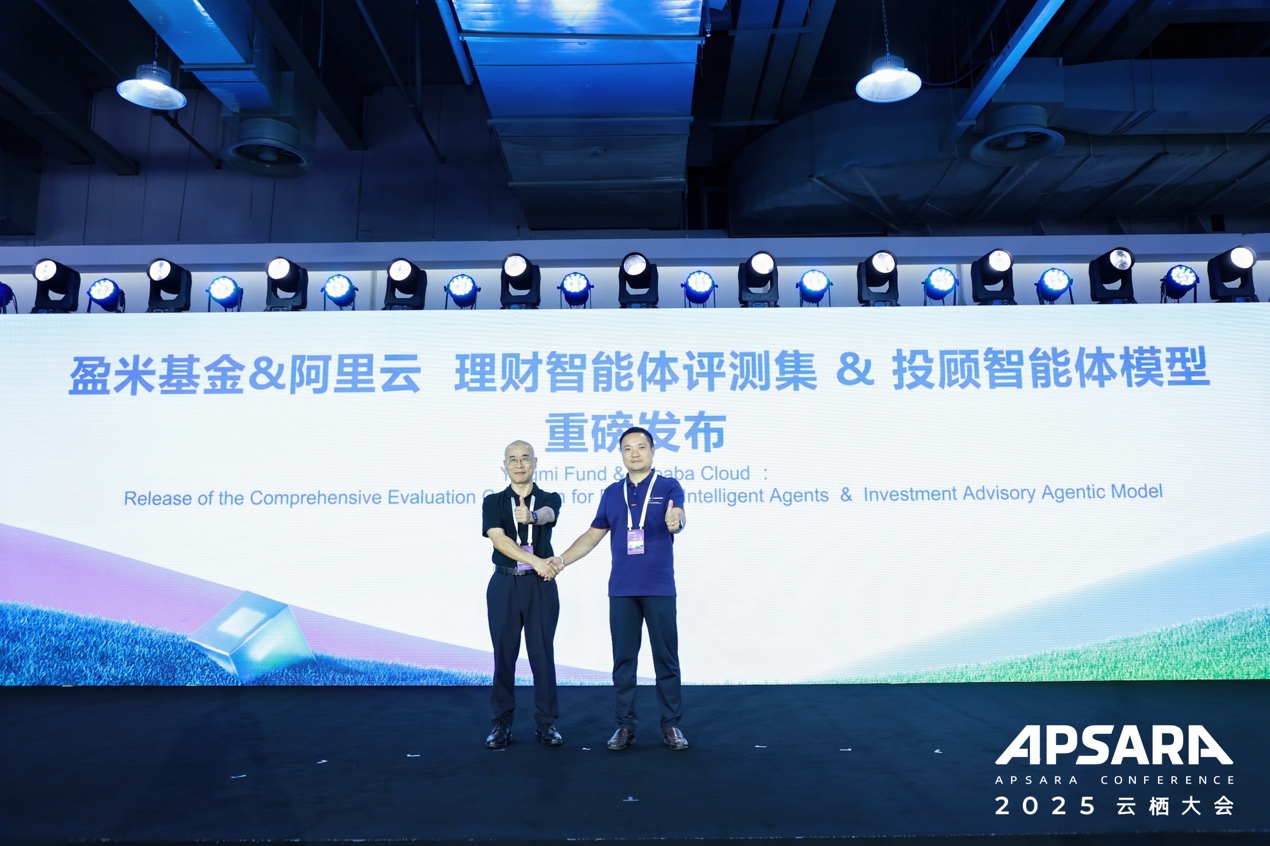
盈米基金联合阿里云发布理财智能体评测集和投顾智能体模型
Zhong Guo Jing Ji Wang· 2025-09-26 06:00
Core Insights - The collaboration between Yingmi Fund and Alibaba Cloud has led to the launch of FinMCP-Bench (FinBench) and the Dianjin-Qieman model, aimed at enhancing AI applications in wealth management [1][2] - FinBench serves as a specialized assessment tool focused on the core capabilities of wealth management services, derived from real user interactions on the Qianman APP [1] - The Dianjin-Qieman model addresses common challenges in financial vertical AI models, such as model hallucination and data quality, enhancing decision-making capabilities in complex scenarios [2] Group 1 - FinBench is designed to evaluate AI applications in wealth management, providing a score for the services offered to clients [1] - The data for FinBench is sourced from real interactions on the Qianman APP, reflecting diverse and personalized wealth management needs [1] - The Dianjin-Qieman model is based on Qwen3 and utilizes deep learning to optimize AI model performance in financial applications [2] Group 2 - The joint release of FinBench and the Dianjin-Qieman model represents an innovative approach to facilitate the AI transformation in the wealth management industry [2] - This initiative aims to improve efficiency and quality in model selection and financial application development for institutions [2] - The ultimate goal is to provide high-quality wealth management services to a broader range of investors [2]
打造“紫金财富管理”品牌名片 政银企共建首都财富管理新生态
Zhong Guo Jing Ying Bao· 2025-09-25 12:41
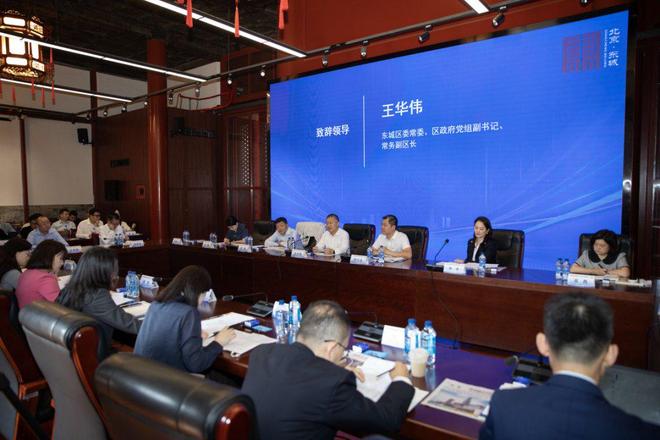
Core Insights - The "Zijin Wealth Management" brand was launched by the Dongcheng District government in Beijing, aiming to provide comprehensive wealth management solutions for entrepreneurs through a collaborative platform involving various financial institutions and academic organizations [1][3][4] Group 1: Brand Launch and Objectives - The "Zijin Wealth Management" brand is a strategic initiative supported by the Beijing Municipal Financial Office, designed to promote the development of the private economy and provide cross-cycle wealth management solutions [3][4] - The brand aims to create a replicable and scalable wealth management service model, enhancing the financial ecosystem for high-net-worth individuals [1][4] Group 2: Event Highlights - The inaugural event featured discussions among representatives from multiple financial institutions, focusing on innovative practices in wealth management and the importance of collaboration among institutions [5][6] - Key speakers emphasized the role of financial services in supporting the growth of the private economy and the increasing demand for wealth management among high-net-worth individuals during the transition of economic dynamics [3][5] Group 3: Future Directions - The establishment of the "Zijin Wealth Management" brand marks a significant step towards building a modern wealth management service system in Dongcheng District, leveraging local financial resources and cultural heritage [6][7] - Future efforts will focus on deepening collaboration among government, financial institutions, enterprises, and media to foster a healthy and cooperative wealth management ecosystem [5][6]
瑞银财富管理CIO:黄金价格或有进一步上行空间
Sou Hu Cai Jing· 2025-09-25 06:16
Group 1 - UBS Wealth Management's Chief Investment Office (CIO) suggests that gold prices may have further upside potential due to the possibility of the Federal Reserve easing monetary policy and persistent high inflation, which could lead to a decline in U.S. real interest rates, benefiting gold [1][1][1] - UBS forecasts that by mid-2026, spot gold prices could reach $3,900 per ounce, continuing to view gold as an effective tool for portfolio diversification and risk hedging [1][1][1] Group 2 - UBS has upgraded its ratings for the Japanese and Indonesian markets from "neutral" to "attractive," citing reasonable upside potential in the Japanese stock market and favorable conditions for the Indonesian market due to new government measures aimed at boosting economic growth [1][1][1] - In the Chinese market, abundant liquidity and accelerated technological innovation have heightened investor sentiment, with UBS believing that there is still room for growth in the Chinese stock market, particularly as household savings flow into the market, leading to potential revaluation in sectors like robotics, with Chinese tech stocks being a top choice [1][1][1]
瑞银财管:料2026年中黄金见3900美元 亚洲货币未来一年或升值4%
Zhi Tong Cai Jing· 2025-09-24 11:03
Group 1 - UBS Wealth Management predicts gold prices may rise further, potentially reaching $3,900 per ounce by mid-2026, driven by declining real interest rates, a weaker dollar, and strong investment demand amid geopolitical risks [1] - The firm expects the Federal Reserve to lower rates by an additional 75 basis points before Q1 2026, while the U.S. economy is not anticipated to enter a recession [1] - In Asia, additional monetary and fiscal support measures are being implemented, with expectations of a stronger Asian currency due to the rebound of the renminbi and exporters converting significant dollar revenues back to local currency [1] Group 2 - UBS believes the Chinese stock market has not yet peaked, with significant household savings expected to flow into the market, leading to potential revaluation in sectors like robotics, making Chinese tech stocks a preferred choice [2]

这一百年指数,或戳破美股“牛市幻境”
Guo Ji Jin Rong Bao· 2025-09-23 12:32
Group 1 - The Dow Jones Industrial Average, S&P 500, and Nasdaq indices reached intraday all-time highs on September 22, continuing a bullish trend from the previous week, with the Russell 2000 index also hitting its highest closing level since 2021 [1] - The market's positive reaction followed a 25 basis point interest rate cut by the Federal Reserve, which, although expected, has contributed to investor optimism [1] - The S&P 500 index has risen over 30% since its low in early April, marking 28 new highs this year, driven by better-than-expected corporate earnings, economic resilience, and positive sentiment towards the Fed's rate cuts [1] Group 2 - The Dow Jones Transportation Average (DJTA) has not followed the broader market's upward trend, instead declining this year, raising concerns among market observers about the sustainability of the current market rally [1][2] - Charles Dow's theory suggests that the DJTA should rise alongside the Dow Jones Industrial Average to confirm a broad market rebound, leading to skepticism about the current market conditions [2] - Factors such as tariff fluctuations and a slowing global economy are seen as headwinds for transportation stocks, which could impact the overall market [2]
审慎美联储支撑美元韧性
Jin Tou Wang· 2025-09-23 03:39
Core Viewpoint - The Federal Reserve's current policy stance is cautious rather than dovish, effectively curbing market expectations for aggressive easing in the near term [1] Group 1: Federal Reserve Policy - Officials have hinted at the possibility of two rate cuts by the end of the year, but have also signaled that policy space will be extremely limited thereafter [1] - The Fed is attempting to balance controlling inflation while avoiding excessive weakness in the labor market, indicating a "wait-and-see" strategy that provides the dollar with relative interest rate advantages and safe-haven appeal in a volatile environment [1] Group 2: Market Reactions - The dollar index was reported at 97.32, with a slight increase of 0.01% from an opening price of 97.31 [1] - Short-term resistance for the dollar index is identified at 97.50-97.55, with significant resistance at 97.65-97.70, while support levels are at 97.15-97.20 and important support at 96.95-97.00 [1]
北京城市副中心运河商务区:“三区”叠加政策优势凸显
Zhong Guo Fa Zhan Wang· 2025-09-22 13:32
Core Viewpoint - The Beijing Canal Business District is positioned as a key area for high-quality development, focusing on global wealth management, green finance, and sustainable finance, aiming to attract major enterprises and investment [1][2]. Group 1: Development and Infrastructure - The Canal Business District covers an area of 7.82 square kilometers with a total construction area of 13.79 million square meters, having completed 4.846 million square meters since its development began in 2009 [2]. - Key infrastructure projects include the completion of the main structure for the Huaxia Bank headquarters and ongoing construction of various industrial projects along the Grand Canal [2]. Group 2: Business Growth and Tax Revenue - The district has maintained a registration rate of 10 new enterprises per working day, with over 20,000 registered companies, contributing to 22.5% of the district's total tax revenue in the first seven months of 2025 [3]. - The district generated a tax revenue of 66.2 million yuan in 2024, with a tax output of 2,536 yuan per square meter [3]. Group 3: Policy Advantages and Investment Opportunities - The Canal Business District benefits from a combination of three policy advantages, including the National Service Industry Expansion Comprehensive Demonstration Zone, Free Trade Pilot Zone, and Zhongguancun National Independent Innovation Demonstration Zone, facilitating investment and trade [4]. - New policies include the removal of foreign investment restrictions in manufacturing and certain telecommunications sectors, as well as support for foreign-funded R&D centers [4].
第一声音|对话香港特区政府投资推广署家族办公室环球总裁方展光
Di Yi Cai Jing· 2025-09-22 03:17
Core Insights - 2021 marked a significant year for the development of family offices in Hong Kong, with the establishment of the FamilyOfficeHK team by the Hong Kong government to promote the city as a global family office hub [1] - The family office sector in Hong Kong is experiencing growth due to policy support, market opportunities, and industry resources, positioning it as a key player in global wealth management [1][7] Group 1: Family Office Definition and Function - Family offices are primarily focused on the concept of inheritance, encompassing the transmission of family wealth, values, and beliefs, with 85% of family offices linked to family businesses [1] - The distinction between family offices and family enterprises lies in their focus on wealth management and cultural transmission [1] Group 2: Hong Kong's Role in Wealth Management - Hong Kong serves as a crucial offshore financial center, facilitating Chinese enterprises' international expansion and enhancing their global influence [1][2] - The city offers a unique advantage in wealth management, being both an international financial center and a leading capital hub, which is difficult for other regions to replicate quickly [1][2] Group 3: Global Family Office Demand - Family offices in Hong Kong cater to diverse needs from various regions, including mainland China, Europe, and Southeast Asia, with each group having different levels of familiarity and requirements regarding family governance and wealth management [2][3] - Hong Kong's low tax regime and transparent legal framework attract established European family offices seeking favorable conditions for wealth management [2] Group 4: Promotion and Growth of Family Offices - In 2024, the Hong Kong government organized 260 promotional events, engaging over 1,000 family office managers, highlighting the city's proactive approach to attracting family offices [4][5] - The number of family offices in Hong Kong has rapidly increased, supported by various stakeholders, including banks and professional service providers [5] Group 5: Professional Support and Ecosystem - The Hong Kong government acts as a facilitator for family offices, providing a network of service providers, including 61 international institutions, to support their establishment and operation [5] - Family offices benefit from a robust ecosystem of professionals, including accountants and lawyers, who assist in setting up compliant frameworks for wealth management [5][6] Group 6: Competitive Advantages of Hong Kong - Hong Kong has become the leading hub for ultra-high-net-worth individuals in Asia, with a high density of professionals (267,000) dedicated to wealth management [6] - The city offers a stable and secure investment environment, ensuring investment freedom and transparency, which is crucial for long-term investors [6] Group 7: Future Policy Support - The Hong Kong government plans to further optimize tax policies for family offices to solidify its position as a top global wealth management center [7] - The evolving global wealth management landscape positions family offices as a focal point, with Hong Kong emerging as a new coordinate for global family offices [7]
中国富豪“撤离”新加坡,回流香港?
3 6 Ke· 2025-09-19 12:12
Core Insights - A significant outflow of wealthy individuals from Singapore has been observed, attributed to stricter regulations and compliance measures, leading to a rebalancing of wealth management in Asia rather than a mere "exodus" [1][2][14] Regulatory Environment - Singapore's regulatory framework has tightened, particularly following a major money laundering case in 2023, which has led to increased scrutiny and compliance requirements for high-net-worth individuals [2][5] - The Monetary Authority of Singapore (MAS) has implemented new guidelines that expand the definition of "beneficial owners" and require extensive disclosure, causing concerns among wealthy clients about privacy and governance risks [6][8] - The approval process for setting up family offices has lengthened significantly, from 3-6 months to potentially 12 months, prompting some clients to consider alternatives in Hong Kong and Dubai [6][10] Wealth Migration Trends - There has been a noticeable shift in family office locations, with many wealthy individuals moving their operations back to Hong Kong due to its proximity to business networks and more efficient compliance processes [9][11] - Hong Kong's vibrant capital market and recent IPO successes have made it an attractive destination for entrepreneurs looking to manage their wealth effectively [12][13] - Dubai is emerging as a new wealth hub, offering a favorable tax regime and a growing financial infrastructure, attracting high-net-worth individuals from around the world [14] Market Dynamics - The competition between Singapore, Hong Kong, and Dubai is intensifying, with each location vying for a share of the global wealth management market [1][14] - The shift in family office preferences reflects a broader trend of wealth reallocation based on regulatory environments, capital efficiency, and service offerings [14]