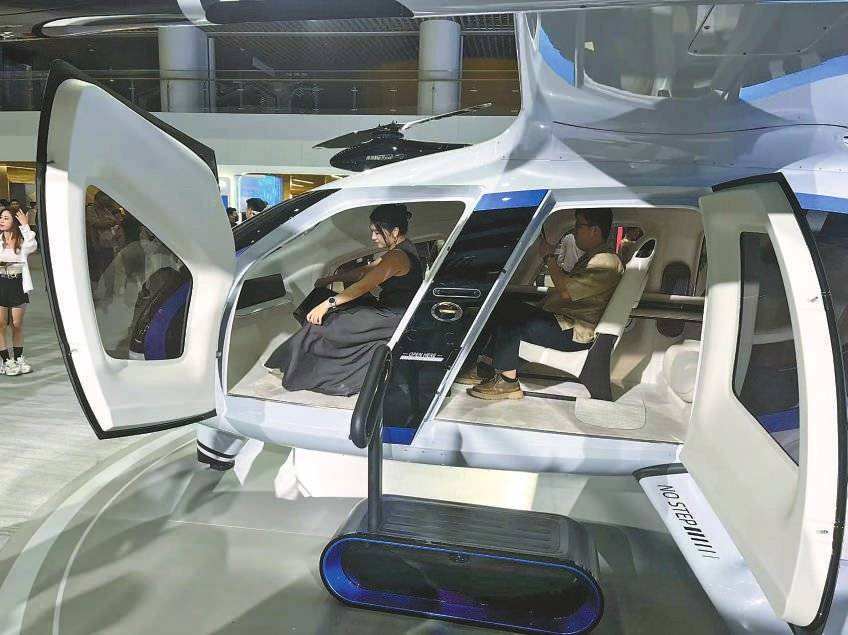
低空飞行

Search documents
车企入局聚合智能产业新机遇 供应链亟待打通
Jing Ji Ri Bao· 2025-10-08 01:46
Core Insights - The integration of smart vehicles, intelligent robots, and low-altitude flying vehicles is seen as a hallmark of new productive forces, with a trend of accelerated convergence among these industries [1][3][4]. Group 1: Industry Trends - The recent first Aggregated Intelligent Industry Development Conference highlighted the potential for these three sectors to merge, leveraging shared technologies and resources [1][3]. - Tesla's recent "Master Plan Part Four" emphasizes AI and robotics, indicating a shift in focus from just electric vehicles to a broader technological ecosystem [3]. - Domestic companies are actively entering the intelligent robotics and low-altitude flying sectors, with over ten automotive and parts manufacturers exploring these fields through various strategies [3][4]. Group 2: Technological Synergy - The three industries share foundational technologies such as artificial intelligence, energy power, and materials, allowing for cross-application of key technologies [4]. - The supply chain overlap between the automotive, robotics, and low-altitude sectors is significant, with over 60% compatibility in their supply chains [5]. Group 3: Cost Reduction and Supply Chain - The lack of a streamlined supply chain is a major barrier to making humanoid robots and flying cars affordable for consumers [5][6]. - Companies are exploring ways to leverage automotive supply chains to reduce costs in the production of new technologies, with expectations to significantly lower prices within 3 to 5 years [6]. Group 4: Challenges in Collaboration - The integration of these industries faces challenges such as standardization, capability alignment, and market size discrepancies [7][8]. - There is a need for innovative collaboration mechanisms to enhance technological and cost competitiveness across these sectors [7][8]. Group 5: Policy and Talent Development - The development of these industries requires a shift from isolated growth to a more integrated approach, emphasizing the importance of policy support and talent cultivation [8].
车企入局聚合智能产业新机遇
Jing Ji Ri Bao· 2025-10-07 22:05
Core Insights - The integration of smart vehicles, intelligent robots, and low-altitude flying vehicles is seen as a hallmark of new productive forces, with a trend of accelerated convergence among these industries [1][3][4] Industry Overview - The recent first Aggregated Intelligent Industry Development Conference highlighted the potential for these three sectors to merge, leveraging shared technologies and resources to create a cohesive industrial ecosystem [1][3] - Tesla's recent focus on AI and robotics in its "Master Plan" indicates a shift towards valuing these technologies, with Musk suggesting that 80% of Tesla's future value may come from its Optimus robot [3][4] Market Dynamics - Domestic automakers are actively entering the intelligent robotics and low-altitude flight sectors, with over ten companies already involved through various strategies such as investment and joint R&D [3][4] - The supply chain overlap between the automotive industry and these emerging sectors is significant, with a reported 60% compatibility in supply chain elements [5][6] Technological Synergies - Key technologies such as AI, energy systems, and materials are common across smart vehicles, robots, and low-altitude vehicles, facilitating their integration [4][5] - Innovations in battery technology, particularly solid-state batteries, are critical for the development of these industries, as they require high energy density solutions [5][6] Challenges and Opportunities - The industry faces challenges in standardization, collaboration, and cost management, which need to be addressed for successful integration [7][8] - The potential for cost reduction in flying cars and robots is significant, with expectations that prices could drop from millions to hundreds of thousands within a few years through automotive supply chain efficiencies [6][7] Strategic Recommendations - A shift from isolated development to a more integrated approach is necessary, promoting cross-industry collaboration and shared technological platforms [8] - The cultivation of interdisciplinary talent and enhanced cooperation between government, industry, and academia is essential for overcoming barriers to development [8]

单点创新奔向聚合发展 ——记首届聚合智能产业发展大会
Zhong Guo Qi Che Bao Wang· 2025-09-24 02:40
Group 1 - The core idea is the integration and collaborative development of the automotive, intelligent robotics, and low-altitude flight industries, emphasizing the need for practical implementation beyond mere rhetoric [2][3] - The establishment of the first Aggregated Intelligent Industry Innovation Center and the Aggregated Intelligent Industry Committee (EAI100) in Wuhan signifies a commitment to fostering innovation in these interconnected sectors [2] - AI technology serves as the foundational layer for smart terminal products across these three industries, facilitating a shift from isolated industry perspectives to a more integrated approach [3] Group 2 - The three industries share commonalities in technology, supply chains, and applications, which can significantly reduce development costs through component reuse [3][4] - Current applications in urban management and intelligent transportation highlight the potential for diverse combinations of autonomous vehicles, drones, and robotics in logistics [4] - Despite the shared goals, the industries exhibit differences in development stages and specific technological requirements, necessitating tailored approaches for each sector [5] Group 3 - The development of low-altitude transportation faces challenges such as certification, testing, and complex urban environments, which require extensive flight testing and sophisticated modeling [6] - The concept of "aggregated development" aims to leverage the automotive supply chain advantages to enhance manufacturing capabilities in robotics and low-altitude flight [7] - Expanding into international markets is seen as a crucial strategy for the aggregated "three major components" to drive growth and competitiveness [8] Group 4 - The need for a collaborative approach among government, industry, academia, and research institutions is emphasized to address the multifaceted challenges in the aggregated intelligent industry [8] - The vision from automotive companies includes leveraging their strengths in manufacturing and supply chain management to foster an ecosystem for aggregated intelligent technology [9]


中国光谷成立国内首个聚合智能产业创新中心
Zhong Guo Xin Wen Wang· 2025-09-18 11:49
Core Insights - The 聚合智能产业发展大会 (2025) was held in Wuhan, focusing on smart vehicles, smart robots, and low-altitude flying vehicles as key areas of interest [1][3] - The establishment of the EAI100光谷聚合智能产业创新中心 marks the first domestic platform for the integration of technological and industrial innovation in this field [1][3] Group 1: Event Overview - The conference theme was "Collaborative Integration of Innovation Chains and Industry Chains to Promote the Development of the Aggregated Intelligent Industry" [3] - The event attracted experts and representatives from the smart vehicle, smart robot, and low-altitude flying sectors [3] Group 2: Industry Development Insights - Zhang Yongwei, Chairman of the China Electric Vehicle 100 People’s Association, highlighted the interconnected nature of smart vehicles, robots, and low-altitude flying vehicles, suggesting they could become a new engine for China's industrial exports [3] - A report titled "Strengthening the Core Chain of the Aggregated Intelligent Industry" was released, advocating for collaborative development among the three sectors [3] Group 3: Strategic Recommendations - Recommendations include focusing on manufacturing to create a technological hub and cost advantage for the aggregated intelligent industry [3] - Encouragement for cross-collaboration among component manufacturers to accelerate technology integration and market access [3] - Emphasis on international expansion and the need to reshape emerging enterprise development models to capture new market opportunities [3] Group 4: Future Directions - The conference discussed various core topics, including the deep integration of smart robots, low-altitude flying, and automotive industry chains [4] - Plans for building an integrated regulatory platform for the collaborative application of smart robots, low-altitude flying, and autonomous vehicles were also discussed [4] - The Wuhan East Lake High-tech Zone aims to leverage this conference to enhance its position as a hub for the aggregated intelligent industry [4]

从“单点创新”到“聚合发展” 首届聚合智能产业发展大会召开
Zhong Guo Qi Che Bao Wang· 2025-09-18 02:20
Core Insights - The integration of the automotive, intelligent robotics, and low-altitude flying industries is becoming a consensus, driven by shared technologies and applications [1][4][9] Group 1: Industry Collaboration - The first Aggregated Intelligent Industry Development Conference was held in Wuhan, focusing on collaborative innovation among the three industries [3] - The establishment of the Aggregated Intelligent Industry Committee and the Aggregated Intelligent Industry Innovation Center marks a significant step towards fostering collaboration [3] Group 2: Technological Synergy - All three industries share a common foundation in AI technology, leading to a convergence of technical and application aspects [4][5] - The electric aviation sector is leveraging electric vehicle technology, indicating a strong technical link between the two [4] - Intelligent robotics is drawing on AI algorithms and cloud infrastructure similar to those used in smart vehicles, showcasing a parallel development trajectory [4] Group 3: Cost Reduction and Supply Chain Efficiency - The interconnectedness of the three industries can significantly lower development costs by reusing components across different applications [5] - Approximately 90% of the supply chain for robotics is derived from the automotive sector, highlighting the potential for cost efficiency [5] Group 4: Differentiated Development Needs - Despite the potential for integration, the three industries exhibit distinct development stages and requirements, necessitating a tailored approach to their growth [6][7] - Variations in battery and motor requirements across the industries indicate the need for specialized solutions despite shared supply chains [7] Group 5: Strategic Development Initiatives - The focus on manufacturing capabilities within the automotive supply chain can enhance competitiveness in robotics and low-altitude flying [9] - Companies are encouraged to explore international markets, leveraging the advantages of the aggregated "three major components" [9] - A shift from single-industry thinking to a more integrated approach is essential for maximizing resource utilization and minimizing waste [9][10] Group 6: Talent Development and Education - The need for interdisciplinary education and talent cultivation is emphasized to support the evolving demands of the integrated industries [10] - Initiatives to create a comprehensive talent development ecosystem, including K12 to higher education, are being proposed [10]

聚合智能产业发展关键问题研讨会在光谷召开
Zhong Guo Jing Ji Wang· 2025-09-17 11:29
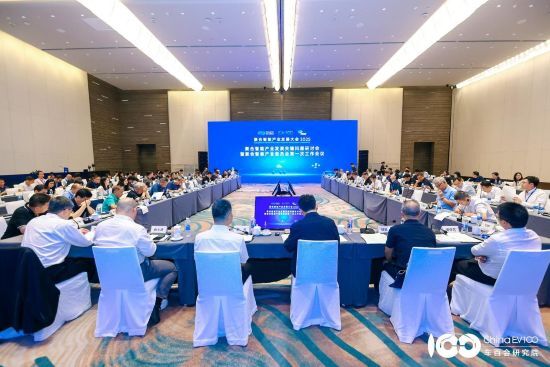
Group 1 - The first Aggregated Intelligent Industry Development Conference (2025) was held in Wuhan, focusing on key issues in the development of the aggregated intelligent industry [1] - The conference discussed the integration of smart robots, low-altitude flight, and the automotive industry supply chain, as well as the development paths and industry division of smart robots [3] - The EAI100 committee aims to promote the collaborative development of smart vehicles, smart robots, and low-altitude flight, establishing a comprehensive service platform for the industry [5][6] Group 2 - As of September, EAI100 has over 110 expert and enterprise members covering all areas of the aggregated intelligent industry, including smart vehicles, smart robots, and low-altitude travel [6] - Future initiatives of EAI100 include research on key common issues, closed-door seminars on integrated management systems, and the establishment of international innovation centers [8]
全球首个低空风洞装置落地深圳,美团、丰翼已“尝鲜”
2 1 Shi Ji Jing Ji Bao Dao· 2025-09-12 07:00
Core Insights - The low-altitude wind tunnel in Shenzhen is the world's first facility designed for the low-altitude economy, simulating complex wind environments for low-altitude aircraft testing [1][2] Group 1: Wind Tunnel Features and Capabilities - The wind tunnel can accurately replicate wind shear, time-varying winds, downbursts, and urban wind fields, providing a controlled environment for testing low-altitude flying vehicles [1] - It allows for precise control of speed fields in three dimensions (X, Y, Z), enabling the simulation of various complex wind conditions encountered at low altitudes [1] Group 2: Industry Impact and Collaborations - Since its launch in September of the previous year, the wind tunnel has provided research and testing services for companies such as Meituan Technology, Guodian Measurement and Testing Group, Fengyi Technology, and Shenzhen Customs [1] - Discussions are underway with Shenzhen Low Altitude Industry Development Service Co., Ltd. to accelerate the commercialization of the wind tunnel, attracting more market forces and potential collaborations with airport groups [2] Group 3: Future Developments - The team plans to construct a larger simulation facility with an outer diameter of 65 meters and an inner diameter of 45 meters, capable of testing new large-scale low-altitude flying vehicles and drone swarms [2]

可提前15分钟气象预警!低空经济安全保障获得新突破
Xin Hua She· 2025-09-06 08:40
Group 1 - The core viewpoint of the articles highlights breakthroughs in high-precision weather sensing and early warning technologies for low-altitude flight safety, which are crucial for the development of the low-altitude economy in China [1][2] - The second Low Altitude Economic Meteorological Frontier Technology Seminar showcased three innovative achievements aimed at enhancing low-altitude flight safety: high-precision weather sensing and warning technology, the Anhui Jianghuai boundary layer atmospheric parameter dataset, and the Hefei low-altitude meteorological service platform [1][2] - Approximately one-third of flight accidents are related to hazardous weather, emphasizing the importance of meteorological factors in ensuring low-altitude flight safety [1] Group 2 - The G/W class non-controlled airspace corresponds to the bottom of the atmospheric boundary layer, which is a critical area for low-altitude economic development [2] - Current meteorological monitoring and warning technologies do not fully meet the high-precision sensing and forecasting needs for low-altitude hazardous weather, which limits the safety assurance levels for low-altitude flights [2] - The research team has developed a short-term warning model for low-altitude turbulence that can provide accurate warnings for drone turbulence 15 minutes in advance, enhancing the monitoring and forecasting capabilities for medium and small-scale weather [2]
智能汽车、低空飞行、人形机器人……这场大会邀你共探智能产业聚合发展“最优解”
Zhong Guo Jing Ying Bao· 2025-09-04 22:27
Core Viewpoint - The integration of intelligent robots, low-altitude flight, and smart automotive industries is characterized by technological synergy, shared elements, and application fusion, which can address challenges such as technological collaboration deficits, fragmented scenarios, and the lack of cross-domain standards, potentially leading to an optimal solution for the development of the intelligent industry and guiding global AI technology and application advancements [1]. Group 1: Conference Overview - The first Aggregated Intelligent Industry Development Conference will be held on September 16-17, 2025, in Optics Valley, focusing on the theme of "Collaborative Fusion of Innovation Chains and Industry Chains to Promote Aggregated Intelligent Industry Development" [1]. - The conference will feature a general assembly and a closed-door meeting, with representatives from government departments, industry organizations, academic institutions, and leading enterprises engaging in in-depth discussions and cross-domain exchanges [1]. Group 2: Morning Session Topics - The morning session will include a forum on building an efficient and collaborative aggregated intelligent industry chain, addressing key questions such as how to create a scalable and high-quality industry chain and the differences in requirements and technical routes for common electric and intelligent components across different terminals [2]. - Additional discussions will focus on resolving cost, reliability, certification standards, and protocol issues in the supply chain for the integration of intelligent robots, low-altitude flight, and smart automotive applications [2]. Group 3: Afternoon Session Topics - The afternoon session will center on promoting the application and industrialization of aggregated intelligent innovation technologies, covering topics such as identifying the latest technology trends in the field, developing classification standards for intelligent robots, and addressing early-stage data cold start issues [3]. - The forum will also explore the construction of an open-source system for aggregated intelligence and the development of a new integrated transportation system focused on autonomous driving and low-altitude applications [3]. Group 4: Closed-Door Meeting Focus - On September 16, a closed-door meeting will address critical issues in building a supply chain system for the aggregated intelligent industry, including the integration of intelligent robots and low-altitude flight with the automotive supply chain [4]. - Discussions will also cover the evolution of development routes and division of labor within the industry chain for intelligent robots, as well as the establishment of a global cooperation system for the aggregated intelligent industry [4].

协同创新加速智能产业升级与消费释放
Sou Hu Cai Jing· 2025-08-19 22:17
Core Viewpoint - The development of unmanned aerial vehicles, intelligent connected vehicles, and humanoid robots as key strategic industries in China is expected to profoundly reshape future lifestyles through technological breakthroughs [4][6]. Group 1: Market Trends and Consumer Demand - The younger consumer demographic is increasingly willing to pay for trendy experiences, while mainstream consumers are opting for smart technology to enhance their life rituals, and the elderly are looking for technology to improve elder care services [5]. - The market is witnessing a surge in demand for smart applications, with intelligent connected vehicles becoming a significant driver of automotive consumption [5]. - In the first half of this year, the installation rate of L2-level and above assisted driving functions in domestic new energy passenger vehicles reached approximately 80%, with a notable increase in the rate of intelligent driving features in vehicles priced below 160,000 yuan [5]. Group 2: Technological Synergy and Innovation - Approximately 70% of the core components in the three industries share common technological roots, which facilitates collaborative innovation and reduces R&D costs [6]. - The integration of digital twin platforms can support the collaborative routing of vehicles and aerial vehicles, enhancing intelligent decision-making in complex environments [6]. - The automotive industry is becoming a core carrier for the implementation of cutting-edge technologies, with trends towards ecosystem-based operating systems, diversified energy supply, and data-driven closed loops [8]. Group 3: Entry into Low-altitude Economy - The low-altitude economy in China is projected to reach a market size of 1.5 trillion yuan by the end of this year and is expected to grow to 3.5 trillion yuan by 2035 [9]. - Several automotive manufacturers have completed the development of flying cars and are entering the testing phase, indicating a significant transformation in the transportation sector [9]. - Innovations such as the "mother ship vehicle + detachable flying vehicle" design allow seamless integration of land and air travel, redefining urban transportation networks [9]. Group 4: Industry Collaboration and Development - The development paths of intelligent connected vehicles and the low-altitude economy share many commonalities, suggesting positive synergistic effects between the two sectors [10]. - The introduction of specialized aviation batteries with a cycle life of 3,000 times and customized millimeter-wave radar for flying cars indicates a comprehensive upgrade of the supply chain [10]. - The need for technical, scenario-driven, and policy support is crucial for the gradual market entry of low-altitude vehicles, humanoid robots, and intelligent connected vehicles [11].