智能终端产品

Search documents
九联科技(688609.SH)业绩快报:2025年净亏损2.10亿元
Ge Long Hui A P P· 2026-02-27 13:13
Core Viewpoint - Jiulian Technology (688609.SH) reported a decline in revenue and increased losses for the fiscal year 2025, indicating challenges in the competitive market and rising costs of raw materials [1] Financial Performance - Total revenue for 2025 was 2.39 billion yuan, a decrease of 4.70% year-on-year [1] - Operating profit was 246 million yuan, with losses increasing by 33.90% year-on-year [1] - Total profit amounted to -250 million yuan, reflecting a year-on-year loss increase of 33.37% [1] - Net profit attributable to shareholders was -210 million yuan, with a year-on-year loss increase of 47.80% [1] - Net profit excluding non-recurring gains and losses was -196 million yuan, with a year-on-year loss increase of 56.40% [1] Asset and Equity Status - Total assets at the end of the reporting period were 3.50 billion yuan, a decrease of 5.23% year-on-year [1] - Equity attributable to shareholders was 780 million yuan, down 15.78% year-on-year [1] Market and Operational Challenges - The domestic bidding market for smart terminal products faced intense competition, contributing to revenue decline [1] - The increase in procurement prices for key raw materials and tight supply conditions led to a low overall gross margin [1] - The scale of delivery and acceptance of smart city projects decreased during the reporting period, further impacting revenue [1] - The implementation of an employee stock ownership plan and increased share-based payment expenses also contributed to the losses [1]

四川九洲股价涨5.58%,永赢基金旗下1只基金位居十大流通股东,持有957.1万股浮盈赚取870.96万元
Xin Lang Ji Jin· 2026-02-24 03:28
Group 1 - Sichuan Jiuzhou Electric Co., Ltd. experienced a stock price increase of 5.58%, reaching 17.21 CNY per share, with a trading volume of 409 million CNY and a turnover rate of 2.39%, resulting in a total market capitalization of 17.491 billion CNY [1] - The company, established on November 28, 1991, and listed on May 6, 1998, focuses on the research and development, manufacturing, and sales of smart terminals, air traffic control products, and microwave radio frequency technologies [1] - The revenue composition of the company includes smart terminal products at 63.76%, air traffic control products at 24.84%, microwave radio frequency at 9.25%, other at 1.09%, and property management at 1.06% [1] Group 2 - Yongying Fund's low-carbon environmental smart selection mixed fund A (016386) is among the top ten circulating shareholders of Sichuan Jiuzhou, having reduced its holdings by 3.19 million shares to 9.571 million shares, representing 0.94% of circulating shares, with an estimated floating profit of approximately 8.7096 million CNY [2] - The fund was established on October 17, 2022, with a current size of 127 million CNY, showing a year-to-date return of 4.17% and a one-year loss of 4.59% [2] - The fund manager, Hu Ze, has a tenure of 2 years and 266 days, with total fund assets of 5.142 billion CNY, achieving a best return of 162.17% and a worst return of 20.14% during his tenure [3] Group 3 - In the fourth quarter, Yongying Fund's low-carbon environmental smart selection mixed fund A (016386) reduced its holdings in Sichuan Jiuzhou by 6.3965 million shares, now holding 3.1745 million shares, which constitutes 4.9% of the fund's net value, ranking as the ninth largest holding [4] - The estimated floating profit from the current holdings is approximately 2.8888 million CNY [4]

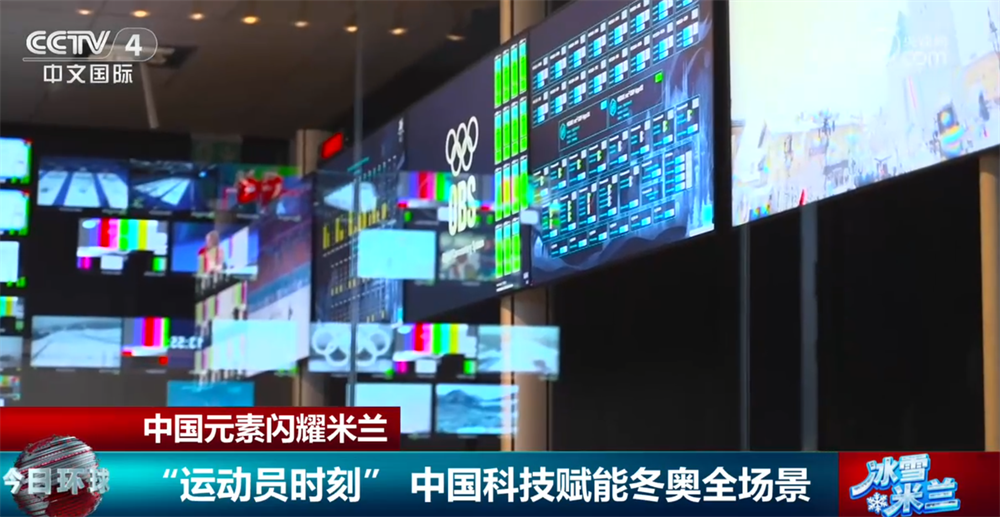
中国科技“大放异彩”赋能米兰冬奥会全场景 “屏宇宙”重构观众观赛体验
Yang Shi Wang· 2026-02-22 07:41
Core Viewpoint - The Milan Winter Olympics showcases Chinese technology products, enhancing both the viewing experience and the overall event atmosphere through advanced display technologies and smart devices [1][6]. Group 1: Technology and Innovation - The International Broadcasting Center (IBC) at the Milan Winter Olympics operates 24/7, providing reliable broadcasting services with display technologies sourced from Chinese companies [1]. - Chinese enterprises are prominently featured in the "Snow Velvet Wonderland" exhibition, displaying smart terminal products and cutting-edge display technologies that merge technology with culture [3]. - Chinese sponsors have set up devices at various Olympic venues, allowing athletes to connect with friends and family immediately after their events [4]. Group 2: Environmental Initiatives - The Milan Winter Olympics aims to be the "greenest Winter Olympics," with local operators deploying 5,000 shared electric bicycles and scooters for sustainable transportation [6]. - The shared electric bicycles, developed and manufactured by Chinese companies, feature sensors that enhance power output for a comfortable riding experience, contributing to a greener event [9]. Group 3: Comprehensive Deployment - Chinese display products are fully integrated across all venues, including opening and closing ceremonies, competition sites, and media centers, as well as in the Olympic Village where AI appliances and smart glasses support athletes' daily lives and training [7].

智能设备春节热卖 你的年货清单含“科”量有多高?
Xin Hua Wang· 2026-02-13 01:53
Group 1 - The core viewpoint of the article highlights the rising popularity of technology products in the Chinese New Year shopping market, with consumers increasingly favoring smart and innovative items [1][9] - Smart home appliances and interactive technology products are becoming significant highlights in the New Year market, reflecting a shift in consumer demand towards "intelligent" options [1][3] - The integration of technology into daily life is stimulating new consumption dynamics, driven by mature technology, policy guidance, and upgraded consumer expectations [9][10] Group 2 - Sales of smart terminals and AI wearable products have seen significant growth, with specific examples such as the sale of over 30 drones in a single day at a Shenzhen store [5][6] - The introduction of national subsidies for AI products, including smart glasses, has further boosted sales, with over 15 million units sold across various categories in January, generating nearly 59 billion yuan in revenue [8][9] - The launch of the 2026 National Online New Year Goods Festival has sparked a consumption boom, with online retail sales reaching 989.73 billion yuan by February 8 [9][10]
中部第一城,这次要冲击“一线城市”
Mei Ri Jing Ji Xin Wen· 2026-02-05 02:52
Core Insights - Wuhan is set to implement the "Wuhan Smart Economy Development Action Plan (2026-2028)" aiming to achieve an artificial intelligence industry scale exceeding 200 billion yuan, with a target of producing high-performance computing capacity surpassing 15,000 PFlops, and a cumulative data circulation transaction volume reaching 3 billion yuan [1][6]. Group 1: Smart Economy Development - The concept of smart economy represents a new economic form arising from the deep integration of artificial intelligence with various industries, marking an advanced stage of digital economy development [3]. - The national strategy has elevated "Artificial Intelligence+" as a top-level initiative, emphasizing the importance of smart economy in the "14th Five-Year Plan" [4]. Group 2: Regional Competitiveness - Major cities like Beijing, Shanghai, and Shenzhen are leading in the smart economy sector, which has become a new benchmark for regional competitiveness [5]. - Wuhan's smart economy core industry scale is projected to reach 1.1 trillion yuan by 2025, with the electronic information manufacturing and software industries accounting for over 80% [6]. Group 3: Infrastructure and Resources - Wuhan boasts significant infrastructure advantages, including 40 5G base stations per 10,000 people, over 5,000 PFlops of high-performance computing, and nearly 3,900 kilometers of open smart connected vehicle testing roads [6]. - The city has 33 out of over 90 universities establishing artificial intelligence colleges, ranking sixth globally in the number of high-output and highly-cited AI scientists [6]. Group 4: Policy Initiatives - Wuhan has previously introduced several policies to promote the development of the artificial intelligence industry, aiming to create a top-tier innovation cluster and industrial development hub [6]. - The latest action plan outlines the establishment of three major root industries in the smart economy: sensor, optical communication, and integrated computing industries, alongside a software ecosystem and application service providers [6][7].
城市24小时 | 中部第一城,这次要冲击“一线城市”
Sou Hu Cai Jing· 2026-02-04 15:51
Group 1 - The core viewpoint of the article is that Wuhan is positioning itself as a leading city in the "smart economy" sector by implementing a three-year action plan to significantly boost its artificial intelligence industry and related sectors [2][8] - The "Wuhan Smart Economy Development Action Plan (2026-2028)" aims for an AI industry scale exceeding 200 billion yuan, with a target of over 15,000 P of high-performance computing power and a cumulative data transaction volume of 3 billion yuan [2] - Wuhan plans to cultivate over 1,000 large-scale data enterprises and exceed 1,500 AI-related companies, establishing itself as a super-large-scale AI city [2][8] Group 2 - The concept of "smart economy" is described as a new economic form resulting from the deep integration of artificial intelligence with various industries, representing an advanced stage of digital economy development [3] - Experts liken the digital economy to extracting data "oil," while the smart economy is compared to building "refineries" and "engines" that convert raw data into intelligent decision-making capabilities [4] - Nationally, the "AI+" initiative has become a top-level strategy, with the "14th Five-Year Plan" emphasizing the importance of "smartization" [6] Group 3 - Cities like Beijing, Shanghai, and Shenzhen are leading the smart economy due to their early advantages, making smart economy a new benchmark for regional competitiveness [7] - By 2025, Wuhan's core smart economy industries are projected to reach 1.1 trillion yuan, with the electronic information manufacturing and software industries accounting for over 80% [8] - AI technology is deeply embedded in sectors such as smart connected vehicles, intelligent equipment, and smart healthcare, with a penetration rate exceeding 30% [8] Group 4 - Wuhan has significant infrastructure advantages, including 40 5G base stations per 10,000 people and over 5,000 P of high-performance computing power, along with nearly 3,900 kilometers of open testing roads for smart connected vehicles [8] - The city has established policies to promote AI industry development and aims to create a first-class AI innovation cluster and industrial development hub [8] - The latest action plan emphasizes building three foundational industries: sensors, optical communication, and integrated computing in the electronic information manufacturing sector, along with a software ecosystem and application service providers in the AI field [8][9]

到2028年,人工智能产业规模超两千亿元
Chang Jiang Ri Bao· 2026-02-04 08:47
Core Insights - The Wuhan Municipal Government has officially released the "Wuhan Smart Economy Development Action Plan (2026-2028)", outlining a systematic approach to develop the smart economy over the next three years [1][2] - The plan aims for the artificial intelligence industry in Wuhan to exceed 200 billion yuan by 2028, with over 1,500 AI-related enterprises established, positioning Wuhan as a leading city in the national smart economy [1] Group 1: Industry Development - The plan emphasizes strengthening the cultivation of original production industries, particularly in the optoelectronic information sector, while enhancing collaboration across the industrial chain [1] - Key focus areas include nurturing intelligent native enterprises and smart terminal products, supporting high-growth companies, and establishing a tiered enterprise cultivation system to create a competitive industrial ecosystem [1] Group 2: Smart Technology Empowerment - The initiative aims to accelerate the smart transformation of the manufacturing sector by constructing intelligent production lines and factories [1] - In agriculture, the focus will be on developing smart agricultural scenarios to achieve high yield and efficiency [1] - The service industry will target key sectors such as finance, logistics, and law, implementing intelligent service entities to enhance industry efficiency and service capabilities [1] Group 3: Infrastructure and Ecosystem - The plan includes building a multi-layered application scenario and a city intelligence ecosystem, integrating smart technology into various urban development processes [2] - It aims to establish a diverse computing power supply system and optimize 5G base station coverage, alongside creating high-quality data sets to promote data product circulation [2] - The initiative will foster an open and collaborative innovation ecosystem, enhancing the environment for core technology breakthroughs and the conversion of scientific achievements [2] Group 4: Implementation and Support - The conference also introduced a system for optimizing resource allocation through the "965" key industrial chain management and the "Five Grains" advantageous industrial cluster management [2] - The development plan marks the beginning of an accelerated phase for Wuhan's smart economy, with a commitment to detailed task division and robust implementation to ensure high-quality development and enhance urban competitiveness [2]
2025年武汉数智经济核心产业规模达1.1万亿元
Chang Jiang Ri Bao· 2026-02-04 06:49
Core Insights - Wuhan aims to achieve a core industry scale of 1.1 trillion yuan in the digital economy by 2025, positioning itself as a strategic growth engine for industrial upgrades [1] - The development of the digital economy in Wuhan is characterized by "dual-core leadership and multi-industry penetration," with artificial intelligence technology deeply integrated into smart connected vehicles, achieving a penetration rate of over 30% [1] Group 1: Three Major Industries - In the electronic information manufacturing sector, Wuhan plans to focus on building three trillion-yuan-level industries: sensors, optical communication, and integrated computing [1] - The software sector will see the establishment of an industrial software ecosystem co-construction platform and four super software factories [1] - In the intelligent entity sector, the goal is to cultivate 200 application service providers, create 50 professional intelligent entities, and develop 15 outstanding intelligent terminal products [1] Group 2: Three Major Scenarios - Wuhan will promote the development of application work plans in healthcare, education, and transportation, establishing industry application empowerment centers [2] - In the state-owned assets scenario, there is a focus on supporting the procurement of local intelligent products, with a target of opening 200 state-owned asset scenarios by 2026 [1] Group 3: Three Major Innovation Elements - The new industrial space will rely on the artificial intelligence demonstration zone to create a "product + park" chain transformation model, fostering innovative small and medium-sized enterprises [2] - The open-source new ecosystem will advance the development of the Harmony OS Wuhan Innovation Center, aiming to complete the adaptation of 20 Harmony OS terminals by 2026 [2] - Capital and talent services will focus on "investing in people," enhancing the layout and direction of industrial funds to attract a group of industry-leading talents [2]
武汉发布数智经济发展行动方案到2028年,人工智能产业规模超两千亿元
Chang Jiang Ri Bao· 2026-02-04 01:03
Core Insights - The article discusses the launch of the "Wuhan Smart Economy Development Action Plan (2026-2028)" aimed at establishing Wuhan as a leading city in smart economy by 2028, with a target of over 200 billion yuan in AI industry scale and more than 1,500 AI-related enterprises [1][2][3] Group 1: Development Goals - By 2028, Wuhan aims for an AI industry scale exceeding 200 billion yuan and over 1,500 AI-related companies, establishing itself as a super-large AI city [1][6] - The plan emphasizes the integration of smart technologies with economic and social development across various sectors, including manufacturing, agriculture, and services [1][2] Group 2: Key Initiatives - The action plan includes eight major projects focusing on industrial upgrades, scene cultivation, infrastructure enhancement, data element development, and smart governance [7][14] - Specific targets include the production of high-performance computing power exceeding 15,000 P, a cumulative data transaction volume of 3 billion yuan, and the establishment of 1,000 large-scale data enterprises [6][10] Group 3: Infrastructure and Ecosystem - The plan outlines the construction of a multi-layered application ecosystem and advanced infrastructure to support smart economy initiatives, including enhanced 5G coverage and high-quality data sets [2][10] - It aims to create a collaborative innovation ecosystem that encourages technological breakthroughs and supports talent development [2][11] Group 4: Strategic Focus Areas - The strategy includes a shift from "Internet+" to "AI+" and emphasizes the importance of integrating smart technologies into various industries and public services [13][15] - The focus will be on three core industries: sensors, optical communication, and integrated computing, along with the development of application service providers and intelligent products [16][17] Group 5: Future Outlook - The plan anticipates that by 2025, the core industries of Wuhan's smart economy will reach a scale of 1.1 trillion yuan, positioning the city as a strategic growth engine for industrial upgrades [16][18] - The city aims to enhance its overall competitiveness and ensure the successful implementation of the smart economy development blueprint through detailed task assignments and organizational support [2][14]
武汉打造全国数智经济一线城市
第一财经· 2026-02-03 13:23
Core Viewpoint - The article discusses the transformative impact of artificial intelligence (AI) on research paradigms, industrial forms, economic development methods, and urban competitiveness, highlighting Wuhan's strategic plan for developing its digital economy through AI initiatives [2]. Group 1: Wuhan's Action Plan - Wuhan aims to achieve an AI industry scale exceeding 200 billion yuan within three years, with a target of producing over 15,000 petaflops of computing power and a cumulative data transaction volume reaching 3 billion yuan [3]. - The "Action Plan" emphasizes the importance of foundational "root technologies" in the digital economy, which is characterized by data as a key element and intelligent technology as a core engine [3]. Group 2: Technological Innovation and Infrastructure - The city plans to establish a comprehensive technology innovation system focusing on "technical breakthroughs, innovation platforms, and results transformation," with over 30 R&D projects aimed at key technologies like AI chips [4]. - Wuhan will implement four major actions to deepen the integration of scientific innovation and industry, including breakthroughs in core technologies, AI empowerment in science, cross-industry integration, and optimizing the innovation ecosystem [4]. Group 3: Economic Growth Projections - By 2025, Wuhan's core digital economy industries are projected to reach 1.1 trillion yuan, with 3,678 enterprises in the sector, primarily in electronic information manufacturing and software industries, which together account for over 80% of the total [5]. - The city aims to maintain double-digit growth in its digital economy by 2026, focusing on key industries such as sensors, optical communication, and integrated computing [5]. Group 4: Data and Computing Power - Wuhan plans to establish a diverse computing power supply system, targeting 7,500 petaflops of computing power by 2026, with low latency for data processing [6]. - The city is also exploring the creation of a public service platform for AI and data, focusing on various sectors such as intelligent manufacturing and smart terminals [6]. Group 5: Strategic Recommendations - Experts suggest that Wuhan should leverage AICT (Artificial Intelligence, Communication Technology) for urban development, focusing on foundational technology innovation and avoiding competition in generic large models [8]. - Recommendations include enhancing urban data infrastructure and creating a collaborative AI infrastructure with neighboring cities to build a central data hub [9]. - The article emphasizes the need to cultivate interdisciplinary talent in AI, driven by application scenarios [10].