
信息科技

Search documents
一位被“限高”创始人的自救
虎嗅APP· 2025-12-21 03:05
Core Viewpoint - The article discusses the journey of the founder of Lanma Technology, Zhou Jian, from a promising AI entrepreneur to facing significant challenges, including company bankruptcy and personal crises, and his ongoing efforts to rebuild and redefine his future in the AI industry [4][32]. Group 1: Company Challenges - Lanma Technology began experiencing salary arrears in October 2024, leading to a series of substantial defaults by March 2025, ultimately resulting in the company's collapse and the departure of nearly all team members [5]. - Zhou Jian has been placed under a consumption restriction order due to outstanding debts to employees, which has severely limited his mobility and options for future endeavors [10][11]. - Despite attempts by two listed companies to acquire Lanma, negotiations have failed, leaving the company in a precarious state with unresolved debts and ongoing risks [12][24]. Group 2: Personal Struggles - Zhou Jian faced a dual crisis in October 2025, marked by the death of his mother and the sudden collapse of his marriage, which compounded his feelings of despair and loss [16][19]. - The pressures of his past achievements, particularly as an ACM champion, have led to a crisis of identity, as he grapples with the realization that his previous skills may no longer hold the same value in the rapidly evolving AI landscape [21][22]. Group 3: Recovery Efforts - Zhou Jian has adopted an intense work ethic, coding for long hours and attempting to leverage his technical skills to regain control over his situation, emphasizing the importance of proving his value in the current AI era [6][22]. - His recovery strategy includes a phased approach: initially focusing on debt repayment through teaching and workshops, followed by developing a new recruitment system that leverages AI to improve talent matching [26][27]. - Zhou Jian envisions a future for Lanma that transcends its previous incarnation, aiming to create an AI-native infrastructure that addresses the limitations of current data systems [28][29].


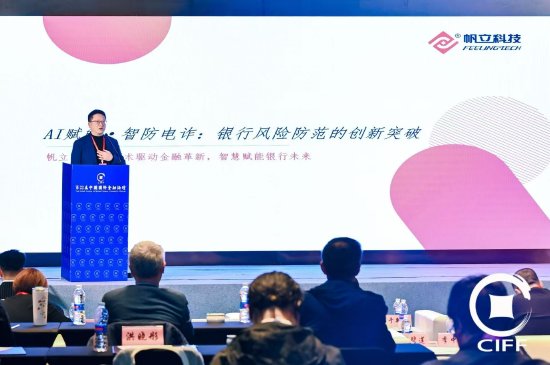
帆立科技谢立:AI赋能反电诈,识别融资诈骗正确率大幅提升43%
Xin Lang Cai Jing· 2025-12-20 07:01
Core Viewpoint - The 22nd China International Financial Forum highlighted the evolving challenges of telecom network fraud in the financial sector and the advancements in AI technology for fraud detection, particularly through the development of the fourth-generation fraud detection model by Shanghai Fanli Information Technology Co., Ltd. [1][6] Group 1: Current Challenges in Fraud Detection - Telecom network fraud is becoming increasingly complex, with traditional anti-fraud methods showing significant limitations, including slow response times, data silos hindering risk identification, and the evolving nature of fraud becoming more concealed [3][8] - The similarity between fraudulent and legitimate users is alarmingly high, with traditional models identifying only 41.8% similarity, while real production data shows a similarity of 83.2%, indicating that fraud signals are extremely weak [4][9] Group 2: Technological Advancements - The fourth-generation fraud detection model has transitioned from passive response to proactive resolution, focusing on penetrating disguises and accurately identifying fraud [3][9] - The Grad model developed by Fanli Technology has demonstrated over a 10% efficiency improvement and a 43% increase in identification accuracy, successfully addressing complex fraud recognition challenges [4][9] Group 3: Industry Challenges and Recommendations - The industry faces three key challenges: restricted data circulation among banks, insufficient sharing of fraud black samples among financial institutions, and poor collaboration between government and enterprises [5][10] - There is a call for regulatory bodies and industry associations to establish a fraud result-sharing mechanism and for financial institutions to share key information while ensuring compliance with privacy regulations [10]
每日投资策略-20251218
Zhao Yin Guo Ji· 2025-12-18 03:00
Macro Economic Overview - The US economy shows signs of slight weakening in employment, with October non-farm payrolls significantly declining due to the end of government layoffs, although private employment continues to expand [2] - November non-farm payrolls rebounded better than market expectations, primarily in construction, healthcare, and education services, while the unemployment rate unexpectedly rose to 4.6%, the highest in nearly four years [2] - The overall job market is weakening but not severely deteriorating, with initial and continuing claims for unemployment benefits showing slight improvement [2] - The economic growth rate and unemployment rate are expected to stabilize by 2026, with inflation anticipated to decrease before rising again, and the Federal Reserve may lower interest rates once in June [2] Global Market Performance - The Hang Seng Index closed at 25,469, up 0.92% year-to-date, while the Hang Seng Tech Index rose 1.03% [2] - The Shanghai Composite Index increased by 1.19%, and the Shenzhen Composite Index saw a rise of 1.68% [2] - In the US, the Dow Jones fell by 0.47%, and the S&P 500 decreased by 1.16%, while the Nasdaq dropped by 1.81% [2] - The DAX in Germany and CAC in France also experienced slight declines, while the FTSE 100 in the UK rose by 0.92% [2] Sector Performance in Hong Kong - The Hong Kong stock market saw a rebound, with materials, information technology, and financial sectors leading the gains, while utilities, telecommunications, and real estate lagged [4] - Southbound capital recorded a net inflow of HKD 7.909 billion, with Xiaomi, Meituan, and Alibaba being the top net purchases, while China Mobile and CNOOC saw significant net sales [4] - The Hang Seng Financial Index rose by 1.03% year-to-date, while the Hang Seng Industrial Index increased by 0.94% [3] Chinese Market Developments - The Chinese market regulatory authority warned that requiring merchants to offer "lowest prices online" could constitute monopoly behavior, encouraging platform companies to develop algorithm screening to prevent algorithmic monopolies [4] - The Hainan Free Trade Port is set to launch full island closure, focusing on "one line open, one line controlled" to promote trade and investment liberalization, significantly reducing business operating costs [4] US Market Insights - The US stock market continued to decline, with technology, industrial, and communication services sectors leading the losses, while energy, consumer staples, and materials sectors saw gains [4] - The AI sector faced continued sell-offs, with Nvidia and Caterpillar experiencing significant declines [4] - The Federal Reserve's latest survey indicated that CFOs expect a 4.2% increase in US prices next year, significantly higher than the Fed's forecast of inflation returning close to 2% [4]
聚焦转型创新,深化多链合作——2025两岸企业家峰会年会综述
Xin Hua Wang· 2025-12-18 02:56
Group 1 - The 2025 Cross-Strait Entrepreneurs Summit focused on "transformation and innovation, deepening multi-chain cooperation," with around 800 participants discussing industrial development and economic growth [1] - The summit highlighted the importance of collaboration in various sectors such as new energy, smart manufacturing, information technology, cultural creativity, and biotechnology [2] - Companies emphasized the advantages of supply chains, industrial chains, and talent chains in fostering competitive environments, particularly in mainland China [2] Group 2 - Strategies for promoting cross-strait multi-chain cooperation were discussed, including policy guidance and collaboration in emerging industries [3] - The summit's participants expressed optimism about the opportunities presented by the "14th Five-Year Plan," which outlines key areas for industrial development and cooperation [4] - The plan is seen as a "opportunity list" for cross-strait enterprises, encouraging them to align with the identified industrial directions for mutual growth [4] Group 3 - The emphasis on technological innovation and investment in mainland China is expected to provide greater opportunities for Taiwanese entrepreneurs [5] - Participants underscored the importance of enhancing cross-strait economic cooperation for high-quality development, advocating for stronger ties despite external challenges [6] - The summit served as a platform for fostering understanding and collaboration among businesses, with a focus on sectors like artificial intelligence [6] Group 4 - The summit's leaders called for the business community to take on a proactive role in contributing to the economic revitalization of the Chinese nation [7] - The integration of cross-strait industries is viewed as a pathway to achieving greater economic synergy and resilience [7]
我对中国科技精英挺失望的 | Findme
投中网· 2025-12-16 06:11
Group 1 - The article discusses the perception of Chinese tech elites in the eyes of Americans, emphasizing the importance of understanding their reading habits and thought processes [2][4] - It highlights that Silicon Valley has begun to question the notion of American exceptionalism, leading to curiosity and even jealousy towards Chinese technology [4][5] - The author critiques the reliance of Chinese entrepreneurs on Western business literature, suggesting a lack of originality and a tendency to treat books as products rather than sources of deep understanding [4][5] Group 2 - The article points out that while Chinese tech elites are often seen as extensions of Silicon Valley, this characterization is overly simplistic and inaccurate [5][6] - It discusses the influence of various Chinese philosophical thoughts, such as Maoism and Confucianism, on the broader population rather than specifically on tech elites [6][7] - The author expresses skepticism about the future of Chinese entrepreneurs, questioning whether they are merely replicating past successes rather than innovating [7]

科技添彩体育赛事(聚焦残特奥会)
Ren Min Ri Bao· 2025-12-15 22:52
Group 1 - The recent Special Olympics athletics event in Guangdong showcased significant advancements in accessibility technology, including a prominent information query screen for barrier-free facilities [1] - Guangzhou Huatu Information Technology Co., Ltd. provided technical support for accessibility services, designing specialized paths for different disabled groups, such as wheelchair-friendly routes and "digital blind paths" for visually impaired users [1] - Guangzhou Yuhong Technology Co., Ltd. developed a communication network that allows over a thousand walkie-talkies to operate simultaneously, significantly enhancing communication capabilities at large venues [1] Group 2 - The Tianhe District has fostered a number of technology companies over the past 30 years by using major sports events as application scenarios, contributing to the growth of the local tech industry [1] - Companies like Jiadu Technology and Shida Weizhi are developing smart traffic command platforms and digital twin services to ensure safety and optimize crowd management during events [2] - The Tianhe District is actively promoting the use of innovative technologies and products in sports events, creating a virtuous cycle of talent-driven innovation and capital support for industry development [2]
雷迪克:已受让上海傲意信息科技有限公司部分股权并向其增资
Xin Lang Cai Jing· 2025-12-15 09:12
雷迪克公告,公司于2025年11月3日召开第四届董事会第二十二次会议,审议通过《关于受让上海傲意 信息科技有限公司部分股权并向其增资的议案》。为深化人形机器人产业领域布局,切实推动产业资源 的深度融合与战略协同,公司以现金为对价通过受让股权及增资的方式合计取得上海傲意信息科技有限 公司20.41%股权。截至本公告披露日,本次交易已实施完毕,公司已完成对上述交易的全部出资。标 的公司傲意科技工商注册登记手续已办理完成,并于近日取得上海市浦东新区市场监督管理局颁发的 《营业执照》。 ...
专访港交所市场主管余学勤:科技已成港股市场新名片 未来会推出更多指数
证券时报· 2025-12-15 00:17
Core Viewpoint - The Hong Kong Stock Exchange (HKEX) has launched the HKEX Technology 100 Index, marking a significant milestone in its index and data business development, reflecting the transformation of the Hong Kong market towards a technology-centric identity [1][2]. Group 1: Introduction of the Technology 100 Index - The HKEX Technology 100 Index is a broad-based stock index tracking the performance of the 100 largest technology companies listed on the HKEX, covering six major innovative themes: artificial intelligence, biotechnology and pharmaceuticals, electric vehicles and smart driving, information technology, internet, and robotics [2][3]. - The index includes only stocks eligible for the Stock Connect program, catering to both international and mainland Chinese investors [2]. Group 2: Market Trends and Investor Sentiment - There has been a noticeable shift in investor perception of the Hong Kong market, increasingly recognizing it as a technology-driven market, especially since the listing rule reforms initiated in 2018 [3]. - Data indicates a significant change in the market structure, with the market capitalization of technology stocks in the Stock Connect program rising from approximately 10% in 2014 to about 40% by 2025, with four out of the top ten companies being technology giants [3]. Group 3: Differentiation from Existing Indices - The HKEX Technology 100 Index differentiates itself from the Hang Seng Technology Index by including 100 constituent stocks, ranging from large-cap companies like Tencent and Alibaba to smaller firms with market capitalizations of over 20 billion HKD [5][6]. - The index aims to meet diverse investor needs, providing a broader selection of technology stocks compared to existing indices [6]. Group 4: Future Developments and Performance - The HKEX plans to introduce more indices, including thematic indices, to further enhance its product offerings [8]. - The HKEX Technology 100 Index has shown strong performance, with a cumulative return of approximately 40% year-to-date, and returns of 45% and 55% over the past year and three years, respectively, highlighting the growth potential of the technology sector in the Hong Kong market [9].


科技已成港股市场新名片 未来会推出更多指数
Zheng Quan Shi Bao· 2025-12-14 22:32
Core Viewpoint - The Hong Kong Stock Exchange (HKEX) has launched the Hong Kong Stock Exchange Technology 100 Index, marking a significant milestone in its index and data business development, reflecting a fundamental shift in the market structure towards technology as a key sector [1][2]. Group 1: Introduction of the Technology 100 Index - The Technology 100 Index tracks the performance of 100 of the largest technology companies listed on the HKEX, covering six major innovative themes: artificial intelligence, biotechnology and pharmaceuticals, electric vehicles and smart driving, information technology, internet, and robotics [1]. - The index is designed to meet the investment needs of both international and mainland Chinese investors, as all constituent stocks are eligible for the Stock Connect program [1]. Group 2: Market Trends and Investor Demand - There has been a notable shift in investor perception of the Hong Kong market, increasingly recognizing it as a technology-driven market, especially since the listing rule reforms initiated in 2018 [2]. - Data indicates that the market structure has transitioned from traditional industries to being dominated by technology companies, with the market capitalization of technology stocks in the Stock Connect increasing from approximately 10% in 2014 to about 40% by 2025 [2]. Group 3: Differentiation from Existing Indices - The Technology 100 Index differentiates itself from the Hang Seng Technology Index by including 100 constituent stocks, ranging from large-cap companies like Tencent and Alibaba to smaller firms with market capitalizations of over 200 million HKD [3]. - This broader coverage aims to cater to diverse investor needs, enhancing the overall attractiveness of the market [4]. Group 4: Accessibility and Future Developments - All constituent stocks of the Technology 100 Index must meet the eligibility criteria for Stock Connect, ensuring ease of access for mainland fund companies [5]. - The index has a mechanism for rapid inclusion of representative new stocks, allowing it to reflect market dynamics promptly [5]. - Future plans for the HKEX include the introduction of more indices, including thematic indices, to meet growing investor demand [5].
专访港交所市场主管余学勤: 科技已成港股市场新名片 未来会推出更多指数
Zheng Quan Shi Bao· 2025-12-14 22:22
Core Viewpoint - The Hong Kong Stock Exchange (HKEX) has launched the Hong Kong Stock Exchange Technology 100 Index, marking a significant milestone in its index and data business development, reflecting a fundamental shift in the market structure towards technology as a key sector [1][2]. Group 1: Introduction of the Technology 100 Index - The Technology 100 Index tracks the performance of 100 of the largest technology companies listed on the HKEX, covering six major innovative themes: artificial intelligence, biotechnology and pharmaceuticals, electric vehicles and smart driving, information technology, internet, and robotics [1]. - The index is designed to meet the investment needs of both international and mainland Chinese investors, as all constituent stocks are eligible for the Stock Connect program [1][2]. Group 2: Market Trends and Investor Interest - There has been a noticeable shift in investor perception of the Hong Kong market, increasingly recognizing it as a technology-driven market, especially since the listing rule reforms initiated in 2018 [2]. - Data indicates that the market structure has transitioned from traditional industries to being dominated by technology companies, with the market capitalization of technology stocks in the Stock Connect program expected to rise from approximately 10% in 2014 to about 40% by 2025 [2]. Group 3: Differentiation from Existing Indices - The Technology 100 Index differentiates itself from the Hang Seng Technology Index by including 100 constituent stocks, ranging from large-cap companies like Tencent and Alibaba to smaller firms with market capitalizations of over 20 billion HKD [3]. - The index aims to cater to diverse investor needs, providing a broader range of investment options compared to existing indices [3]. Group 4: Accessibility and Inclusion Criteria - All constituent stocks of the Technology 100 Index must meet the eligibility criteria for the Stock Connect program, ensuring ease of access for mainland fund companies [4]. - The index requires constituent stocks to have at least six months of listing history, but it also includes a rapid inclusion mechanism for representative new stocks that meet the criteria [4]. Group 5: Future Developments and Performance - The HKEX plans to introduce more indices, including thematic indices, to meet growing investor demand [5]. - The Technology 100 Index has shown strong performance, with a cumulative return of approximately 40% year-to-date as of November 30, 2025, and returns of 45% and 55% over the past year and three years, respectively, highlighting the growth potential of the technology sector in the Hong Kong market [5].