
先进装备制造

Search documents
城投挖系列(十六)之潮兴闽岸,债稳业长:福建省城投债现状4个知多少
Soochow Securities· 2026-01-07 05:32
1. Report Industry Investment Rating There is no information provided regarding the industry investment rating in the given content. 2. Core Views of the Report - Fujian Province has strong overall comprehensive financial strength, with a relatively high fiscal self - sufficiency rate. However, there are significant regional disparities within the province, which may provide room for moderate credit - quality downgrading for urban investment bond investors, subject to proper risk pricing [1][17]. - The third - industry in Fujian Province has become dominant and continues to strengthen, while the second - industry's share is decreasing. The first - industry maintains a low proportion [1][21]. - Fujian's local government debt burden has increased, but the absolute level remains low in the national context. The debt growth rate is generally in line with the economic output growth rate, and the investment - financing cycle of urban investment platforms is smooth. However, the urban investment debt ratio remains high [1][30]. - The balance of outstanding urban investment bonds in Fujian Province ranks in the middle - upper level nationwide. The province's urban investment platforms are expected to continue to moderately raise debt, keep the debt growth rate in line with the economic growth rate, and optimize the debt term structure and financing costs [1][41]. - In 2025, the issuance of urban investment bonds in Fujian Province showed the characteristics of "stable total volume and negative net financing". In 2026, the funds raised by urban investment platforms will mainly be used for rolling over existing bonds, but incremental financing space may open up with platform transformation [4][61]. - The next three years are a critical window for resolving hidden debts of urban investment in Fujian Province. The repayment pressure is unevenly distributed, and the refinancing demand in 2026 may be higher than that in 2027 and 2028 [4][68]. - The trading activity of urban investment bonds in Fujian Province has room for improvement. Given the current market situation, the credit - quality downgrading strategy may not be very cost - effective, while the duration strategy may be more effective [4][80][86]. 3. Summary According to the Table of Contents 3.1 Fujian Province Overview 3.1.1 Economic and Fiscal Perspectives - In 2024, Fujian's GDP was 5776.1 billion yuan, with a growth rate of 5.5%, ranking in the middle - upper level nationwide. Its per - capita GDP was 137,920 yuan, a year - on - year increase of 5.34% [11]. - In 2024, Fujian's general public budget revenue was 361.529 billion yuan, ranking 6th nationwide, with a year - on - year increase of 0.65%. The general public budget expenditure was 608.093 billion yuan, ranking 11th, with a year - on - year increase of 3.78%. The fiscal self - sufficiency rate was about 59.45%, a decrease of 1.85 percentage points from 2023, ranking 6th nationwide [15]. - There are significant regional disparities in fiscal strength within Fujian Province. The fiscal self - sufficiency rates of Xiamen, Fuzhou, and Quanzhou are significantly higher than the provincial average, while those of inland cities such as Nanping, Sanming, and Longyan are relatively low [15][17]. 3.1.2 Industrial Layout Perspective - In the past seven years, Fujian has been transitioning from the secondary industry to the tertiary industry. In 2024, the share of the third industry reached 51.5%, while the share of the second industry showed a downward trend, and the first industry maintained a low proportion [1][21]. - Fujian has introduced a series of policies to promote high - quality development, such as forward - looking layout of future industries, promotion of green transformation, and strengthening of cross - strait industrial cooperation [22]. 3.2 Current Situation of Outstanding Urban Investment Bonds and Urban Investment Entities in Fujian Province 3.2.1 Review of the Changes and Development of Fujian's Urban Investment Bonds - Fujian's urban investment financing can be traced back to 1986. The development of urban investment in Fujian has followed national macro - policies, with the scale and rhythm strictly regulated [27][28]. - From 2015 - 2019, the balance of outstanding urban investment bonds in Fujian increased steadily. In 2020 - 2022, the scale increased rapidly due to the impact of the COVID - 19 pandemic. Since 2023, the growth rate has slowed down significantly [28][29]. 3.2.2 Focus on the Current Outstanding Bonds and Structure - As of December 11, 2025, the balance of outstanding urban investment bonds in Fujian was about 228.513 billion yuan, ranking 13th nationwide. The weighted average coupon rate was about 3.20%, ranking 29th nationwide, both lower than the national average [41]. - In terms of structure, the credit ratings of the issuers are mainly AA +, with good credit quality. The remaining maturities of the bonds are mainly concentrated in the 3 - 5 - year range, and the bond types are mainly corporate bonds. The coupon rates are mainly below 3% [42][44]. 3.2.3 Focus on the Current Situation of Urban Investment Entities - As of December 11, 2025, there were 86 urban investment entities in Fujian, with 59 having outstanding bonds. The urban investment platforms in Fujian show a pattern of "balanced development of district - county and prefecture - level platforms" [51][52]. - The financing capacity is concentrated in high - grade core platforms. While district - county AA - rated platforms can provide considerable coupon income, their relatively low liquidity due to limited scale needs attention [52]. 3.3 Issuance Situation of Fujian's Urban Investment Bonds in the Primary Market in 2025 - In the first three quarters of 2025, Fujian issued 60.193 billion yuan of urban investment bonds, ranking 14th nationwide, with a cumulative net financing of - 16.115 billion yuan. The issuance showed the characteristics of "stable total volume and negative net financing" [4][60]. - The average coupon rate of newly - issued urban investment bonds in the first three quarters of 2025 was 2.34%, significantly lower than the outstanding coupon rate. The rate was in the middle - upper level among the seven provinces and cities in East China [62]. - In terms of issuance structure, AA + - rated issuers accounted for nearly half of the issuance scale. The issuance terms were mainly 3 - 5 years, and the bond types were mainly corporate bonds and medium - term notes. The industries of the issuers were mainly concentrated in the industrial sector [65]. 3.4 Repayment Situation of Fujian's Urban Investment Bonds in the Next Three Years - As of December 11, 2025, bonds maturing within three years accounted for 53.14% of the outstanding urban investment bonds in Fujian. The repayment pressure is unevenly distributed in the next three years, with the refinancing demand in 2026 likely to be higher than that in 2027 and 2028 [68]. - In terms of repayment structure, corporate bonds have the largest repayment scale, and the repayment subjects are mainly of medium - high credit ratings, which is consistent with the structure of outstanding bonds [69][74]. 3.5 Secondary Market Trading and Yield Performance of Fujian's Urban Investment Bonds - In the first three quarters of 2025, the trading volume of Fujian's urban investment bonds in the secondary market was about 110.983 billion yuan, ranking 14th nationwide, with a turnover rate of 54.52%, ranking 18th, slightly lower than the national average [80]. - Since 2025, the average yield of Fujian's urban investment bonds has been about 2.27%, lower than the national average. The trading activity has room for improvement, and the credit - quality downgrading strategy may not be very cost - effective, while the duration strategy may be more effective [80][86].
贵州省人民政府办公厅印发《贵州省扩大民间投资三年行动方案》
Xin Lang Cai Jing· 2026-01-04 14:56
Core Viewpoint - The Guizhou Provincial Government has issued a three-year action plan to expand private investment, aiming to enhance confidence and stimulate high-quality development in the province's private investment sector [1]. Group 1: Work Objectives - The plan aims to optimize the environment for private investment, expand market access, eliminate investment barriers, and enhance project construction and policy support [2]. - By 2027, the growth rate of private investment is expected to exceed the overall fixed asset investment growth rate, with private investment accounting for approximately 42% of total fixed asset investment [2]. Group 2: Key Tasks - Strengthening industrial private investment by focusing on six major industrial clusters and three characteristic industries, while supporting private enterprises in participating in significant state-owned manufacturing projects [3]. - Expanding private investment in characteristic advantageous industries, including textiles, pharmaceuticals, and agriculture, while promoting tourism projects [3]. - Stabilizing private investment in real estate by facilitating financing mechanisms and supporting private real estate enterprises in various financing methods [3]. - Encouraging private investment in infrastructure projects with reasonable equity participation and supporting renewable energy projects [3]. - Promoting private enterprises' involvement in the "Digital Guizhou" initiative and encouraging investment in digital infrastructure [3][4]. Group 3: Policy Measures - Cleaning up market access barriers and ensuring compliance with bidding regulations to facilitate private enterprise participation [4]. - Implementing a new mechanism for government and social capital cooperation (PPP) to clarify private capital participation requirements [4]. - Increasing procurement shares for small and medium-sized enterprises in government projects [4]. - Enhancing investment service efficiency by streamlining project approval processes [4]. - Promoting key private investment projects and providing financial support for eligible projects [5].
贵州出台扩大民间投资18条举措 激发民间投资活力
Xin Lang Cai Jing· 2026-01-04 11:42
Core Viewpoint - The "Three-Year Action Plan for Expanding Private Investment in Guizhou Province" aims to enhance private investment confidence and stimulate high-quality development of private investment in Guizhou [1][2]. Group 1: Key Measures - The plan outlines 18 measures to optimize the investment environment, expand market access, eliminate hidden barriers, and strengthen project construction and policy support [1]. - By 2027, Guizhou aims for private investment growth to exceed the overall fixed asset investment growth, targeting a private investment share of approximately 42% of total fixed asset investment [1]. Group 2: Focus Areas - Eight key tasks focus on enhancing industrial private investment, expanding investment in advantageous industries, and stabilizing private investment in real estate development [1]. - Guizhou will concentrate on six major industrial clusters, including digital intelligence, new energy, and advanced manufacturing, as well as three characteristic industries such as textiles and health medicine [1]. Group 3: Digital Transformation and Low-altitude Economy - The plan promotes private enterprises' participation in the "Digital Guizhou" initiative, encouraging the application of AI in various sectors and supporting digital transformation [2]. - It also aims to guide private enterprises in developing the low-altitude economy, including investments in aviation batteries and drone manufacturing [2]. Group 4: Investment Facilitation - The plan emphasizes the need to streamline investment project approval processes, with specific timelines for various permits and a total approval time of 35 working days for private investment projects [3]. - It includes measures to promote quality projects with investments over 50 million RMB and encourages financial institutions to increase credit support for private enterprises [3].
贵州发布扩大民间投资三年行动方案 到2027年民间投资占比力争达42%
Xin Lang Cai Jing· 2026-01-04 09:41
Core Viewpoint - The Guizhou Provincial Government has issued a three-year action plan to expand private investment, aiming for private investment growth to exceed the overall fixed asset investment growth by 2027, with a target for private investment to account for approximately 42% of fixed asset investment [1] Group 1: Investment Strategy - The plan emphasizes the implementation of the "Artificial Intelligence +" initiative to promote the application of large models in industries such as sauce-flavored liquor, chemicals, and energy [1] - It focuses on six major industrial clusters: digital intelligence industry, new comprehensive energy, new energy materials, deep processing of advantageous mineral resources, sauce-flavored liquor, and advanced equipment manufacturing [1] - The strategy includes selecting and publicly announcing a batch of advanced manufacturing clusters to strengthen comparative advantages [1] Group 2: Support for Private Enterprises - Guizhou will support private real estate companies in issuing corporate bonds and equity financing, as well as providing loan extensions and renewals to manage debt prudently [1] - The government encourages leading private enterprises to build comprehensive digital empowerment platforms to accelerate the digital transformation of private companies [1]
广东集中发布200项职工创新成果
Xin Lang Cai Jing· 2026-01-02 18:29
Group 1 - The second Guangdong Province Employee Excellent Innovation Achievement Exchange Activity was held, showcasing 200 innovative achievements selected from 702 submissions, with over half belonging to strategic emerging industries [1][2] - The event introduced a new category for "Five Small" innovative achievements, which received a positive response from employees across various enterprises [1] - The project led by Li Junhuan from Betterray New Materials Group, focusing on improving the moisture content qualification rate of solid-state battery electrolyte products, represents a new generation of materials with significant potential in electric vehicles, drones, consumer electronics, and energy storage systems [1] Group 2 - Over 50% of the innovative achievements are from strategic emerging industries such as advanced equipment manufacturing, electronic information, and new energy and resource conservation, indicating a trend of industrial structure optimization and the role of employee innovation in supporting emerging industry development [2] - More than 70% of the innovations originated from the production front line, effectively addressing practical issues, enhancing production efficiency, and reducing costs [2] - During the 14th Five-Year Plan period, Guangdong Province's employee innovation activities resulted in 362,600 technological innovations, 6,019,000 reasonable suggestions, 118,000 inventions, 86,200 advanced operating methods, and 82,800 patents [2]
“国家队”出征探索零碳实践可行路径
Xin Lang Cai Jing· 2025-12-29 17:12
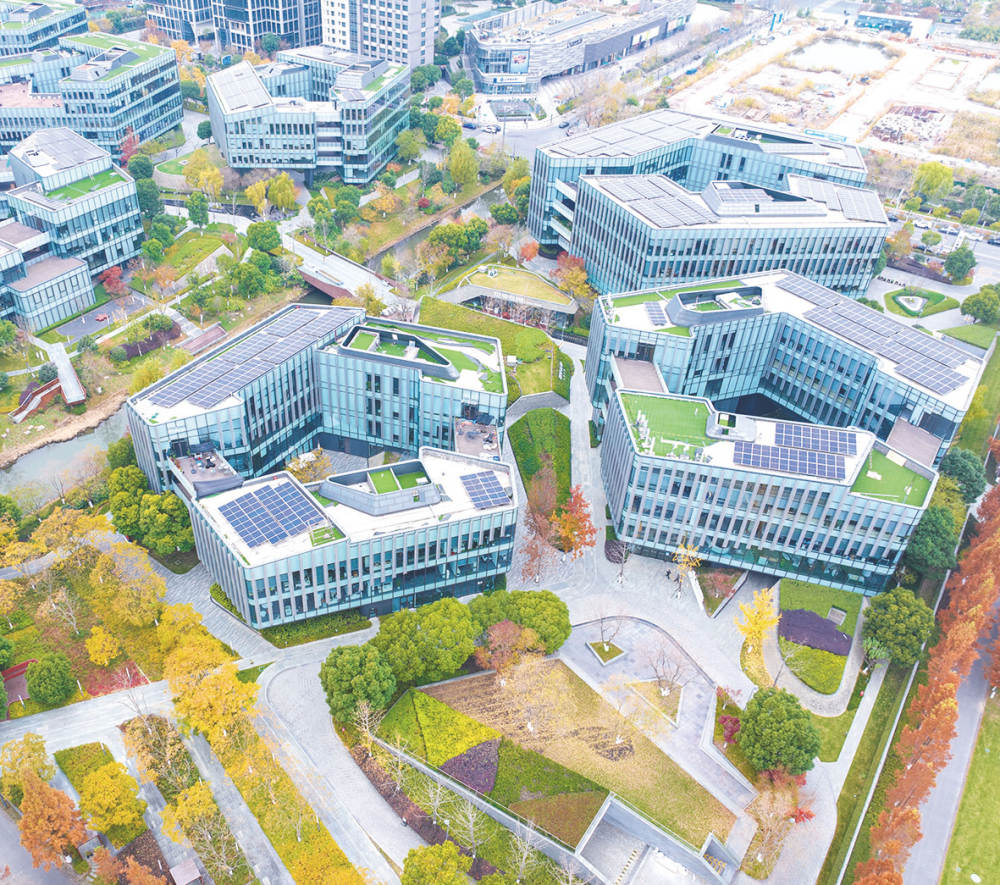
Core Viewpoint - The first batch of national-level zero-carbon parks has been announced, with 52 parks selected to lead the construction of a new energy system and promote green low-carbon industries in China [3][4][5]. Group 1: National-Level Zero-Carbon Parks - The selected 52 parks are seen as the "national team" for zero-carbon park construction, tasked with five key functions including serving as experimental fields for new energy systems and guiding regional coordinated development [4]. - The initiative aims to establish around 100 national-level zero-carbon parks by 2025, reflecting a rapid and steady implementation from top-level design to practical execution [3][5]. Group 2: Systematic and Nationwide Layout - The zero-carbon parks cover all 31 provinces and regions, ensuring that experiences in zero-carbon transformation are accumulated across diverse energy endowments and industrial bases [5]. - The construction of these parks will not adopt a one-size-fits-all approach but will leverage local comparative advantages, promoting a new regional development pattern [5][6]. Group 3: Construction and Evaluation - The parks will undergo a phased construction process, with 6 parks expected to complete by 2027 and 15 by 2030, while 24 parks are already advancing major projects [6]. - A comprehensive assessment system will be implemented, focusing on core and guiding indicators related to energy consumption and carbon emissions [6][11]. Group 4: Green Competitiveness and Economic Impact - The construction of zero-carbon parks is expected to enhance China's green competitiveness by reducing transformation costs for enterprises and fostering large-scale green industrial clusters [7][9]. - The anticipated output value of the first batch of parks is projected to reach 3.54 trillion yuan, supporting significant economic growth with low carbon emissions [11][12]. Group 5: Innovative Practices and Future Directions - Key strategies include "green electricity direct connection" and "green production," aiming to restructure the energy system and industrial landscape [8][9]. - The parks will serve as practical models for achieving carbon neutrality, providing valuable insights for broader societal transitions towards low-carbon living [12].

从入选到建成有多远?刘翠玲:国家级零碳园区技术、资金仍待解
2 1 Shi Ji Jing Ji Bao Dao· 2025-12-29 10:22
Core Insights - The first batch of national-level zero-carbon parks has been announced, including 52 parks across all 31 provinces, autonomous regions, and municipalities, with construction periods set between 2025 and 2030 [1][2] - The parks focus on low-energy, low-pollution, and high-value-added industries, primarily in new energy equipment manufacturing, advanced equipment manufacturing, and green computing [1][2] Industry Characteristics - The selected parks emphasize a "green production" approach, aligning industrial development with clean energy consumption capabilities, creating a virtuous cycle of "green drives production, production promotes green" [2] - Energy utilization models will rely on local renewable resources, with a target of at least 50% of the parks' electricity coming from green power [2] Technological and Financial Challenges - The construction of zero-carbon parks faces challenges in technology integration, funding balance, policy coordination, and stable operation [8][10] - A significant upfront investment is required, with costs varying widely based on park type, location, and industry focus, potentially ranging from tens of billions to hundreds of billions [12] Positive Effects on Industry - Zero-carbon parks can lead to cost reductions of 20-30% in electricity costs, enhancing profitability and market competitiveness [5] - Support from national and local governments through funding, special bonds, and credit will alleviate financial pressures on companies transitioning to green operations [5] - The initiative encourages innovation in green technologies, improving core technological competitiveness and creating green technology barriers [5][6] Key Performance Indicators - The parks will operate under a "1 core indicator + 5 guiding indicators" framework, focusing on reducing carbon emissions per unit of energy consumption to one-tenth of the current average [7] - The guiding indicators will support the core goal by addressing energy supply, industrial consumption, and resource recycling [7]
云南“十五五”规划建议:因地制宜推动生物制造、人工智能、氢能及新型储能等成为新的经济增长点
Jing Ji Guan Cha Wang· 2025-12-29 02:24
经济观察网中共云南省委关于制定云南省国民经济和社会发展第十五个五年规划的建议发布。其中提 到,积极发展战略性新兴产业和未来产业。实施产业创新工程,加快生物医药、新材料、先进装备制 造、数字经济、低空经济等战略性新兴产业发展,推动新能源电池产业等延链补链强链,努力培育新兴 支柱产业。积极谋划布局未来产业,建立未来产业投入增长和风险分担机制,因地制宜推动生物制造、 人工智能、氢能及新型储能等成为新的经济增长点。完善产业生态,加快发展创业投资,实施新技术新 产品新场景大规模应用示范行动。引导技术、资本、人才等优质资源要素向重点领域和优势企业集聚。 大力培育专精特新"小巨人"、制造业单项冠军企业。 ...
前10月全省制造业税惠减免超80亿元
Xin Lang Cai Jing· 2025-12-28 22:35
Core Insights - The article highlights that the Guizhou Provincial Taxation Bureau has implemented tax reduction and refund policies totaling 8.2 billion yuan to support the development of the manufacturing industry in the first ten months of this year [1] Group 1: Tax Policies and Impact - A total of 1.6 billion yuan in tax reductions and refunds were specifically targeted at advanced manufacturing enterprises through policies such as VAT incremental deductions [1] - General tax reduction and refund policies for manufacturing enterprises, including VAT credits, accounted for 6.6 billion yuan, effectively stimulating market vitality and innovation within the manufacturing sector [1] Group 2: Support Mechanisms for High-tech Manufacturing - The tax authorities have established a comprehensive service mechanism that includes precise pre-emptive guidance, ongoing support during the process, and post-analysis of outcomes to assist high-end manufacturing firms with their R&D investments and technology transfer [1] - The case of AVIC Elevator, the only advanced equipment manufacturing enterprise in Guizhou covering the entire elevator industry chain, illustrates the benefits of customized tax guidance, enabling the company to efficiently access various tax incentives and expedite capital turnover through a fast-track export tax refund process [1]
52个园区入选首批国家级零碳园区建设名单
Xin Lang Cai Jing· 2025-12-27 17:39
Core Insights - The first batch of national-level zero-carbon parks has been announced, including 52 parks across 31 provinces and regions, ensuring at least one park in each area [1][2] - The parks focus on low-energy, low-pollution, and high-value-added industries, primarily in renewable energy sectors, emphasizing a "green production" approach [1][2] - The expected output value of these zero-carbon parks is projected to reach 3.54 trillion yuan [1] Group 1 - The first batch of zero-carbon parks includes Beijing Economic-Technological Development Area and Tianjin Economic-Technological Development Area among others [1] - The parks will utilize local wind and solar resources, with a green electricity supply ratio of at least 50% of the parks' total electricity consumption [1][2] - The initiative is part of a broader strategy to promote green transformation and explore new low-carbon development paths [2] Group 2 - The central economic work conference in 2024 emphasized the establishment of zero-carbon parks, with clear directives in the government work report [3] - A systematic deployment for zero-carbon park construction has been outlined, including a core indicator for carbon emissions per unit of energy consumption and five guiding indicators [3] - The guiding indicators focus on clean energy consumption ratio, energy consumption per unit of product output, comprehensive utilization of industrial solid waste, and reuse rates of industrial water [3]