大家电

Search documents
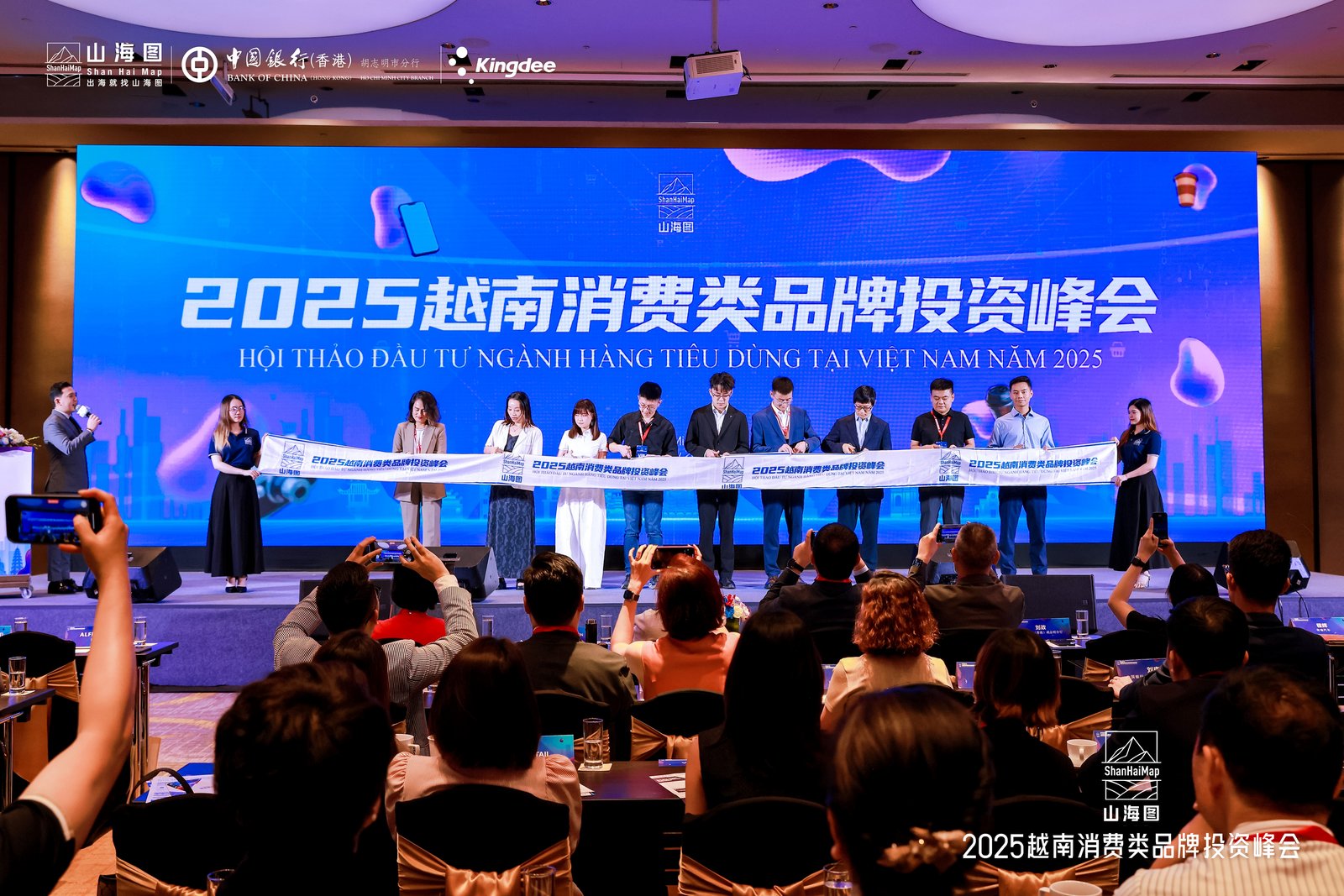
聚势越南,“2025越南消费类品牌投资峰会”7月17日圆满落幕
Zhong Guo Jin Rong Xin Xi Wang· 2025-07-17 09:34
Group 1 - The "2025 Vietnam Consumer Brand Investment Summit" was held in Ho Chi Minh City, attracting over 500 representatives from Chinese and Vietnamese companies, highlighting the strategic value of Vietnam as a consumption growth hub in Southeast Asia [1][8] - The summit focused on the theme "Insights into Vietnam's New Consumption Wave, Building New Growth Momentum for Brands," with key insights shared on the characteristics and opportunities within the Vietnamese consumer market [3][8] - Keynote speakers emphasized the importance of digital transformation and IT support for consumer goods companies, as well as the need for innovative product development to enhance customer experiences [4][6] Group 2 - Vietnam's economy is projected to reach a GDP of $476.3 billion in 2024, maintaining a growth rate of 7.09%, positioning it as the fourth largest economy in ASEAN [3] - The consumer market is characterized by a young population, strong consumer desire, the rise of the female economy, and an expanding middle class, which are seen as significant advantages for investment [3] - The summit provided a platform for cross-border investment dialogue, encouraging more Chinese companies to engage in the Vietnamese consumer ecosystem and capitalize on historical opportunities [8]





小米创下史上最强单季度业绩 推进全品类高端化
Zheng Quan Ri Bao· 2025-05-27 16:16
Core Insights - Xiaomi Group reported a record-breaking Q1 2025 performance with revenue of 111.3 billion yuan, a year-on-year increase of 47.4%, and adjusted net profit exceeding 10 billion yuan, reaching 10.7 billion yuan, up 64.5% [1] - The company emphasized that all business lines are performing well, supported by continuous R&D investment and a successful high-end product strategy [1][2] - Xiaomi's automotive sector showed strong growth, with the SU7 series delivering 75869 units in Q1 and a total of 258,000 units since launch, aiming for an annual delivery target of 350,000 units [1][2] Business Performance - The revenue from Xiaomi's home appliance segment doubled in Q1, with air conditioner shipments exceeding 1.1 million units, a growth of over 65% [2] - Xiaomi aims to rank among the top three in the Chinese retail market for air conditioners by 2030, having completed its full product line and achieved self-research in technology [2] - The average selling price (ASP) of Xiaomi's global smartphones reached a historical high of 1211 yuan, reflecting a 5.8% year-on-year increase [2] Strategic Initiatives - Xiaomi's high-end strategy, initiated five years ago, is transitioning from exploration to systematic planning, with a focus on expanding from high-end to ultra-high-end products and from China to overseas markets [3] - The company's R&D investment in Q1 was 6.7 billion yuan, a 30.1% increase, with an expected total R&D expenditure of 30 billion yuan for the year [3] - Over the next five years, Xiaomi plans to invest 200 billion yuan in R&D, indicating a strong commitment to innovation and product development [3]
追觅跨界大家电:以技术复利+无界生态改写行业规则
雷峰网· 2025-05-22 11:29
Core Viewpoint - The article discusses the strategic entry of Chasing Technology into the traditional home appliance market, emphasizing its reliance on technological compounding and ecological synergy to disrupt a market dominated by established players like Midea, Haier, and Gree [2][17]. Market Dynamics and Opportunities - The Chinese home appliance market is experiencing a significant shift, with an expected release of over 1 trillion yuan in market space over the next three years due to a wave of replacements driven by the aging of existing appliances and government policies promoting trade-ins [3][18]. - Chasing Technology aims to leverage its core technological capabilities, such as high-speed digital motors and intelligent algorithms, to tap into the overlooked 99% of market potential, contrasting with competitors focused on narrow segments [3][4]. Technological Leverage - Chasing Technology is applying its existing technologies from the cleaning appliance sector to new categories like refrigerators, air conditioners, and kitchen appliances, aiming for a "technology leverage effect" [3][4]. - The company is also working on overcoming technical barriers in key components of home appliances, such as compressors in air conditioners, which account for 30% to 40% of the total cost [4][10]. Ecological Collaboration and Scale Barriers - The company has adopted an "ecological" approach, reusing core technologies and supply chain capabilities across various product lines, which helps reduce costs and accelerate market entry [6][8]. - The home appliance industry is characterized by high capital requirements and long cycles, necessitating continuous investment in both funding and research and development [7][9]. Competitive Strategy - Chasing Technology is diversifying its product offerings while maintaining competitiveness across multiple fronts, including supply chain collaboration and the establishment of "lighthouse factories" to enhance production capacity [8][10]. - The company is focusing on a balanced investment strategy across short, medium, and long-term projects to ensure steady growth and maintain a competitive edge in research and development [10][17]. User Co-Creation - Unlike traditional home appliance companies, Chasing Technology employs a user co-creation model in product development, allowing customers to vote on features, which ensures alignment with market demands [12][13]. - This approach reduces market misjudgments and enhances feedback loops, particularly important for high-involvement purchases like air conditioners and refrigerators [13][14]. Brand and Market Positioning - Chasing Technology is building brand recognition and consumer trust through its established presence in the smart cleaning sector, which can be leveraged as it enters the home appliance market [15][18]. - The company is also developing a comprehensive service system that includes marketing, distribution, installation, and after-sales support, crucial for competing in the home appliance sector [15][18]. Conclusion - The journey of Chasing Technology into the home appliance market represents an exploration of "corporate boundaries," combining rational calculations of technological compounding with ambitious ecological visions [17][18]. - The success of Chasing Technology will depend on its ability to navigate supply chain restructuring, overcome scale and channel barriers, and reshape consumer perceptions in a highly competitive landscape [17][18].

影像设备公司一年抓30个商业间谍;跨境品牌大厂员工开会像高考;无人机公司请外国演员冒充在海外生产丨鲸犀情报局Vol.06
雷峰网· 2025-04-14 10:05
Group 1 - The sweeping robot market is highly competitive, with companies seeking new growth avenues, such as Stone's entry into the home appliance sector, investing millions to reduce prices significantly [1] - Stone's research indicated a potential in the washing machine market, leading to its collaboration with traditional appliance giants [2] - The drone industry is witnessing intense competition, with companies showcasing their production capabilities through promotional videos [3][4] Group 2 - A certain imaging equipment company has been vigilant against corporate espionage, reportedly capturing 30 spies within a year [5] - The 3D printing company,拓竹, has seen a turnaround in investor interest, projecting revenues of 6 billion in 2024, breaking previous market expectations [6][7] - The founder of a projection company is now involved in AI glasses, aiming to launch a more affordable product by April [8] Group 3 - A sweeping robot company is considering replacing laser radar with a dual-camera solution to reduce costs and improve operational efficiency [9] - A cross-border e-commerce company emphasizes a rigorous work culture, leading to a high attrition rate among new hires [10] - An AI hardware company, Plaud, underestimated its value but achieved significant sales success shortly after launching its product [11][12]

被忽视的大家电,石头、追觅、科沃斯扎堆抢蛋糕|36氪分析
36氪· 2025-03-29 09:34
Core Viewpoint - The article discusses the competitive landscape of the smart home appliance industry, highlighting the shift of companies like追觅 into larger home appliance markets as a strategy to diversify and enhance revenue streams amid declining growth in the smart cleaning segment [4][6][12]. Industry Overview - The home appliance industry is characterized by intense competition and price wars, leading to a saturated market where differentiation is challenging [3][9]. - The smart cleaning market, particularly for vacuum robots, has seen a slight decline in market size, with a year-on-year decrease of 0.6% in the first half of 2023 [5][10]. - The overall retail sales of home appliances in China are projected to reach 907.1 billion yuan in 2024, reflecting a growth of 6.4% [11]. Company Strategies - 追觅 has expanded its product offerings to include traditional home appliances such as air conditioners, refrigerators, and washing machines, moving beyond its initial focus on smart cleaning devices [4][5]. - The company leverages its existing technological capabilities, such as high-speed motors and smart algorithms, to innovate in new product categories [16][19]. - 追觅's established sales channels and after-sales service systems, with over 5,500 offline stores globally, provide a competitive advantage in entering the larger appliance market [20]. Market Dynamics - The smart cleaning market is experiencing a slowdown, prompting companies to seek new growth opportunities by diversifying their product lines and reducing reliance on single categories [14][22]. - The transition to larger appliances is seen as a strategic move to capitalize on the significant market potential, especially as the global home appliance replacement cycle is at a critical juncture [21].