
智能锁

Search documents
中山小榄镇党委书记赵锡雄:全镇13个村(社区)集体收入超亿元
Nan Fang Nong Cun Bao· 2025-12-23 16:00
Core Insights - The town of Xiaolan has achieved significant economic growth, with a collective income exceeding 1 billion yuan for 13 villages and communities, and a projected GDP of 586.4 billion yuan for 2024, with an average annual growth rate of over 6% from 2023 to 2025, ranking it among the top in the country [2][4]. Economic Development - Xiaolan has focused on modernizing its urban planning and enhancing its economic strength and influence, aiming to create a modern city that integrates industry and urban development [5][9]. - The town has transformed low-efficiency industrial parks, reclaiming over 6,500 acres of land, with a 90% occupancy rate for newly built industrial facilities, supporting 171 local enterprises in expansion and attracting new projects, including 8 projects exceeding 1 billion yuan [11][13][14]. Environmental Initiatives - Xiaolan has made significant strides in water pollution control, achieving a 100% rate in rural sewage treatment and eliminating all black and odorous water bodies in the region over three years [21][24]. - The town is also enhancing its living environment through comprehensive improvements in rural housing and urban greening, aiming to restore the beauty of the Lingnan water town [26][27]. Cultural and Tourism Development - The town leverages its cultural heritage, such as the national intangible cultural heritage event, the Xiaolan Chrysanthemum Festival, to boost tourism and cultural consumption, generating over 270 million yuan in revenue from recent festivals [28][30]. - Xiaolan is also developing large agricultural and cultural tourism projects, with a notable investment of 1.5 billion yuan in the Ninghui Garden project [28]. Governance and Reform - Xiaolan is implementing integrated reforms across various sectors, including industrial, water, agricultural, and urban reforms, to stimulate economic vitality [32][33]. - The town has adopted a precise empowerment model, delegating 463 economic and social management powers from the city level, significantly reducing project approval times and enhancing operational efficiency [40].


中山小榄:以破釜沉舟的决心勇气向低效工业园宣战
Nan Fang Du Shi Bao· 2025-12-23 13:33
Core Insights - The meeting held in Guangzhou focused on promoting the "Hundred Counties, Thousand Towns, and Ten Thousand Villages High-Quality Development Project" to enhance urban-rural regional coordination [1] Group 1: Economic Development - In 2024, the GDP of Xiaolan Town is projected to reach 58.64 billion yuan, with an expected annual growth rate of over 6% from 2023 to 2025, ranking 17th among the top 500 town economies in China [1] - The town has successfully transformed over 6,500 acres of low-efficiency industrial land, achieving a 90% occupancy rate for newly built "industrial transformation" factories [1][2] - A total of 171 new projects have been attracted, including 8 projects exceeding 1 billion yuan, with 18 returning projects from local entrepreneurs who previously invested elsewhere [1] Group 2: Industrial Upgrading - Xiaolan Town is developing a modern theme industrial park spanning thousands of acres, focusing on new industries such as artificial intelligence and low-altitude economy [2] - The town is optimizing and upgrading eight national-level traditional industrial clusters, with an expected total investment of nearly 7 billion yuan in technological transformation from 2023 to 2025, and an annual growth rate of 20.5% in industrial investment from 2021 to 2025 [2] Group 3: Environmental Improvement - Xiaolan Town has successfully eliminated all black and odorous water bodies within the region, achieving a 100% treatment rate for rural domestic sewage [2] - The town is committed to a comprehensive water pollution control initiative as part of the "Hundred Thousand Project," enhancing the ecological environment [2] Group 4: Cultural and Tourism Development - The town is leveraging the national intangible cultural heritage event, the Xiaolan Chrysanthemum Festival, to boost cultural tourism, with investments of 1.5 billion yuan in large agricultural and cultural tourism projects [3] - The recent Xiaolan Chrysanthemum Festival has generated over 270 million yuan in cultural tourism consumption, and the town has gained recognition as a significant baseball town following the successful hosting of the 15th National Games baseball events [3]
高盛掘金日本市场“阿尔法”:未来十年豪掷8000亿日元,聚焦中型企业并购
Zhi Tong Cai Jing· 2025-12-23 03:58
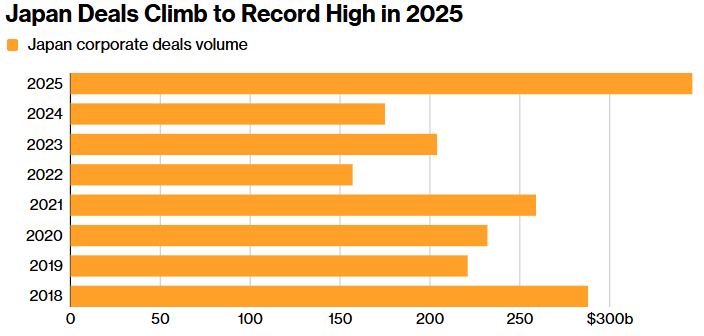
Group 1 - Goldman Sachs plans to expand its acquisition and investment scale in Japan's growing M&A market by approximately 800 billion yen (about 5.1 billion USD) over the next decade, focusing on mid-sized companies [1] - The firm is targeting companies involved in management buyouts, subsidiary sales, and succession planning, as global institutional investors show strong demand for the Japanese market [1] - The investment pace is currently two to three times faster than before, with a balanced supply-demand relationship between investors and companies seeking financing [1] Group 2 - By 2025, the transaction volume involving Japanese companies is expected to soar to a historical high of around 350 billion USD, driven by corporate governance reforms aimed at enhancing shareholder returns [1] - Goldman Sachs is primarily interested in mid-sized companies valued between 30 billion and 300 billion yen, which often lack the resources for overseas expansion or M&A [1] - The firm has already begun such investments, including a 200 billion yen acquisition of Nippo Corp. in collaboration with Eneos Holdings Inc. and a management buyout of Nihon Housing for approximately 94 billion yen [1][4] Group 3 - Healthcare is another key focus area, with Kakehashi Inc. raising about 14 billion yen from Goldman Sachs and existing shareholders to provide software data to pharmacies [4] - The industrial sector is also a priority, encompassing a wide range of industries, including Nippo and Nihon Housing, with companies like Raksul Inc. announcing a management buyout for 120 billion yen [4] - Goldman Sachs had not previously entered the consumer goods sector until acquiring Burger King Japan for about 70 billion yen from Affinity Equity Partners [4] Group 4 - Since the COVID-19 pandemic, fast-food chains like Burger King have experienced rapid growth, particularly in the hamburger segment [5] - Due to language barriers and differences in business practices and regulatory environments, overseas private equity funds require time and resources to establish teams and invest directly in Japan [5] - Many investors find it reasonable to entrust funds to firms like Goldman Sachs that have established teams and performance records in Japan [5]

客户说|德施曼将AI转变为生产力,为客户创造超预期的价值!
Xin Lang Cai Jing· 2025-12-12 04:22
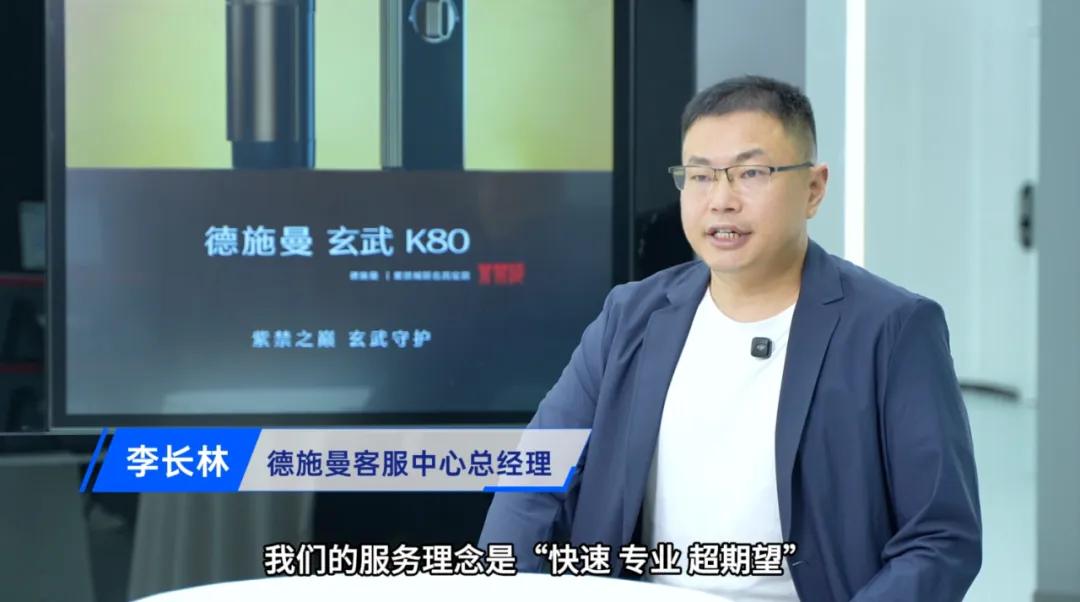
Core Insights - The company has partnered with Tianrun Rongtong to integrate its conversational AI agent ZENAVA and knowledge base into after-sales service and installation appointment scenarios, significantly improving efficiency and customer experience [1][12][18] Company Overview - Founded in 2009, the company is a global leader in high-end smart locks, encompassing research and development, manufacturing, sales, installation, and after-sales service, maintaining the top sales position for 13 consecutive years [10][12] Service Philosophy - The company's service philosophy emphasizes "speed, professionalism, and exceeding expectations," with a commitment from all employees to focus on user pain points and deliver surprising service experiences [11][12] AI Integration - The integration of ZENAVA as an AI employee has led to an 83% independent reception rate in customer service and a 50% reduction in labor costs [4][14] - ZENAVA can engage in natural conversations with customers, understand their needs, create installation work orders, and conduct follow-up calls after service completion [3][14] Efficiency and Customer Experience - The AI can independently handle repetitive and standardized inquiries, such as battery replacement and password settings, enhancing problem-solving efficiency and customer experience [3][14][16] - The company aims to transform AI from a concept into a productive force, creating long-term measurable business value [5][15] Industry Leadership - The company aspires to be a leader in the transformation of customer service through AI, establishing a competitive barrier in the industry and driving the sector towards a new era of intelligent services [7][17][18]
天润云(02167.HK)客户说|德施曼将AI转变为生产力,为客户创造超预期价值
Ge Long Hui· 2025-12-06 22:19
Core Insights - The company, 德施曼, has established itself as a leading high-end smart lock brand since its inception in 2009, maintaining the top sales position for 13 consecutive years [1] - The service philosophy of 德施曼 emphasizes "speed, professionalism, and exceeding expectations," which is strictly adhered to by all employees from the founder to frontline staff [1] - The integration of AI into customer service has significantly enhanced customer experience and operational efficiency, marking a transformative shift in the industry [5][6] Group 1 - 德施曼 has implemented AI technology, specifically the conversational AI agent ZENAVA, to improve customer service processes such as appointment scheduling and after-sales inquiries [3] - The AI agent ZENAVA has achieved an independent reception rate of 83% and has reduced human labor costs by 50% since its deployment [3] - The company aims to leverage AI not only to enhance efficiency but also to create a competitive barrier in the customer service sector [5] Group 2 - The introduction of AI has allowed 德施曼 to convert AI from a conceptual tool into a measurable business asset, demonstrating long-term value [4] - The company is committed to being a leader in the transformation of customer service through innovative AI applications, striving to provide smarter, more efficient, and more personalized service [6]

AI时代,凯迪仕重新定义“一把好锁”
3 6 Ke· 2025-11-19 10:08
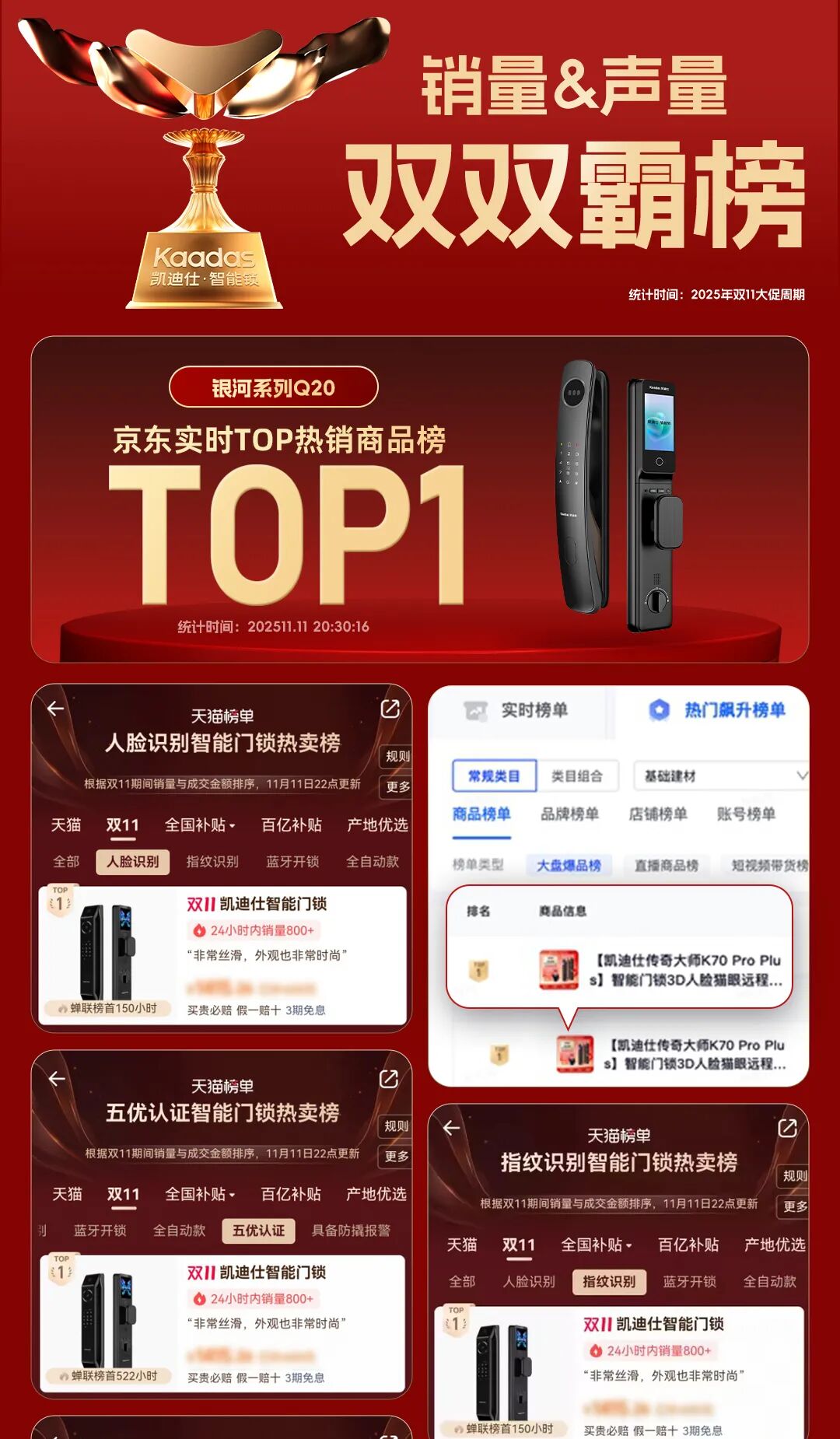
Core Insights - Kaadas achieved impressive sales during the 2025 Double 11 shopping festival, ranking first in multiple categories and generating over 5 billion in online buzz [1][4] - The growth engine for the smart lock category is shifting towards AI smart locks, with the market expected to reach 480 billion by 2025, growing at a compound annual growth rate of over 30% [4][23] - Kaadas has been recognized as a leader in the industry, receiving multiple awards for its AI smart locks, including being named the "Global AI Smart Lock Pioneer" [4][30] Group 1: Market Trends - The Chinese smart home market is projected to reach 945 billion by 2025, with smart locks expected to penetrate over 35% of the market [4] - Consumers are moving beyond basic needs for keyless entry to seeking deeper security and intelligent experiences [4][29] - The establishment of industry standards for AI smart locks indicates a maturation of technology and a move towards more regulated products [9][10] Group 2: Company Strategy - Kaadas has focused on early investment in AI technology and has developed the engineering capabilities to translate this into stable products [6][12] - The company integrates AI into its products not just as an added feature but as a transformative technology that enhances user experience [6][22] - Kaadas has invested nearly 10% of its revenue into R&D, holding over 711 patents and expanding its global presence to 36 countries [22][30] Group 3: Product Innovation - AI smart locks are evolving from simple security devices to proactive guardians that can detect unusual behavior and alert users [8][22] - The integration of AI allows for advanced features such as multi-dimensional recognition and adaptive algorithms, enhancing usability for all family members [8][23] - Kaadas' AI capabilities enable features like real-time alerts for package monitoring and personalized video summaries of door activity [16][22] Group 4: Future Outlook - The future of smart locks will focus on more precise security recognition and enhanced situational awareness [23][28] - Kaadas is exploring deeper integration with major smart home ecosystems, aiming for a comprehensive service model [28][30] - The competition in the smart lock market is shifting towards brands that effectively combine technology, user needs, and human-centered design [29][30]
AI时代,凯迪仕重新定义“一把好锁”
36氪未来消费· 2025-11-19 09:50
Core Viewpoint - Kaadas is leading the smart lock industry with AI technology, achieving significant sales and recognition during the 2025 Double 11 shopping festival, with a total online voice exceeding 5 billion [3][4][8]. Group 1: Market Performance and Trends - Kaadas achieved top rankings in various sales categories, with its flagship products dominating platforms like Tmall and JD [3][4]. - The smart home market in China is projected to reach 945 billion by 2025, with smart locks expected to penetrate over 35% of the market [7]. - AI smart locks are anticipated to reach a market size of over 48 billion by 2025, with a compound annual growth rate exceeding 30% [8]. Group 2: Technological Advancements - The evolution of smart locks from basic security to AI-driven intelligent systems is transforming user experiences, addressing deeper usage pain points [13][14]. - AI technology enables enhanced recognition capabilities, allowing smart locks to adapt to various user scenarios, such as elderly or child users [13][14]. - Kaadas has established a comprehensive AI recognition system, ensuring rapid and accurate identification, achieving a response time of 0.6 seconds [31]. Group 3: Industry Recognition and Standards - Kaadas has received multiple accolades, including being recognized as the "Global AI Smart Lock Pioneer" and "China's Leading AI Smart Lock Brand" [8]. - The establishment of industry standards for AI smart locks during the China International Hardware Exhibition marks a significant step towards product regulation and quality assurance [15][20]. Group 4: Manufacturing and R&D Capabilities - Kaadas has integrated AI technology with manufacturing, utilizing advanced production facilities and industrial internet 4.0 models to ensure reliable product quality [18][20]. - The company invests nearly 10% of its revenue into R&D, holding over 711 patents and employing a global research team [29]. Group 5: Future Directions - The future of AI smart locks will focus on more precise security recognition and enhanced situational awareness [31]. - Kaadas is exploring deeper integration with major smart home ecosystems, aiming for seamless interaction and enhanced user experiences [34][35].

海尔智能门锁双11销量增长26%领跑
Quan Jing Wang· 2025-11-18 07:06
Core Insights - Haier's smart lock P50 Pro achieved a 26% year-on-year sales growth during the Double 11 shopping festival, while the new S3 model surpassed 10,000 units in online sales, and the T15 model maintained its position on JD's electronic lock leaderboard [1] Product Innovation - The P50 Pro features the new Zongmu TMAI multi-dimensional vision system with upgraded dual cameras, integrating AI palm vein and 3D facial recognition for enhanced security and user experience [1] - The product's ultra-wide-angle lower camera increases the visible range by 130%, providing comprehensive coverage of the entrance area, which helps prevent package theft [1] - The high-performance AI chip enhances image clarity even in low-light conditions, ensuring detailed visibility [1] User Experience - The P50 Pro offers multiple unlocking methods to cater to different family needs, making entry more convenient for users of all ages [1] - Features like 3D facial recognition prevent unauthorized access through photos or videos, ensuring safety for users [1] - The lock adapts to different family members' fingerprint characteristics, becoming more sensitive with use [1] Smart Living Enhancement - The P50 Pro supports remote video calls with visitors via mobile devices and includes a voice-changing feature for added security, particularly for individuals living alone [2] - The lock automatically captures and sends video footage to the user's phone if unusual activity is detected outside, proactively mitigating risks [2] Brand Recognition - Haier's smart locks have been recognized with the "2025 Smart Lock Industry Leadership Brand Award," emphasizing their role in ensuring home security and enhancing smart living experiences for users [3]


刘润年度演讲:最赚的生意,藏在情绪里
创业邦· 2025-10-26 01:08
Core Viewpoint - The article emphasizes the need for businesses to adapt and evolve in response to changing market conditions, advocating for a "great migration" away from traditional competition towards innovative solutions that meet new consumer demands [5][59]. Group 1: Challenges Faced by Industries - The restaurant industry has seen a 24.2% decrease in business banquets and team-building events, with average customer spending dropping by 7.7%, leading to a reduction in restaurant lifespan from over 2 years to just 15 months [21][22]. - The maternal and infant industry is experiencing a significant decline, with newborns in China dropping from 18.83 million in 2016 to 9.02 million in 2023, impacting various related sectors [25][26]. - Many businesses are facing systemic "ecological drought," where traditional revenue streams are drying up, leading to increased competition and reduced profitability [18][28]. Group 2: The Concept of "Great Migration" - The "great migration" is illustrated through the example of wildebeests in Africa, which must migrate to survive, paralleling the need for businesses to seek new opportunities rather than engage in destructive competition [31][56]. - Companies must make a choice between risking everything for new opportunities or remaining stagnant in a competitive environment, which is likened to the "Mara River dilemma" faced by wildebeests [49][50]. Group 3: Case Studies of Successful Adaptation - A restaurant called "烤匠" has successfully attracted customers by focusing on emotional value and creating a unique dining experience, demonstrating a shift from basic offerings to enhancing customer experience [62][64]. - AirBuggy, a premium baby stroller brand, pivoted to producing pet strollers in response to declining birth rates in Japan, successfully leveraging their core competencies to meet new market demands [72][75]. Group 4: Avoiding Category Rigidity - The article discusses "category rigidity," where businesses become too focused on existing products and fail to adapt to new consumer needs, exemplified by the case of a fish farmer who innovated by creating a premium product through a unique feeding process [84][95]. - Companies must recognize and respond to evolving consumer demands rather than clinging to outdated business models, as illustrated by the transformation of traditional products like beds and tables to meet modern needs [99][102]. Group 5: Value Reordering - The concept of "value reordering" is introduced, where consumers are becoming more selective about their spending, often choosing to save on essentials to splurge on experiences or luxury items that provide immediate satisfaction [188][210]. - This shift in consumer behavior reflects a broader trend of psychological adjustment to economic pressures, leading to a dual approach of frugality in some areas while indulging in others [205][206].

AI智能锁市场仍处蓝海初期 德施曼首创AI品类加速领跑
Zheng Quan Ri Bao Wang· 2025-09-26 06:40
Core Insights - The leading smart lock brand, Deshman, has received five prestigious certifications for its AI smart lock, including "First AI Smart Lock in China" and "AI Smart Lock Leader" [1][2] - The AI smart lock market is still in its early stages, presenting opportunities for brand establishment and differentiation [1] - Deshman has redefined the boundaries of smart locks by enhancing market penetration, brand influence, technological research, and functional innovation [1] Industry Analysis - The AI smart lock is recognized as a key entry point in smart home technology and a significant application of "Artificial Intelligence+" [1] - The competition in the AI smart lock sector is shifting towards AI algorithm capabilities and the integration of large models, moving away from traditional price wars [1] - Deshman is the first brand to launch an AI smart lock, incorporating human recognition AI algorithms and advanced AI functionalities [2]