航天探索

Search documents
美国航天局:计划不早于2月6日实施“阿耳忒弥斯2号”载人绕月飞行任务
Ge Long Hui· 2026-01-14 08:00
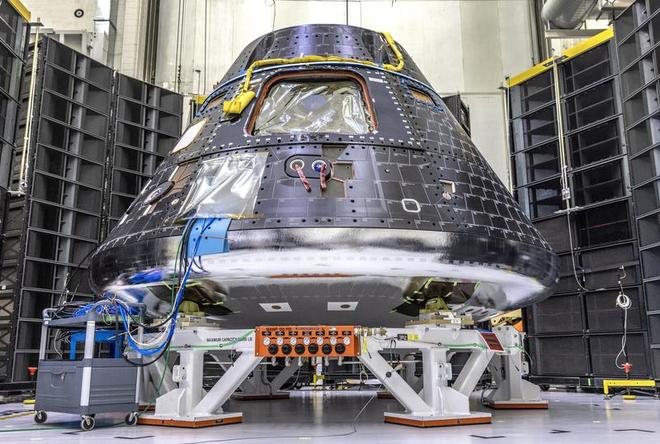
Core Viewpoint - NASA plans to implement the "Artemis 2" crewed lunar flyby mission no earlier than February 6, marking the first crewed mission for the new generation lunar rocket "Space Launch System" and the "Orion" spacecraft [1] Group 1 - The "Artemis 2" mission will be the first crewed flight of NASA's new lunar rocket [1] - The mission is part of NASA's broader Artemis program aimed at returning humans to the Moon [1] - The "Space Launch System" and "Orion" spacecraft are key components of this mission [1]
欧媒幻想:新一轮登月竞赛,德国人有没有可能先登月?
Guan Cha Zhe Wang· 2025-12-29 09:30
Core Viewpoint - Europe aims to become an independent participant in the lunar exploration race, seeking to send European astronauts to the Moon, while still heavily relying on the U.S. Artemis program for its lunar ambitions [1][5]. Group 1: European Space Agency (ESA) Involvement - ESA is expected to play a key role in NASA's Artemis program, potentially sending European astronauts aboard U.S. spacecraft to the Moon [1][5]. - ESA's Director General, Aschbacher, indicated that the first European astronauts for the lunar missions are likely to come from Germany, France, and Italy, with four German candidates being the most promising [3][5]. - ESA has received nearly €22.1 billion from its member states for operations from 2026 to 2028, aiming to enhance Europe's independent access to space [5]. Group 2: Funding and Investment - Germany is the largest contributor to ESA, providing €5.1 billion, and emphasizes the need for increased investment in space as a contribution to European sovereignty and security [5]. - Despite budget constraints, Germany's Federal Minister for Research, Technology, and Space, Dorothee Bär, advocates for more funding in the space sector [5]. Group 3: Global Lunar Exploration Context - The U.S. Artemis program, initiated in 2017, aims for a manned lunar landing, with Artemis 3 now delayed to mid-2027 due to development challenges [6]. - China is progressing steadily with its lunar exploration plans, aiming for its first manned lunar landing by 2030, having already conducted multiple lunar missions [6].

美国新消息!将在特朗普第二个任期内重返月球 建立“月球基地”
Mei Ri Jing Ji Xin Wen· 2025-12-28 14:17
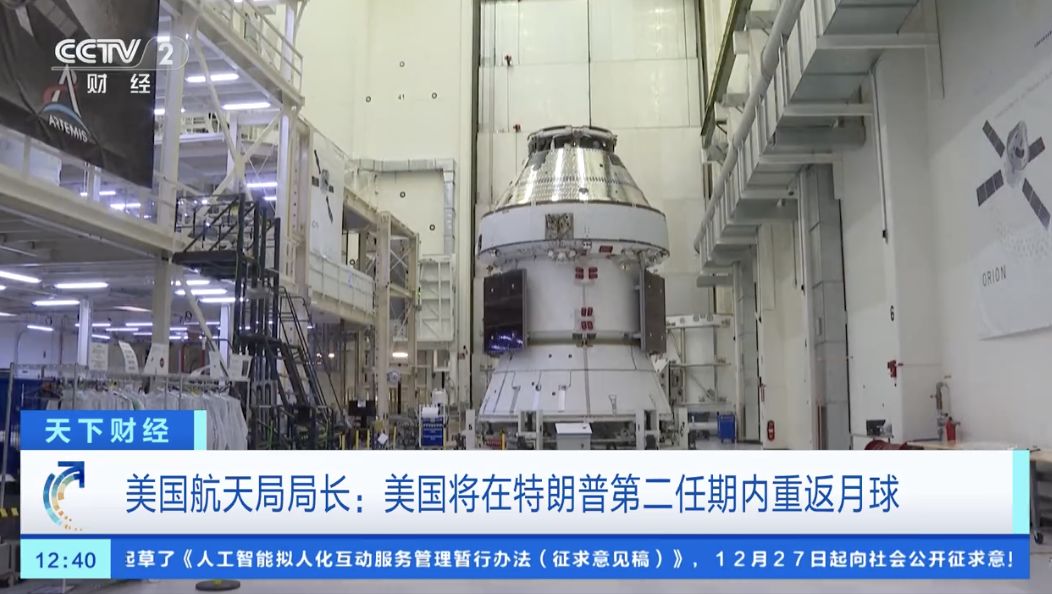
央视财经消息,美国航天局新任局长贾里德·艾萨克曼上任来首次公开发言,表示美国将在特朗普第二个任期内重返月球。具体行动包括建立空间数据 中心和基础设施,以及在月球上开采氦的同位素氦-3等。而在建立"月球基地"之后,美国航天局将考虑投资核能与核动力推进,以实现进一步探索。 图片来源:央视财经视频截图 目前,美国航天局正与美国太空探索技术公司、蓝色起源以及波音公司等就"阿耳忒弥斯"的相关发射任务进行合作。 央视新闻消息,当地时间12月18日,美国白宫发表声明称,特朗普当日签署了一项行政命令,为"美国优先"的太空政策制定了愿景,以确保美国在太 空探索、安全和商业领域"引领世界"。 该命令要求美国人到2028年重返月球,并在2030年前建立永久月球前哨站的初始设施,指示在月球和轨道上部署核反应堆。该命令通过升级发射基础 设施和开发商业途径,以在2030年前取代国际空间站,从而刺激私营部门的创新和投资。该命令指示总统科学技术顾问协调国家太空政策工作,并指 示联邦各部门和机构共同执行该命令,包括简化采购流程、实施相关的太空安全战略,确保拥有适当的人力资源来实现这些目标。 每日经济新闻综合央视财经、央视新闻 (文章来源:每日 ...
美国航天局局长:美国将建月球基地
Mei Ri Jing Ji Xin Wen· 2025-12-28 14:15
Core Viewpoint - The new NASA Administrator, Jared Isaacman, announced plans for the United States to return to the Moon during Trump's second term, focusing on establishing a lunar base and exploring helium-3 mining [1] Group 1: Lunar Exploration Plans - NASA plans to establish a space data center and infrastructure on the Moon [1] - The agency will consider investing in nuclear energy and nuclear propulsion for further exploration after the lunar base is established [1] Group 2: Collaborations and Partnerships - NASA is collaborating with SpaceX, Blue Origin, and Boeing on the Artemis launch missions [1]
NASA新局长:特朗普任期内必将重返月球
财联社· 2025-12-28 07:13
Core Viewpoint - NASA's new administrator, Jared Isaacman, emphasizes the importance of returning to the Moon during Trump's second term, viewing it as a key to unlocking the Moon's potential in science, economy, and national security [4]. Group 1: NASA's Plans and Initiatives - NASA aims to explore opportunities on the Moon, including the construction of space data centers and infrastructure, as well as the potential mining of helium-3, a rare gas embedded in lunar soil that could be crucial for future nuclear fusion energy [6]. - The Artemis program, which involves collaboration with contractors like SpaceX, Blue Origin, and Boeing, is designed not only to return to the Moon but also to prepare for future Mars missions [6]. - The Artemis 3 mission was initially scheduled for 2024 but has been postponed to 2027, with Artemis 2 delayed to April 2026 [6]. Group 2: Technological Developments - SpaceX and Blue Origin are enhancing heavy-lift rocket technologies and developing in-orbit cryogenic propellant transfer to make rockets more reusable [6][7]. - These advancements are expected to enable affordable and frequent travel to the Moon, laying the groundwork for future missions to Mars and beyond [7].

NASA新局长:美国将在特朗普任内重返月球
Feng Huang Wang· 2025-12-27 00:20
Core Viewpoint - NASA's new administrator, Jared Isaacman, announced plans for the U.S. to return to the Moon during President Trump's second term, emphasizing the importance of lunar exploration for economic and national security purposes [1]. Group 1: Lunar Exploration Opportunities - Isaacman highlighted the potential for establishing a lunar data center and infrastructure, as well as the possibility of mining helium-3, a rare gas that could serve as a significant fuel for nuclear fusion power [1]. - The establishment of a "lunar base" is seen as a precursor to investments in nuclear energy and space nuclear propulsion technologies to enhance exploration efforts [1]. Group 2: Technological Advancements - SpaceX and Blue Origin are reportedly improving heavy-lift launch vehicles and introducing in-orbit cryogenic propellant transfer technology to achieve higher levels of reusability [1][2]. - This technology is expected to enable frequent and cost-effective trips to the Moon, laying the groundwork for missions to Mars and beyond [2].

俄罗斯计划未来十年在月球建成核电站
Hua Er Jie Jian Wen· 2025-12-24 15:53
Core Viewpoint - Russia's state space corporation, Roscosmos, plans to establish a nuclear power station on the Moon by 2036 to support its lunar space program and the Sino-Russian International Lunar Research Station [1][2] Group 1: Project Details - The nuclear power station will provide energy for various facilities, including lunar rovers, observation equipment, and the infrastructure of the Sino-Russian International Lunar Research Station [1][3] - Roscosmos has signed a contract with Lavochkin Association to advance this project, with participation from Rosatom and the Kurchatov Institute [1][3] - The project marks a shift from single missions to a systematic and long-term approach to lunar exploration [3] Group 2: Competition and Strategic Importance - The initiative reflects Russia's ambition to regain its leadership in space exploration, especially after setbacks like the crash of the Luna-25 probe [2] - The competition is intensified by NASA's plans to deploy a nuclear reactor on the Moon by the first quarter of fiscal year 2030 [1][2] - Analysts predict a "resource development boom" on the Moon, driven by the estimated 1 million tons of helium-3 and various rare earth metals essential for advanced technology [4] Group 3: Implications for Space and Energy - The Moon's resources are crucial for sustaining lunar bases and future manned missions to Mars, highlighting the strategic importance of energy supply [4] - The international competition for lunar nuclear power construction underscores the race for dominance over strategic space resources and the integration of aerospace and advanced nuclear technologies [4]
俄罗斯计划在月球建电站
财联社· 2025-12-24 11:08
Core Viewpoint - Russia plans to build a lunar power station by 2036 to support its lunar exploration program and the Sino-Russian International Lunar Research Station [2][4]. Group 1: Project Details - The lunar power station is expected to be completed by 2036, with contracts starting in 2025 for spacecraft development, ground tests, flight tests, and infrastructure deployment on the Moon [2][3]. - The project aims to establish a long-term scientific lunar base, marking a shift from one-time missions to ongoing lunar exploration [4]. Group 2: Technological Aspects - Although Roscosmos has not explicitly stated that the lunar power station will be nuclear, the involvement of Rosatom and the Kurchatov Institute suggests a focus on nuclear energy technology [4]. - Roscosmos has indicated that one of its goals is to deploy a nuclear power station on the Moon while also advancing exploration of Venus [6]. Group 3: International Collaboration - Russia and China signed a memorandum in March 2021 to cooperate on the construction of the International Lunar Research Station, with a roadmap for the project released in June 2021 [5]. - Ongoing collaboration between Russia and China has been confirmed, with agreements signed to further the construction of the lunar research station [7]. Group 4: Strategic Context - This initiative highlights Russia's ambition to regain its position in deep space exploration, especially as it has fallen behind the U.S. and China in recent years [8]. - The recent failure of Russia's Luna-25 lander underscores the challenges faced in its lunar exploration efforts, while the U.S. has announced plans to return to the Moon by 2028 and establish a permanent outpost by 2030 [8].

特朗普签署行政令:2028年登月
财联社· 2025-12-19 01:22
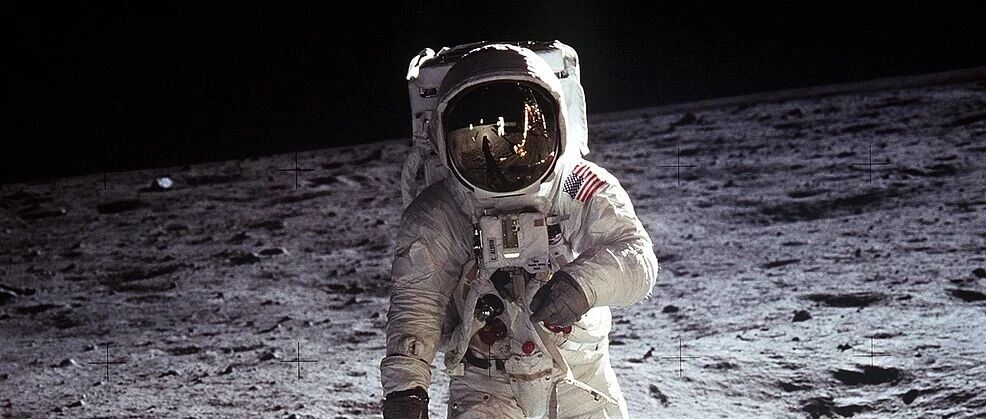
Core Viewpoint - The article discusses a new executive order signed by Trump that outlines a vision for a "America First" space policy, aiming to ensure the United States leads in space exploration, security, and commercial sectors [2][7]. Group 1: Executive Order Details - The executive order aims to send astronauts back to the Moon by 2028 through NASA's Artemis program and establish a permanent presence on the Moon by 2030 [3][5]. - It emphasizes the development of nuclear energy in space, directing the deployment of nuclear reactors on the Moon and in orbit [5]. - The order also calls for upgrading launch infrastructure and developing commercial pathways to replace the International Space Station by 2030, stimulating private sector innovation and investment [6]. Group 2: Investment and Economic Impact - The executive order is expected to attract at least $50 billion in additional investment to the U.S. space market by 2028 [7]. - It highlights the importance of space superiority as a measure of national vision and will, contributing significantly to national strength, security, and prosperity [7]. Group 3: NASA's Artemis Program Updates - NASA's Artemis 2 mission, which aims to send astronauts into lunar orbit, has been delayed to April 2026, while Artemis 3, targeting a lunar landing, is postponed to 2027 [7].
前NASA局长急死:赶紧推翻重来,中国才是对的
Guan Cha Zhe Wang· 2025-12-11 04:06
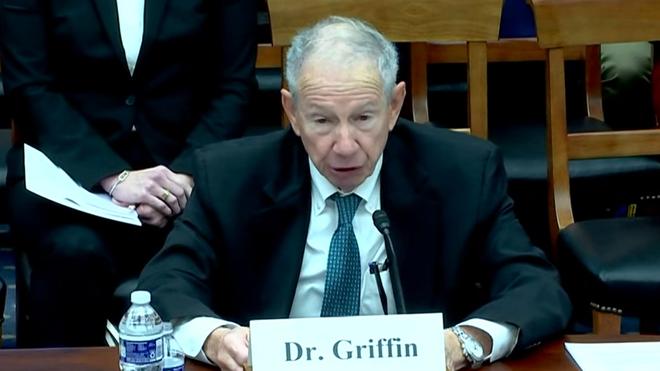
Core Viewpoint - The former NASA administrator Michael Griffin expressed concerns about the feasibility of the U.S. manned lunar return program, suggesting that the U.S. is falling behind China, which is on a more effective path for lunar exploration [1][2][8]. Group 1: U.S. Lunar Program Challenges - The Artemis program, announced in 2019, has faced significant delays due to complex design and unverified technologies, with the Artemis 2 and Artemis 3 missions postponed multiple times [4][5]. - Griffin criticized the current Artemis 3 mission plan, stating it relies on untested technologies and complex operations that could jeopardize mission reliability [7][8]. - He highlighted that the U.S. has wasted time and may not achieve manned lunar landing before China, emphasizing the need for a simplified approach similar to China's strategy [1][2][9]. Group 2: Comparison with China's Lunar Program - China aims to land humans on the moon by 2030, with progress reported as smooth and on track, contrasting with the U.S. delays [2][4]. - Griffin noted that China's lunar mission plan is simpler and more aligned with the successful Apollo program, utilizing a dual-rocket launch system that has proven technologies [8][9]. - The Chinese government’s ability to execute long-term plans consistently provides them with advantages in project continuity and stability, which Griffin believes the U.S. political system struggles to match [9].