装备制造业

Search documents
2025年我国中小企业经济运行总体平稳 专精特新表现亮眼
Xin Lang Cai Jing· 2026-02-25 00:29
专精特新中小企业表现亮眼。2025年,规模以上工业专精特新"小巨人"企业增加值同比增长9.0%,利润 总额同比增长7.0%,营收利润率达7.9%,均高于全部规模以上工业,综合竞争力进一步增强。 人民财讯2月25日电,工业和信息化部数据显示,2025年我国中小企业经济运行总体平稳,展现出较强 发展韧性,成为工业经济稳增长的重要支撑。 2025年,规模以上工业中小企业增加值同比增长6.9%,高于全部规模以上工业1.0个百分点,连续3年高 于全部规模以上工业增速;营业收入达83.8万亿元,同比增长2.6%;利润总额同比增长1.4%,尤其是装 备制造业利润总额保持较快增速,同比增长11.4%,其中计算机通信电子设备、铁路船舶航空航天、汽 车制造业同比分别增长49.1%、22.8%、11.8%。 ...
先导智能(00470)股东将股票由花旗银行转入高盛(亚洲)证券 转仓市值2.8亿港元
智通财经网· 2026-02-25 00:17
先导智能于2月11日登陆港交所,公告显示,每股定价45.8港元,共发行1.08亿股股份,每手100股,所 得款项净额约47.96亿港元。据此前招股书,先导智能所交付的制造装备及解决方案广泛分布于锂电 池、光伏电池以及计算机、通信及消费电子产品(3C)制造、智能物流、制氢及燃料电池生产、汽车制造 及激光精密加工等多元应用领域。 智通财经APP获悉,香港联交所最新资料显示,2月24日,先导智能(00470)股东将股票由花旗银行转入 高盛(亚洲)证券,转仓市值2.8亿港元,占比5.64%。 ...

策马振兴 且趁春风
Xin Lang Cai Jing· 2026-02-17 22:46
(来源:沈阳日报) 值此新春到来之际,向奋斗在沈阳振兴一线的全体市民,向关心和支持沈阳的海内外朋友,致以最诚挚 的新春祝福! 回首来路,沈阳——这个共和国的工业长子,在时代奔流中保持着特有的沉稳与坚韧,在维护国家"五 大安全"中扛牢使命,在英雄城市血脉里续写荣光。眺望未来,从装备制造的智能化转身,到科技创新 的攻坚突破;从城市更新的蝶变焕新,到民生福祉的持续增进,沈阳的每一步前行都镌刻着"老马识 途"的清醒与"快马加鞭"的紧迫。 马年赛马,意在精神。真正的"千里马",不仅能驰骋于坦途,还可奋蹄于坡坎。审视当下,全面振兴正 处于关键期,沈阳作为核心增长极,既要直面产业转型的阵痛,又要应对区域竞争的现实。"十五五"开 局,沈阳锚定建设东北亚国际化中心城市,从"东北地区重要中心城市"到"东北亚国际化中心城市",这 一跃升不仅是地理坐标的位移,更是城市能级与格局的重塑。未来五年,是战略机遇期,更是攻坚窗口 期。真正的突破,不仅在于规划的宏伟,更在于执行的精准;不仅在于速度的追求,更在于质量的保 证。 新的一年,让我们以"不待扬鞭自奋蹄"的行动自觉,在全面振兴的征途上策马扬鞭、勇毅前行,奋力谱 写中国式现代化沈阳篇章! ...
东北这座城,最争气
盐财经· 2026-02-14 10:35
Core Viewpoint - Dalian has achieved a significant milestone by surpassing a GDP of 1 trillion yuan, reflecting its role as a key player in the revitalization of Northeast China and showcasing its potential for sustainable economic transformation [3][5][34]. Economic Performance - In 2025, Dalian's GDP reached 1,000.21 billion yuan, marking a historic achievement and demonstrating a rapid growth trajectory from 700 billion to 1 trillion yuan since 2018 [3][5]. - The city's industrial output value increased by 11.7% year-on-year, with the petrochemical industry growing by 8.9% and equipment manufacturing surging by 15.4% [15][34]. Strategic Positioning - Dalian is the only planned sub-provincial city in Northeast China and serves as a crucial coastal open city, acting as a "front desk" for the region's economic engagement with the world [5][7]. - The city has established itself as a hub for global resource allocation, leveraging its port to connect with over 160 countries and regions [13][14]. Innovation and Development - Dalian has seen a significant increase in technology-driven enterprises, with over 10,000 companies and a 75% growth in high-value invention patents over five years [24]. - The number of high-tech enterprises in Dalian rose from 2,475 to 5,300 between 2020 and 2024, reflecting a 114% increase [24]. Challenges and Opportunities - Despite its achievements, Dalian faces challenges such as an aging population, with 24.71% of residents over 60 years old, and a need for high-quality job creation to retain talent [27][28]. - The city’s per capita GDP stands at approximately 132,600 yuan, which, while leading in Northeast China, lags behind more developed eastern cities like Shenzhen and Hangzhou [28]. Regional Collaboration - Dalian's growth is not isolated; it must foster collaboration with surrounding cities like Shenyang and Changchun to enhance regional economic synergy [37][40]. - The city has initiated regular sea-rail intermodal transport to facilitate trade with neighboring provinces, but there is a need for deeper integration of supply chains [38][40]. Future Directions - Dalian aims to redefine its role not just as a local leader but as a connector for Northeast China to national and global high-value economic cycles [40][41]. - The city has implemented over 540 institutional innovations in its free trade zone, but barriers remain that hinder broader regional integration [40].


制造业数字化转型进入“深水区” 超89%规上企业已行动
Xin Lang Cai Jing· 2026-02-13 16:24
Core Insights - The report indicates that the next five years are crucial for China's manufacturing digital transformation, transitioning from "benchmark leadership" to "scale promotion" and from "digital empowerment" to "intelligent application" [1] - The digital transformation of manufacturing is entering a phase of widespread adoption, supported by intelligent applications that will enhance efficiency, innovation, and sustainability [1] - The integration of technologies such as artificial intelligence and digital twins will be pivotal in optimizing decision-making and enhancing competitiveness in the manufacturing sector [1] Industry Overview - By December 2025, 89.6% of registered large-scale industrial enterprises are expected to engage in digital transformation, with a digital equipment penetration rate of 57.7% [2] - The digital transformation landscape shows a tiered structure, with the electronic information and equipment manufacturing sectors leading, while consumer goods and raw materials lag behind [2] - The automotive, shipbuilding, and electronic information manufacturing sectors have the highest rates of digital transformation, at 94.4%, 94.2%, and 93.9% respectively [2] Policy Support - The Chinese government has been increasing policy support for manufacturing transformation, with the "Digital Transformation Action Plan" approved in May 2024 [2] - The plan emphasizes the importance of digital transformation in promoting new industrialization and building a modern industrial system, with tailored strategies for different industries [2] Talent and Skills Gap - A significant challenge for manufacturing digital transformation is the shortage of composite talents who understand both industrial production and digital technologies [3] - Recommendations include enhancing the training of composite talents in higher education and vocational training to meet industry needs [3]
建议提案办理见成效 推动人工智能赋能制造业转型升级
Xin Hua Wang· 2026-02-12 03:06
Core Viewpoint - The integration of artificial intelligence (AI) into manufacturing processes is transforming production models and economic structures, becoming a key variable in driving industrial upgrades and reshaping the global landscape [1]. Group 1: AI Integration in Manufacturing - China Electric Equipment Group Co., Ltd. has incorporated AI into various stages such as R&D, production scheduling, distribution, and supply chain management [1]. - Zhang Fan, a representative and head of the technology innovation department, emphasizes the importance of "dual empowerment" between AI technology and manufacturing applications [1]. Group 2: Challenges and Recommendations - The industry faces challenges such as data silos, talent shortages, and insufficient integration of technology with business practices, necessitating policy guidance [1]. - Zhang Fan submitted recommendations during the 2025 National People's Congress, focusing on strategic planning, collaborative innovation, data ecology, and talent development [1]. Group 3: Government Response and Policy Implementation - The Ministry of Industry and Information Technology (MIIT) has actively engaged with Zhang Fan to discuss the recommendations, leading to the publication of the "AI + Manufacturing" action implementation opinions [2]. - The MIIT has adopted a diverse approach to processing suggestions, including face-to-face discussions and field research, ensuring a thorough understanding of industry conditions [3]. Group 4: Outcomes and Impact - The MIIT has successfully adopted numerous suggestions, resulting in the issuance of 101 policy measures and the incorporation of 334 suggestions into policy documents [3]. - The collaboration between representatives and the MIIT has transformed valuable ideas into actionable policies that promote high-quality development in the manufacturing sector [2].
建议提案办理见成效丨推动人工智能赋能制造业转型升级——工业和信息化部积极推动落实代表委员建议提案
Xin Hua Wang· 2026-02-11 23:31
Core Viewpoint - The integration of artificial intelligence (AI) into the manufacturing sector is crucial for driving industrial upgrades and reshaping the global landscape, as highlighted by industry representatives [1]. Group 1: AI Integration in Manufacturing - AI technologies are being applied across various stages of manufacturing, including research and development, production scheduling, distribution, and supply chain management [1]. - Challenges such as data silos, talent shortages, and insufficient integration of technology with business practices need to be addressed through supportive policies [1]. Group 2: Legislative Support and Policy Implementation - Recommendations for enhancing the integration of AI in manufacturing were submitted during the 2025 National People's Congress, focusing on strategic planning, collaborative innovation, data ecosystems, and talent development [1]. - The Ministry of Industry and Information Technology (MIIT) has actively engaged with industry representatives to discuss and implement these recommendations, leading to the publication of the "AI + Manufacturing" action plan [2]. Group 3: Policy Outcomes and Industry Response - The MIIT has adopted a diverse approach to policy implementation, including face-to-face meetings and field research, to ensure effective handling of proposals [3]. - A total of 101 policy measures have been introduced, incorporating 334 suggestions from various proposals, demonstrating a commitment to translating high-quality recommendations into actionable policies [3].
2025年鞍山先进装备制造业增加值增长20.2
Liao Ning Ri Bao· 2026-02-10 01:11
Group 1 - The core viewpoint is that Wolong Electric Group has become a leading player in the high-voltage frequency conversion industry in China, reflecting the transformation and upgrading of the equipment manufacturing industry in Anshan [1] - Anshan's equipment manufacturing industry has gathered 228 large-scale enterprises, with an industrial output value of 21.5 billion yuan, ranking third in the province [1] - By 2025, the added value of advanced equipment manufacturing is expected to increase by 20.2%, showcasing the resilience and vitality of the industry [1] Group 2 - Innovation is identified as the core driving force for industrial upgrading, with Anshan accelerating the transition from "manufacturing" to "intelligent manufacturing" [2] - The city has cultivated 11 national-level specialized and innovative "little giant" enterprises and has approved 8 major technological equipment projects at the provincial level or above [2] - Anshan's equipment manufacturing industry is focusing on high-end, intelligent, and green development, aiming to strengthen technological innovation support and fill gaps in the industrial chain [2]
河北秦皇岛:电磁加热多层层压机发往海外
Xin Lang Cai Jing· 2026-02-09 14:07
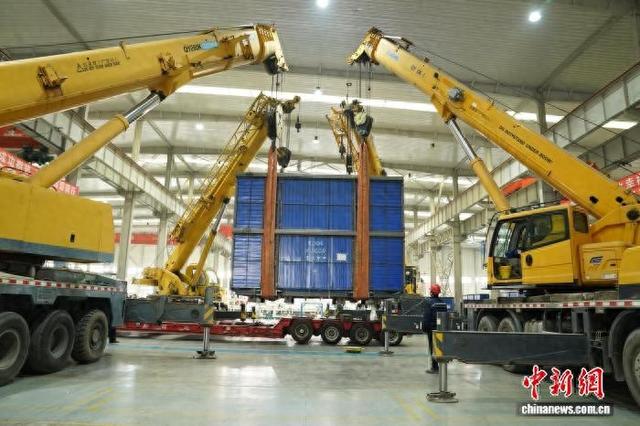
Core Insights - A high-tech enterprise in Qinhuangdao Economic and Technological Development Zone, Hebei Province, has successfully developed an electromagnetic heating multilayer laminator, which has completed assembly and debugging, and is now being shipped overseas [2]. Group 1: Product Development - The electromagnetic heating multilayer laminator measures 25.5 meters in length, 4 meters in width, and 4.15 meters in height, with a total development and manufacturing time of 3 years [2]. - The product incorporates key technologies such as electromagnetic induction heating, multilayer synchronous temperature control, and a three-dimensional stacking structure, achieving dual innovation in heating methods and production modes [2]. Group 2: Shipping and Deployment - The completed multilayer laminator is now prepared for overseas shipment, indicating the company's expansion into international markets [2][13].
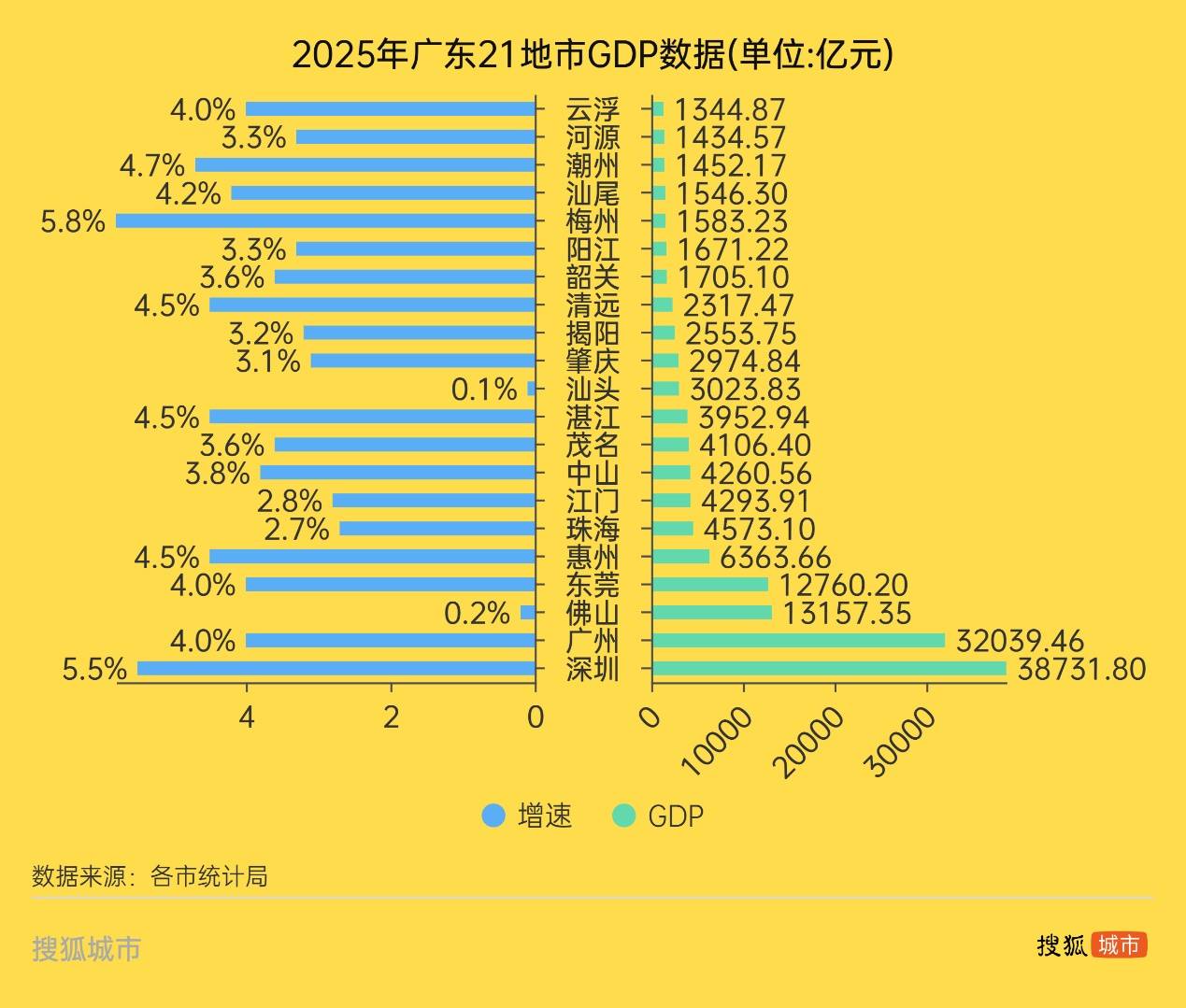
广东21地市GDP出炉:佛山和汕头名义增速负增长
Sou Hu Cai Jing· 2026-02-09 10:30
Economic Overview - Guangdong's GDP for 2025 is projected at 14,584.68 billion yuan, with a growth rate of 3.9%, lower than the national average of 5% [1][13] - Among the 21 cities in Guangdong, only Shenzhen (5.5%) and Meizhou (5.8%) outperformed the national growth rate, while 11 cities fell below the provincial average [1][3] City Performance - Meizhou leads the province with a growth rate of 5.8%, driven by strong performance in high-tech manufacturing, with industrial output increasing by 8.6% [5][10] - Shantou and Foshan reported minimal growth rates of 0.1% and 0.2%, respectively, with Shantou experiencing negative nominal growth [5][8] - The economic performance of cities like Zhuhai, Jiangmen, and Zhongshan is hindered by declining fixed asset investments, with decreases of 25.6% and 22.6% respectively [3][4] Industrial Insights - The industrial performance of cities correlates with economic growth, with cities like Zhanjiang showing a 10.7% increase in industrial output, supported by green petrochemicals and modern agriculture [4] - In contrast, Shantou's second industry saw a decline of 7.3%, indicating structural issues in its economy [5][8] Economic Challenges - Guangdong has faced challenges with its GDP growth consistently falling below expectations for four consecutive years, attributed to a declining real estate market and pressures from industrial restructuring [11][13] - The province's economic growth target for 2026 is set between 4.5% and 5%, with a focus on enhancing the Guangdong-Hong Kong-Macao Greater Bay Area [13]