远程医疗

Search documents
HeartBeam, Inc. (NASDAQ:BEAT) Overview: Stability and Potential in Telehealth
Financial Modeling Prep· 2025-11-13 02:00
Core Insights - HeartBeam, Inc. is a medical technology company specializing in telemedicine solutions for cardiac disease detection and monitoring, with a flagship compact electrocardiogram device and a cloud-based diagnostic system [1] - The consensus price target for HeartBeam has remained stable at $4, while Industrial Alliance Securities has set a higher target of $10, indicating differing outlooks among analysts [2][6] Financial Performance - Recent earnings calls, including Q2 2025 on August 13 and Q1 2025 on May 13, featured key executives and analysts, showcasing the company's engagement with the financial community [3][6] - The ongoing interest from analysts suggests a focus on HeartBeam's financial trajectory and performance [3] Product Innovations - Product innovations are critical for HeartBeam's future, as advancements in telehealth products could attract more attention from analysts and investors [4] - Efforts to expand into new markets or form partnerships with healthcare providers are also essential for influencing the stock's outlook [4] Regulatory Approvals - Regulatory approvals for new products or features are crucial for HeartBeam, as they can significantly impact the company's valuation and stock target price [5] - Monitoring these developments, along with quarterly earnings reports, is important for assessing HeartBeam's growth trajectory and operational efficiency [5][6]



Hims & Hers Revenue Continues to Surge. Is It Time to Buy the Stock?
The Motley Fool· 2025-11-09 09:35
Core Viewpoint - Hims & Hers Health continues to demonstrate strong growth potential, with significant revenue increases and a robust outlook for future performance [1][11]. Revenue Performance - In Q3, Hims & Hers reported a 49% year-over-year increase in revenue, reaching $599 million, surpassing both its guidance and analyst expectations [2][7]. - Monthly online revenue per subscriber increased by 19% to $80, while the subscriber base grew by 21% to over 2.47 million [3][7]. Subscriber Growth and Transition - The number of customers utilizing personalized treatment plans surged by 50%, with those using at least one personalized subscription rising by 80% to 1.6 million, accounting for over 65% of the subscriber base [4][3]. - Excluding the impact of the transition to personalized treatments, subscriber growth exceeded 40% [3]. Financial Metrics - Adjusted EBITDA increased by 53% from $51.1 million to $78.4 million, while earnings per share (EPS) was reported at $0.06, missing the analyst consensus of $0.09 [6][7]. - Gross margin experienced a decline of 500 basis points year-over-year to 74%, with operating expenses slightly decreasing to 72% of revenue [5][7]. Future Guidance - Hims & Hers narrowed its 2025 revenue forecast to between $2.335 billion and $2.355 billion and adjusted EBITDA guidance to a range of $307 million to $317 million [7]. - For Q4, the company anticipates revenue between $605 million and $625 million, with adjusted EBITDA expected to be between $55 million and $65 million [8]. Strategic Developments - The company is in discussions with Novo Nordisk to potentially offer Wegovy injections and oral Wegovy on its platform, following a previous collaboration that ended earlier this year [9]. Valuation Metrics - The stock trades at a forward price-to-earnings (P/E) ratio of approximately 32.5 for 2026, with a price/earnings-to-growth (PEG) ratio around 1, indicating potential undervaluation [12][13]. - Based on price-to-sales multiples, the stock is valued at 3.6 times 2026 analyst estimates, suggesting attractive valuation given its growth outlook [13].

1 Russell 2000 Stock to Keep an Eye On and 2 Facing Challenges
Yahoo Finance· 2025-11-06 18:31
Core Viewpoint - The Russell 2000 index, which includes many small-cap stocks, presents opportunities for investors to discover undervalued companies, but these stocks are often more volatile and susceptible to economic downturns [1][2]. Group 1: Stocks to Sell - **Teladoc (TDOC)**: - Market Cap: $1.43 billion - The company provides telemedicine services aimed at rural areas, facilitating remote medical consultations [3][6]. - Current share price is $7.72, with a forward EV/EBITDA ratio of 4.9x, indicating potential concerns regarding its valuation [5]. - **Kadant (KAI)**: - Market Cap: $3.21 billion - A global supplier of critical components and engineered systems for process industries [6]. - The stock price is $267.51, reflecting a forward P/E ratio of 27.5x, suggesting caution for potential investors [8]. Group 2: Stock to Watch - **Byline Bancorp (BY)**: - Market Cap: $1.25 billion - The bank has experienced unremarkable sales trends with a 2.9% annual growth over the last three years, which is below the average for consumer internet companies [9]. - The focus on user growth over monetization has resulted in a 7.9% annual decline in average revenue per user [9]. - The bank ranks as the fifth most active Small Business Administration lender in the U.S., serving small and medium-sized businesses [11]. - **Positive Indicators for BY**: - Annual net interest income growth of 12.3% over the last five years indicates an increase in market share [12]. - Earnings per share have grown by 21.8% annually, surpassing revenue growth, indicating high profitability from incremental sales [12]. - Tangible book value per share has increased by 17.5% annually over the last two years, reflecting strong equity value growth [12].
Compared to Estimates, American Well (AMWL) Q3 Earnings: A Look at Key Metrics
ZACKS· 2025-11-05 02:01
Core Insights - American Well Corporation (AMWL) reported a revenue of $56.29 million for Q3 2025, reflecting a year-over-year decline of 7.8% and an EPS of -$1.74, an improvement from -$2.87 a year ago [1] - The revenue exceeded the Zacks Consensus Estimate of $54.37 million by 3.53%, while the EPS also surpassed the consensus estimate of -$1.83 by 4.92% [1] Revenue Breakdown - Platform subscription revenue was $30.9 million, exceeding the two-analyst average estimate of $27.74 million, with a year-over-year increase of 17.8% [4] - Other revenue amounted to $4.19 million, falling short of the two-analyst average estimate of $5.69 million, representing a year-over-year decline of 42.9% [4] - Revenue from visits was $21.2 million, slightly above the two-analyst average estimate of $20.85 million, but showed a year-over-year decrease of 22.8% [4] Stock Performance - Over the past month, American Well's shares have declined by 19.1%, contrasting with a 2.1% increase in the Zacks S&P 500 composite [3] - The stock currently holds a Zacks Rank 3 (Hold), indicating expected performance in line with the broader market in the near term [3]


Is This Beaten-Down Stock Finally on the Road to Recovery?
The Motley Fool· 2025-11-04 02:24
Core Viewpoint - Teladoc Health is facing ongoing challenges despite a recent uptick in stock performance, with a significant decline in revenue and increased competition in the telehealth sector [2][3][10] Financial Performance - Year-to-date, Teladoc's shares have decreased by 8%, although they have gained 21% over the past six months [2] - Third-quarter revenue fell by 2% year-over-year to $626.4 million, and the loss per share increased to $0.28 from $0.19 in the previous year [3] Leadership Changes - Recent leadership changes, including the replacement of the CFO and the upcoming CEO transition, may have contributed to a more optimistic outlook among some investors [4] Valuation Metrics - The company's forward price-to-sales (P/S) ratio is currently at 0.6, suggesting it may be trading at a deep discount [4] Growth Opportunities - Teladoc aims to expand insurance coverage for its BetterHelp virtual therapy service, which could enhance performance in that segment [5][6] - The acquisition of UpLift, a virtual mental health service, could potentially increase sales if marketing efforts successfully boost adoption [6] - International revenue growth presents another opportunity for improvement, although challenges remain [7] Competitive Landscape - The virtual care segment is highly competitive, with Teladoc's user base for BetterHelp declining despite aggressive marketing [8] - Competitors already have established relationships with insurers, making it uncertain whether Teladoc can attract enough new members [9] Investment Outlook - Given the company's struggles to achieve profitability in the U.S. market, there are doubts about its ability to perform better internationally [10]


Teladoc(TDOC) - 2025 Q3 - Earnings Call Presentation
2025-10-29 21:00
Financial Performance - Q3 2025 - Revenue for 3Q-25 was $626 million, a decrease of 2% year-over-year[4] - Net loss per share for 3Q-25 was $(0.28)[4] - Adjusted EBITDA for 3Q-25 was $69.9 million, a decrease of 16% year-over-year[4] Financial Outlook - FY25 - The company projects FY-25 revenue to be in the range of $2,510 million to $2,539 million[5] - The company projects FY-25 net loss per share to be in the range of $(1.25) to $(1.10)[5] - The company projects FY-25 Adjusted EBITDA to be in the range of $270 million to $287 million[5] Financial Outlook - Q4 2025 - The company projects 4Q-25 revenue to be in the range of $622 million to $652 million[5] - The company projects 4Q-25 net loss per share to be in the range of $(0.25) to $(0.10)[5] - The company projects 4Q-25 Adjusted EBITDA to be in the range of $73 million to $90 million[5] Balance Sheet and Cash Flow - Cash and cash equivalents as of September 30, 2025, were $726 million[36] - Convertible senior notes as of September 30, 2025, were $994 million[36] - Operating cash flow for 3Q-25 was $99 million[36] - Free cash flow for 3Q-25 was $68 million[36]
权重股B站、快手大涨,“AI应用ETF”——线上消费ETF基金(159793)涨超1.5%
Sou Hu Cai Jing· 2025-10-21 02:09
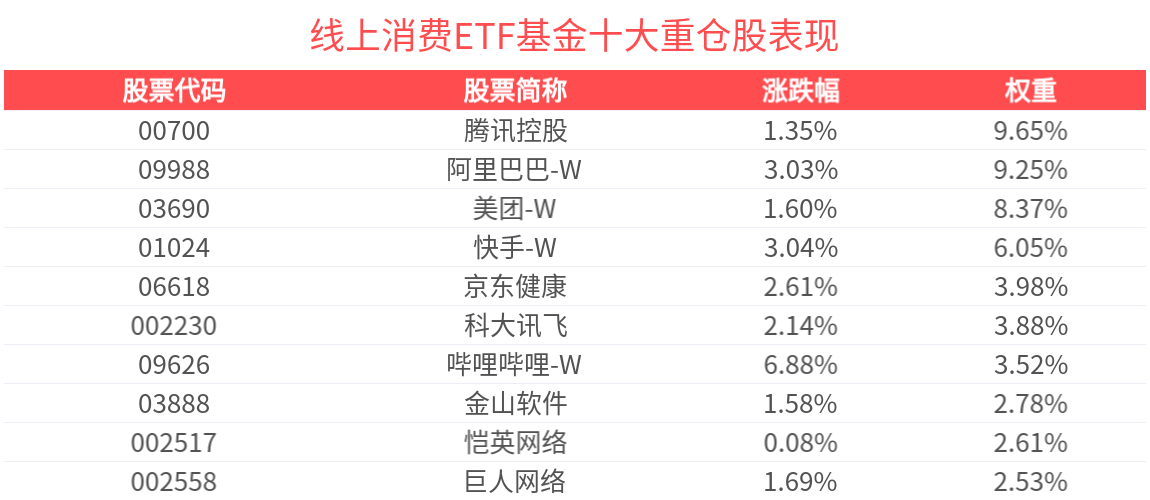
Group 1 - OpenAI has tightened regulations on its AI video generation application Sora to prevent deepfake content, collaborating with actor Bryan Cranston and the SAG-AFTRA union [1] - As of October 20, 2025, the CSI Online Consumption Theme Index (931481) rose by 1.47%, with notable increases in stocks such as Bilibili-W (6.88%) and Kuaishou-W (3.04%) [1] - The CSI Online Consumption ETF (159793) increased by 1.60%, reaching a latest price of 1.08 yuan, and has seen a cumulative rise of 10.95% over the past three months [1] Group 2 - As of September 30, 2025, the top ten weighted stocks in the CSI Online Consumption Theme Index accounted for 55.76% of the index, including Alibaba-W, Tencent Holdings, and Kuaishou-W [2] - The weight and performance of key stocks in the index include Tencent Holdings (1.35%), Alibaba-W (3.03%), and Meituan-W (1.60%) [4]





How HIMS Stock Rises To $120?
Forbes· 2025-10-16 13:10
Core Insights - Hims & Hers Health (NYSE: HIMS) stock surged by 16% following the announcement of its expansion into menopause and perimenopause treatment, indicating a strategic shift to diversify revenue sources beyond its GLP-1 obesity treatments [2][3] - The stock has increased by 150% year-to-date, currently trading around $60, raising the question of whether it could double to $120 [2][3] - The valuation appears conservative at 7.6x trailing revenues compared to other high-growth healthcare companies, which typically range from 12-15x [3] Revenue Growth Potential - Hims & Hers reported $2.0 billion in trailing twelve-month revenue, an 88.7% increase from $1.1 billion, with the latest quarter showing $545 million in sales, a 72.6% increase from $316 million [4] - Analysts project 58% growth this year and 20% next year, but these estimates were made before the menopause launch; a compound annual growth rate of 25%-30% over the next three years could lead to $4 billion in revenue by 2028 [5][6] Market Valuation and Multiples - If revenue reaches $4 billion while the stock remains at $60, it would imply a low valuation of 3.8x sales, making HIMS one of the least expensive growth narratives in healthcare [6] - A more plausible scenario suggests a revenue multiple of around 6x, leading to a market capitalization of $24 billion and a share price above $100, even with a decrease in the multiple [7][16] Strategic Diversification - The menopause launch addresses over-dependence on GLP-1s and targets an underserved market, potentially generating $500-750 million in annual revenue within 2-3 years [11][12] - Hims & Hers has built a telehealth platform that allows for effective cross-selling, reducing customer acquisition costs as new sectors are introduced [13] Profitability and Market Sentiment - The market is currently hesitant to grant Hims a premium revenue multiple until sustained profitability improvements are demonstrated [10] - The company is investing heavily in customer acquisition and infrastructure, which may lead to improved margins as growth continues [20] Risks and Market Dynamics - Regulatory scrutiny from the FDA regarding compounded GLP-1s poses a significant risk, as any intervention could drastically impact revenue [20][21] - Increased competition in telehealth and compounded medications could pressure margins and growth [21] - A broader market shift away from growth stocks due to economic factors could compress multiples, affecting Hims regardless of its fundamentals [21]

Teladoc (TDOC) Just Reclaimed the 200-Day Moving Average
ZACKS· 2025-10-15 14:31
Group 1 - Teladoc (TDOC) has recently reached a key level of support and has overtaken the 200-day moving average, indicating a long-term bullish trend [1] - The stock has moved 13.5% higher over the last four weeks and is currently rated as a Zacks Rank 1 (Strong Buy) [2] - Positive earnings estimate revisions support the bullish outlook, with no estimates decreasing in the past two months and one estimate increasing, leading to a consensus estimate increase [2] Group 2 - Investors are encouraged to monitor TDOC for potential gains due to its key technical level and favorable earnings estimate revisions [3]

权重股哔哩哔哩领涨,线上消费ETF基金(159793)盘中溢价
Sou Hu Cai Jing· 2025-10-15 01:55
Core Insights - The China Securities Index for online consumption (931481) has seen a slight decline of 0.25% as of October 15, 2025, with mixed performance among constituent stocks [1] - The online consumption ETF (159793) has increased by 0.75%, reaching a price of 1.07 yuan, and has shown a cumulative increase of 15.42% over the past three months [1] - The index comprises 50 listed companies from mainland China and Hong Kong, focusing on sectors such as online shopping, digital entertainment, online education, and telemedicine [1] Summary by Category Index Performance - The online consumption theme index (931481) decreased by 0.25% as of October 15, 2025 [1] - The online consumption ETF (159793) rose by 0.75%, with a latest price of 1.07 yuan [1] - Over the last three months, the ETF has accumulated a growth of 15.42% [1] Constituent Stocks - Leading gainers include Bilibili-W (09626) up by 3.49%, Yonghui Supermarket (601933) up by 2.07%, and Miniso (09896) up by 1.86% [1] - Major decliners include Gibit (603444) down by 9.99%, Giant Network (002558) down by 4.33%, and Zhonggong Education (002607) down by 2.79% [1] Top Weighted Stocks - As of September 30, 2025, the top ten weighted stocks in the index account for 55.76% of the total weight, including Alibaba-W (09988), Tencent Holdings (00700), and Kuaishou-W (01024) [2] - The weight distribution among the top stocks includes Tencent Holdings at 9.65%, Alibaba-W at 9.25%, and Meituan-W at 8.37% [4]