
钢铁产业

Search documents
国泰君安期货所长早读-20250519
Guo Tai Jun An Qi Huo· 2025-05-19 02:21
Report Summary 1. Report Industry Investment Ratings The report does not explicitly mention overall industry investment ratings. However, it provides trend intensities for various commodities: - **Positive Trends**: PX, PTA, MEG trend intensities are 1, indicating a relatively positive outlook [78]. - **Negative Trends**: Gold, silver, zinc, tin, rubber, lithium carbonate, industrial silicon, and polysilicon have negative trend intensities, suggesting a bearish view [22][31][38][81]. - **Neutral Trends**: Copper, aluminum, alumina, lead, nickel, stainless steel, rebar, hot - rolled coil, ferrosilicon, silicomanganese, coke, coking coal, and thermal coal have neutral trend intensities [26][29][34][45][55][58][64][67]. 2. Core Views - **US Economic Situation**: The University of Michigan's consumer confidence index hit the second - lowest level on record, and inflation expectations reached multi - decade highs. Tariff concerns and Trump's call for the Fed to cut interest rates are influencing the economic outlook [7][19]. - **Commodity Market Outlook** - **Alkali and Alumina**: Caustic soda is expected to be volatile in the short term and face pressure later. Alumina had a sharp rebound recently, but the long - term supply - demand surplus pattern may remain [11][12]. - **Metals**: Most metals are in a state of weak or neutral trends. For example, copper lacks driving forces and is in a price - oscillating state, while zinc has a surplus in the long - term and its price is under pressure [24][30]. - **Energy and Chemicals**: PX is in a high - level oscillating market with a strong trend, and the strategy of going long on PX and short on PTA is recommended. MEG remains strong unilaterally [75][77]. 3. Summary by Commodity **Precious Metals** - **Gold and Silver**: Gold broke below the support level, and silver oscillated downward. Their trend intensities are - 1 [20][22]. **Base Metals** - **Copper**: Lacks driving forces, and the price oscillates. The trend intensity is 0 [24][26]. - **Aluminum and Alumina**: Aluminum is in a range - bound state, and alumina had a sharp rebound. Their trend intensities are 0 [27][29]. - **Zinc**: There is a long - term surplus, and the price is under pressure. The trend intensity is - 1 [30][31]. - **Lead**: Both supply and demand are weak, and it oscillates. The trend intensity is 0 [33][34]. - **Tin**: Narrowly oscillates. The trend intensity is - 1 [36][38]. - **Nickel and Stainless Steel**: Nickel is supported by the contradiction in nickel ore, and stainless steel has a clear cost bottom but lacks upward - driving forces. Their trend intensities are 0 [40][45]. **Energy - Related Commodities** - **Coking Coal and Coke**: With the decline in hot - metal production, they oscillate widely. Their trend intensities are 0 [60][64]. - **Thermal Coal**: The coal - mine inventory increases, and it oscillates weakly. The trend intensity is 0 [65][67]. **Chemical Commodities** - **Caustic Soda**: Volatile in the short term and under pressure later. The downstream restocking situation determines its rebound sustainability [11]. - **Alumina**: Had a sharp rebound due to short - term supply - demand tightness, but the long - term surplus pattern may not change [12]. - **PX, PTA, and MEG**: PX is in a high - level oscillating market and is recommended for a long - short strategy against PTA. PTA is in a de - stocking pattern, and MEG remains strong unilaterally [75][77]. - **Rubber**: Oscillates weakly. The trend intensity is - 1 [79][81]. **Lithium - Related Commodities** - **Lithium Carbonate**: The cost curve continues to decline, and the trend is bearish. The trend intensity is - 1 [46][49]. **Industrial and Polysilicon** - **Industrial Silicon and Polysilicon**: Both are in a weak state, with negative trend intensities [50][52]. **Steel Products** - **Rebar and Hot - Rolled Coil**: Raw materials continue to decline, and they oscillate weakly. Their trend intensities are 0 [53][55]. **Ferroalloys** - **Ferrosilicon and Silicomanganese**: Oscillate widely. Their trend intensities are 0 [56][58].
关税战正酣,印度对中方趁火打劫!莫迪这波操作把中企整笑了
Sou Hu Cai Jing· 2025-05-07 13:09
Group 1 - India's recent policy limits Chinese companies' stake in joint ventures to 10% and requires technology transfer to local firms, contrasting with the 100% ownership allowed for other foreign companies [3][5] - Despite the push for "de-China" initiatives, 76% of components in India's electronics manufacturing still rely on imports from China, highlighting a contradiction in India's strategy [3][5] - The Indian government's "Production-Linked Incentive" scheme, which invested $26 billion, has not significantly improved the market share of local brands, which remains below 5% [3][5] Group 2 - The U.S. is seen as supporting India's anti-China stance, but India's steel industry faces challenges due to reliance on Chinese coking coal, leading to operational difficulties [6][8] - Recent foreign investment in India has plummeted by 40%, with manufacturing's GDP contribution dropping to 14.3%, indicating economic distress [8][10] - Historical comparisons show that while China has advanced significantly in manufacturing, India struggles to keep pace, suggesting that restrictive foreign investment policies may hinder growth [10]

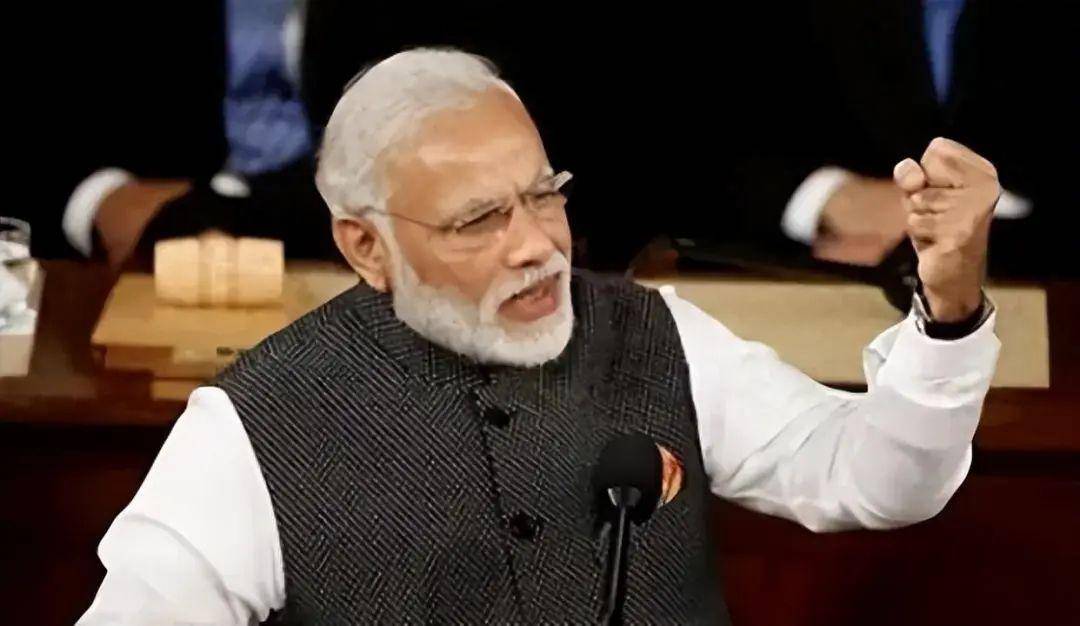
化相邻之利为聚合之力(评论员观察)——更好发挥高质量发展动力源作用②
Ren Min Ri Bao· 2025-05-05 21:47
Core Insights - The emergence of "Six Little Dragons" in Hangzhou has sparked interest in how other cities can cultivate similar successful enterprises, emphasizing the importance of innovation and high-quality development [1] Group 1: Regional Development Strategies - The Yangtze River Delta region is highlighted as a key area for economic growth, leveraging integration and collaboration among cities to enhance resource allocation efficiency [1][2] - Cities like Suzhou and Nanjing are focusing on their unique strengths, such as biomedicine and high-performance steel, to develop competitive industries and products [2] - The integration of industries like integrated circuits and new energy vehicles across the Yangtze River Delta showcases the benefits of differentiated specialization and collaboration [2][3] Group 2: Avoiding Homogenization and Fragmentation - The article stresses the need to avoid both homogenization and fragmentation in regional development, advocating for mutual support and leveraging each region's strengths [3] - A unified approach to industrial planning and technological innovation is essential for achieving a synergistic effect, where the whole is greater than the sum of its parts [3] - Cities are encouraged to focus on sustainable innovation in their unique fields rather than competing in saturated markets, fostering a collaborative environment for high-quality development [3]

特朗普遭关税恶果反噬
虎嗅APP· 2025-05-03 13:02
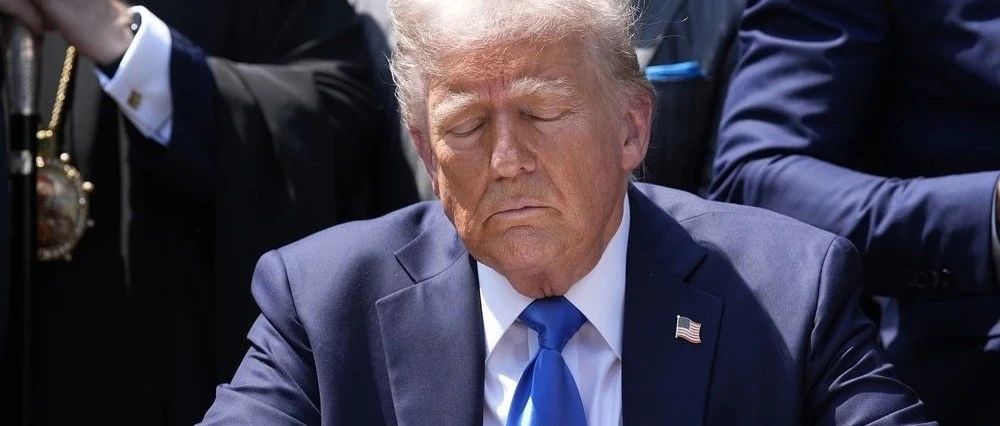
Core Viewpoint - The article discusses the significant impact of tariff policies under the Trump administration, highlighting the adverse effects on U.S. businesses, supply chains, and the broader economy, while also emphasizing the potential long-term consequences for global trade governance [1][10]. Group 1: Impact on U.S. Businesses - Tariff-induced uncertainty has led to a decline in product demand, making it difficult for U.S. companies to pass on rising costs to customers, with some businesses facing potential bankruptcy [4]. - The Dallas Fed's manufacturing survey indicated a sharp decline in the business activity index to -35.8 in April, reflecting the turmoil caused by tariff policies [3]. - Many companies are experiencing increased operational costs due to the need to shift supply chains, with estimates suggesting an 18%-25% increase in operational costs for those relocating production [4]. Group 2: Employment and Economic Consequences - The imposition of tariffs has resulted in negative employment growth in the manufacturing sector, with job losses projected to increase significantly as tariffs rise [5]. - The agricultural sector, particularly U.S. farmers, is facing declining net income and increasing bankruptcy rates due to canceled orders from China, a major buyer of U.S. agricultural products [5]. Group 3: Environmental and Social Implications - The shift in supply chains to countries with weaker industrial bases, such as Vietnam and Mexico, is expected to increase carbon emissions and environmental pollution [7]. - The tariff policies disproportionately affect low-income households, as they spend a larger portion of their income on essential goods that are sensitive to tariff increases, exacerbating income inequality [8][9]. Group 4: Global Trade Governance - The unilateral tariff actions have led to a breakdown of the global trade governance system, replacing multilateral agreements with bilateral coercion, which undermines the effectiveness of the WTO [10]. - The article argues that the tariff policies represent a blend of populism and monopolistic capitalism, posing a legitimacy crisis for global governance and pushing the world towards a "zero-sum game" scenario [10].
特朗普遭关税恶果反噬
Hu Xiu· 2025-05-03 05:09
Group 1 - The article discusses the significant impact of Trump's tariff policies on American businesses, highlighting the confusion and chaos experienced by various industries due to these measures [2][3][4] - Many companies are facing increased costs and supply chain disruptions, leading to a decline in product demand and potential bankruptcies [2][4][5] - The tariffs have prompted some businesses to relocate production to countries like Vietnam and Mexico, resulting in higher operational costs and longer supply chains [3][5] Group 2 - The agricultural sector is particularly affected, with reports of canceled orders from China for U.S. agricultural products, leading to decreased net income for American farms [4][6] - The environmental impact of the tariffs is also noted, as companies shift production to regions with less developed industrial bases, potentially increasing carbon emissions [5][6] - The article emphasizes that the tariffs disproportionately harm low-income households, as they face higher prices for essential goods, exacerbating income inequality [6][7] Group 3 - The article suggests that Trump's tariff strategy is a form of unilateral protectionism that undermines global trade governance, replacing multilateral agreements with bilateral coercion [9][10] - The long-term consequences of these policies may lead to a breakdown of the World Trade Organization's dispute resolution mechanisms, pushing the global economy towards a "zero-sum game" scenario [9][10] - Overall, the article argues that the tariffs represent a blend of populism and monopolistic capitalism, with far-reaching implications beyond just economic factors [10]