Film and Television

Search documents
What to know about Netflix's landmark acquisition of Warner Bros.
TechCrunch· 2026-02-10 15:56
Core Viewpoint - The acquisition of Warner Bros. by Netflix marks a significant shift in the streaming industry, potentially disrupting Hollywood and consolidating major franchises under one platform [2][3]. Group 1: Acquisition Details - Netflix has acquired Warner Bros.' film and television studios, HBO, HBO Max, and other assets, bringing together iconic franchises like Game of Thrones and Harry Potter [2]. - The deal is valued at approximately $82.7 billion, with Netflix offering $27.75 per WBD share in an all-cash agreement [9][10]. - Paramount had initially offered around $108 billion to acquire the entire company, but Netflix's focused offer on specific assets was deemed more attractive by WBD's board [8]. Group 2: Competitive Bidding Process - The bidding process for WBD became competitive, with Paramount and Comcast emerging as serious contenders, but Netflix ultimately secured the deal [6][8]. - Paramount's proposal was rejected due to concerns about its heavy debt load, which would have left the combined company with $87 billion in debt [12]. - Paramount has continued to pursue WBD's assets, even filing a lawsuit for more information about the Netflix deal [13]. Group 3: Regulatory Scrutiny - The deal faces intense regulatory scrutiny, with Netflix co-CEO Ted Sarandos scheduled to testify before a U.S. Senate committee [15]. - Prominent lawmakers have expressed concerns that the merger could lead to excessive market power, potentially harming consumers and stifling competition [16]. - If regulators block the acquisition, Netflix would be liable for a $5.8 billion breakup fee [17]. Group 4: Industry Reactions - The entertainment industry has largely reacted negatively, with the Writers Guild of America calling for the merger to be blocked on antitrust grounds [19]. - Concerns have been raised about the potential impact on independent creators and job losses within the industry [19]. - Netflix has indicated that operations at HBO will remain largely unchanged in the near term, with no immediate pricing changes expected during the regulatory approval period [21][22]. Group 5: Timeline for Closure - The deal is not yet finalized, with a WBD stockholder vote expected around April, and the acquisition anticipated to close 12 to 18 months after that vote, pending regulatory approvals [23].



1分钟,直线封板!A股,上演涨停潮!重磅利好突袭
券商中国· 2026-02-10 03:59
Core Viewpoint - The resurgence of the IDC sector is driven by the increasing demand for computing power due to the rapid growth of AI models and their applications, particularly highlighted by the recent launch of the AI video generation model Seedance 2.0 by ByteDance [1][2]. Group 1: Market Reactions - On February 10, A-share computing power concept stocks saw significant gains, with major players like Meiliyun and People's Daily hitting their daily limits [1][2]. - The cultural media sector also experienced a surge, with multiple stocks, including Light Media and Huace Film, reaching their daily limits, and related ETFs hitting historical highs [1][2]. Group 2: IDC Sector Dynamics - The IDC sector, once a leading market segment 11 years ago, is witnessing a revival, with NetEase Technology's stock nearly doubling recently [2]. - The current market enthusiasm is attributed to the massive token consumption driven by large AI models, which significantly increases the demand for computing power [2]. Group 3: Future Expectations - There are high expectations for the commercialization of large models, with projections indicating that OpenAI's revenue could reach $4.3 billion by mid-2025, despite significant losses [4]. - The anticipated acceleration in the commercialization of AI models is expected to further increase the demand for computing power, with IDC's market conditions improving as a result [5]. Group 4: Technological Advancements - The performance of domestic AI chips, such as Huawei's Ascend and Cambricon, is continuously improving, which is expected to enhance the capabilities of cloud service providers like Alibaba and Tencent [5]. - The integration of AI applications across various sectors, including media, gaming, education, and healthcare, is progressing, contributing to the formation of a commercial ecosystem involving chips, models, and applications [5].

老厂变片场,超百个场景一站式拍摄,汉江湾畔“竖”起AI影视基地
Chang Jiang Ri Bao· 2026-02-03 11:10
Core Viewpoint - The Hanjiang Bay Shudian Film and Television Base is set to transform an industrial area into a comprehensive short drama filming location, leveraging AI technology to enhance the film industry in Central China [1][5]. Group 1: Project Overview - The Shudian Film and Television Base will cover an area of approximately 18,000 square meters and is expected to open its first phase in May 2024, with full completion by August [1][6]. - The base will feature over 100 filming scenes and several holographic studios, equipped with advanced recording and lighting systems, allowing seamless transitions between real and virtual settings [5][12]. Group 2: Industry Trends - The short drama sector is identified as a new growth area in the film industry, with a tight shooting schedule of about one week, making efficient location management crucial [5][11]. - AI technology is being integrated into the production process, with teams capable of producing 30 to 50 AI-generated short dramas monthly, showcasing the trend towards AI in content creation [9][10]. Group 3: Economic and Cultural Impact - The project aims to create a complete film industry chain, incorporating digital special effects and cultural experiences, thereby enhancing the area's economic and cultural vitality [12][13]. - The Hanjiang Bay area is positioned to become a hub for AI-driven film production, supported by local policies and technological advantages, fostering a significant short drama industry cluster [13].

America's 50 most iconic brands, from Main Street to Silicon Valley
Yahoo Finance· 2026-02-02 17:43
Core Insights - The article highlights the significant American companies that have shaped the nation's identity and economy as it approaches its 250th birthday, emphasizing their cultural and historical impact rather than just financial metrics [1][2]. Group 1: Visa - Visa was established in 1958 as BankAmericard, launching the first consumer credit card in the U.S. [3][6] - The company rebranded as Visa in 1976 and went public in 2008, currently holding a market cap of $632 billion [4][6]. - Visa operates in over 220 countries and territories, accepted at more than 175 million merchants [7]. Group 2: Meta (Facebook) - Facebook was founded in 2004 by Mark Zuckerberg and quickly grew to 1 billion users by 2012, later rebranding to Meta in 2021 [9][13][14]. - The platform has faced controversies regarding user data and misinformation but remains a dominant social media service with over 3 billion regular users [15]. Group 3: Boeing - Boeing, established in 1916, is a leading aerospace company known for producing commercial jets and military aircraft [15][16]. - The company has faced challenges in recent years, including safety allegations and COVID-19 impacts, but continues to be a major player in the industry with a market cap of $185 billion [20][21]. Group 4: Tesla - Tesla was founded in 2003, with Elon Musk joining in 2004, and has become synonymous with electric vehicles, launching the Model 3 in 2017 as the best-selling electric car [23][27]. - The company has a market cap of $1.4 trillion and is recognized for driving electric vehicles into the mainstream [28]. Group 5: Patagonia - Patagonia was founded in 1973 by Yvon Chouinard, known for its commitment to sustainability and donating 1% of sales to environmental causes [30][33]. - The company has expanded from climbing gear to a wide range of outdoor apparel and is estimated to have a market cap of $3 billion [33]. Group 6: Intel - Intel was founded in 1968 and became a leader in semiconductor technology, introducing the first programmable microprocessor in 1971 [34][35]. - The company has maintained a significant market presence, controlling approximately 75% of the CPU market as of 2025 [38]. Group 7: HP - HP was established in 1939, initially focusing on sound equipment and later becoming a leader in personal computers and printers [40][42]. - The company split into HP Inc. and Hewlett Packard Enterprises in 2015, with HP Inc. having a market cap of $18 billion [45]. Group 8: Nike - Nike was founded in 1964 as Blue Ribbon Sports and rebranded in 1971, becoming a dominant player in the sportswear market with a 14% share in 2024 [46][50]. - The company gained fame through its endorsement deal with Michael Jordan, significantly boosting its brand recognition [48]. Group 9: Kodak - Kodak was founded in 1888 and became a pioneer in photography, introducing innovations like roll film and the first digital camera [51][54]. - The company filed for bankruptcy in 2012 and now focuses primarily on commercial printing and imaging [56]. Group 10: IBM - IBM was established in 1911 and became synonymous with computing, initially focusing on tabulating machines and later dominating the PC market [59][62]. - The company has shifted its focus to consulting, software, and cloud computing, with a market cap of $291 billion [67]. Group 11: Paramount Pictures - Paramount Pictures, founded in 1912, is recognized as the longest-operating major studio in Hollywood, producing numerous iconic films [68][70]. - The studio has undergone various mergers and continues to be a significant player in the entertainment industry with a market cap of $12 billion [74]. Group 12: Netflix - Netflix was founded in 1997 as a DVD rental service and transitioned to streaming in 2007, becoming a leader in the industry [77][80]. - The company has a market cap of $351 billion and announced plans to acquire Warner Bros. Discovery in 2025 [81]. Group 13: FedEx - FedEx was founded in 1971, revolutionizing overnight delivery with a centralized hub model [83][84]. - The company has introduced several innovations in the shipping industry and has a market cap of $74 billion [88]. Group 14: Motown - Motown Records, established in 1959, played a crucial role in integrating Black artists into mainstream pop music [91][92]. - The label produced numerous hits and helped launch the careers of many iconic artists, although it faded in prominence during the 1970s [94][96]. Group 15: PepsiCo - PepsiCo was formed in 1965 through the merger of the Pepsi-Cola Company and Frito-Lay, becoming a leading global food and beverage brand [99][100]. - The company is known for its innovative marketing strategies and has a significant rivalry with Coca-Cola [101]. Group 16: Levi Strauss - Levi Strauss, founded in 1853, is known for creating the first riveted blue jeans, which have become a cultural staple [104][106]. - The company continues to sell a wide range of apparel and remains a significant player in the fashion industry [106]. Group 17: Microsoft - Microsoft was founded in 1975 and became a leader in software development, particularly with its Windows operating system [109][110]. - The company has expanded into gaming, cloud services, and AI, with a market cap of $7.8 billion [112]. Group 18: The Home Depot - The Home Depot was established in 1978, focusing on providing a wide range of building supplies and home improvement products [115][116]. - The company has a strong commitment to community initiatives, particularly supporting veterans, and has a market cap of $3.2 trillion [118]. Group 19: WK Kellogg Company - WK Kellogg Company was formed from the original Kellogg's brand, known for its iconic cereals and snacks [121][123]. - The company underwent a reorganization in 2023, with its cereal business spun off into a new entity [123].
“精品剧未必成为爆款,但爆款剧必定是精品”
Bei Jing Ri Bao Ke Hu Duan· 2026-02-02 10:47
Core Insights - The discussion at the "2025 Annual Evaluation List" event focused on how long dramas can continue to attract viewers amidst the popularity of short videos and how to break the "sequel curse" in the industry [1] Group 1: Long Drama Production Insights - The producer of "Silent Glory," Ma Zhongjun, highlighted the challenges faced during the show's development, particularly regarding the portrayal of Taiwan's historical struggles, which ultimately received support for its production [3] - The creative team of "Silent Glory" worked extensively to seek authorization from the descendants of historical figures, successfully portraying the heroism of underground workers without overly glorifying them [3] - The core message of "Silent Glory" emphasizes the unfulfilled wishes of martyrs for national unity and reunion, resonating with audiences and reflecting a shared sentiment for cross-strait unity [3] Group 2: Successful Themes in Recent Dramas - The rural-themed drama "Life of All Things" achieved both critical acclaim and popularity by focusing on the relationship between land and people, showcasing authentic rural life [5] - Director Liu Jiacheng emphasized the importance of creating quality content without following trends, stating that true masterpieces require sincere effort and dedication [6] - "Life of All Things" was adapted from a novel that won a literary award, demonstrating the value of strong literary foundations in enhancing the artistic quality of adaptations [6] Group 3: Innovations in Series Production - The producer of "Tang Dynasty Strange Stories," Wang Bing, discussed how the series maintains its appeal to young audiences by integrating profound explorations of human nature and incorporating national treasures into the storyline [9] - The series has successfully aired three seasons with 24 stories, thanks to actively listening to audience feedback, and the next season is set to return to a Three Kingdoms backdrop [9] - Zhang Ben, producer of "Cang Hai Chuan," noted that the success of long dramas lies in their ability to tell compelling stories, countering the notion that audiences prefer fast-paced content [11] Group 4: The Future of Long Dramas - The forum addressed the impact of short videos on audience attention spans, with Ma Zhongjun asserting that long and short dramas serve different viewing experiences and both have their value [14] - Liu Jiacheng mentioned that the rise of short videos encourages long drama creators to innovate storytelling techniques, emphasizing the need for engaging openings [14] - Zhang Ben highlighted that long dramas can provide deeper emotional and human expressions due to their length, which is an irreplaceable value in storytelling [14]


Catherine O’Hara passes away at 71: How did the Home Alone and Schitt’s Creek star die? What we know so far
The Economic Times· 2026-01-30 19:04
Core Viewpoint - Catherine O'Hara, a renowned actress known for her iconic roles in film and television over five decades, passed away at the age of 71 after a brief illness [1][3][11] Career Overview - O'Hara began her career in Canadian television and gained popularity through the sketch comedy series "Second City Television," where she won an Emmy Award, marking the start of her successful comedy career [4][10] - She became a household name with iconic films such as "Beetlejuice," "After Hours," and the "Home Alone" series, where she portrayed Kate McCallister, a mother trying to reunite with her son [6][10] - O'Hara was closely associated with filmmaker Christopher Guest, appearing in several of his mockumentary films, including "Best in Show" and "A Mighty Wind," and lent her voice to animated films like "The Nightmare Before Christmas" [7][10] Recent Achievements - In her 60s, O'Hara experienced a career renaissance with her role as Moira Rose in the CBC sitcom "Schitt's Creek," earning a second Emmy Award and introducing her work to a new generation [8][10] - Her success in "Schitt's Creek" led to further high-profile television roles, including appearances in HBO's "The Last of Us" and Apple TV's "The Studio," where she played a veteran Hollywood executive [8][10]


The makers of AACTA-nominated movies and TV shows discuss the Australian screen industry
Abc.Net.Au· 2026-01-29 19:30
Core Insights - The Australian film industry is experiencing a resurgence, with significant nominations at the AACTA Awards, highlighting the success of films like "Kangaroo" and "Apple Cider Vinegar" [1][4][5] Group 1: AACTA Awards and Nominations - "Kangaroo," directed by Kate Woods, has received five AACTA nominations, including best film and best direction [1][5] - "Apple Cider Vinegar" leads this year's nominations with a total of 20 nods, including best miniseries [4][17] - The competition for best film includes "Bring Her Back," which has the highest nominations at 16, and "The Correspondent," with 14 nominations [6][7] Group 2: Financial Trends in Australian Film - Spending on Australian movies rose by 76% to $379 million in 2024-25, according to Screen Australia's report [15] - Total expenditure on Australian movies and TV shows reached $1.1 billion in 2024-25, marking a 14% increase from the previous year, despite a decrease in the number of titles produced from 89 to 71 [20] - Streaming services accounted for $238 million, or 73%, of investment in TV drama, although the number of commissioned shows fell from 27 to 15 [24] Group 3: Industry Perspectives and Future Outlook - Kate Woods emphasizes the importance of international production companies in financing Australian stories, advocating for more feel-good films with a distinct Australian identity [14][15] - The introduction of content quotas for streaming services may help increase investment in Australian content, as they are required to spend at least 10% of local expenditure on Australian productions [21][24] - Danny Philippou, co-director of "Bring Her Back," calls for more support for emerging filmmakers, highlighting the need for producers to take chances on first-time directors [31][39]


邵氏兄弟拟收购正午阳光等资产,揭秘正午阳光关联影视公司
Yang Zi Wan Bao Wang· 2026-01-27 06:37
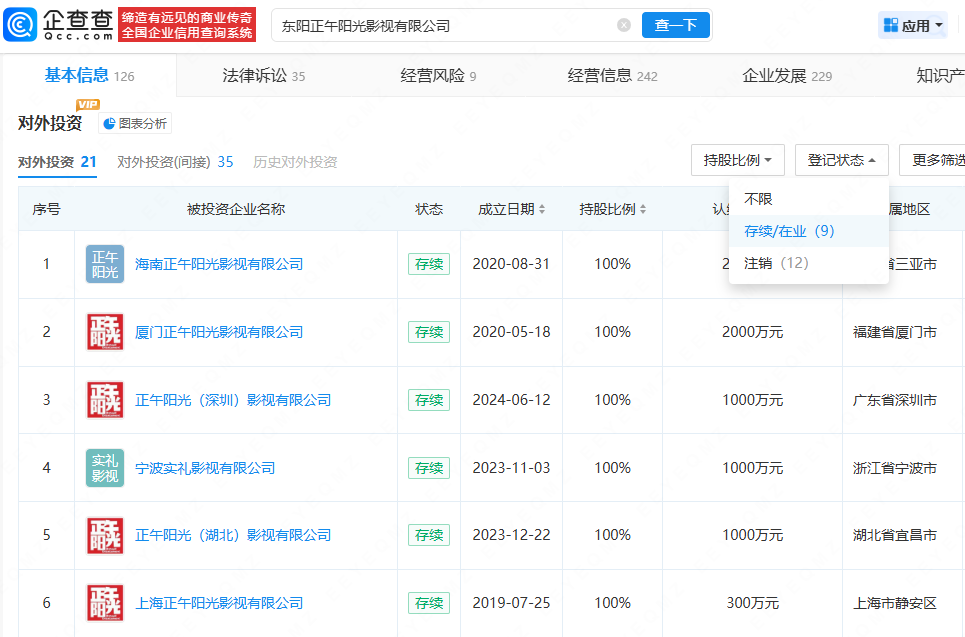
Group 1 - The core point of the article is that Shaw Brothers has announced an agreement with its major shareholder, CMC Inc., to acquire core assets from CMC for a transaction value of 4.5765 billion RMB [1] - The assets to be acquired include well-known production companies such as Zhengwu Sunshine, distribution company Tongle Film, film investment and production company Shanghai Huaren Film, variety show production company Riyue Xingguang Media, and Shanghai Siyuan, which operates over 50 UME cinemas [2][3] - Zhengwu Sunshine has produced popular series such as "Nirvana in Fire," "The Great River," "The Sea in the Mountains," and "The Story of Minglan," establishing itself as an industry benchmark [3] Group 2 - CMC Inc. is recognized as a leading comprehensive media and entertainment company in China, founded in 2015, with its founder Li Ruigang being referred to as "China's Merck" [3] - CMC became the controlling shareholder of Shaw Brothers in 2016, indicating a long-term strategic partnership [3] - Zhengwu Sunshine's affiliated company, Dongyang Zhengwu Sunshine Film Co., Ltd., was established in August 2011 and has invested in 21 enterprises, with 9 currently in operation [3]
西南证券:AI应用全面开花 游戏电影持续复苏
智通财经网· 2026-01-26 07:13
Group 1: AI Applications - The AI application ecosystem is thriving, with continuous upgrades in AI+ gaming, comics, companionship, advertising, education, and healthcare [2] - Major companies are accelerating their layouts, with advancements in multi-modal interaction and video generation technologies [2] - Key products like Ant Lingguang, Tencent's Mixed Yuan Game 2.0, Kuaishou Keling, and Yidian Tianxia AdsGo.ai are driving AI penetration in content creation, gaming, video production, and marketing [2] Group 2: Gaming - The gaming market is expected to show steady growth in 2025, driven by quality content and IP [3] - A clear policy encouragement is evident, with a record issuance of 1,772 game licenses in the year, injecting vitality into the industry [3] - Innovative gameplay, such as the "search, hit, withdraw" model and SLG fusion gameplay, is expanding the user base [3] Group 3: Film and Television - Short dramas and AI comics are gaining popularity, while long videos are expected to recover [4] - The comic drama market is projected to explode in 2025, with nearly 47,000 new releases and a market size of approximately 53.3 billion yuan, reflecting a 113% year-on-year growth [4] - The film market is set for a comprehensive recovery, supported by both top-tier and mid-tier films, with significant box office returns [4] - The television industry is experiencing a supply rebound driven by new policies, indicating a potential turning point for the drama market [4]

演员表的花式套路该休矣
Xin Lang Cai Jing· 2026-01-24 07:17
Core Viewpoint - The film "Biao Ren: Wind Rises in the Desert" has generated significant discussion due to its complex actor title classifications, which may confuse audiences about the core cast [2][3]. Group 1: Actor Title Classifications - The film features a detailed classification of 30 actors into 8 categories, including "leading actor," "special performance," and "friendship guest appearance," which complicates the understanding of the main cast [2][3]. - Other films, such as "Kong Qiang," also employ intricate title classifications, leading to humorous reactions from audiences regarding the excessive variety of titles [3]. - The trend of elaborate title classifications is not limited to films; television series also exhibit similar practices, with various creative title arrangements that can confuse viewers [3][4]. Group 2: Impact of Title Classifications - The practice of title classification reflects a competitive struggle for "main character status," where actors prioritize title rankings over compensation during negotiations [4]. - The term "banwei" (番位), originating from the Japanese entertainment industry, signifies the importance of title placement in determining an actor's commercial value, which has diverged from the quality of the work itself [4]. - Historical examples demonstrate that an actor's value is not solely determined by their title; memorable performances can come from characters with less prominent roles [4][5]. Group 3: Industry Reflection - The focus on title rankings detracts from the essence of acting, where the emphasis should be on the quality of the work rather than on title competition [5]. - The industry is encouraged to shift away from these tactics and prioritize genuine storytelling and character development, allowing audiences to engage more with the narrative rather than the superficial aspects of actor titles [5].