住宅开发

Search documents
6月17日晚间重要公告一览
Xi Niu Cai Jing· 2025-06-17 10:10
Group 1 - Company Xi Zhong Technology proposed to repurchase shares worth between 75 million and 150 million yuan using excess funds and self-owned funds [1] - Company Yongxi Electronics expects a revenue growth of 16.6% to 28.88% in the first half of the year, with projected revenue between 1.9 billion and 2.1 billion yuan [2] - Company Jingyi Equipment anticipates a revenue increase of 36.54% to 42.48%, with expected revenue between 690 million and 720 million yuan [2][3] Group 2 - Company Haipuri received approval from the European Medicines Agency (EMA) for a new production line for Enoxaparin Sodium injection, with an annual capacity of 330 million doses [4] - Company Inner Mongolia Xinhua plans to merge its wholly-owned subsidiaries to optimize resource allocation and improve operational efficiency [5] - Company Cloud Chemical intends to sign daily related transaction framework agreements with its controlling shareholder to reduce operational costs [7] Group 3 - Company China Software received approval from the China Securities Regulatory Commission for a specific stock issuance [8] - Company Wankong Intelligent's subsidiary won a bid for a project with the State Grid worth approximately 12.17 million yuan [9] - Company Lianlong obtained a patent for an anti-aging agent, which is expected to enhance its product offerings in polymer materials [11] Group 4 - Company Yunlu plans to increase its shares by 4 million to 12 million yuan through stock purchases by its executives [12] - Company Enhua Pharmaceutical's chairman increased his stake by 237,900 shares [14] - Company Daqin Railway announced the resignation of its general manager due to retirement [15] Group 5 - Company Hefei Urban Construction signed a land use rights transfer contract for an industrial site with an area of 78,561.78 square meters, with a payment of 103 million yuan due by July 13, 2025 [16] - Company Taiji Group received a government subsidy of 20 million yuan, representing 75.04% of its projected net profit for 2024 [17] - Company Guodian Nanrui elected a new chairman, Zheng Zongqiang, while he resigned from his previous roles [19] Group 6 - Company Xinhua Medical received a medical device registration certificate for a thromboelastography testing kit [20] - Company Baotailong's subsidiary obtained a mining license for a graphite mine with a production capacity of 2 million tons per year [21] - Company Zejing Pharmaceutical received approval for clinical trials of its innovative cancer treatment drugs [22] Group 7 - Company Aojing Medical's artificial bone repair material received registration approval in Vietnam [23] - Company Chengjian Development received a cash dividend of 90.2169 million yuan from Guoxin Securities [24] - Company Rili Technology proposed a share repurchase plan worth between 10 million and 20 million yuan [25] Group 8 - Company Deshi General Institute received approval to issue up to 1 billion yuan in technology innovation bonds [44] - Company Tongding Interconnect plans to bid for two procurement projects worth approximately 717 million yuan [46] - Company Bangji Technology plans to acquire multiple agricultural companies [46]


6月13日早间重要公告一览
Xi Niu Cai Jing· 2025-06-13 04:57
Group 1 - Xiyec股份 plans to repurchase company shares with a total amount between 100 million and 200 million yuan, at a price not exceeding 21.19 yuan per share [1] - Bee Assistant intends to acquire the remaining 30% stake in Guangdong Fengdang Technology Co., Ltd. for 206 million yuan, aiming to integrate industry resources [2] - *ST Gongzhi received a decision from the Shenzhen Stock Exchange regarding the termination of its stock listing, with the last trading date expected to be July 10, 2025 [2] Group 2 - *ST Jingfeng will cancel the delisting risk warning and continue to implement other risk warnings, with its stock name changing from "*ST Jingfeng" to "ST Jingfeng" [3] - Doli Technology plans to acquire 52% of Kunshan Fagerland Automotive Parts Co., Ltd. for 91.4653 million yuan to enhance its product structure [5] - Jinma Amusement's vice president plans to reduce holdings by up to 269,500 shares, accounting for 0.17% of the total share capital due to personal financial needs [6] Group 3 - Lingang股份 intends to absorb and merge its wholly-owned subsidiary Beipiao Steel Pipe, which will result in the cancellation of its independent legal status [7] - Demai Chemical plans to sell up to 4.5 million shares of Aoke股份 through various trading methods [9] - Shengxiang Bio plans to acquire 10% of Hunan Shengweis Rui Biotechnology Co., Ltd. for 5 million yuan to enhance its industry chain layout in sepsis diagnostics [10] Group 4 - Ha Sanlian's directors and executives plan to reduce their holdings by up to 252,200 shares, accounting for 0.08% of the total share capital [11] - Luoxin Pharmaceutical's shareholder plans to reduce holdings by up to 10.4421 million shares, representing 0.96% of the total share capital due to financial needs [13] - Hengbao股份's vice president plans to reduce holdings by up to 197,500 shares, accounting for 0.03% of the total share capital due to personal financial needs [15] Group 5 - Xianfeng Electronics' vice president plans to reduce holdings by up to 16,500 shares, accounting for 0.01% of the total share capital due to personal financial needs [16] - ST Jinyi will cancel other risk warnings, changing its stock name to "Jinyi Culture" and adjusting the daily price limit from 5% to 10% [16] - Vanke A completed the sale of all A-share treasury stock, raising 479 million yuan from the sale of 72.956 million shares [18] Group 6 - Taiji股份 is planning a change of control, leading to a temporary suspension of its stock trading for up to two days [20] - Lio股份's directors and executives plan to reduce their holdings by up to 6.7688 million shares, representing 0.1% of the total share capital [23] - Yuhuan CNC's vice president plans to reduce holdings by up to 46,100 shares, accounting for 0.0296% of the total share capital due to personal financial needs [24] Group 7 - Huamin股份 plans to invest up to 100 million yuan to acquire approximately 8% of Tiantai Robotics [24] - Enjie股份's shareholders plan to reduce their holdings by up to 1.19% of the total share capital due to personal financial needs [26] - Guoxin Securities plans to acquire 96.08% of Wanhua Securities through the issuance of A-shares, with the review scheduled for June 19, 2025 [27]
5月成交超20亿元!琶洲千万级住宅保利天奕开放会所
Nan Fang Du Shi Bao· 2025-06-11 14:12
Core Insights - The real estate market in Guangzhou is showing signs of recovery, with strong product offerings and new regulations supporting market activity [1] - In May, the average transaction price for residential properties in Guangzhou reached 36,023 yuan/m², a month-on-month increase of 10.7%, marking the highest monthly price this year [1] - The Tianhe District recorded an average transaction price of 81,672 yuan/m², up 18% month-on-month, while Haizhu District followed closely with 72,630 yuan/m², up 16% [1] Group 1: Project Performance - Poly Tianyi achieved 176 units sold and a transaction value of 2.167 billion yuan in its first month, leading in both sales volume and value in Guangzhou's residential market for May [1] - The project features a 2,500 m² clubhouse that is already operational, differing from the common practice of selling properties before constructing amenities [2] Group 2: Design and Amenities - Poly Tianyi's design includes a full south-facing layout and a pure flat-panel structure, which is rare among luxury properties priced over 100,000 yuan/m² in Guangzhou [1] - The project incorporates high-end amenities such as a temperature-controlled swimming pool, a badminton court, and a basketball court, which are not typically found in most luxury developments [2] - The interior design emphasizes large windows and open spaces, utilizing soft curves in architecture and decor to create a warm living environment [2] Group 3: Market Impact and Infrastructure - The project has received attention for its commitment to enhancing surrounding infrastructure, including bridge and road construction, as well as the introduction of quality educational and commercial resources [2]

“好房子硬杠二手房 核心15城40个四代宅相对周边溢价幅度达16%
Jing Ji Guan Cha Bao· 2025-06-10 06:24
Core Insights - The concept of "Good Housing" has gained prominence, with the government aiming to enhance housing quality and promote green and smart transformations [2] - The rise of "Fourth Generation Housing" is closely linked to policy direction, with expectations for future properties to focus on low density, high usable area, and larger units [2][10] - The introduction of supportive policies in over 50 cities, including Beijing and Chongqing, is accelerating the implementation of Fourth Generation Housing [3] Market Trends - The supply of Fourth Generation Housing is projected to grow, with over 70 new projects expected by 2025, particularly in cities like Nanjing and Xi'an [7] - The premium of Fourth Generation Housing over surrounding properties in 15 core cities has reached 16%, indicating strong market demand [8] - The average absorption rate for newly launched Fourth Generation Housing is 43%, surpassing the overall absorption rates of 25%-42% in core cities [8] Construction and Cost - The construction cost of Fourth Generation Housing is approximately 650-700 yuan per square meter higher than traditional housing, but its high premium and rapid sales can mitigate cost pressures [9] - Innovative features such as high ceilings and outdoor spaces are contributing to higher usable areas, with some projects achieving over 90% usable space [4] Industry Dynamics - The shift from concept trials to widespread adoption of Fourth Generation Housing is being driven by both policy incentives and market demand [10] - The emergence of Fourth Generation Housing is expected to disrupt the existing market, particularly affecting the second-hand housing sector [10][11] - Real estate companies that can continuously innovate their products are likely to gain a competitive edge in the market [11]
6月10日早间重要公告一览
Xi Niu Cai Jing· 2025-06-10 04:03
Group 1 - Lingnan Holdings plans to publicly transfer 3.92% equity of Guangzhou World Wonder at a base price of 23.6576 million yuan, focusing on core business development [1] - Guangkang Biochemical's chlorantraniliprole product has a designed capacity of 10 tons/year but has not yet been produced, with expected minor contribution to overall performance [1] - Palin Bio's controlling shareholder intends to transfer 21.03% of shares to China National Biological, changing the controlling shareholder and actual controller [1][2] Group 2 - Haimer Technology is planning a change of control, leading to a temporary stock suspension for up to two trading days [1] - *ST Zhongdi's stock will be suspended for one day and will resume trading with a change in risk warning status [1] - Jiahua Intelligent's shareholder plans to reduce holdings by up to 1% of total shares due to personal funding needs [5] Group 3 - Bosi Software's director plans to reduce holdings by up to 0.22% of total shares for personal funding needs [6] - Hanjia Design's director intends to reduce holdings by up to 35.6 million shares, representing 0.1577% of total shares [7] - Nanfang Energy plans to invest approximately 51.9788 million yuan in distributed photovoltaic power stations, expecting related transaction amounts to reach 99.3685 million yuan over 25 years [8] Group 4 - Tian Tie Technology's subsidiary temporarily halted production due to steam supply issues, expected to last about one month [9] - Haiguang Information plans a share swap to absorb and merge with Zhongke Shuguang, with stock resuming trading [11] - Tianyima is planning to acquire controlling interest in Xingyun Kaiwu, leading to a stock suspension for up to 10 trading days [12] Group 5 - Xinhua Group's chairman resigned, and Wang Gengyu was elected as the new chairman [13] - Zongyi Co. plans to invest 220 million yuan in Jilai Microelectronics, aiming for a controlling stake post-investment [14] - Zhongying Electronics' controlling shareholder will change to Zhinen Industrial Electronics, with stock resuming trading [16] Group 6 - Huayang Lianzhong plans to jointly invest in a new company with its controlling shareholder, with a registered capital of 402 million yuan [19] - Gaomeng New Materials' chairman and executives plan to reduce holdings by a total of 0.41% of total shares [20] - Beifang Changlong intends to acquire 51% of Henan Zhongsheng for approximately 102 million yuan, expanding its business scope [21]
6月6日早间重要公告一览
Xi Niu Cai Jing· 2025-06-06 05:54
Group 1 - Leisai Intelligent adjusted the share repurchase price limit from 25.00 yuan/share to 52.00 yuan/share [1] - Fulin Precision's subsidiary Jiangxi Shenghua signed a supplementary agreement with CATL, involving a 500 million yuan advance payment for production capacity [1] - Shenzhou Cell plans to issue up to 25 million A-shares to its controlling shareholder to raise no more than 900 million yuan for working capital [2] Group 2 - BOE Technology received a commitment for an 1.8 billion yuan stock repurchase loan from China Construction Bank [2] - Chengjian Development plans to publicly transfer 9.24% equity in Beijing Science and Technology Park Construction Group at a minimum price of 282 million yuan [2][3] - *ST Lingda's chairman and president Wang Mingsheng resigned, with Jin Yongfeng elected as the new chairman [4] Group 3 - Jiangsu Boyun's shareholder plans to reduce holdings by up to 3% of the company's shares [6] - Yuhua Tian's shareholders plan to reduce holdings by up to 6% of the company's shares [8] - Anpei Long's shareholder plans to reduce holdings by up to 3% of the company's shares [10] Group 4 - Dayu Water-saving plans to participate in the auction for 70% equity of Huai'an Design Institute [15] - InSai Group intends to purchase 80% equity of Zhizhe Brand for 642 million yuan [16] - Jinj Chicken's shareholder plans to reduce holdings by up to 2.99% of the company's shares [18] Group 5 - Chao Hongji's shareholder plans to reduce holdings by up to 3% of the company's shares [19] - Chuangye Huikang's shareholder intends to transfer 40 million shares to repay stock pledge financing [20] - Zhuangzi Island's shareholder plans to reduce holdings by up to 1% of the company's shares [21] Group 6 - *ST Renle received a decision from the Shenzhen Stock Exchange to terminate its stock listing [22] - SMIC's wholly-owned subsidiary plans to sell 14.832% equity of a subsidiary to Hunan Guoke Microelectronics [24]




“好房子”登上舞台:第四代住宅来了
Jing Ji Guan Cha Bao· 2025-06-05 11:43
Core Insights - The concept of "good housing" is gaining traction, with the government emphasizing quality upgrades and green transformation in housing as part of its 2025 work report [1] - The emergence of the "fourth generation residential" model is closely linked to policy direction, aiming for low plot ratio, high usable area, and larger unit types to meet improvement demands [1][4] - New regulations have increased the minimum ceiling height for residential buildings from 2.8 meters to 3.0 meters, enhancing spatial comfort [1] Policy Implementation - Over 50 cities, including Beijing, Chongqing, and Xi'an, have introduced supportive policies for new housing projects, such as excluding certain areas from plot ratio calculations [2] - In Beijing, many projects feature 6-meter high ceilings and standard terraces of 20-30 square meters, achieving usable rates above 90% [2] - Chongqing has popularized vertical greening systems and designs that improve air quality, with some projects achieving a PM2.5 filtration efficiency of 35% [2] Market Performance - Research indicates that the supply of fourth-generation residential projects is expected to grow, with over 70 new projects planned across various cities [4] - The average premium for fourth-generation residential projects in core cities is 16% compared to surrounding properties, with initial sales rates averaging 43%, outperforming the overall market [4] - The construction cost of fourth-generation residential units is approximately 650-700 yuan per square meter higher than traditional units, but their high premium and sales velocity can mitigate cost pressures [4] Transition to Quality Housing - The fourth-generation residential model is transitioning from pilot projects to widespread implementation, becoming a key component of the "good housing" policy [5] - The rise of fourth-generation residential units may disrupt existing markets, with around 70 projects in major cities achieving usable rates exceeding 100% [5] - In a market with excess supply, developers are focusing on fourth-generation residential units to differentiate their offerings and counteract the impact of second-hand housing [5]
2025年4月全国住宅产品月报
克而瑞地产研究· 2025-05-28 09:33
Core Insights - The article discusses the evolving trends in the real estate market, focusing on product innovation and customer preferences in residential housing [4][10][13]. Group 1: Product Dynamics - The "4×4 Good Product Concept" by Yuexiu Properties emphasizes four key aspects: quality, warmth, intelligence, and growth, supported by 16 product propositions [10]. - The "4+X" product series targets various market segments, including high-end, ecological, urban renewal, and youth-oriented housing [12]. - The market is seeing a shift towards larger residential units, with a notable decline in the sales proportion of units under 120 square meters [21][24]. Group 2: Customer Trends - Modern families are seeking homes that reflect emotional values, with a focus on flexible spaces that can adapt to changing needs [16][17]. - The emotional core of home design is characterized by three aspects: defining spaces, providing therapeutic environments, and ensuring harmony [17]. - The demand for larger units is increasing, with a significant rise in the sales of four-bedroom apartments, while two and three-bedroom units are declining [36][37]. Group 3: Residential Product Structure - The overall market is trending towards larger units, with a 1.5 percentage point decrease in the share of units sized 100-120 square meters [21][24]. - In first-tier cities, the focus is on the 100-140 square meter range, while second-tier cities show a slight decrease in this segment [24][31]. - The mid to high-end price segments are gaining traction, particularly in the Pearl River Delta region, where the share of properties priced between 500-1,000 million yuan has increased [30][31]. Group 4: Project Highlights - The Hangzhou Greentown Runbai project features a low-density community with high-end quality, luxurious landscaping, and well-designed layouts that enhance privacy and comfort [4][58]. - The project is strategically located in a mature area with excellent amenities, including shopping, healthcare, and educational institutions [58][63]. - The design incorporates modern aesthetics with functional spaces, catering to the needs of high-net-worth individuals [45][56].

为什么说“富不买横厅,穷不买竖厅”,听过来人直言,都是血泪经验!
Sou Hu Cai Jing· 2025-05-27 10:25
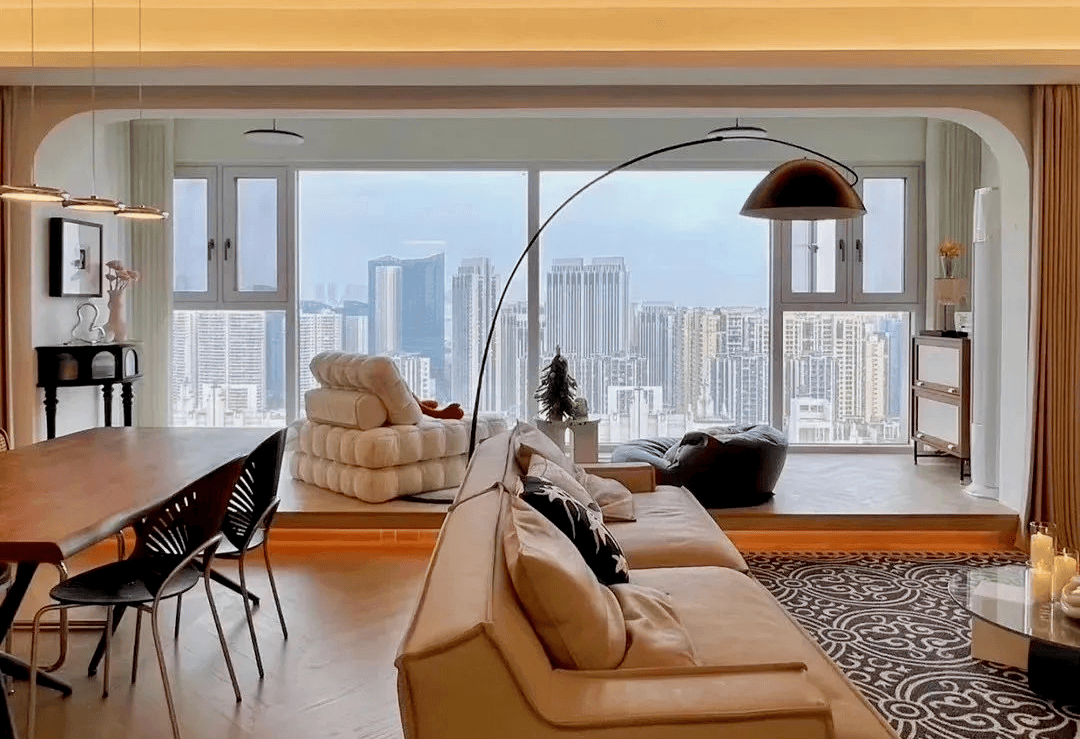
Core Viewpoint - The phrase "the rich do not buy horizontal halls, and the poor do not buy vertical halls" reflects the underlying preferences and practical considerations in housing choices, particularly regarding the layout of living spaces [3]. Group 1: Differences Between Horizontal and Vertical Halls - Horizontal halls have a layout where the width is greater than the depth, allowing for a linear arrangement of the living and dining areas [4]. - Vertical halls, in contrast, have a smaller width compared to depth, resulting in a layout where living and dining areas are not aligned horizontally [4]. Group 2: Advantages and Disadvantages of Horizontal Halls - Advantages of horizontal halls include better lighting due to larger windows, wider views enhancing the living experience, and higher space utilization allowing for diverse functional arrangements [7]. - Disadvantages include higher renovation costs due to larger areas and complex designs, increased maintenance costs, unclear functional area divisions leading to a cluttered feel, and lower privacy levels [9][11]. Group 3: Advantages and Disadvantages of Vertical Halls - Advantages of vertical halls include better privacy through distinct functional area separation, a stronger sense of spatial layering, and lower renovation and maintenance costs due to smaller areas [13][14]. - Disadvantages consist of insufficient lighting due to the vertical layout, limited space which can be problematic for families, restricted views affecting the living experience, and greater difficulty in renovations due to fixed layouts [16]. Group 4: Conclusion on Housing Choices - The choice between horizontal and vertical halls should be made based on individual needs and financial capabilities, rather than strictly adhering to the saying "the rich do not buy horizontal halls, and the poor do not buy vertical halls" [18].
5月20日早间重要公告一览
Xi Niu Cai Jing· 2025-05-20 04:03
Group 1: Company Announcements - Light Media's controlling shareholder plans to reduce its stake by no more than 29.24 million shares, accounting for up to 1% of the total share capital, to lower debt and improve financial structure [1] - Xinjiang Haoyuan intends to change its name to "Wanqing Energy" and its stock abbreviation accordingly [2] - Xunbang Intelligent plans to acquire controlling shares of Wuxi Indichip Microelectronics, focusing on the automotive chip sector [3] - Kangping Technology intends to acquire 100% of Suolu Electronics for 198 million yuan to enhance core competitiveness [4] - Shentong Express reported April revenue of 4.118 billion yuan, a year-on-year increase of 16.39% [5] - Wenzhou Hongfeng's controlling shareholder plans to reduce its stake by no more than 4.37 million shares, accounting for 1% of total share capital [8] - Changyang Technology plans to invest 29.9 million yuan in Ningbo Huizhixing New Materials [9] - Zhejiang Agricultural Holdings intends to publicly transfer 100% of its subsidiary Huadong Pharmaceutical, valued at 369 million yuan [10] - *ST Jinguang faces delisting risk due to stock price falling below 1 yuan for 10 consecutive trading days [11] - Huibo Yuntong plans to acquire 67.91% of Baode Computer to enhance its competitive edge [12] - Xinhua Group intends to change its name to "Yingxin Development" [13] - Purang Co. plans to reduce its stake by no more than 24,800 shares due to personal funding needs [14] - Xinhecheng plans to participate in a land auction for a commercial plot in Hangzhou, with a starting price of 1.037 billion yuan [15] - *ST Sailong's controlling shareholder plans to transfer 14.16% of shares, potentially changing control [16] - Gaoweida's controlling shareholder plans to reduce its stake by no more than 13.27 million shares due to funding needs [17] - Tianli Lithium Energy's shareholder plans to reduce its stake by no more than 3% [18] - Baijia Qiancheng's shareholder plans to reduce its stake by no more than 9.42 million shares [19] - United Optoelectronics is planning to issue shares to acquire Dongguan Changyi Optoelectronics [20] - Meg Intelligent plans to issue H-shares and apply for listing on the Hong Kong Stock Exchange [21] Group 2: Industry Insights - The express delivery industry shows growth, with Shentong Express and Yunda reporting revenue increases of 16.39% and 5.84% respectively in April [5][20] - The automotive chip sector is highlighted as a key investment area, with Xunbang Intelligent's acquisition of Indichip Microelectronics [3] - The energy sector is seeing name changes and strategic shifts, as seen with Xinjiang Haoyuan's rebranding to Wanqing Energy [2] - The pharmaceutical sector is undergoing restructuring, with Zhejiang Agricultural Holdings planning to divest its pharmaceutical subsidiary [10] - The technology sector is active in mergers and acquisitions, with Huibo Yuntong's acquisition of Baode Computer [12]